Author Archives: keithnoback

Weird Seasonal Activities

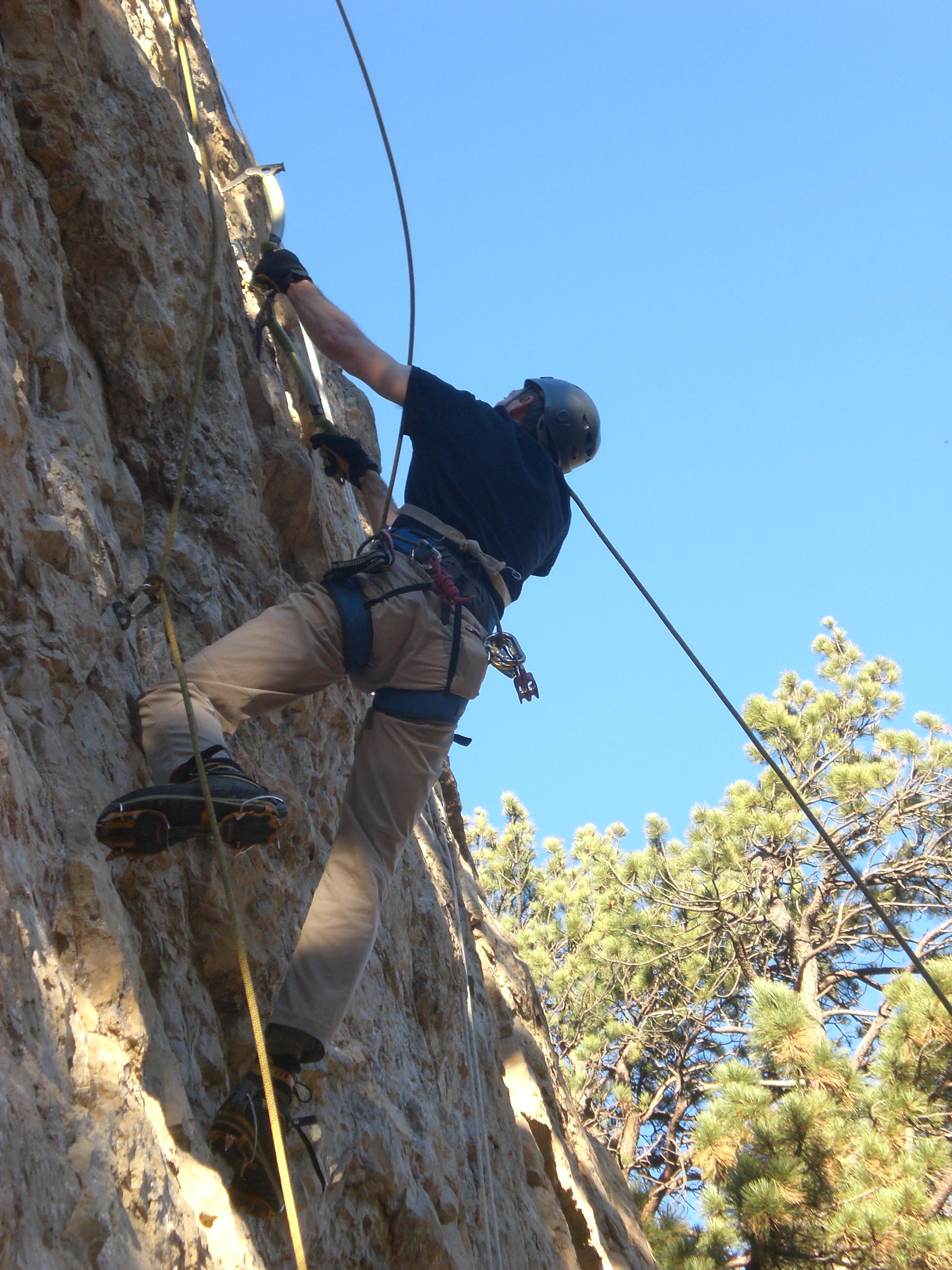
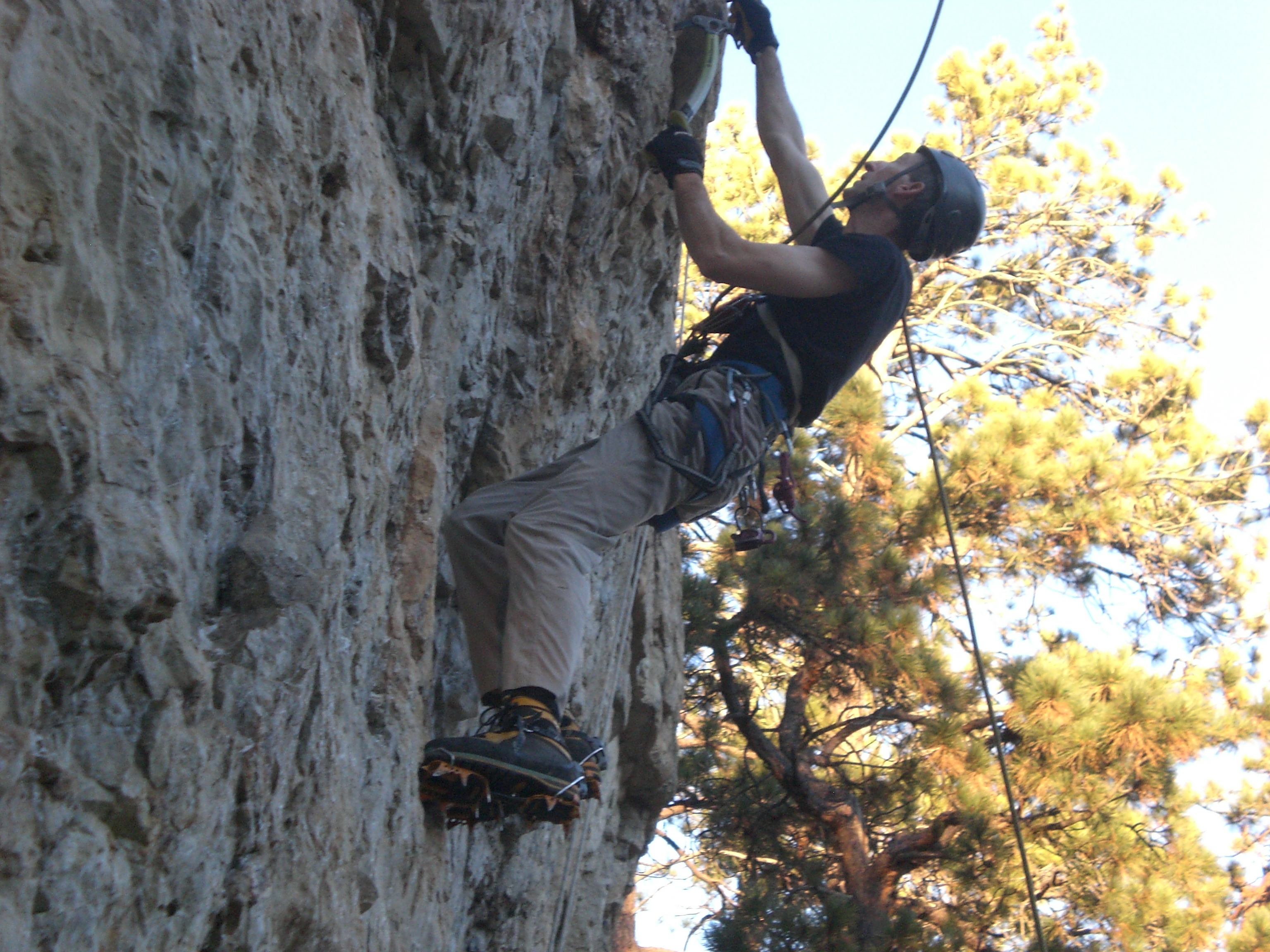
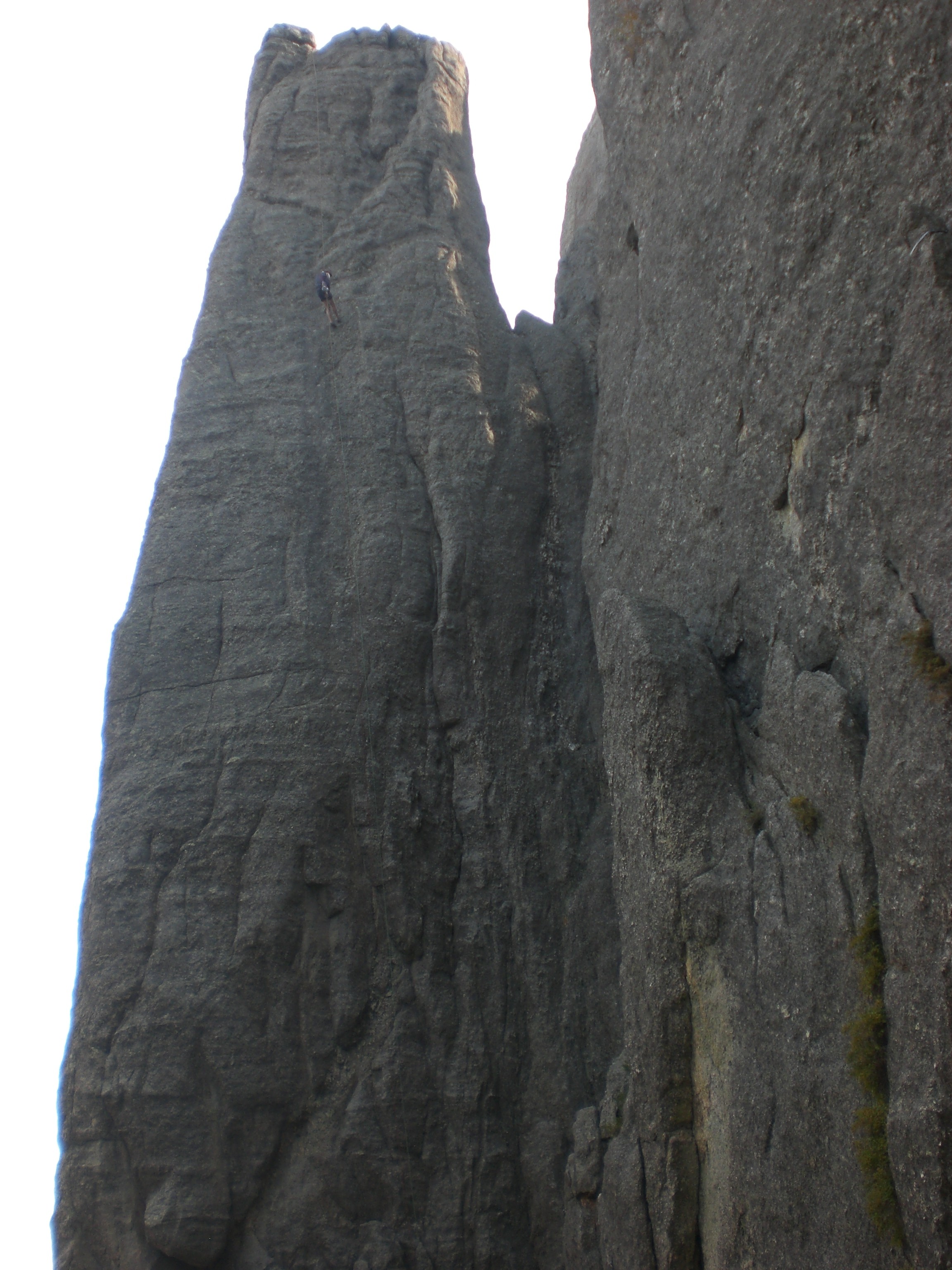
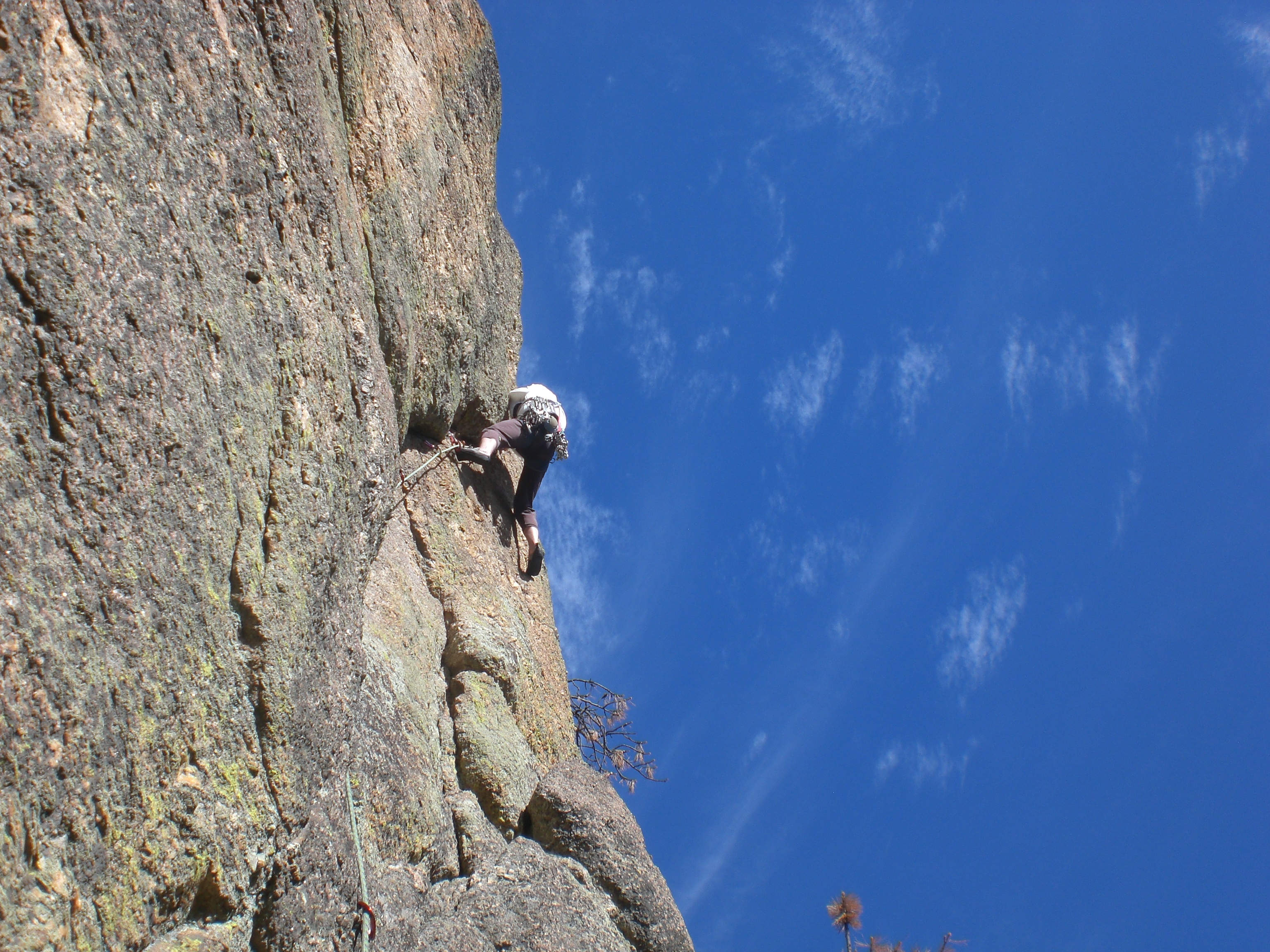
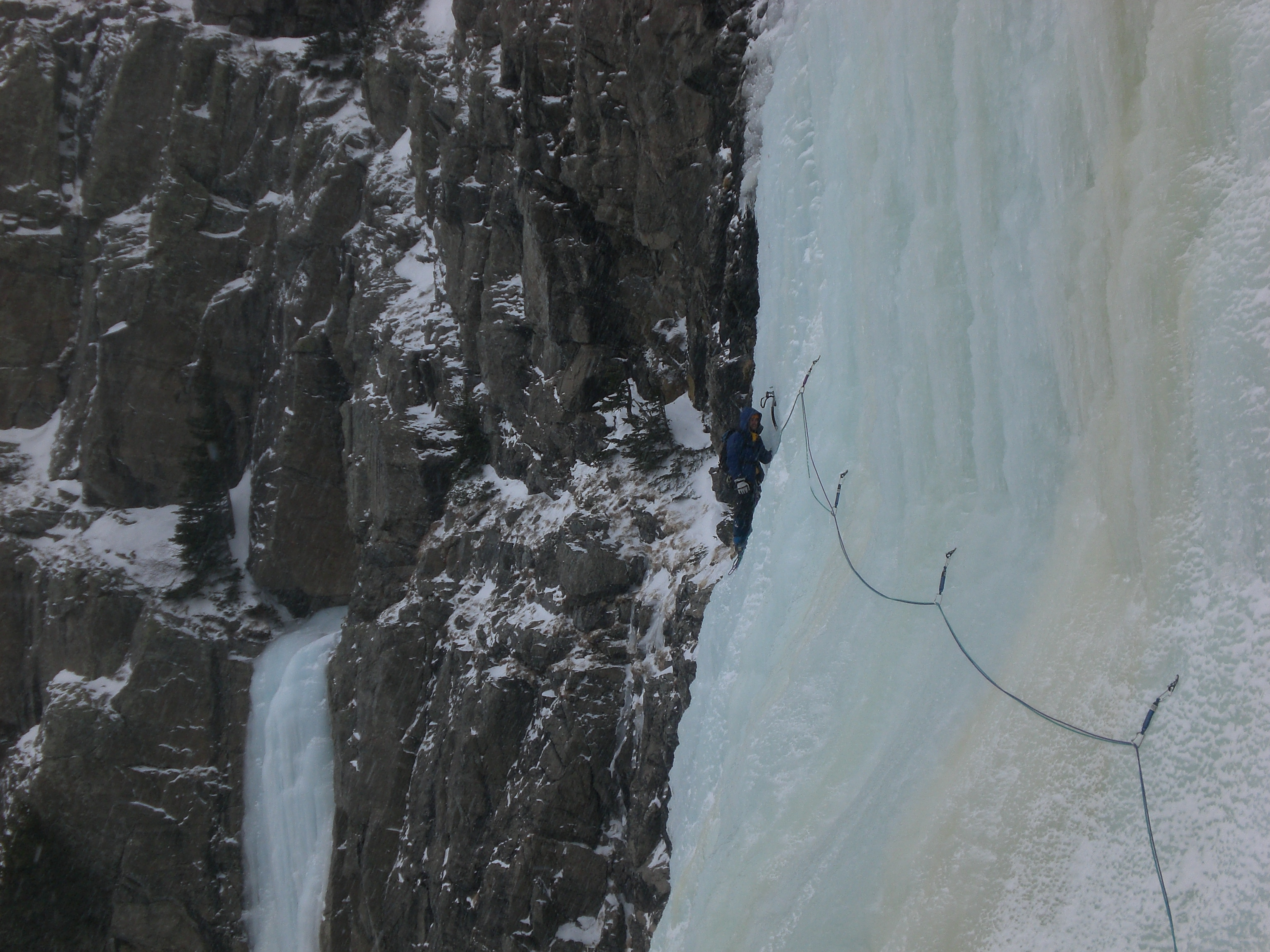
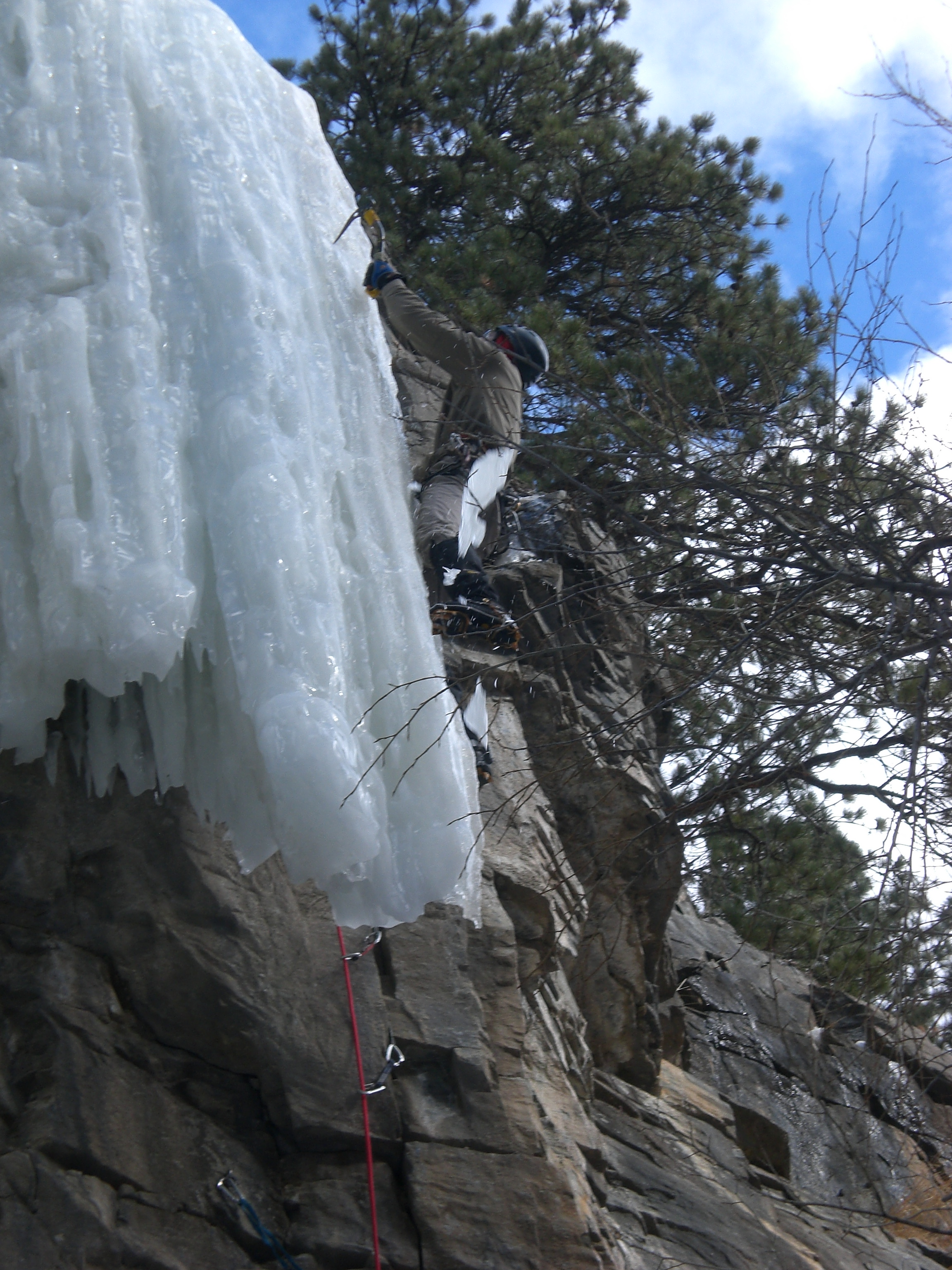
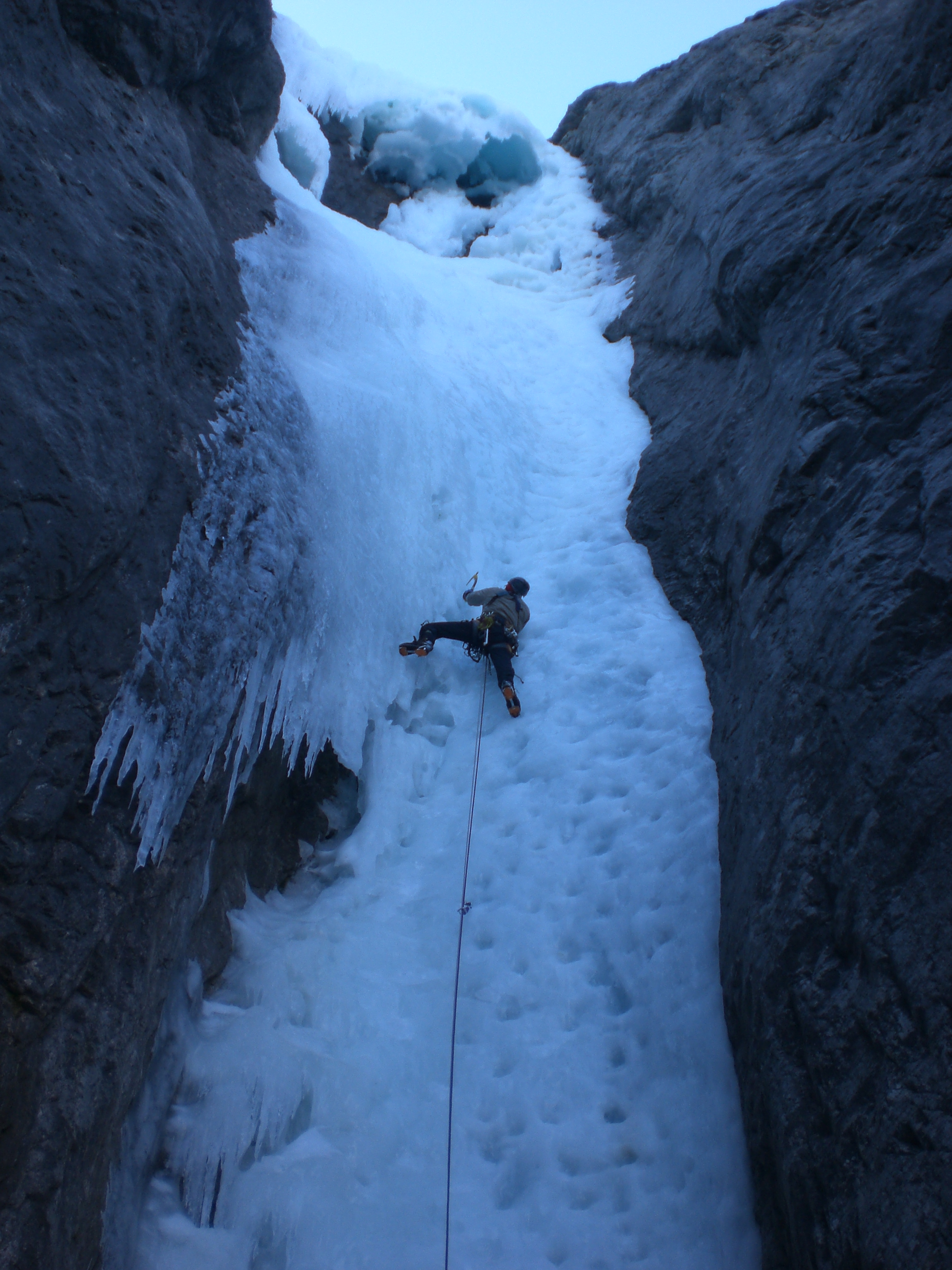
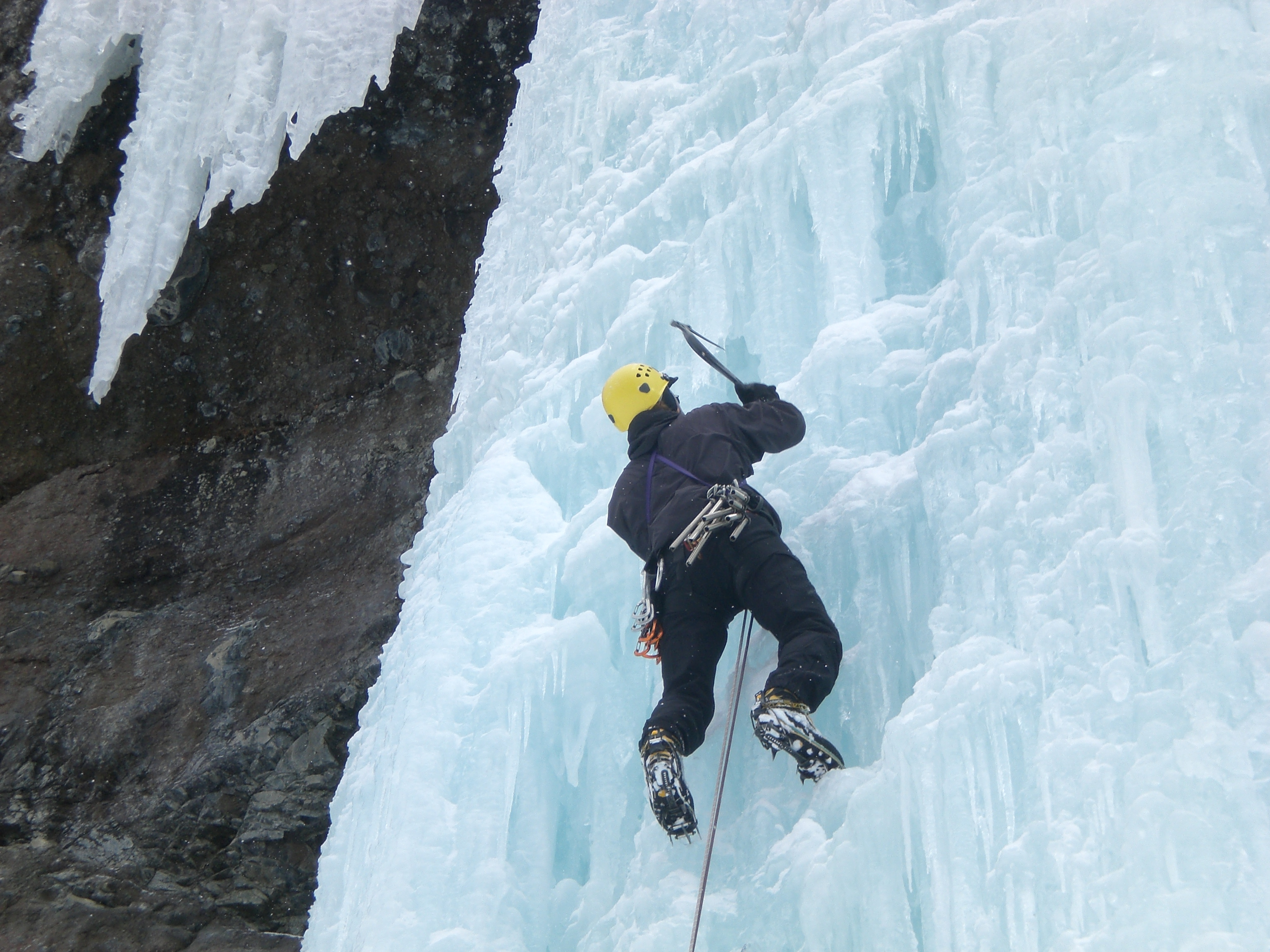
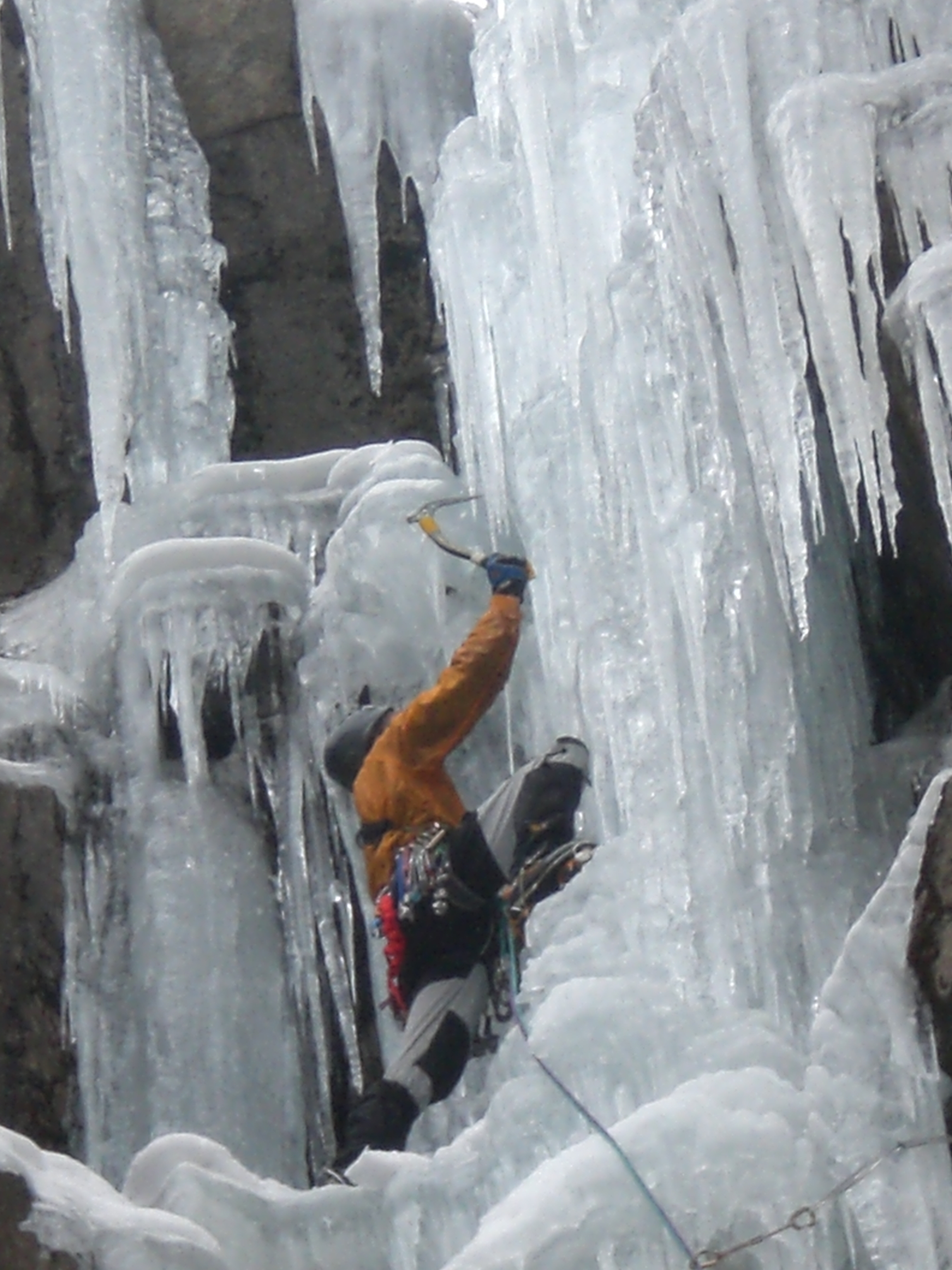
It’s time to be mixed up. A little good-humored anarchy prepares us for the fearful chaos of winter climbing.

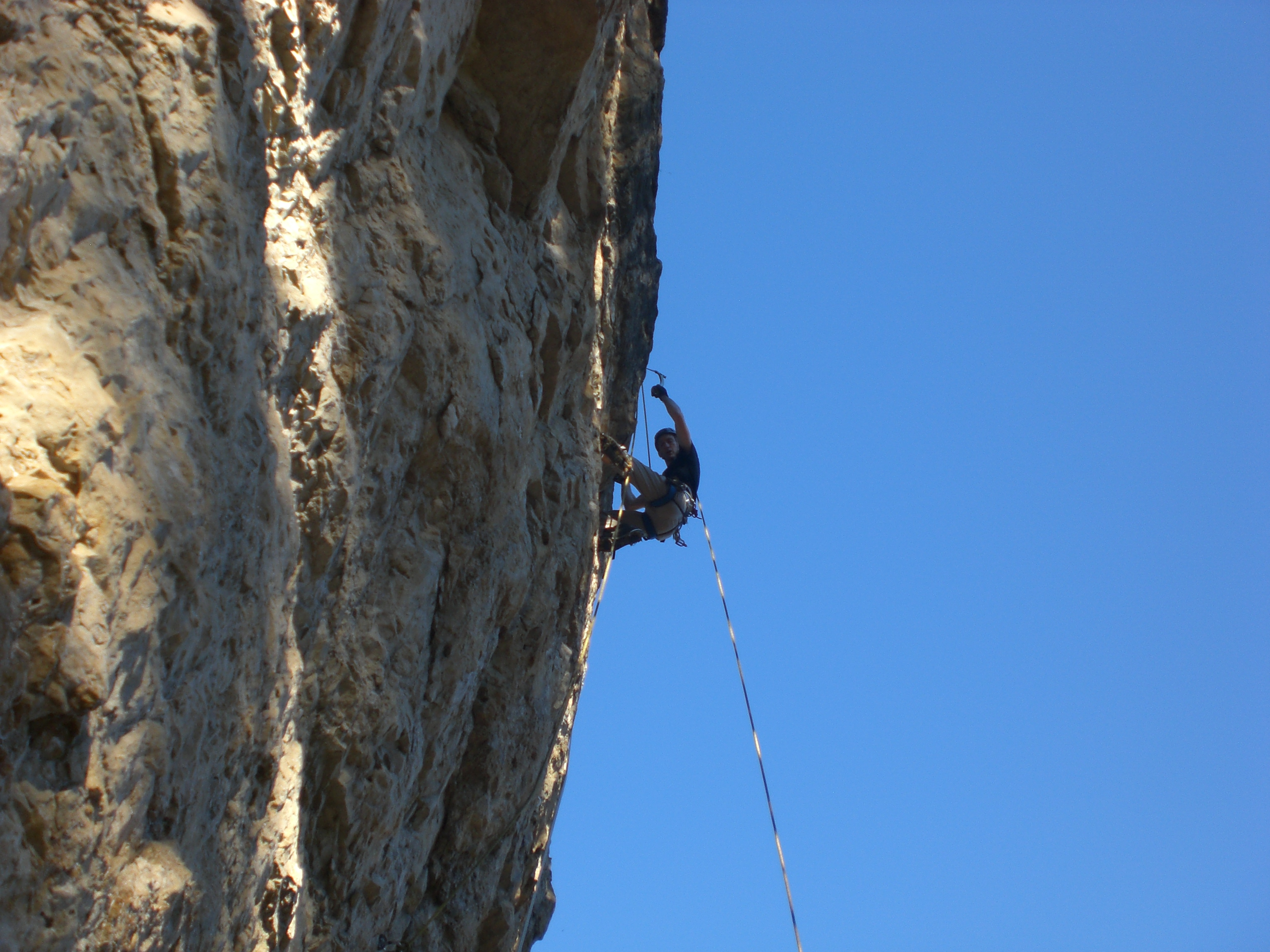
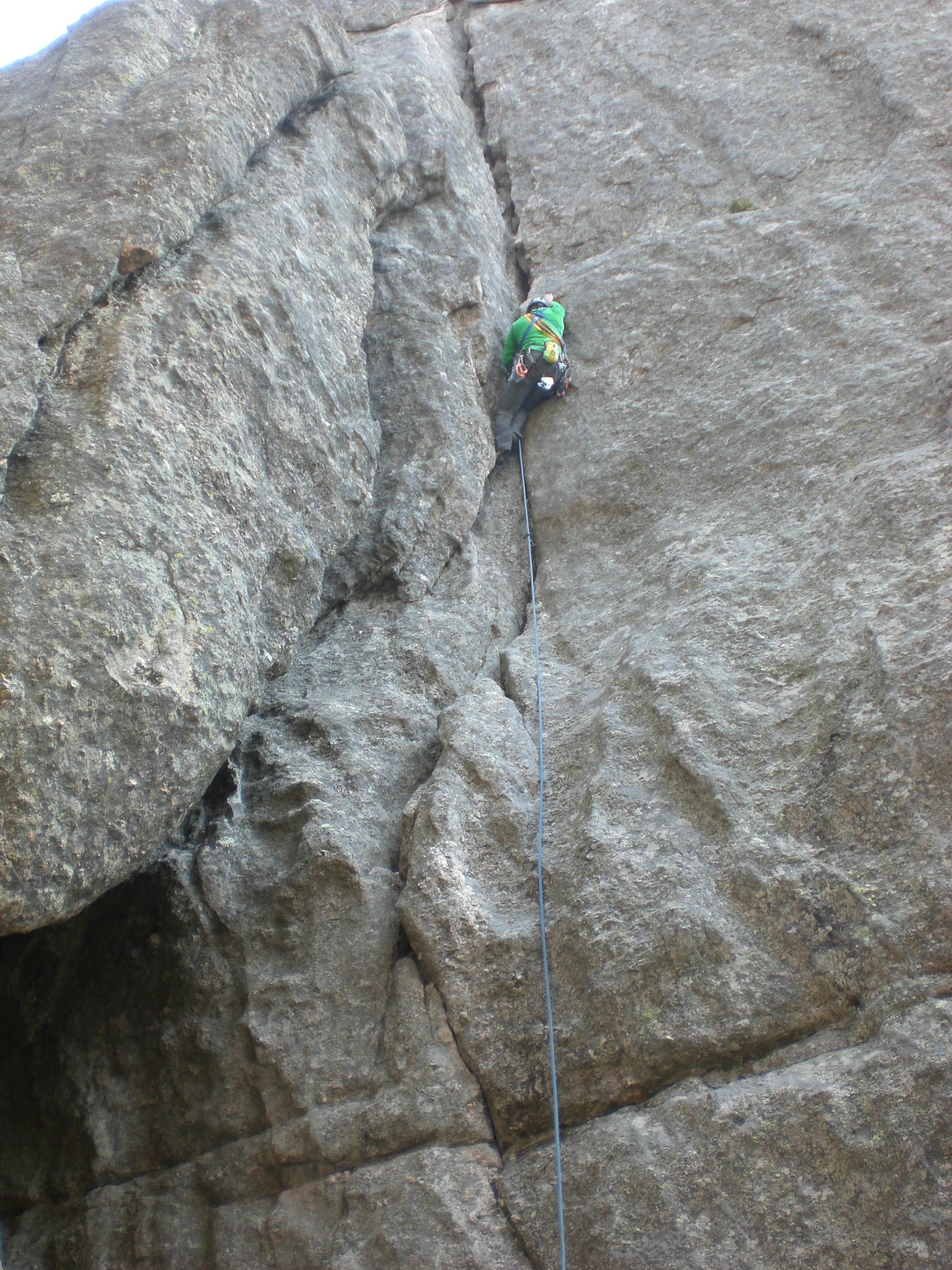
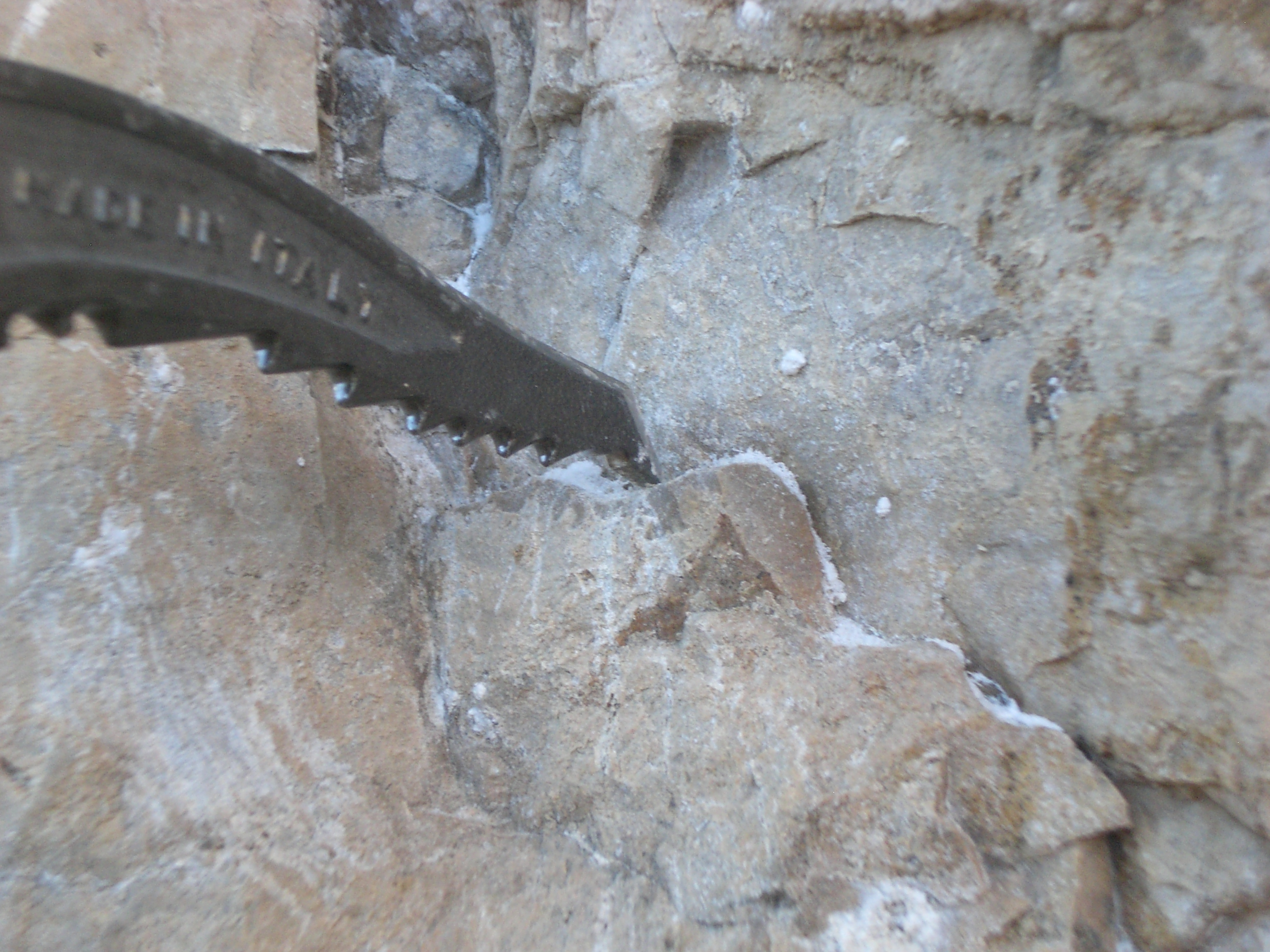
This isn’t mixed climbing, where one foot is on rock and the other is on ice. This is climbing rock with ice tools.

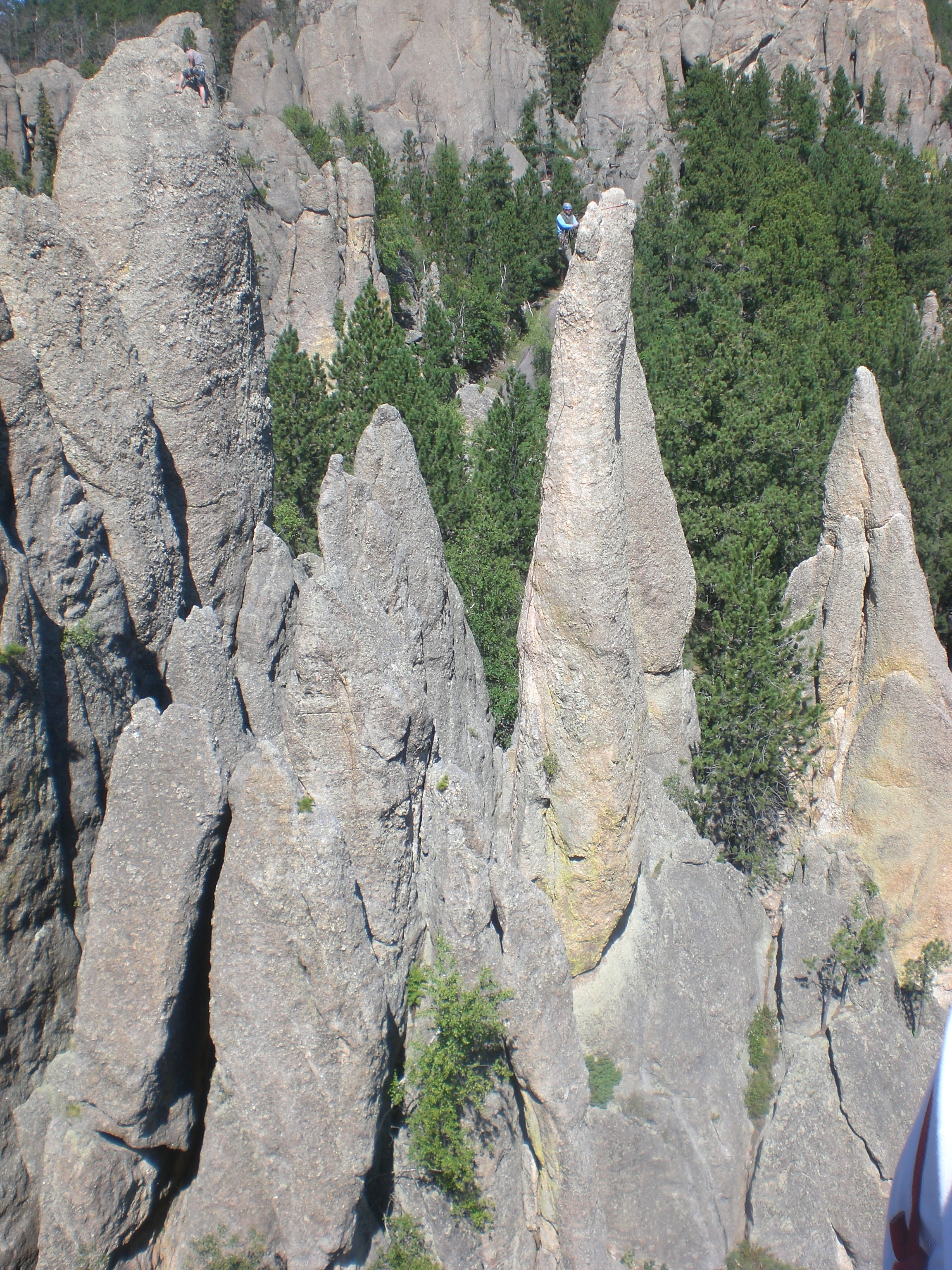
Without crags developed for climbing with tools and crampons, it would be nearly impossible to be an ice climber living in the Black Hills. Being an alpine climber would  be entirely impossible. But with our specialized crags, when the waterfalls finally freeze in Cody and the faces and gullies ice up in the Big Horns, Tetons and Canadian Rockies, our strength and balance are tuned up and with a few swings of the ice tools to knock the rust off, we are back in the game.

Now,we just wait for the cold.


Tagged , , ,

Supervenience and Rambo (2)

Cardiopulmonary arrest is not a legitimate cause of death. This often comes as a surprise to the lay public since it is highly counter-intuitive. Nevertheless, if a doctor writes that on a death certificate, the vital statistics office will return the paper with a nasty-gram demanding clarification. The problem is not that cardiopulmonary arrest is not the cause of death, in a certain sense. The problem is that cardiopulmonary arrest is always the cause of death, in a certain sense.

Of course, the main reason for excluding it from the death certificate is justification for the epidemiologists’ jobs. They can’t very well have a single column of data year after year titled “Cardiopulmonary arrest” and hope to keep their line in the public health budget. Plus, they would be forced to repeatedly present to the public and government officials a mere dismal reminder that everybody dies and there really isn’t anything anybody can do about it. Beyond those practical motivations, though, they actually have got  it right in principle.

Cardiopulmonary arrest is an epiphenomenon. It is a summary  description of  a crucial juncture in a process, but it is not really part of that process. It is an epiphenomenal, or apparent, cause of death, but not the actual cause of death. At this point, some CPR survivors may be jumping up to disagree. Good for them, but those survivors represent the population of people with treatable heart rhythm problems and choking victims, not the population of cardiopulmonary arrest victims (though they will someday join that group, by whatever means). The state of pulselessness and apnea supervenes on an underlying pathological chain of events in every case. The precise sequence of events is unique to each individual, so it may seem incoherent, or at least superfluous, to even talk about cardiopulmonary arrest at all. That is a mistake as well.

The underlying process in each death, if traced back through the microscopic processes  determining the outcome, is so byzantine that it appears random. Though those processes are the really real truth of the pathologic mechanism in each case, such an explanation is not really available to us and so it fails just at the point where a person collapses in the shopping mall. Then the idea of cardiopulmonary arrest shines, for in a few, indiscernible cases, immediately replacing the function of the heart and lungs specifically by employing the techniques of CPR, will allow correction of the underlying process which set the person on their fatal trajectory.

So cardiopulmonary arrest turns out to be an epiphenomenal cause and useful as such, but not as a truth. To prevent premature onset of cardiopulmonary arrest we need a more precise, truthful representation. Thus the epidemiologists demand a description of the fatal process more proximal in time and specific in detail. They need something closer to the bare truth, even though they must still deal in epiphenomena. Except perhaps in cases of  vaporization, the acceptable causes of death are still summary descriptions reducible to more basic causes, but they are all we need at the level of public health. The acceptable causes are real enough. This interplay of epiphenomena is how our understanding of the world works in general anyway. Just look at how we come to appreciate cloud elephants and Jesus toast.

When someone sees an elephant in a passing cloud or the figure of Jesus on a piece of toast, the image supervenes on their knowledge of elephants or Jesus in conjunction with some prosaic neurological mechanisms. The image is unique in each case and without prompting, an observer may not immediately identify a line-up of cloud elephants as belonging together. The grouping of shapes may seem irrational. Once cued to the basal relationship however, most will nod and can even start picking out details of trunks, ears, legs and tails. The images cause nothing other than amusement, and even then as epiphenomenal causes (the amusement comes from recognizing the image – the process of seeing it – subsequent viewings are less and less entertaining).

Now, some may claim that Jesus is on the toast on purpose. Nobody claims that the cloud is shaped like an elephant on purpose, and nobody claims that the shape on the toast gives them their primary idea of Jesus or that the shape of the cloud gives them their primary idea of elephants. Still, it is rational to see elephants in clouds and Jesus on breakfast foods. Though the various arrangements of contrasting shades that evoke the image are different (the figure of Jesus or an elephant is multiply realizable) they are related in their causes, they share a base, and so are not incoherent. The mental objects are the rationalizing story themselves.

These relationships between causes and their explanations, between reduced phenomena and what we experience, finally beg the question of the truth of our ideas about causation. We have good reason to doubt those ideas. We cannot understand very small things or very large things, though we can model them with mathematics. Therefore, somewhat predictable relations exist at these extreme scales; they may just defy our notions of causation. Too bad, we are stuck with the limits of our perception. Despite the potential limitations of the picture we derive from analysis, the story of the mental supervening on the physical is the best we’ve done so far and its consistency suggests that we’re headed in the right direction. Think of what lies in the other direction, where the physical begins to supervene on the  mental. Things quickly start to resemble the situation in the movie Rambo 2.

Actually, movies in general provide a case where the physical supervenes on the mental. The story that the director wishes to tell determines the objects and events on-screen. Rambo 2, particularly during the helicopter sequences at the end of the film, is just one of the best examples of what comes of this supervenience relation.

As the denouement begins, the bad guys prepare to drop a bomb on Rambo. The bomb has to be big and scary, so we fear for Rambo’s survival and so we understand what a superhuman feat his survival would represent. There must not be objects attached to the helicopter, like rocket-pods, that would detract from the visual impact of the bomb slung beneath the fuselage.  Once Rambo has dodged the explosion (and we are prepared to accept further superhuman acts from him, such as leaping from the water to commandeer the helicopter) he needs to kick ass. He can’t do that properly in a helicopter without rocket- pods, so rocket-pods appear just before he takes possession of the aircraft. He needs to wreak righteous vengeance on the POW camp where his comrades have been held and tormented, but if he wipes out the thirty or so guards that mustered out in an earlier scene, he might look like a bully and the quantity of  righteous vengeance delivered would be unsatisfying besides. He therefore kills three or four times that number, taking a massive amount of ground-fire all the while. The pattern continues as guns on the helicopter switch sides when needed, a rocket launcher acquires an emphatic handle and trigger, and a hole in the chopper’s windshield appears and disappears  as necessary.

These inconsistencies are called continuity errors. Sometimes that name fits, but often it does not. Often, the inconsistencies are there because the story demands it or the director thinks he can sneak them by the audience in scenes where consistency would be costly or inconvenient. This is the kind of thing we should expect with physical supervenience on the mental. These continuity errors reflect the “queerness of the mental” – the consequences of things like bias toward pattern recognition and inborn attentional preferences, the very things that allow directors to slip continuity errors by us. In real life we don’t see rocket-pods flickering in and out of existence or any other continuity errors of the sort we should expect with a “bare truth” variety of mental causation. Rather we see mental objects as causes like cardiopulmonary arrest is a cause of death or the scorch-marks on a piece of bread are a cause of an image of Jesus – just true enough for us to handle.

Tagged , , , , ,

On Being Struck in the Face by a Large Rock

The single purpose of the present moment.

The Diamond is the upper half of the East Face of Long’s Peak in Rocky Mountain National Park. It gets its name from its shape, but the name also fits it from a climbing perspective. The vertical to overhanging plate of granite is striped with cracks from the width of a fingertip to the width of a basketball. It is a jewel, and irresistible even for sport climbers from Chicago like me and Jim were.

In our defense, we were not sport climbers by choice. Living in Chicago severely limits a person’s options. Despite our circumstances at the time, both myself and Jim, had extensive experience in the mountains, including long routes in the Tetons. Our experience meant that we were not complete fools to think we could climb the Diamond in the first place, but it also meant that we should have picked up on a few clues that things might be off track before the incident.

The line of evidence goes all the way back to the contemplation phase. When I was thinking about a big trip in those days, I always tried to run the idea by my friend Tim. He was a veteran of Ama Dablam and the Cassin Ridge on Denali as well as a living, intact paraglider pilot, so I figured he must know something about risk assessment. He was also a model pagan skeptic of Swedish heritage, born and bred in a factory town in upstate New York.   He soft-pedaled nothing.

“What?” he said, “the Casualty Route?”

He shook his head. When I corrected his assumption that we intended to climb the Casual Route (the easiest and so most popular route on the Diamond) he  dialed back the distaste a single click.

“Yeah, well,” he said, “the whole place is a god damned zoo. Good luck.”

I ruminated on his comments just exactly up to the moment I looked at the picture of the Diamond in the guidebook again. Then I forgot about them until the trip back from Colorado.

The scene at the registration office should have refreshed my memory sooner. It was climber Babel. There were kids and old people, dirtbags in flannel shirts with frayed ropes slung over tattered backpacks and teams of smartly dressed outdoorsmen lugging huge, spotless haul-bags. We got one of the last remaining permits to sleep in the boulderfield below Mills glacier at the base of the East face. When we arrived at the bivouac site, the sun was setting and the slopes, speckled with headlamps, looked like a reflection of the Denver suburbs far below.

The North Chimney was not the best approach to the Diamond, but it was expeditious and that was important in a race. As the first light of morning touched Long’s summit, the dash for positions on the ledge atop the lower East face was already well underway. Several of the wiser teams crept up the snow slope at the far edge of the glacier. Others descended ropes from the plateau on the other end of the precipice. One group had chosen to climb the shield of rock in the middle of the lower face, and daylight found them hauling a fully assembled portaledge up their route, the frame of the collapsible sleeping platform bumping along like a kite stuttering across the ground in a high wind. One group was ahead of us on their way to the chimney. Another trailed us by just a few minutes.

The North Chimney was not the best approach to the Diamond because it was not a climb and it was not a walk, it was a scramble – easy hand-and-foot climbing. As such it was easy for a climber to ascend without a rope – a little less so lugging a heavy pack and even less again wearing hiking boots. In other words, it was fast, loose and dangerous.

The party ahead of us was well out of sight and, we justifiably assumed, probably clear of the chimney when we started up. I was in the lead, about twenty feet above the gap between the top of the glacier and the base of the lower East face at the moment that they yelled, “Rock!”

On hearing that warning cry, a climber has two choices: look up in hopes of dodging the missile or hug the rock and rely on the strength of one’s helmet. I was in poor position to dodge, supported as I was by hands and feet on a steep bit of the scramble, but the ominous sound of what was coming convinced me that the helmet might not suffice. I did manage to head-shuck the first , cantalope-sized chunk, and ducked the next, slightly larger stone as it bounced over me. The third one wasn’t bouncing; it was too big. It grated along in light contact with the face, striking sparks. I leaned back to get out from under it.

As the block cleaned me off my stance I slipped into a certain clichéd state which I’ve only rarely experienced. Time slowed down. I felt myself tipping back, the heavy pack dragging my shoulders down faster than my hips. I felt my partner’s hand on the bottom of the pack and though it was physically impossible ( my helmet had been pushed down over my eyes and the broken edge forced through the end of my nose by the impact) I saw him trying to keep me from flipping over. I couldn’t right myself. I didn’t have enough leverage against his outstretched arm. However, the force was just enough to let me twist and face out from the wall, reversing the pull of the pack. My new position felt better, but looked worse. From beneath the broken rim of my helmet, I saw the long sweep of glacier below, lying at the angle of a ski run and now strewn with debris. At the top of the slide was a black moat between the rock face and the ice. A narrow ledge projected into the shadow a few feet below the lip of the ice. I aimed my heels at the ledge and put my forearms out in front or me.

The impact must have hurt, but I have no recollection of it. I might as well have settled like a feather balanced on the edge of the ice. Immediately, I was fumbling around in real-time again, trying to pull the pack over my neck as the tail end of the rockfall pummelled my back and legs.

I’ve often wondered what was going on in those first moments. How could I have a memory of seeing my friend spotting me when I couldn’t possibly have seen him? How could I make decisions in the span of time I had to react? I think the Hagakure  may hold the answer.

“Even if  one’s head were to be cut off, he should be able to do one more action with certainty.”

Quite an odd notion on the face of it. The idea is sound, though. Newborns show a visual preference for faces at nine minutes of age, and this too is an odd notion. We have inborn comparators against which our identity is a reference point and we refine and build on those comparators as we grow. That constant process comparing current state versus prior state versus anticipated state is the root of consciousness itself. Pre-reflective consciousness, our direct, subjective experience, is not pure perception. It is beautifully impure. The mind maps the present onto the past and future by the moment. It is only in moments of utmost need that we lay down enough memory to see the process at work. So the mind, if it has the right set of references at the fore, might seem to carry out one more anticipatory action, in death or in life, such as putting out a hand as if to spot a partner’s fall.

What good is this understanding? Yamamoto Tsunetomo’s most beautiful thought answers:

“There is surely nothing other than the single purpose of the present moment. A man’s whole life is a succession of moment after moment. There will be nothing else to do and nothing else to pursue. Live being true to the single purpose of the moment.”

Sadly, we cannot escape reflection and live the dream the author sketches in this passage. We have to face the horror of war that comes with the joy of battle. However, we can hope to keep the two straight, the reflective and the pre-reflective,  and that is what understanding is good for – holding onto memories without bending them into trinkets or icons.

That’s what I walked away with from the base of Long’s Peak, having been smashed in the face by a large rock. That, and the knowledge that the Diamond is indeed a god damned zoo at the end of August. And the realization that I should pay more attention to Tim’s opinions. And four tiny, blue, Kevlar threads lodged in the end of my nose.

Tagged , , ,

Nostalgia

East Gruesome

Summer is shrinking away to the equator. The rock doesn’t warm over the day and the Needles’ shadows at noon grow longer and longer. We have a couple of weeks of denial left at best. On the good days we took for granted less than a month ago, we can climb on the  faces last season’s heat denied us.

Driving past the entrance to Custer State Park this week, the fee station was closed and its windows boarded up. Soon the custodians will gate the road and abandon the park until Spring. We stopped at Sylvan Lake and wandered around looking for routes in the sun and out of the wind. Only two routes held no shade. The first was an easy face climb. The second was an arching crack protected in the upper half by three pitons, each thinner, more rusty, and more unfavorably oriented than the last. The route proved that the smallest summits can be more daunting than the tallest.

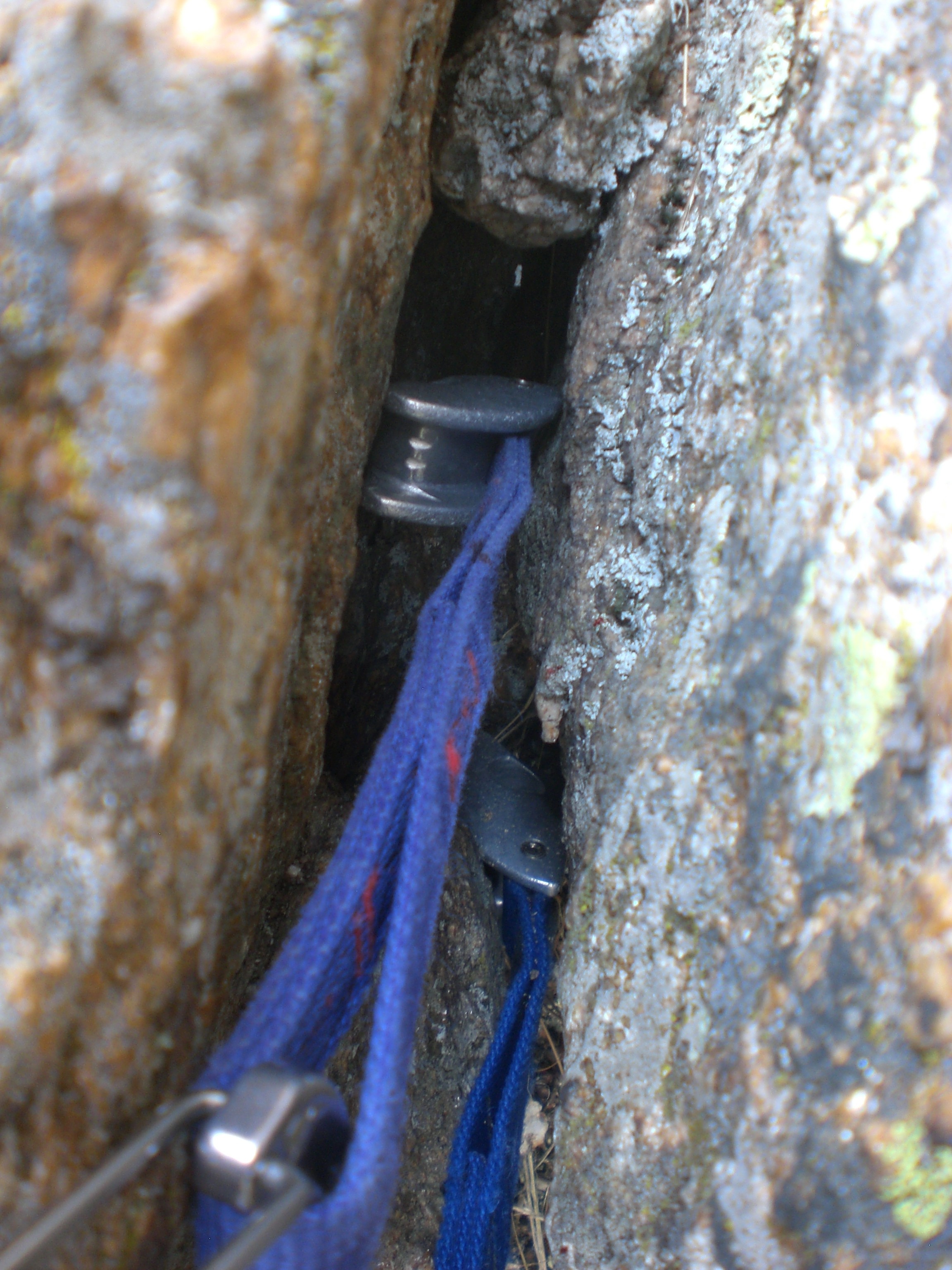
Don’t leave home without them. Tricams in a pegmatite crack

As a climber passes a point of protection, if he falls, he will fall twice the distance he climbs above that point. The closer to the ground, the quicker that distance becomes equal to the distance to the ground and the sooner one is utterly dependent on a single, rusty metal blade in case of a slip. ‘The leader must not fall’ is how a now defunct generation of climbers summed it up. On the arching crack, we backed the pitons up with modern, removable equipment, and nobody fell.

We walked by a further reminder of previous generations on the way out – a memorial plaque for Renn Fenton, one of the Black Hills’ climbing pioneers. Whenever we pass the small memorial, with its birth and death dates, Rich comments on the unlikely gap between the numbers. In those days, climbing was part of a counter-culture more concerned with hard-drinking and pursuing inspiration than building a retirement account. Somehow, the early climbers survived, and with some amazing accomplishments to their names.

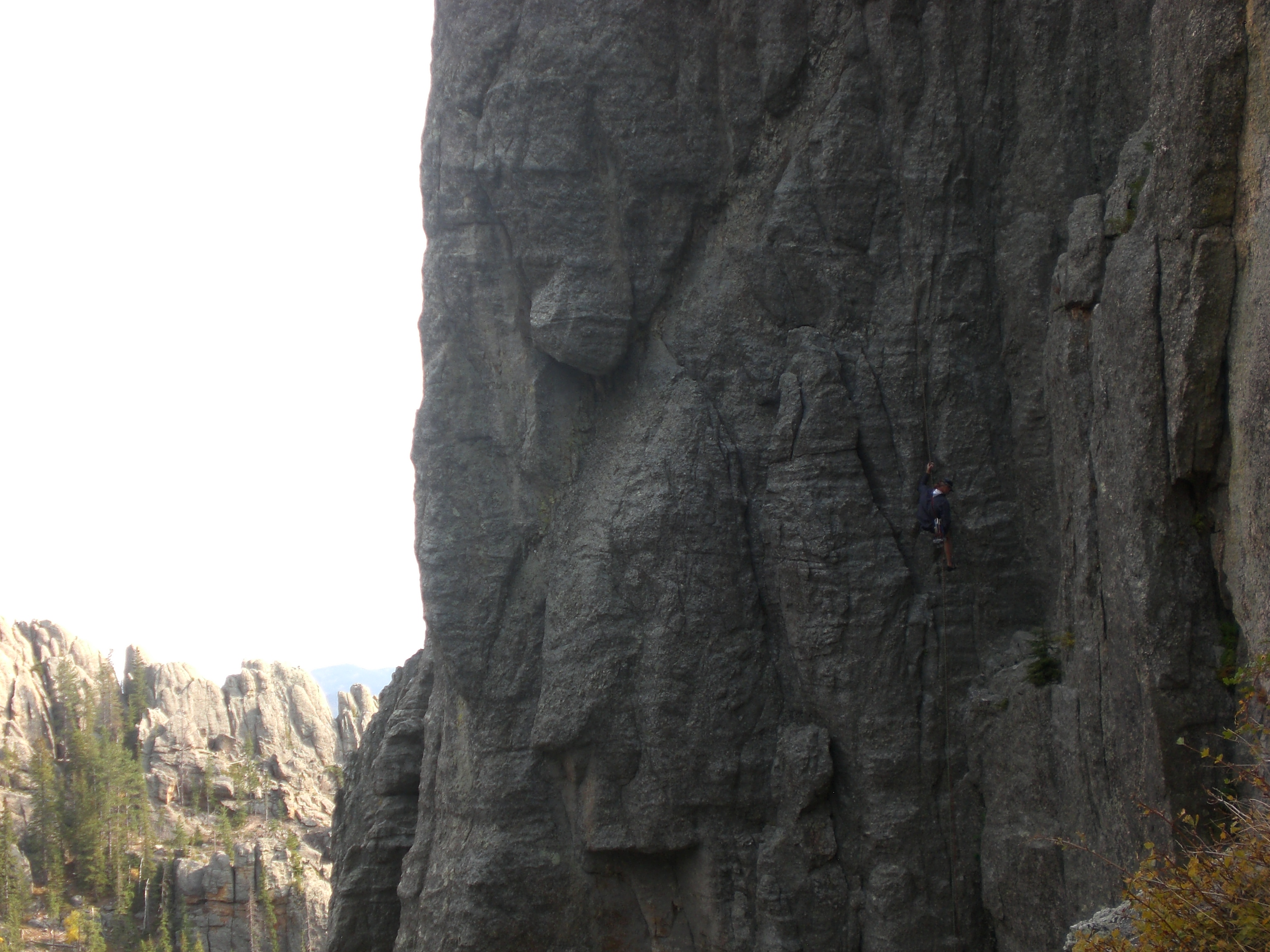
Base of East Gruesome rappel

Jan and Herb Conn represented that era as well as anyone. The couple, who made so many of the Needles’ first ascents in tight, dime-store tennis shoes, with a braided rope around their waists and a handful of pitons clipped to their belt-loops, may not have drunk as hard as some, but they made up for it with the finest inspirations. A week prior to standing before Renn Fenton’s memorial, we had visited the Conns’ masterpiece, East Gruesome.

Nobody knows for sure where the original route goes. We climbed a somewhat difficult crack on the East side of the formation, which the Conns almost certainly did not follow. Above the crack, though, all paths converge on a thin seam through a steep slab. Driven into the seam are three pitons. The section is awkward. The handholds are tiny crystals and the foot work requires precise balance. We did it with no mishaps, but it did not feel any easier than the first two times I climbed it. Eric Sutton’s comment in the summit register says it all: “Damn, Herb!”

Energy Crisis

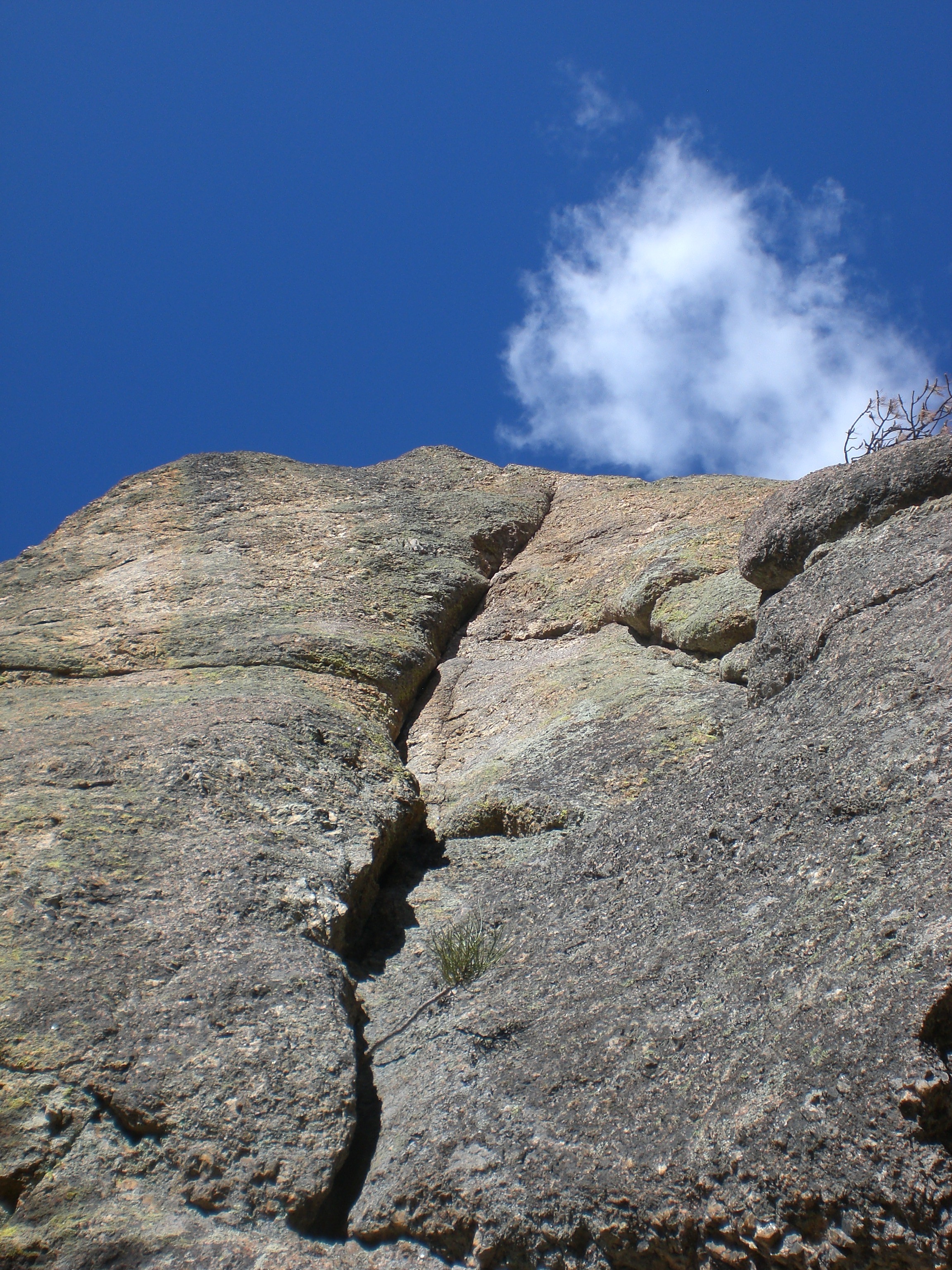
A week later, we left Sylvan Lake after climbing the crack across from the memorial; it was just too cold and windy. We drove over to the Ten Pins and climbed Energy Crisis, another thin, arching crack. I fell at the crux. My foot came off a crystal as I tried to pull up on a triangular hold I had pinched between my thumb, index and middle fingers. A small metal chock caught me after just a couple of feet, and after a rest, I was able to climb it top to bottom with no falls.

Rich on Energy Crisis

Herb Conn died this past year. Jan is still alive, but no longer does her annual singalongs at the Devils Tower picnic shelter. Climbs like Energy Crisis were inconceivable in the Conns’ day. Even if they’d had our stretchy ropes, sticky shoes and sculpted metal gear, they may not have been capable of such routes, as modern equipment allows us to run up against limits of tendon and muscle which the techniques of the Conns era did not test. We will never know how the Conns may have performed in the modern era. However,  I don’t think I would have, or even could have tiptoed up the upper portion of East Gruesome with a cord of twisted plant fiber tied around my waist and cheap tennis shoes on my feet. Looking back, I just have to shake my head and agree with Eric, “Damn!”

Tagged , , , , , ,

Inverse Apologetics

My best friend from Medical School firmly believes that I’m going to hell. He is a brilliant and thoroughly decent person, and though I have only maintained a tenuous contact with him over the years, if he needed a kidney from me, I wouldn’t hesitate. It doesn’t trouble me that he thinks I’m going to hell. It doesn’t bother me that he believes there is a race of invisible creatures living alongside and sometimes interacting with us (the djinn). I do not think less of him for believing these things. I understand how and why he believes as he does, because I was raised a Southern Baptist, and I held many similar beliefs. I began to abandon those beliefs when I was 14 years old. It started with hell, and led on, via a process of inverse apologetics,  to where I am now – accepting of those beliefs in others, though I no longer subscribe to them myself.

I don’t know what got me started thinking critically about the concept of hell. Maybe it was too much Hesse, too early.  My first concerns did arise at about the same time I was reading Steppenwolf. Anyway, I one day realized that I could not personally condemn another creature to eternal suffering. Kill, torture for a bit maybe, if the transgressor had done something odious enough, but not watch another suffer interminably. If petty, finite me couldn’t do this, I didn’t see how a wiser, smarter, personality could.

Nor could I see how god, if he had the power to prevent it, could allow another to suffer eternally based on a mistake. Perhaps he didn’t have the power. If so, he was simply a grander creature beholden to a natural law beyond our ken; different from us in magnitude, but not in principle. If he chose to allow eternal suffering, it must be in pursuit of  justice for crimes against the eternal which our finite minds were not equipped to appreciate. I could not see how this last explanation was possible assuming his motive was justice through retribution. As finite creatures, we would never be able to appreciate eternal punishment either. If we did not go mad, we would always have some uncertain expectations of the future, some hope, even if it was only the hope to endure the next moment. Of course he could change us upon death to make us understand, but then he wouldn’t be punishing the same people. God as a personality was an inconsistent bully.

If the whole scheme were to hold up, I had to conclude that god was ineffable. All his thoughts and actions were beyond human understanding. Then, however, all scripture was erroneous, assuming it was given from god. He could not use words, symbolizing human experience, to convey an understanding of his intent. Knowledge of god was not truly possible. The whole scheme, with god as our template personality and hell and sin in the bargain, couldn’t hold up. If there was a god he was impersonal and we couldn’t be sure what he was about. From the human perspective, he was either a force like the weather and other natural phenomena, or a warm refuge after the grave. The warm refuge theory seemed attractive. It let god’s actions occur in the past and so covered up with changing circumstance the interaction problems with substance dualism. It also allowed him to be benevolence personified, so he could still be a guy, kind of, even if we only saw a slice of him, the way we might see a four-dimensional sphere.

Thomas Aquinas disabused me of the warm refuge or “guy in the sky with a pie where you fly when you die” option. This substance dualist view was already on shaky ground for me. No one could say how it was that god acted in the world, at whatever point, without being part of it, without time or space or quantum fields or some other, as yet unknown material property inhering in god. A god-matter system seemed necessary and god was thus relegated to the role of super-weather. The only alternative which preserved god as a truly separate substance and allowed him to thus retain his guy-with-pie-ness was an extreme form of idealism. The substance dualist view held up if it technically relinquished its dualism.  Then, we were all really brains in god’s vat and all our perceptions of material reality were an illusion. Of course, were that the situation,  we could never know about the vat or what was outside the vat. Even if god chose to tell us directly about the vat, there would be no way for us to distinguish that information from the information of our programmed illusion, and the information would be of questionable  relevance besides. Aquinas preserved some relevance and role for god by making him a sort of universal substrate.

Tom may have been onto something, because some other guys had come up with the same idea independently. The idea of a universal substrate, a kind of meta-property, is the basis of Taoist philosophy. The Taoists thought about this kind of property dualism a bit harder than Saint Tom, though. The Taoists realized that a truly universal substrate cannot have a hierarchical relationship with its constituents, since the one-way dependency put the system at risk of an infinite regression. If the sub-units rest on the substrate’s carapace, then the carapace must extend in some way. Otherwise one must say that events at once do (in the determined sub-units and in the causal determination of the sub-units) and do not (in the immutable substrate) occur in the context of the whole. Another contextual carapace is implied and bingo, it’s turtles all the way down. In the Taoist version  of the idea, the property and the objects which exemplify it mutually determine each other (the whole can be viewed as an event), and mutual determination is the closest one can ever get to describing such a property.

This is weird and seems to escape the regression problem on a technicality, which led many of the Taoist’s contemporaries to question the utility of this explanation of the world. It seemed to imply a lack of meaning in its rejection of conventional causal relationships. The Taoist response was that their description of the world questioned the validity of overall meaning or the lack thereof. They considered talk of purpose an error. “What is the meaning of life?”, is simply a wrong question, and moral discourse, a circular futility. This is the more likely destination for a property dualist description of the world. It shares common qualities with the endpoints of other approaches. The more consistent the picture, the less momentous the implications and the weirder the image. Tom turned off before he got to the end.

To be fair, the same road was never open to Aquinas in the first place. The Taoists were engaged in purely philosophical inquiry. They wanted to puzzle out a consistent description of the world to the extent that such a thing was verifiable. Aquinas was engaged in philosophical inquiry and apologetics at the same time, the latter being the rationalization of a given description. Being an apologist for the Middle-Eastern monotheistic religions ultimately demands rationalization of  guy in the sky, substance dualism.This given endpoint for all reasoning leads to a creeping realism when it comes to concepts.

An innocuous example of a concept is in order before observing the creep. Consider “blueness”, the belief about certain objects: that they are blue. A host of constituent factors determine how we experience blueness, from the make-up of the spectrum, to our genetic heritage, to the color’s cultural and personal associations. These things that make up our experience of blue may be the whole story. In that case blue is just a good description of that whole bundle of stuff; there is nothing inevitable about blueness. Or blue could be made of the things it’s made of because some properties inherent in the constituents of blueness cause them to fall together that way. Here, blue may not be inevitable, but it is an arrangement the universe likes, so it may make sense to speak of it as a proper thing, even though it doesn’t really do anything. Finally, blueness could be a property inherent in the underlying condition of everything, which causes the constituents, in conjunction with their own properties or not, to fall into line. In that case, blueness is inevitable.

For someone bent on establishing substance dualism, this last bit is irresistible. Logic, reduction and a little bit of acceptable evidence from experience can get a person there. With one more little step –  moving all properties out of the constituents – the path can lead back to substance dualism. However, the situation is now no different from strict idealism once again, where we are brains in god’s vat, living out his virtual reality experiment. Analysis, in this scenario, yields no information. Parts of concepts may seem to cause things to happen to other parts, but the truth is that the parts must behave as the law of the concept dictates, all else is mere appearance. “Things are as they are” is all we can rightly say.

The various forms of the question “Why is there Something rather than Nothing?” help illustrate this sort of thinking. Nothing, taken as a real thing, is an error of language, an equivocation of the customary meaning with a concept that is inexplicable and has no explanatory power. Nothing customarily means zero or the null set. With that meaning in place, the correct phrasing would be, “Why are things the way they are and not some other way?”, or more succinctly, “Is all this in any way necessary?”.  The question in this form is probably not answerable, but worth considering, since it offers two potential viewpoints without compelling reasons to prefer one over the other and with slightly different implications depending on the choice. In other words, the question demands some humility, which helps us avoid errors that stunt us.

The questioners set on blazing a trail to substance dualism mean to persist in the error. They wish to discuss a real nothing. Not zero as defined by the absence of any number, or the null set, bounded by all other sets, but an absence of all including potentiality. Unfortunately for them, that would include the potential of absence. To get around the error, they claim that if some concepts may be a bit more than just descriptive, then we may allow that we think about things that we can’t fully explain, and so why can’t we just as reasonably talk about something we have no explanation for at all. Of course, this maneuver is why they wish to persist in the error in the first place. In a grand equivocation, they make room for all sorts of claims, from a working understanding of the nature of singularities (to paraphrase a couple of renowned physicists – saying that you understand singularities is the best indication that you do not understand singularities) to the guy with the pie.

The larger error in insisting on speaking of  a real nothing is that all the other things – qualities, beliefs, properties – which lead to the proper version of the question, “Why is there something rather than nothing?”, at least have some explanatory power, if only as effective labels. All sorts of concepts are possible without that minimum requirement, but taken as real, they amount to the assertion, “Things are as they are”, stated in a more sophisticated way. Maybe that is true; it certainly looks like an endpoint description. If it is, then there is no room for further statements – not descriptive and certainly not prescriptive.

My friend chooses to stick with the simple statement, “Things are as they are”, in regards to cosmology and takes the consistent approach to it. He eschews apologetics. Things like god and god’s reasons for sending me to hell are not comprehensible to my friend or anyone, and that’s the end of my friend’s business with those given facts. He feels that the assertion is true and knows he must live with the fact that it can never be verified, especially if it really is true.

For the available knowledge, he answers the question “Is all this in any way necessary?” with an affirmation. I’m prone to say, “probably not”, based merely on parsimony. Though the source differs, we share an underlying appreciation of our limited understanding and live by Edward Whymper’s admonition to climbers, “Do nothing in haste, look to each step, and from the beginning think of what may be the end.”. Hopefully, we thereby keep from falling into error and suffering its limitations. This is what philosophy, as opposed to apologetics, is good for, no matter your conclusions.

Tagged , , ,

Carnival of Adverse Selection

A Canadian friend once told me that he did not understand the American political system and asked if I could explain it to him. I told him that it was basically an exercise in pest management. On the one hand you have your smarmy rats (Democratic politicians) and on the other you have your vicious rats (Republican politicians). The first kind you don’t even want near you, the second kind you just want to stomp. Either way you’ve got an intractable rat problem, so mostly you just try to ignore them as best you can and get on with your life.

Sometimes though, they crawl across the kitchen counter in broad daylight and then you have to pay attention to them. That happened to me during the last Presidential debate. I was doing my best to ignore it, but we have a radio in the garage with a power switch stuck in the ‘on’ position and the debate was playing in the background. I had it successfully tuned out until they started talking about health care and Romney, who’s turning out to be a particularly nasty little ankle-biter, came with the crazy talk.

Here’s what he wants to do about health insurance:

  • Block grant Medicaid and other payments to states, limit federal standards and requirements on both private insurance and Medicaid coverage. The state can structure a cost-share program however it wants?  It can still shift costs to the Emergency Rooms of Medicare-participating hospitals and to the Medicaid programs of richer states (a kind of internal ‘self deportation’ which already happens to a limited extent)? I can’t imagine what the states might do? These changes are supposed to lead to innovation, and they will – just more the sort of innovation that financial system deregulation allowed.
  • Unshackle Health Savings Accounts by eliminating the minimum deduction requirement and allowing people to use the account funds to pay premiums. HSA’s are a nice product for a very limited income range. If you make too much money or too little to make the tax savings worthwhile, a HSA makes no sense. The proposed changes won’t change that. So, why make the changes? Hang on a minute, I’ll get to that.
  • Allow consumers to purchase insurance across state lines. Recall this is the now minimally regulated insurance product. Watch the insurance companies gobble each other up as they try to recruit all those newly available good risks. Watch high risk people get filtered out of the broader  insurance pool as the generous benefit plans become increasingly burdened with these individuals, and the prices for those plans go up and up, in turn prompting lower risk people to leave for cheaper, less generous benefit plans. Will Romney & Co. adequately fund a reinsurance plan to keep this from happening? Not to worry, people with chronic problems can still go to the ER, right? People can preemptively accomplish this adverse selection themselves via purchasing pools, right?
  • Medicare will become a premium support program. The premium support and benefit requirements will be fixed at the current levels in Medicare. If costs go up, the market will determine how people make up the difference. And in time, like gravity takes care of shoddy construction projects (who really needs architects or building codes), the market will take care of things by channeling the high risk people into the more generous plans (Medicare), driving those plans’ costs out of sight and eventually, driving those plans and high risk  people out of the market. I can almost hear the invisible hand slapping – see adverse selection and cost shifting above. (It’s actually worse than that – Medicare has a normative effect that goes beyond its simple economic effects but that is a story too long and tangential for the moment.)

So, why make the changes if they entail all these predictable distortions? Free market fundamentalism is the answer. Markets aren’t a highly effective tool for these guys, they are a moral imperative. So in their view, markets must be good for every application. Just set up a market and have faith; it will solve any problem. Regulation and critical analysis aren’t caution, they’re apostacy. I’d usually ignore this crap, like I ignore people praying for rain, but this is more like praying that your kid gets better from leukemia in lieu of consulting an oncologist. I feel like I’ve at least got to say something.

So, for all who wondered what could be worse than Obamacare – it’s this happy horse shit. These two rats are scampering across the counter in broad daylight with this mess, and they need stomping, (metaphorically of course).

Tagged , , , , ,

Commitment

In the climbing culture , there is an ongoing dispute about who is a “real climber”, who is a poser, and how the two may be differentiated. The distinction between real climbers and posers is stark in some cases. Most of the folks on reality TV shows about Everest expeditions are posers. Most of the suburbanites dangling from top-ropes at the climbing gym are posers. Yet, even these most benighted dabblers are at constant risk of becoming real climbers.  The only thing separating them from real climbers is commitment, and even in the gym or on the snow slope, given time, a moment of commitment will come. Then, provided they don’t simply turn away, the basest poser may get real.

The addiction to commitment is what distinguishes all real climbers. Addiction is normal for humans. By the broadest definition, we are addicted to all sorts of pleasant things, from food to companionship. We are not normally addicted to unpleasant things, like commitment. We tend to see people’s repeated forays into piercing or swimming in frozen lakes as borderline pathological. Nevertheless, some folks are addicted to these things too, and the climber’s addiction to commitment belongs in the same category.

Now, religious types and other defenders of the social order may object to the characterization of commitment as unpleasantness. They are wrong, of course. Commitment presumes change and uncertainty. The psychology literature is clear on the effect of change and uncertainty on a person’s stress level, and the effect is not salutary. What makes commitment in climbing addictive is the same thing that makes other unpleasant things addictive: commitment moves us toward reconciliation of our core contradiction.

The sense that we are conscious undergirds everything we think and do. Many definitions of this essential quality exist, with some of those definitions occupying volumes of text. A simple, adequate definition is possible though. Consciousness is the perception of identity. We say we are conscious when we perceive ourselves as distinct from other perceptual objects. But we can never directly experience our identity, we can only perceive it as we perceive other things inside and outside of us. As we gain experience, we see our identity change, not spontaneously, but by means of interaction with other perceptual objects. We begin to suspect that our identity is contingent on history and relations with other objects, while our consciousness still tells us that our identity is necessarily independent. We have a central contradiction growing in us from the moment we first see ourselves.

Seeking out unpleasant experiences is rebellion against our core contradiction. When we hurt ourselves a little bit, we deny the preciousness of identity, and so relieve a little bit of the tension between what we actually experience and what our consciousness is telling us we experience. The more so when we make a commitment, especially in climbing. To commit to a difficult move or a difficult climb, we have to write off our future and make a dispassionate assessment of our past and the capabilities which our history reflects. We are committing to the climb, and also committing to the notion that our identity is not independent, precious or permanent. The resolution of our essential tension has nothing to do with wholesome exercise or achievement, but it lurks just behind those inviting, pleasant aspects of climbing, waiting to snare the unwary poser and make them a real climber.

Tagged , , , , , ,

Can Demon Possession Make You a Better Ice Climber?

I’ve been wanting to sell my soul for a while now, but I just can’t find the right buyer. I’ll admit I didn’t think it through before I started looking, but who does? This sort of transaction has such a history, it’s hard not to slip into the ruts, and I did. The first buyer I considered was the Devil.

It turns out that he has already had a pretty extensive background check, and is not considered a good risk. Even though a seller knows that the Devil is the embodiment of dishonesty, it is almost impossible to devise an effective means to circumvent that fact. A whole lot of very smart people have evaluated deals with the Devil, and the consensus is that even if you get what you want, you won’t get it in the way you want, which, unfortunately, is crucial.

Having rejected what the Devil had to offer, I next considered God. Dealing with an all-powerful, benevolent entity takes care of the reliability problems which confound deals with the Devil, but I had to reject a deal with God as well. As an all-powerful being, he can be very picky about what he offers, and as a benevolent being, he’s only going to offer what’s best for you. Trouble is, what’s best for you isn’t necessarily what’s good for you. He offers one package built around guarantees of immortality and eternal pats from the hand that holds it all, including ultimate reassurance. Your satisfaction is guaranteed, and there is the problem. If you make the sale on those terms you will be satisfied with what you get, and stop wanting whatever it was that prompted you sell in the first place. In that case, the crusaders had it right. Once you settle, it’s best to find some helpful fellow to kill you quick so you can get to the goods and avoid running afoul of  contractual conditions.

With the conventional choices eliminated, I decided to go with eccentric, so instead of scrolling through the Saints or Old Testament demons, I investigated Laplace’s Demon as a possible buyer. Laplace’s Demon is part of a thought experiment about determinism. The Demon is a perfect calculator who, knowing the initial conditions of the universe, can figure all future conditions. A critical few cast aspersions on my inquiry, saying that the Demon was a purely imaginary creature. However, during my background check of God I had encountered the Ontological Argument, which said that if I could imagine a perfect being, the only way it could really be perfect was if it was real as well as imaginary, so a perfect imaginary being must also be a real being. I had received a reassuring number of reassurances from the keepers of the Lord’s earthly franchise that this metaphysical maneuver actually detected a real  quality of the universe via an indirect examination of the nature of our minds and didn’t just ignore the dependency of imaginary objects. It seemed I was on the right track. Sadly, the complete examination of Laplace’s Demon ended in disappointment as well.

I have to back up for a moment here to clarify my motivation for marketing my soul in the first place. It is a modest ambition, really: I thought I might be able to trade my soul for something that would make me a better ice climber. You see, I am very dissatisfied with the method and means of improvement available to me currently. The method is learning through practice and progressive challenge. The means is critical appraisal of what it is ‘like’ to properly swing and weight an ice tool. The means part is the real problem; I could live with the method if I didn’t have to deal with the vagaries of the means.

Swinging an ice tool isn’t like juggling or jumping rope. Once you know the technique, you don’t just get better by repetition, up to your physical limits. You have to know what a good swing feels like so you can know whether the pick has set well in the ice, and if it hasn’t, just how badly it has set. Everything else – the energy you expend for each foot of upward progress, the security of the protection you place, the speed of your ascent – follows from what each swing is like. By the same token, the quality of a swing depends on a huge bundle of factors beyond the alignment of the elbow and timing of the wrist-flip. The quality of my swing follows from the appearance and feel of the ice, my level of mental focus, my level of physical responsiveness, the accuracy of my estimation of my physical responsiveness, etc..

It’s an impossible set of variables to track, but all together, they feel a certain way when they fall together right. To get better,  I can match every swing against the memory of that right swing until they begin to cluster closer and closer to that theme. There’s a hidden bonus in this means of progression, too. I can use the information I get from what a swing is like in combination with the same kinds of themes regarding body position, balance, and ice structure to sort out an entire climb, both before I start and as the climb unfolds. Though it’s a slippery and imprecise means, my mind, anybody’s mind,  can use it to manipulate otherwise intractable sets of details, albeit by proxy, which brings me back to why the Demon can’t help me.

To have the reductive knowledge that he does, the demon must rely on one simple trick: he ignores time. Since events are multiply contingent upon other events in an ultimate reduction (or even in an incomplete one) the resulting structure, with all events completed and with all the chaotic processes gamed out, is a web of converging and diverging causal chains. From the Demon’s viewpoint, it makes no sense in sequence, any more than it makes sense to say an unmarked map has a beginning or end rather than boundaries. Given his quirk, the Demon can help me in one of three ways. First, he can jump in and yell, “Stop!” when I approach a point where a bad swing exists. That may only make things worse. Second, he can take over and guide my arm, but to realize each step to a good swing in sequence is likely to take ages in lining up, or proceed in fits and starts as he makes adjustments to jump from path to path, neither of which I can afford. Third, he can show me where I am in the interlocking mass of causal connections relative to a good swing, but then the information is only approximate until I actually swing (or close enough) and that’s just the kind of situation I’m trying to escape.  Laplace’s Demon is no more helpful than the Devil himself. I can’t use either of them to cheat the world out of another degree of freedom. I’m stuck feeling my way through with qualities and beliefs about qualities.

The worst part is, I suspect I am taking advantage of the means I have about as well as I can, as is the rest of the species. Our brains are quality having, belief generating, story telling organs. The stories our brains make are good enough that we can’t say for sure where the stories end, and where their causes begin. I don’t think beliefs or qualities cause anything, but maybe they do capture something about the way the world works that reduction misses. They seem like way points on the Demon’s map of causal relations, marking time. Even so, I can’t say for sure that qualities and beliefs aren’t real things, determining the actions of their constituents. That would require an external perspective, like the kind a perfectly knowledgeable Demon could give me. Hmmm – What does the Ontological Argument say about contacting a perfect being, and whether or not I can get an hourly rate?

Tagged , , , , , , , , ,

It’s No Good

Zhuang zi is my favorite moral anti-realist. A millennium or so later, and nobody has been able to say it better.

The invention of weights and measures makes robbery easier. Signing contracts, setting seals, makes robbery more sure. Teaching love and duty provides a fitting language with which to prove that robbery is really for the general good. A poor man must swing for a belt buckle, but if a rich man steals a whole state he is acclaimed as statesman of the year.

Hence if you want to hear the very best speeches on love, duty, justice, etc., listen to statesmen. But when the creek dries up, nothing grows in the valley. When the mound is leveled, the hollow next to it is filled. And when the statesmen and lawyers and preachers of duty disappear, there are no more robberies either and the world is at peace.

Moral: the more you pile up ethical principles and duties and obligations to bring everyone in line, the more you gather loot for a thief…By ethical argument and moral principle the greatest crimes are eventually shown to have been necessary and, in fact, a signal benefit to mankind.”

The translator, Father Merton, does not exaggerate the sarcasm in his interpretation. The use of the word ‘crimes’ , for example, is intentional, not a slip into moral terminology – moral realism leads to the definition of an act as a crime, as it leads to the facile redefinition of the same act as good when situations change.

Good isn’t an intention. It isn’t about any specific thing, at least independent of circumstance or for very long. Good isn’t a quality. To speak of it, we need to make it dependent on a subject. If we reverse that arrangement, we end up with Kantian contradictions – we must tell the axe-murderer where his quarry is hiding because telling the truth is objectively good.

Good is, as any moral notation, a place-holding modifier. These words allow us to avoid the confusion of re-explaining to ourselves what we’re about before we do anything. They are very useful, so we shouldn’t get rid of them, but we must not make the error of treating them as real things. Otherwise, the crimes pile upon crimes, until we smother.

Tagged ,

A Few Photos

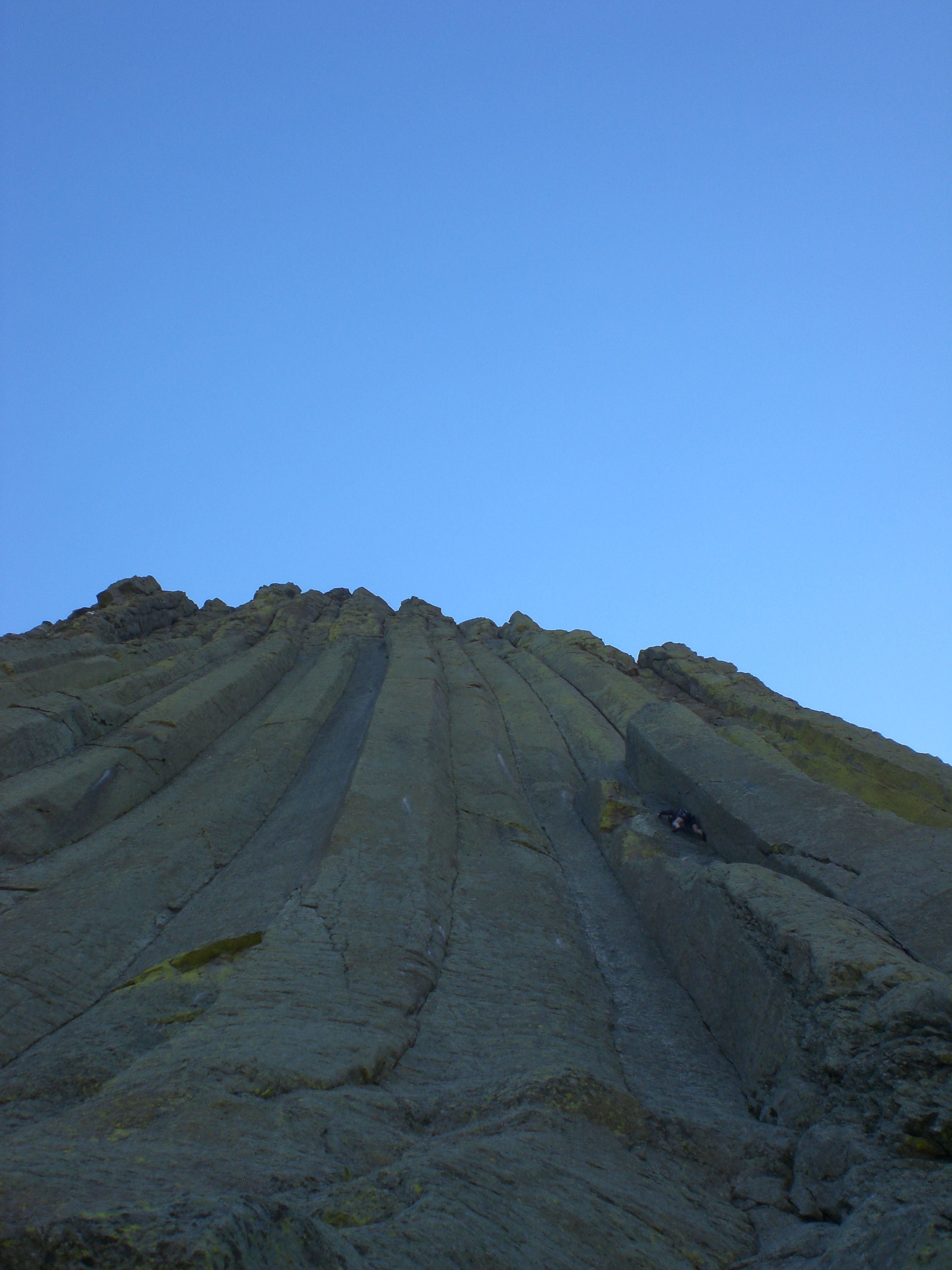
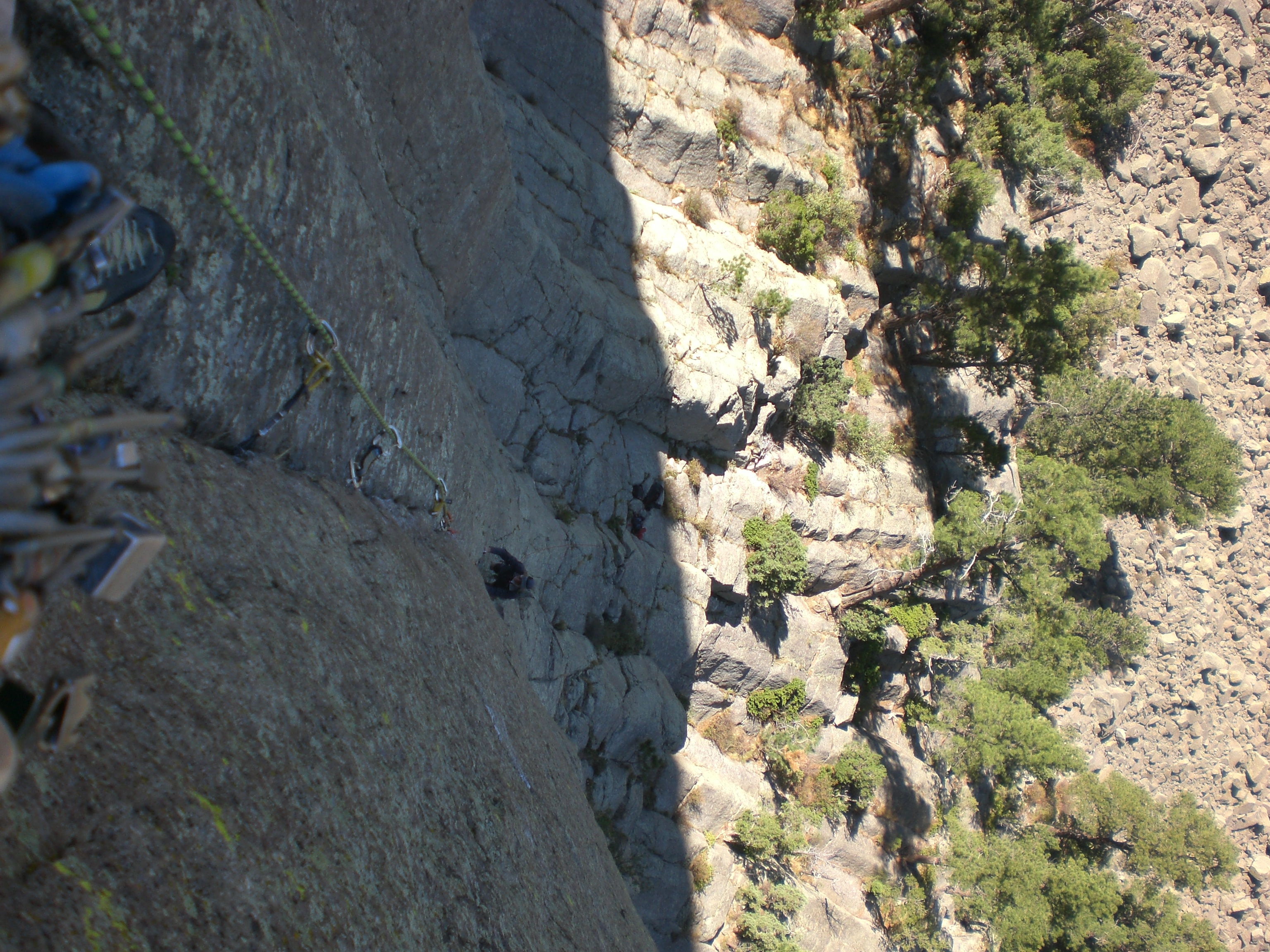
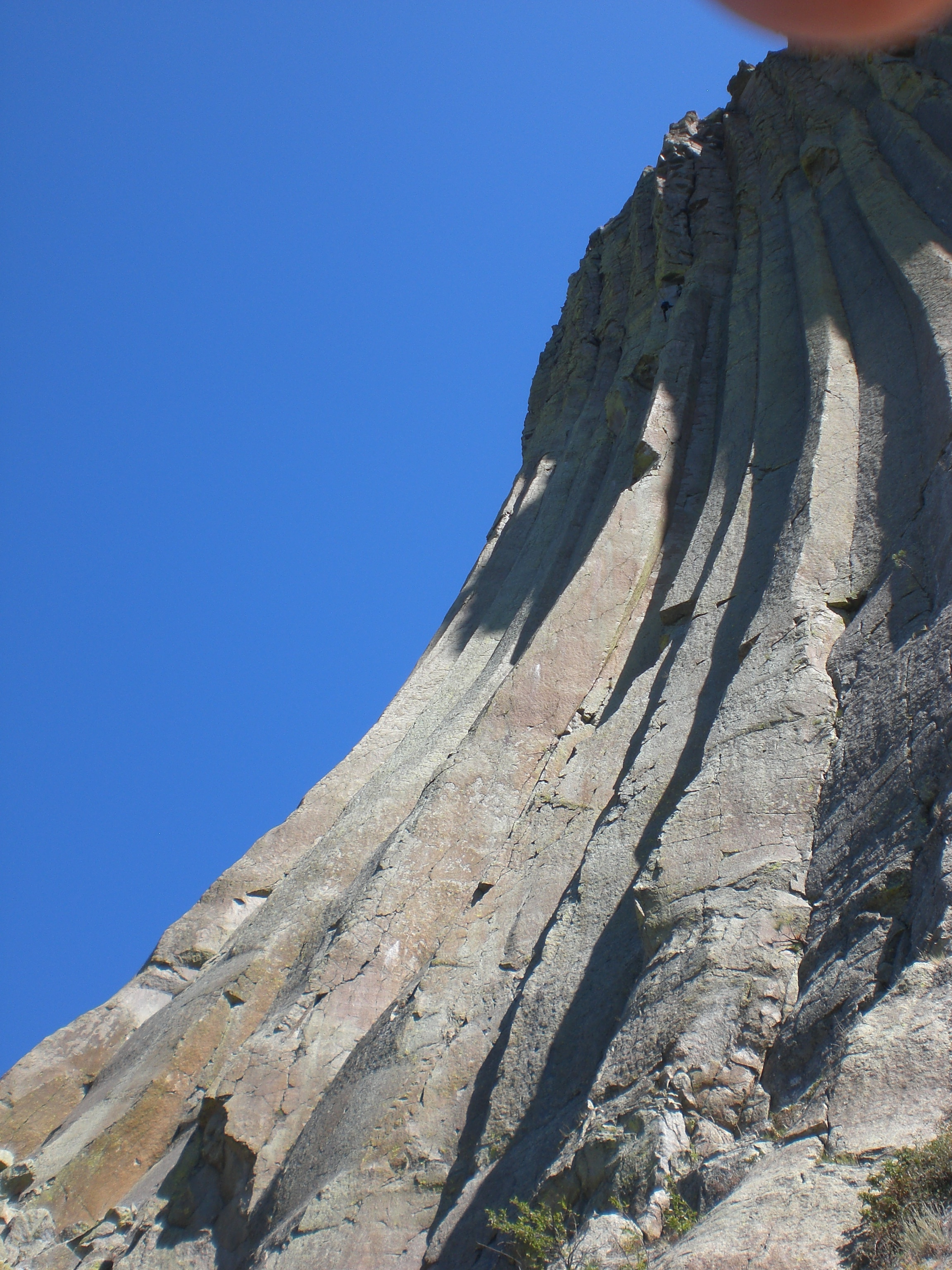
Days are getting short. The Weird Season is about to begin. It’s time to cram as much Tower climbing as possible into early Autumn’s ideal weather window.

The sloping horror, Tulgey Wood.

Deli Express, much tastier than the hermetically sealed, gas station sandwiches.

September light on the NW shoulder.


Tagged , ,