Category Archives: climbing

Best of Cody – High on Boulder

Let’s say you go to the Southfork Ice Fest and have a few Fat Tires while you watch the slideshow. You’re waking up the next morning at 9 AM with the motive but without the means to do some ice climbing. Wait, you don’t have to nurse your headache and ill temper until Cassie’s opens in the afternoon. If you’re looking for a fight that won’t land you in the county jail, you can still make it out to High on Boulder.

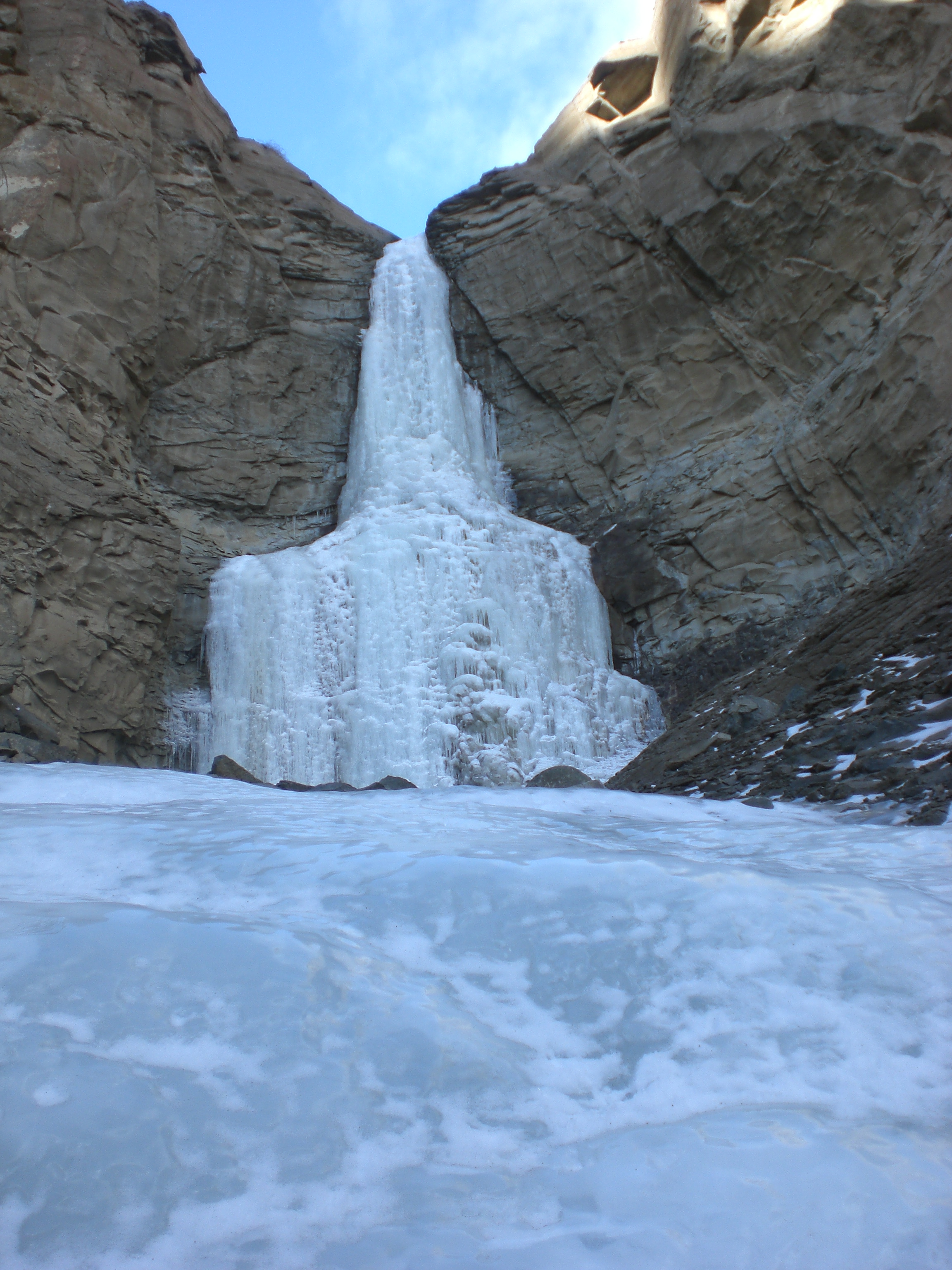
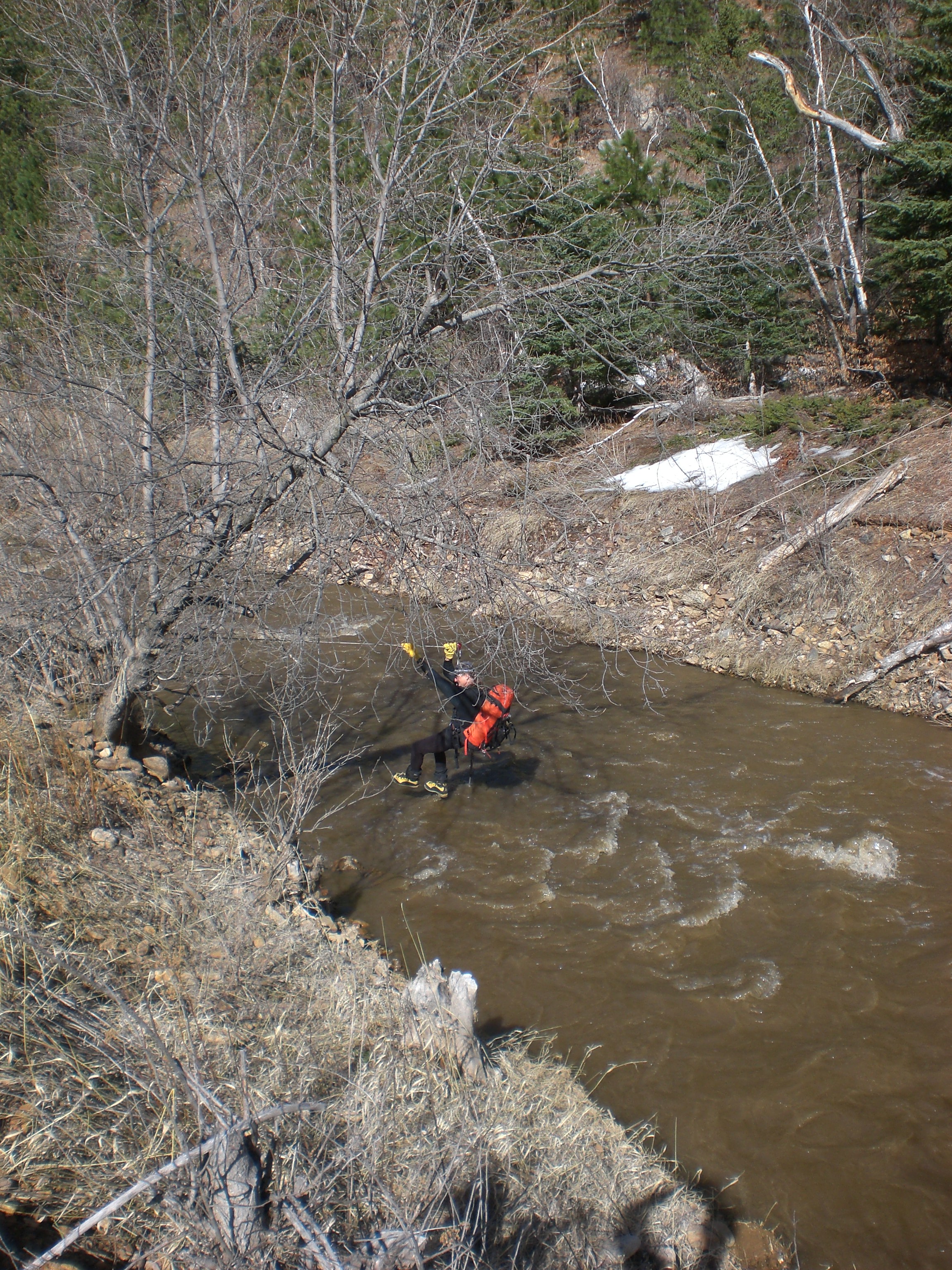
You can’t miss it. It is the intimidating flow directly across the river from the Cabin Creek parking area. Once you cross the river (stay tuned for options) you can go right up the stream bed or intersect the Southfork trail and follow it downstream until it turns left to round the toe of the ridge forming the SE boundary of the drainage. There, a faint trail angles off right and up. The trail is easier to walk, but harder to find. Take your pick.
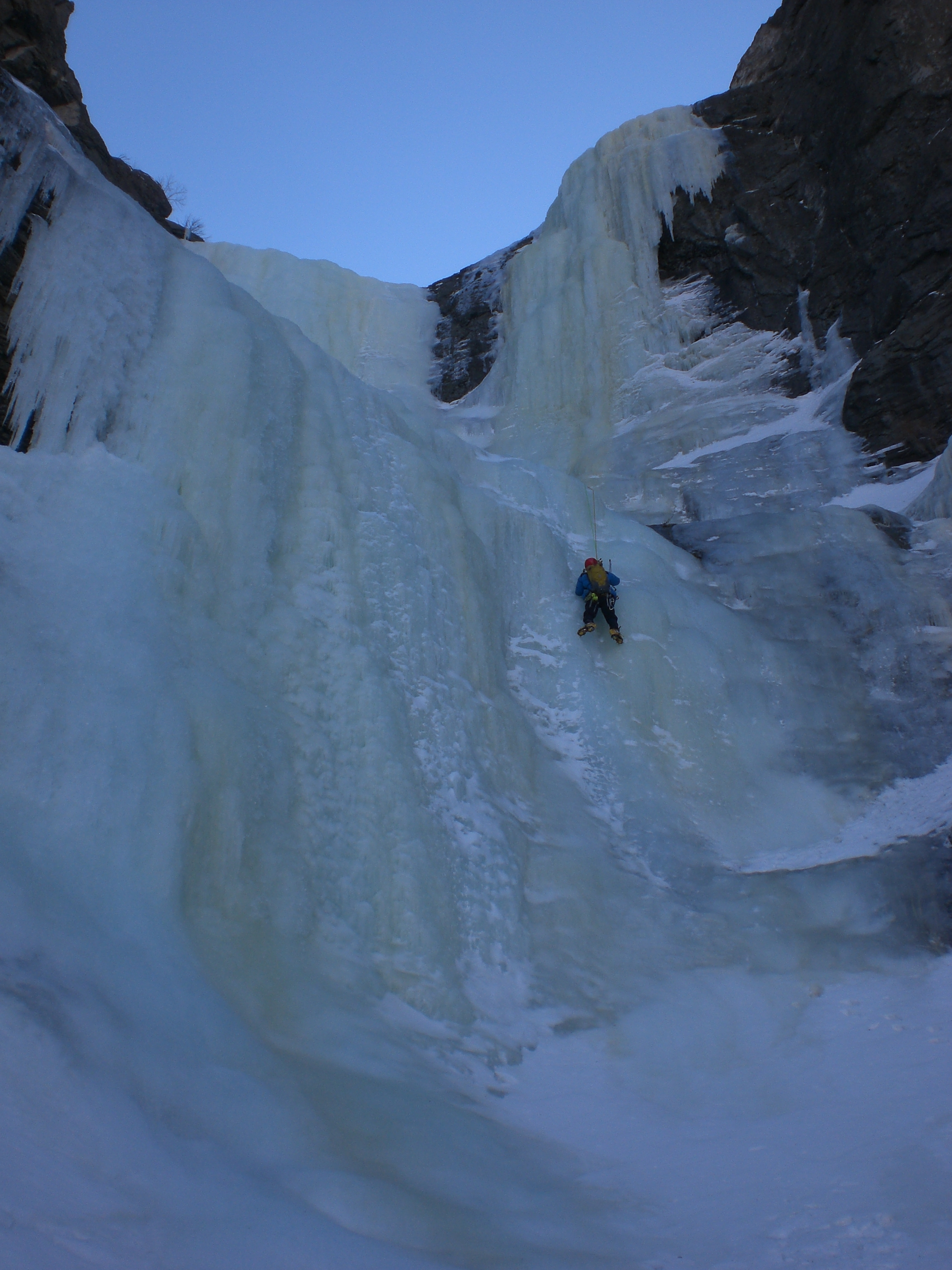
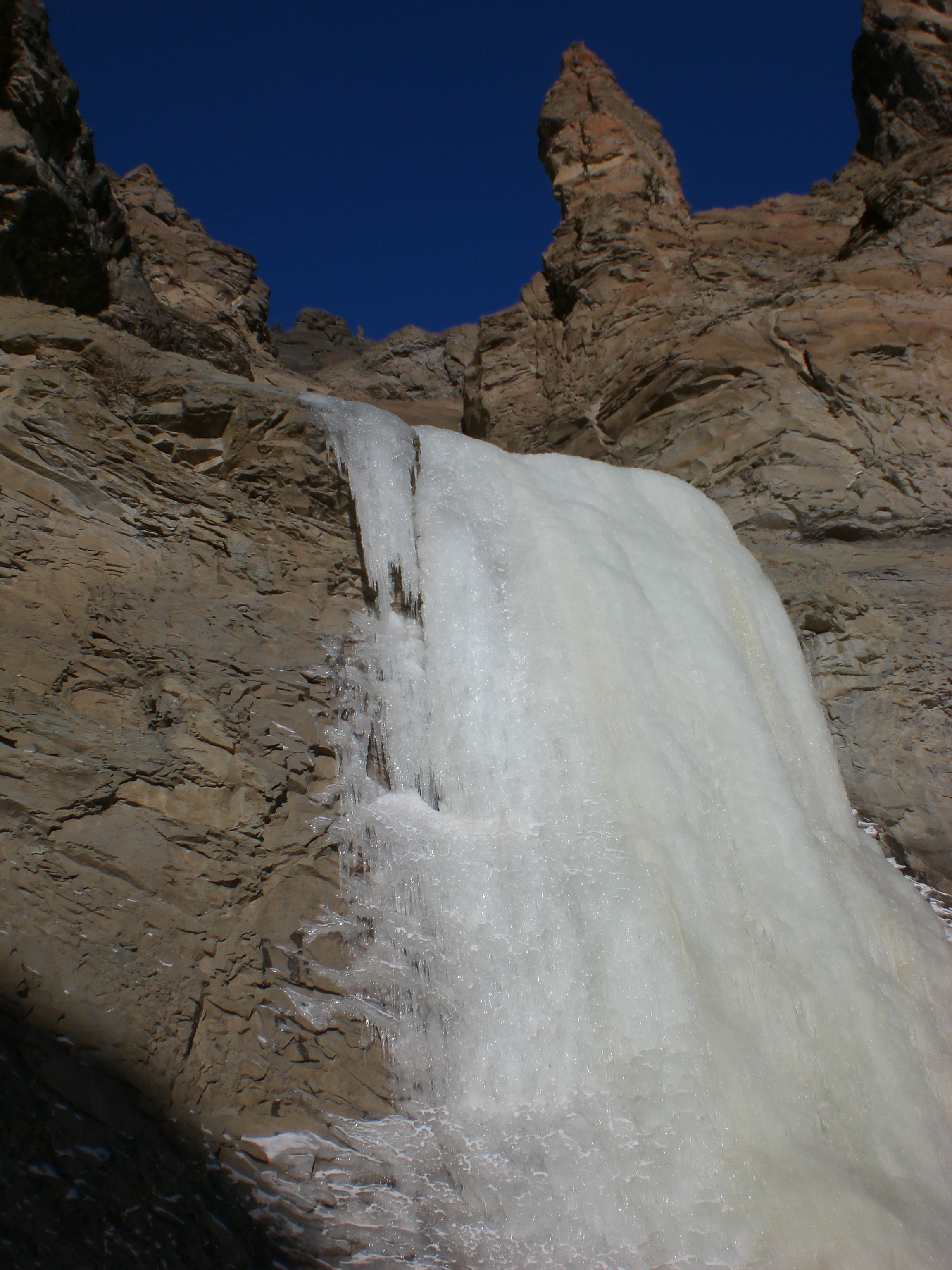
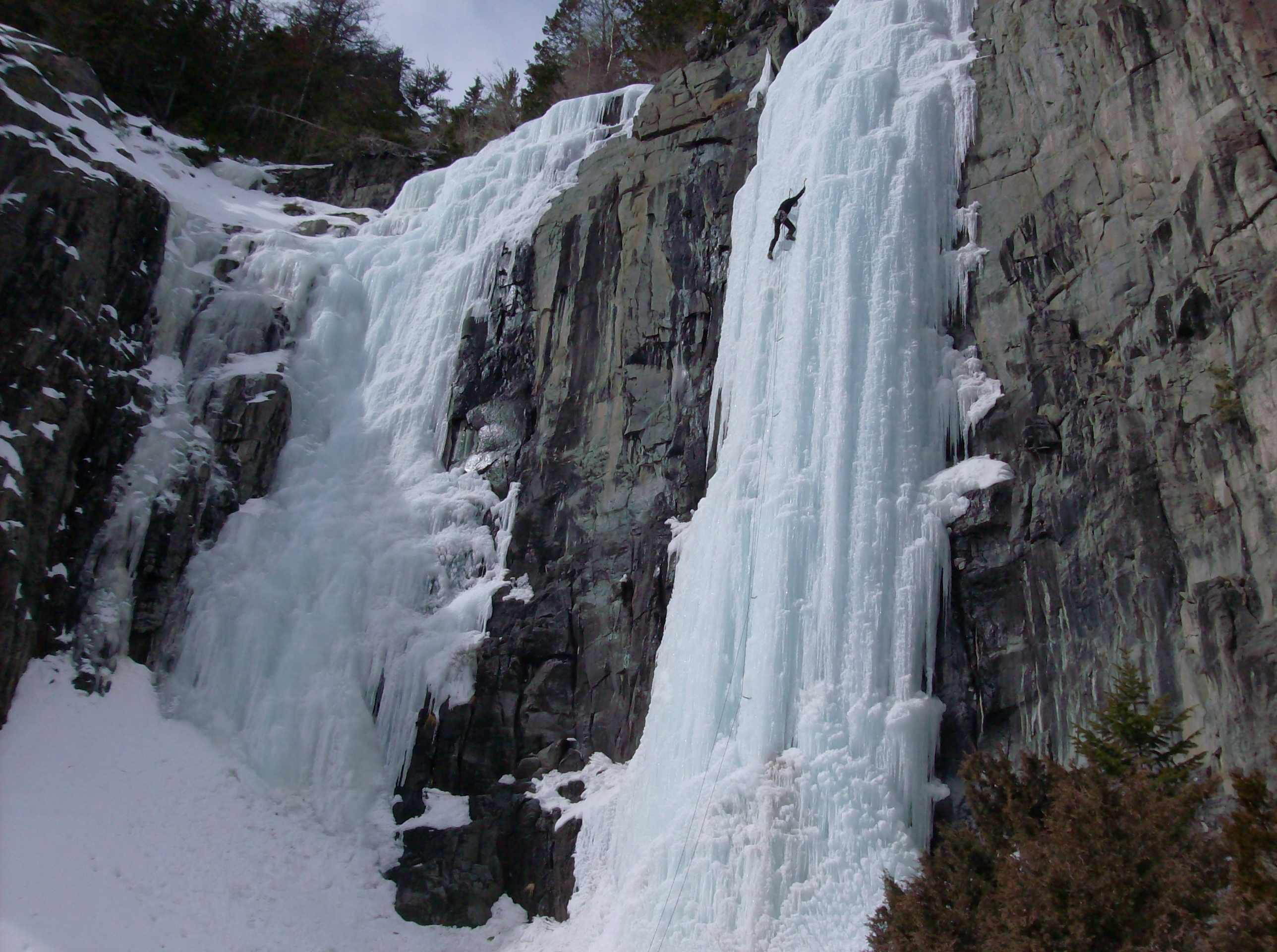
First pitch of High on Boulder

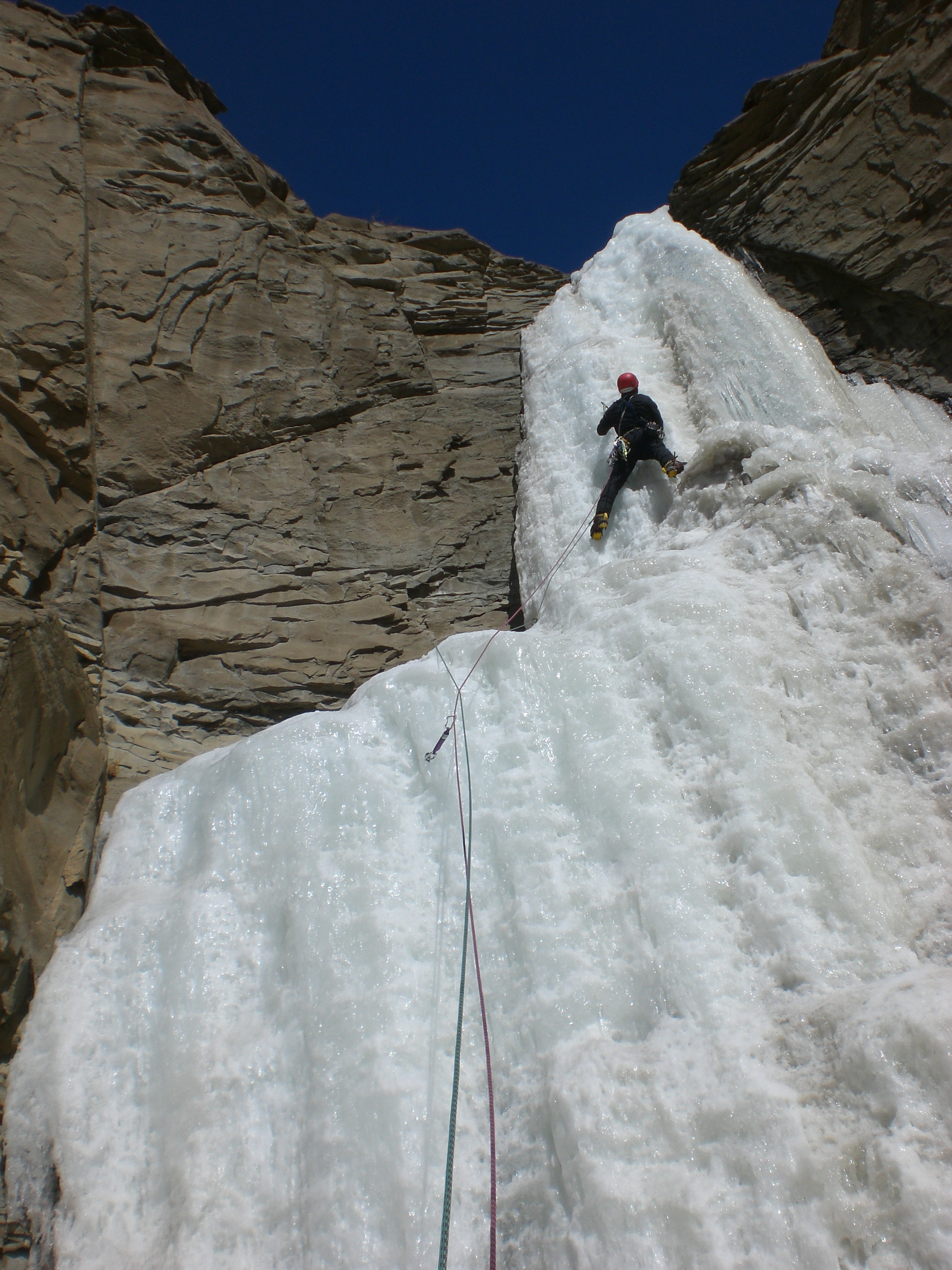
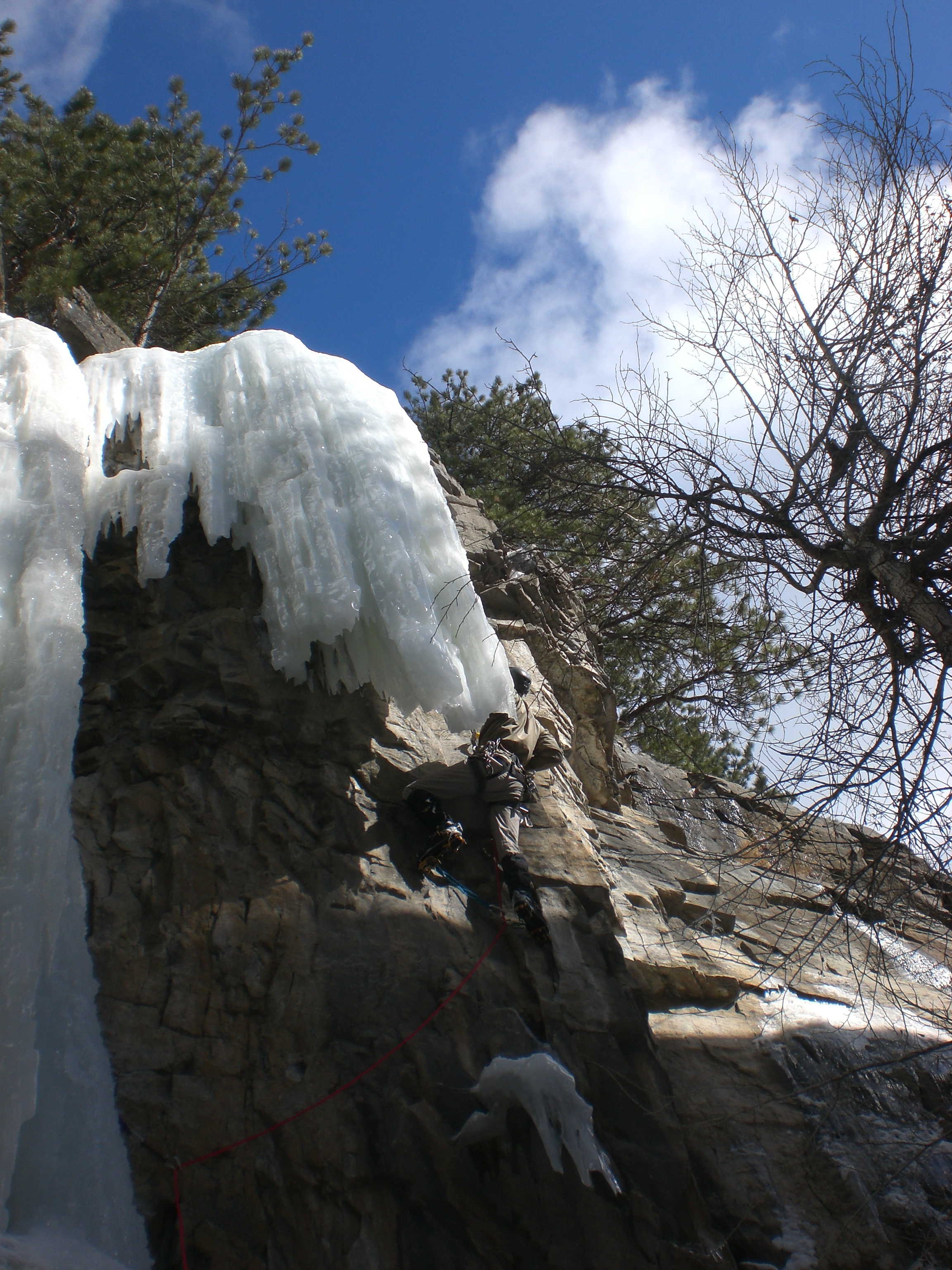
The climb is easier than it looks. The first pitch goes at WI 3, ending at a bolt and chain anchor on the left, which may be buried by snow or ice. Pitch two is a nice WI 4 with a belay at bolts on the left at the next tier of cliffs above the top of the climb. The third pitch is another WI 3 to a tree anchor on the right. Sometimes, a slightly steeper alternative forms on the left side of the gully, straight across from the bolts. If you choose to go that way, the traverse back into the main drainage is not too bad.
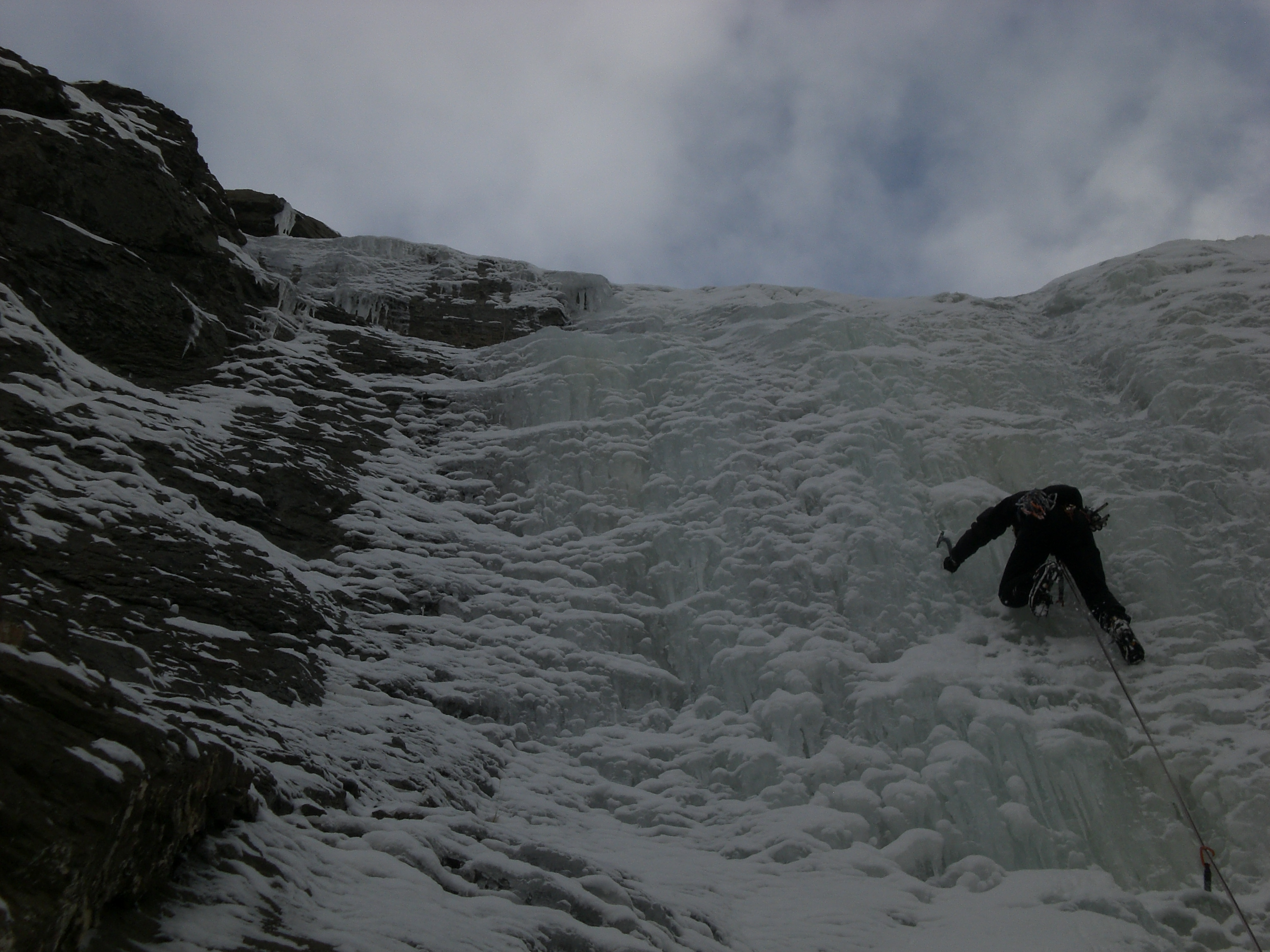
Second pitch of High On Boulder
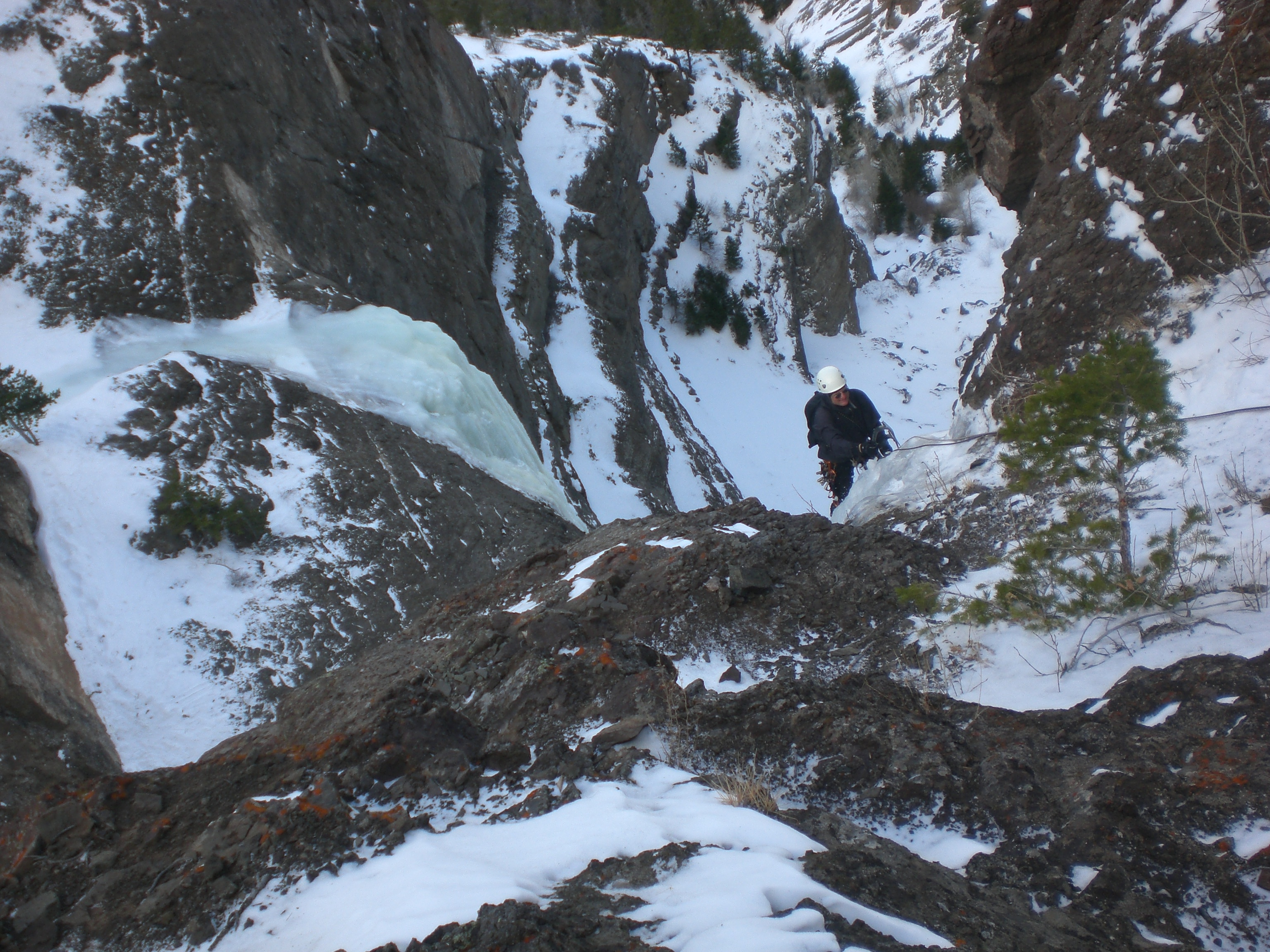


Finishing the alternate 3rd pitch of High on Boulder
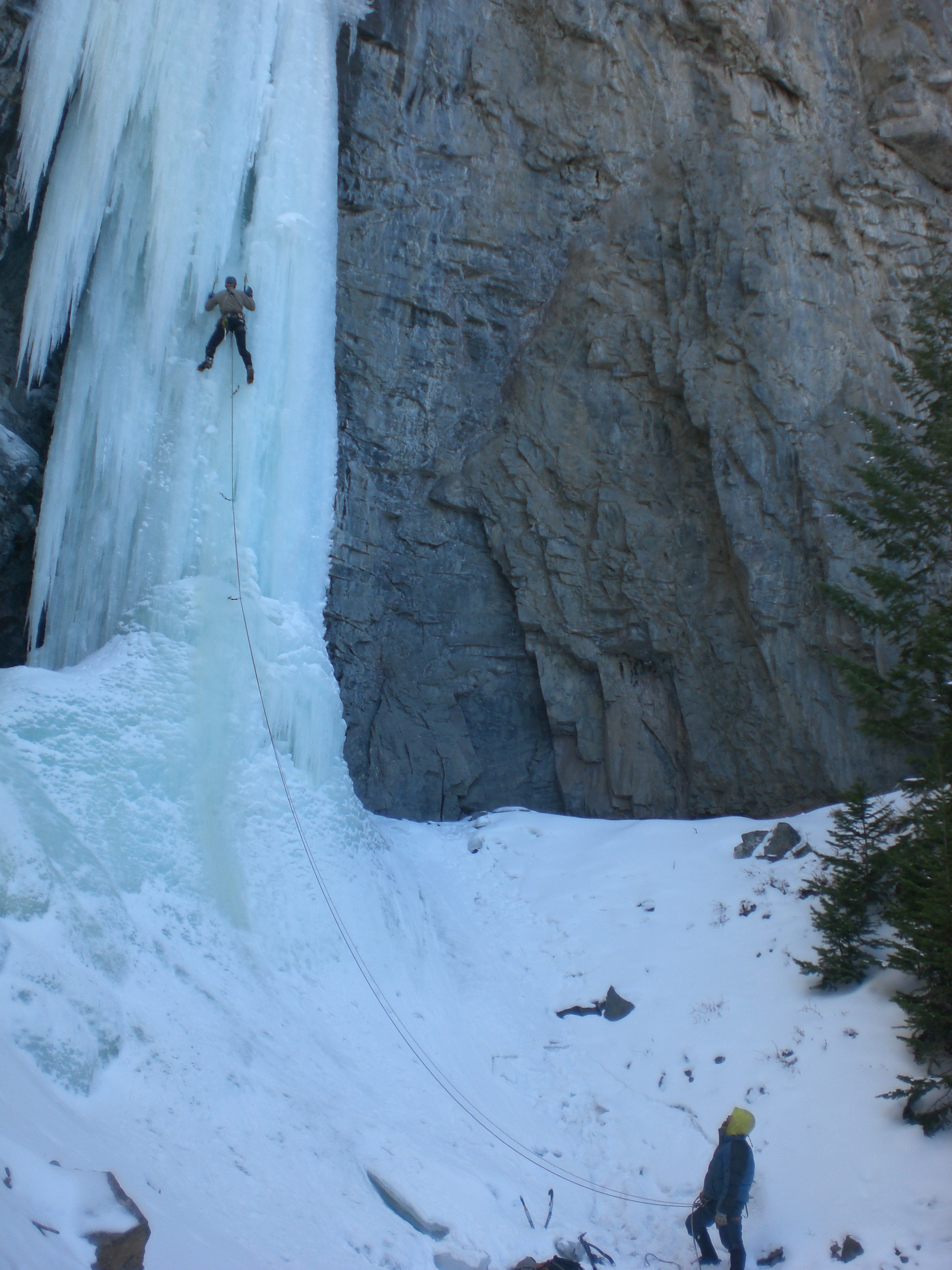
 
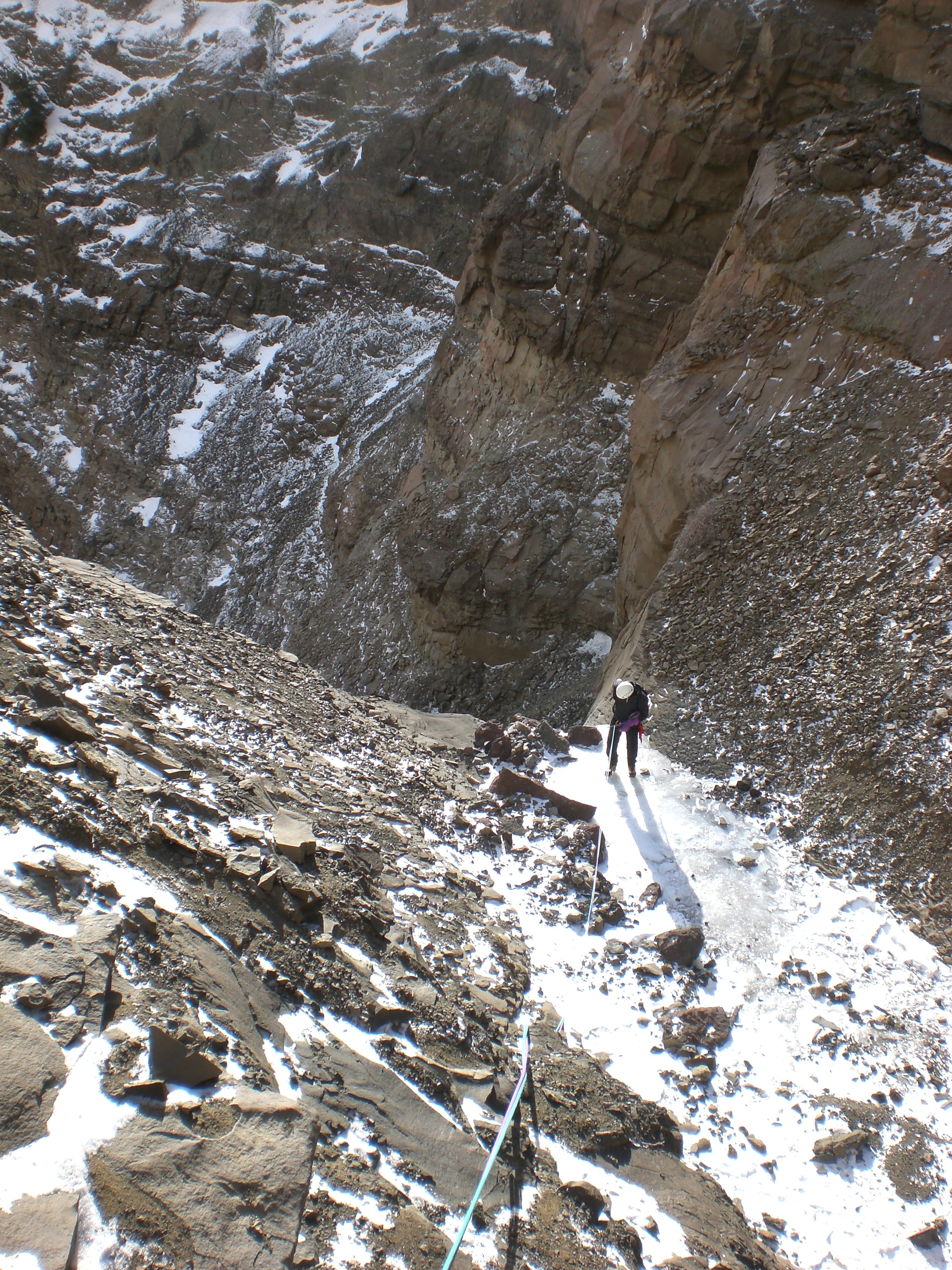
Now you’re done, and still in time to get back to the chow line and more beers. But if you’re sick of all that decadent camaraderie, there’s more. A substantial hike with some easy bands of ice to surmount, leads to 25 meters of WI 4 and then to the final headwall and the Pillar of Pain.

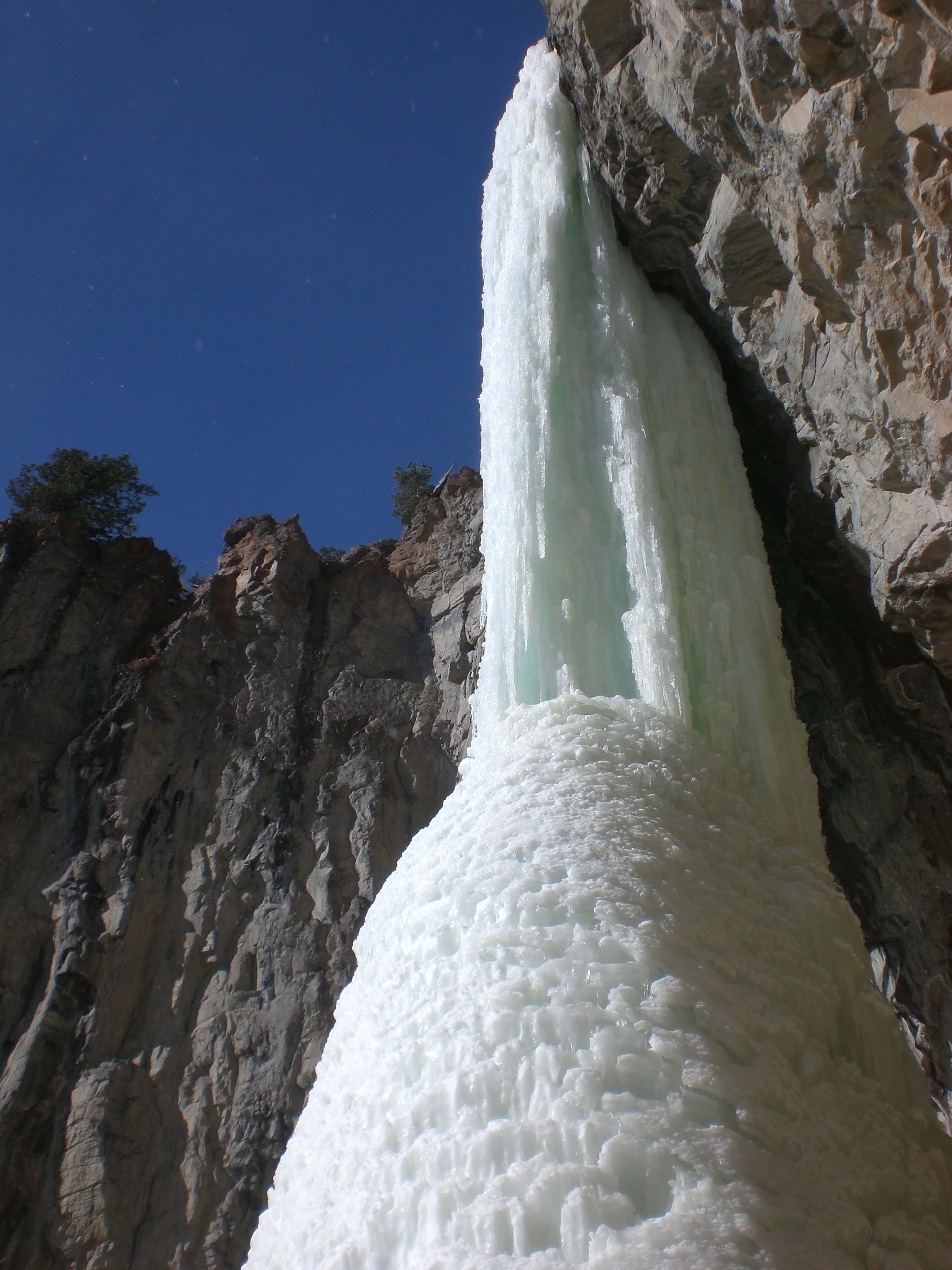
Pillar of Pain

This is 50 meters of solid WI 5, with a tree belay on the left.
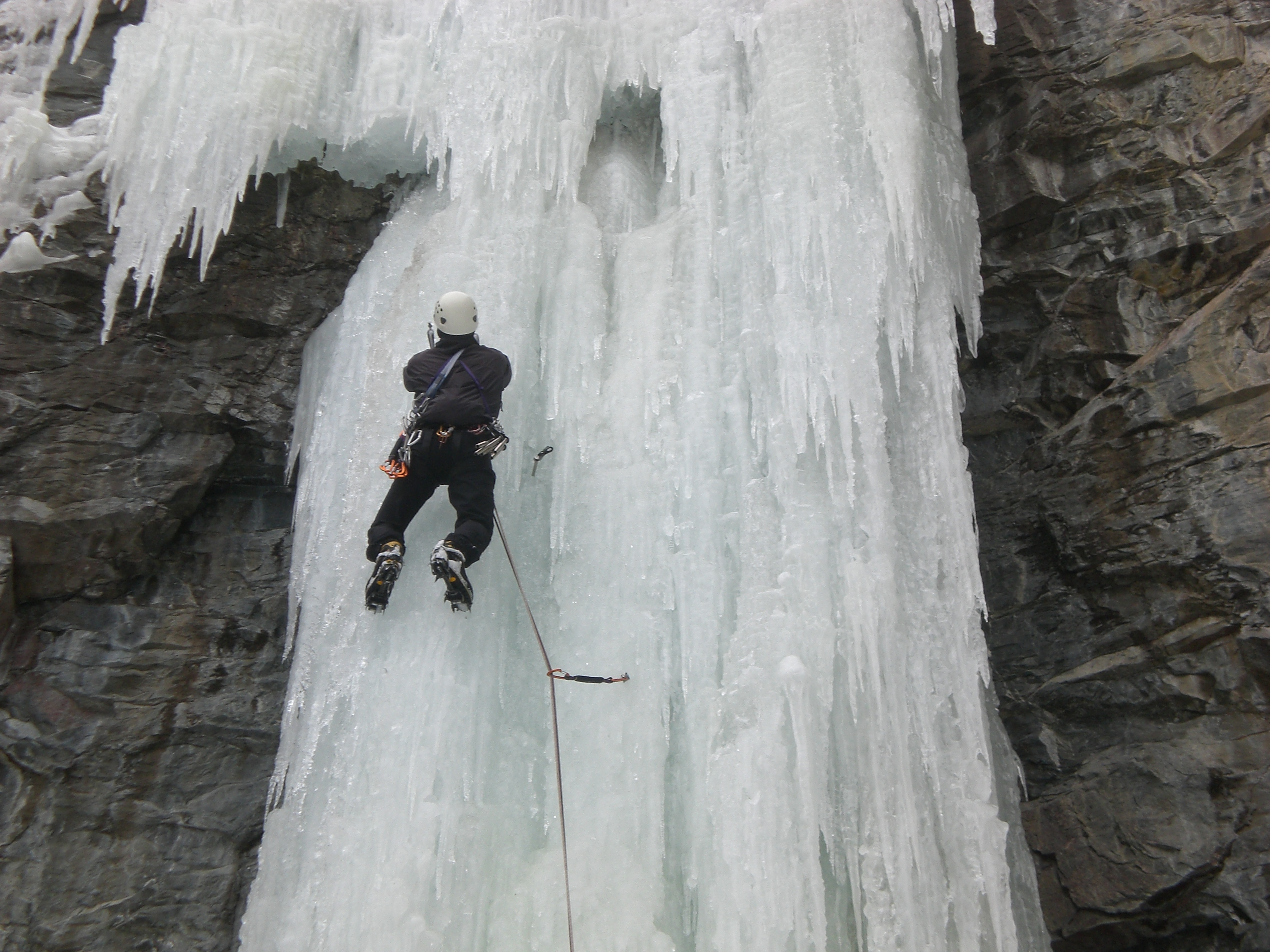
More Pain
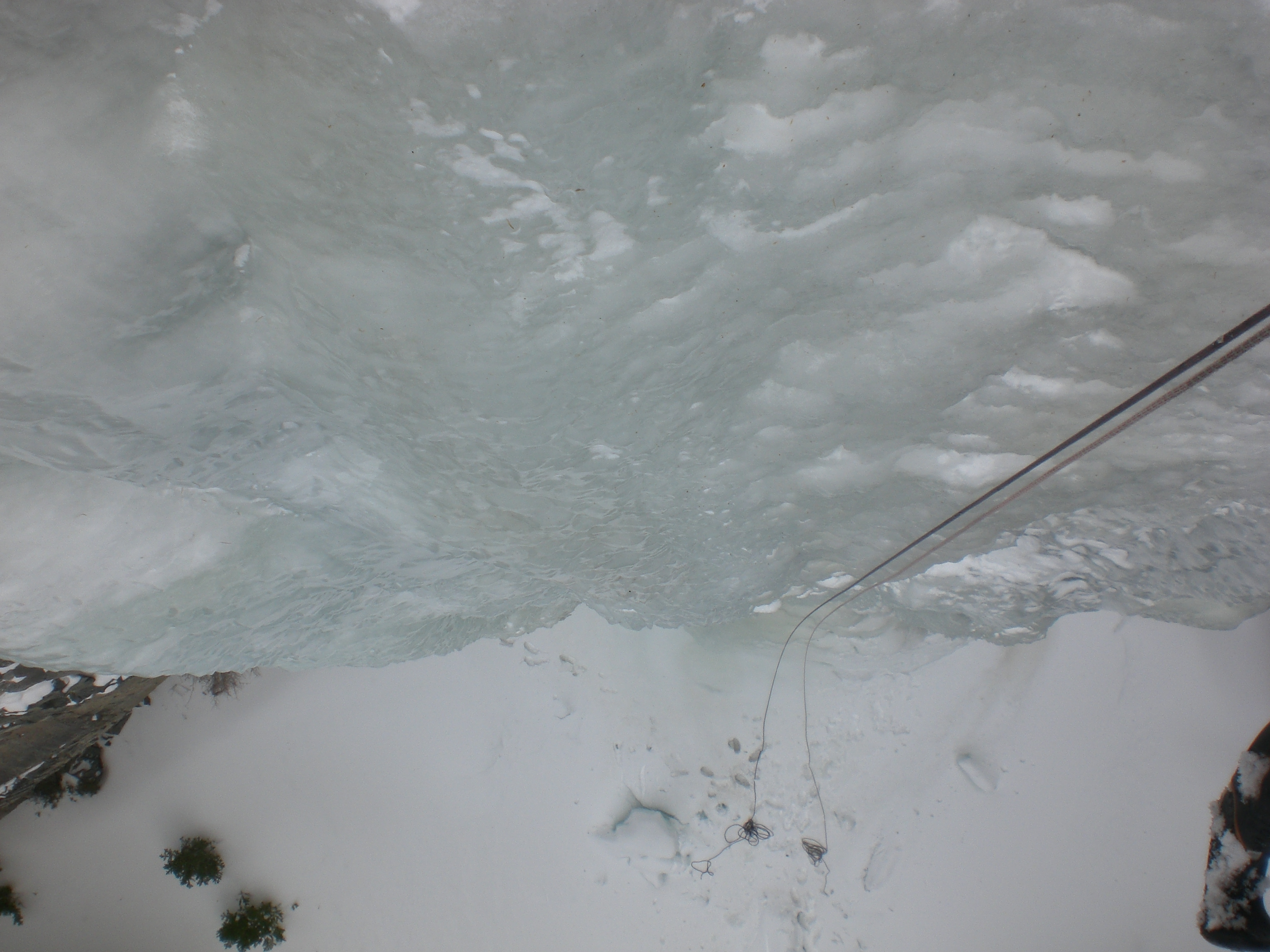
Looking down the Pillar

OK, now you’re really done. But if you want the Gold Star, then down-climb and rappel  to the base of the 2nd pitch and climb the pillar off to the right (Moonrise, WI 5). Break out the headlamp and stumble back to the car. You’ll probably get lost and may take a dip in the Shoshone. This ain’t the kiddie pool after all, it’s the Southfork. And you went and did it right.
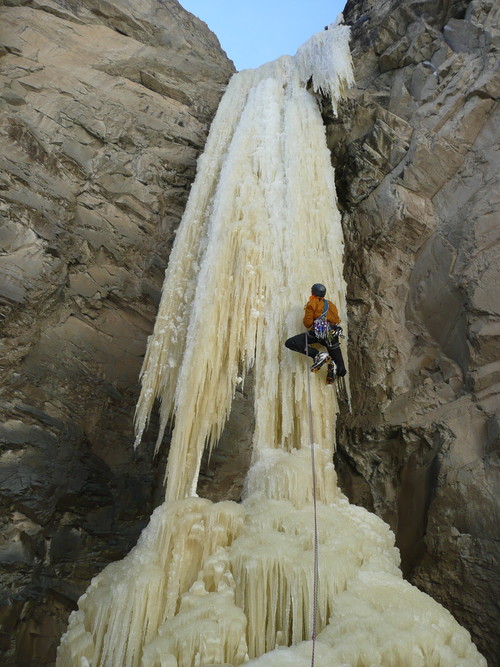
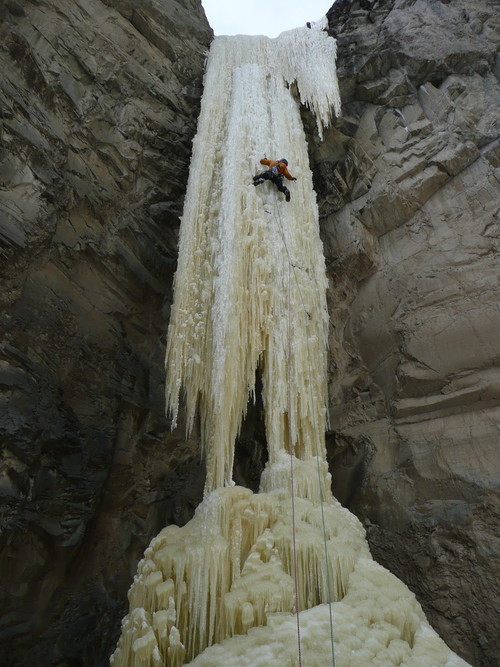
Tagged , , ,

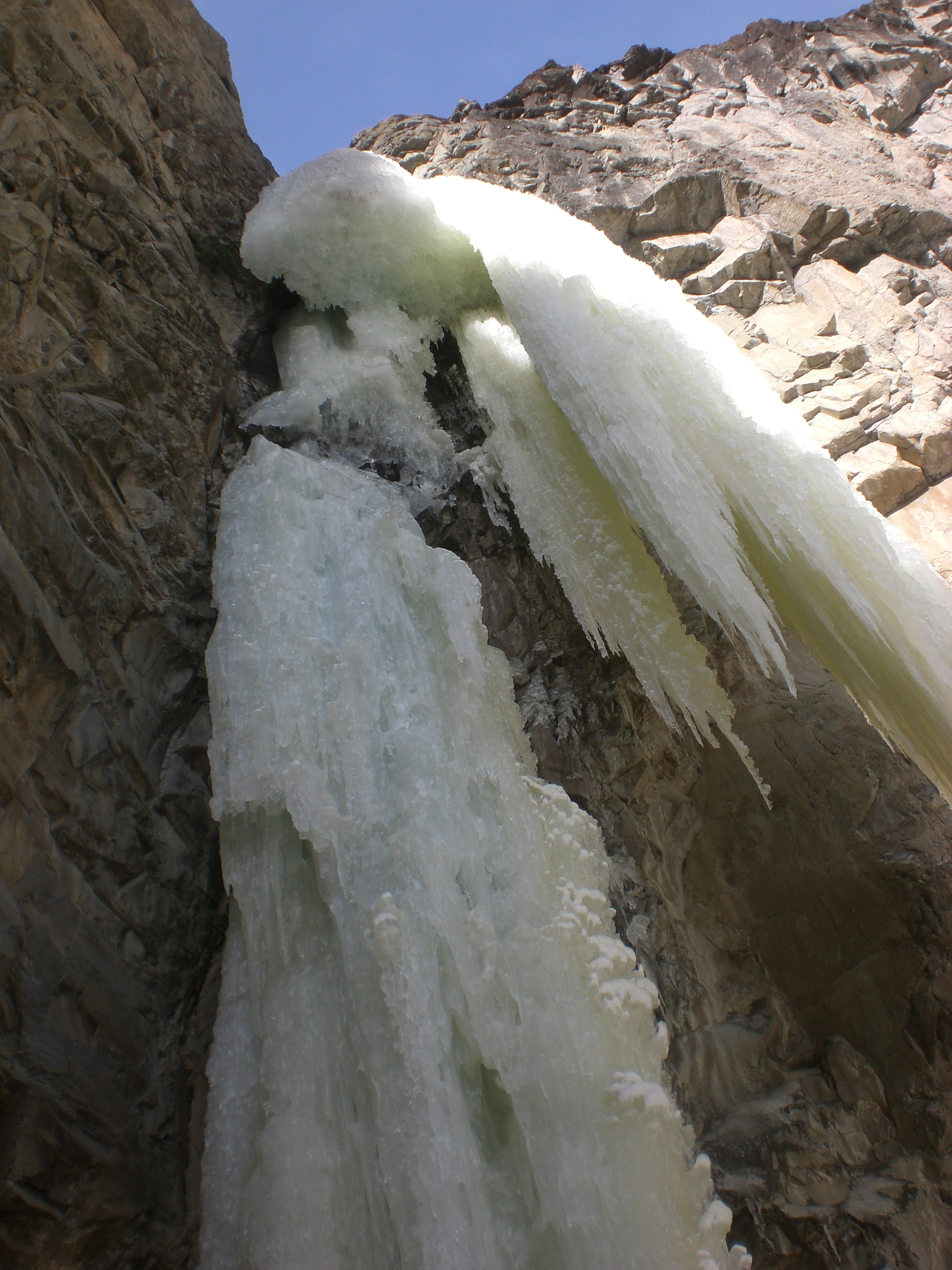
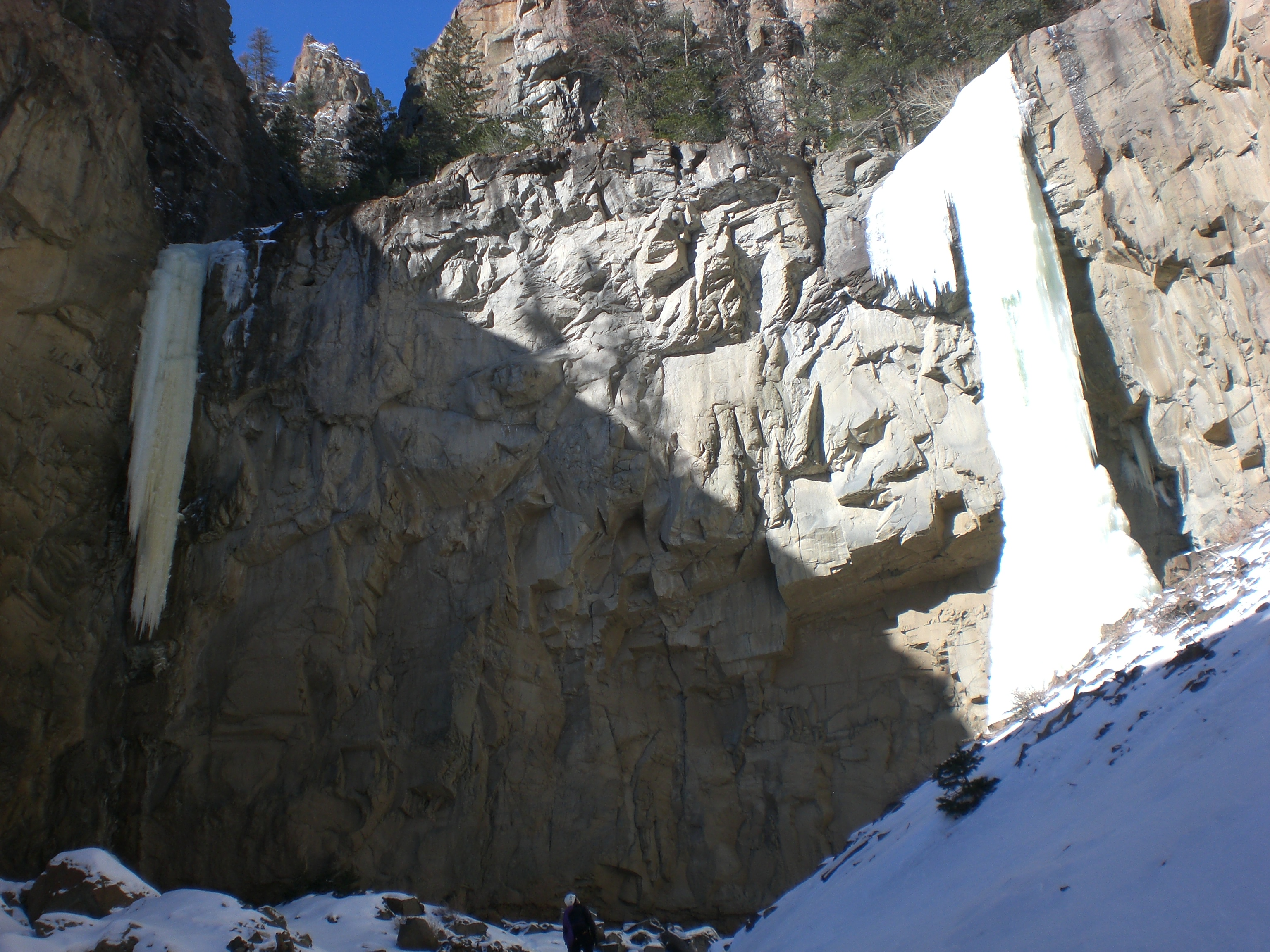
Carotid Artery

Everybody does it. We all have relationships with inanimate objects. For certain classes of object, like vehicles or weapons, personification is so common it seems normal. Every climber I know has a relationship with at least one route. Sometimes it is a hostile relationship. Sometimes it is an abusive relationship, featuring a masochistic blend of fear, pain and desire. Usually, it is a mentorship, albeit a harsh one.

I once heard a historian lament never having gone to war.  He felt he missed the opportunity to find out if he was a coward. A naive sentiment, to say the least, but I understand the thinking because I always saw Carotid Artery as a similar sort of opportunity. I felt it like eyes on my back every time I climbed My Only Valentine, on the sunny side of the same rock amphitheatre where the Carotid Artery resides.

Climbing it the first time took a string of charms. During the drought years and before a large avalanche changed the water flow a bit, the ice formed late in the season if it formed at all. Once I’d worked up the nerve to climb it, the ice never touched down. So, I packed my rock gear. Honestly, the rack of cams and pitons was a talisman all along. The mixed version of the route is part of the Alex Lowe legend and an improbability for me. But the rack has worked its magic every time. The column was formed to the ground that first time I brought the rock gear and each time thereafter.

The mentorship has been rewarding, too. I’ve had all sorts of important questions answered on that climb, like ‘You’ll get no rest, so hows your gumption?’ and ‘Got your metaphysics in line, ’cause that last screw is a piece of shit?’. Trouble is, I think the magic may be wearing off. Last time, the ice was still touching, but with a gap in the middle. I had to use my ice tools on the rock. The placements were improbable, but they were possible. I even set a piece of gear in the rock, and it was good. The promise of salvation is a dangerous thing. I’m afraid the lessons may not be over.

Tagged ,

Best of Cody – Broken Hearts

Pitch 5 of Broken Hearts


If you could just do one climb in the Southfork… What an awful question. Still, Broken Hearts is the answer, no matter who’s asking. It has the easiest approach of the big, multi-pitch climbs, it’s mostly protected from the wind, it has some spectacular pitches, and it has about the widest range of difficulty of any drainage in the Valley.

Third pitch of Broken Hearts


The key to the whole trip up this climb is the third pitch. It gets sun in the morning and the top will disappear in warm, consistently sunny weather. It is visible from the road, if you drive a couple hundred yards past the parking spot for the approach.

First pitch of Broken Hearts

The first four pitches are moderate WI 3-4 climbing.


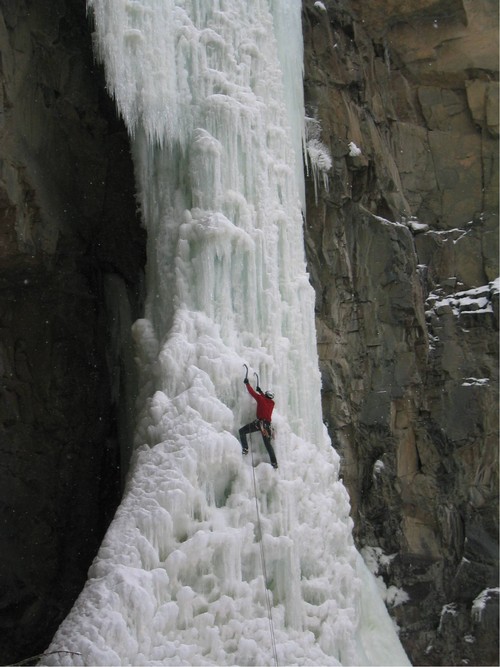
5th pitch, mixed form of Carotid Artery on the left.


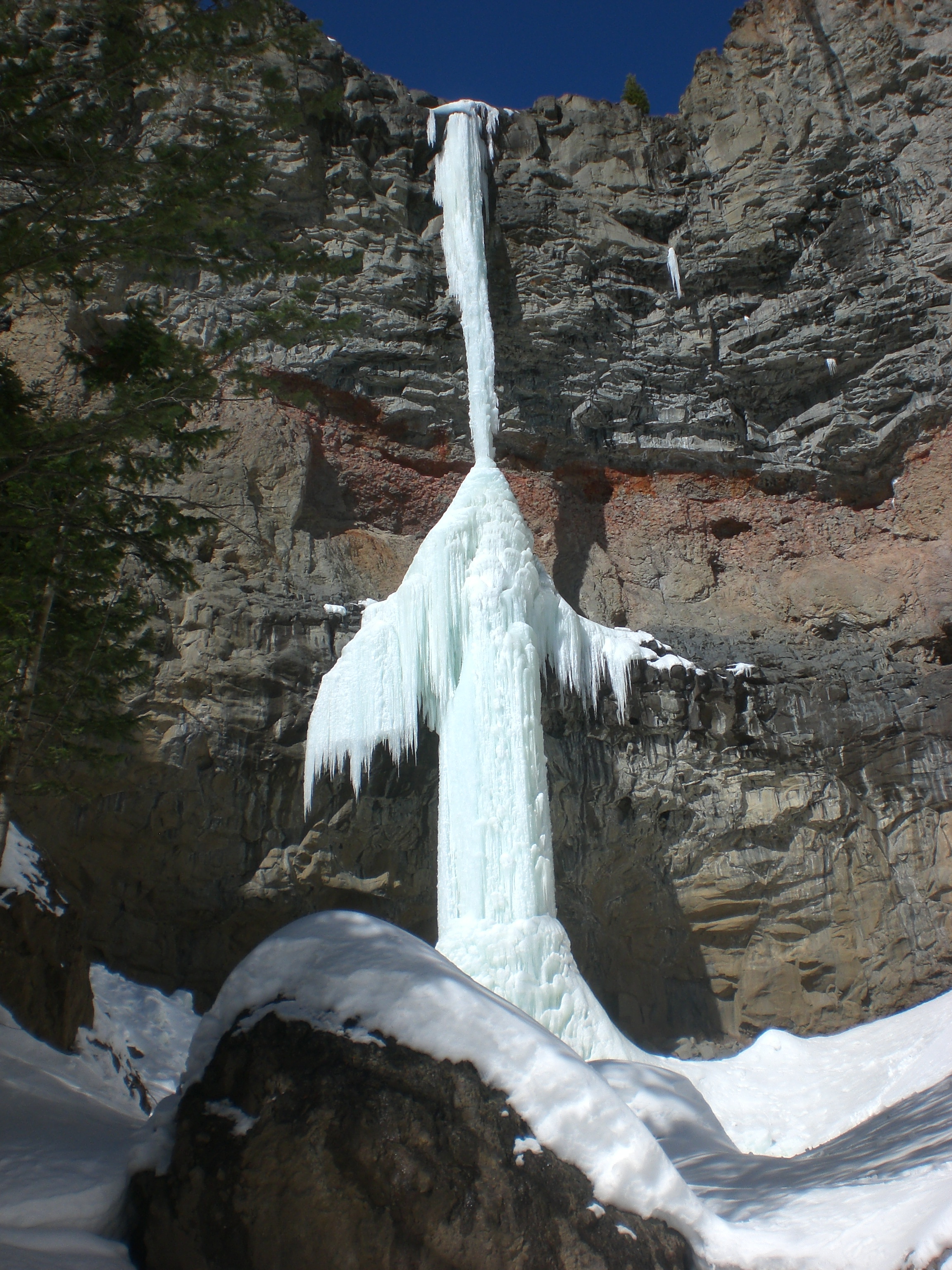
Pitch 5 is a WI 5 pillar, with the WI 6/M7 pitch Carotid Artery just to the left.

6th pitch as fat as it gets.


Pitch 6 is a WI 6 pillar that often looks easier than it is. Pitch 7 rarely forms, but when it does – well, the photo speaks for itself.

7th pitch!

A few notes to supplement the guidebook Winter Dance, by Joe Josephson. The rappel anchor for pitch 3 is a tree high on the wall of the gully to climber’s right. The rappel atop the second pitch is from an ice anchor, check its integrity on the way up and be prepared to set your own or do the alternative descent if it looks dicey. Break the rap. down the first 2 pitches into two 30m sections, pulling the rope can be a frustrating experience otherwise. The ‘walk off’ described in the guide is feasible, but not trivial. It crosses some steep slopes and the break onto the ridge can be difficult to identify. Glass it before you try it and know that unless you have tracks in the snow to follow, it is the longer, more physically demanding alternative to descending the drainage.

3rd pitch rap.

Tagged , , ,

The Weird Season

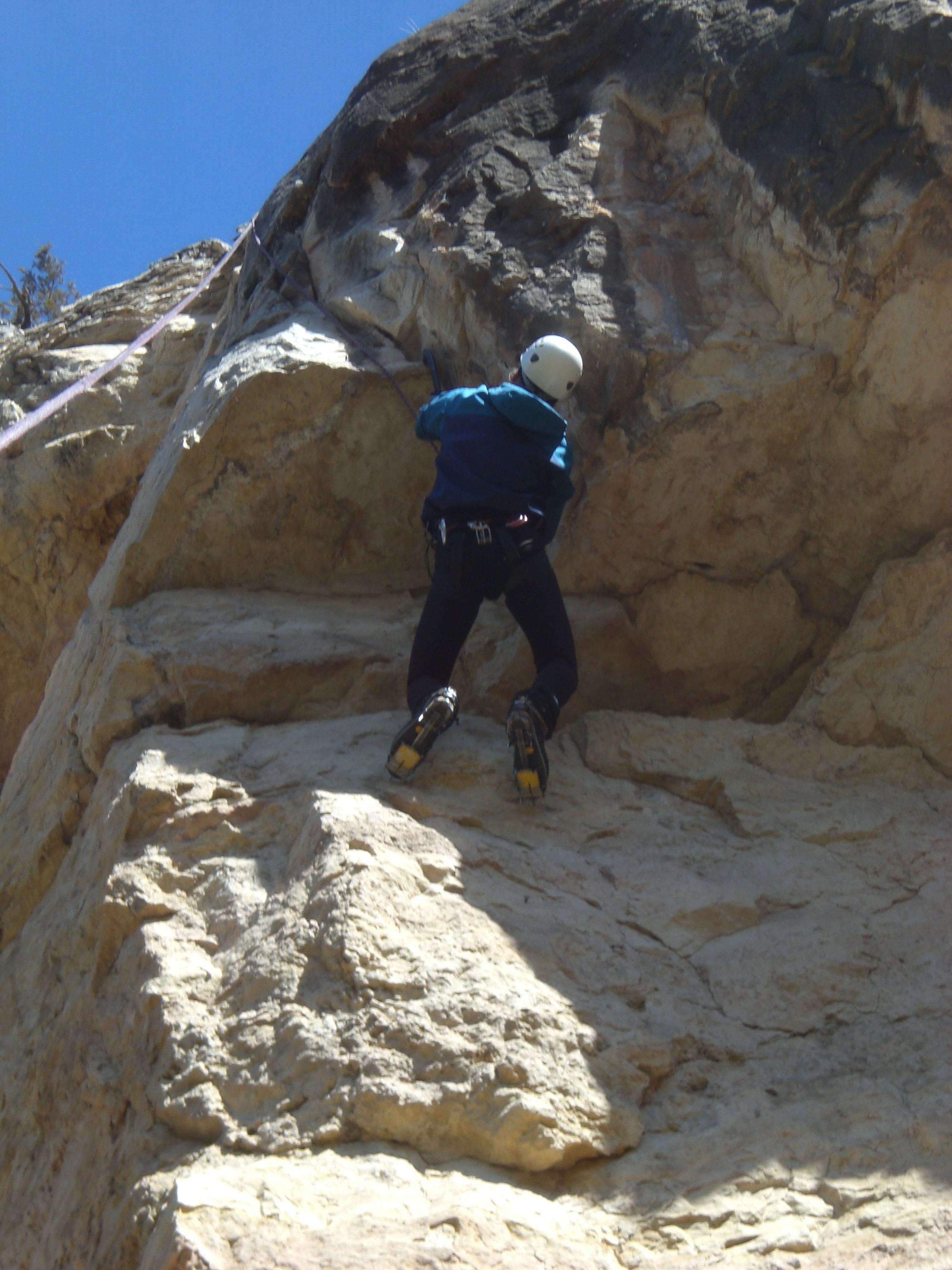
   It snowed today. Tomorrow it will be 60 degrees. It’s hard to know what to do. Birds are leaving, hares are changing color, beetles and wasps are swarming. The whole world is just sort of milling about. The Needles highway is closed, but climbing at Devils Tower is still possible. It feels like getting some last licks in rather than progress, though. I suppose sport climbing or bouldering are options. Not consistent options, just things to bide time until winter. To harmonize oneself with nature’s state in this season only one activity suffices: climbing rock with ice tools.


It’s pointless and a little dangerous, but it feels right about now and besides, it makes waterfall climbing look downright reasonable.

Critical Thinking

 Climbs with a hard start are the best. Any commitment issues get resolved right away. Nantucket Sleighride is like that. Once you make those first few moves, your teeth are locked and the rest be damned. Fortunately, the fall protection is good in the first half of the route, where you face difficult climbing. That’s because you rely on a crack to place the protection yourself, so all the decisions are yours and you can let them evolve. After you leave the crack at the mid-point, you rely on bolts. Then you have to guess about the climbing between the bolts. Is it within your capabilities, and if so, how far within? You have to guess at the consequences of a fall. How far would it be? Might you bounce on the way down? You have to guess about the bolts. Do they look like they were placed by a Prussian officer or the guy down the road with the junked cars in his yard? Most of all, are you running on fear, ambition or reason? On Nantucket Sleighride, it all comes to a head at the last bolt. From there, you have 30 feet of climbing to finish, so a 60 foot fall if you blow it right at the end. The fall would be ugly, too. Twelve feet above the bolt, two harder moves guard the way, then the climbing eases. A right hand where the left hand should be could end badly right there. But the fall would be unpleasant rather than a catastrophe. After those two moves you get no reprieve psychologically, it is all physical, technical relief. The trick is to see the truth: the first twelve feet and the remaining eighteen feet are two separate things rather than one, as your inner child insists. Launching from that bolt is a real exercise in critical thinking.

Tagged ,