Category Archives: philosophy

Buddy the Blastocyst Gets a Soul (or does he?)

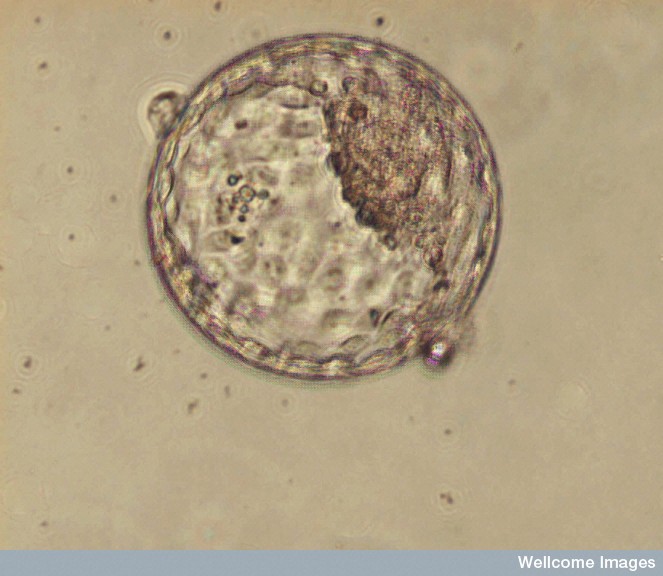
Nobody likes abortion – not the people who go through the procedure, not the people who perform the procedure, not the people who make the rules – and for good reason. For the patient, it is emotionally and physically traumatic. For the physician, it is one of those sad duties on the ethical borders of the profession. For the society,  it is desensitizing and it ‘whites out’ a gray ethical situation. From proponents, abortion rights call for a sober advocacy, the kind of favor given a less bad thing. Only one thing makes the whole mess worthy of a fight, and that is the contention of abortion opponents that abortion is murder. To qualify as murder, Buddy the Blastocyst’s destruction must be the destruction of a human. To qualify as a human, Buddy the Blastocyst must have a soul. What makes the accusation of murder objectionable is the murder which justifies the accusation. That murder is the murder of the soul, or at least one concept of it.

Most religious people are dualists; they believe in a soul which is a substance separate from the body. In this model of the soul, the nature of the substance is a sort of nascent self- consciousness or quality of humanness – a realized version of what it’s like to be human. The soul then forms a nidus for the mind, as well as a motive force, and through its one-way, motivating influence on the mind, causes the body to act. Though the body’s actions may  indirectly represent the soul’s intent, the soul is only affected by its own decisions independent of the body and the parts of the mind that gather and manipulate information from the physical world. In this model, we are soul puppets. Though it is subtle and convoluted, this arrangement is necessary to have the soul be one substance with the deity. The deity then encounters no philosophical problems in being the direct creator and ultimate owner of the soul.

Obviously, skeptics and other monists do not subscribe to the soul puppet model. However, most still believe that there is something it is like to be human, and so believe in a version of the soul. But this version is a dependent soul. It derives from the gradual realization of the potential to be what a human is like, over an individual’s lifetime. The soul is thus an accretion on the body and mind, with the potential quality of humanness as its nidus. This is the idea of soul which the soul puppet people are bound to destroy. To properly understand this imperative, it helps to examine the implications of being a soul puppet for Buddy the Blastocyst.

Let’s say Buddy forms under the dualist model. He has a soul, created by the deity, which is a substance separate from his body and rational mind. His soul may indirectly affect his body and mind, and to remain a separate substance, may not be directly affected by the body and mind. As soon as Buddy comes to be, there is about a forty percent chance that he will  quickly cease to be. The uterus may not be ready for him or he may have a fatal genetic abnormality. For a variety of reasons, a large proportion of early pregnancies fail. On superficial examination, this fact seems to pose some problems for Buddy the soul puppet. Perhaps the deity is a cruel practical joker, who bestows Buddy with a soul only strip it away. Perhaps the deity knows Buddy will fail and so does not give Buddy a soul in the first place.

Buddy needn’t worry though. Just as the motives of his soul are not directly accessible to his mind and body, neither are the motives of the deity. In an ironic twist, the benevolence of divine caprice saves Buddy from predestination and arbitrary judgement. Just as the soul must affect itself and merely be represented in mind and body, so the greater material world must symbolize the deity’s motive, but in context of the deity’s real condition alone, which is separate and self-contained, completely encompassing and determining the material world. Otherwise, movements in the material world begin to operate on the same rules as in the divine, and so begin to have a direct meaning for the deity, bringing the deity under their influence (even if he/she must only choose to ignore them). Then he/she is no longer a separate substance, just a separate category.

So, Buddy is saved by never being able to know god’s mind through interpretation of material events. However, by the same ironic twist which allows Buddy the soul puppet to dodge potential problems with predestination and arbitrary judgement, the real consequence he suffers is condemnation to thorough-going Nihilism. He can’t know the motives of his soul in terms of material objects subject to his reason. He can rationalize the material representation of the deity’s will, though he can never know its significance. Forever pushing around symbols he can’t read in a game with rules not relevant to anything outside themselves, on all but the very deepest level, he is a zombie. But if he comes to see himself as a soul puppet, accepting the viewpoint of those who would call his destruction murder, his future can be a happy  condition of necessary ignorance.

The material world will no longer be a big problem once Buddy comes to that conclusion. It will be very convenient for him if he can rationalize its relationships, but consistency is not vital. Likewise, the moral sense that he may feel could be indigestion, but it may just as well be a one-way communique from his soul. He will be justified in believing his intuitions, though he can never really validate them. He then has a choice of two paths to follow. He can decide to do as the Shakers and others have and simply avoid confusing situations where an underlying psychological motive might masquerade as inspiration. Conversely, he can follow the majority of his fellow soul puppets, hold all his intuitions to be inspiration from the higher realm, and simply have faith that he is not deceived.

Still, it takes a tremendous amount of faith to walk about in pitch black dark. Like so many of us, Buddy may not cope well with uncertainty. He may seek solace in the scriptures which record  inspirational intuitions concordant with his own. History is cold comfort, though. He may wish to know something in his own time and space which validates his intuitions. Then, the only means available is comparison of his intuitions with those of others, and he may feel, since he is justified in believing his own intuitions true, that others’ intuitions must coincide with his own. He may demand a substantial soul for every blastocyst, and seek to silence any talk, or even implication, of an accreted soul.

The demand for consistency may seem inconsistent, but if it is driven by an intuition related to religious sentiment, the soul puppet may be justified in believing it is just as close to the truth as an action based on reason. Actually, if an intuitive conclusion cannot be related to a cause based in the material world, he may be more justified in believing such a conclusion is true. Distinguishing  discomfort from inspiration requires insight in the soul puppet’s world, and in that world insight is not more reliable than intuition. He might as well flip a coin.

This is the problem: in a material world where we are all weak from time to time, the soul puppet perspective ultimately requires universal participation. It is too uncomfortable otherwise, and in a system where the difference between discomfort and inspiration is not reliably discernible, relief becomes an imperative. So, the soul puppets are justified in crying ‘murder’, and more. They are justified in demanding that everyone else cry ‘murder’, and more. It isn’t abortion that’s a fighting matter, it’s the imperative behind the cries of  murder. Everyone may not agree on the nature of the soul, but no one wants to be a pawn in another person’s scheme to insulate himself from the implications of his own beliefs. Even a blastocyst deserves protection from that.
Tagged , ,

Beetle Battle

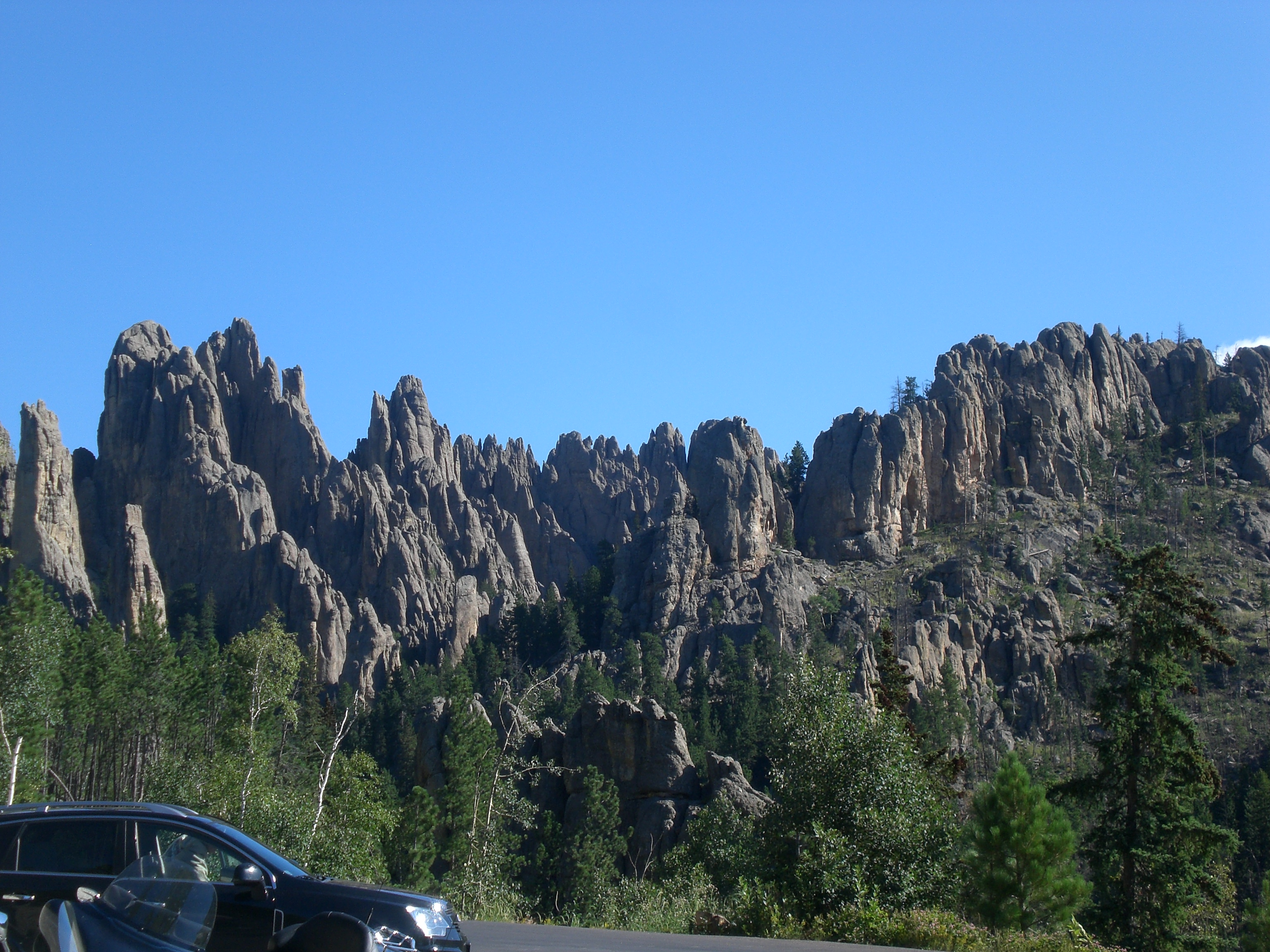
The Cathedral Spires after the beetles

The mountain pine beetle is a native son of the Black Hills, but nobody around here is very proud of the little guy. I like him. He’s tiny and a weak flyer. A victim of his own reproductive tactics, he’s a bit like the Lemming – doomed to population booms and busts that make him look stupid. Nevertheless, this little insect has thwarted the will of the baddest mammal on the planet.

For the most part, the life cycle of the pine beetle is typical, boring high school biology. It’s one of those egg-larvae-adult-egg affairs that fits well in a circle of arrows on the textbook’s margin. In late summer, adult beetles emerge from trees infested the year before and fly to new trees, where they burrow into the bark and lay eggs. The eggs hatch quickly into grub-like larvae which begin to eat the tender, inner layers of the bark. After a Winter’s break, the larvae finish their meal, metamorphose into adults and the cycle begins again.Within this staid tale, there are a few interesting details that, under the right conditions, conspire to make the smoldering, little endemic population of beetles into a conflagration.

First, there’s that Winter dormancy. To prepare for the cold, the larvae produce antifreeze. If cold weather strikes before they are ready, many will die. If they are ready, though, they can survive temperatures down to thirty below zero, Fahrenheit. Besides allowing more larvae to survive, adequate preparation means the larvae are further along in their development when they wake up in the Spring. Sometimes, they are far enough along to complete two generations in one year.

Second, the trees don’t just stand there and take it. They have an immune response to the beetles. As the insects dig into the inner bark, the injury prompts the tree to force resin upwards.  Sap spills out of the defect in the bark, smothering the beetles. If the beetles are few enough, and the tree is strong enough, the immune system can prevail. In turn, the beetles have adapted to overcome the trees’ defenses. They produce a pheromone which calls other beetles to a tree under attack, giving them the opportunity to exhaust the tree’s immunity with sheer numbers.

Blue stain fungus

The beetles have also developed a symbiotic relationship with a fungus that weakens the trees. The ‘blue stain’ fungus thrives in the core wood of pine trees, where it interferes with water transport to the crown. Beetles carry fungal spores on their bodies as they breach the outer layers of bark which normally bar the fungus entry.

Under usual conditions, things work out so a few trees die and a few beetles survive. However, if the weather is right and the trees are already weak, a positive feedback loop ensues and the beetle population explodes. Usually these excursions amount to little bursts, limited by the availability of suitable trees.  But presently, due to a lucky convergence of human and beetle preferences, there is no limit to the availability of suitable trees.

The forest that we have cultivated is made of trees which are just the species and size that the beetles prefer. Plus, we’ve made a dense forest, so even the mountain pine beetles’ weak flying skills carry them easily from trunk to trunk. Our relationship with the pine forest has unwittingly, coincidentally helped turn the little pops in beetle numbers into a boom. Modern human activity on the land, from fire suppression to agriculture to habitation, has attenuated a kind of herd immunity inherent in the age, size and density of the trees.

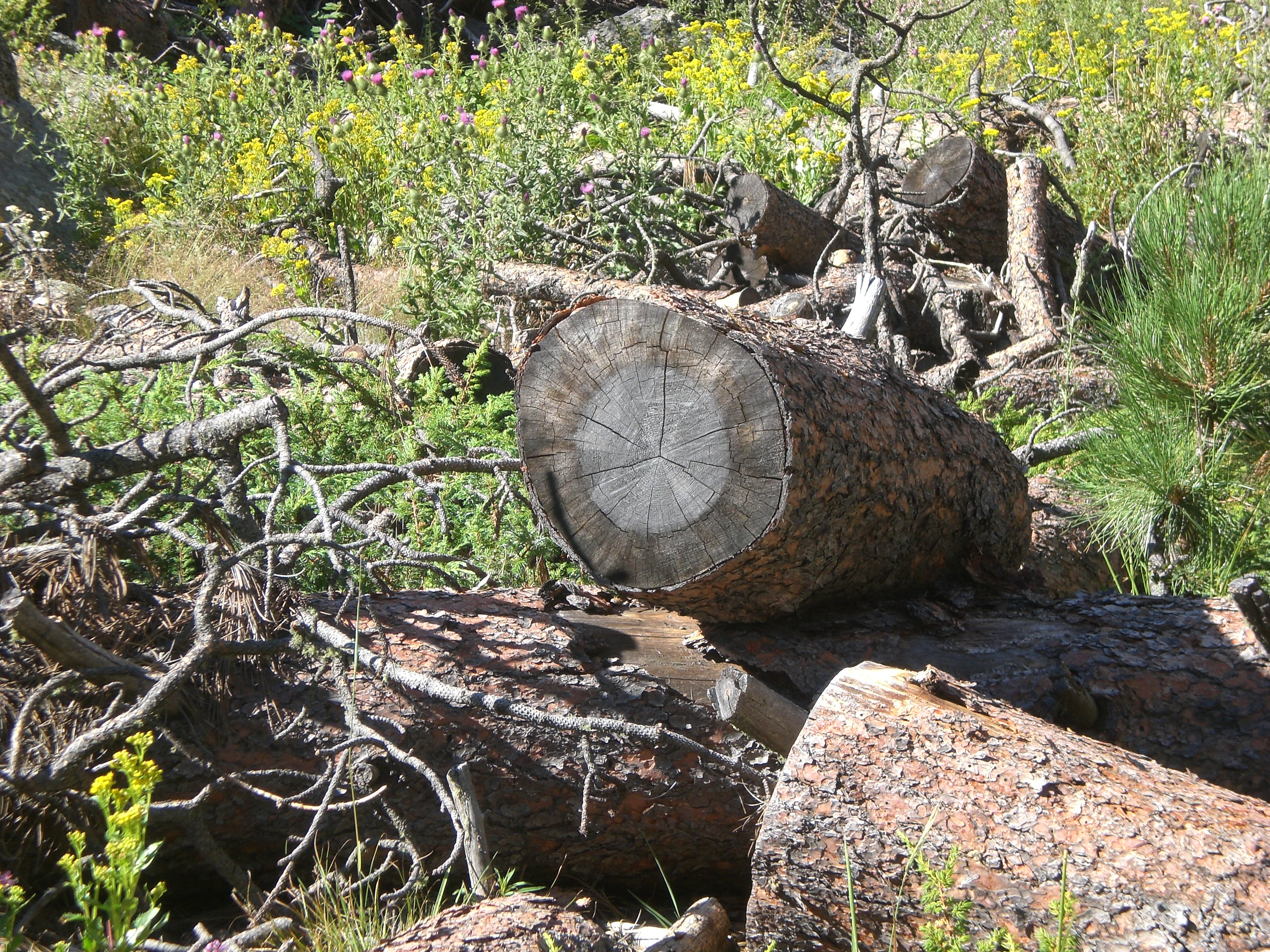
Cuttin’ & Chunkin’

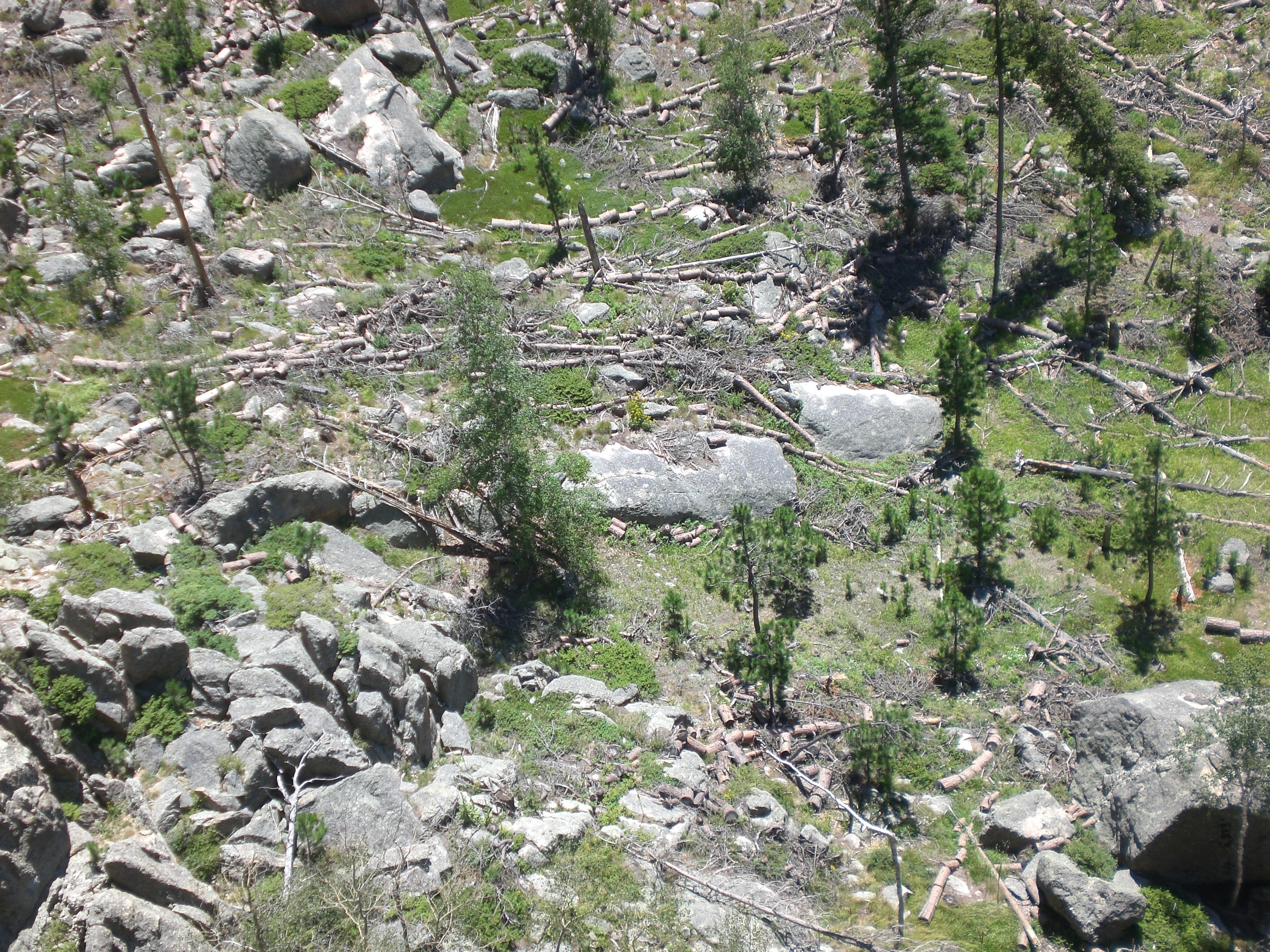
Now, we are trying to stand in for that herd immunity. We want our forest back the way it was. It gave us logs, shelter and aesthetic satisfaction. So, we try to cut infected trees before the beetles can emerge. We try to trick the beetles with pheromones (the insects actually release a repellant pheromone when their host tree harbors too many beetles). We even spray neurotoxins on the trees in ‘high value’ areas, like Mt. Rushmore.

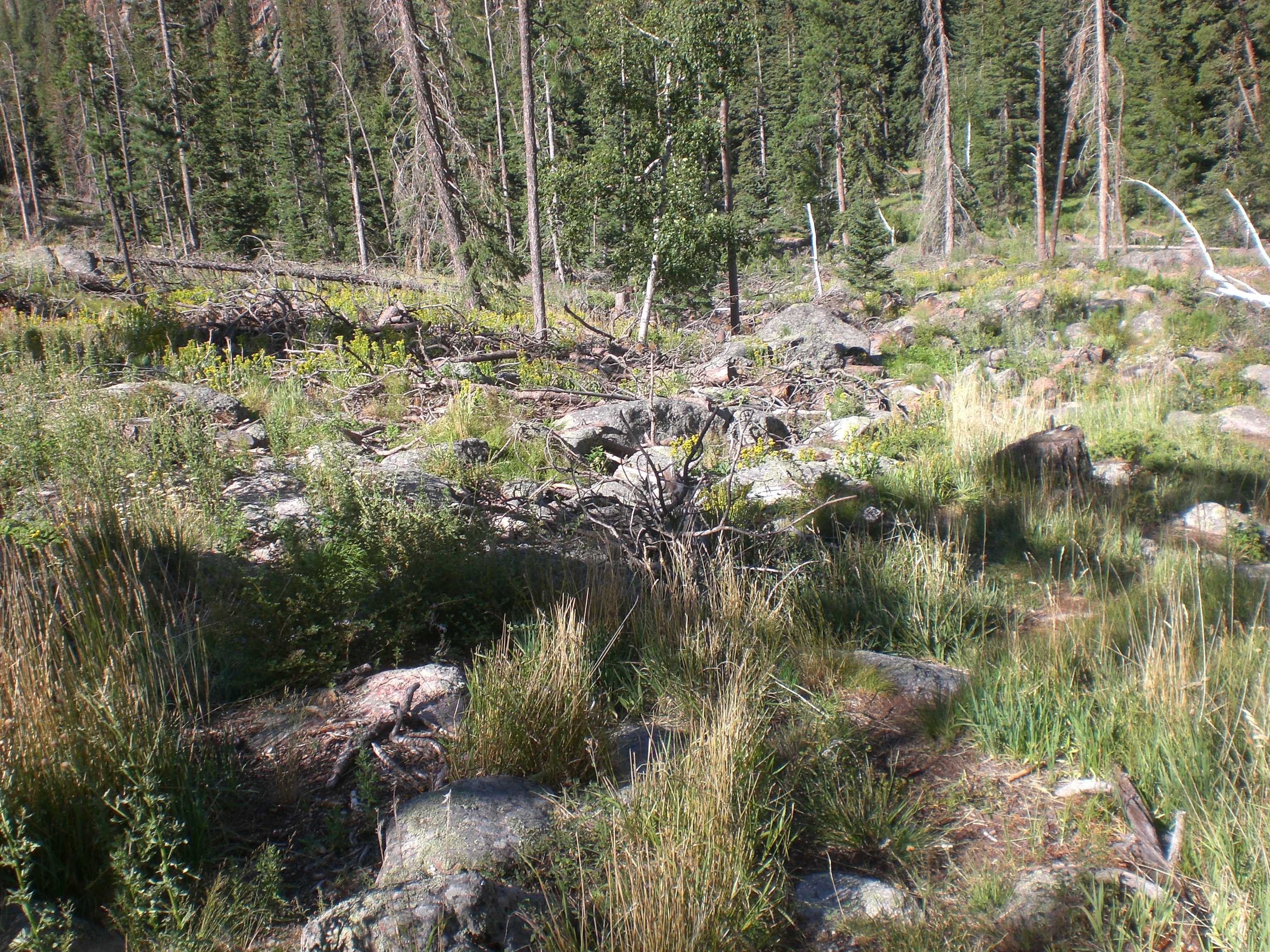
Beetle-thinned forest

Close up, our efforts look pretty smart, like a beetle attack on an individual tree looks smart, with its chemical communications, antifreeze equipped larvae, and fungal force multiplier. But just as the beetles are already doomed to population collapse by the time they start to thrive, we have already ensured that we won’t have the forest back the way we like it, simply because we liked it that way so much in the first place.

It will work out in the end. Preservation is a fool’s errand anyway. We pursue it for sentimentality’s sake, and because it makes us feel like we may be able to avoid our own eventual extinction. When the beetle epidemic is over, we will learn to like the new forest and maybe we will recognize the beetle battle as a farce. For at a proper distance, our interaction with the habitat is indistinguishable from that of the beetles. Like them, and the Lemmings, we’re condemned to a lifestyle that allows us to survive in spite of a built-in vulnerability to chaos.

Tagged , ,

Dirtbag Libertarianism

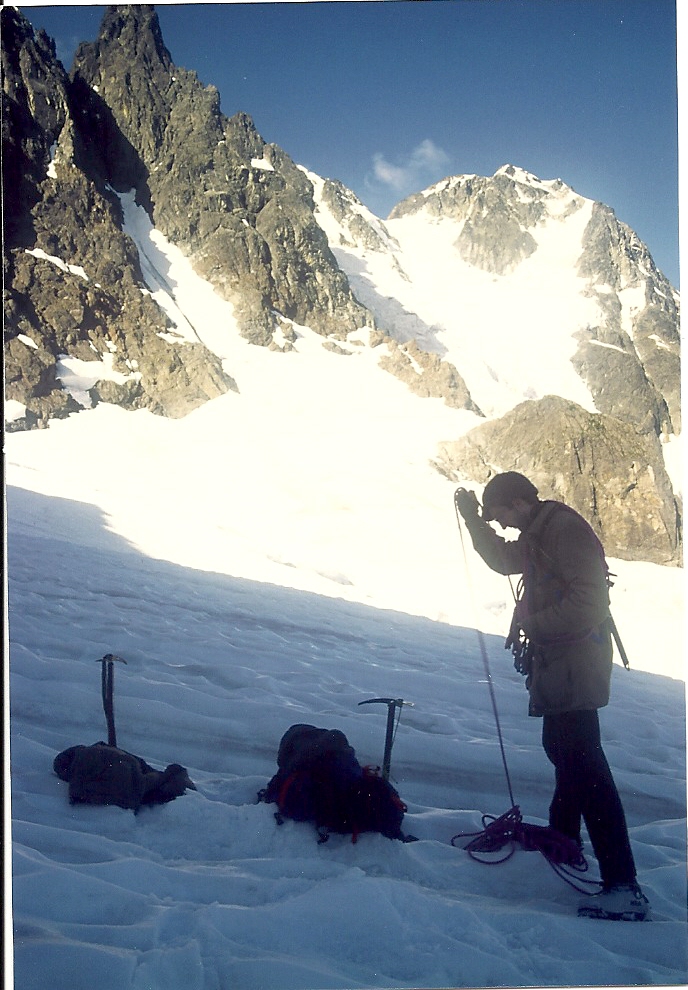
Wool, fiberfill and Scotch-guard – vintage dirtbag

In recent years, there’s been a loud discussion in the black community on the merits of the N-word. Specifically, people have disputed the value of  ‘claiming’ the word. Many have offered eloquent arguments on either side of the issue, but few have looked for lessons in history. Those lessons exist; here is a familiar and recent one.

The word ‘dirtbag’ is an honorific in the climbing world. It refers to devotees whose total commitment to the sport has led to a de facto vow of poverty. Nowadays, the word calls to mind the romanticized, early days of climbing in Yosemite, where the pioneering resident climbers, in the course of surviving in the Park, earned the label as an epithet.

The Park Service and the concessionaires saw the climbers as parasites – dirtbags who camped illegally and stole food scraps while contributing nothing to the park or society in general. The authorities were correct, too. Most of the climbers were parasites, due to lack of means and a single-minded desire to climb. They didn’t pursue parasitism, they fell into it by default, abetted by the availability of a corpulent, plethoric, degenerate host. Besides, their parasitism produced results.

Climbing  thousands of feet of seemingly impassable rock may not be worth anything to society at large, but it might buy you a word. To the original users, ‘dirtbag’  meant someone who was nothing but a worthless nuisance. A ‘dirtbag’ who could climb El Cap. might still be considered a worthless nuisance, but it was hard to say that was all they were. Plus, not all those who lived to climb were rootless kids looking for an outlet for their dissatisfactions. Always, some dirtbags chose an austere life to pursue their visions.

The latter group planned to work only enough to buy gear, subsist on cat food, and climb as much as possible. Their’s was a long-term plan, and it became a template. Over time, they emerged from the rest of the ‘dirtbags’ but never disavowed the name. Through them, ‘dirtbag’ came to mean ‘the opposite of dilettante’. So much so that modern climbers see ‘dirtbagging’ as a rite of passage and a special opportunity.

By this definition, all sorts of people, from artists to Buddhist monks, are dirtbags, and many of them have taken to using that shorthand description for their lifestyles of devotion. Of course, the original sense of the word will persist. No derogatory term can escape its origins, and the American conservative libertarian will continue to call everybody who chooses to live low and climb high, a dirtbag in the original sense of the word.

He didn’t build that wood stove, and the Yeoman farmer didn’t mine the iron for his plow. There is no free-range human.

That’s one of the good things about dirtbagging, though. There may be some true libertarian dirtbags – people who believe in the myth of the Yeoman farmer. There are precious few American conservative libertarian dirtbags – people whose credo is: “Everyone must be free; free to be just like me”. Just as being a dirtbag can teach one the difference between voluntary frugality and true poverty, wearing the word can be a reminder of the source of its negative content, and serve as a warning against perpetuating that negativity.

Nevertheless, claiming the word is a perilous trick. The term is a poisonous thing at heart, and it’s hard to play with it without getting any on you. However, some people are going to call climbers camped at a crag with nothing but a rope and a rusty Subaru to their names, ‘dirtbag’ anyway. Tucking tail and slinking away or trying to teach stupid people a lesson don’t seem like better strategies, and overall, owning the dirtbag label has worked out pretty well for the climbing community. For what it’s worth.

Tagged , , , ,

Bite Me

People have traditionally followed two divergent paths to righteousness, a hard and heavy path and a soft and squishy path. I mean old testament versus new testament, duty versus faith, Catholicism versus snake-handling. Most religions contain both these elements and maintain them by cognitive dissonance. Blessed are they who try to reconcile the paths. The task is impossible and it only ever turns out one way. Many, many examples of the inevitable outcome exist, from the Sufis, to the Chan, to the Kabbalists.

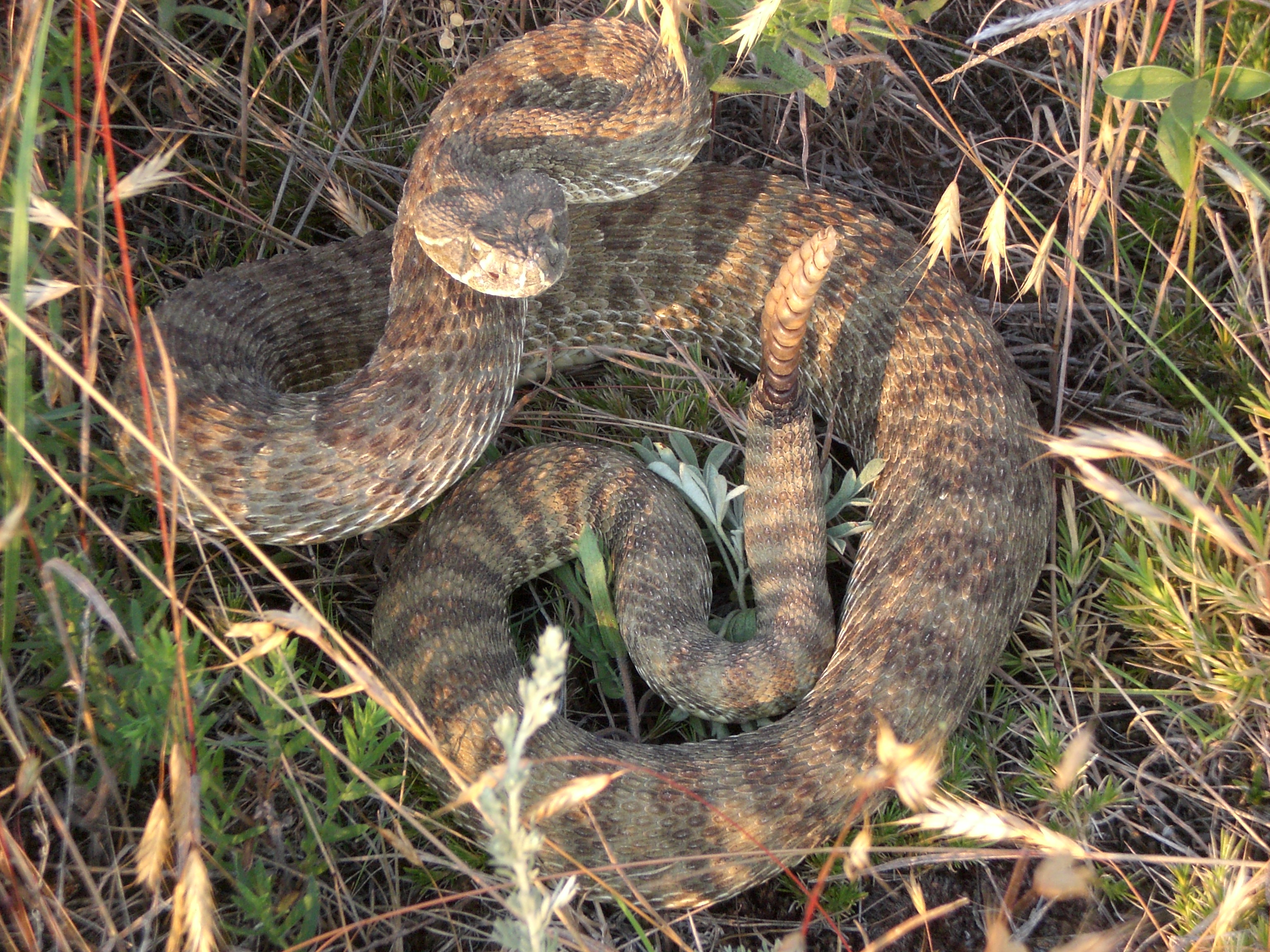
The relevant lot from the Christian tradition are the snake-handlers and they are the best lot of them all. Math, meditation and music do have the power to transform, but a handful of rattlesnakes is clarity itself. Like all sects that get involved in changing how members are as well as what they do, the snake-handling churches subscribe to conventional scriptural authority. Most are even literalists, and quite austere literalists at that. In typical fundamentalists, literalism makes for a dull theology, fearful and full of contradictions. For the snake-handlers however, the rules and regulations, just like the snakes, are guides to align a person’s trajectory. The target is a right way of being, not just a right way of doing. The Holy Spirit subsumes scriptural dictates. The soft and squishy way absorbs the hard and heavy one. This arrangement of the spiritual food chain is necessary, because the hard and heavy way is not real and it must go under. The ought isn’t.

Ask for a definition of Good. A clever theologian will say it is like a primary color – something we can know, but not describe. A less clever theologian will tell you it is what one is told to do. The guy on the bar stool next to you will say it is what he wants. Good is a stick. It can point. It can start a fire. It can crack a skull. Good is all of those things that the theologians and the drinker wish it to be, because moral good is an error of language. Good begins as what we want, then we want things of others, then we need to tell others how to give us what we want. We start using “good” in the first case and carry on through, watching the word transform itself from a mundane descriptor to an ethereal being.

The truth is, “good” remains a descriptor all along and as we boost it to higher and higher levels of discourse, it is the concomitant release of dopamine that makes it radiant. Used in a sentence and pursued through right actions, good’s charge is grounded, contradictions multiply, and the glow dissipates. What’s left for us is a handful of rattlesnakes, which is preferable.

Though an ‘ought’ reconciles the act with scripture, no ‘ought’ drives a believer to pick up a snake or drink poison. He is determined to do those things by his faith. His faith is made of his history, recorded in his genes by forgotten generations of ancestors and accumulated over the moments of his life. In devotion to his faith by acts, he becomes concordant with the truth of that history: he is not a discrete entity. Sounds awful squishy, but that’s what we are, squishy globs of history on a very squishy path. No wonder we like to think solid entities like good and evil might exist to make a channel for us. We must live with our inherent imprecision, though. As messy as it may be, it is still less messy than pursuing an error.

Tagged , ,

Blip!

I swore I wouldn’t get into this anymore. The intelligent design crowd keeps pushing this crap, though, and I have kids who are at risk. Beyond that, I suppose intelligent design’s sort of dishonesty just galls me. Don’t say I didn’t warn you.

I am about to give an argument by analogy. I do so with trepidation, because analogies are always in danger of going off in the wrong direction and have no deductive validity in the first place. However, I think this form is the only fair tool for the subject since I’m going to use this argument by analogy to critique another argument by analogy: intelligent design (ID). Rather, I’m going to critique the positive arm of the intelligent design argument. This is the withered limb compared to the evolution-bashing arm, but it is necessary to the whole and the negative argument is a morass. Since scientific knowledge is never complete, critics have available to them an endless list of objections. The positive side of the ID case is more a philosophical than a scientific argument, so it can be settled on that level.

The positive ID argument is as follows: when humans start with a purpose (a problem to solve) and devise a tool to serve that purpose, the end product looks a certain way. Biological structures have a similar appearance, so biological systems must result from the same sort of process. An immediate problem arises at this point. Since proponents wish the analogy between man-made objects and biological structures to be precise the argument commits the fallacy of the undistributed middle (Designed structures look like X, Biological structures look like X, therefore Biological structures are Designed structures).

The proponents of ID subsequently introduce a number of modifiers to try to alleviate this situation. Complex specified information is not only used to portray designed and biological structures as essentially similar, it is also used to try to pare down the middle by saying it is statistically negligible. Appeals to abductive reasoning serve the same purpose, suggesting that design is so far and away the “best guess” that there’s no need to worry about the logic. There are deeper problems than the modifiers and the middle but those are the simplest things to consider, so let’s go there first. Let me tell you how I built my son a mountain bike.

The bike came in a big box in a bunch of pieces with a couple dozen pages of instructions. The instructions were complex and very specific. In fact, if you read the instructions through, you would know that a mountain bike and nothing but a mountain bike would result from following those instructions, even without actually building a bike to find out. But, I didn’t read the instructions. I know how bike parts work, so I just eyeballed the problem and figured it out. So, even though the Complex Specified Information (CSI) in the instructions has all the qualities that the advocates of biological CSI wish it to have, it doesn’t have the necessary relationship to the endpoint that those advocates want from it. There are multiple paths through the middle to the mountain bike. There is still a way out for ID, though. I must have picked up on the CSI contained in the parts themselves. It’s true. When I looked at the parts, they fit together in certain configurations and orders of assembly best, as I expected. My expectations were key, too. Over the years, bike designers had shaped those expectations, in effect teaching me to read the information they put in the parts so I could use my abductive reasoning to make a really good guess about how the parts should go together.

I use this “best guess” faculty all the time, because it is a great shortcut and pretty reliable in familiar circumstance. Notice I said ‘pretty reliable’. Also note that I said I didn’t use the instructions, but I didn’t say I threw them away. Sometimes the bike makers come up with an innovation and then my abductive reasoning is worthless and I have to rely on the instructions again to tell me what to do about the new part. I get in trouble if I try to rely on that ‘best guess’ shortcut in clinical medicine, too. The causal history of a manufactured bike is well-defined because people decided to make it that way. If the causal history of a patient’s symptoms is well-defined for me, it’s because I have decided so. Used outside of a situation with known prior constraints on the variables, the ‘good guess’ becomes confirmation bias. So, the problem is with the complex specified information. In biological structures, to achieve ‘specification’ and thus make the ‘best guess’ inference to design, the causal history has to be constrained after the fact. Anything less leaves open those pesky intermediate paths through the middle. ID imposes that constraint by assigning purpose to all biological structures it considers. Assigning purpose is easy for us humans and we like to do it because it lets us use shortcuts like guessing. Attributions of purpose (intent) are so appealing that we have trouble keeping them in the realm of human behavior where they belong (and not even there without some confirmatory process to check the attributions). Who hasn’t said their car “worked hard” to get up a steep hill? It’s just as easy to say that E. coli intends to swim to new food sources with its flagellum. In fact, it takes just that sort of presumption of intent to wrangle an object’s causal history into CSI, resulting in a bit of a Cartesian circle (if the flagellum is made for swimming, then it has a complex history treading a narrow path to that endpoint, which shows that the flagellum was made for swimming). Still, we should be able to safely use this attribution of intent after the fact in limited circumstances, as long as we’re careful, right? For instance, it is surely accurate to say that the guys who designed my son’s bike did so from an original purpose. However, even that presumption of intent from the endpoint is not accurate, and the problem with the retrospective attribution of purpose/intent in such a case leads us back to the problem with intelligent design that predates any attempt to distribute or minimize the middle.

What do we know about design? We really just know what we do and what we do requires an agent (us), a purpose, and means. The problem is that the relationship between those three factors is not linear, nor is it even hierarchical. When considering bike design, for instance, we could go back to the origin of the means via the agent and examine the influence the means then had on the agent’s intent and subsequent development of further means. We could track back to the origin of the wheel in geometry, which is in turn based on observed properties of materials, which are in turn based on some basic laws of physics, all of which humans bothered to investigate and remember in the first place because, if you are a tool-maker, it’s easier to investigate and remember than to, um, ‘reinvent the wheel’. We could trace bicycle history back to the wheel and beyond, but let’s keep it brief and just consider the design of mountain bikes.

Mountain biking started when some California bike racers moved to the country. Their new environment confronted them with the problem of riding, and of course racing, on gravel roads. Their road bikes’ narrow tires were too unstable for that purpose, so they found some preexisting cruiser bikes with wide tires that would at least be ridable on the fire roads near their homes. The cruiser bikes were not perfect. They were heavy and hard to pedal, so the riders raced them downhill. Even that compromise lead to problems though. The brakes and bearings on the cruisers couldn’t survive that kind of abuse. The riders replaced the brakes and bearings with motorcycle and road bike components. The riders soon found that the revised cruisers, now possessing cassettes of gears with the road bike bearings, were capable of riding on rough trails as well as fire roads. Trail riding prompted further modifications to the bikes. These guys in rural California invented the mountain bike, but not all at once and not out of the blue. They worked through a progressive series of problems, each leading to the next, until they arrived at a relatively stable final design that did something very different from the structure they started with. The mountain bike evolved. Of course, this is microevolution; the mountain bike is just a tweaked cruiser bike. Neither the mountain bike nor the cruiser looks anything like an old penny-farthing with the giant wheel in front. The lineage is clear though, and bike development has proceeded by the same basic process from the wheel to the velocipede to the mountain bike. Moreover, the agents in this process acted as selective forces and were acted upon by selective forces – and not just physically. As designers altered the bikes, the bikes’ new capabilities altered their conception of where and why they might ride a bike and thus their purpose in the next set of modifications.

To fingerprint design as the ID scheme misrepresents it, we really must close that Cartesian Circle by presuming intent for any and all endpoints we wish to examine. Then the history of that point is seen separated from any branches or external contingencies. If the mountain bike comes from a mountain bike factory, surely the mountain bike factory holds the entire explanation for its structure. When defined after the fact like this, the history of a structure looks irreducibly complex; if you take away one part it is rendered meaningless because it is its own context. ID’s analogy between designed structures and biological structures not only fails to distribute the middle, it doesn’t even accurately depict design processes as we undertake them. People, the source of everything we know about design, don’t start cold from an undetermined purpose and design toward that purpose in an implacable, irreducibly complex chain of events. Replication may work a bit like that, but not design.

What this method really does is provide for a hierarchical relationship between presumed intent and biological structures, where the intent causes the structure. Such a relationship seems to allow for a supernatural cause. This is why ID’s advocates have gone through such contortions to make it work (or at least look like it might). Yet the intelligent design model fails even as a portal for the supernatural. It offers no solution to the interaction problem in dualism. This is a real problem because, as far as I can tell, one tenant of ID is that the design process in nature is ongoing. To drag a spiritual being into the material world and have it start doing things, one has to explain how it does so without being in some way beholden to the same laws, and thus part of the same causal history, as the rest of matter. If there is no good explanation, then the spiritual being from another realm is just a bizarre, unexpected new part of nature. Though this may seem an obscure technicality at first glance, here is an example of just how sticky the problem really is.

Descartes tried to defend the independence of the mind from brain processes. He offered the analogy of a virtuoso violinist asked to play on a broken instrument. The listener would have no clue as to his true skill. Likewise the damaged, diseased, or intoxicated brain may just be a broken instrument unable to give voice to the intact mind which plays upon it. Unfortunately, this analogy raises the question: May the virtuoso be a virtuoso without a violin? Study of music theory or any other purely mental operation is insufficient. He must play a physical violin. Yet the skill he gains is a mental faculty which is subject to his creativity, religious concepts, and emotion. The brain and its adjuncts affect the mind. There is no escape from this problem in a world of two supposedly separate substances in active contact. Deism or a strict idealism offer the only outs (and Deism may just push the problem back in time). Either of these scenarios keeps the supernatural supernatural, but thereby makes it irrelevant to any practical understanding of nature/matter. This is why it is best for religion that science adhere to methodological naturalism. This is why intelligent design is insidious as well as invalid, for all concerned. It robs religion of any hope of philosophical integrity, just as it misrepresents biology. Reason enough for everyone to drop this bullshit for good.

Tagged , , , ,

Three Puzzles

“Goddamnit! Hold him down,” said the Chief.

His tone, which had been ironic and jovial as he bantered with the patient moments before, was now weary and annoyed.

 As the Chief rammed the blunt plastic rod beneath the skin of the man’s chest, under his collar-bone and into the incision in the hollow of his neck, the man bucked and screamed again. Nurses and medical students grasped his limbs to keep him on the table. The surgeons had taken every necessary measure to make the procedure safe and painless. They chose to place the catheter into the patient’s jugular vein under sedation to avoid the greater risks and side-effects of general anesthesia. They had even injected local anesthetic at the incision site and along the track the catheter would take from his mid-chest to the point where it entered the vein in his neck.

Not that local anesthesia could deaden such a large area. It mostly helped tamp down soreness after the procedure. But it needed do no more, because of the type of sedative used. Besides making a patient sleepy, the chemical was an amnestic; it reduced a human’s powers of memory to those of a goldfish.

As we wheeled him back to the recovery room, I leaned over the patient and asked, “Uh, how do you think that went?”

“Beautifully,” he said.

“No pain?”, I inquired.

“Not a bit,” he chirped, “and you know, I’m surprised how lucid I was. That was the best operation I’ve ever been through.”

I stopped dead in the hallway. At that moment, I understood the feeling my friend  had a week previously when he found out his parents aspired to zombiehood. They were, he had discovered, people who wanted ‘everything done’. He had tried to explain the predicament this created for him, and though I thought I had understood the situation based on our common experience as medical students, his complete perspective eluded me at the time. I thought his parents were just wrong because they knew no better.  Of course, we two medical students were horrified, since we knew what ‘everything’ really was and where it led: dull suffering, delirium, dead eyes in a live body, chest heaving to the click and hiss of a ventilator, then death, inescapable in spite of  ‘everything’. I hadn’t seen the other side of my friend’s dilemma: what is it like for the zombie? To become a zombie – a dying person bent on continuing to die – was to abandon a previous, more natural course but perhaps it was not a wrong act. Perhaps the transformation was like telling a goldfish in a bowl that it was doomed to swim in a twelve-inch circle until it died. The goldfish would suffer withering psychic agony for the three seconds it could recall the revelation, then it would return to contentment, unharmed. The vicarious regrets of the living  just might have a similar effect on a zombie, even the regrets of their former, living self.

And as the gurney bumped against the recovery room doors, I realized that I had faced this riddle once before and failed to resolve it. The riddle had come that time in the context of a story a co-worker told me. We worked together at a landscaping business. The guy was a mechanic, so he worked in the shop, while I worked in the field. Still, I got to know him well enough through shared lunch hours and down time with broken equipment to decide he was a decent guy. He was honest and, as a practicing Catholic, always trying to be good. And he was good, sometimes to a fault as he freely lent money to people who were unlikely to ever pay it back. Then he told me a story about when he was in the service.

He was stationed at a boring, isolated post. For miles around, there was nothing but irrigated fields, sage brush, and a few abandoned missile silos. Nothing moved on the landscape but jack rabbits and a few stray domestic animals. The jackrabbits were wary and hard to catch, but the strays would come to a kind word and an offer of food, so they were the ones that got tossed down the missile silos for fun. At first, the fading echos of the animals’ cries and the sparkling static on their fur were entertaining enough. Later, gasoline on that crackling fur added novelty to the routine.

He saw nothing wrong with ‘dog toss’. These were animals, after all, not conscious beings with a soul. As such, they could not truly suffer. What happened to them, as long as it was relatively quick and served a human need, didn’t matter. He thought this because he had been raised a moral realist and a deontologist. Good was a ghost in the ether, inhabiting certain acts and objects, imbuing them with its nature. All else was morally neutral. Other things rated only via human largess backed by tenuous relationships drawn between the hosts of good and those other things that his moral educators felt uncomfortable excluding from their calculus. Other things rated as bonus points. No one was going to hell for ‘dog toss’.

No one was going to hell for what happened under sedation with an amnestic agent either. The healthy body (even just a relatively healthy body) was a host for good, and that end didn’t just justify the means, it made them irrelevant. Proof  lay smiling on the gurney in recovery, ready for the next step in his embodiment of good, where his catheter would carry toxins to his blood to kill his tumors, his appetite, his hair follicles, his sense of smell, the lining of his mouth and colon, all to clear a space for good between his diagnosis of metastatic cancer and his death from it.

The doors swung shut and the surgical team turned away toward the suite of operating rooms where the next case waited. I did not follow. These three were related riddles, but they were not quite the same. Though I could now see it whole, the third puzzle still remained, and it was still the hardest. My friend’s parents were motivated by moral realism to have everything done. But whether their end came by age, chronic illness or catastrophe, the change from living to dying would come to them and sweep away any thought of ghosts and duty to ghosts just as surely as an amnestic sedative swept away all memory of pain and indifference to pain. Then it would be up to us – family, friends, doctors, hospitals – to tend to the ghost, or not. That was the hard part. Because we could deal with the creature before us, be it living or not, on its own terms, instead of trying to realize an apparition. And that meant denying metaphysical duty.

I stood for another moment while the surgical team gained some distance on me.

“I ought to walk out that door and just keep going,” I thought.

Instead, I put my head down and set off after the surgeons. I knew that I wasn’t doing the dutiful thing, but I was pretty sure that didn’t matter. Maybe all I could do was deal with what was in front of me, zombies and all. But even if I wasn’t up to the task of replacing them, I couldn’t keep serving  ghosts, theirs or mine.

Tagged ,

Certainty

I try not to rope up with people who are too certain. They tend to do things like walk under seracs because seracs don’t fall when the weather is cold, forego protection because they can just climb it, and cross loaded slopes because they went this way before and it didn’t slide. Some of them are certain because they are fatalists, some because they are true believers, most because they can’t deal with the fear and uncertainty anymore and have decided to just switch off.

For a couple of centuries it seemed like we were poised to untie from certain people in general. A series of uncertain people came along and showed that their way was better. Their questioning lead to an understanding that the earth was really old, Democritus was right, kind of, and our thought and language were a self-referential tangle. These and other revelations of uncertainty eroded the old institutions whose source of knowledge was authority.

But change lead to anxiety, and the certain people saw an opportunity in that angst and in the methods of the uncertain themselves. To people who lived by a belief in authority, relativism equaled Nihilism and statements like “There is nothing but the text.” represented soft-headed weakness rather than caution and humility. So, the certain rejoined the discussion.

Their bid was an appeal to relativism and uncertainty as they saw it. If the field was level, their ideas should merit equal consideration in principle. And they packed their methods right along with those ideas. Debate to replace discussion. Moral force to replace reason. Because, with authority as their source of knowledge, they didn’t need to refine an incomplete understanding, they needed to win. And they did win. They managed to replace real skepticism, which implies uncertainty, with their version, which is synonymous with mere derision. Worse, they managed to draw uncertain people into debate.

Once the uncertain engaged, it was over. They kept trying to be reasonable and have a discussion. When that didn’t work, they tried to be certain. The certain people didn’t care about a discussion, they knew what they knew and just wanted the popular influence all authority craves. And when the uncertain people  expressed certainty, they became vulnerable to a claim of equivalence. They were revealed as authority-based too, so the claim went, so it was a simple matter of choice among similarly valid systems of belief.

The mistake was to allow the premises of certainty in the beginning. Before the uncertain began a defense of their ideas, they should have demanded that the certain defend and explain their own ideas first, with an eye toward divining the premises. When the certain appealed to assertion of authority, whether in the form of a moral sense, supernatural agency, or incredulity, the talk should have ended. A person may certainly assert whatever, but once they do, there’s no point talking about it unless you begin by agreeing with their assertion. And in that situation, it’s best to just un-tie.

Tagged , , ,

Uncertainty

Uncertainty gets treated as a negative term, but it is our ground state. Learning to act in its presence is one of the most important things a person can do. Most simply choose to ignore or even deny it, resulting in random behavior. Lucky for us, homeostatic mechanisms permeate and surround us, so we tend to ping back and forth in a general direction and, with a little cognitive dissonance, we can even make a case for purposeful human behavior. How pervasive is our uncertainty, though, and how much does it matter?

Is a V-8 sitting on a desk an engine or a paper weight? How about a V-8 made of polystyrene? If you touch the engine, and take it apart, and you know something about engines, you will be able to make a good guess about whether or not it runs, and is thus an engine. If you don’t know much about engines, you might not be able to make as good a guess. All you could say is that the polystyrene engine is probably a paperweight and the metal one might not be. Imagine if you had never seen an engine of any sort before. Would analysis help you? If allowed unlimited resources and time, you could track the parts, shapes and relationships back to common origins. You could, in theory, reinvent the engine and then you could know with some certainty whether or not the example in front of you would run.  

How about a more difficult case? Most people would agree that  brain with no ‘stuff’ in it is not a mind, but is it, in that case, even a brain? How can you know? Without watching it work, the requisite process of reduction to determine whether or not the empty, static brain could work is daunting. In fact, it is reasonable only as a thought experiment and finally amounts to saying only that everything is made of the same, interconnected thing – a very, very important conclusion, but redundant.

The way out of the resulting tautology is conceptual. Concepts like mind are vague and squishy. So much so that they may be mistaken for an epiphenomenon called epiphenomena. But they delimit the reduction and account for the temporal element of our experience. We will always have to watch things in motion to make sense of them and our sense will always be fuzzy and incomplete, though we can endlessly refine it through analysis. We’re just lucky that way, too.

Hey, Kant’s Gettin’ Baked – Check Out His Moral Sense!

No one will ever know how dogs were domesticated, but we can make some good guesses based on the results beside us. Domesticated canines are less aggressive than their wild brethren. They pay attention to us in addition to their own species. They tend to be more ‘cute’ than grown wolves. A couple of different scenarios make sense of these observations. Maybe wild dogs hung around human encampments, attracted to food. The ones that didn’t bite us were tolerated, probably because they were good garbage disposals but also probably because they were social animals and we recognized that shared trait. The ones that didn’t growl were allowed close to the fire. The ones that learned to beg got more than scraps. Alternatively, we brought pups home after exterminating the adults and kept or disposed of the little ones as they pleased us. Either way, we catalyzed the changes we see.

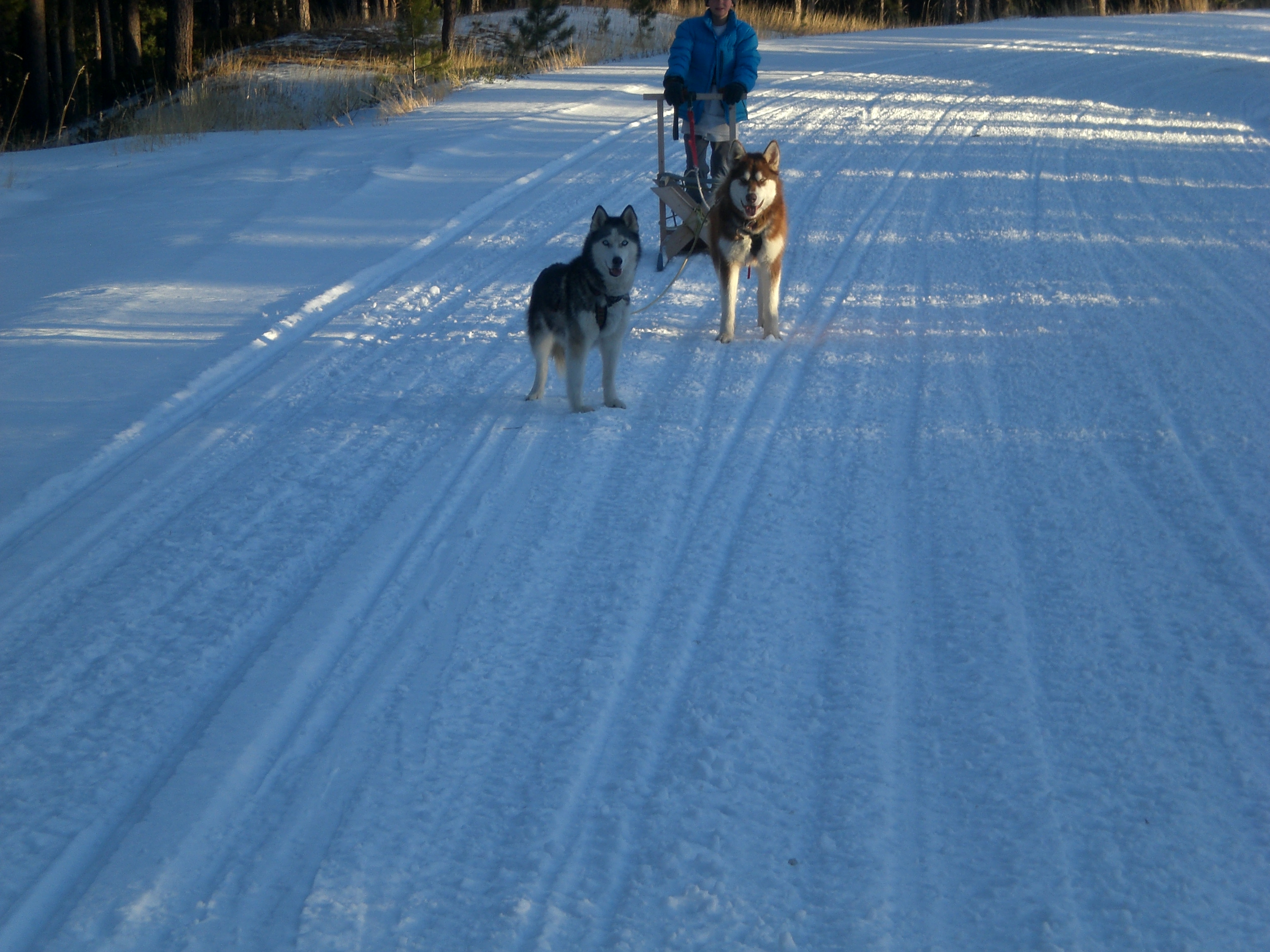
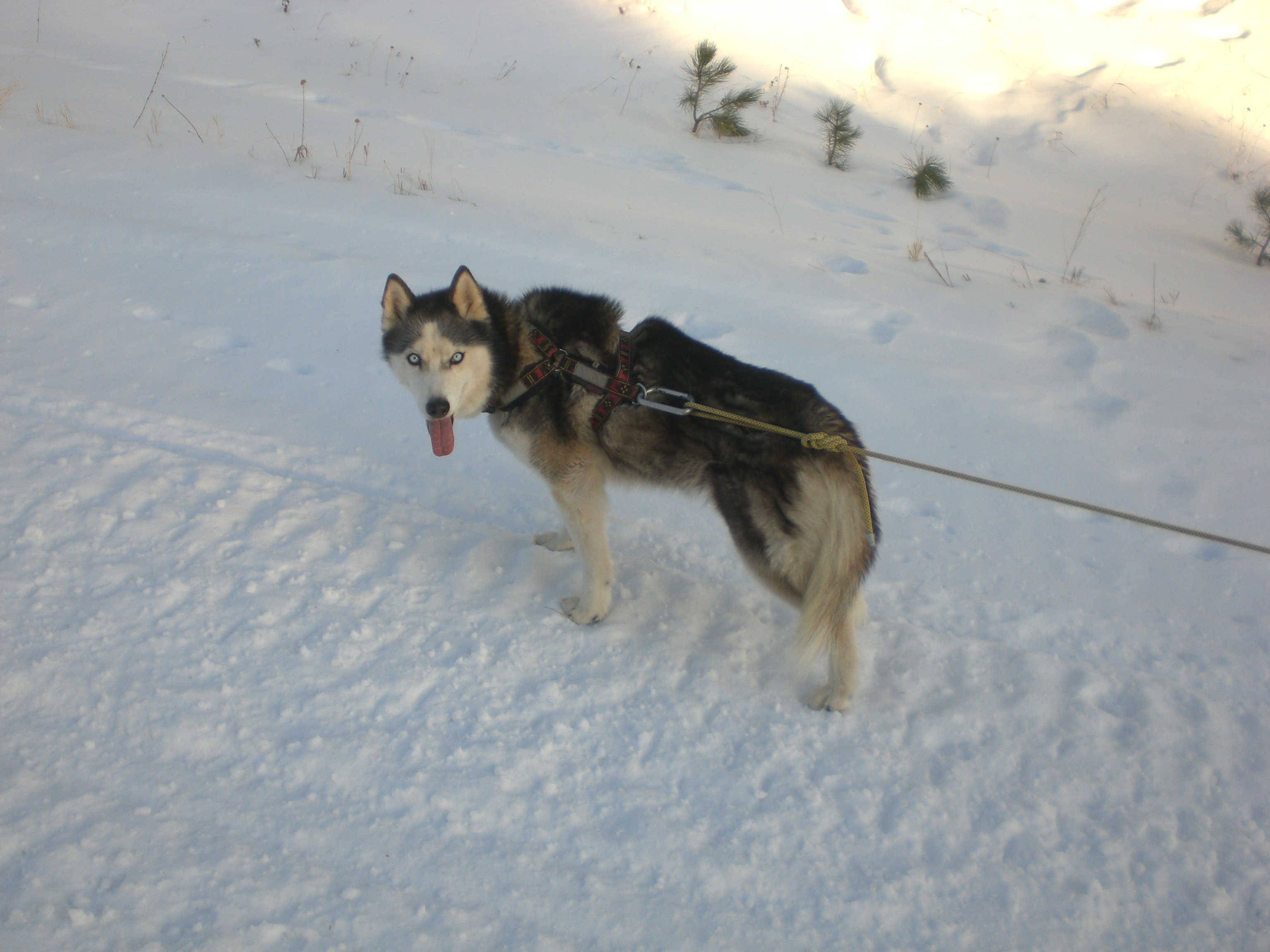
And either story draws a vivid line connecting that first contact with the pair of dogs that pull my son’s sled. The products of selective breeding and the characteristics of wild canines are both visible in their behavior. They are working dogs, so they retain more wild traits than a pure companion animal. The aggression required to pull hard just seems to bring the wildness along with it. The lead dog is a Siberian Husky, and as expected for a lead dog, she is the most wolf-like of the two. She rarely seeks affection. She will hunt if not restrained. If the other dogs in the house defy her, she bares her teeth and puts her foot on their neck. She poses no risk to strangers, however. As entities outside her social order, they merit no attention beyond a quick sniff to establish détente. As for domestic traits,with her human family members, she is keen. She can tell when her boy is about to prepare the sled even before his parents. She recognizes words and tones as directional commands, and most impressive, she reads the expressions of facial features she does not possess. And she does it all for approval, not directly for food.

She is constantly running a reverse Turing test on her human associates, as do all dogs. Alan Turing proposed his test to determine when a computer was thinking and therefore conscious, and presumably, therefore a person. His test was a practical one. Essentially, a human inquisitor would speak with the computer alongside a human control subject and if the inquisitor could not tell which was which, the computer was thinking. The Turing test basically offered a practical answer to the question, “What makes me think a person is a person?”. The dog is asking, “What does it take for me to make you think I’m a person?”.

The dog owes this behavior to her ancestors and their human breeders. She cannot be taken out of context, nor can any of the players in this tale. Though they are no more conceivable to her than the astrophysics that lead to her winter coat and her instinct to dig a snow bed, she and they share a necessary link. It is a strange relationship, but a natural one, not a supernatural one. The same forces that fuel her cells fuel the sun and govern the seasons and the people who made her what she is.

It is possible that  a separate reality exists. If so, we can never know it, else it would no longer be separate, just weird. Look at the various proposed supernatural ideals, such as a moral sense, independent mind, or essential self-awareness. A bottle of Thunderbird can dispense with all of them with ease. If these intuitions are valid they are part of the Thunderbird reality with us, not visitors from a higher realm. The only way the supernatural makes sense is as a variation on George Berkeley’s model, in which we are all simply God’s thoughts. Unidirectional causation allows a separate, higher superstructure, but it renders it unknowable and so practically irrelevant to us. We can assert such a world without fear of self-contradiction, but there can be no Turing test to sort it out. If such a world exists, we relate to it, at best, as puppets to a puppet master rather than as dogs to humans or even dogs to winter. And if so, why worry about it? Nature is weird enough.

Tagged ,

Autonomy

The quest for autonomy should be medicine’s ethical basis. A person afflicted with pain or debilitating illness can do little else but attend to the demands of their malady. Offer that person some relief, and they can better fulfill their potential. Whenever medical interventions achieve that goal, it is a clear win. All too often though, that’s the start of trouble, because winning is seductive, and it easily displaces less dramatic goals. Casinos could not survive otherwise. And when it comes to healthcare, we’re really in a sort of magic casino.

Players come in the door with a stake, but there are no bets and the only game is Blackjack. Rather than betting, we simply get to keep playing until the house wins and then we have to leave. Meanwhile, there’s the best cash bar ever, Cuban cigars – whatever floats your boat. And there’s more. Interventions are available for purchase. A player can buy the game down from  eight decks to one. He or she can spend a little more for the privilege of referring to a strategy chart during play. A little more buys a consultant to count cards for the player. Cards are even for sale. Between the dealer’s hits the house will give or take back a card for a price. All of these changes in the game are analogous to medical interventions in real life, from preventive care to emergency surgery.

The catch is, you can’t win. Sooner or later, the house hits 21 and you have to go. The trick is, remembering that you can’t win and playing to stick around and enjoy the bar and the Cuban cigars while you can. Ignoring your cards doesn’t make sense, but neither does hunching over the table with your card-counter whispering urgently in your ear.

Of course, the house could try to help the players out. It could require the purchase of a single deck game on entry. It could hire a concierge to tap players on the shoulder when they forget what they’re about and start to play to win.

Right now, the house of medicine is satisfied with being an honest shopkeeper. It is loath to get involved with purchase decisions because it mistakenly views those choices as, categorically, an expression of autonomy when they are not. They can lead to an increase in autonomy, but they can  lead to an ultimate loss of autonomy as well. Too many players are fixated on their hands in eight deck games, trying desperately to win, a card counter at their side and no cigar money left. Surely, we could do better.