
Subscribe to continue reading
Subscribe to get access to the rest of this post and other subscriber-only content.

Subscribe to get access to the rest of this post and other subscriber-only content.
I love pbs! It sells what nobody wants to buy. From the documentaries to the pundit panels, it delivers the 10,000 ft view of any topic imaginable. Most of the time, it also tries to entertain, lightly. Even when they tackle the heavy topics they don’t rush through or sensationalize. They stay serious but steady. At the end of the article the journalist has you feeling like it is bad today, but this too shall pass.
Nobody is better at maintaining a calm and informative flow than the folks at NewsHour. Everybody has the mood in mind, whether they are in front of the camera or behind it. The set designers and builders avoid any distracting graphics. The clothing and makeup people don’t enforce an artificial fashion code on the presenters1. All the zoom calls look like Zoom calls.
All of the journalists work diligently to make the news informative and sympathetic to the range of viewers who might tune in from any spot in America, but no one works harder on it, and no one is better at it than Geoff Bennett. He is the anchor of NewsHour, and one of the few people remaining in TV journalism who truly merits that title. He is the embodiment of unflappability.
He can steer a politician’s Ideological cruise boat away from the muddy reefs which call to those vessels inexorably. He knows how to navigate a soliloquy on the secret project known to everyone which has the Chinese Communist Party and its real leader, George Soros, passing out visas and voter registration cards to the horde of slavering migrants stampeding toward Brownsville. He knows how to keep a light touch on the tiller as he sees us through a report on US policy toward Costa Rica.
He doesn’t simply change the subject. He offers the guest an opportunity to make themselves understood, first to him, and then by the transitive property of Television exposition, to the rest of their fellow citizens.
It’s clear, from the beginning of every interview, that nobody’s going to get him riled. He will not raise his voice, gesture emphatically, laugh, or talk over the guest.
His performance during the Trump era’s mass psychosis helped alleviate my heartburn. Geoff’s steady tone and incisive questions exposed the populist neofascist face of Trump’s movement. The political operatives all suffer from hubris and profound incompetence exacerbated by their competitive hankering for Trump’s perianal flavor. Geoff’s conversations with these snarling purse dogs allowed them to demonstrate that incompetence. He has given them the rope that they have asked for, while resisting the temptation to help them with the knot and the tree limb. After listening to them respond to his questions, I figure on just letting them sell NOAA to Exxon and eliminate FEMA before the next hurricane season, try to safely, inexpensively, and effectively round up 16 million people and deport them, and have somebody like Matt Goetz stand up at morning briefings to tell Federal prosecutors and law enforcement that he’s the new sheriff in town and here are all of his well-considered and professionally informed plans for the agency’s future.
Lately, I have started questioning my odds of a worry-free future again. I’m having doubts because they broke Goeff. I know I shouldn’t be surprised. Everyone has their limit. There’s just that one, last, dumb shit comment that pushes things over a person’s line. We all start off hopeful when we engage in adversarial discussions. Despite all the absolutisms tossed about in the course our disputes, we all hope that at the end, we will be able to say that the opposition was misguided, but even so, gave a respectable argument for their position.
We don’t become dejected when an opponent offers up a logical fallacy or bogus statistic in the course of an argument. What kills a person’s spirit is insistent incoherence delivered from beneath the protective umbrella of a time limit, or in such a massive load that it will strain the attention of any sane person to see the argument thoroughly dismantled.
On November 13th, 2024 at 49 minutes and 55 seconds into the PBS NewsHour, the cameras captured the very instant when Geoff snapped.
You can see it coming. The guest throws out cryptic negativity about Covid vaccines, then ramps it up with some free-floating homophobia. Then for the finisher, he throws out abortion on demand with no restrictions and no restraint. The next glimpse of Geoff’s face reveals his thoughts as clearly as spoken words.
‘This? This again with two minutes left in the interview? I can’t. I know I should swat this down, but I am so tired. I’m just going to ignore it and move on.’
I sincerely hope that Geoff recovers. He looked a lot better by the end of the episode, but that kind of hit can result in a relapse. Please get well soon Anchor Man. I don’t think I have it in me to start worrying about Matt Goetz doing the same thing to the FBI.
Okay, there is that one pink pantsuit that keeps coming back. I imagine there’s a story behind that, because I can’t imagine that nobody said anything. I consider it an isolated incident.
It can’t do anything on its own. But give it just a little bit to go on, and it will make your damn world reliable.
I look at the small red spot on his arm and then at his eyes. My heart sinks. The red spot appears to be an irritated hair follicle. His gaze is steady and forthright. I am the 3rd doctor that he has been to for this problem. I recognize the diagnosis. I have seen many people over the years with his same complaints. I have treated many people with those complaints for lice, scabies, and other parasites, with great success. However, I have never successfully treated the condition from which this person suffers. Though they have symptoms which occur with a parasitic infestation the patient is actually afflicted by the belief that they are infested. They harbor a delusion.
A delusion is a fixed, false belief. In many cases this definition is not controversial. For instance, if someone believes that the CIA is controlling their thoughts and actions by means of a radio receiver implanted in their brain, we can quickly conclude that such a thing is demonstrably impossible. It doesn’t fit with what we know about structure of the brain. Such a receiver should be detectable by electronic means or by imaging. It is difficult to imagine how the device might have been surreptitiously inserted into the victim’s head. In other words, none of the stories that we could tell about the mind control device can be squared with any of our well-worn stories about the rest of the world. The glaring falsity makes the fixation easy to expose. When the delusional person suggests that the implantation was accomplished via a trans-sphenoidal incision which would leave no obvious scar, and that the receiver is made of material which nonmagnetic and radiolucent, and that the whole system operates on burst transmissions which are only detectable with cutting edge equipment which is currently only available to the CIA, it is pretty obvious that they are merely doing whatever it takes to preserve their belief rather than proposing a serious explanation.
The trouble is: the method we use to reject the mind control device story is not anything special. We compare experience – our own personal experience as well as our collective experience – with the contents of the mind control device proposition. If things match up, we believe the claim. If the pieces of a mind control device do not fit in to the puzzle of our world, we are prone to say that the claim is not true. The comparison process is not precise though. We often don’t have experience of every aspect of a claim. We also have questionable access to claims, especially when they relate to other people’s experiences.
We may tell people that we feel their pain, but we can never mean it literally. Herein lies a delusion’s opportunity. A dermatologist can tell you that they find no evidence of scabies mites, lice, or plastic filaments erupting from your skin. They cannot tell you that you are not itching in just the way and in just the places that people with scabies report itching. When confronted with such observations, the dermatologist must admit their ignorance., or face the same incredulity with which we greet the story about the mind control device. Furthermore, if the dermatologist is ignorant on that account and yet willing to forge ahead with a diagnosis, what are the limits of the doctor’s hubris? What other evidence has the smug twit disregarded?
The question used to be mostly rhetorical. It was part of that argument from incredulity. Now, the question has a ready answer: all that stuff on the Internet. There is a case report to support almost anything imaginable. Plus, there are instructions on how to investigate your own case. It is quite clear, once a person has it under the oil immersion lens on their home microscope, that the speck they picked off their forearm is not a skin flake, it is a bug. And by the way, patients cannot help but notice the lack of such equipment in the clinics which they visit in pursuit of the truth regarding their signs and symptoms.
Those who imagine that they have parasites, no longer need rely on the necessary limits of our knowledge as they contend with the medical establishment. The volume of unsorted information available to them dilutes any counterclaims. In the process, reams of reference material hide fixation. All the delusional person rejects are the hasty diagnoses of a few arrogant physicians. Those physicians are rejecting a body of literature which exceeds the memory capacity of the patient’s cell phone.
I have never successfully dispelled someone’s delusion of parasitosis, but I have come close, maybe even close enough. The patient had come to me with the usual complaints: rashes and bumps on her skin, itching, crawling sensations. She brought in the usual box of samples and sheets of lab tests. I had failed the 2 previous people who I diagnosed with this delusion. One of them simply never returned after I told him that we had done all the testing that we could and, though I could not tell him why he was having his symptoms, I could at least reassure him that the symptoms were not due to a parasitic infection. The other one walked out in the middle of their last visit after I told them that they ought to consider an antipsychotic for their symptoms.
Previous cases fell apart just about the time of diagnosis. This time, I resolved not to conclude no matter what. We looked at the samples. They were like Rorschach blots. Suggestive shapes faded in and out with focal adjustment if you were prepared to see them. All the labs were normal. There were no significant findings on previous skin biopsies and attempts at sampling from skin lesions were consistently negative. But her labs were consistently normal over time. She was feeling well. Her weight was stable. She did not have any allergy symptoms. Whatever might be crawling on her making her itch did not appear to be doing her any serious harm. Maybe this organism was more like all the mites and microbes peacefully inhabiting the backwaters of our anatomy, than it was like the bloodsucking arthropods that sometimes attack us. It was a successful detente for all of us
All that stood between us and level ground was the truth. It needed to be teased free of all the suppositions woven in with it, almost down to the facts. What remained when the sorting was done was a series of flat statements (I itch, there is a bump on my skin, I feel like something is crawling on me) without distorting references to a justifying theory. She no longer started with bugs under her skin as the primary description of her problem, however compelling the image.. She began with the itching and crawling sensations. The sensations meant what they meant without entailing the massive tangle of hypotheticals and contingencies that accompanied the bugs.
I was also forced to pick apart truth and supposition in my thoughts on her complaints.. Diagnosing her generated a fixation of my own, because it committed me to considering a single aspect of those complaints. To be honest, when I could find no insects, I immediately began to see her as deranged, and so I set about correcting her derangement without a 2nd thought. But my perseveration on the pathological nature of her delusion just fed its gravity.
We all suffer from delusions from time to time. Almost everyone is subject to a “mild positive delusion”. That entity is simply the fixed, false belief that one is more capable than they actually are in any given situation. At first glance, the mild positive delusion appears to be just a fancy name for foolishness. But it is hard to see how anyone would ever get better at anything without it. The delusion pulls a person into situations slightly beyond their control. That zone between comfortable mastery and havoc, is where learning occurs. Of course, not all delusions are so benign. Delusional beliefs may generate heavy, dark hypotheses which draw the deluded to grim actions.
The prime example of such a delusional black hole would be the shooting incident in a small pizza restaurant which occurred a couple years ago. The shooter disliked certain politicians. He took note of some stories on the Internet which tracked well with his estimation of those politicians character. He then began to actively search for such narratives. This drew him in to the point that he became absolutely convinced that the distasteful politicians were a cabal of child sex traffickers operating out of a small pizza restaurant on the East Coast. He subsequently packed his rifle in the car and drove to the pizza joint, where he demanded the release of the imprisoned children and immediate apprehension of the evil politicians. He fired a few shots in the air to emphasize the seriousness of his conviction.
For good or ill, we will never be free of delusions. We cannot do without them. Rather than undertaking the extermination of fixed, false beliefs, we might instead try to limit the pull of their gravity, as my one successful patient demonstrated. That means taking care not to mistake the theoretical structures which delusions generate for the truths undergirding the delusions. That way, when we find ourselves standing in the middle of a pizza restaurant with a rifle, we understand that we are standing in the middle of a pizza restaurant with a rifle. And we itch if and only if we itch. That much would be true.
My wife continues to ask her question. Sometimes from the positive side: “why are we here, doing all these things?”. Sometimes from the negative side: “if we’re going to be extinct in a few hundred thousand years, why are we doing all this. No one’s going to be around to care or remember.” Of course, she’s just reformulating the simpler old cliché, “what is the meaning of life?” She keeps coming at this from different angles because she’s trying to get a different answer from me. But my response is always the same. I tell her that question turns on a category error.. Life is not the sort of thing to which meaning applies. Existence is not instrumental, nor does it represent anything. I have tried to present a convincing argument for my position, but she has rejected every version outright. Her tone leads me to believe that she may simply doubt my authority on the matter. That’s a reasonable position to take. I’m a amateur philosopher at best.
So, I’ve tried to hit her with statements on the matter from authorities in the field. I’ve tried Nietzsche.
“Physiologists should think before putting down the instinct of self-preservation as the cardinal instinct of an organic being. A living thing seeks above all to discharge its strength–life itself is will to power; self-preservation is only one of the indirect and most frequent results.”
She just shook her head.
Then I went to the Hagakure:
“Live being true to the single-purpose of the present moment. Ae man’s whole life is a series of moments. If you can do this, there will be nothing else to do and nothing else to pursue.”
It bounced off, not even a mark.
I even trotted out the old favorite:
“Existence precedes essence”.
Mere sophistry, she says.
Recently, I got my best chance at validation. I got to pose her question to a real philosopher. As it turns out, he was sympathetic to the question, but he reformulated it a bit. He split her more complicated notion of meaning into 2, distinct concepts. The minor portion is the equivalent of Telos-the idea that existence is instrumental, or in other words, that life has a purpose. This idea, he felt, could be easily rejected. It’s true, the idea that there’s some purpose served by existence falls apart almost as soon as it’s formulated. For instance, if we assume that we exist to make widgets, the question of why we exist simply devolves to the question of why widgets exist. Maybe we’ve got an easy answer for that question. Maybe it’s plain to all that widgets are needed to make a widgetron. And obviously, a widgetron exists because God needs a widgetron. But then we have to ask why God needs a widgetron. Maybe we can sneak by this question by insisting that only God knows why God needs a widgetron. But, if we are going to preserve Telos for the widgets and therefore for the widget makers, then we need an account of God’s use for the widgetron, and all we get from making the knowledge of that use private is a shift in responsibility. God must carry on the investigation. What we end up with, is a set of complications without a change in the structure of the problem. Wherever you choose to stop, you’re forced to admit that this is just how things are. Existence really does precedes essence.
If Telos is unsalvageable, another sense of meaning may yet stand. Heidegger observed that we are thrown in to our circumstances. We don’t come with an instruction manual, map, compass, or storybook. We are confronted with puzzling out our best narrative. Though there is still a brute fact at work here, it doesn’t have the crushing gravity of given purpose. We are stuck with our task, but the work of charting our course remains self consistent. Here is the meaning that the questioner is after: a sort of self representation,. It is a smaller revelation than expected from a definitive answer to the question of life’s meaning. But it doesn’t overreach by trying to explain brute facts, and it is more substantial than “42”. It is the Goldilocks answer, and should satisfy everybody. But my wife cannot accept it. Knowing that it all ends in a “great rip” which destroys space and time, or alternatively, that the universe quietly evaporates in a “heat death”, makes all the stories the same. There may be some variations on the typical strutting and fretting along the way, but everyone’s book ends with the same billions of blank pages. By the time the reader has flipped through them all, he or she will scarcely recall the printed contents, and the stories might as well all be the same for as much as they differ in light of that mass of emptiness. For her, if there is no permanence, there is no possibility of constructing a good story.
At this point, I was out of arguments. I wasn’t quite ready to admit defeat,, but I couldn’t think of another convincing way to state my position.
And then Dr. King came to my rescue. I’m not sure how I got to the video, but it was Martin Luther King Day, so there was plenty of high profile MLK material floating around the Internet. He was giving an interview in 1966 and he said something that I never would’ve imagined a pastor and activist saying.
“If a man has not discovered something that he will die for, in a sense he is not fit to live.”
Such a person labors under the mistaken notion that existence itself has some token value. Life has representational meaning in that case, and it’s role as a token makes life worth something, just like money has value because it represents debt. If you hold this position, then some permanence really is critical. If the bank is not an eternal bank, then we all must become Roman coins someday. As the debts which we represent are forgotten and our value gets washed away by time. For meaning to be sustainable, the treasury upon which it draws must be permanent, and sustainability is an essential part of representational meaning. Our narratives represent to something, at least in principle, or we really are just sound and fury.
Attribution of representational meaning to existence is sketchy enough, but It is a particular consequence of the attribution which renders its claimant, in a sense, unfit to live.. The monetary analogy serves here as well. Like a bill or coin, we are inert. That is not to say that we cannot do things. A banknote ,after all, can mark one’s place in a book, and a coin of the proper size can be used as a screwdriver. But what they really must do as currency to be currency, is to remain a recognizable token. Self-preservation is paramount, and, in a sense, any action beyond that scope is meaningless.
But, we do act, and only rarely with the primary intention of preserving ourselves. As Nietzsche pointed out survival is just a very common, happy side effect of our motives and their associated actions.. To take things to the most basic level, we eat because we are hungry, and drink because we are thirsty. We don’t eat or drink to carry forward the tale of our Personality.
If representational meaning in a narrative can’t quite face up to those blank pages stretching to eternity, can anything? .Here is where Dr. King comes to the rescue, with the first part of his statement. An explanation lies in the implication of what it means to discover something that one will die for. One might reasonably ask: what won’t people die for? People die for money, shame, vanity, and every other stupid thing, every day. But I don’t think that those transactions are what King means to reference. I think he means something more like things worth dying for. I think he means exactly the thing so expressive of the individual’s personality that its persistence renders that person’s independent existence moot. That class of things doesn’t demand extinction as the price of admission, they just render the separate persistence of one’s identity irrelevant.
To take Dr. King as an example: he advocated nonviolence, but only secondarily. He was nonviolent primarily. He spoke out on civil rights, but not in order to play a role in the story of civil rights. His words were a seamless expression of those rights, and inextricable from the marches, sit ins, jail time, and even the bullet. All those things were not elements of autobiography, they were the man himself.
Rather than weaving a tale, we are aimed at discovering a destiny. Destiny is the closest word for what I think motivates us. Because place is the best metaphor for our hearts desire. It is the place where our feet fit perfectly, and where we are completely oriented. That is Yamamoto Tsunetomo’s “single purpose of the present moment”. It is not a moment to live for, or in, it is a place from which any movement is self-expression, and from which no movement alters the circumstances.
Destiny’s viewpoint reveals self-preservation’s constraining nature and exposes extinction’s irrelevance. Self-preservation and extinction represent aspects of a person. They have the weaknesses of any representation and have no more role in the discovery of destiny than a Roman coin (as a Roman coin) has in loosening a screw.
I think destiny answers my wife’s objections. It is self-contained in a way that narrative meaning is not, and so stands up to eternity’s vacuum. I think it is a better way to understand the single purpose of the present moment. I can tell that she has some sympathy for the idea, but she can’t quite get past its insinuation that transience is what we seek.
I will run this argument by her. I don’t have any great expectation that it will fare better than the ones that have failed before it. After all, her objections are at least partially noncognitive. She has a good understanding of the endless empty pages, and it frightens her. There may not be any getting past that feeling. But she is also suspicious of samurai and German philosophers. With Dr. King on board, maybe there is a chance for a breakthrough.
My wife texted me from her resiliency seminar: “what is the difference between joy and happiness?”
My knee-jerk response was, “Happiness has more letters?”. In other words, joy and happiness are completely synonymous. But after thinking about it a little more, I reconsidered.
“Happiness is a philosopher’s word,” I wrote back, “joy is a theologian’s word.”
Joy was never a candidate for the means of exchange in Jeremy Bentham’s moral economy.. He understood that nobody would accept such a scheme, because it would require a quantification of joy. Joy can’t be priced out. Happiness, on the other hand, might be weighed and measured.
A quantum of happiness is plausible because happiness refers to a state of affairs. When someone claims to be happy, we expect that they can explain themselves. If pressed, the happy person can break down their happiness into the status of the various bits of their world. Their health is good. Their interpersonal relationships are running smoothly. Their access to basic resources is secure. Although there may be practical difficulties in arriving at an accurate sum, it seems possible in principle.,
Joy does not feel causal gravity, and therefore defies our scales. When someone says that they are joyful, they claim to experience a sensation. If joy really does refer to a sensation, even in part, then it shares the burden of mystical subjectivity with other sensations. It is explicable to a point, but there is an extra bit right at the end. A good analogy is the difference, for me, between buying a cold drink with American money and buying a cold drink with Bahamian money. I feel no joy in handing over greenbacks. The bills are boring to the point of oppression Bahamian notes are completely different. Their design and color give me a little bit of joy as I hand them over. The drink is just as refreshing. I can explain why I like the colors and graphics on Bahamian notes, even down to ostensibly subconscious factors. But that certain something which accompanies a transaction mediated by the beautiful notes defies a thorough analysis.. It doesn’t do anything in the transaction; it is just a particular feeling experienced along the way.
The loose ends of experience, those “just so” remnants flapping at the tail end of joy, fear, pleasant views and burned fingers, call for our acceptance. Yet, we rarely stop at acceptance. We want to put our sensations of belonging to work. Something that does nothing, can do anything. So, the loose ends of experience frequently serve as philosophical everlasting gob stoppers. As described in the book, Charlie and the Chocolate Factory, an everlasting gob stopper is a piece of gum which can generate a limitless series of flavors. It is the last piece of gum a person would ever need. Such is the role of joy in a resiliency seminar.
Resiliency originated as a concept in psychology. It is meant to describe the capacity of some people to avoid the consequences of chronic stress. Resiliency is resistance to “burnout”. It doesn’t take much imagination to guess what happened when corporate America got wind of this notion. A thorough expose’ would take volumes but would yield no better account than the words of Lone Watie, depicted by the great Dan George in the film The Outlaw Josie Wales,:.
“I wore this frock coat in Washington, before the war. We wore them because we belonged to the five civilized tribes. We dressed ourselves up like Abraham Lincoln. We only got to see the Secretary of the Interior, and he said: “Boy! You boys sure look civilized.!” he congratulated us and gave us medals for looking so civilized. We told him about how our land had been stolen and our people were dying. When we finished he shook our hands and said, “endeavor to persevere!” They stood us in a line: John Jumper, Chili McIntosh, Buffalo Hump, Jim Buckmark, and me — I am Lone Watie. They took our pictures. And the newspapers said, “Indians vow to endeavor to persevere.”
We thought about it for a long time, “Endeavor to persevere.” And when we had thought about it long enough, we declared war on the Union.”
Resiliency lessons are an organization’s way of telling its human resources to endeavor to persevere. If the resources are persuaded to buy in, promoting resiliency is much cheaper and easier than trying to fix a dysfunctional system whose friction causes its operators to burst into flame with prolonged contact. It is not an easy sale. But the seminarians have an incentive. They offer a gobstopper programed with the flavors of joy. Follow their chewing instructions, and sweet, sweet joy will sweep away the bitter taste of stress. Their enticement is incredibly appealing. No one in their right mind would choose to cook up a recipe for happiness and hope for a joyful aftertaste, when they can simply chew on the taste of joy.
It is not so easy though, to seek out an emotion. The resiliency gurus quickly achieve their goal with the joy gob stopper. The room is soon busy chewing, and no one is thinking about their smoldering psyche or the stressors which are slowly roasting it. But the room is not all smiles. One by one, those who chew the gob stopper confront its single flaw: it is sold as a vehicle for pure experience, which does nothing,, and so can do anything, but it can’t actually do anything after all.
The original gobstopper, as manufactured by Willy Wonka, would sometimes taste like something weird. It could randomly taste like for instance, a turkey dinner. The gobstopper does something, but not just anything. It doesn’t give the chewer the taste of turkey and dressing. It represents the taste, like a urinal hanging on a gallery wall represents an actual urinal. A representation can standalone, and therefore appear to do nothing, but it merely appears to do nothing. It is indicating, in part or in whole, what it represents. It cannot escape circumstance, and so it cannot produce a consistent response in its beholder. Many gallery patrons appreciate the urinal; many more find it discordant. The flavor of a turkey dinner is discordant with most people’s idea of a positive gum chewing experience.
The chewer is left holding the experiential bag when they bite down on Wonka’s gobstopper, and that bag contains a piece of gum that tastes like cornbread soaked in turkey broth. Those who taste the joy gobstopper are holding the same bag, and as they try to suck joy from its contents, the resiliency students encounter discord as well. Techniques aimed at producing a psychological atmosphere conducive to joy only yield an uncertain representation of the emotional state. What those techniques do with certainty is expose the transitory nature of joyful experiences. As the student focuses on their feelings, they are confronted with the fact that joyful sensations shift with the circumstances. A joyful feeling cannot be parlayed into a persistent mood.
Faced with inconsistent results from following the Master’s teaching, a student may legitimately wonder if they really ever experienced joy in the first place. Perhaps they are congenitally joy deficient, and what they called joy was just some particularly thorough happiness. Maybe they are not trying hard enough. Maybe they are trying too hard. They may wonder if there is a test that they can take to diagnose the cause of their inconsistent joy. On the other hand, maybe they just need a new guru with a new seminar.
Our thoughts come to us unbidden. We don’t wish to have a thought and then think that thought because we wished it. That doesn’t mean that we can’t anticipate circumstances in which certain thoughts may occur, and we certainly expect to be able to explain our thoughts in terms of their circumstances. We just don’t have any sort of “prospective reflection”. The same is true of our emotional phenomena. They happen, and we can anticipate under what circumstances, but they don’t happen through our direct effort or desire
We are better off accepting how we feel, and working with those emotions than we are trying to engineer our psychology to generate emotional sensations in service of an end. At work, we should shake off the resiliency spell. Despite the promises coming from all the Wonka’s in all their resiliency power points, we can’t escape burnout by engineering our psychology to feel joyful about it, or even to feel joyful despite it. Instead, we should pursue the happiness that comes with having the time and resources to do a decent job.
“Life! Don’t talk to me about life!”
Marvin the robot
My day began with a woman on the radio proclaiming a great victory for life. For the first time in a long time, a world in which no unborn child got murdered looked to her like a real possibility. Her statement contained a pile of red hot words, resting on one simple word: life. Let us be as clear as possible about the definition of life, because those who have adopted the label “pro-life” will not be. When they talk about life, they don’t mean to talk about biochemistry, they mean to talk about the soul. They mean to talk about all those little souls, bearing some indefinite relationship to little bundles of cells. Via that bond, the soul somehow sanctifies an embryo, while remaining completely uninvolved with biochemistry. What follows are the familiar discontents of substance dualism.
Like most of the pro-life crowd, the woman on the radio barged past the interaction problem and its implications with loud assertions. I got the sense that she may not have fully appreciated those implications herself, and so the rhetorical bum rush may have been a means of self defense as much as it was an offensive tactic.
Poor insight is no excuse though. She deserves the heap of scorn coming her way. Yet she doesn’t bear sole responsibility for her inconsistency. She no doubt labors under the influence of a defective definition of biology. In school, she probably learned a series of rhetorical tautologies (life is organism, organism is metabolism plus reproduction) in her biology classes which amounted to saying, “life is what biologists study”. Nor is biology unique in that regard. All of the sciences have backfilled their metaphysics.
Yet, the associated metaphysics is what really interests us. Though it is fantastic to know about the microscopic structure of the wood in the ship of Theseus, what we really want to know is not the composition of the planks, but the defining relationships of those boards in context. The planks are the ship of Theseus because they floated around the Aegean trod upon by Greek heroes, not simply because the boards consist of a cellulose polymer capable of floating around the Aegean while being trod upon by Greek heroes.
Life is not the Krebs cycle or the DNA in a blastocyst’s nucleus, and it is certainly not some vital substance wafting about, indefinable in principle, and opaque in its activity. Life is what sustains defining change across circumstances. In other words, it is the fulcrum of a dynamic equilibrium. Consider a bacterium in a nutrient broth. Energy from the broth translates into new molecules like the molecules which came before in the cell wall, ring chromosome, and cytoplasm of the bacterium. Having built up enough substrate, bacterium divides, relaying its balance point on through time and space. Then someone drops an antibiotic into the broth. Energy from the broth stops flowing into new substrate and shifts to the activation of efflux pumps. That’s life.
If the organism is overcome, it becomes adrift in its circumstances. Once its equilibrium gets tipped too far, it cannot make its way through the broth or the antibiotic exposure with its causal explanations intact.It’s molecules react with surrounding molecules based on ambient energy states. It cedes all its explanations to whatever is floating around with it in the broth. It is dead.
Beyond this stark boundary between life and death, lies an expansive liveliness. There is life that sails almost where it will (humans), life within life (Portuguese man of war, bees, lichen), and life explicable only in context (prions, chlamydia, embryos).
Embryos live strictly within the lives of their mothers. Embryo explanations require mothers. Embryo explanations do not require souls. Until someone comes up with an effective description of the soul and its relationship to a little ball of cells latched onto the endometrium, the soul remains an inert addition – an epiphenomenon at best. This is a problem which the pro-life fools can’t shout down or blow past. Because the problem with epiphenomena is that there is nothing really tying them down. They don’t do anything, so they can fill in wherever. The unknowable nature of the zygotic soul can justify whatever, from bombs to prayers. It’s a wonder that something so flimsy could ground a social movement of such size. The truth is though, it doesn’t.
The target of the pro-life movement has always been the women, as one might guess given the nature of trans placental relationship.
The vacuous nature of pro-life rhetoric needs exposure, so that we can get to the real purpose of that rhetoric, which is control. People in the pro-life movement are not really interested in the biology of human development, or even bioethics. Instead, they are interested in other people’s stories. Because their own narratives, jumbled as they are with souls, sins, and angels, are so weak, the pro-lifers see divergent narratives as invalidating. Accordingly, they try to curtail divergent narratives wherever they can.
That is the motivation behind the pro-life movement. I doubt that this motive is ever articulated within the ranks. I suspect it is held more as a feeling, which makes it even more dangerous. A stated policy can be confronted, criticized, and torn down. Opposition to a feeling is personal. Furthermore, feelings tend to take on lives of their own. Clarence Thomas is already telling us what comes of persistent, unleashed insecurity. Listen to him, and the rest, and then call them out.
Freedom’s just another word for nothing left to lose
Janis Joplin
Attachment is the root of suffering
Buddha
We live in Scottsdale, an outpost latched to the Sonoran Desert like a tick on the back of a bony mongrel. It calls itself a city, but it is not. Cities are permanent settlements which arise spontaneously from commercial roots. A city has some external basis for its existence, like a navigable river, a mineral deposit, or rich surrounding farmland. Being based on a natural utility, a city bears the confidence of legitimacy coupled with the discipline of responsibility. Take a port city for example, which grows a superstructure founded upon its waterfront. Though they may grumble about their tax bill, no citizen of the port need wonder why the city government spends money on building docks and dredging the harbor.
Scottsdale has no such foundation. Instead, it is an amenity for its amenities. The city provides an airport so that wealthy snowbirds can migrate to the desert when the first frosts make their hometowns uncomfortable. There are golf courses soaked in stolen water from the Colorado where executives do business in information technology and professional players entertain resident retirees. Many districts are zoned to allow restaurants and shops mixed with apartments and office buildings. The resulting environments have adopted the label “live/work” for themselves. Metaphysically, it is radioactive and I blame exposure to its rays for my wife’s parasomnia.
She does not sleepwalk, nor does she exhibit signs or symptoms of any other ordinary sleep disorder. Her affliction may even be unique, since I have found no record of similar cases in the literature.
This is how it manifests: as I am falling completely asleep, she grabs my shoulder and shakes me.
“How long did you say it would be until humans go extinct?”, she asks.
“About 100,000 years,” I answer.
“Really?” she exclaims” Then what is the point of all this if humans are just over someday and nobody will remember any of us or anything we did?”
“Well,” I say “that question is just bad. Asking an existential what’s-the-point-question is like asking why isn’t round, green. Separate things entirely.”
“Well,” she persists, “I don’t see why we try so hard to accomplish all these things that will be completely forgotten in the end.”
“It is just who we are,” I offer.
“I still don’t see why we try to do anything at all,” she says.
” Try not doing anything at all, and remember, sitting home eating ice cream is doing something,” I say.
There is silence now from her side of the bed.
“Say,” I ask, “do you want to go to Walmart tomorrow?”
“Yeah,” she replies, “that will be fun.”
She settles back and goes to sleep then, but I know she’s unconvinced. We will have this same conversation again, on another night in the near future, in the few minutes before sleep overtakes us.
The trip to Walmart will buy us a couple of peaceful nights. She loves Walmart, like most of us do. The store has a broad-based appeal, as evidenced by its presence in the middle of upscale Scottsdale. Our local Walmart typically has as many BMWs as it has Chevys in the parking lot. It took me a long time to figure out why we find Walmart so attractive. It isn’t the items for sale. Everything in Walmart is available someplace else. Buying the same goods over the Internet is generally more convenient and may be even cheaper than going to the store. The physical environment isn’t the draw either. The aesthetics of Walmart’s interior design leave much to be desired, and practically, it is a maze crammed with items that are sometimes poorly marked.
The ingenious curation of items is the key to Walmart’s appeal. Everything on the shelves serves its purpose up to the highest level manageable by a layman. When a shopper walks through the front door with a certain need, intent on a particular item which they have calculated most likely to fulfill that need, they may or may not find the object of their intent. But, they are almost guaranteed a solution amongst the goods in stock.
Say a shopper comes in looking for a dovetail saw, because they want to cut thin plywood and figure that they need a saw with a straight, self-supported blade. What they find on the shelves at Walmart is a variable speed, electric reciprocating saw. As they consider the electric saw, they realize that they really don’t know anything about the dovetail saw, other than the fact that it has a straight blade which is self-supported. Maybe, they think, they were about to get in over their head by buying a dovetail saw. The electric saw looks like it will do the job, and is guaranteed to be manageable for an amateur like them. All the items in Walmart are instructive in this way.
When I first grasped the secret of Walmart’s draw, it seemed like magic. But it turns out to be something less. In fact, I think the Magi in the back room of corporate headquarters sorted out their strategy by watching beavers. At first glance, beavers seem to be brilliant little creatures. Their dams and dens look like masterful feats of engineering. But in truth, all the beavers do is put sticks where they hear flowing water. The dam is just a manifestation of accrued impulse.
The Magi understand that humans are just the same as the beavers. Everything man-made is a manifestation of accrued impulse. Instead of reacting to the sound of water flowing, we respond to an urge to preserve. Our impulse to save the status is expansive, and pertains not just to personal existence, but to the entire infrastructure of personal identity. Wherever we hear a trickling leak of currency dripping into memory or memory into oblivion, our species hustles over to plug things up again. To get the job done, we will use anything that we can get our hands on: monuments, literature, culture, or personal possessions.
Over the centuries, we have built up dams made of dams to preserve us. In a room in the very back of corporate headquarters at Walmart, the Magi have a model of the whole thing. They can see what sort of patch will fit a particular defect in the barrier. The dam of dams model shows them exactly what kind of jersey to put in the men’s athletic wear section: A tank top which recalls the shirts of famous players long retired, without naming names, yet a garment current enough in its design to acknowledge present stars. This sort of insight is just too perfect to attribute to anything less than informed and premeditated action. It requires a model of the dam.
On occasion, right after I am shaken awake to answer existential questions, I fantasize about taking my wife to corporate headquarters, where we will find the the door in the very back of the complex. I could then show her the full extent of the dam. I wouldn’t say a word. I would let the monstrous complexity of the model speak for itself.
But when I awaken the next morning, I never get up to pack the car for a road trip. Rested and little more sober in the light of day, I suspect that a peek at the whole structure will not cure her sleep disorder, anymore than my reasonable words. I think that she will need to see what the dam contains, and not the dam itself. That stuff is transparent and liquid to the touch, though. It will be dangerously easy for her to dismiss the stuff of identity, even if she were able to dip her toe in it. I doubt that the Magi have gone so far in the name of realism as to fill the reservoir behind their model. They don’t really need that part of the simulation anyway.
It doesn’t really matter. I can survive a little lost sleep. My answers to her questions remain adequate, even if she does not find them conclusive. Besides, in a few decades, the desert will shrivel and the Colorado River will be sucked dry. The city of Scottsdale will flop over with its legs curled in the air. The rest of everything humanity has built will follow shortly, in geologic time. No one will recall her metaphysical sleep disorder. I think I will not keep thinking about a cure. It is a unique experience after all. And there is always the solace of a shopping trip the next day.
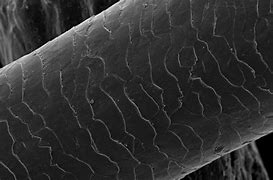
This is a picture of a black horse. It symbolizes nothing. It is a record of an aspect. In other words, it does not identify black horses, much less a particular black horse, because it does not refer to the structure of aspects which constitutes black horses or Daisy the black horse.
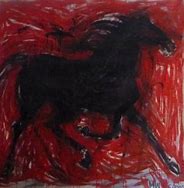
This is a black-horse picture. It symbolizes black horses, and therefore refers to the entire structure of aspects identifying black horses. Though this one does not, such pictures may refer to a particular structure of characteristics identifying Daisy the black horse.
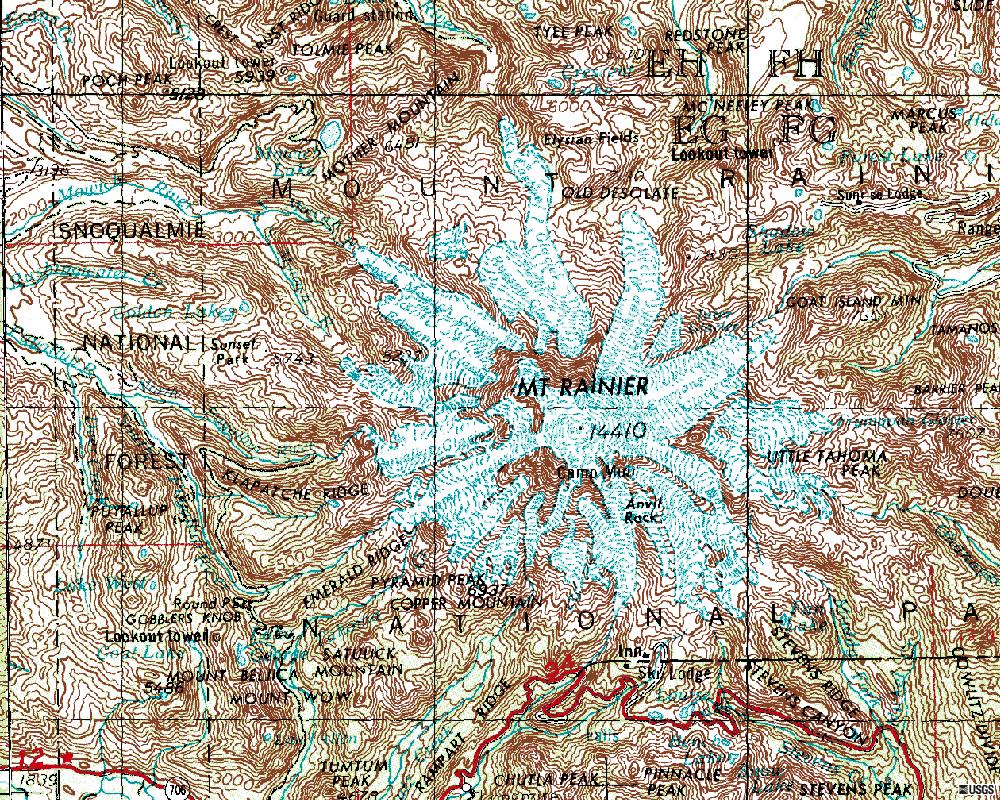
This is a topographic map of Mount Rainier. It is a record of an aspect (relative prominence). Therefore it is necessarily a picture of Mount Rainier. It also refers to the entire structure, from the chemistry of volcanic rock to the origins of the volcano’s name. Therefore, it is necessarily a mountain picture, a volcano picture and a Mount Rainier picture.
Any map which is a map has these features: it presents a viewpoint in reference to the global structure of viewpoints on its subject. The name superimposed on the map’s collection of contour lines directs the user to a European nobleman in whose honor a Pacific Northwest volcano was named. Knowing now that the map in hand is a map of a Pacific Northwest volcano, one can guess, based on geologic and physical chemistry aspects of those peaks, what the climbing might be like on the steep, North face of Mount Rainier.
In addition and necessarily, if I travel to a certain longitude and latitude on the map, I will know what sort of ground I will be standing on: rock or ice, steep or flat. Because, I have a picture of that ground on the map.
Maps constitute our reality, if we wish to speak of anything as real. It is an interdependent reality, not an independent reality, and especially not a mind independent reality. The idealists can postulate archetypical forms for everything under the sun. Dualists can insist on a mental substance. Yet, the world maps the same without these outside props. Bishop Berkeley could be right; God could be making it all up as he goes along. But, when we stub our toes on a rock, our consciousness conjures a map featuring the stone’s painful hardness, without reference to any divine-creative aspect. At best, the activities of the deity are notations on the border of a chart which is already complete.
We employ cartography across the board, charting all things, from Northwest volcanoes to attitudes. Sometimes, we even use fictional maps in our depictions of sentimental features of our experience. A map of Middle Earth, for instance, does not record any aspect of anyone’s experience. It does provide a background of relationships upon which various categories of experience are charted. The landscape’s precipices, snowfields and swift waters sketch out fear, endurance, and fidelity.
Features on the map of middle Earth fictionalize geologic structures as building blocks for a depiction of interpersonal relationships and personal attitudes. To be successful, the fictional features need to reference our maps of geology just enough to bring along the emotional content. The Misty Mountains must seem cold and treacherous. Rivendell must feel like an old growth forest. Done well enough, an arrangement of fictional elements can make us wonder what truly separates the constructed world from the world of primary experience.
There are hundreds, if not thousands, of images depicting Rivendell. But of course, there are no pictures of Rivendell. There are not even Rivendell pictures, as there is no structure of aspects to reference regarding Rivendell’s locality. What the artist does when they depict Rivendell is a reconciliation. Images of Rivendell constitute an attempt to match up the artist’s motive with the elements of the artist’s experience. Tolkien simply acts as a guide. He lays out the emotional manifestations which the topography must encompass.
The reason for fictions like the diverse images of Rivendell, should be obvious. When we examine our motive, we confront a brute fact. Our methods, which aim to explain, suddenly fail, and we are forced to construct a proper narrative instead. Such is the case with artistic fictions, and such is the case with moral fictions as well.
We move from one psychological state to another without understanding how we arrived at the start or why we left it. So, our reflections prove reactive, and our notions of introspection are fallacies at heart. To reconcile motive and experience, we must fall back on our depictions of Rivendell, and our moral narratives.
The method of our psychological cartography yields a much different product than we get from our geographical cartography. Our map of Mount Rainier provides a record of an aspect in reference to a global structure of aspects. Our depictions of Rivendell suggest emotions which record our psychological motion through the landscape. Our psychological cartography necessarily gives us something secondary: the structure of experience resulting from motive expressing itself, as it flows freely or is thwarted by the cliffs, streams and woodlands on the page.
Because we can explain the sensations, whether the depiction of Rivendell makes us feel warm or cold, sad or inspired, we find it easier to speak of those sensations as primary. We say that the depiction moves us to the attitude in question. That is not accurate. We move and our sensations constitute the wake of that motion. The generative element of our experience is not responsive. Even our wistful feelings upon viewing the ancient trees of Rivendell are not responses, but results.
All talk of morality is a Rivendell picture.
It looks like a place, in other words, a suitable cartographic subject. But, as Hume and Moore pointed out, our moral depictions lack the associated structure of aspects required. Moral depictions are secondary representations, just like Rivendell, which is a secondary representation of interpersonal relationships and personal attitudes. Instead of precipices, snowfields, and rushing streams, moral pictures sketch out a desirable motivational ecosystem. And because of the opacity of motive, moral pictures always remain flawed in their representation, though they represent their secondary subject as well as any art might.
It is no great error to talk about a moral sense, or human thriving, or the tally of global well-being. These things represent the aspiration of our expressive impulse. We can use such terms consistently, as long as we do not begin to mistake those depictions as proper cartographic subjects.
 Dedicated to the Game