Category Archives: psychology

Curse You Peter Higgs

“Mass was so simple before you. Mass was just a property. Actually it was just a property of having another property: inertia. Inertia was so simple, though. It was just the property of resisting changes in motion.

Of course, we all know what ‘resisting’ means. And, we all know what motion is: d/t. If anyone must ask what distance and time are…well, there is little hope for someone so dim. At least, there is little hope for such a dimwit in physics. Hah! It looks like someone needs a metaphysician!”

The line of thought is a big hit with dualists. Actually, it is the best thing about mind/body dualism, and is why it’s good to have mind/body dualists around. Without them, physicalism grows too complacent.

The physicalist can be forgiven. It seems so obvious what we mean when we say that something is physical. But what does that mean? Is it simply anything that’s the proper business of physics? Is physics itself the proper business of physics?

The question of what makes something physical is actually difficult, even within physics. Take the Higgs field. It is not a ‘thing’; it is not even a ‘property’ of a ‘thing’. It is a property of space. It is a phenomenon which physics considers, but it is really weird, from the perspective of the old extended/unextended divide which Descartes proposed.

Yet we are prepared to accept the Higgs field as something physical, along with apples and atoms. That’s because we have been prepared to accept the physicality of the Higgs field by accepting  the physicality of things like d and t in the Newtonian scheme, as physical. Time and distance are not any less weird – they are strangely malleable, for instance – but they are more easily recognizable as our own phenomena. We experience time and distance, and we are comfortable with the idea that physics is a phenomenology of time and distance.

If we have drilled down to the notion of physics as phenomenology, and understand phenomena as our experience, then the remaining question is: What is our experience? I am not sure there is an all-encompassing answer to that question. Yet I think we can say a few things around the question which are instructive as to the notion of physicality.

At base, our experience is identity, and identity is interdependence. If I am watching an egg roll off the counter and hit the floor, I am the one watching that egg. The rolling egg, among other things, is making me, me. The memories of eggs, dependent upon the shape, color, texture and historical context of my current experience, shape my thoughts and expectations regarding the egg, just as the color, shape and texture of the egg depend upon the impression that the kitchen light delivers to my eyes after it bounces off the rolling egg. That is what the notion of supervenience is getting at: identity is fixed by spatial and temporal history.

And such a thing cannot be ‘transcendent’. It comes with the here and now; (physical) existence has a tense. ‘Tenseless’ existence is a product of reflection and not what we directly experience. Transcendence, in other words, occurs in the storybook, not in the story (else we would never read a story twice).

The trouble with this whole picture is that it looks like a truism. If physicality consists of an interdependent identity which avoids transcendence, then what is left? Ghosts are live possibilities; so are Higgs fields. Of course, that is the point of physicalism. When we look at our experience in total, physicality seems to exhaust all the explanatory possibilities, or at least the ones we could hope to know.


Tagged , , , , , , , , ,

OK Trump Voters, Grab Them Bootstraps…

…and get ready to start yankin’…Wait, what are they doin’ back there?

Oh, that’s gotta hurt. No lube or nothin’.

————————————————————————–

From the start of the current fiasco, two possibilities have existed. Either Trump meant that he subscribed to an authoritarian/fascist ideal (women in their proper roles, it’s fine for the state to torture individuals,  the National Identity is fixed and enforceable) or he calculated that enough people wanted to hear the language associated with fascism to get him what he wanted.

If you voted for this guy, you were either moved by that language, or you were willing to accept that language to get what you wanted (fags in their proper roles, enforcement of your religious preferences, suppression of alternative religious preferences, etc. whatever).

I want to be clear: I am not using fascism merely as an epithet. I am referring to its contents. Because fascism is the idea that the individual is feckless and decadent without a guiding star, and that the nation/state is meant to be that star. It is an idea which appeals to fear and weakness, especially fear and weakness caused by weariness. It doesn’t just get enforced from above. It needs the complicity of a large portion of the population.

That’s what the rest of us are pissed at: not Trump in himself, but your complicity.

And now, it is looking like that may be what’s left to be pissed about. Trump is showing some signs that he was delivering a calculated rather than a sincere appeal to fascist sentiments. Realpolitik, as advocated by Gingrich, may have been the program all along.

The Wall, mass deportation, and repeal and replace have been replaced by caveats, preparing the way for …whatever.

The current whatever looks to be folks like Ryan and Pence. These are the dingleberries  on the bung-hole of democracy. Objectivists at heart, their major concern is seeing Social Darwinism work out as they expect. For them, the nation/state is a farce, and an unnatural impediment to the natural forces (for Pence, natural forces ordained by the Lord) which sort the wheat from the chaff.

So get ready, because guess who these guys think are the chaff? It isn’t just black folks, who are obviously responsible for their own sad economic state because they haven’t been capable of working hard enough to transcend a few paltry centuries of enslavement, or illegal immigrants who obviously came here to sack this country by doing all our highly desirable agricultural work and then scurrying back to Mexico to live like kings on their ill-gotten profits.

Listen closely Trump voters, because Pence & Co. are about to tell you that it’s time to bend over, grab your bootstraps, and start yankin’. When you do, something else is going to happen – the same thing that has been happening.

When it happens again, I want you to think back to that Stones’ song that Trump’s campaign kept playing at his rallies: You Can’t Always Get What You Want. Sometimes, though, you don’t even get what you need. Sometimes, you get what you deserve.


Tagged , ,

On Hating to Hate Hating on The Hateful Eight

The Hateful Eight is a Western movie by Quentin Tarantino. The title is a reference, if not an homage, to the famous Western, The Magnificent Seven, which is an American take on Kurosawa’s film, Seven Samurai.

Though this post will examine the plot and characters in The Hateful Eight, there is no need for a spoiler alert. Representations of art cannot spoil the experience of art. That is because true art is not didactic. It is about what it depicts  rather than being a diagram, so experiencing the art is everything, and knowing things about how a work of art is put together can never substitute for the experience.

Whether you think The Hateful Eight is good art or bad, it meets the criterion above. The film does not document the Western landscape, rugged individualism, or violence; it is about the Western landscape, rugged individualism and violence. I happen to think it is pretty good art, but I hate it anyway. Let me explain.

In the first part of the movie, we learn about the characters, who are all forthright, tough individualists. They have come West after the Civil War. They have come to be free to be themselves. They have come to be free of their pasts. They have come to get away from the hell of other people.

On  a long stagecoach ride, the rugged individualists recount all the ways in which they have stuck to their principles, no matter the cost. They have been heroes in war and agents of justice afterwards, no matter which side they championed. What matters is that they have championed something, and have served blind justice.

But then, the stagecoach stops at a lonely outpost. The conversation moves indoors. Other people become involved. And in a ugly crescendo, we are shown the consequences of unyielding principle, and an ethic which extolls championing one’s principles as a virtue in itself. The result is scorched earth, and an endless cycle of vengeance chasing death, all sustained by the moral satisfaction which comes of living a principled life.

As the cycle plays out, the Hateful Eight sacrifice others and finally even themselves, a piece at a time, in the name of family bonds, racial justice, legal justice, and cultural allegiance. If the first part of the film invites the audience to share a draught of moral satisfaction with the characters, the second part challenges us to keep on drinking as it all turns to blood.

Because, the narrative doesn’t change as events on screen descend into an orgy of violence. The action is cartoonish, but the actors do not play it tongue in cheek. They do their best to keep it real. Their efforts seem pathetic at first, then sickening, as each side in turn slakes its thirst for justice on the suffering of the other.

At some point, the film invites the viewer to turn away from the escalating grotequerie, and when the viewer does turn away, that’s when the film really becomes art. Because, veering off in disgust is a hypocritical act. The audience hasn’t earned the right to look away. We were just admiring the characters for the very traits which generate the revolting atrocities in the second part of the film.

And haven’t we engaged in the same hypocrisy in real life, whenever we’ve bought into the Western-spirit myth of self reliance, toughness and self- righteousness without acknowledging that that same spirit has just as often  manifested as selfishness, callousness and zealotry? We love Lewis and Clark; we choose to forget Wounded Knee. We admire Custer’s bravery at the Little Bighorn while we stubbornly ignore the intentions which led him to that spot. We buy into the nasty Western contradiction every time we choose to watch a Western movie.

Yet the film’s indictment is flawed. We do turn away, so we can make the distinction between, for instance, Bill Hickok and Emil Reuter. In illustrative contrast, the original film in The Hateful Eight’s family tree recognizes the schism between our moral ideals and our emotional reflexes.

The young samurai who idolizes the leader of the Seven Samurai expects glory and honor from defending innocent villager from a gang of bandits. What he gets, in the course of achieving his victory, is one bitter loss after the next. He finally turns away too, and although he achieves some peace in understanding that the choice to fight is merely one grim option among many, he must also accept that there can be no moral equation which resolves those choices. The last scene questions whether his own choice really is worth it – and if he could even know anymore, having made the choice.

Tarantino’s film points an accusing finger to the same end, but aiming the finger sustains the cycle of judgement and reduction. Sure, it brings us in and makes us feel what it’s really like inside, but it is an oversimplification. It dodges the hard questions which arise in arguments about just wars or the enforcement of human rights. It leaves open the possibility of moral equations.

So, though I hate to say it, I do hate The Hateful Eight. And I hate that that is my inevitable conclusion.


Tagged , , , , ,

Don’t Piss Down my Back and Tell Me It’s Raining

The calls for reconciliation have begun. Right.

The weasel who won office by prying open the old cracks in American society and barging through, says it’s now time to heal those fissures.

The fawning sycophants who constitute the Republican party have started to push the narrative that he really didn’t mean it.

It was all just locker room talk, they say. Just listen to this other stuff he said.

Listen selectively, they suggest, to the non-denigrating parts.

Hmmm, what did you say, you simpering, weak, crawling roundworms on the Trump-voting turds?

Oh, I am reconciled…


Better and Better

img_1200

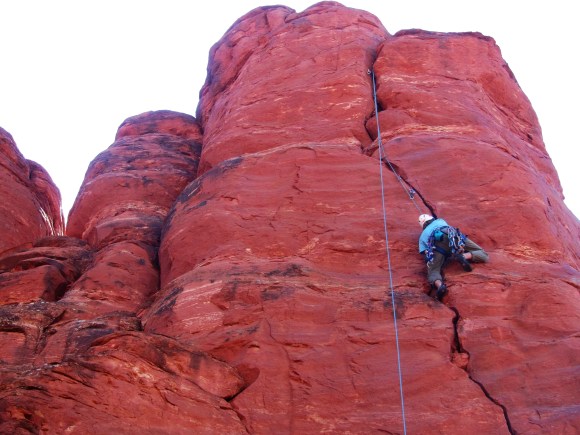
“I didn’t bring my gear because they said there was no climbing in Sedona. Because it is sandstone. Like Las Vegas.”

– Anonymous climber, sadly hiking by the base of The Pirate


img_1293

The Pirate


Who would lie so viciously? Most sandstone is climbable. Maybe you have to approach it like a mixed ice-climb; you know, distribute the weight, climb statically, don’t pull out.


img_1289

Tenacious Calculus, the best


And some of the climbs are apocryphal, or protected by hostile vegetation more nasty than anything the North Cascades could dream up (yes, worse than Devil’s Club).

img_1225

Book of Friends

But there is so much that is so good.

img_1299

Tagged , ,

I am sorry

I know why you read those books and perform the prescribed rituals. You are afraid of dying, and you are afraid of suffering. Moreover, you are afraid that your death and your suffering will not be remembered.

I know that the institutions to which you devote yourselves have spent centuries weaving a pseudo-philosophical tapestry of rationalizing tales to shield you from your fears. The length and depth of the weave gives it weight, and your devotion gives worth, but at the price of disassociation from your fears, and the simple understanding which fear brings.

You can push those fears outside yourselves, but it will avail you nothing.

In time’s rushing wave or eternity’s placid ocean, you will be forgotten. And in eternity, even you will forget you. All this is hidden by the curtain, and one more thing besides: things held in memoriam have no efficacy. The condition is nothing to which you may aspire.

Try this instead:

There is surely nothing other than the single purpose of the present moment. A man’s whole life is a succession of moment after moment. There will be nothing else to do, and nothing else to pursue. Live being true to the single purpose of the moment.

Hell, even an amateur gets it right from time to time.


No Other Reason

img_1226

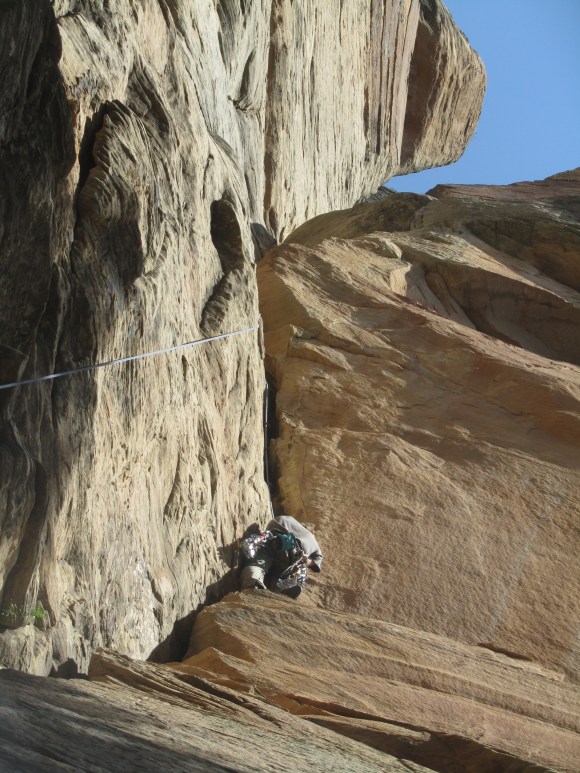
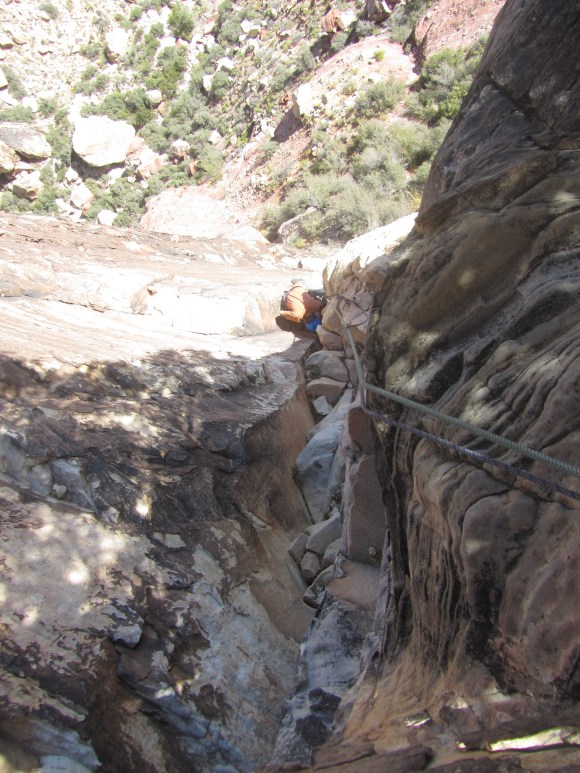
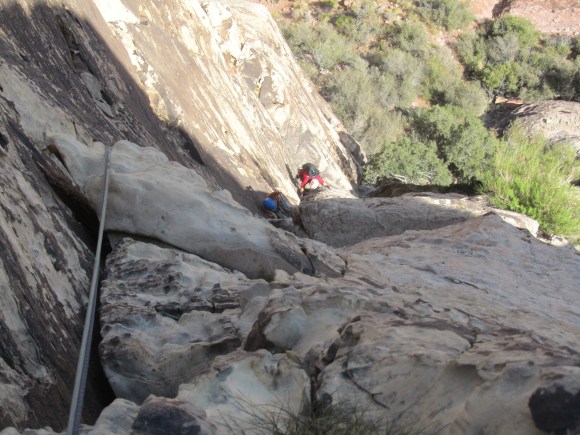
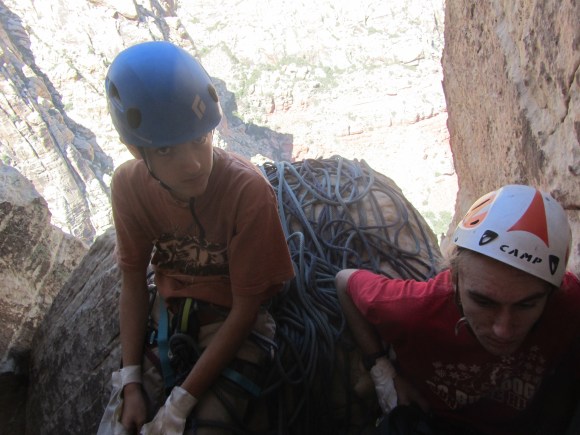
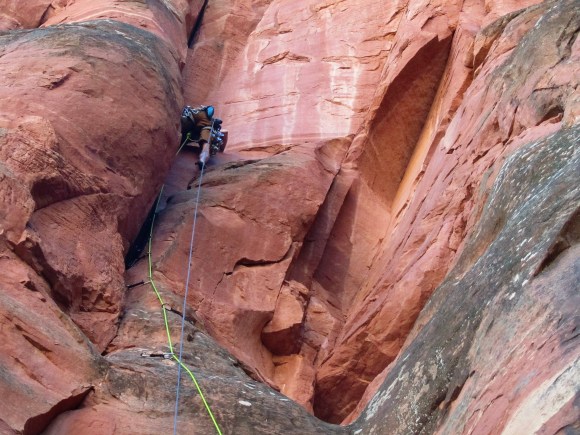
I looked at the anchor. There was a lot to it, but it was all small. Still, it showed no sign of motion when I bounced on it. Bouncing on it was my job, and that was OK, even if the anchor failed its test. I hadn’t called ‘off belay’ yet. If the whole thing blew out of the crack in the Apache sandstone, I would fall about thirty feet.

img_1228

It wouldn’t be pretty, but everyone would survive, because I had done the same thing at the last anchor. Having tested the set-up, I did the usual thing and stopped worrying about it. I would check it a couple more times as part of the process, but those would be dispassionate inspections and a matter of course.

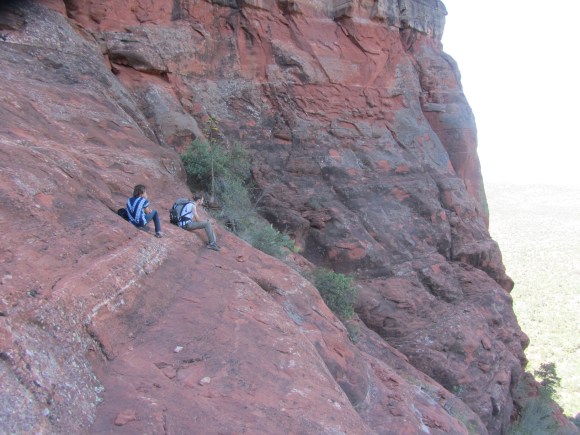
I felt a twinge of pride in my hard-earned discipline because, from a certain perspective, I was in the process of engineering m own Armageddon. I had both of my teenage children 500 feet up a technical climb with no fixed anchors. If things went wrong, everybody could end up dead. Sure, the climbing was far from a red-zone effort for me, but the possibility remained. From a certain perspective, our trip up the route was irresponsible, if not abusive on my part.

img_1235

The perspective in question had been on public display over the past couple of weeks. Just before our climb, two alpinists were given up for dead on a mountain in Pakistan. The typical mewling followed.

“Darwinism in action.”

img_1239

“Stupid.”

img_1241

“Irresponsible.”

img_1242

“High price for a cheap thrill.”

As always, the simpering pieces of shit making those comments were … well, to be fair, they were simply unqualified to comment. They were the kind of weak which makes me ashamed to be classified in the same species as them.

They were Nietzsche’s vision of the last man, realized.

I believe the term-of-art is, “punk-ass bitches”.

img_1245

Anyone who has climbed knows why the two men were on that mountain in Pakistan. They were there because it moved them – the mountain, the climbing, the commitment, the whole thing. While they were climbing, they were living by a pure aesthetic, and anyone who has not lived that, cannot understand it.

img_1247

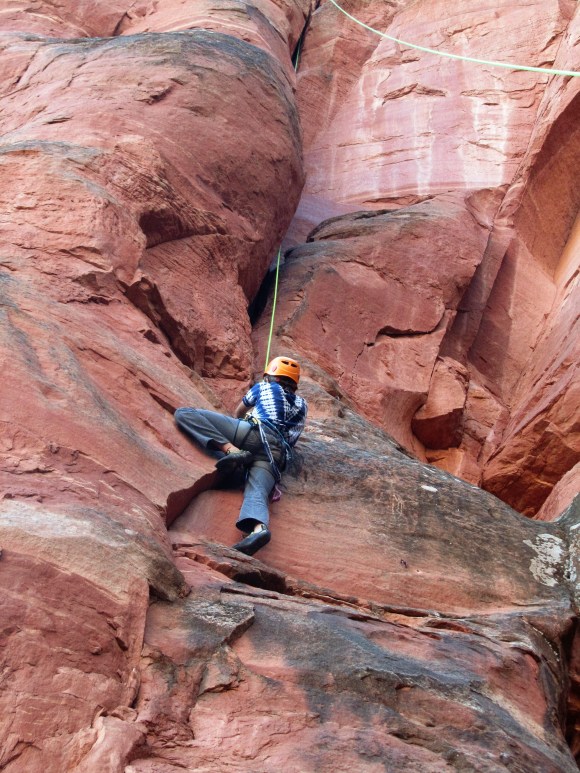
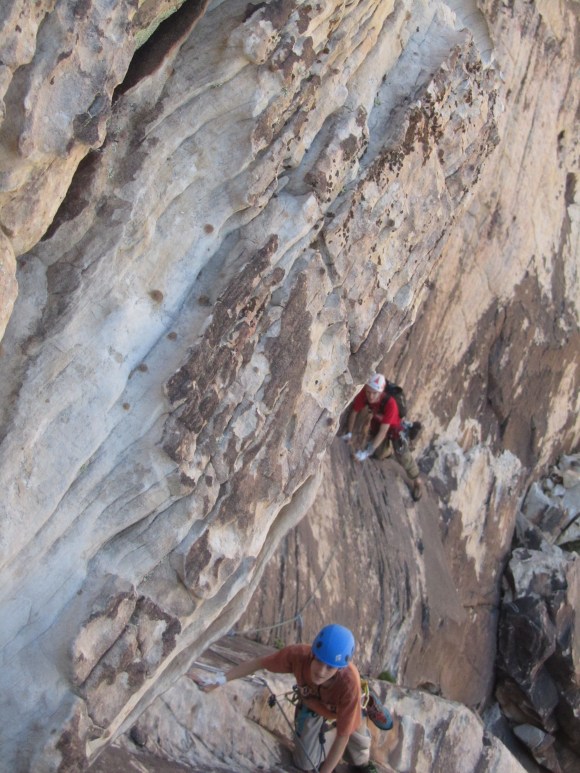
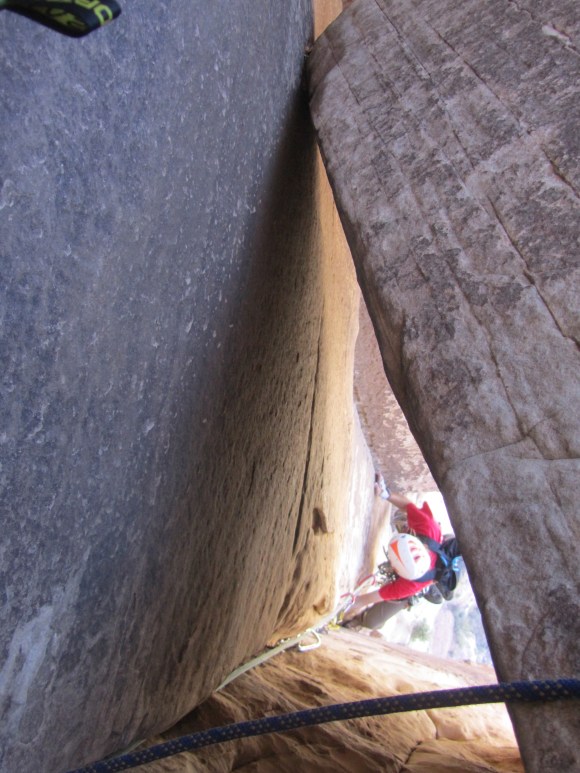
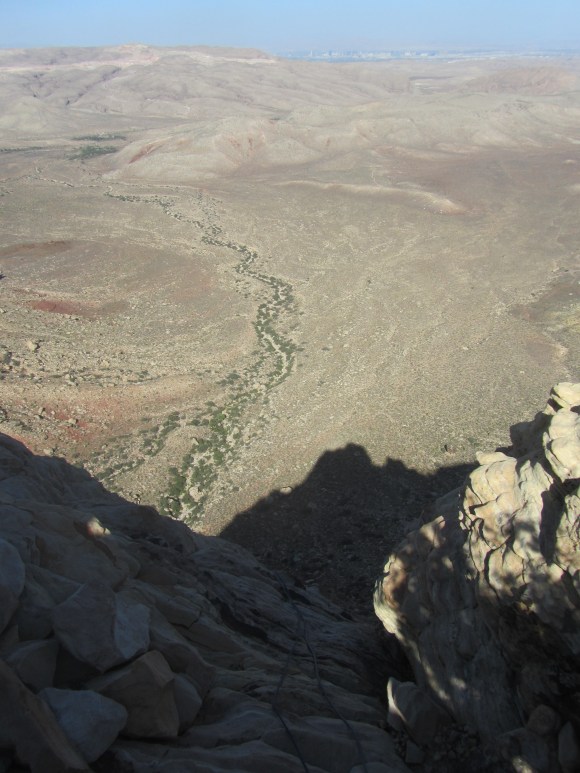
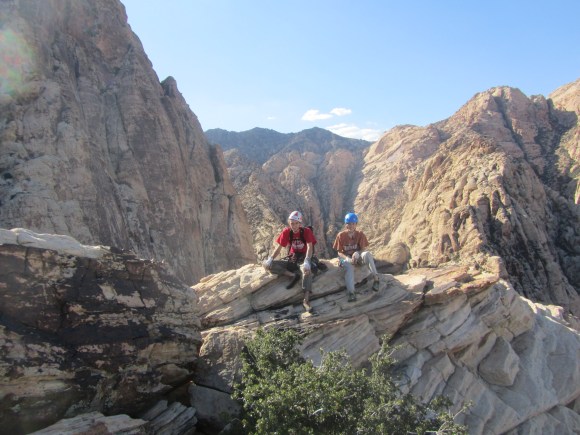
Frogland, 5.8, 6-7 pitches, 700 feet, Red Rocks, Nevada

Those who have lived it know: There is no other reason.


Tagged , , , , ,

Socrates Is Not a Number

The heavyweight teetered on his shoulder for a moment, and then the plane of his back tipped slightly beyond perpendicular to the mat. Everyone groaned. They knew that it was over. In those days, before high school students had really gotten into the steroids, heavyweights were heavy. If one got turned onto his back, the victim was doomed to stay there until the refree slapped the mat and the portly victor rolled off.

The poor kid who now faced being pinned to the mat in the district semi-final was typical of the heavyweight breed. He was a kid who was interested in athletics, despite being pretty un-athletic. He was too heavy. But he was large. He was tall and broad, and it made his weight wieldy enough to let him play on the line in football, and wrestle in the heavyweight division. Some of his species were hyper-aggressive, likely in response to the hazing they received from elementary school on up. He was well-adjusted however, which worked against him on the mat.

He had an unfortunate name, ‘Jonah’. In the bible belt, that immediately earned him the nick name, ‘Jonah the Whale’. We had hung out on the sidelines waiting for our turns to wrestle and I liked him, as far as I knew him.

I hadn’t qualified for the district tournament, so I was watching Jonah from the stands with my father and the choir director from our church. We were rooting for Jonah, because he was up against a wrestler from a rival school. If Jonah won, our team locked in the tournament win. It was not to be. Under the combined weight of his opponent and his own bulk, Jonah sank flat. His legs flailed briefly in a futile attempt to bridge his shoulders off the mat. The referee slapped his hand and blew his whistle. Jonah’s legs went limp.

The choir director turned to my father and said, “Now, isn’t that just like a nigger.”

My father usually would not reply to stupid crap like that. He saw no point in useless conflict. But this time, he looked like he didn’t even know what he might say. He was flabbergasted, and so was I.

It was not the words; it was the tone.

The choir director didn’t sound angry, bitter or vindicated. He had a note of sadness and resignation in his voice. He expected Jonah to give up and lose, because it was in Jonah’s blood to give up and lose. Jonah had inherited an identity which played in certain narratives and not others. To our choir director, black folks were lazy, unreliable and weak-minded. Jonah was black, therefore Jonah was lazy, unreliable and weak-minded.

For the longest time, I thought that our choir director was wrong about Jonah just  because he was wrong about black folks. But I finally came to realize that our choir director was wrong about Jonah, because he was wrong about everything. Jonah could be represented by blackness, or fatness, or type B personality, but none of those things were Jonah. Nor was it true to say that Jonah represented any of the things that you could say about him.

Put enough of those things together, and you might be able to pick Jonah out of a crowd, or even predict what he might do in a particular situation. However there was no Form of Blackness, Property of Personableness, or Elan Vital , which determined his ethnicity, his being good mat-side company, or his being the proper subject of Biology.

Yet that was the world according to our pious musician. It was a world of causative kinds, where things like Good, Black and Life were not points on our map of the world, but the lands themselves, which we had discovered or, as he would maintain, were granted us by God. It seemed that he saw things that way, at least.

For a time, I considered the possibility that I was being too hard on him by speculating that he was the type who might claim that opium caused sleepiness by means of a dormative property. Maybe he was the type that saw a grander conspiracy, instead. Not the Conspiracy of Forms, but the Conspiracy of Form. Perhaps he saw the fact that our experience permitted mapping and the application of logic as evidence of some existential purpose. It could not be otherwise, otherwise we could not know that it could not be otherwise. Of course, that was the problem with the Grand Conspiracy – there could be no otherwise to propose. It was undecidable in principle and so the Grand Conspiracy could only be held as a humble hypothesis, on faith.

And that was why I came to believe that he was the first sort of conspiracy theorist after all. Like most in the church hierarchy, he was not really interested in anything humble. The factors of an authoritarian regime never are. They want the appearance of humility which comes with deference to order. A humble demeanor sets people off their guard, which makes it easier to bludgeon them into line (inevitably behind the club wielder). Such individuals will also pay lip-service to the Grand Conspiracy in order to cultivate a humble self-image, since a humble self-image makes the beatdown easier to countenance (I am merely an instrument; it is for their own good). However, what they act upon is the Conspiracy of Forms, because order serves its servants.

Later that night, Jonah wrestled in the consolation round of the tournament. What had gotten into him, I would never know, but he came out in an uncharacteristic, cartoon fury, twitching and spluttering like Daffy Duck. It took the opponent aback, but it did not make Jonah more graceful 0r skilled. It did not keep Jonah off his back.

Again the groan went up. Jonah’s coach and family screamed futile encouragement. In a grim replay of his earlier match, Jonah tried to bridge. And it worked.

The move didn’t flip the other wrestler off Jonah’s chest, or even raise Jonah’s shoulders off the mat. However, in his fury, he had worked himself into a lather, and lubricated by his own sweat, he was able to scoot himself and the large boy lying on top of him, across the mat and out of bounds.

From there, Jonah’s determination saw him through. Buoyed by his miraculous escape, he could not be held down, and after two more minutes of panting and pushing, Jonah won the match on points.

When it was all over, Jonah was still black, still alive, still personable, and still a heavyweight, just as Socrates was any number of numbers.


Tagged , , ,

Coffee Enema? No, I Said Causal Enema.

I hate  baseball. I hate the bleachers, the standing around, the hide-bound rules, the pastoral sublimation of aggressive behavior which breaks down in fights from time to time. Most of all though, I hate the crack of the ball off the bat. It is a false promise of wind in the doldrums, and a bitter return to cud-chewing calm always follows.

I always feel a little guilty about my baseball hating ways, because the crack of the ball off the bat seems so innocent. After all, it is simply the elastic properties of wood, leather and air interacting. Of course, those properties of the materials are in turn determined by the molecular structure of the materials. There can be little doubt about it; flip the bits around in the bat’s cellulose and you have a starch, and subsequently, no crack. And of course, the properties of the atoms in the molecules cause the molecular structure to hold together and behave as it does. Oh, and I can’t forget the quantum properties of the atoms’ particles, which, arranged as they are, cause the atoms to behave as they do, and therefore cause the molecules to behave as they do, and thus the materials’ behavior, etc.

The whole situation looks to be a rabbit hole, with no bottom to the causal drop. But the appearance of interminable reduction is illusory. When we speak of the kind of analytic reduction which says that what is really happening when the bat flexes is that the molecular bonds in the cellulose are flexing, and what is really happening when the molecular bonds are flexing is a shifting probability gradient in a quantum field, etc., we are describing the applicability of a method.

The bat, the ball, and their interaction can be represented by reduction. There is a web of dependencies which can be mapped out within the bat and ball phenomena. The map tells us that if we see a flexing bat, we can look in the chemical vicinity and find cellulose, or the particle physics vicinity and find electrons, or in the quantum mechanical vicinity and find orbitals. Reductive representation gives us a means of identification rather than a mechanism of cause. It is not the case that the quantum probabilities change, which induces bonds to flex, which causes the ball to spring off the bat. All these occurrences are coincident in space and time.

We should be dismayed to find a bottomless pit of causes. Even in the awful dolbrums of the baseball diamond, we see things happening, rather than standing eternally on hold while the micro-physical structure tries to get it together. So, the representational reduction of baseball is about as compelling as the game itself.

My hatred of baseball seems a little different, at least at first glance. It resists representational reduction. There is no baseball-hating mechanism. No set of laws seems to predict my hatred of baseball in the way that the laws of physics predict the flexing of the bat and the ball. After all, some apparently reasonable, emotionally balanced people, of similar background to my own, profess a love of baseball.

Nor can I quantify my hatred of baseball. It does not contain a certain number of carbon and oxygen atoms. It has no temperature. And yet, my hatred of baseball also seems to depend on those little atoms, as much as the specific bats and balls do – actually, insofar as the bats and balls do. For I would not know about baseball if it were not for all those cracking bats and balls which built my awareness of the game and engendered my hatred. Because, my hatred was not some metaphysical lurker, waiting like an emotional lamprey to latch onto baseball.

Though it is private, and so cannot be quantified, I know just where my hatred of baseball resides. It lives right in the snug space between my dislike of basketball and my despite of opera. It stems from my propensity to do rather than observe. It relates to my aversion to uniforms and my natural incomprehension of any activity built around catching a projectile. In other words, my hatred of baseball is reducible, even though there is no chemistry of it as there is of bats and balls.

And actually, bats and balls are reducible in the same way. A particular bat is swinging at a particular ball at a moment in a particular stifling, unbearable inning, because we can say that its particular particles stand as they do on the global stage. And, here is the point of metaphysical interest. The identity of the bat and the ball, my hatred of baseball, and even my own identity,  depend strictly  upon their susceptibility to this latter sort of reduction. It is what makes them physical. The susceptibility of my experience to reductive explanation causes me to say that I am at a baseball game, that I hate baseball, and that, at any moment in an inning, I am hating this stifling, unbearable, cracking false promise as an instantion and a progression of my baseball hate.


Tagged , , , , , , , ,

The edge

IMG_1133

One hundred degrees feels hotter in the desert than it does in town. The relentlessness of the sun is part of the difference. Running in the Sonoran desert, in Summer, is unwise, but I don’t claim to be wise. It is just a few miles, after all, on good trails.

The sun is rising high by the time I get going. The first three or four miles remain comfortable, but I can feel the heat building in the air and in my blood. I have to slow down. Still, it gets hotter.

Half way around the pile of granite blocks which passes for a mountain in these parts, I feel a little adrenergic twinge. Those who have pushed themselves will understand what I mean. It is the thing that comes after a second wind in the form of a slightly panicky, angry feeling accompanied by a tightening of the skin and a little nausea.

The feeling marks a reserve opening up, but at a price. Blood goes to the muscles and away from the viscera, but also away from the skin, where it is needed to exchange heat with the air. I slow down some more, but the heat keeps building.

I am getting close now. I can see the power lines which cross the trail just a half mile from the trailhead, with its shade-shelter and water. I think I know just how much I can allow myself to speed up, and I do.

The last quarter mile feels a little desperate, but I trot into the shade in good form, with a little left. I walk back and forth for a long time, cooling down. A cop patrolling the trailhead gives me a hard look. I understand; I don’t like the idea of getting sucked into a rescue either.

I was close to the edge. How close, I don’t know. That’s the thing. You can’t know where the edge is until you are over it.

Or rather, there isn’t really an edge. Sure, there’s a last step and an end to all efforts, but that last step is in a different spot every day. You can get pretty good at knowing when you’re close to the last step, but you can never know just exactly where and when you will collapse. The uncertainty keeps things interesting. The uncertainty is motivating.

And, the uncertainty is everywhere. The same run is not the same run. Feet land in different spots, the wind shifts, the sandy dirt is soft or packed.

So it is with all defined entities and their instances. Identities hold for instances. This desert is this desert, where I run this close to the edge, but not over. That is true. This desert is also the Sonoran Desert – practically, but not really. Accepting the latter sort of identity gets me to the trailhead, but no more. It doesn’t get to the truth, any more than talk of the edge informs me where the edge really is.

But now I recall; it is not true that there is an edge, only a retrospective, last step. I’m always thinking about the edge, because it helps keep me off the last step. Knowing about the last step does nothing for me, even though it is the truth.

Or rather, it does nothing because it is the truth. It is local and transparent. I can’t pack it up in a box and take it away to inform me elsewhere and in the future. But because it is local and transparent, I must move by it. And because I must move by it, the truth is inextricable from my motivation.

I think that’s why all of us remain enamored with the truth, even though it is useless in its own right. I know that’s why I will continue to run in the desert – the uncertainty of the true, last step and the very deficiency of my edge-theory – even though it may not be the most useful thing for my health in the end, mental or otherwise.


Tagged , , , , , , ,