The Dry Cat Food Paradox

So close, yet so far...the Tetons

So close, yet so far…the Tetons

I’ve recently had the privilege of attending a continuing education conference in Jackson, Wyoming. As a climber who thinks of himself as primarily an alpinist headed to the Tetons, I should have felt like the proverbial cat who ate the canary. Instead, I left my gear in the basement. It wouldn’t have fit in the car with all the ski equipment and clothes anyway (the whole family of four was signed up for the trip). It wouldn’t have done me any good even if it did fit. Four months out of the year, those mountains are shut down due to a horrendous snowpack. When conditions allow, the climbing is still high up and far back.

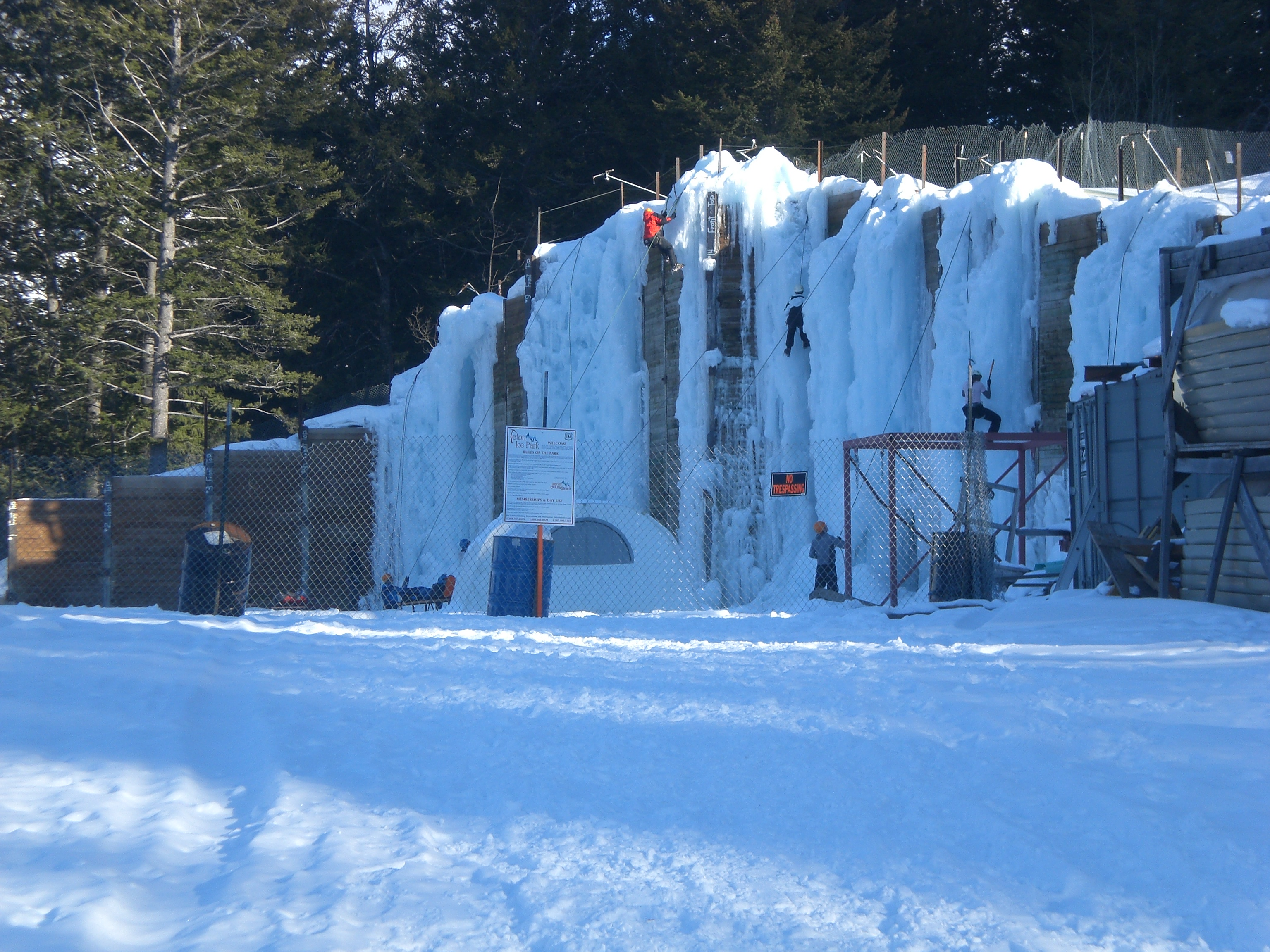
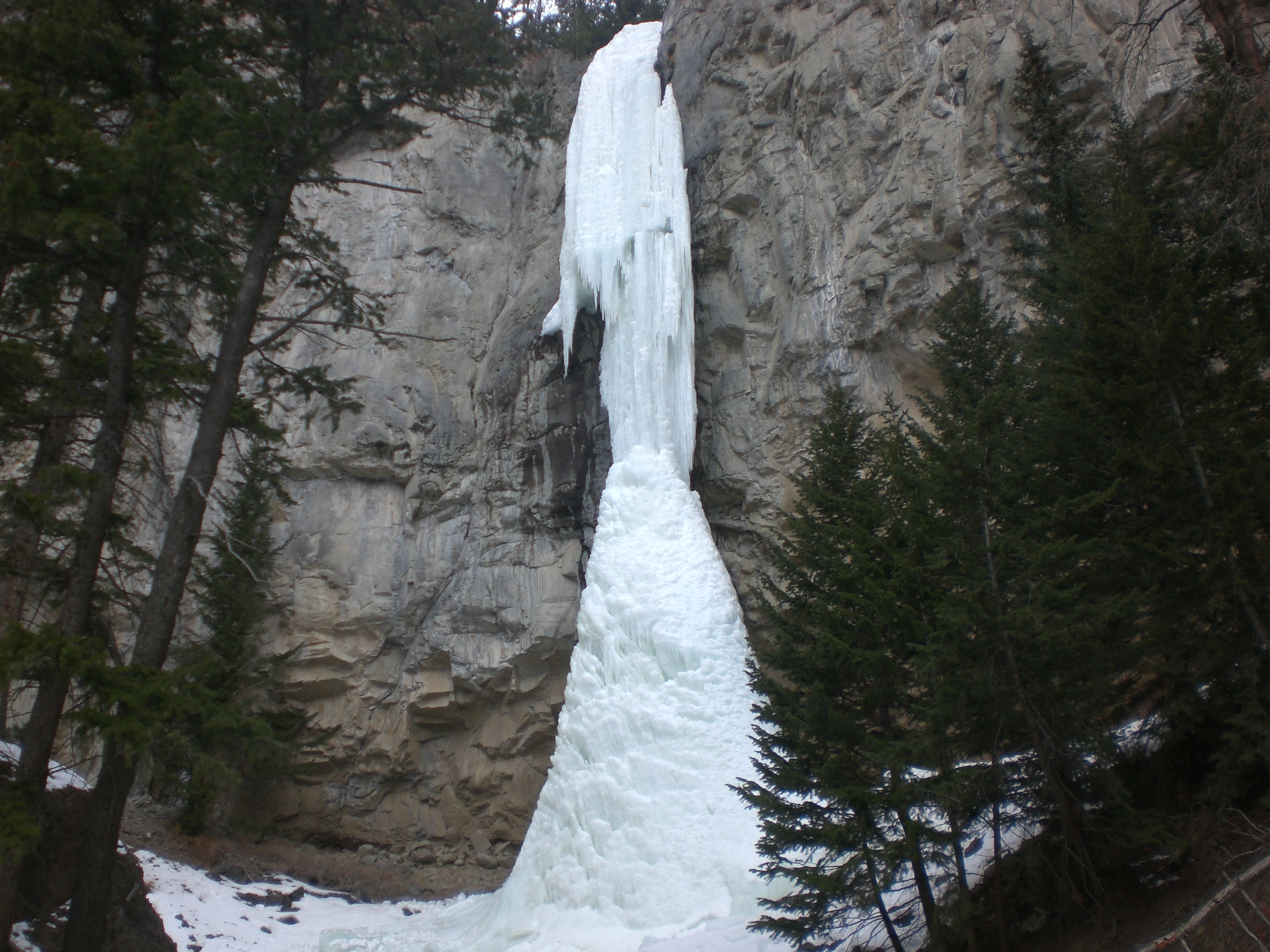
It turns out that it is almost as hard for a climber to subsist on Teton routes as it is for a cat to live on hunted birds. Signs of compensation for these difficulties were everywhere in Jackson. Right around the corner from the conference center, was a sign for the “Teton Ice Park”. When the first morning of lectures ended, I walked up to take a look. What I saw was the result of  a noble effort, but one obviously born of desperation. An enterprising guide service had run a few hoses over a 40 ft. retaining wall to produce about five, moderately-angled chunks of ice. The ice park rented gear, but I decided to utilize a different compensatory facility – the climbing gym just outside of town. It turned out to be quite nice.

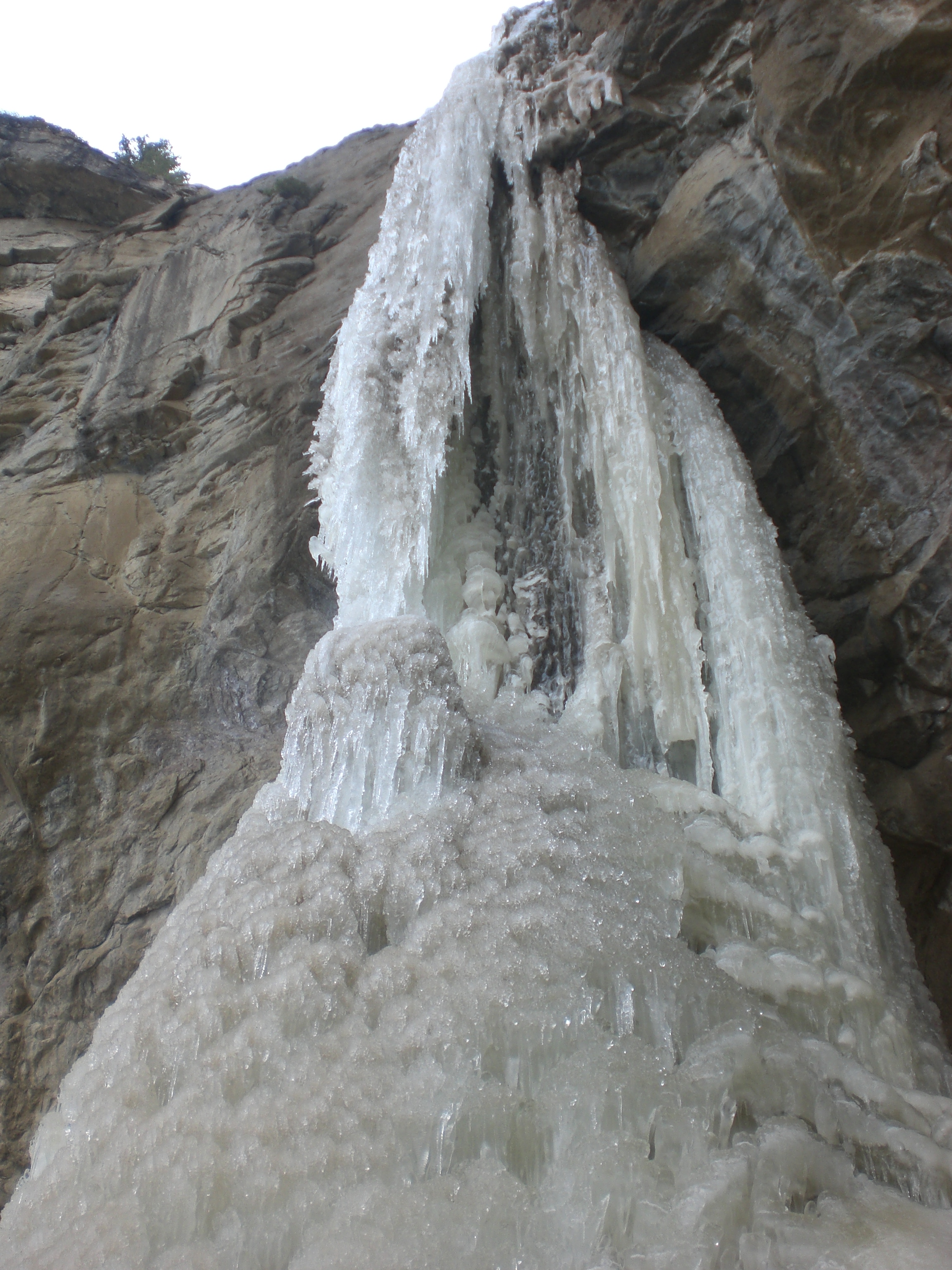
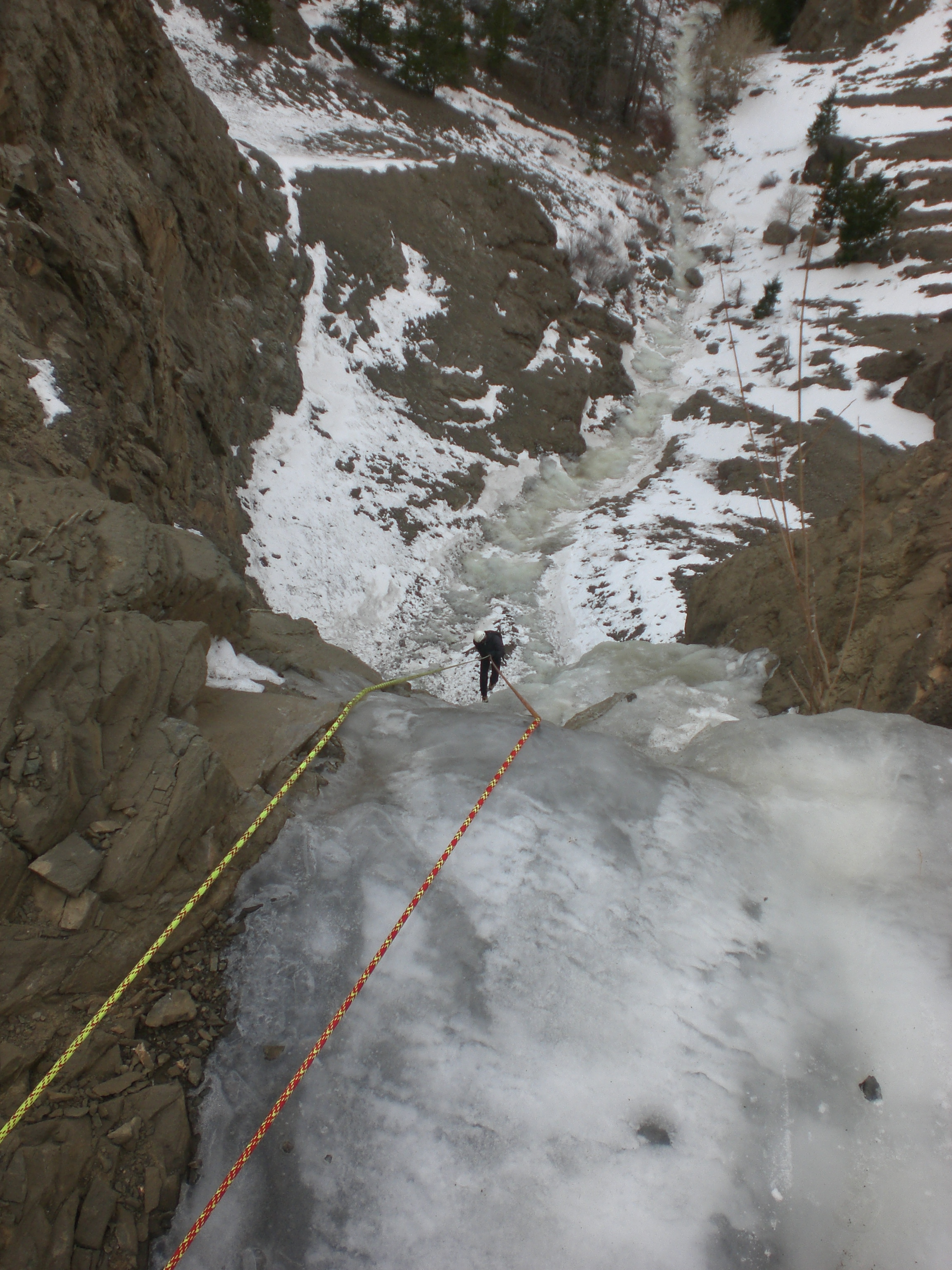
CIMG4000

Back in the conference center that evening, I was mulling over the dissonance of indoor climbing in the Tetons when the next set of lectures began. Maybe I should have been paying better attention to the speakers. However, it was a series about nutrition, and though the subject is interesting, the hard science behind it could be covered in about fifteen minutes rather than the three hours allotted  As I considered my Teton climbing experience, I kept coming back to the viewpoint which kept me in the Black Hills for all these years: alpine climbing is more about training than actually climbing. Adaptation to harder routes in the mountains paradoxically required less time climbing mountains. Living in a place like Jackson resulted in strong legs and weak skills. Unless a climber availed himself of  an artificial training facility, the volume of technical climbing needed to improve was just not accessible, at least to anyone with a job. My mind wandered back to the lecturer. He was talking about the Paleo Diet and I found it strangely relevant to the contradictions involved in trying to be a good alpine climber.

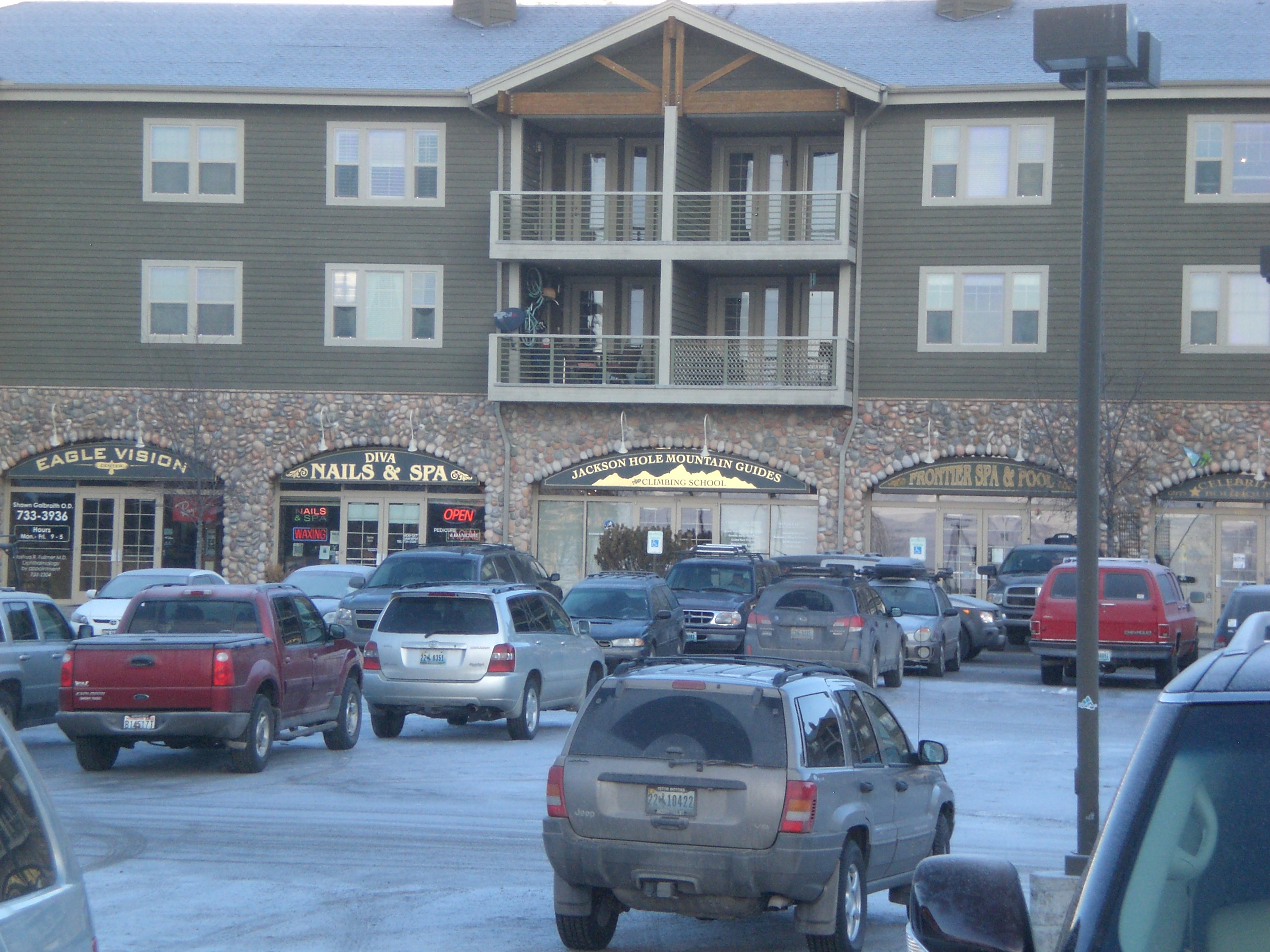
Guide service storefront.

Guide service storefront.

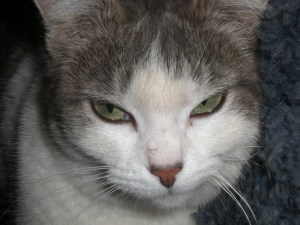
This diet is supposed represent our nutritional heritage. It encompasses the type and mix of foodstuffs our hunter-gatherer ancestors adapted to eat. Therefore, runs the logic of the diet’s proponents, it is the mix of foods that we ought to eat to  maximize our health and longevity. On the menu is lots of meat and a few plants. Grains and legumes are out. We should eat more like cats than cows, the speaker admonished. To back up his assertion, he flashed a slide on the screen with a picture of a cat at the top and a chart favorably comparing the body compositions of hunter-gatherers with those of cats.

The picture looked a little like my cat, but my cat thrives on dry cat food. I say “thrives”, because I have a dietary comparison-state for her. She was a stray who showed up in our garage when the weather got cold. Before coming to live in our house, she had, in fact, been subsisting on the cat version of the Paleo Diet – fresh, free-range mouse and bird meat. She wasn’t doing so well. She was thin and listless. After a few weeks living inside and dining on kibbles, however, she was tearing around the house like a maniac, destroying rolls of toilet paper and climbing the curtains.

Here are the first four ingredients listed on her cat food label: chicken by-product meal, corn grits, chicken fat, tuna, brewer’s rice. One would expect a wild cat to catch birds, but I doubt one ever took down a tuna, much less an ear of corn or rice. Still, a cat’s ability to live a long and active life eating nothing but rock-hard brown morsels shouldn’t surprise us. Evolution makes the most  of things, not necessarily the best of things. Wild cats developed the capacity to survive on mice and birds. Cats are therefore well suited to that diet. That doesn’t mean that there isn’t a diet better suited to cats. Perhaps humans are much the same.

A subsequent  slide showed a Kung! tribesman butchering an antelope with a stone tool, and then a chart with cholesterol levels and heart disease rates demonstrating the sterling health of various modern hunter-gatherers. Unfortunately, the health data for the Tarahumara, a group of indigenous people living in Mexico and renowned for their feats of long-distance running, look just as good. The Tarahumara subsist primarily on corn, beans, chiles, and beer.The answer to this dietary conundrum is not found in the diet, but what comes with the diet. Both the Kung! and the Tarahumara are incredibly active, and they do not suffer from surplus. The Paleo diet is not the answer to our health problems. No such simple answer exists.

Of course, there are limits imposed by natural adaptation and on artificial adaptation. Artificial answers are also incomplete. To be a good alpinist, one must climb a certain number of big routes in the mountains. But plate after plate of summits will limit a climber’s potential in the end. Though it isn’t complete in itself, some artifice is required as well. Likewise, when my cat came to live in the house, she didn’t just get dry food, she got a warm, stress-free place to sleep, immunizations, and anti-parasitic medicine. I’m sure she would not be so healthy if we limited our involvement with her to setting out a plate of kibbles on the driveway.

Of the billions of humans alive now, most are suffering from the short-comings of an agricultural, and subsequently an industrial, society and a few are suffering from its excesses. As the most realize the economic, social and technological benefits which drove the move to agriculture in the first place, they no longer get the grace period which the few enjoyed. The harms of excess come right along with the initial development. We can’t simply go back, though. Solutions will require some artifice, and may have an unsatisfying appearance – less like grass-fed beef  and more like a bowl of dry cat food or an indoor climbing gym in the Tetons.

Tagged , , , , ,

A Moister Brownie…

4th pitch of Mean Green

4th pitch of Mean Green

…is not necessarily a better brownie, especially when it comes to dirty ice.

CIMG3971

The Southfork is not is stellar shape this year. Climbs like Moratorium haven’t seen enough water to form up properly, while South-facing routes like Ovisight haven’t seen enough cold.

CIMG3962

Mr. Mulkey has pulled off ascents of Pillars of the Community and the mixed start to Joy After Pain (the latter with help from a friend, see video and photos at coldfear.com) but even those climbs are beginning to sublimate away.

CIMG3973

We squeaked by the third pitch of Broken Hearts.

CIMG3981

On the return trip, it was gone.

6th pitch of Broken Hearts

6th pitch of Broken Hearts

Carotid Artery wasn’t even close enough for me to agonize over.

CIMG3967

Mean Green looked to be missing the fourth pitch, but it turned out that the ice was just so full of dirt, you could barely distinguish it from the rock.

The Valley from the top of pitch 5, Mean Green

The Valley from the top of pitch 5, Mean Green

It feels like the season has never gotten started this year; thoughts of Canada are already popping into my head unbidden.

Ten Sleep

Ten Sleep

We’ll give it a couple of more weeks.

Tagged , , ,

Cult of the Range-Fed Turtles

When my best childhood friend grew up, he decided to become an archaeologist. During his graduate training, he was in charge of  a dig in the Mississippi river valley which unearthed an odd structure. In the midst of the native people’s dwellings, was found a circular enclosure made of closely spaced wooden posts and containing a large pile of turtle shells. The undergraduates were eager to speculate about the purpose of the structure, but my friend cautioned them against it.

“We can’t be sure of its use,” he said”, and we can’t just guess based on what we might use an enclosure like that for today. We can’t just assume they were running a turtle ranch here. Why would they do that with a river full of turtles just a quarter-mile away? We have to put it in context of the surrounding village and the environment of the time, look for other examples and see if there are any modern structural analogs. Then we can make a guess, but it will still just be a guess.”

The next day the professor in charge of the dig came around on a rare site visit to see how things were proceeding. The students were eager to show him the mysterious ring of posts with its pile of shells.

Upon seeing their find, the professor remarked without hesitation, “Huh, must have been a turtle pen,” and promptly resumed his walking tour of the dig.

I don’t know if archaeology has an excuse for this kind of thinking, but medicine does:

Life is short. The art is long. Experience is difficult.

– Hippocrates

We can be forgiven for resorting to teleological assumptions now and again in medicine. With limited time and incomplete information, we must sometimes act on hypotheses which attribute function to structure and purpose to processes. Lucky for us, there’s plenty of slop in the system, so even if we’re wrong at the start, we usually get a second chance. We are trying to get away from teleology, though. “Evidence based medicine” and “scientific medicine” are the names that we have given that effort.

We are trying to get away from teleology because we have been burned by it. We thought that the body made pus to fight off bacterial infections, so for years, when we saw people with respiratory illness cough up phlegm with pus in it, we gave them antibacterial medications. We were wrong, not just about the purpose of pus, but in attributing a purpose to pus. Again, it was an understandable mistake, given the long history of debate regarding the merits of pus. Was it a good sign, or a bad one? Should we encourage or discourage its formation? It turns out we shouldn’t have been focusing on the pus at all, but on    the outcome of our purposeful intervention in the underlying process that produces the pus.

Purposeful results and final causes apply prospectively to human endeavors alone, and even there it’s often difficult to tell whether, when our actions are associated with the desired result, the outcome is due to our actions or simply due to fortuitous circumstances. Applied retrospectively or to processes and structures beyond our control, teleology is a sure mistake.

When we assign an endpoint to a process, we presume causation and correlation must be proven. Humans are notoriously bad at that. In systems which we can’t duplicate or control, we can always tell a causal story (I’m looking at you evolutionary psychology, intelligent design, cosmological fine tuning). But those stories are just interesting rationalizations, sharing the merits of a fairy tale in that they reveal more about us than the subject matter. Our fairy tales are harmless when they are about the universe, the origin of life, turtle ranches or anything else beyond our control. When we tell teleological stories about processes we do seek to influence (and can) we court tragedy.

The practice of bleeding was based on one such tale: the story of homeostasis. We still tell it today, but we tell it as metaphor instead of fact. The story is based on the simple observation that, when a person becomes ill, they go through a series of changes in their physical state which ultimately ends in either the restoration of their previous state, or death. Having observed other systems, the Greeks thought that the process of illness looked like a disequilibrium. Having observed associated changes in fluids which emanated from the body, they attributed the disequilibrium to an imbalance in those fluids. We can hardly blame them for the limits of their observations. We can’t fault their hypothesis. However, we can fault their method.

They didn’t just postulate an imbalance in the humors as a cause of illness, they presumed a balance of the humors as a state the body sought. The difference in these two points of view is subtle, but crucial. If  the balance of fluids is seen as descriptive  then restoring health by balancing the fluids remains a working hypothesis. It admits that other factors may determine the observed equilibrium. It leaves open the possibility that the observed flux of humors is a secondary phenomenon. Most important, it leaves physiologic equilibrium as a simple description, instead of presuming that it is a purpose with causal powers.

Given a description and a working hypothesis, physicians would look at their efforts to balance a patient’s humors with a critical eye. As a teleological assumption, with equilibrium as a “final cause” under Aristotle’s system, the idea creates an entirely different viewpoint. With  humoral balance rooted in the body’s design, variances in expected observations must be due to inadequate methods or incomplete knowledge of the humors. For this version of the “balancing the humors” hypothesis, failure is not an option.

Now, the ancient Greeks may have weathered this kind of assumption better than their heirs. They loved to fight with each other. In the face of inconsistent outcomes from humor-balancing interventions, they were likely to call Aristotle and Hippocrates idiots or just ignore the under-girding theory of causes altogether in favor of their own pet theory. Definitive statements naturally took a healthy beating in the Greeks’ intellectual environment. The Romans, and the Europeans who came after them, were much more pious.

As a result, no one questioned the teleological assumption, out of reverence for its sources, and the vital fluids persisted in medical thought owing largely to the idea of homeostasis by design. No matter how apparent the flaws in our understanding of the blood, bile and phlegm, they were somehow attached to the homeostatic goal of the body. As long as physicians saw that equilibrium as the body’s goal, they could reconcile any discrepant observations with the over-arching story and persist in practices such as bleeding. It fell to investigators outside of the medical profession to discover the secondary nature of the humors. Only then did the practices aimed at balancing the fluids truly begin to fade.

But long after bleeding and the balance of fluids fell by the wayside, the tale of homeostatic purpose continued to plague medical science. Physicians continued to view physiology as directed toward an end. For example  the heart was seen not to pump blood, but to be a pump. Therefore, medical students were instructed to never administer medications called beta-blockers to patients with heart failure.

Beta-blockers stick to proteins in the membranes of  heart cells called beta receptors, which normally bind adrenaline. Via the beta receptor proteins, adrenaline stimulates the heart to pump faster and with more force. In heart failure, the heart can’t contract forcefully or fast enough to keep up with the volume of blood returning to it from the veins. If the heart is a purpose-built pump, beta blockers should be anathema in the setting of heart failure. But in reality, when given to stabilized heart failure patients, beta blockers reduce long-term mortality by about one-third.

We don’t yet know exactly how these medicines achieve such a feat. We do know why they are not inevitably detrimental in heart failure. It is because the heart pumps, but it is not a purpose-built pump. The heart is instead a group of cells which inhabits a specialized niche in a system of many cells all with complimentary and competing characteristics, existing in a state of equilibrium which, in deference to tradition, we call homeostasis.

Our physiology doesn’t try to maintain homeostasis any more than erosion tries to form a natural arch. The arch forms (rather than crumbling like the sides of a stream-bed) because it is geometrically stable given the geology. The arch persists because it is geometrically stable, and so we frequently see natural arches where the climate and geology allow. Nobody marvels at this, speculating about a conspiracy between sandstone and weather patterns. Then again, few people have an emotional stake in natural arches. The same is true of our physiology, minus the low stakes. There is no overall homeostasis sensor or hormone in the body. There is no homeostasis conspiracy.

So, we have abandoned the notion of purpose in physiology, and that simple maneuver has allowed us to discover things like the survival benefit which beta blockers produce in heart failure. This move is the principle behind the randomized, controlled clinical trial. All along, it wasn’t ignorance holding us back, but the project of rationalizing our knowledge to traditionally understood, teleological models.

Of course, the questions driving evidence based medicine don’t start from nowhere. Scientific medicine asks questions based on the results of previous investigations and hypotheses derived from basic science discoveries regarding the components of physiology and their relationships. Some of these hypotheses are even most easily stated in terms of purpose. But those statements are now understood as metaphor, rather than bare fact.

Beyond the fecundity of this change in method, the move away from teleology finally brings some redemption for poor Hippocrates. Rather than using it as an excuse, we can understand his aphorism, “Life is short. The art is long. Experience is difficult “, properly again – as an admonition about method. Be skeptical. Remember that your viewpoint is limited. Watch out for overarching narratives. Good advice, and not just for medicine, but for all those turtle-ranch theorists out there (I’m looking at you intelligent design, cosmological fine tuning, evolutionary psychology…).

Tagged ,

Ice Climbing is Dangerous

CIMG3954

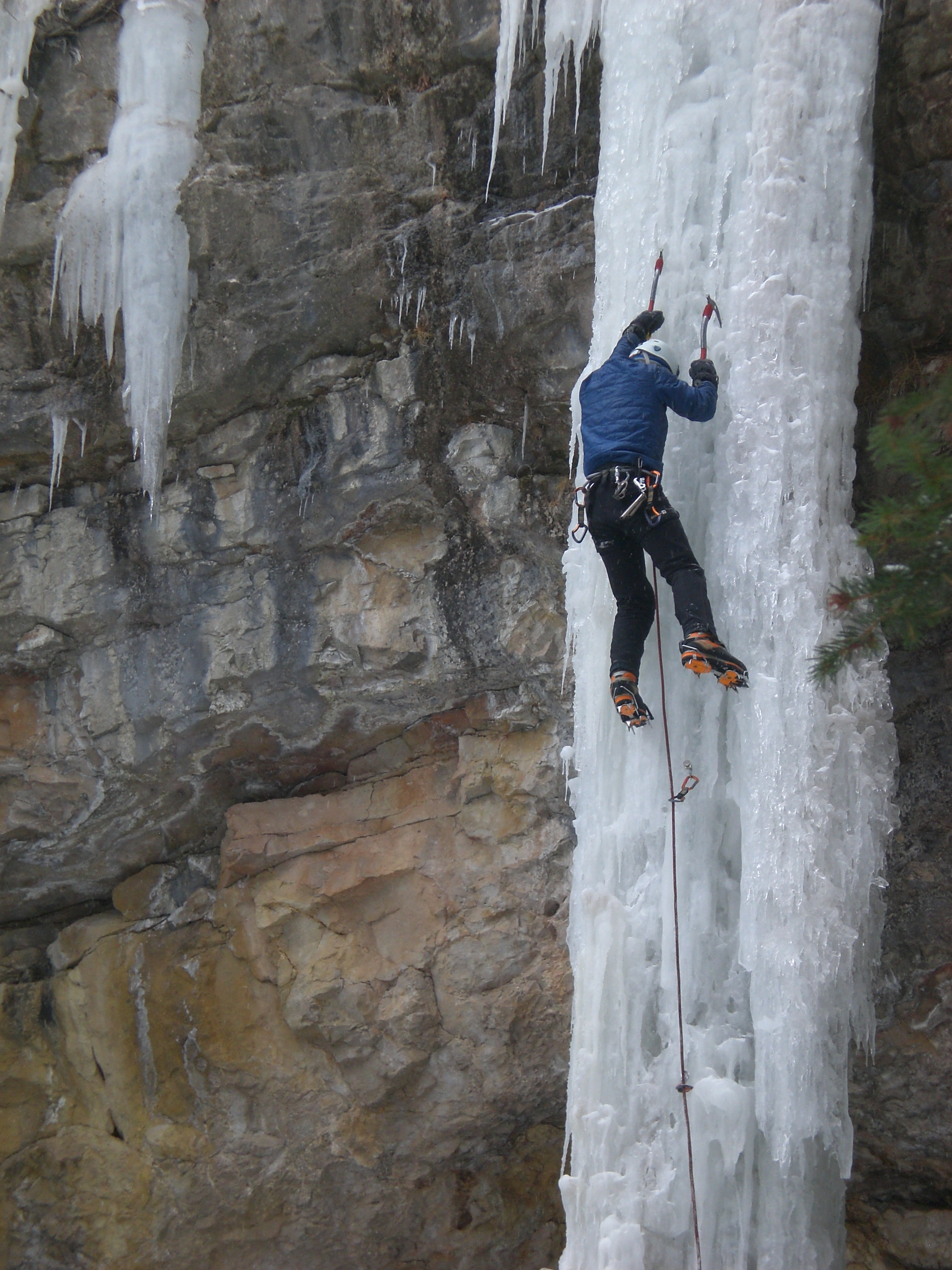
So we place tubular screws in the ice to secure the rope in case of a fall. But even placing the  protection is difficult enough to be controversial. You find them less and less, but there are some experienced climbers who feel it is safer to go without protection against all but a catastrophic fall. Their rationale is that the screws are too tiring to place and the placements are not predictably reliable.

As if it isn't hard enough - penalty slack

As if it isn’t hard enough – penalty slack

I disagree, of course, but I’m an optimist. I figure, if the screw hit an air pocket,  it may fail if I take a big fall on it, but that means it may not too, and I know that the ground will be even less forgiving. I have some data to back up my optimism. There are the drop tests done by Craig Leubben and Chris Harmston. Then there’s my anecdotal evidence. I know several people who have fallen on ice screws. The majority came away with fractures, true, but the screws held and all the climbers lived to climb again. In addition, I have personally witnessed two falls on ice screws.

CIMG3957

The first was several years ago. A friend and I were watching a couple of guys climb Jaws a waterfall in Rocky Mountain National park. The sun was baking the upper third of the climb and the leader wisely placed a screw just before he climbed out of the shade. About fifteen feet into the tropics, he started having trouble getting his tools to stick. He placed another screw and continued. After ten more feet, it was clear he could not go up any farther; the ice was just too thin and rotten. Things looked better off to his right though, so he struck out in that direction. It proved a false hope. Two moves into the traverse, he slid down several feet. He recovered, made two more tool placements, then popped off. The upper screw blew out of the ice without even stretching the rope. The shadow piece caught him after about fifty feet, just five feet from the ground.

CIMG3959

I witnessed the second fall just five days ago. A younger gentleman was climbing at our training area. I had led a solid line just to his right a few minutes before. He wanted to go a bit steeper. The line he chose had a little overhanging icicle about fifteen feet up and he launched for it. Rich had tapped on that feature on his way past it, and neither of us liked the sound it made. I almost said something, but I didn’t want to intrude. Tony’s a good climber; he would be careful. He drove an ice screw in the pillar below the icicle, hooked a tool on a feature in the middle of the hanging dagger, and took a tentative swing for the top of the icicle. As soon as the pick of the tool made contact, the whole thing cut loose. Fortunately, he had his legs out from under the falling chunk, so he missed having his bottom half skewered. The screw caught him just before his crampon points scraped the ground. The screw did not bend and the ice around the hanger hadn’t a chip in it. The fall factor had to be close to 1.5. I shall persist in my optimism.

CIMG3952

Tagged , ,

The Prelife

I have resigned myself to die many times over, but I have been lucky. I wasn’t shot in Paris. I didn’t fall off the North Ridge variation. I wasn’t killed by rock fall, or struck by the falling body. The avalanche didn’t push me over the cliff. I recovered from my pneumonia and I stopped rolling before I went under the car.

I have known others who had similar experiences and the same good fortune. One guy fell from the top of an ice climb and punctured his lung. When he got out of the hospital, he sold all his gear and quit climbing. Another locked the back brake on his motorcycle at 60 mph to slip behind the car he was passing. In doing so, he avoided a head-on collision with a truck, and barely kept his machine upright through the ensuing fishtail slide. After he pulled off the road and dismounted, he never climbed back on a bike again. On the other hand, another guy I know survived altitude sickness on Denali, came down and bought a para-glider  Then there was the friend who took fall after fall, and each time climbed farther from his protection than the last, until he began to eschew the rope altogether.

The first group, those who escaped a close call and chose to hoard the life that might remain to them, were wrong. Time kept in a vault sustains nothing in the end, it simply perishes. However, the second group, those who saw themselves as survivors specially blessed by fortune, were also wrong. No such privilege exists. Of all the people I’ve encountered who confronted death, the only ones who seemed to get it right every time were those who died.

I have seen a lot of people die. On the road, in the snow, in bed and on gurneys, the people I have seen die have done so in quiet, while the people around them wept and wailed. I think that arrangement reflects the truth more than any other set scene we might devise to frame the end of a life. Those remaining mourn for themselves; they are the ones who have lost something. The dying become quiet because they return to the prelife

The prelife is an individual’s condition before they come to be conscious, when their heritage and senses have yet to generate the identity necessary for experience. No one recalls the moment they pass from prelife to life any more than anyone recalls the exact moment that they fall asleep. No one fears or laments the time before they first woke any more than they fear the moment that they go to sleep, when they come to it (even if they are the worst insomniac existentialist).

It is easy for us to accept the necessity of our preconditions. It is more difficult for us to accept the necessity of our post-conditions, though they are actually much the same as the circumstances that conspired to bring us about, except of course, for the fact that we have been.

So, we make up bedtime stories for ourselves about afterlives. Stories of this kind are necessary to get us through the uncertainties of childhood when we lack the experience to allay our anxiety about the unknown. In those stories though, the dead are truly lost to us, as their lives become a token of their true existence at best. Worse, each person is lost to themselves from the start, as they are, in the end, separated from the determinants and contents of their lives as a whole and are left with a remnant, and a stagnant one at that, if we believe the claims of eternity in those yarns.

Read through from a mature perspective, the accounts of paradise sound more like dark, German fairy tales than lullabies. A ghost condemned to wander a pleasant meadow will be just as miserable as one who haunts a swamp. Lucky for us,  afterlife stories are only a class of fiction. We won’t be condemned to an endless disassociation. We may expect instead to return to the prelife when we die.

Tagged , ,

Dr. Blue Thumb (with apologies to Cypress Hill)

Right Pillars

Right Pillars

The crop has come in. It may be no taller than G1 in Hyalite, but it is more potent, and much closer to home.

Central pillar

Central pillar

Overhangs, chandelier, steps – it’s all there for the pleasant terror of the community.

All ninja missions require video documentation for payment. Left pillars.

All ninja missions require video documentation for payment. Left pillars.

Maybe the Black Hills will sprout some more ice climbers after all.

Tagged , , ,

Oh Suzanna

Elusive ice in Ten Sleep

Elusive ice in Ten Sleep

The pick made a distinctive ‘plink’ as it bounced off the rock. The sound always sends a shock down my spine, but I can’t tell if it’s the nature of the noise itself or purely the implications. I tapped a little higher and the tool set with a hollow sound no less disappointing than the ‘plink’. The resonance came from a layer of air separating the ice from the cliff face. I spared a glance down.

By the road in the shadow of the canyon floor, I could just make out a tiny brown stain by the car where the dregs of my coffee had flash-frozen when I poured them out an hour ago. The shadow ended in a sharp line half-way up the steep drainage and the upper portion took full morning sun.  Twenty feet below me, my last ice screw basked in the direct radiation. I drove another short screw into the ice. It gnawed through with dismissive ease.

The ice may have been just four to six inches thick, but it was not vertical and was well supported by a thicker lip of ice at the bottom. So, even though it was not continuously attached to the rock, it wasn’t likely to break off in a sheet unless I got very clumsy. The consistency was perfect, too. Though too soft to hold an ice screw well, it allowed the points of the tools and crampons to bite and set. ‘Hero ice’ was the name for it. The whole trip had been black and white like that.

CIMG3941

Every time we drive through Ten Sleep Canyon we look up into the second drainage East of the fish hatchery, hoping to see ice. Usually, we only see a water streak. Sometimes we see a thin smear. Very rarely, we see a fully formed climb. When the ice is formed, we vow to climb it on the way back through, but it always disappears before we return. Nevertheless, when we saw substantial ice in the drainage on our way out this time, we took it as a good omen.

High on Boulder and Moonrise from the river

High on Boulder and Moonrise from the trail.

The sense of good fortune evaporated as we traveled from Cody to the Southfork the following morning. Just as we reached the gravel road, something went wrong in my stomach, and the organ decided to right things by turning itself inside out. We were reduced to a driving tour of the valley between puke stops. The conditions looked dry. Moratorium was thin. Mean Green had a translucent 4th pitch. Ovisight lacked a first pitch. Broken Hearts looked pretty good, though.

High on Boulder and Moonrise (right-hand climb)

High on Boulder and Moonrise (right-hand climb)

Rich had to make a day of downtown Cody once we got back, but my problems subsided over that time and once again we felt fortunate. By the following morning, I was ready to try again. We headed for the lower pitches of High on Boulder, plus Moonrise.

CIMG3929

I hate Moonrise. Rich says I have a psychological problem with the climb. I may, but it often forms up with a series of short roofs, and as everyone knows, roofs are for short people – short roofs the more so.

Another view of Moonrise

Another view of Moonrise

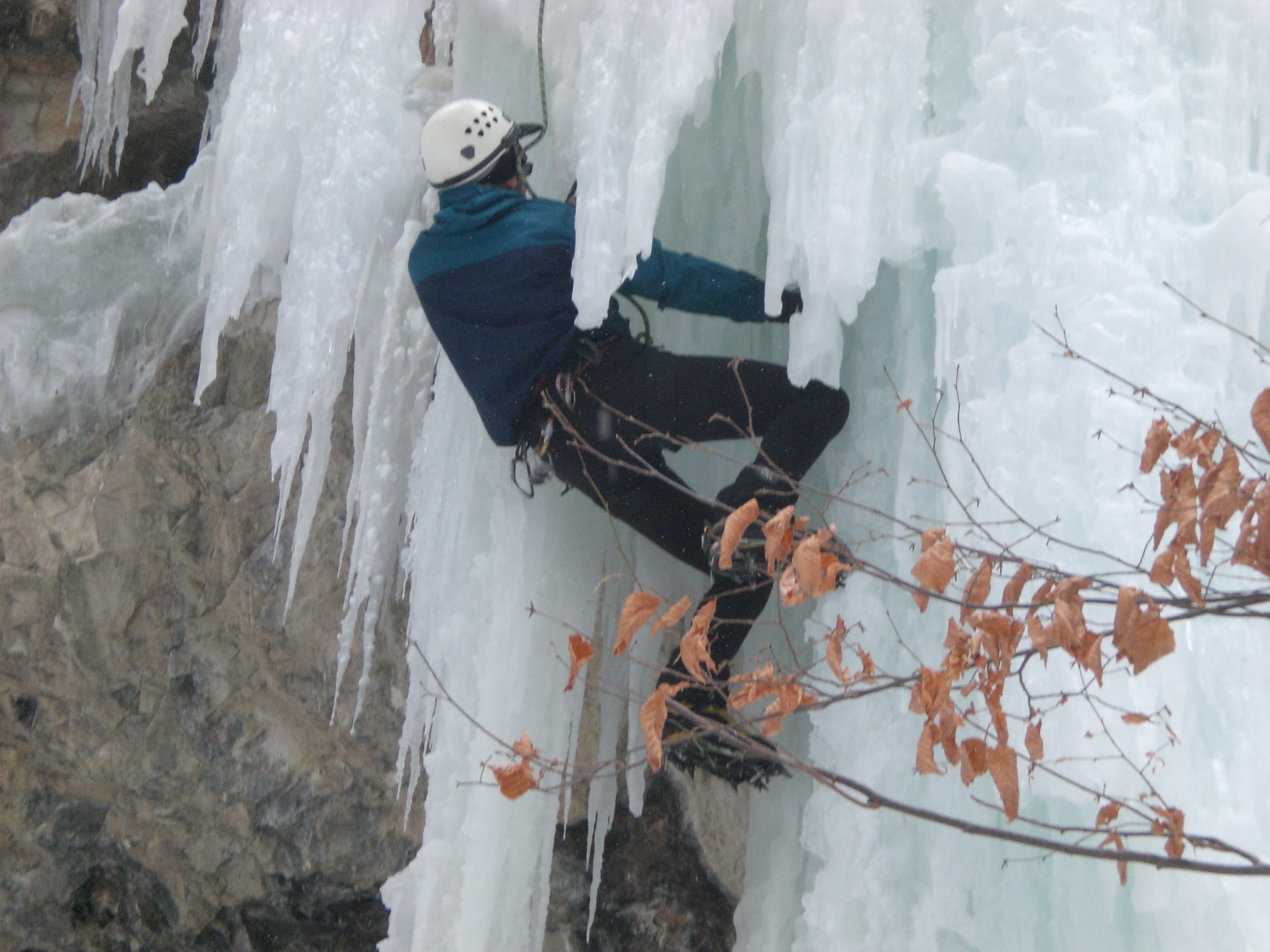
I climbed poorly on Moonrise. After such a depressing reversal, I was sure that the column in Ten Sleep had fallen. Yet as we passed the fish hatchery, there it was intact. We pulled a quick, dangerous U-turn on the shoulderless highway and parked in the last pull-out. The approach was longer and steeper than expected. The climb looked less steep than expected, maybe a WI 4(-) but with the thin ice, imaginary protection and bent pick, it remained interesting. As we rappelled from a bundle of icicles at the top, an old song kept running through my head, “…sun’s so hot I froze to death, oh don’t you cry for me… ‘least I don’t live in Alabama, so don’t you cry for me…” Or something like that.

Tagged , , , ,

There’s a Pill for That

While waiting for labs with me in the ER yesterday, a younger colleague made an offhand comment about quitting medicine. She felt frustrated because, instead of helping people get over their health problems and get on with their business, she spent her time treating public health problems in the clinic and emergency room. Even worse, she had begun to feel complicit in the distortion. I didn’t know whether to offer congratulations, condolences, or both. Most medical professionals never get that far. They continue to feel good about encouraging dialysis for blind, depressed diabetics with one remaining limb and prescribing cholesterol-lowering medication to nonagenarians. Thereby, only the superficial dissatisfactions of their jobs remain.

I don’t think that doctors should feel guilty about the public health problems confronting them in clinics. Nobody planned for our society to fail us. We spent so much of our history working so hard to make life easier and more certain that we just didn’t notice when we started working harder and harder to make life easier than we needed. The illusion of increasing certainty helped us zoom past the point of diminishing returns. Once enough surplus accumulated to ensure against starvation, twice the surplus seemed to offer twice the insurance against shortage, but the excess would only mold and spoil the lot. Our surplus is spoiling in us now, clogging our blood vessels and glycosylating our nerve fibers.

A solution to the problem lies beyond the scope of clinical medicine. The only solution may be time and economic dissolution. The furor over limiting soft-drink sizes in New York City does not bode well for self-conscious alternatives. But medical professionals can feel bad about their complicity in the whole scheme, because our business is to tell people that there’s a pill for all that.

We tell the public that we can “treat” and “manage” diabetes, coronary artery disease and heart failure. The proper terms would be “attenuate” and “temporize”. The proper terms would imply a lack of control however, and a sense of control is what we’re selling as much as medication or surgery. We keep the illusion of control on offer in the name of comfort. We want our patients to feel free from anxiety about their health. They should feel empowered, and they do, which is good since they will still be physically ill under treatment, just a bit less so than when they consulted us.

I guess there really is a pill for surplus-mold, at least on a psychological level, but it will cost those who take it a lot of money, and the motive to seek out the roots of their ailment. Besides, it will keep the doctors feeling good about something they shouldn’t be doing. It may appear to buy some time, but it won’t cure anything.

You Eyeballin’ Me?

ATTENTION

ATTENTION

An older gentleman lay on the gurney. His son had brought him in from the ranch suffering from abdominal pain. I pushed on his liver.

“Does that hurt?”, I asked.

“Well,” he replied after a moment’s reflection, “it ain’t sore, but it is a little tender.”

Attention

Attention

Tender, not sore. Twelve years and I still don’t know what the hell that means. A former colleague grew up in Wyoming, and since she habitually spoke more than three words in a day (not including ‘Yep’ and Nope’) I asked her a couple of times to explain it to me. She just looked annoyed and said it didn’t matter. I finally understood that she was right. The difference between sore and tender is clinically irrelevant.

attention

attention

‘Tender’ does not have any distinct denotative value, only a connotative one. It still bothers me not to understand its meaning. I’d like to think language can give me a working knowledge of other people’s thoughts and feelings. My expectation of understanding is not realistic. Symbols and their associated concepts just approximate the sets of unique experiences that constitute our shared mental universe. It’s all a big analogy of me to you, words or no. While imprecise, the analogy has one great advantage: it is durable. I may not be able to compare my experience of tenderness to the rancher’s to any good effect, but I can achieve a dialog with the dogs.

Attn.

Attn.

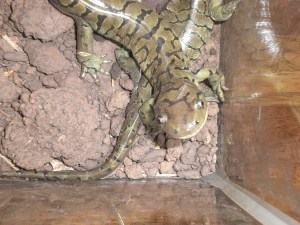
I can even predict the salamander’s response to me looking at it and it can anticipate my response to it clawing at the glass. All of us know our perceptions of each other are about something, which allows us to form these relationships, however vague and riddled with projection they may be (though the salamander does not beg food from people who are not looking at it or objects moving outside the glass, it does respond to the cat staring at it and she is surely looking in with a different intent than it understands).

Attention

Attention

I’m pretty sure I share an extensive mutual understanding with the mammals in the house, even the ones with ear-buds. I’m less confident about what passes between myself and the slimy monsters in the terrarium, but after a day of contemplating human tenderness with all its consequences and deficiencies, an amphibian’s intentional stare is the most reassuring.

Tagged ,

Believe It or Not

In the November 16, 2012 edition of the New Republic, Alvin Plantinga reviews Thomas Nagel’s book, Mind and Cosmos: Why the Materialist Neo-Darwinian Conception of Nature is Almost Certainly Wrong. It isn’t so much a review as it is an editorial on the incoherence of monist naturalism and the shining clarity of theism. I understand; I can’t pass up an opportunity to go on about pet subjects either. In the middle of his exposition, Plantinga makes a very interesting statement.

Is the idea that the world is intelligible only if there is some important property that houses, horses, hawks, and handsaws all share? What kind of property?

Second, how much plausibility is there to the claim that this sort of unity is required for intelligibility? Clearly, we cannot claim that Descartes’ dualism is literally unintelligible – after all even if you reject it, you can understand it. (How else could you reject it?)

As usual, Jaegwon Kim is way ahead of the game. He anticipated these very questions in his paper, “Lonely Souls: Causality and Substance Dualism”.

But does this conception of a person, as something made up of two radically diverse components, a body and an immaterial soul, make sense, whether the body is made up of ordinary matter or some mysterious ethereal stuff? One contention of this paper is that there is reason to think that such a conception of a person is ultimately unintelligible. My arguments will be principally based on considerations of causation – specifically, I will try to undermine the idea that immaterial souls can causally interact with material bodies, therefore forming a “union” with them. If I am right, it is an idea that we cannot make intelligible.

He is right. Even Descartes could not make sense of it in the end. The alert reader of Descartes’ works may have already suspected as much when Descartes turned his discourse from the nature of consciousness and perception to the activities of the pineal gland.

Supporters of substance dualism raise several objections to Kim’s argument. He anticipates a couple of these, the best being:

…some people say that we could simply take the concept of the mind’s “union” with the body as a primitive, and that it is simply a brute, unexplainable fact, perhaps divinely ordained, that this mind and this body are integrated into a proper union that is a person.

This is not a bad point and it is interesting for a reason beyond its specific content. The structure of the objection exemplifies the creeping realism in regard to concepts present in so many supporting arguments for substance dualism. Some concepts do seem to be basic, our ideas of color being the most famous (and least controversial) examples. However, these basic concepts can be located in context. They enter into dependency relationships with other parts of our interdependent world and that is why we ascribe some reality to them even though they defy analysis. For supernatural objects, the method is to say what they do not depend upon. This appears to let their advocates locate supernatural concepts in context. As the negatives build up, the supernatural object appears to creep into reality. In reality, the creep represents the photo negative of the trouble with verification in logical positivism ( if you are going to say that all swans are white because all the swans we see are white you’d better have taken a look at all swans – those that are, were and will be).

Kim says it better than I ever could:

But I find such an approach unhelpful. For it seems to concede that the notion of “union” of minds and bodies, and hence the notion of a person, are unintelligible. If God chose to unite my body with my mind, just what is it that he did? I am not asking why he chose to unite this particular mind with this particular body, or why he decided to engage in such activities as uniting minds and bodies at all, or whether he, or anyone else, could have the powers to do things like that. If God united my mind and my body, there must be a relationship R such that a mind stands in relation R to a body if and only if that mind and body constitute a unitary person. Unless we know what R is, we do not know what God did. Again, we are not asking how God managed to establish R between a mind and a body – as far as we are concerned, that can remain a mystery forever. We only want to know what God did.

Not how but what. Dr. Kim wants to know if the relationship in question is describable and thus knowable to us as we know other things. He frames his question in terms of a “pairing problem” to lay out how we think of causation. We must somehow be able to “locate” or identify events and objects in relationship to each other to establish a cause and effect relationship between them. He concludes that our understanding of causation requires some shared context. Space-time provides such a relational context for physical objects, but what of the immaterial, wholly separate divine substance? It cannot be preserved as such while functioning as a cause as we understand causes. Again, Kim says it better than I ever could:

I have tried to explore considerations that seem to show that the causal relation indeed exerts a strong, perhaps irresistible, pressure toward a degree of homogeneity over its domain, and, moreover, that the kind of homogeneity it requires probably includes, at a minimum, spatiotemporality, which arguably entails physicality. The more we think about causation, the clearer becomes our realization that the possibility of causation between distinct objects depends on a shared spacelike coordinate system in which these objects are located, a scheme that individuates objects by their “locations”. Are there such schemes other than the scheme of physical space? I don’t believe we know of any. This alone makes trouble for serious substance dualisms and dualist conceptions of personhood – unless, like Leibniz, you are prepared to give up causal relations of substances altogether. Malebranche denied causal relations between all finite substances, reserving causal powers exclusively for God, the only genuine causal agent that there is.

Just as the advocates of verification are plagued by the mere possibility of a black swan, substance dualism is in trouble not if the substances in question must interact across all their properties, but across any of their properties. Then they share a property, enter into a dependency relation and, by our lights become a system, a unity. The point is that this is just how we understand ordinary objects, including ourselves. Philosophers like Dr. Kim are interested in establishing whether or not substance dualism is a fruitful philosophical enterprise. He wants to know if we can give a coherent, comprehensive account of human experience from a substance dualist standpoint. We cannot. It is a philosophical dead-end.

At this stage, if it is fair to ask what it is that god does it is also fair to ask what the philosophers do. Why bother with an account such as the one Kim seeks? Plantinga asks as much:

And third, suppose we concede that the world is genuinely intelligible only if it displays this sort of monistic unity: why should we think that the world really does display such a unity? We might hope that the world would display such unity, but is there any reason to think the world will cooperate? Suppose intelligibility requires that kind of unity: why should we think our world is intelligible in that sense? Is it reasonable to say to a theist, “Well, if theism were true, there would be two quite different sorts of things: God on the one hand, and the creatures he has created on the other. But that cannot really be true: for if it were, the world would not display the sort of unity required for intelligibility”? Won’t the theist be quite properly content to forgo that sort of intelligibility?

A reasonable position – depending on what one thinks the philosophers are about. I think they do two things at two levels. One thing and its level are more apparent: they tell stories that help us remember what we are about when we act, like every story every person has ever told. Like all utilitarian explanations, though, this explanation at this level begs the question of what their activity depends upon, of where it is located in context. On this second, murky level, what they do is genetic expression, by biological analogy and by the plain abstract meaning of those two words. At neither level is Plantinga’s conclusion satisfying. Satisfaction itself is antithetical to the entire project at any level.

But which dominates, the storyteller’s end or the thinker’s means? If it is the means, is it the only means? These are questions which Nietzsche asked. He concluded that philosophy was a means to an end – the definitive occupation of essential self-expression active at the murky level, which he termed “will to power” – and he concluded that it was but one of several means to that end. These conclusions lead him to a rather severe and chaotic viewpoint, but one that accommodates substance dualism as a potentially fruitful religious means rather than a philosophical one.

Is Malebranche’s concept any less wild? If we cannot know a separate substance as we know the familiar one, how could we, how must we, know it, if it were truly “there”?

I did not derive it from the senses, it did not at any time come to me unexpectedly, as normally happens with the ideas of sensible objects when those objects affect (or seem to affect) the external sense-organs; and it is not my own invention, for I can neither add anything to it nor subtract anything from it. So it can only be innate in me, just as the idea of myself is. – Descartes, 3rd Meditation.

I’d quibble with the last bit, but overall it turns out Descartes was doing pretty well just up to the point he decided to bring in the pineal gland.

For since he does not, as it were, produce himself or derive his concept of himself a priori but only empirically, it is natural that he obtains his knowledge of himself through inner sense and consequently only through the appearance of his nature and the way in which his own consciousness is affected. But beyond the characteristic of his own subject which is compounded of these mere appearances, he necessarily assumes something else as its basis, namely, his ego as it is in itself. Thus in respect to mere perception and receptivity to sensations, he must count himself as belonging to the world of sense; but in respect to that which may be pure activity in himself (i.e. in respect to that which reaches consciousness directly and not by affecting the senses) he must reckon himself as belonging to the intellectual world. But he has no further knowledge of that world. – Kant, Foundations of the Metaphysics of Morals, 3rd Section.

The knowledge of a separate substance could only be a direct knowledge. It must be a thing out of context, unextended. . Anything we can know about it is thus available only through “revelation”, “faith”, “intuition” – whatever you want to call pure, non-contingent experience, if such a thing exists, and so, as Kant says, our awareness of the other stuff’s existence must be the full extent of what we know about it. I don’t think we have a claim to such knowledge, but the reality of it does not matter for me or for those who believe they experience god’s presence. Real or not, as far as the pursuit of such a thing as a means goes, it works as well for all those snake handlers, dervishes and Zen practitioners. They all have it right,too. You can organize the world around the idea of such a thing, but you can’t understand the thing itself by the organization of the world. Because one can’t “make sense” of such knowledge, the outlook of those who pursue it must be personal and self-effacing in the most cruel sense. People who pursue it as a means must become either madmen or overmen, like Fred said. There are simply no other choices. This is the proper end of substance dualism; as a means.

So why does a certain brand of apologist continue to pursue the untenable project of substance dualism as a philosophical end? Maybe it is fear of snakes and the wild uncertainty that goes with pursuing the idea as a means, but maybe also a desire for control, for the perpetuation of religion as control. Back to Plantinga’s review:

Now you might think someone with Nagel’s views would be sympathetic to theism, the belief that there is such a person as the God of the Abrahamic religions. Materialist naturalism, says Nagel, cannot account for the appearance of life, or the variety we find in the living world, or consciousness, or cognition, or mind—but theism has no problem accounting for any of these. As for life, God himself is living, and in one way or another has created the biological life to be found on Earth (and perhaps elsewhere as well). As for the diversity of life: God has brought that about, whether through a guided process of evolution or in some other way. As for consciousness, again theism has no problem: according to theism the fundamental and basic reality is God, who is conscious. And what about the existence of creatures with cognition and reason, creatures who, like us, are capable of scientific investigation of our world? Well, according to theism, God has created us human beings in his image; part of being in the image of God (Aquinas thought it the most important part) is being able to know something about ourselves and our world and God himself, just as God does. Hence theism implies that the world is indeed intelligible to us, even if not quite intelligible in Nagel’s glorified sense. Indeed, modern empirical science was nurtured in the womb of Christian theism, which implies that there is a certain match or fit between the world and our cognitive faculties.

Abandon your exertions. Here is comfort and here are easy answers. No fasting or flagellation here, of the body or the soul. Cain made a similar mistake, didn’t he? This is the religion that Nietzsche hated. This is what killed that revelatory impulse that he saw as a manifestation of will to power. This is what his Madman meant when he said, “What are these churches now if they are not the tombs and sepulchers of God?”

But Fred was a pessimist on this account, both on the fact that he got it right about our expressive needs and on the ease with which they could be suppressed and their manifestations turned to the ends of social control and a destructive sort of self-control. Obviously, apologists feel the need to go on stabbing this particular means to our end, but I take that positively. To me it means not that the true idea is dead and some just want to make sure it doesn’t twitch and ruin the edifice they’ve built upon it, but that it is yet to be subjugated despite the wounds it has suffered.

Tagged , , , , ,