Marginal Behavior

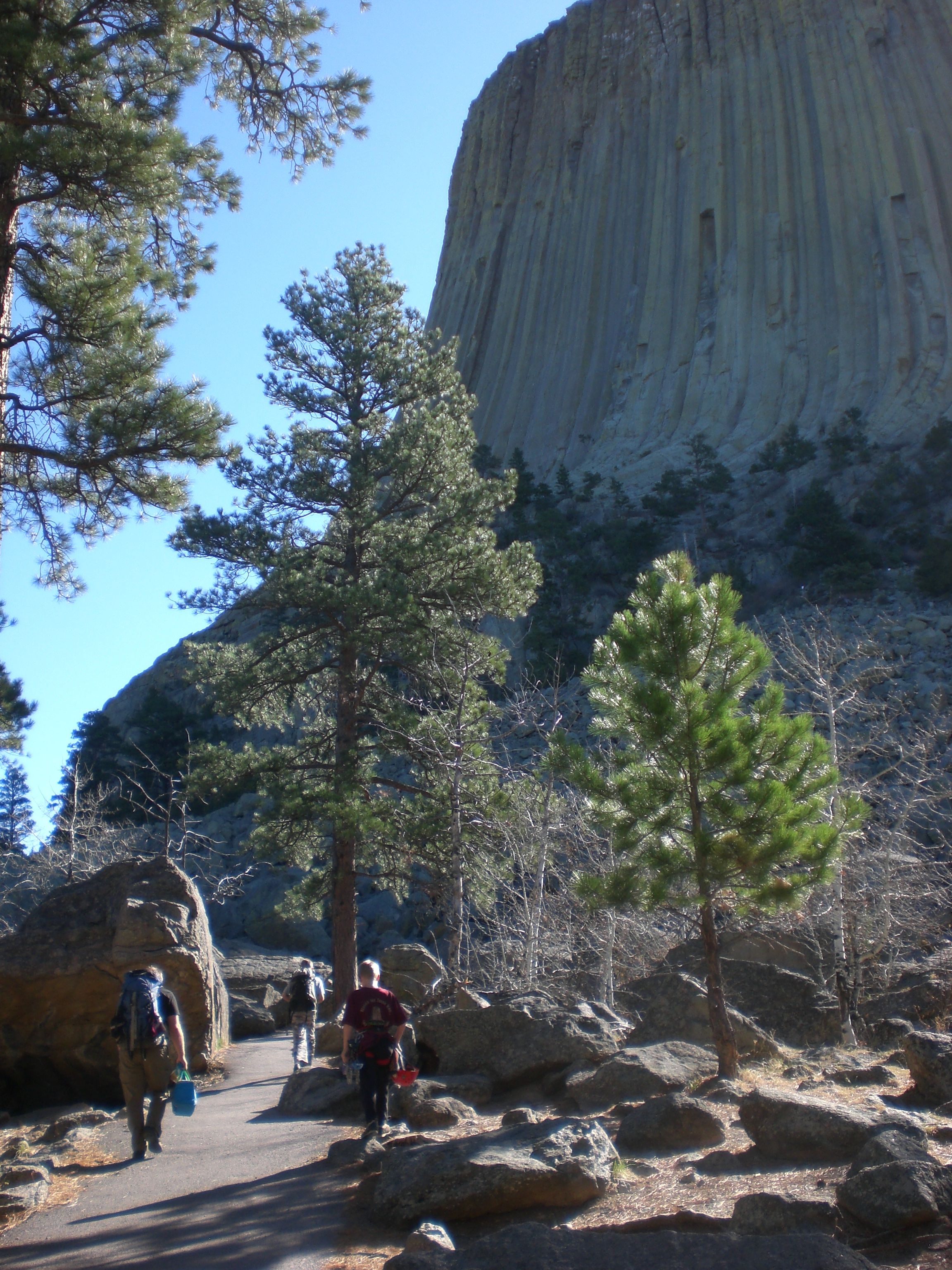
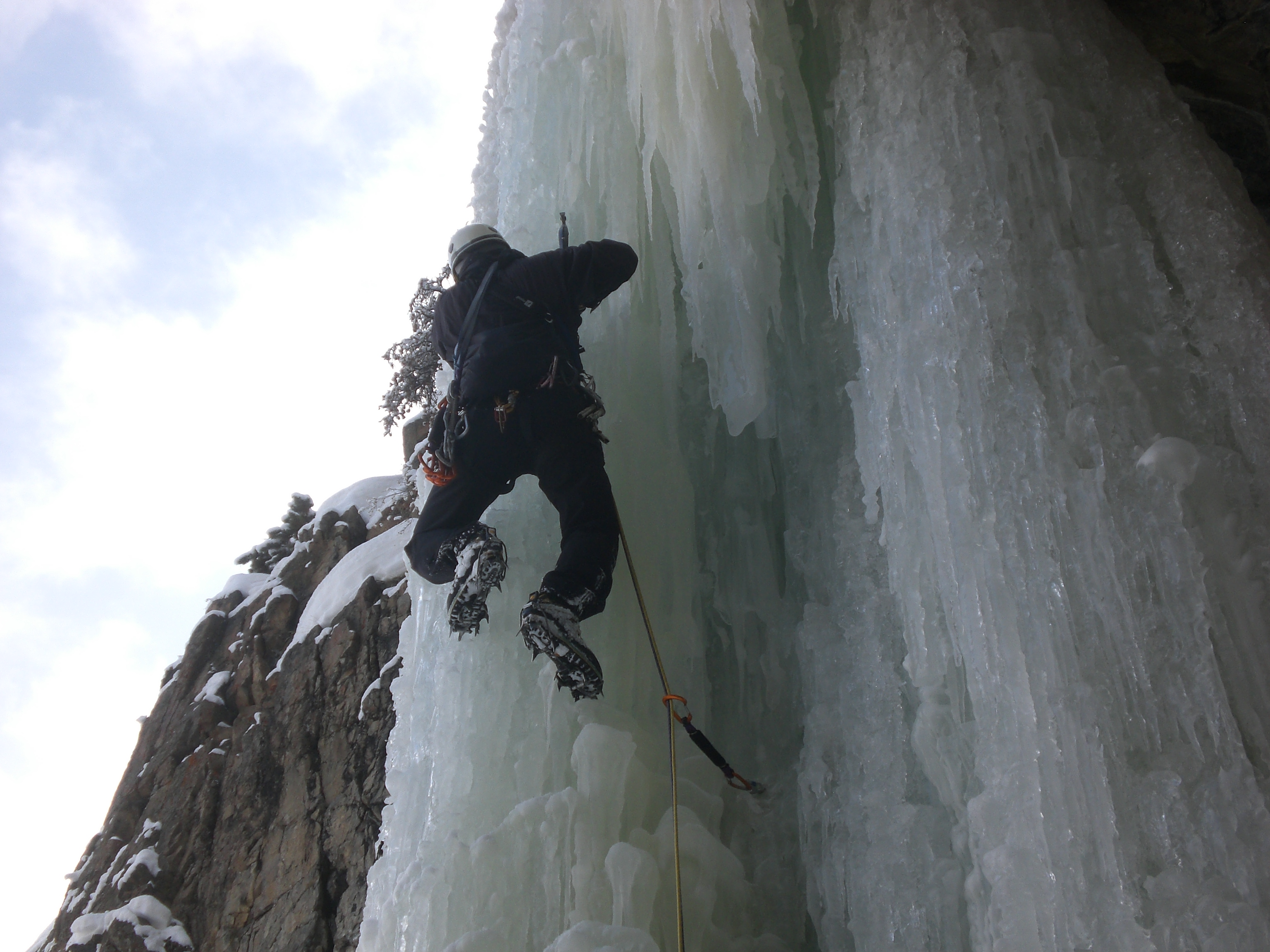
Climbing with kids is always iffy. Multi-pitch climbing with kids can be asking for trouble. It isn’t guaranteed trouble, it’s just a set-up that, given the arrangement of the pieces, makes you think twice. It is important to start with low expectations and treat the whole enterprise as a sort of upward rescue.

The great thing about climbing with kids is that they bring kid foolishness, which is plain and transparent,  to the climb rather than adult foolishness, which is deep and opaque. Kids aren’t going to tell you their knot is good when it isn’t. Kids may horse around on the belay ledge, but they aren’t going to unclip from the anchor so they can move around to get a better picture.

By the same  token, if  kids are going to freak out and freeze, it’s probably going to happen in the first twenty feet, when they realize the gravity of their situation, rather than three pitches up when their ego collapses.

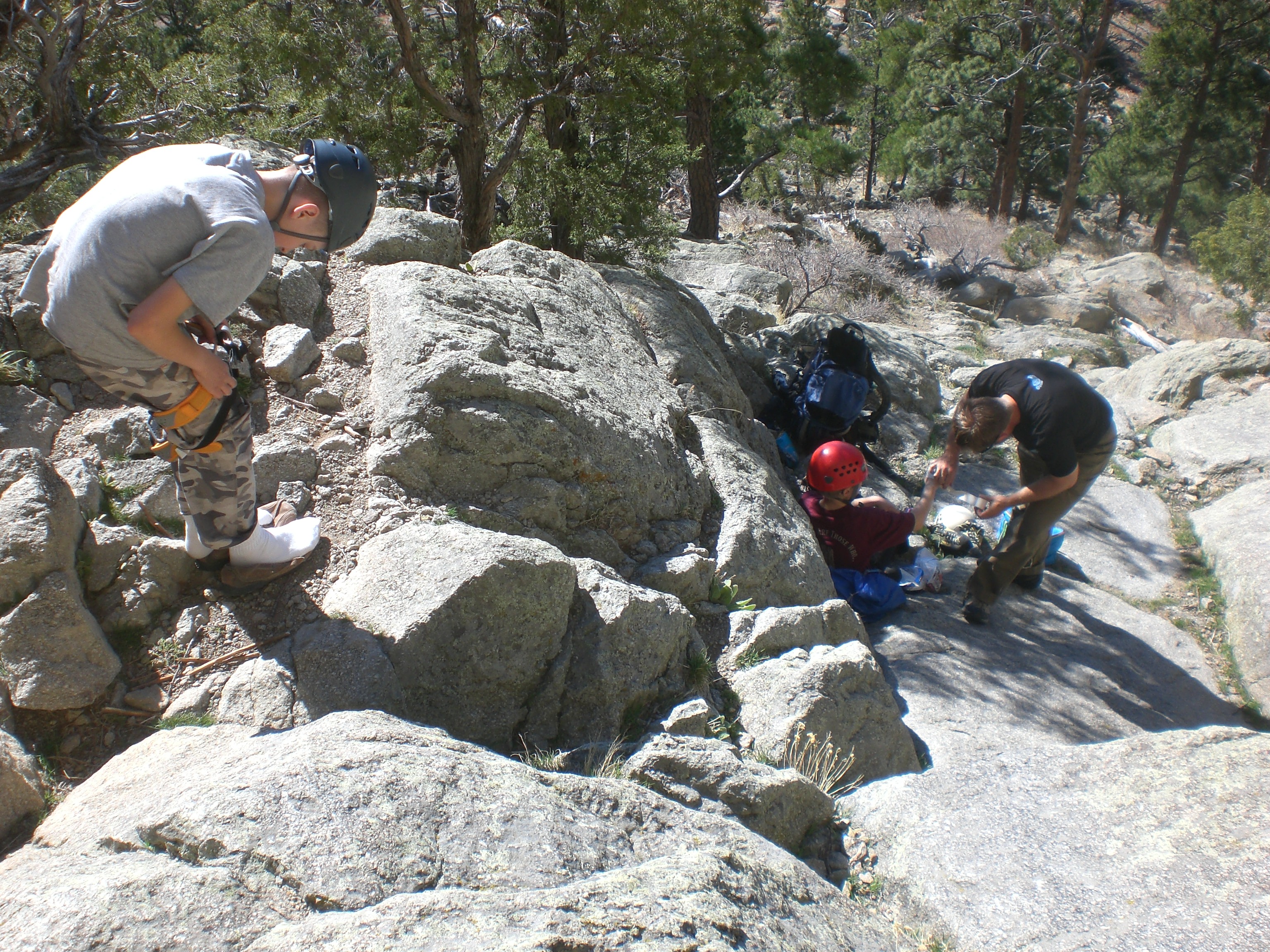
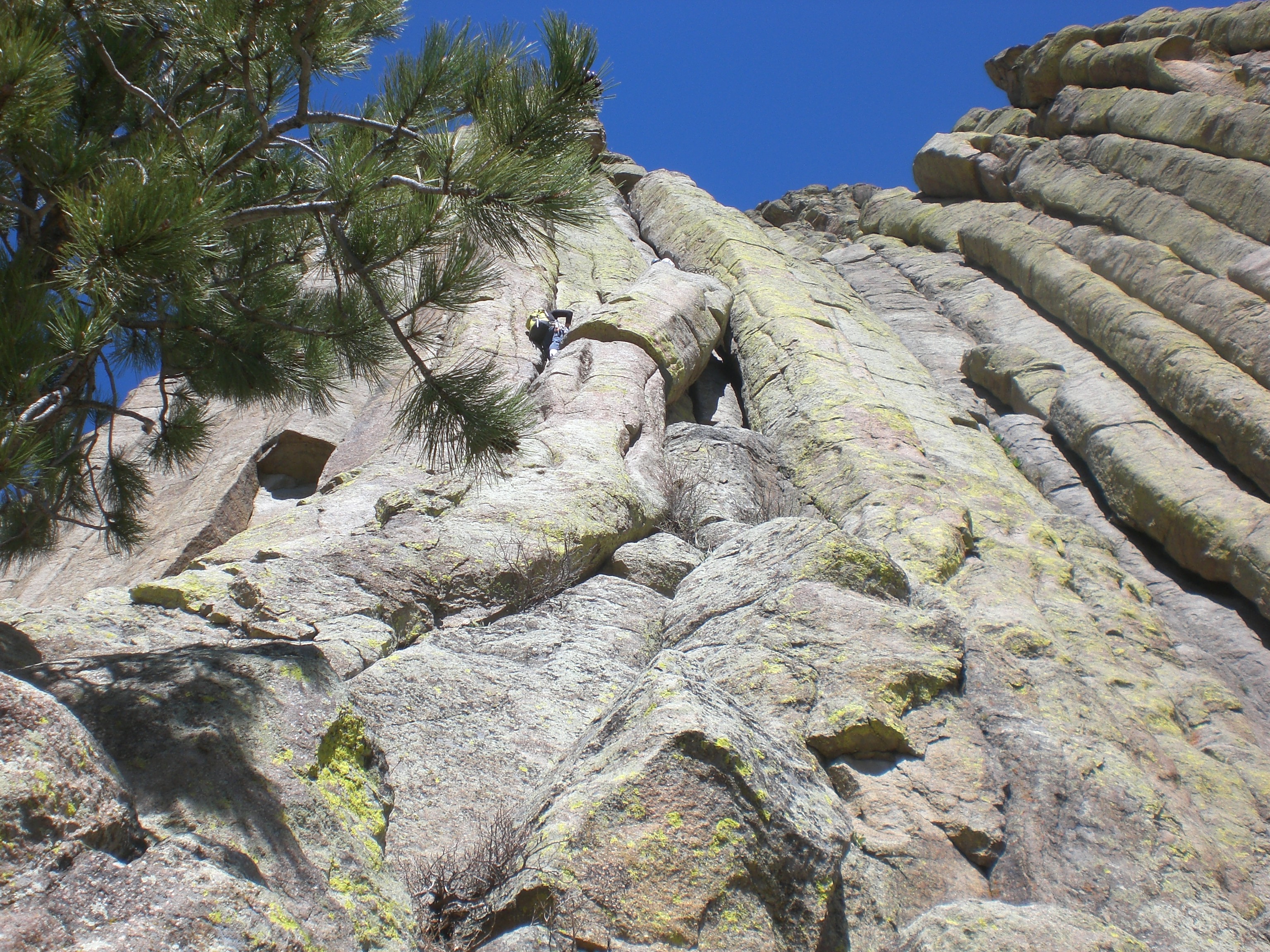
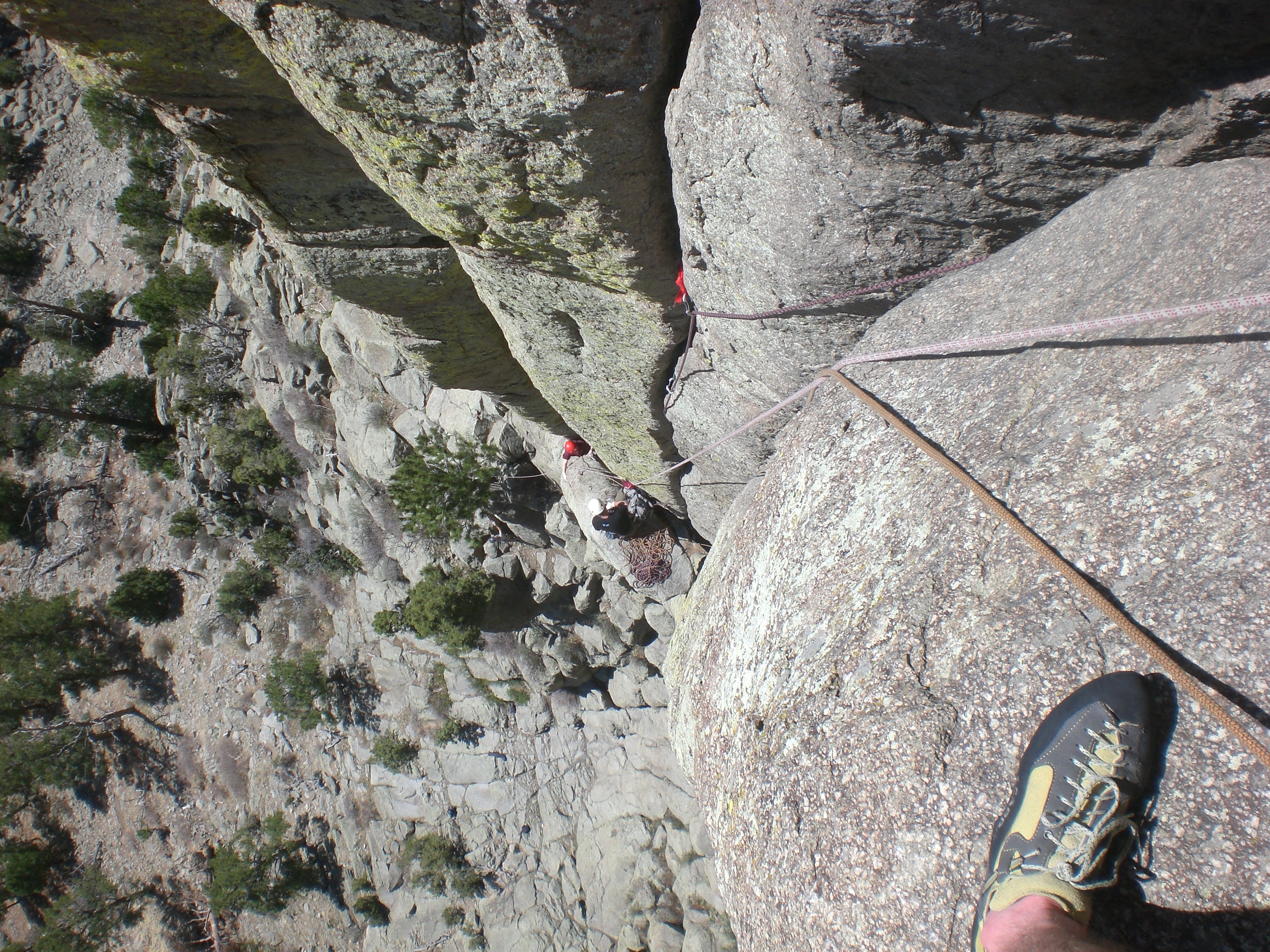
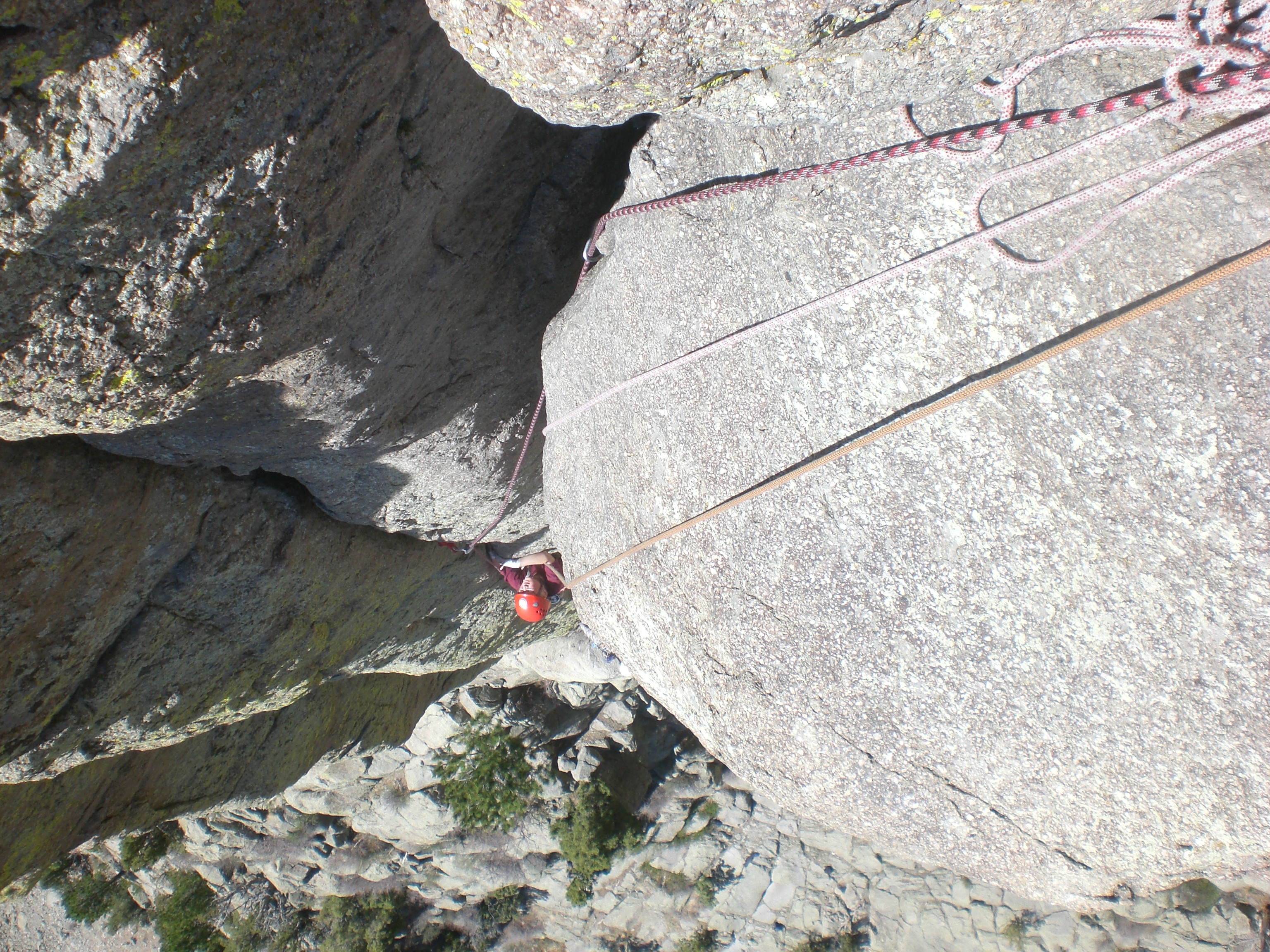
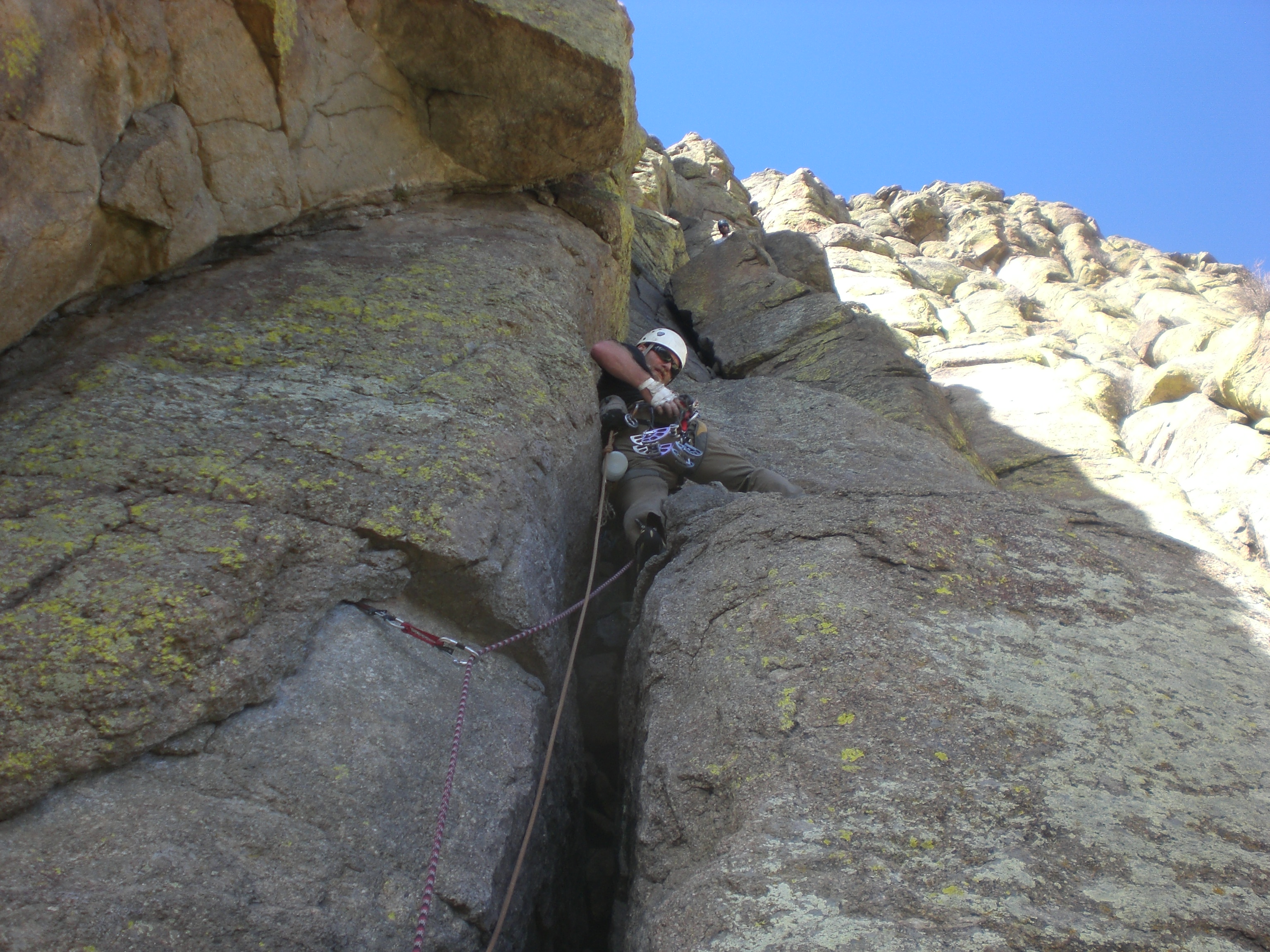
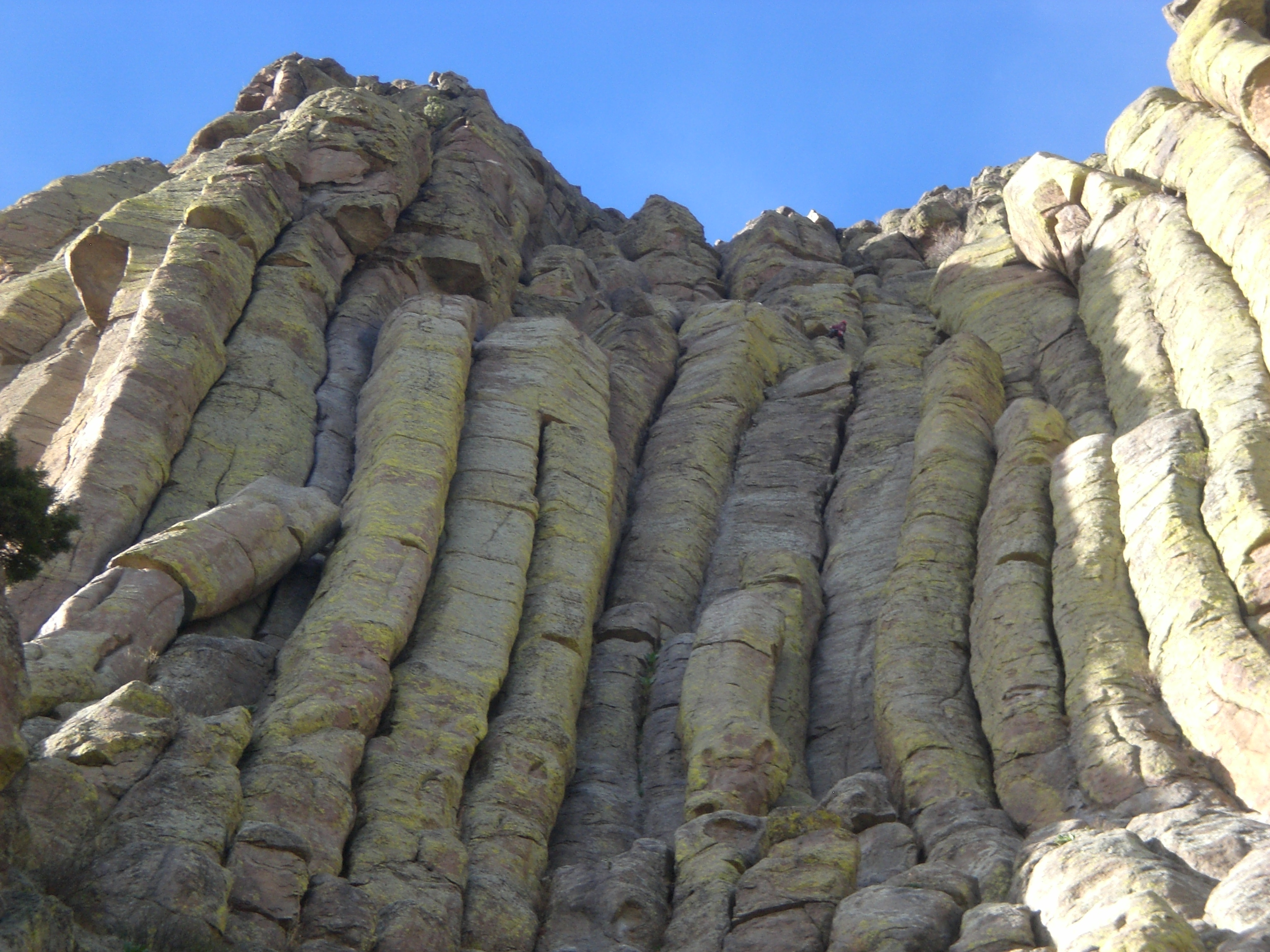
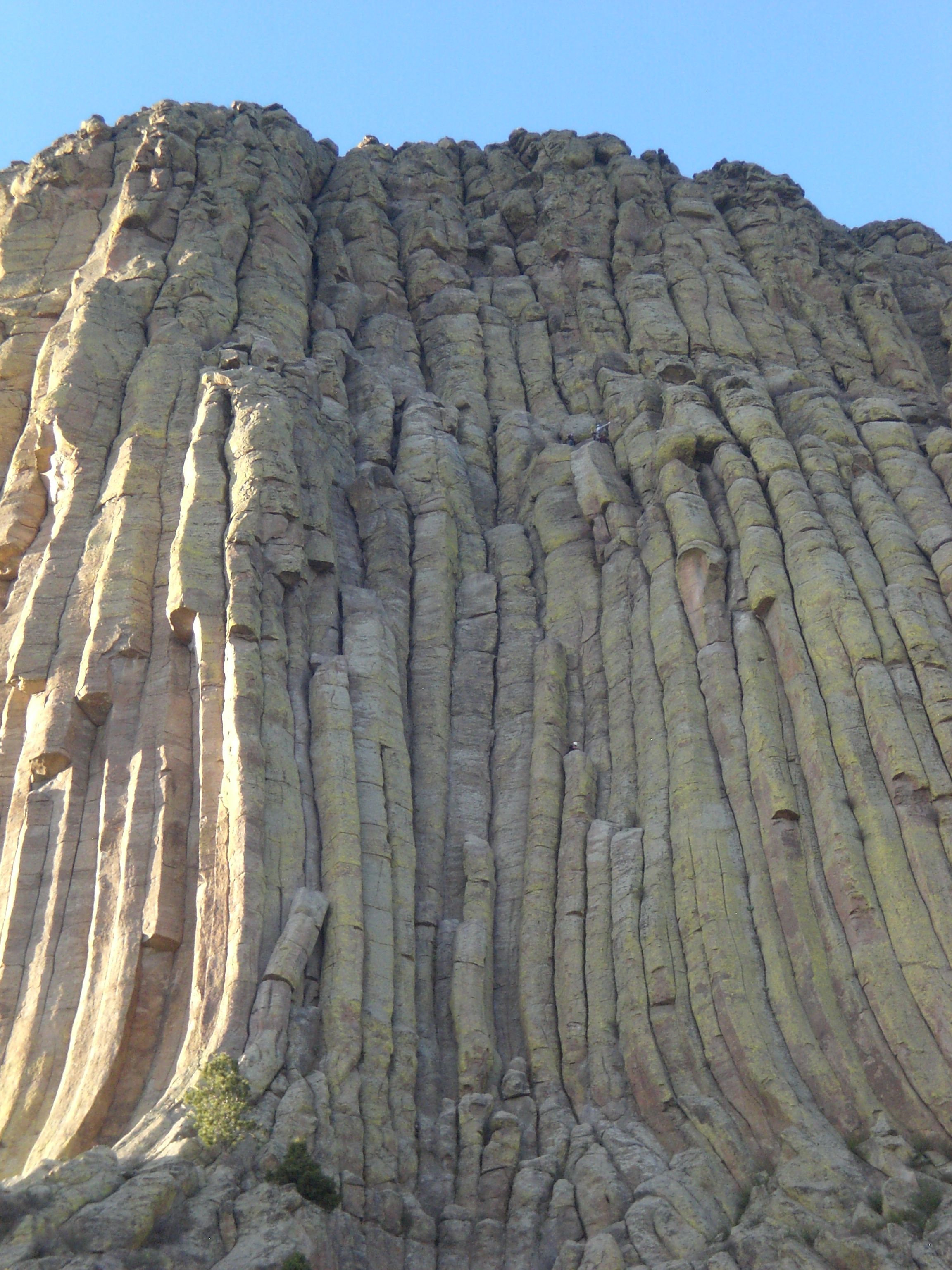
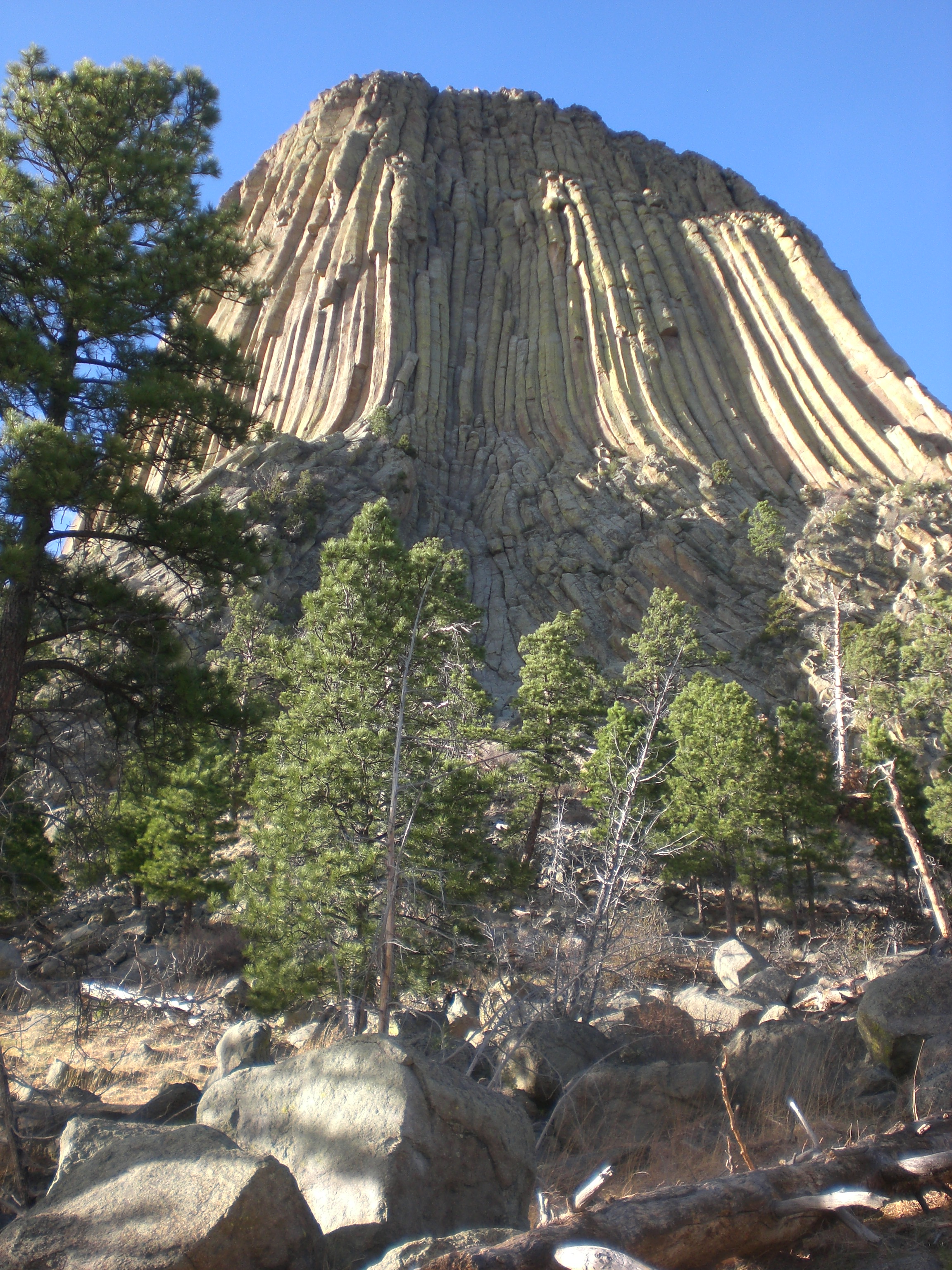
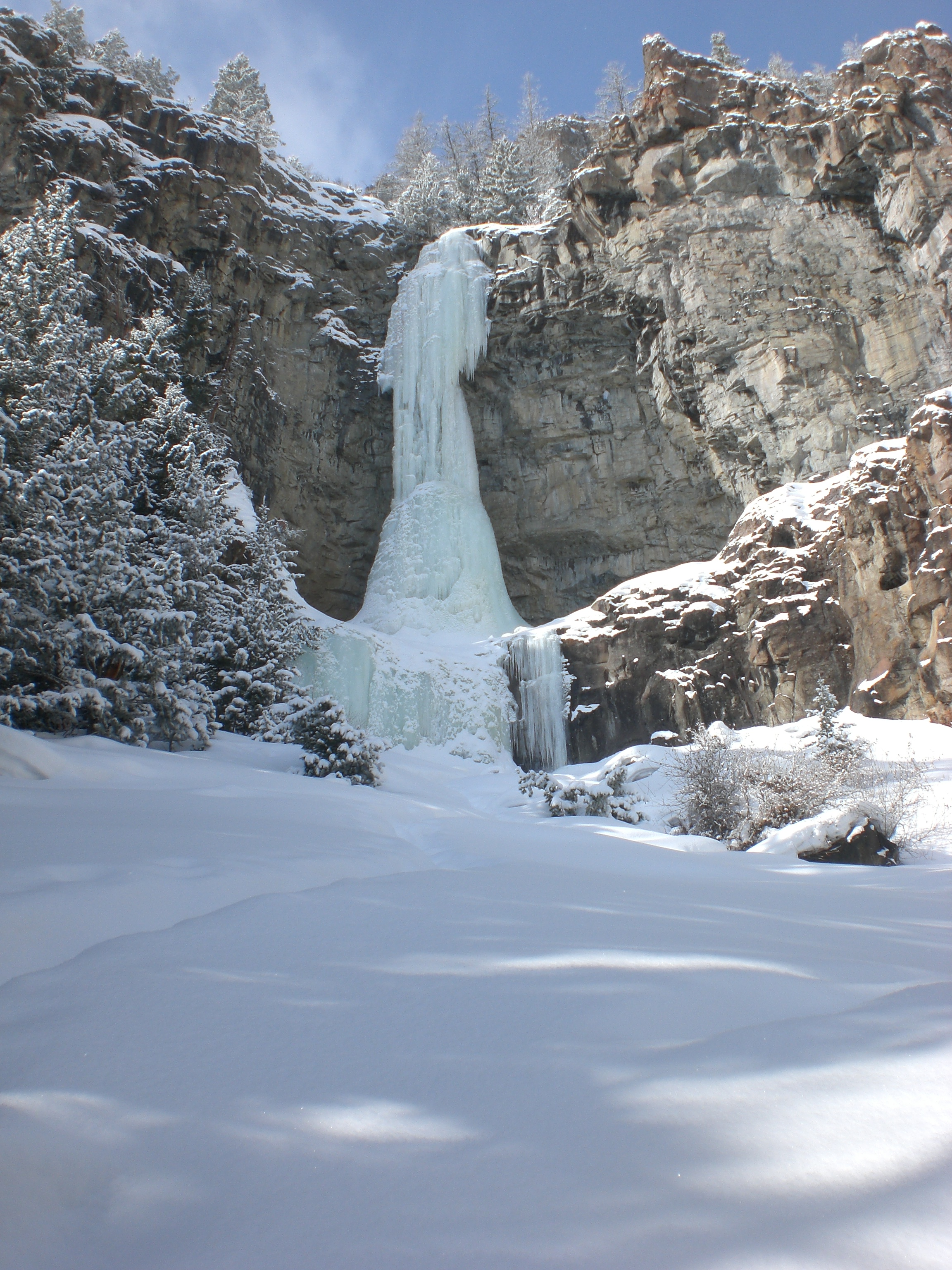
When we started up the Tower with our 11 and 12-year-old boys, Mike and I had all these things in mind. Being veterans of soul-searing alpine epics and dicey retreats, we had a reasonable degree of confidence we could pull it off. Experience like ours builds an expertise in Redneck Rescue – an improvisational method of crisis management that is effective, but lacks the smoothness and consistent redundancy of a professional approach. Of course, professionals avoid crisis situations in the first place, so what do they really know.

Rowan, the older kid, had seen the method in action. He had climbed the Tower with me the year before. The way up was tough and he just squeaked by the crux pitch, but the descent was a horror show. A thunder-storm caught us and we had to descend the ropes through hail, wind and lightning. It affected his motivation for the current day, I could tell. Jack, the younger kid, had never climbed the Tower, so he had no reason to fear it.


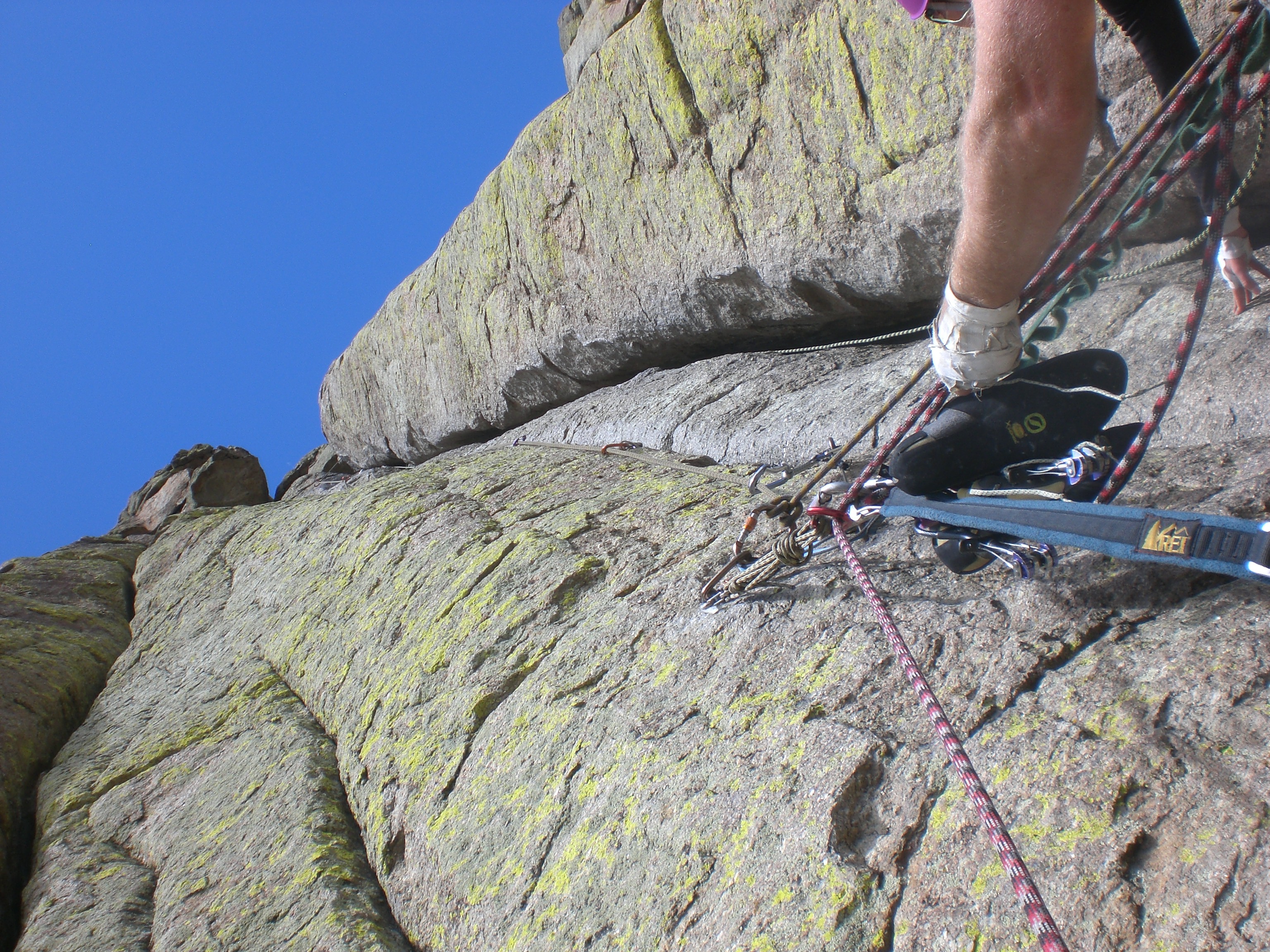
Rowan folded at the crux pitch; Jack’s curiosity and ambition led him on into the wide crack and stemming problem. I had the opportunity to belay him on the pitch and the experience was the same as every other time I’ve belayed a kid on difficult climbing. It’s a lot like deep-sea fishing would be, if you could hear what the fish was thinking.  You brace yourself, pull, reel in line, all to the sounds of desperate effort interspersed with whimpering.

On the belay ledge, once he stopped shaking, I could see a familiar light in Jack’s eyes. He’d gotten by the hardest thing he’d ever climbed and now his teeth were locked on this project. Jack was going up, but Rowan was going down. He wasn’t upset, he’d just made his decision and would not be continuing.

Splitting up the team is a core skill in Redneck Rescue. After batting the question, “OK, so what is going to happen..?” back and forth for a few rounds we completed the hand off and Mike continued to the top with Jack while I took Rowan down.

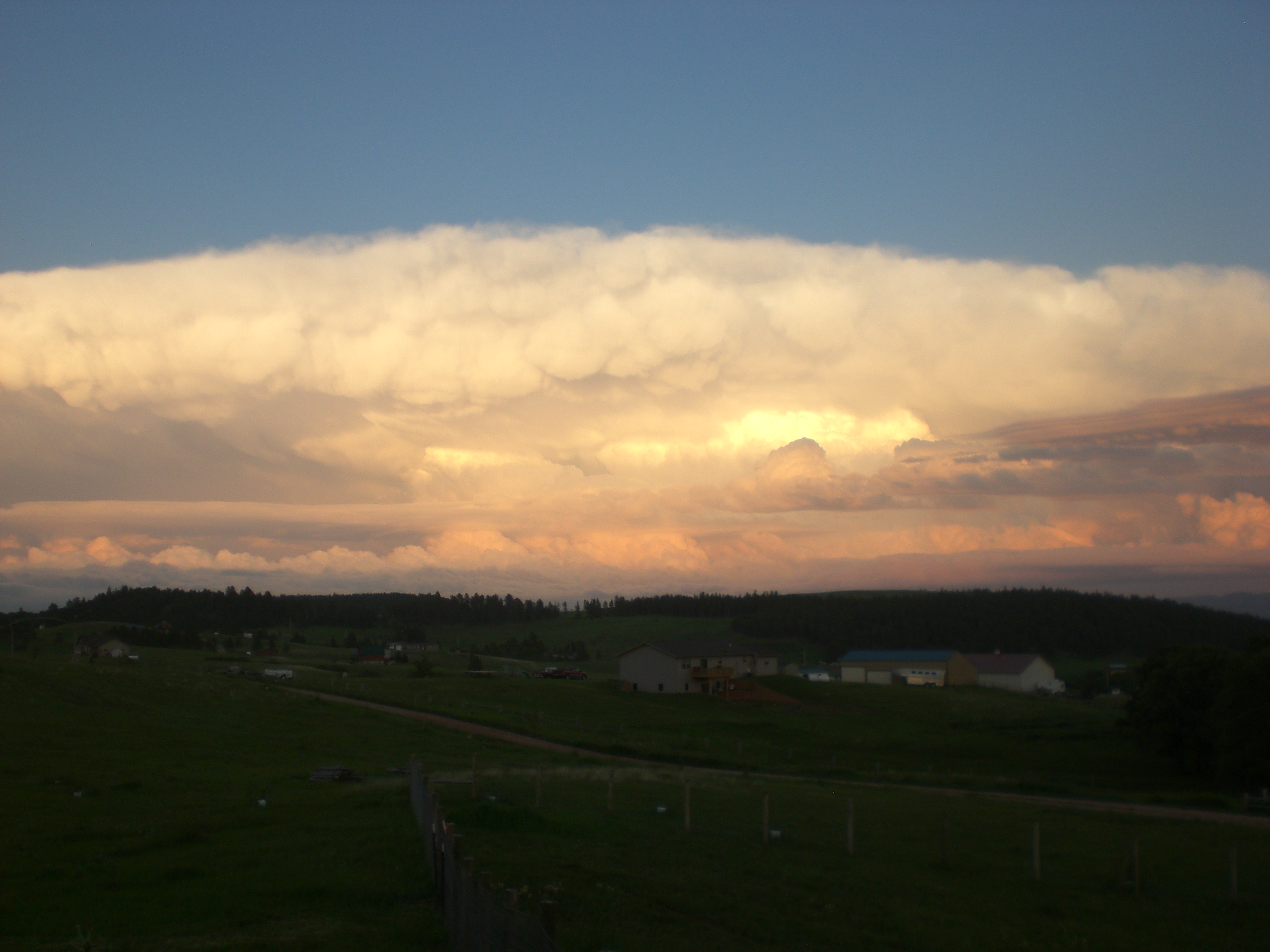
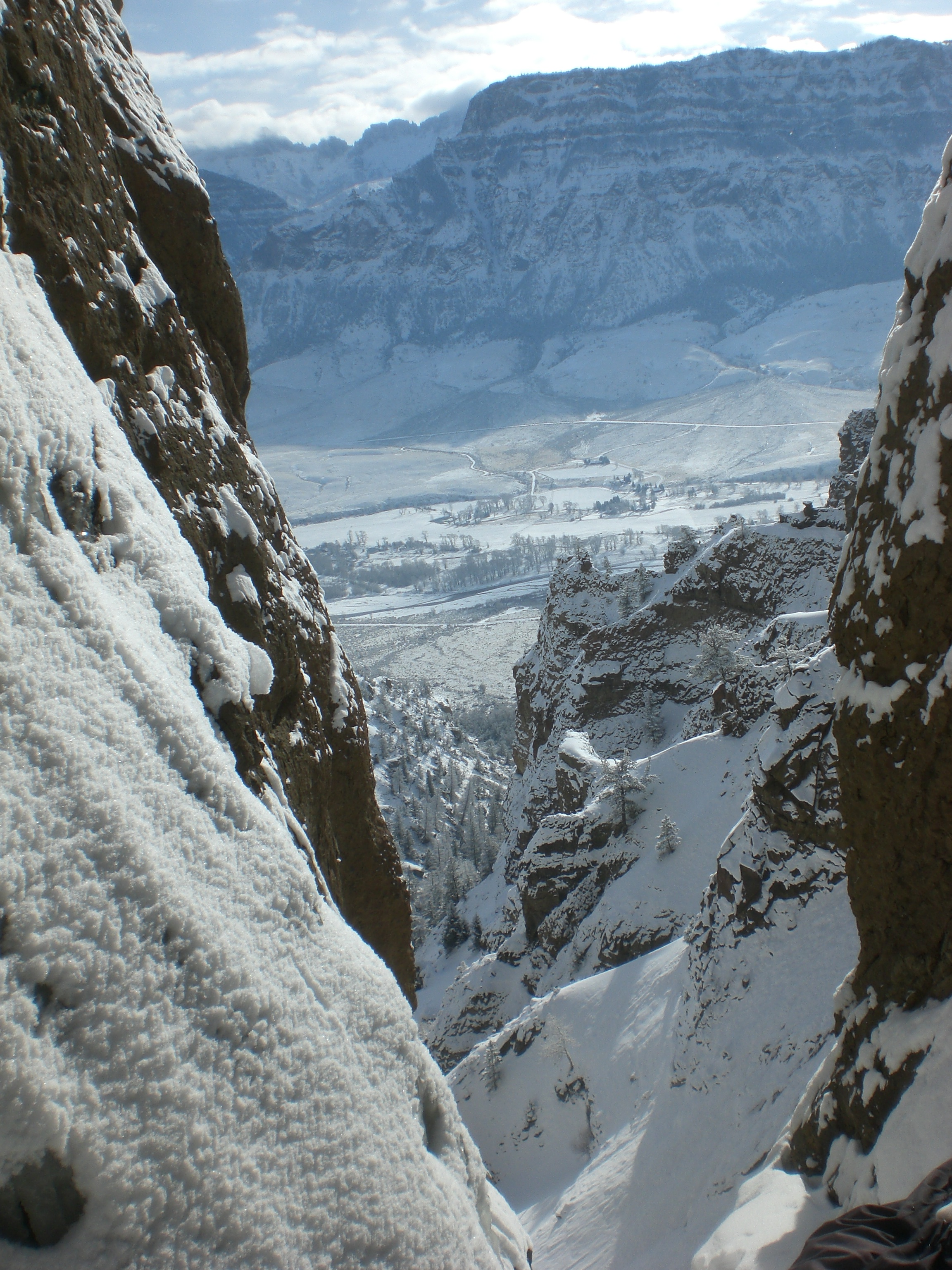
It was a long wait at the bottom while Mike and Jack finished the route. An adult would have spent the time moping and feeling impatient. Rowan spent it trying to figure out why rocks bounce. I got to watch the light change over the Belle Fourche River valley without having to think about anybody else’s emotional weirdness. I wouldn’t want to do it every day, but I like climbing with kids.


Tagged , ,

Three Puzzles

“Goddamnit! Hold him down,” said the Chief.

His tone, which had been ironic and jovial as he bantered with the patient moments before, was now weary and annoyed.

 As the Chief rammed the blunt plastic rod beneath the skin of the man’s chest, under his collar-bone and into the incision in the hollow of his neck, the man bucked and screamed again. Nurses and medical students grasped his limbs to keep him on the table. The surgeons had taken every necessary measure to make the procedure safe and painless. They chose to place the catheter into the patient’s jugular vein under sedation to avoid the greater risks and side-effects of general anesthesia. They had even injected local anesthetic at the incision site and along the track the catheter would take from his mid-chest to the point where it entered the vein in his neck.

Not that local anesthesia could deaden such a large area. It mostly helped tamp down soreness after the procedure. But it needed do no more, because of the type of sedative used. Besides making a patient sleepy, the chemical was an amnestic; it reduced a human’s powers of memory to those of a goldfish.

As we wheeled him back to the recovery room, I leaned over the patient and asked, “Uh, how do you think that went?”

“Beautifully,” he said.

“No pain?”, I inquired.

“Not a bit,” he chirped, “and you know, I’m surprised how lucid I was. That was the best operation I’ve ever been through.”

I stopped dead in the hallway. At that moment, I understood the feeling my friend  had a week previously when he found out his parents aspired to zombiehood. They were, he had discovered, people who wanted ‘everything done’. He had tried to explain the predicament this created for him, and though I thought I had understood the situation based on our common experience as medical students, his complete perspective eluded me at the time. I thought his parents were just wrong because they knew no better.  Of course, we two medical students were horrified, since we knew what ‘everything’ really was and where it led: dull suffering, delirium, dead eyes in a live body, chest heaving to the click and hiss of a ventilator, then death, inescapable in spite of  ‘everything’. I hadn’t seen the other side of my friend’s dilemma: what is it like for the zombie? To become a zombie – a dying person bent on continuing to die – was to abandon a previous, more natural course but perhaps it was not a wrong act. Perhaps the transformation was like telling a goldfish in a bowl that it was doomed to swim in a twelve-inch circle until it died. The goldfish would suffer withering psychic agony for the three seconds it could recall the revelation, then it would return to contentment, unharmed. The vicarious regrets of the living  just might have a similar effect on a zombie, even the regrets of their former, living self.

And as the gurney bumped against the recovery room doors, I realized that I had faced this riddle once before and failed to resolve it. The riddle had come that time in the context of a story a co-worker told me. We worked together at a landscaping business. The guy was a mechanic, so he worked in the shop, while I worked in the field. Still, I got to know him well enough through shared lunch hours and down time with broken equipment to decide he was a decent guy. He was honest and, as a practicing Catholic, always trying to be good. And he was good, sometimes to a fault as he freely lent money to people who were unlikely to ever pay it back. Then he told me a story about when he was in the service.

He was stationed at a boring, isolated post. For miles around, there was nothing but irrigated fields, sage brush, and a few abandoned missile silos. Nothing moved on the landscape but jack rabbits and a few stray domestic animals. The jackrabbits were wary and hard to catch, but the strays would come to a kind word and an offer of food, so they were the ones that got tossed down the missile silos for fun. At first, the fading echos of the animals’ cries and the sparkling static on their fur were entertaining enough. Later, gasoline on that crackling fur added novelty to the routine.

He saw nothing wrong with ‘dog toss’. These were animals, after all, not conscious beings with a soul. As such, they could not truly suffer. What happened to them, as long as it was relatively quick and served a human need, didn’t matter. He thought this because he had been raised a moral realist and a deontologist. Good was a ghost in the ether, inhabiting certain acts and objects, imbuing them with its nature. All else was morally neutral. Other things rated only via human largess backed by tenuous relationships drawn between the hosts of good and those other things that his moral educators felt uncomfortable excluding from their calculus. Other things rated as bonus points. No one was going to hell for ‘dog toss’.

No one was going to hell for what happened under sedation with an amnestic agent either. The healthy body (even just a relatively healthy body) was a host for good, and that end didn’t just justify the means, it made them irrelevant. Proof  lay smiling on the gurney in recovery, ready for the next step in his embodiment of good, where his catheter would carry toxins to his blood to kill his tumors, his appetite, his hair follicles, his sense of smell, the lining of his mouth and colon, all to clear a space for good between his diagnosis of metastatic cancer and his death from it.

The doors swung shut and the surgical team turned away toward the suite of operating rooms where the next case waited. I did not follow. These three were related riddles, but they were not quite the same. Though I could now see it whole, the third puzzle still remained, and it was still the hardest. My friend’s parents were motivated by moral realism to have everything done. But whether their end came by age, chronic illness or catastrophe, the change from living to dying would come to them and sweep away any thought of ghosts and duty to ghosts just as surely as an amnestic sedative swept away all memory of pain and indifference to pain. Then it would be up to us – family, friends, doctors, hospitals – to tend to the ghost, or not. That was the hard part. Because we could deal with the creature before us, be it living or not, on its own terms, instead of trying to realize an apparition. And that meant denying metaphysical duty.

I stood for another moment while the surgical team gained some distance on me.

“I ought to walk out that door and just keep going,” I thought.

Instead, I put my head down and set off after the surgeons. I knew that I wasn’t doing the dutiful thing, but I was pretty sure that didn’t matter. Maybe all I could do was deal with what was in front of me, zombies and all. But even if I wasn’t up to the task of replacing them, I couldn’t keep serving  ghosts, theirs or mine.

Tagged ,

Dutch Whatever

“I’ve noticed that in the alpine, everyone’s hesitant to rate anything harder than M6 – and then everything’s M6. Why do you think that is?” Mike wondered.

M6 is a grade given mixed rock and ice climbing. For most folks, it’s the grade that consistently feels hard, the place where you start to feel like you could fall off. I thought back to the previous day in the Clarks Fork. When you’re trolling for blind pick placements under a sheet of snow, yarding on apparently frozen blocks with the secondary points of your crampon wedged in a crack coated with ice and running with water, it really is all M6 until you’ve climbed it.

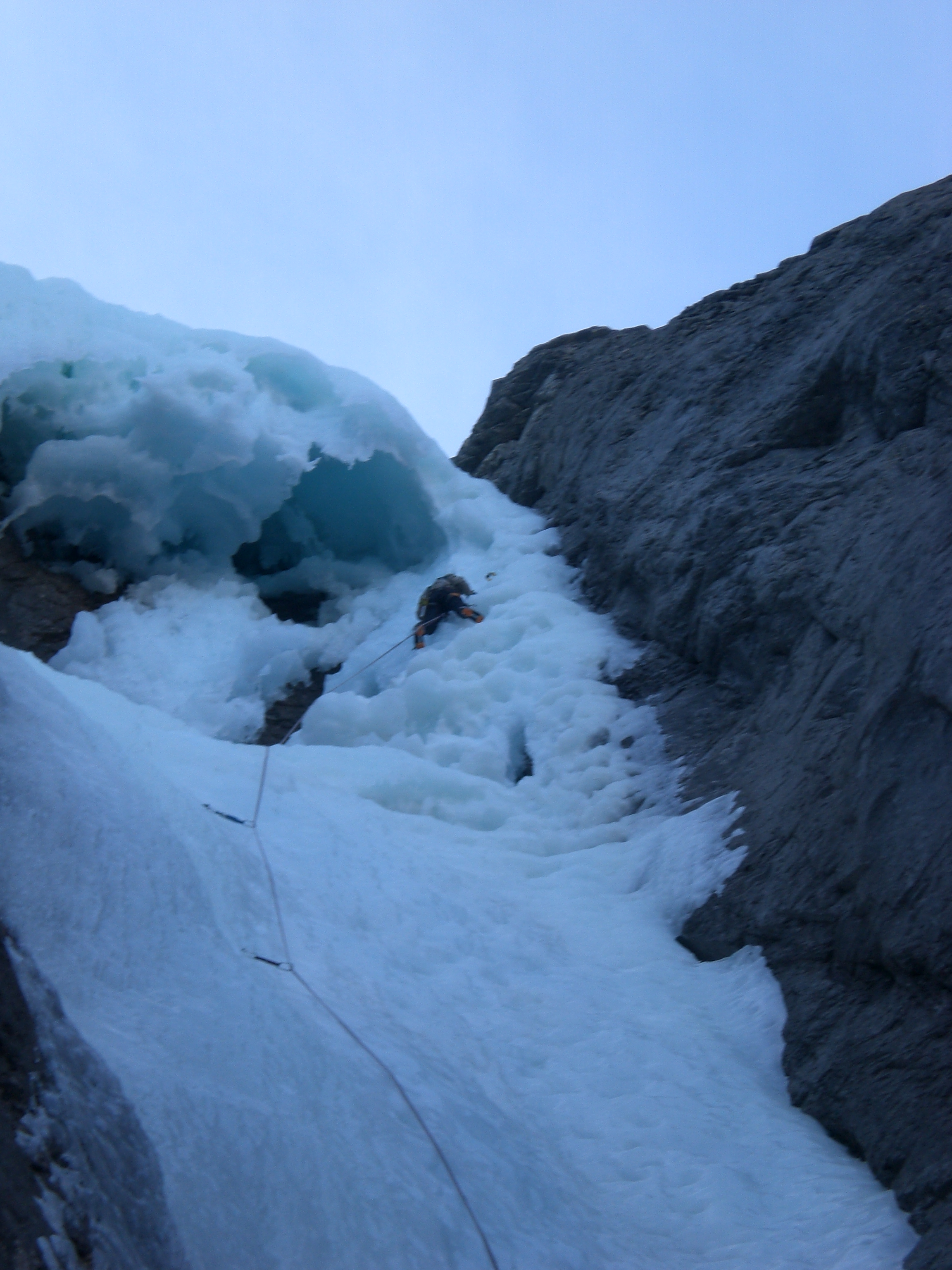
Looking down the 6th pitch of Broken Hearts

It had rolled for us, though. We had felt good after sneaking in six pitches of Broken Hearts as the climb melted around us. It was a good omen, and we had word that the climb in the Clarks Fork had looked feasible as of two weeks ago.

Beta doesn’t obviate omens when it comes to going into the Clarks Fork, though. The climb was probably there. The approach was surely there, and in the usual condition: a brutal wallow through the continental snowpack, followed by a dicey stumble down frozen dirt beside a stream bed.
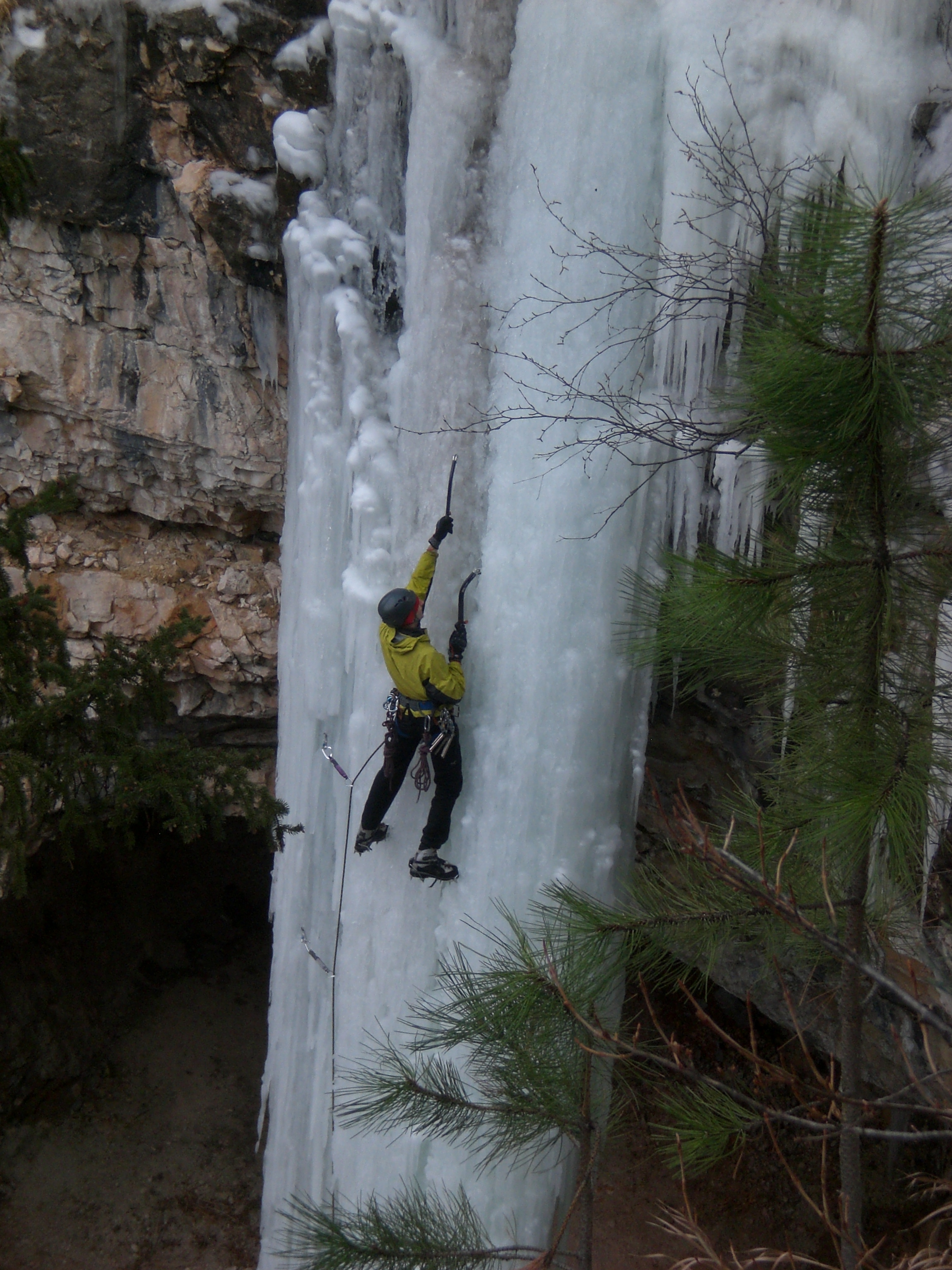
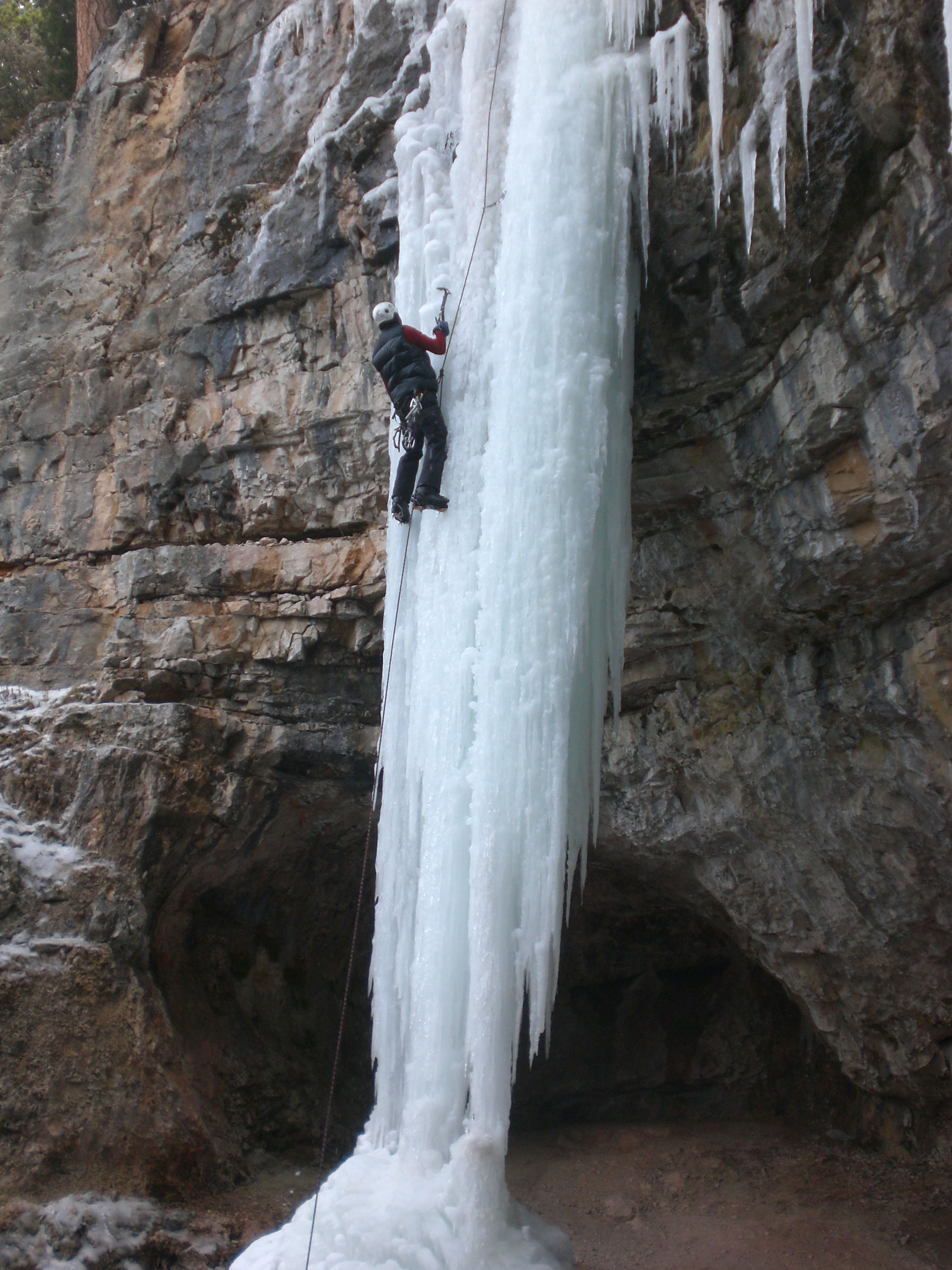
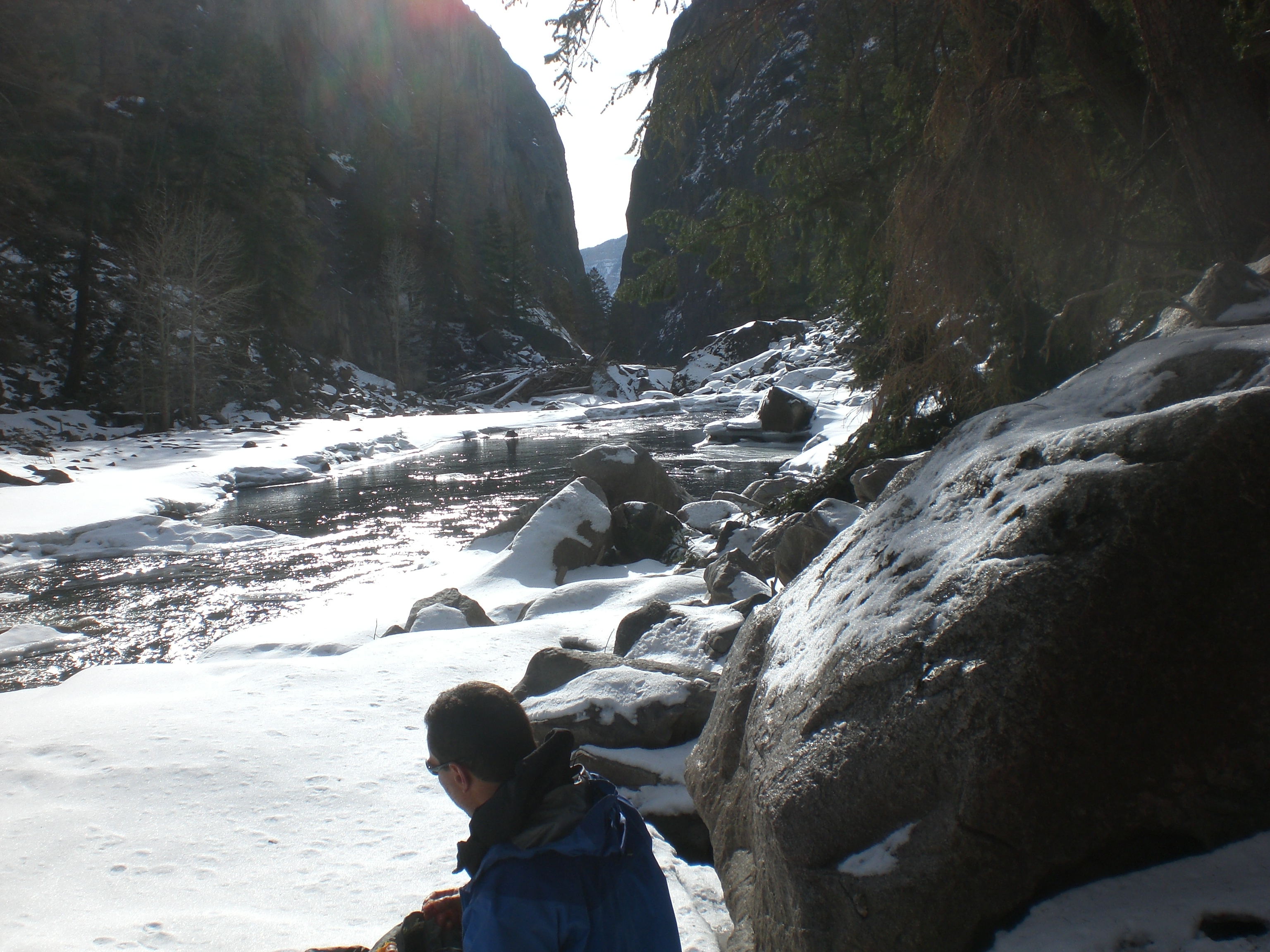
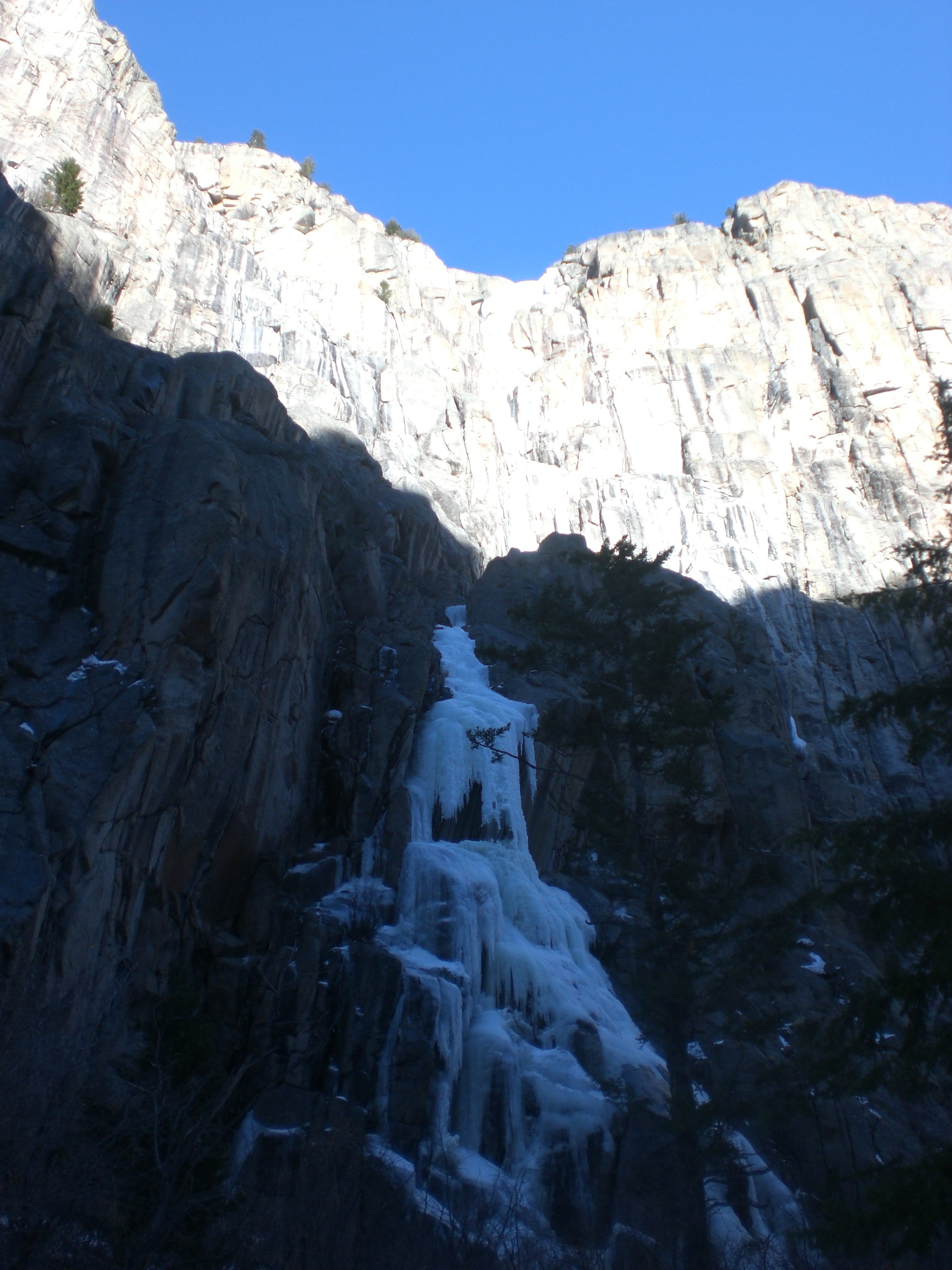
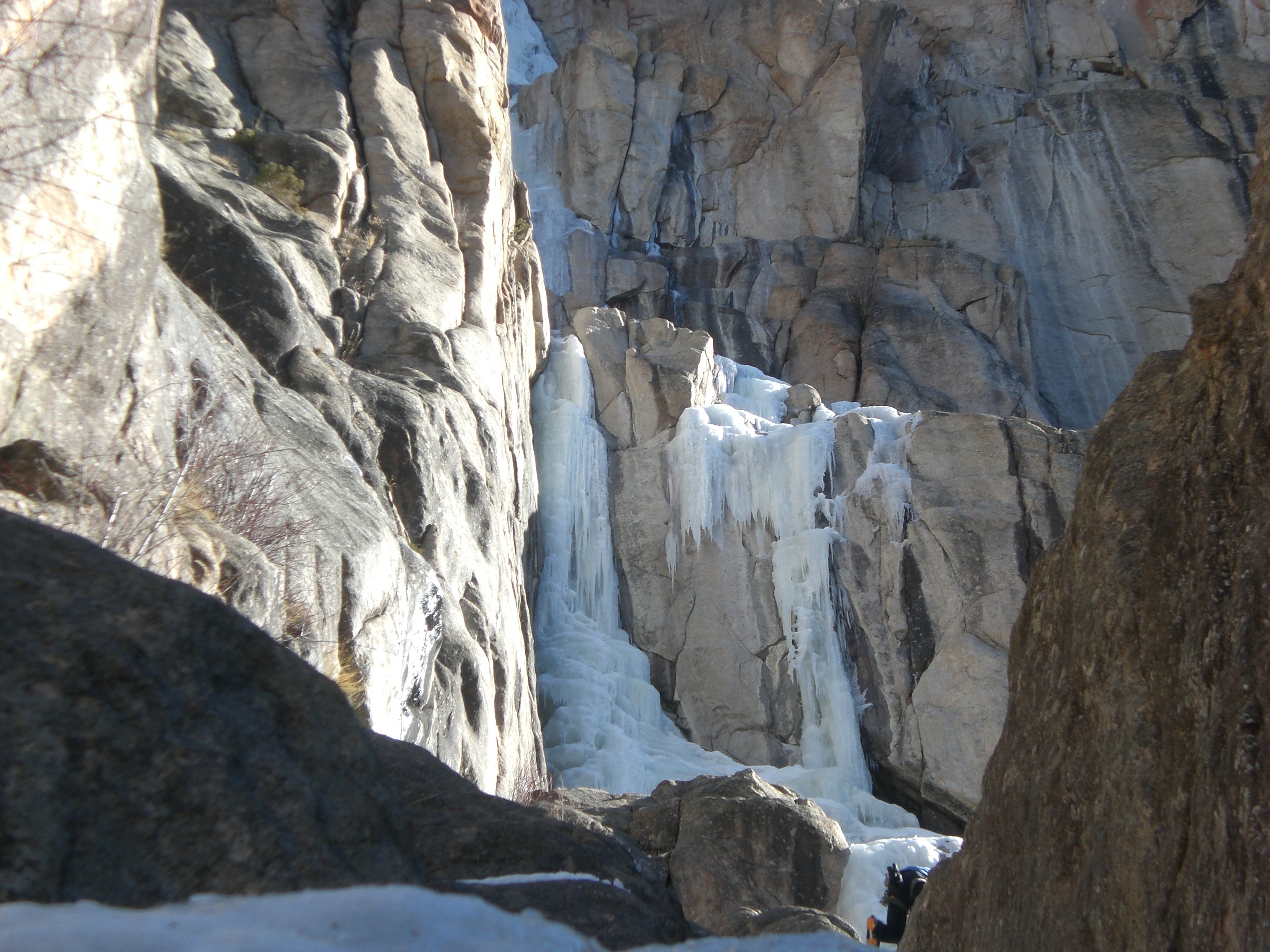
It was quite a reward at the bottom, almost enough to make you forget you had to walk back up what you just came down. The morning sun shone into the gorge, tanning the 800 ft. granite walls, while the river grumbled under ice, welling in pools where the channel widened.

Call of Cthulhu first pitch

And there was the climb I’d fallen off two years ago. The weasel-like part of me that scampers around the base of my skull was disappointed I wouldn’t get a rematch with the mixed version of the first pitch. The more clear-thinking part was glad to see the first pitch touching down.

The climbing wasn’t too hard, it just took a light touch on the sun-baked, arching pillar. Mike accepted the ramble up the second pitch with equanimity.

Mike nearing the end of pitch #2

The third pitch was alpine climbing, the beautiful sort of stuff made of rock and ice at once which defies any sort of rating, with a little bit of M4 (after the fact) to finish.

Pitch 3/4 belay

Mike got his karmic justice for enduring the mediocrity of the second pitch. Steep sunny ice on the fourth pitch lead to a spacious belay cave at the end of the route.

Beginning pitch #4

By any name, it was a stellar climb. So good, I barely noticed the quadriceps hematoma from rockfall on the way down. Hell, I’d even forgotten the walk out by the time we left the parking lot. Ok, maybe that’s a lie, but it was pretty damn good.

Pitch #4

Tagged , , , ,

Certainty

I try not to rope up with people who are too certain. They tend to do things like walk under seracs because seracs don’t fall when the weather is cold, forego protection because they can just climb it, and cross loaded slopes because they went this way before and it didn’t slide. Some of them are certain because they are fatalists, some because they are true believers, most because they can’t deal with the fear and uncertainty anymore and have decided to just switch off.

For a couple of centuries it seemed like we were poised to untie from certain people in general. A series of uncertain people came along and showed that their way was better. Their questioning lead to an understanding that the earth was really old, Democritus was right, kind of, and our thought and language were a self-referential tangle. These and other revelations of uncertainty eroded the old institutions whose source of knowledge was authority.

But change lead to anxiety, and the certain people saw an opportunity in that angst and in the methods of the uncertain themselves. To people who lived by a belief in authority, relativism equaled Nihilism and statements like “There is nothing but the text.” represented soft-headed weakness rather than caution and humility. So, the certain rejoined the discussion.

Their bid was an appeal to relativism and uncertainty as they saw it. If the field was level, their ideas should merit equal consideration in principle. And they packed their methods right along with those ideas. Debate to replace discussion. Moral force to replace reason. Because, with authority as their source of knowledge, they didn’t need to refine an incomplete understanding, they needed to win. And they did win. They managed to replace real skepticism, which implies uncertainty, with their version, which is synonymous with mere derision. Worse, they managed to draw uncertain people into debate.

Once the uncertain engaged, it was over. They kept trying to be reasonable and have a discussion. When that didn’t work, they tried to be certain. The certain people didn’t care about a discussion, they knew what they knew and just wanted the popular influence all authority craves. And when the uncertain people  expressed certainty, they became vulnerable to a claim of equivalence. They were revealed as authority-based too, so the claim went, so it was a simple matter of choice among similarly valid systems of belief.

The mistake was to allow the premises of certainty in the beginning. Before the uncertain began a defense of their ideas, they should have demanded that the certain defend and explain their own ideas first, with an eye toward divining the premises. When the certain appealed to assertion of authority, whether in the form of a moral sense, supernatural agency, or incredulity, the talk should have ended. A person may certainly assert whatever, but once they do, there’s no point talking about it unless you begin by agreeing with their assertion. And in that situation, it’s best to just un-tie.

Tagged , , ,

Uncertainty

Uncertainty gets treated as a negative term, but it is our ground state. Learning to act in its presence is one of the most important things a person can do. Most simply choose to ignore or even deny it, resulting in random behavior. Lucky for us, homeostatic mechanisms permeate and surround us, so we tend to ping back and forth in a general direction and, with a little cognitive dissonance, we can even make a case for purposeful human behavior. How pervasive is our uncertainty, though, and how much does it matter?

Is a V-8 sitting on a desk an engine or a paper weight? How about a V-8 made of polystyrene? If you touch the engine, and take it apart, and you know something about engines, you will be able to make a good guess about whether or not it runs, and is thus an engine. If you don’t know much about engines, you might not be able to make as good a guess. All you could say is that the polystyrene engine is probably a paperweight and the metal one might not be. Imagine if you had never seen an engine of any sort before. Would analysis help you? If allowed unlimited resources and time, you could track the parts, shapes and relationships back to common origins. You could, in theory, reinvent the engine and then you could know with some certainty whether or not the example in front of you would run.  

How about a more difficult case? Most people would agree that  brain with no ‘stuff’ in it is not a mind, but is it, in that case, even a brain? How can you know? Without watching it work, the requisite process of reduction to determine whether or not the empty, static brain could work is daunting. In fact, it is reasonable only as a thought experiment and finally amounts to saying only that everything is made of the same, interconnected thing – a very, very important conclusion, but redundant.

The way out of the resulting tautology is conceptual. Concepts like mind are vague and squishy. So much so that they may be mistaken for an epiphenomenon called epiphenomena. But they delimit the reduction and account for the temporal element of our experience. We will always have to watch things in motion to make sense of them and our sense will always be fuzzy and incomplete, though we can endlessly refine it through analysis. We’re just lucky that way, too.

Ovisight


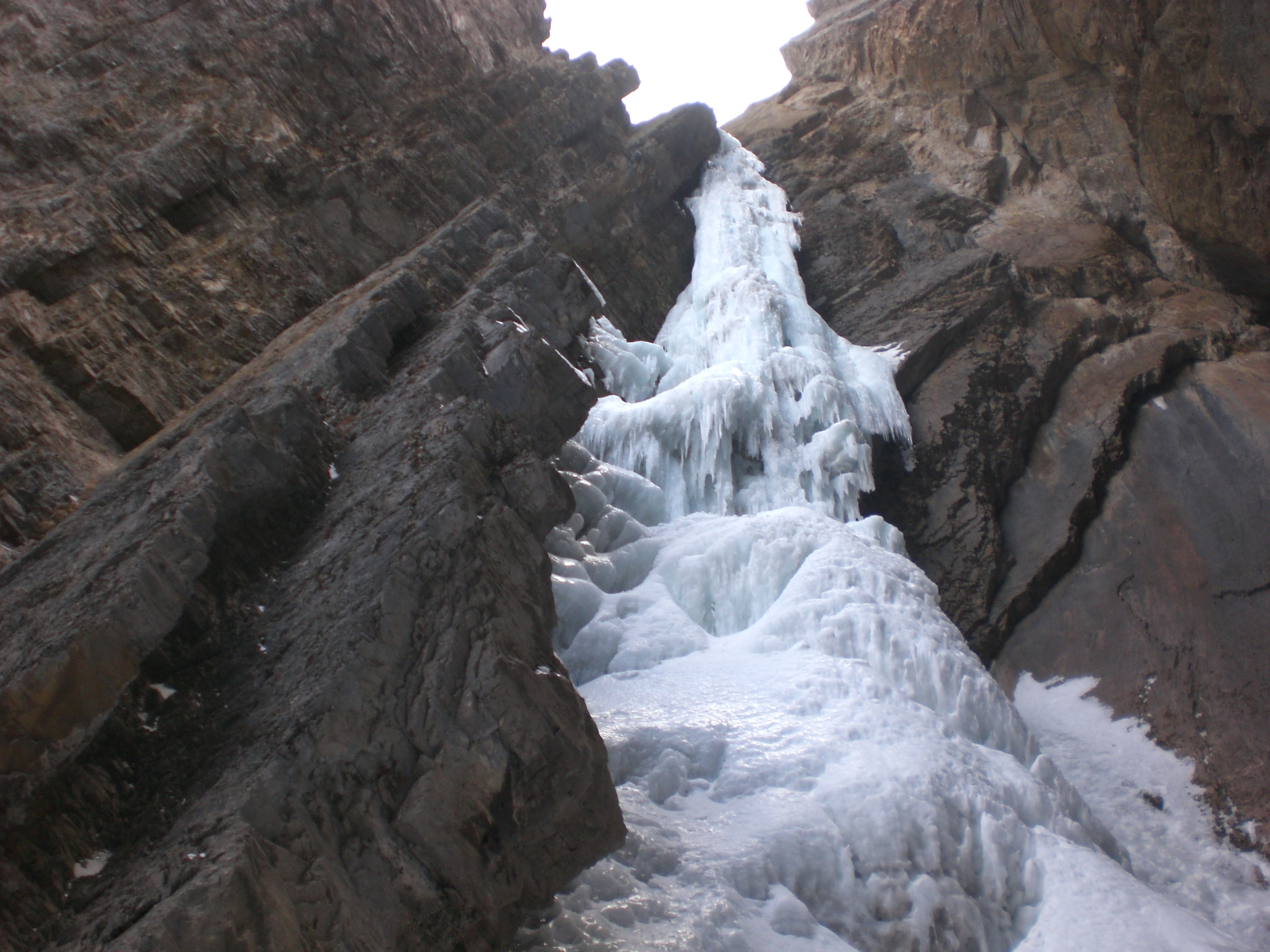
I am getting old. Every year, I recover more slowly from big days out. Injuries have started to accrue rather than heal. My climbing partner has an artificial hip. The day I’ll have to back off is on the horizon. But I can still climb Ovisight, so that day has not arrived yet.

The hills don’t care who you are, what you do, or how you feel. The Ovisight/ Legg creek drainage cares perhaps a bit less than other sections of the world’s terrain. The approach is always just as treacherous and choked with snow, no matter the conditions elsewhere in the valley. This year was no different.

We got a late start, so it was mid-morning before we stood at the top of the approach pitch, where the entire drainage funnels through a gap you can stretch your arms across.

We slid and wallowed our way up to the first pitch. The ice was easier than usual, more five-ish than six-ish.

The second pitch was, as usual, harder than it looks.

At the top of the pillar, the snow was deep and the hour was late, so we went back to climb the first pitch again rather than pushing on to the final column of ice above.

As we were wrapping up, two teams of younger guys arrived at the first pitch. They had started at noon. I was impressed until I checked the clock. They hadn’t moved any faster than us, it was just that late.

We made it back to the car as the sky faded from blue to black and the coyotes began to call to each other. We were whipped and I think if either of us were asked at that moment, we’d have said we wouldn’t go back to climb Ovisight again. But, being old, we would forget that moment and next time the first pitch peeked around the ridge at us, we’d head back up for another Alzheimer’s onsight.

As our little diesel cranked and caught we looked back at the climb one last time and we saw headlamps wink on high, high up the valley wall. I shivered. Age had its advantages after all.

Tagged , , ,

Spray and Beta : Climbing Social Media

In college freshman English, we had to read Beowulf. The assignment was onerous for most of my classmates, but one woman seemed to suffer above all. She sighed and rolled her eyes through every class discussion; I expected a convulsion at any moment.

And finally, it came. During a passage where the hero holds forth about what he’s going to do to Grendel’s mama, she burst out, “You know, that’s what I hate about Beowulf. He’s constantly bragging and showing off. In fact that’s all this whole story has been about. It is the shallowest thing I’ve ever read!”

I was dumbfounded. “No,” I offered,” it’s not bragging, it’s a kind of oath. He says all those things, in front of those people, there’s no way he can come back empty-handed.”

Beowulf’s soliloquy was Spray. Even back then, when I was a measly scrambler armed with a piolet, the climber inside me recognized it. Since the beginning, when climbers have encountered other climbers, they have sprayed about what they did and what they were going to do. From Cham, to Sheffield, to Camp 4, if you talked smack to those in the know, when you sobered up the next day, you had to fulfill your destiny.

My brother used to yell at the TV. He had all kinds of advice for the Dallas Cowboys’ offensive squad. He really did know something about football and often the coaches would actually do what he yelled at them. Nevermind he had never played football. And, he was 12 years old. But he didn’t seriously think he was advising the team. The tirade was just a means of vicarious participation. In climbing terms, it was Beta.

Spray and Beta are not such bad things in person. You can see the sprayer getting wound up to do something. The Beta, though it can be a little much, has an encouraging tone. However, Spray and Beta shifted to the internet, stripped of tone and context, come across like bragging and showing off, and the result is the shallowest thing you’ve ever read: climbing social media.

Of course, few things are all bad. The four main climbing sites, (Mountain Project, Rockclimbing.com, Summitpost, and Supertopo), have some great photos, gear reviews and  trip reports. In other words, with some editing they’d make decent online magazines. The problem is, they don’t have a good editing process and they don’t want to just be magazines, they want to be guidebooks and chatrooms as well.

The community content guidebook is a guaranteed failure. A good guidebook gives the reader a sense of the area, provides inspiration and gives enough specific information to get a climber up the routes without sucking the adventure out of it. To effectively accomplish those tasks, the guidebook needs the unity of purpose a single author/editor provides. Otherwise, it ends up a pile of puke – you can sort out a few savory bits, but they are partially digested and tainted by the mix.

A chatroom might seem like the ideal internet venue for climber Spray, but think back to Beowulf for a moment. When he stood up to Spray, the audience could see his scars, his sword, and the crazy in his eyes, and he could see that they were not much different. Participants in an online forum are just lines of type with silly pictures next to them. The people behind the words may be anchored to their chairs, a wide load in their khakis, a coke and a sandwich their only comrades. In such circumstances, Spray inevitably devolves to wanking.

So, save yourself the trouble and buy a reputable guidebook if you want to go climb in a new area. And if you want to look online for information or inspiration, stick to regional sites like Gravsports or Montanaice.

 But for those who love bad movies, Twinkies and True Stories of the Highway Patrol and can’t help but lurk – I mean look (and I’ll confess to all of  that), here’s a quick rundown of your climbing social media choices:

Supertopo: Cali-centric with some (intentionally) amusing forum topics and good gear reviews. Typical user may have some difficulty urinating, may also be a member of Mountain Project. Mostly about rock climbing.


Summitpost: Cosmopolitan, with the best fund of information. Typical user is chronically constipated, may also be a member of  14er’s.com and eHarmony. Mostly about mountaineering.


Rockclimbing.com: Some interesting and (unintentionally) amusing forum topics. Typical user sleeps in a bed that has a canopy or is shaped like a race car, may also be a member of Access Fund and Explorer Scouts. Mostly about what the name says, more sport than trad.


Mountain Project: Colorado-centric with great photos. Typical user owns a letter jacket and loves to give nuggies, may also be a member of Supertopo or Summitpost and a porn site. Mostly about trad climbing.

Tagged , , , , , , , ,

Best of Cody – Mean Green

The moose which used to browse along the trail to Mean Green has long since gone, but the climb is still one of the best in the valley. With its neighbor High on Boulder, Mean Green is one of the handful of routes that occasional visitors to the Southfork aspire to climb. It is spectacular, with contiguous pitches at the start and finish, and it is long. You must have your system tuned up to get it done in daylight. So, though the vast majority of the climbing is WI 3, you ought to be solid at WI 4 if you expect to do the whole climb.

Mean Green from the Cabin Creek parking area

The climb follows the next drainage East (left, down stream) of  High on Boulder. From the end of the Southfork road at the Cabin Creek parking area, cross Cabin Creek and follow the trail left until it brings you to the gravel flats. Cross the river by whatever means necessary and keep walking pretty much straight toward the High on Boulder drainage until you intersect the Southfork trail. Turn left and walk until you see a sign that says “No Trespassing, No Hunting, Stay on Trail”. This is where you want to leave the trail. Don’t worry. The folks who posted are worried about people hunting, camping, cutting wood and generally tearing up the land and disrupting their cattle operation. In winter, if you are just passing through, you’ll be fine. Angle up toward the drainage and cross into the stream bed. Do this just before the drainage narrows, it should take just a single step down from the bank if you’re in the right spot. An easy hike gets you to the bottom of the first pitch.

First two pitches

About 50 meters of nice WI 3 leads to a belay at the base of the short 2nd pitch.

There were bolts and chains at a protected stance on the right, but I haven’t seen them for years. They are either gone or consistently buried now. Belay at ice anchors pretty much right in the line of fire. Send up the partner with the lightest touch to lead pitch# 2.

A short hike gets you to the short third pitch. Belay anchors can be a problem above the pillar.

Pitch #3

Look for ice anchors higher in the gully or use, uh, this…

Alpinism! Two slung chockstones and a 3" diameter pine tree

A bit more walking gets you to pitch 4. This is the kicker. It is much harder than any of the other climbing on the route, WI 4-5 depending on the year and the time of year.

By this time, you will have seen the upper slabs. They look like they’re just about 5 minutes up the way. This is due to something called ‘foreshortening’, a phenomenon where our optimistic little brains, lacking intermediate reference points, tell us that things are closer and steeper than they really are. It’s a solid 30 minute walk with some significant sections of ice bouldering. The slabs themselves are 75-80 meters of easy WI 3. Rappel and downclimb the route, the walk-off is a Bear Grylls sort of thing (gratuitous hardship undertaken due to foolishness or inadequate skill to avoid).

Upper slabs, top right

Tagged , , ,

Just a Taste

A few days of cold make a big difference.

The cave is finally formed up.

Either side is going at ~4+ right now, with indifferent protection.

Maybe it is going to be winter after all. On the other hand, it is 45 degrees and raining right now in Northern Wyoming. Hope this isn’t global warming – my boot is awful heavy, and the crampons are really sharp.

Leo demo's that essential piece of ice gear, the down vest.

Tagged , ,

Making Use of Ice Grades

Well, since there is precious little ice to climb, I’m stuck just thinking about it, and talking about it. Thanks La Nina. Bitch.

Anyhow, the WI grading system has always perplexed me a bit. Other ice climbers seem to feel the same way, since they use it either as a means of keeping score or a general guide to stay within their comfort zone when picking out a climb to do. But I’ve come to see the sense of it over time, and I think it is a valid scale. It does sort out distinct, progressively more difficult types of climbing, each associated with a unique set of hazards and opportunities. Here’s how knowing the grade may actually help you out on the climb.

Disclaimer: The thought of leading WI 6 doesn’t give me instant diarrhea anymore, but I am not an expert. I’ve climbed ice for over twenty years now at levels of activity from weekend warrior to marriage-threatening, though never as my primary occupation. But what I’m going to say isn’t for experts either, it’s for my fellow proletarians. In addition, I am not addressing the Red Bull-swilling, whipper-taking dudes dossing on a floor in Canmore December through February, living for the thrill of the thirty foot run-out. You guys grab your tools and snowboards and get the hell out; you will find this quaint anyway.  This is for those of us who view trying to make it safe as part of the game.

  • WI 1-3 : With a modern set up, the tools are used for balance only. The ice is thick and the only vertical sections are bulges. Good protection is available almost anywhere, so pick a comfortable stance to place it. This allows you to climb from stance to stance, rather than trying to climb to  the most promising screw placement. The commitment level is low, since the option of placing a good piece of gear and hanging on it or lowering is always available. The big dangers are having the ice plate-out, or your calves melt-out, from under you.

3rd pitch of Broken Hearts, WI 4

Wicked Wanda, WI 4

California Ice, WI 4

WI 4 : These climbs are steep enough that you have to pull on the tools to make upward progress, but not so steep that you can’t get your weight entirely back on your feet when you stop. Many of these climbs have multiple “steps” of vertical or near-vertical ice. Running out of gas in the middle of a step can be problematic, so the commitment level is higher. Beware the bulges, where a steep section transitions onto a ledge. The ice there tends to be brittle and may fracture into large plates. However, snow sticks to the ledges too, where it forms a shell of hollow ice above the bulge. These flat spots look like a good location for gear, but often they are not. Pulling over a bulge can be dangerous regardless of the ice quality, as well. Climbers have a tendency to step too high or lean over the ledge too soon, levering the lower crampon out of the ice. With WI 4 like this, the best places to set a screw are standing on top of the bulge or just below the bulge, with at least one tool over the top to take some stress off your arms.

My Only Valentine, WI 5

Community Pillar, WI 5

\

Drumstick, WI 5


  • WI 5: This is the grade where muscle fatigue and fickle gear become big factors. The ice is steep and unrelenting. The bonus is the appearance of mushrooms, blobs, columns, candles – all those irregularities in the ice commonly called ‘feature’.  Making use of the feature is key. Stepping onto a blob of ice instead of kicking the crampon’s frontpoint into a flat section of ice saves energy and may yield a more secure foothold. Hooking over gaps in the ice or swinging the tools at junctions in the features makes for fewer swings to get a solid pick placement.
  • Aside: Before I say anything about protection, I should explain the rationale behind my approach to placing ice screws. First of all, it’s worth it. Gone are the days when climbers could make a cogent argument that screws made things more dangerous because of the effort required to place them or that screws were so unreliable that they amounted to confidence boosters only. Ice screws work. We now know a bit about how they work and what makes a placement better or worse, (see http://www.jjgeng,com/html/body_ice_screw.html for an excellent summary) . Still, field assessment of placement quality is problematic. All you can do is avoid the two situations that make for a sketchy piece of gear: weak, unsupported ice under the hanger and areas where the screw doesn’t ‘bite’ all the way through the placement, indicating an air pocket in the ice.
     
Oh Le Tabernac, WI 5
  • More WI 5: Features can guide your choice of protection points as well. Again, the junctions of columns are places where water has stopped during ice formation, eliminating air pockets. Knocking the lip off these junctions can make for a good placement. Sections where columns protrude from the main body of ice also tend to make for better protection opportunities. At this grade, if there is a good stretch of ice for gear, take it, even if it is not the most comfortable stance. Full on rests are rare and not so restful at this angle if you are trying to drive a screw into the ice. Besides, any ledges are typically located where water has dripped down from just above to form the ledge, leaving aerated ice above the stance. Not always, but often enough that you shouldn’t simply count on running it out to a ledge and getting decent gear there.
First pitch of Ovisight, WI 6

Nemesis, WI 6

Whiteman Falls, WI 6

  • WI 6: Two things, chandelier and overhanging ice, characterize this grade. Sometimes it’s given to climbs where the ice forms up steep and thin or hollow as well, but those are rare. Chandelier, the bundles of small icicles that look like a crystal chandelier, is impossible to protect unless it overlies a more solid column which is accessible with minimal chopping. Stopping to clear bad surface ice and drive a screw on a section of climbing angled at 105 degrees is a non-starter, too. Expect to commit yourself to trust in the sticks. Look for the junction of features and dare to hope you’ll get a screw to bite all the way in there. Fortunately, you’re often climbing toward safety, as the ice usually gets thicker and less fluffy towards the middle and top of these things. The sticks do tend to be good in solid chandelier, too.

So, for WI 3, keep moving from stance to stance and don’t burn your calves out. For WI 4, gun it through the steep sections and learn how to deal with bulges before leading. For WI 5, learn to read and use the features; don’t get suckered into just climbing from stance to stance, the gear may suck when you get to a ‘nice’ place to stand. For WI 6, get your head together, climb to safety, don’t try for gear where there can be none, be sure you trust your sticks, and hope for the best.

  • WI 7  ? I have never knowingly climbed this grade, though I have climbed some WI 6 that felt noticeably different, and harder, than the rest. Is a 10 foot roof still 6? Is an overhanging pile of translucent candles for 25 meters still 6? What about a 3 foot diameter pillar that goes to an 8 foot diameter in 30 meters, is that still 6 (I have kids, so I followed that – and stood well away from the base to belay)? Besides feeling extra hard and scary, the few climbers I’ve spoken with about this grade can’t characterize it further. It sounds like the old 5.9+ rock grade in the Black Hills, devised when the scale ended at 5.9. Besides, hasn’t Will Gadd proposed skipping to WI 10? Splatter climbing, he calls it, doesn’t he? Oh well, I like the sound of that, and I suppose the kids need something to look forward to, especially if it gets them out of their fruit-boots.
Tagged