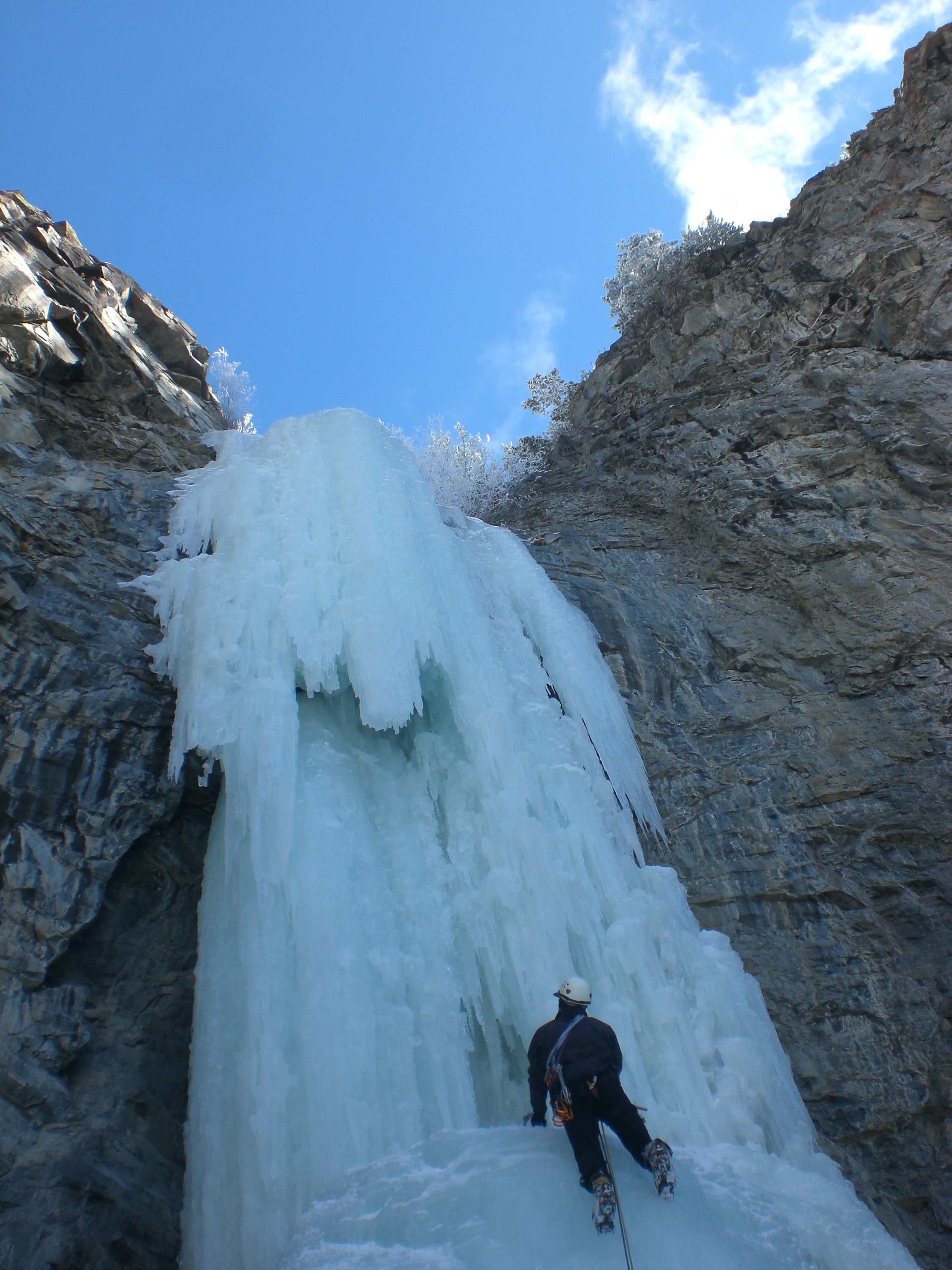
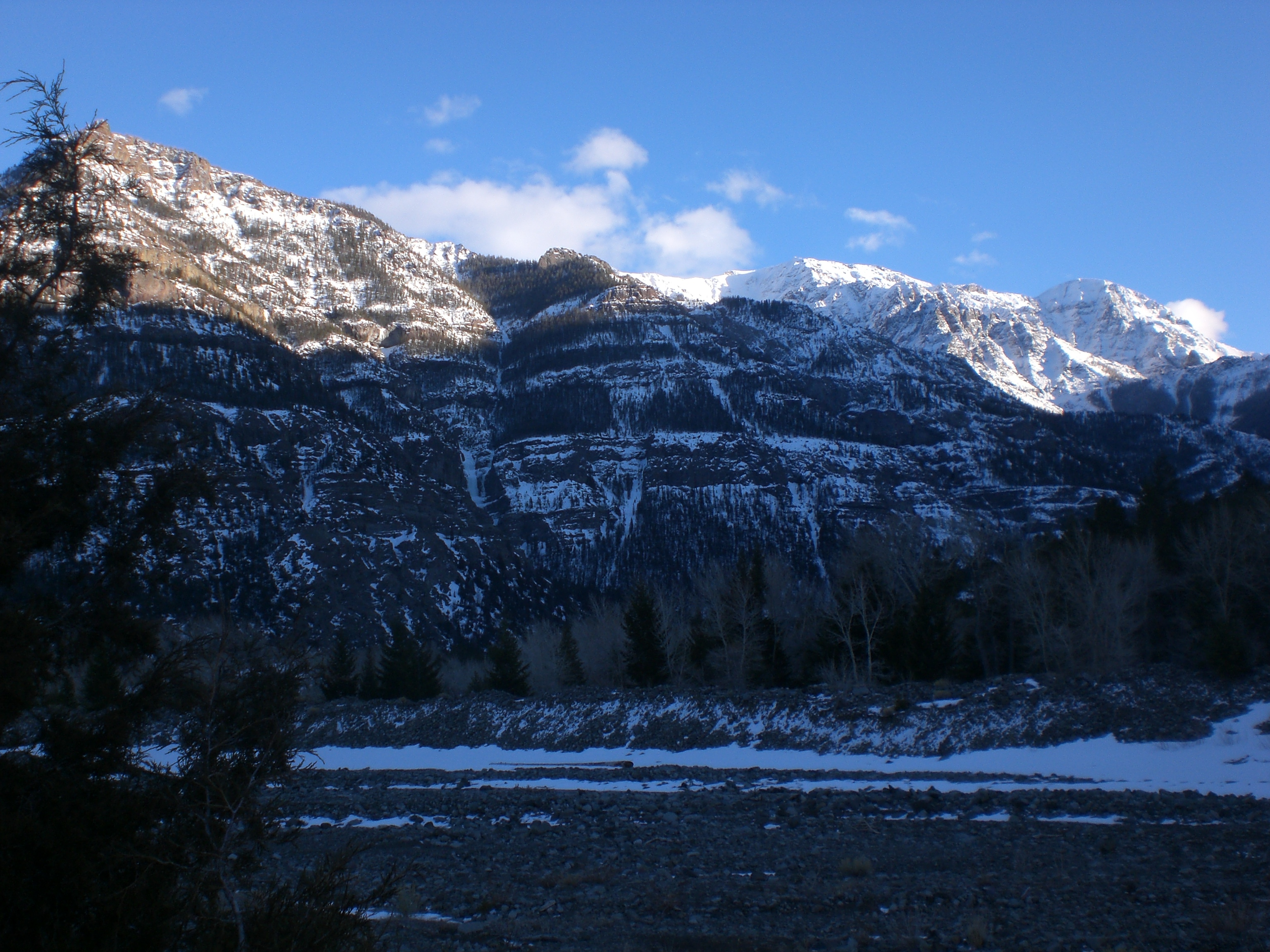
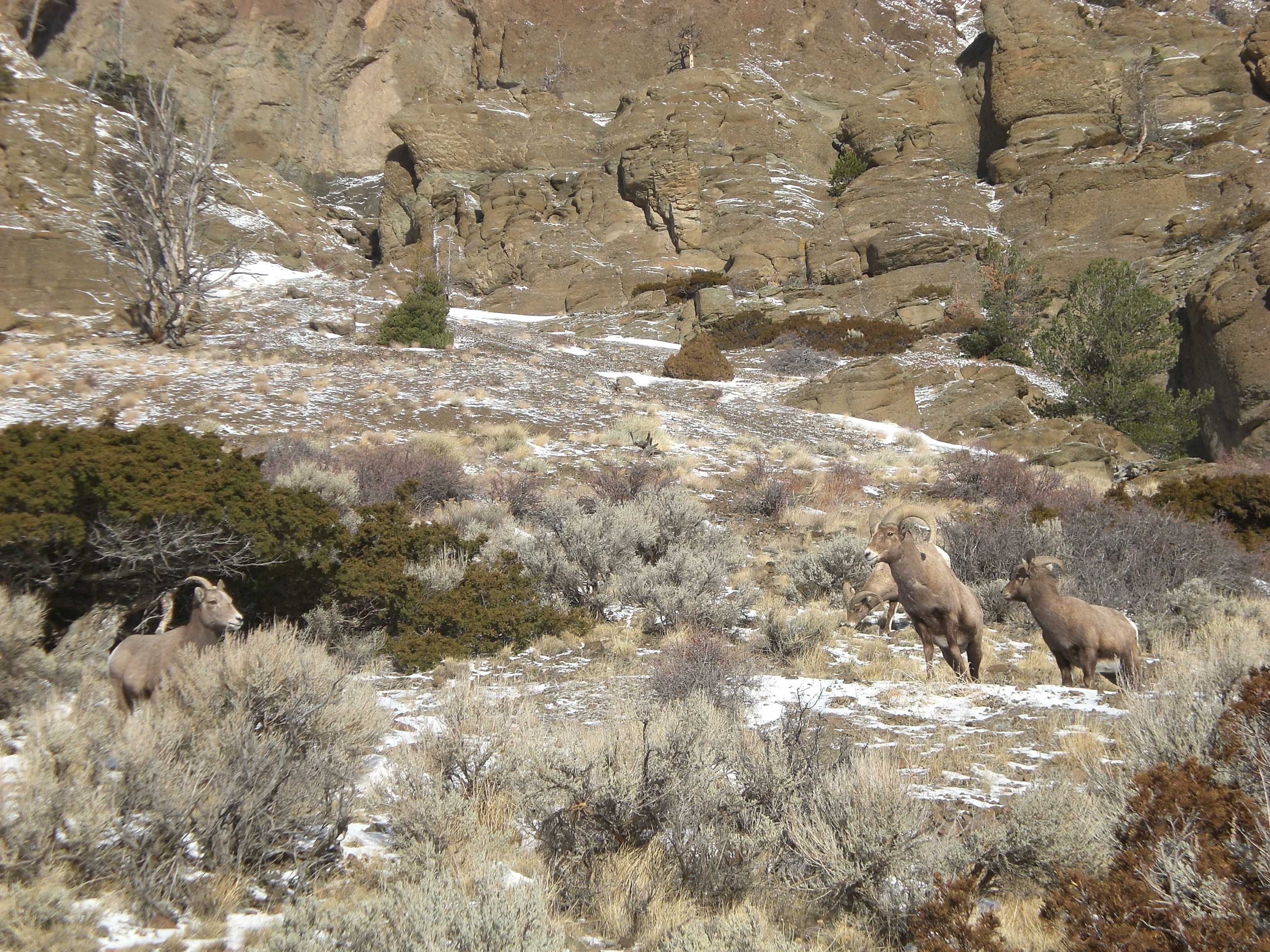
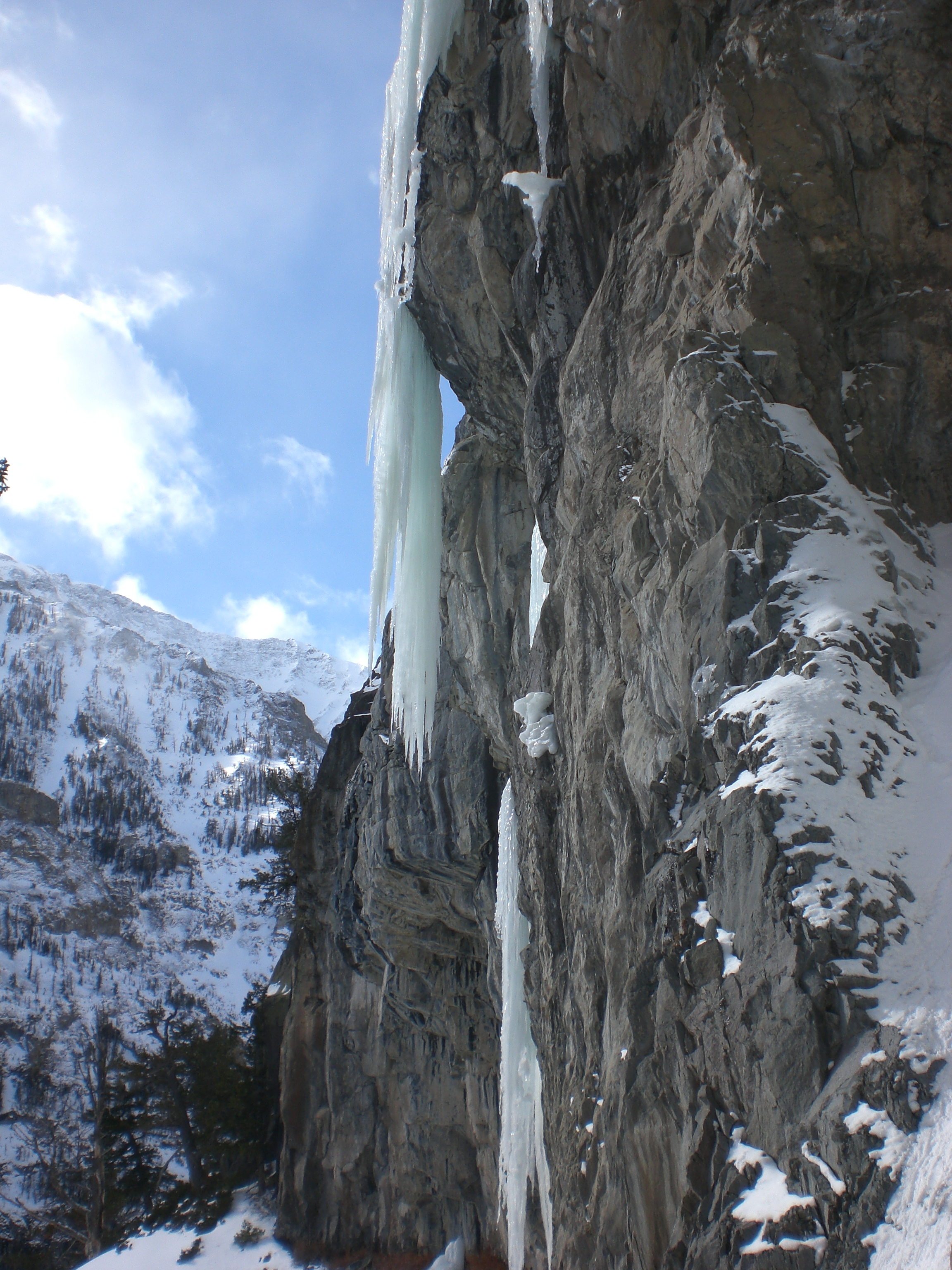
Category Archives: climbing

Dear Ueli,

You know what this is about. It’s what everything has been about for – how long has it been – ever? I mean the little dust-up on Everest. Let me reassure you, I am writing as a great admirer and friendly correspondent. You are living the dream, and showing all us amateur climbers how to do it. We are all limited by what we think is possible, and you have made a career of crushing the limits. So I am not a critic, but I do have a concern.

I’m not so worried about the actual events on the Lhotse face. I don’t know shit about Sherpas or their culture, but I am a field observer of human psychology, as a hobby and in my job, and here is how it looks. It appears that the Sherpa crew on the face was pissed because you guys passed them and may have knocked a bit of ice down. As climbers, we know how frustrating it can be to have a stronger team pass us. We accept it as part of the game, though. It’s the same with ice fall; even the best climber is going to knock a little ice down, no matter how careful he or she is trying to be. However, the reaction you got didn’t come from climbers, did it? It came from technicians trying to get a job done.

I’ve tasted that flavor of hostile indignation before. The first time was from a Chicago cop. I used to run a route that took me past a housing project. Rain or shine, I did that run for a year and a half, until the cop stopped me. He didn’t yell or throw rocks at me, but he made it clear that I was not to run the route past the project anymore. Unpleasant legal consequences would follow, he implied, if I did not comply. Before my encounter with the cop in Chicago, I had the naïve idea that laws and cops were there to keep the peace and let the citizens get on with their business. Afterwards, I understood that laws and cops were there to prevent trouble for cops and the legal system. Seems like the situation is the same with the fixed lines on Everest and the people associated with them.

These people – the functionaries of the Big Expeditions to the Classic Routes on the Big Mountains – have a different view of risk than climbers. A climber’s view of risk is like a card player’s. He pushes the chips to the middle of the table and then does his best to get them back. These other people do their best not to have to play the game. Who can blame them? They have a job to do.

Which brings me to my concern. What do you want with mountaineering anyway? We all know that mountaineering is for those who can’t do anything else. Hell, in fifteen years or so, I know I’ll be trading in my tools for a piolet and begging my kids to drag me up some god-forsaken volcano (assuming I live that long). Of course, on Everest you were after the West Ridge, which is not a mountaineer’s route. No doubt you were motivated in part by the tale of the route’s first ascent. I have heard Tom Hornbein talk about the original climb. Even back then, he and Willie Unsoeld had to fight the mountaineering expedition mentality to get to their climb. That mentality is institutionalized now in the environs of all the prominent peaks, high and low. Did you hope to escape it in this day and age on the most prominent peak of them all?

I know you have a job to do too, and you are beholden to the weasels in marketing because of it. However, you shouldn’t feel compelled to stoop to mountaineering. You must realize that the weasels in marketing would rather not have you around. They would prefer an endless parade of reality TV celebrities coming off the summit of the world’s highest. Those wankers come much cheaper and are easier to liquidate. The climbing community would recognize the significance of a West Ridge ascent, but the rest of the world would see only the summit of Everest, and they would be glad that you had finally got there, after all your preliminary fiddling in the Alps.

You ratify the popular perception by adding an Everest summit to your resume, and in the process, you increase the value of wanker stock. To us climbers, you represent the consummate talent and discipline required to push the chips to the middle and reliably pull them back. To the summit industry, you represent recklessness bordering on assholery, by playing your game in their workspace. Even worse, when their stock goes up, yours goes down. As the notoriety of the high summit grows, lending credence to the wankers’ claim (explicit or implicit) that the high summit is the Grand Prize of climbing, the significance of soloing the North Face of the Eiger in a few hours, shrinks.

Don’t get me wrong, an artist like you should do what moves him without listening to anybody else, especially a duffer like me, and if you are moved to go back to climb the West Ridge of Everest, you should. Furthermore, you have nothing to be sorry for regarding the fight with the rope-techs on the Lhotse face. I’ve read all the anti-imperialist narrative and social justice analysis regurgitated in response to this incident. Sherpas attacking a bitchy client is a revolution. Sherpas attacking an independent team of climbers is just a good, old-fashioned turf war. So, I think there’s nothing to stop you from going back in principle, but please consider before you do: Is it good for business?

Tagged ,

Just Off Highway 212..

..in Southwest Montana, hard by the Crow agency, stands a  prominent hill with a monument marking a mass grave which holds the remains of members of the 7th Cavalry. On a sunny day in Spring, I stood on that hill and saw what happened to Custer and his command in the Battle of the Little Bighorn.

They lost it. They lost it long before the last of them died on the hill, though. The evidence, especially the fact that the last of the command did die on the hill, is manifest on the surrounding landscape. Markers dot the ridge and valley leading to the site of the ‘last stand’ indicating the spots where men died along the way, died while standing separate from the command, or fell trying to flee the hill. Nobody could really know what transpired that day, but anyone could know, just by standing there, that the hill was a terrible place to be.

The view from the hill was panoramic. All the  features of the terrain, including the perpendicular ridges which form the sides of surrounding gullies, were exposed. The commander of a military unit would naturally seek such a vantage point, due to both his training and a natural instinct to be able to see an oncoming threat. But even at the beginning of his maneuver to the hill, Custer had ceased to be the commander of a military unit trying to win a battle.

As his trained instinct to retreat and regroup was misplaced, so was his natural instinct to keep his enemy in view, for from an opponent’s perspective, anyone standing on the hill became a perfect target outlined against the sky. Any move to escape the hill could not be concealed. From the vantage point of those defending the command, targets seen from the hill had to be picked out from the background of grass and dirt on the slopes, if those targets were not completely hidden behind the perpendicular ridges. Custer’s maneuver to the hill was a mistake, but it was not the first such mistake in human history, nor the last. It was one of a surprisingly broad and common category of mistakes, which afflict the capable as easily as the bumblers among us.

Decades later, the pilots of Air France flight 447 experienced something very similar to Custer’s  retreat up the hill. Just as the pilots were maneuvering through a series of thunderstorms, the airspeed sensors on the outside of the airliner froze over. The plane’s computer then shut off the auto pilot to avoid the automated system’s reacting to invalid data from the malfunctioning sensors. Now in control of the plane and unable to make sense of the numbers anymore than the computer could, the acting pilot reverted to instinct and training. His instinct was to get out of the situation. The first bit of training which came to mind for escaping a bad situation was one which told him to add power and pull the nose of the plane up. He even tried to confirm his instinct with his fellow pilot, at one point saying, “I’m in TOGA, eh?” – an acronym for ‘Take Off, Go Around’, a maneuver used to recover from an aborted landing, for example, by adding power and climbing. All the while, the stall warning was screaming, indicating a problem which demanded everything but elevating the nose of the plane and climbing.

I have great sympathy for the pilot of flight 447, because I have done what he did, but I was luckier. I was on one of my first long rock climbs with an equally inexperienced partner. We set out on a warm, clear day amid the long days of Northwest Summer on a route well within our capabilities. We knew we could climb it easily in a day, so we left without jackets, headlamps and extra food. However, the route was longer and more convoluted than we had anticipated. By the time we peeped over the summit for a view across the range to the sea, we had to shade our eyes from the lowering sun. We knew it was late, but had no idea how late, since we had left our watches with the headlamps. As we descended, which we had planned to do mostly by climbing down, it got dark and we were forced to use the rope more and more often.

For those who are unfamiliar with climbing techniques, descending by use of the rope involves doubling the line through a loop of nylon webbing anchored to the rock, with or without a metal ring to hold the rope off of the nylon, then using a friction device attached to one’s seat-harness to slide down the two sides of the doubled rope at once. Typically, the descending climber holds one hand above the friction device for balance while the other hand is on the rope below the device, controlling the rate descent by increasing or decreasing tension on the free end of the rope. Before coming to the end of the rope, the descending climber must find a new spot to anchor another loop of nylon. The second climber then comes down the rope to the new anchor, the team pulls the rope through the original anchor, doubles the line through the new anchor and repeats the process.

In the growing dark, new anchor opportunities became harder and harder to find. We had to get down, because we planned to get down, because we felt an instinctive aversion to the prospect of being stuck on the face, and because my partner had to be at work the following morning. As I approached a wide ledge, I could not find an anchor. I swung back and forth across the face, letting a little more rope through my friction device on each pass to allow a wider and wider arc. Now past the ledge and increasingly desperate for an anchor point, I pushed back to the left one more time and felt the ends of the rope slip past my lower hand. My upper hand reflexively locked onto the rope above the friction device as the ends pulled free of the device. Luckily, my grip on the rope with the upper hand held and kept me from falling several hundred feet down the face.

Instantly, I forgot about the prospect of not finding an anchor, my partner’s missed work day, and the dreariness of being stuck out for the night. Climbing hand over hand back up the rope to the ledge, I was re-oriented to the situation. We were not racing to finish a successful climb or out of options because I couldn’t find an anchor by starlight. We were trying to descend a complex route in the dark, and had hit an endpoint. We would not die of cold or thirst or starvation that night. My partner joined me on  the ledge. We secured the rope ends to a bush and then curled around the stem of the small plant as if it could provide some warmth and shelter. We shivered the night away and by morning’s light, found a large flake of rock ten feet right of our little bush to tie off as an anchor. My partner lost a vacation day, but kept his job.

As I climbed more, I spent fewer unprepared nights out, partially because I learned the hard way, but partially because I learned the checklists that all climbers employ. There is a packing checklist, a checklist for use prior to climbing onward from an anchor, a checklist for use prior to descending the rope, a checklist to run before pulling the rope through a top anchor, etc. Checklists have saved me on many occaisions.

A checklist almost saved flight 447, though they did not know they were using one. When the senior officer arrived in the cockpit, the pilot and co-pilot were racking their brains trying to sort out what had happened, even as they acted to achieve what they knew that they must achieve – making the plane climb instead of descend. When they asked the senior officer what they should do, he replied, “I don’t know.” In effect, he performed the most vital step in any checklist – he stopped himself and began to pay attention to what was going on right then, in his own head as well as in the airplane. Unfortunately, by the time he’d helped his fellow officers clarify their mental states and reconcile their actions with the events at hand, the airplane was one and a half seconds from the ocean. Even Custer might have been saved if he’d had a checklist, despite the more complicated nature of his situation.Custer faced a special challenge because his opponents had a keen understanding of the psychological elements which make a checklist so useful.

One element in particular is the key benefit of checklists and the one which we are in constant danger of forgetting. Even in the definitive popular treatment of checklists, Atul Gawande’s The Checklist Manifesto, the key element gets only superficial treatment. He touches on it in his description of the engine failure checklist for single engine planes.

It is slimmed down to six key steps not to miss for restarting the engine, steps like making sure the fuel shutoff valve is in the OPEN position and putting the backup feul pump switch ON. But step one on the list is the most fascinating. It is simply: FLY THE AIRPLANE. Because pilots sometimes become so desperate trying to restart their engine, so crushed by the cognitive overload of thinking through what could have gone wrong, they forget this most basic task. FLY THE AIRPLANE.

The admonition in step one of his example could be generalized to the statement: Remain oriented to your situation. Gawande can’t be blamed for focusing on the other utility of checklists – their ability to help us prioritize the necessary steps in a complex task and thus break the task into manageable bites. After all, he is primarily concerned with the application of checklists to prevent errors in the relatively controlled, but complex, environment of the operating room. However, his focus risks neglecting the source of our potential disorientation, a mental flaw which Custer’s antagonists at the Little Bighorn understood as vital, and which the course of the battle illustrated so well.

As opposed to Custer and his command, the warriors camped along the river were not soldiers. They had experience with war, but operated as a group of individuals rather than a formal unit. They had leaders, but no commanders. Their only training in the cooperative use of force came from hunting buffalo. Yet they understood their position. Management of the warriors’ psychological state was the leaders’ primary task. The leaders had to direct their warriors by example and exhortation.  And from the buffalo hunts, they knew that if they could control their targets’ psychological state as well as their own, success was guaranteed. The assembled tribes had a method, but not a plan and part of their method was aimed at breaking all plans set against them.

When Custer moved against the encampment on the Little Bighorn, he had a plan. He planned to trap the band of wayward natives between the two elements of his command, preventing the Indians’ escape or forcing them to surrender and return to the reservation. His plan was one for a pursuing force, an aggressive force. It was a plan for a military unit, utilizing a military unit’s capacity for coordinated attack and maneuver. For a moment, it looked like the plan might work. The Indians were surprised by the force which crossed the river to attack from the South under the command of Reno. But the Indians had a larger contingent of warriors than expected. In the face of determined resistance, the Southern attack failed and the troopers fell back in disarray.

When the initial thrust of Reno’s force stalled, a number of the warriors still mobilizing in the camp stopped to perform ceremonial rites. Crazy Horse in particular took so long in ritual preparations for battle that the younger men following him became impatient. Perhaps the drama was part of his plan too, orchestrated to focus and rouse his entourage. At any rate, Crazy Horse’s rituals were vital for his own role in the fight. The preparations served as Crazy Horse’s checklist, to protect him from the very thing he would soon attempt to do to his enemies – turn them from men into buffalo. When he emerged from his lodge, he was ready to fight his way. During the subsequent action, he would ride back and forth in front of the enemy lines blowing an eagle bone whistle, drawing fire. He would cut through a line of moving soldiers and lead his band of warriors in among the enemy forces. His actions would serve to prevent concerted action by his foes and force them to fall back on the familiar and the comfortable – predictable instinct and the rote lessons of training.

Custer’s attack never really got started. Confronted by a large force rallied to face him, he seems to have had difficulty orienting himself to the new situation. He doesn’t even seem to have had that critical moment which flight 447’s senior officer provided when he said, “I don’t know.” Instead, he retreated toward the hill.  In a subsequent interview, Hollow Horn Bear, a warrior who witnessed the battle gave this description:

Interviewer: After the soldiers got to the ridge, did they keep together in one body, or did some of them make a stand to give the others a chance to select a position?

Hollow Horn Bear: Soldiers kept together all during the fight. The soldiers would shift positions, but no stand was being made to do so.

Another witness, a warrior named Two Moons, gave a more incisive analysis:

…Custer was a brave man. I give him credit for attacking a people that vastly out numbered his – but something was the matter with his men. They did not run nor seek shelter, but stayed right out in the open where it was easy to shoot them down. Any ordinary bunch of men would have dropped into a watercourse, or a draw, where they could have fought for a long time. They acted and shot their guns like something was wrong with them. They surely had too much of that whiskey. That bunch of men should have fought for a long time, but it did not take long to kill them all.

Most telling was the view from the perspective of the encampment, as witnessed by Julia Face:

Interviewer: Did the Indians reach the high ridge ahead of Custer, and did he at any time charge them and drive them off?

Julia Face: None of the warriors reached the high ridge ahead of Custer. The Indians acted just like they were driving buffalo to a good place where they could be easily slaughtered. Custer never charged.

Maybe Custer had no choices that day. But maybe the one critical step in any checklist, the pause to reorient, would have helped his command acquit itself better even if it could not have saved him and his men. Because that one step is the only thing that can save the human part of the mind from itself. Without the jolting stop at the start of a checklist, the part of us that thinks will dwell on its plans and motivations rather than wading into the delays and discomforts immediately before it. A pilot’s mind, focused on the goal of gaining altitude, will tune out the stall warning since it is not helping him achieve his desire. A climber’s mind will forget about the end of the rope since it is not helping him find the next anchor. Then, with the human part of the mind occupied with its own concerns, the buffalo mind is left to act in its place. According to its nature, the buffalo mind just does something. It reacts to the anxiety assailing it from within and the simple cues coming from the outside with a series of programmed behaviors which ignore the future and the immediate past. It functions as a behavioral “Hail Mary” when the thinking part of the mind has checked out. It may freeze in the face of an immanent threat and not fly the plane. It may run over the edge of a cliff to escape.  Even without encouragement, the buffalo mind, with its unselected, rote behaviors, will often lead us to a good place where we can easily be slaughtered.

Notes: Interviews are obtained from the books, Indian Views of the Custer Fight by Richard G. Hardorff, Lakota Noon by Gregory F. Michno, and Lakota Recollections of the Custer Fight by Richard G. Hardorff. Further information is available at the Custer Battlefield in South Central Montana via our wonderful, woefully underfunded National Park Service

Tagged , , , , ,

Oughto Elimination

CIMG4053“I ought to be able to climb this,” I thought.

My partner agreed. “You got it, man,” he called from the belay.

Of course, the problem was that I didn’t have it. If the helpful blob of ice for my left foot had been there instead of the mushy snow that was, I would have had it. If the sun had not already melted loose the key chunk of ice above my head, I would have had it. If there were a foot hold above the little bump of granite which supported one point of my right crampon, I would have had it.

I pulled sideways on the quarter-inch, diagonal edge which provided the only purchase for the picks of my ice tools on the overhang which I was trying to exit. The ice having proven useless, I tried to clear it from the rock and then ratcheted my way up, fishing for an edge to latch onto with my left tool. Before I found one, my right foot popped off the little bump. My knee took up the counter-pressure before the pick of my right tool popped off the rock.

Pleasantly surprised to find myself still attached to the route, I lowered gently back onto the little bump. Ambition drove me up one more time, with predictable results.

“Not gonna happen today,” I said, “I’m coming down.”

CIMG4037

That attempt was my third on the route. We rappelled the three pitches below and descended avalanche debris to the floor of the cirque. As we coiled the ropes, a few tons of wet snow rumbled down a ledge system beside our abandoned line of ascent. We walked back to camp in silence, crawled into the tent and took our boots off.

“Well,” I offered, “we could always go climb at the Tower.”

CIMG4051

Few who climb remember the moment they started. The best most of us can do is to recall a time when we realized that we were climbers, but we were well into it by then. It sprouted as an inspiration regardless of the seed. As we acted on the landscape though, it changed our notions of what we could do and what we wanted to do. Aspiration took over from inspiration.

For most of us, ambition came close behind. Everybody’s had a list or project take possession of them for a stretch. In the worst case, our projects frustrated us, wore us down and made us quit, even if we finished them. In the best case, by the time we achieved our ambitions (or at last abandoned them), they had changed us so that the climbs to which we devoted ourselves no longer seemed so hard or so desirable as the routes we had discovered along the way.

Two Winters ago, an old man began to frequent our local ice climbing crag. He was a person of some renown, with many first ascents to his name in the ranges of North America. But, he had never climbed the waterfalls in the South Fork Valley of the Shoshone. He was training for the Valley’s steep cascades with miles of rolling ice between them, by climbing at the little cave we had nicknamed “forty feet of fun”.

His equipment was antiquated, but he wielded it with an ingrained ability reflecting many years of focused movement over ice and snow.  Still, he was slow and the length of his reach and the height of his steps betrayed the effects of 70 years of mountain travel on joints and tendons. He must have known what he was doing, so he must have known that his chances of getting up any of the climbs in the South Fork were extremely slim.

Finally, I had to ask, “What do you plan to climb in the Valley?”

“I don’t know,” he said, “I’m just going to go and see.”

A puzzled smirk spread over his face as he spoke, and I began to suspect. I’d felt the same expression of bemusement on my own face on occasion, after pulling a hard crux, usually on a “project”, when I couldn’t recall the moves involved or even how hard they felt. Then I would walk around for the rest of the day with the fading suspicion that maybe I didn’t climb it, maybe I fell off and even died, but had lost the capacity to notice in the process. Maybe the old guy felt that way all the time now; I didn’t ask about it or anything else, and I never found out how his trip turned out.

CIMG4031

Back in the tent, both of us stared at the nylon floor for a few moments.

Then my partner lifted his head and replied, “You know, climbing at Devils Tower has been on my list for a long time.”

Tagged , , , , , ,

Seven

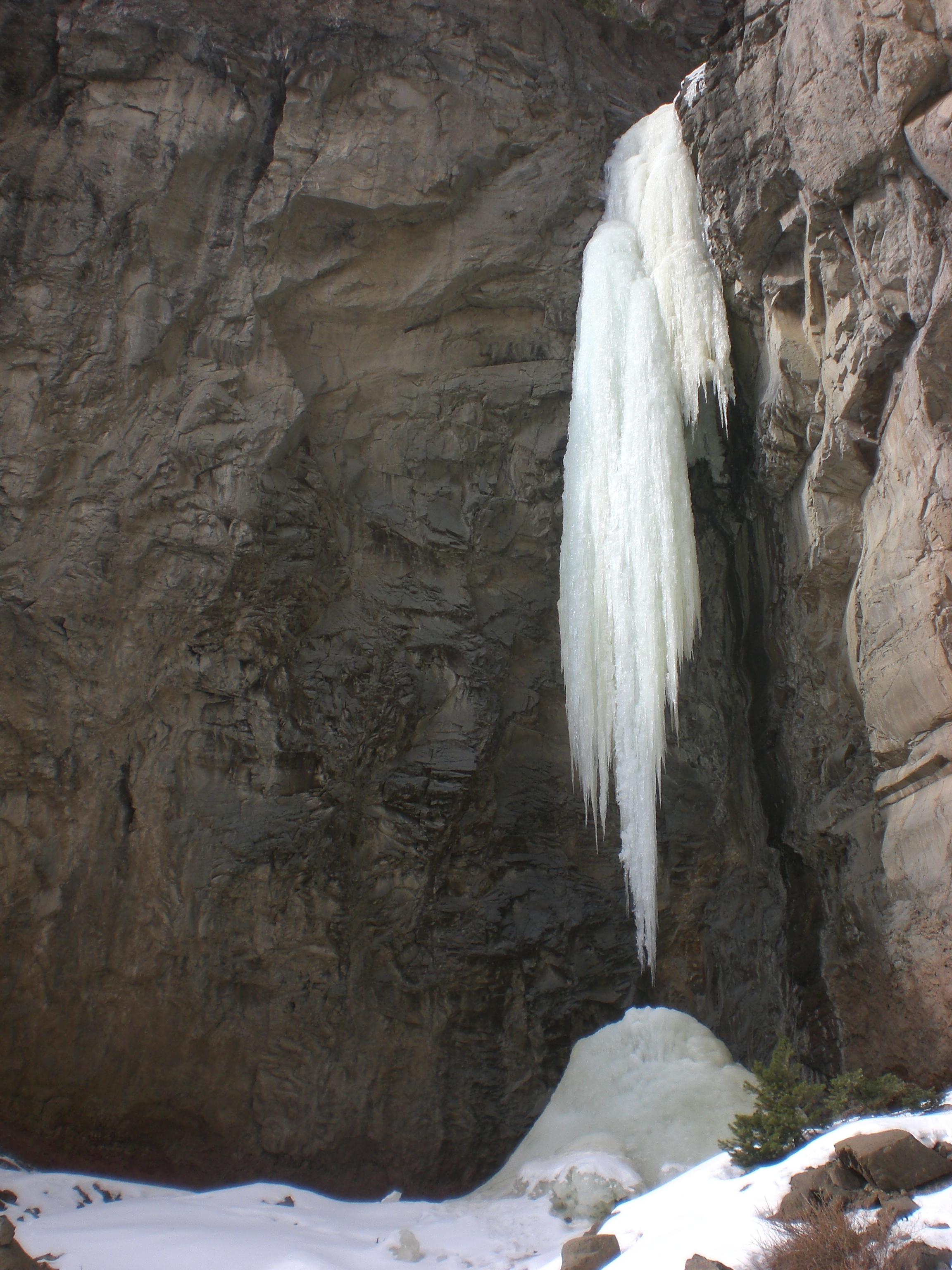
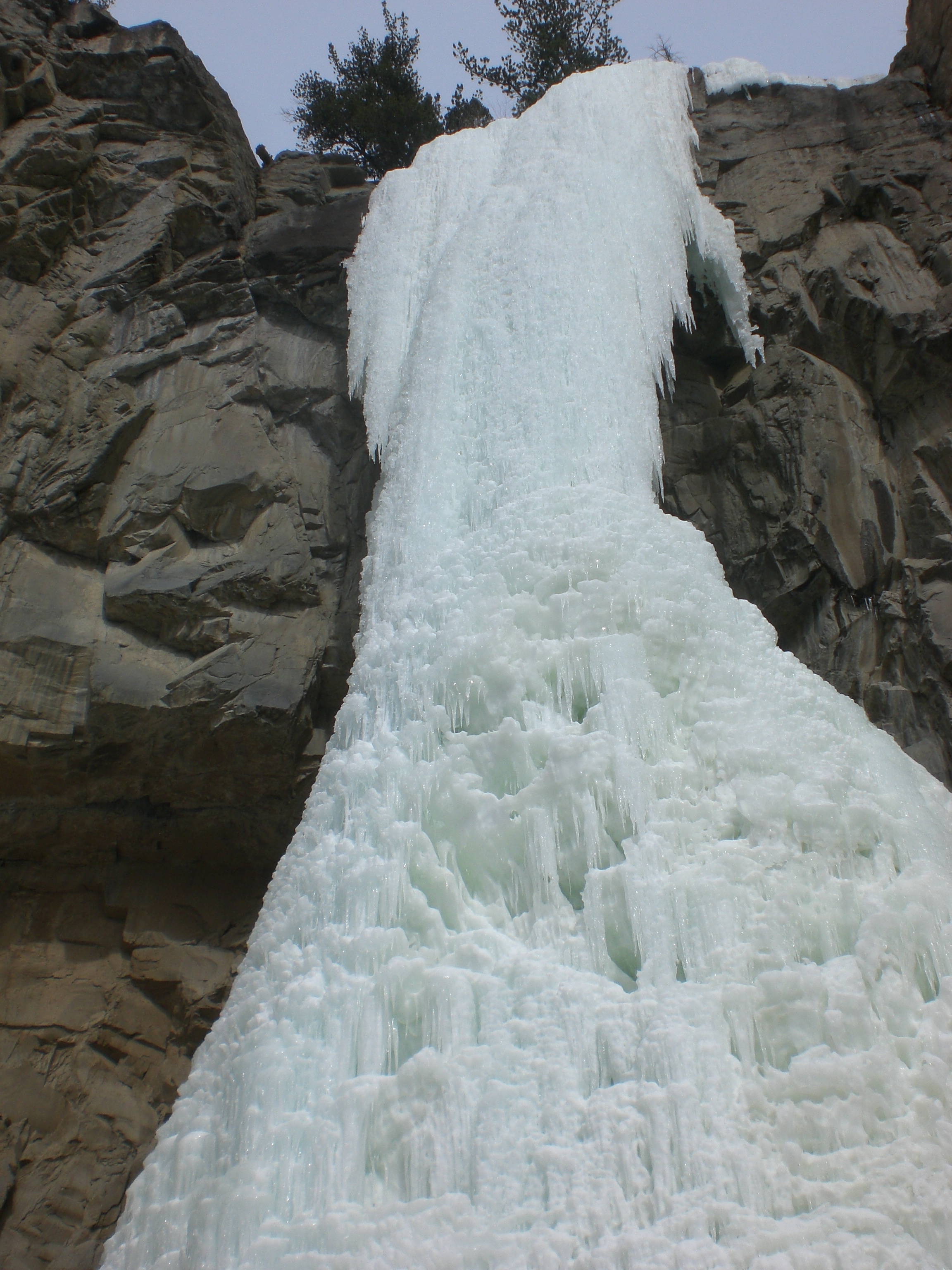
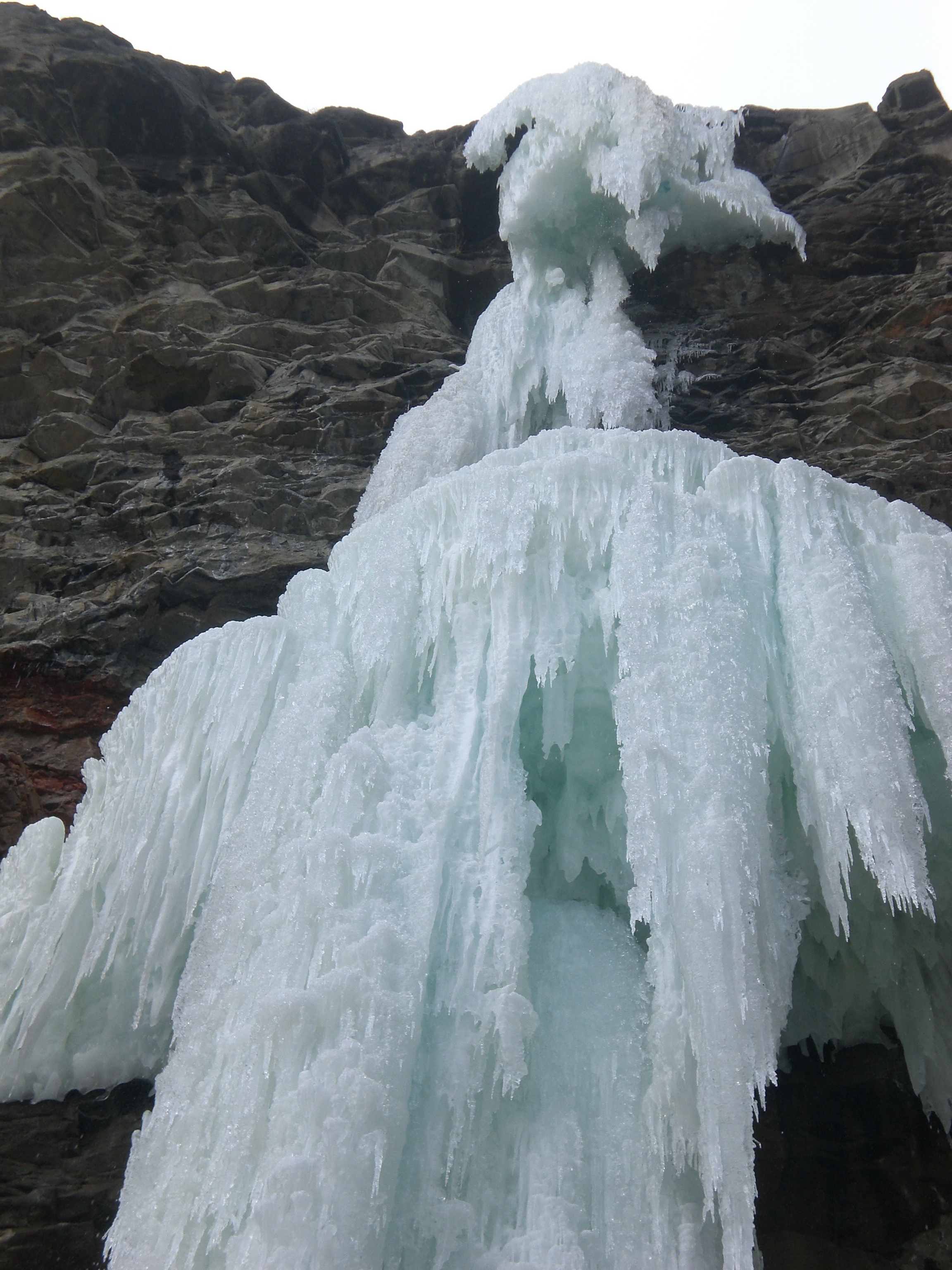
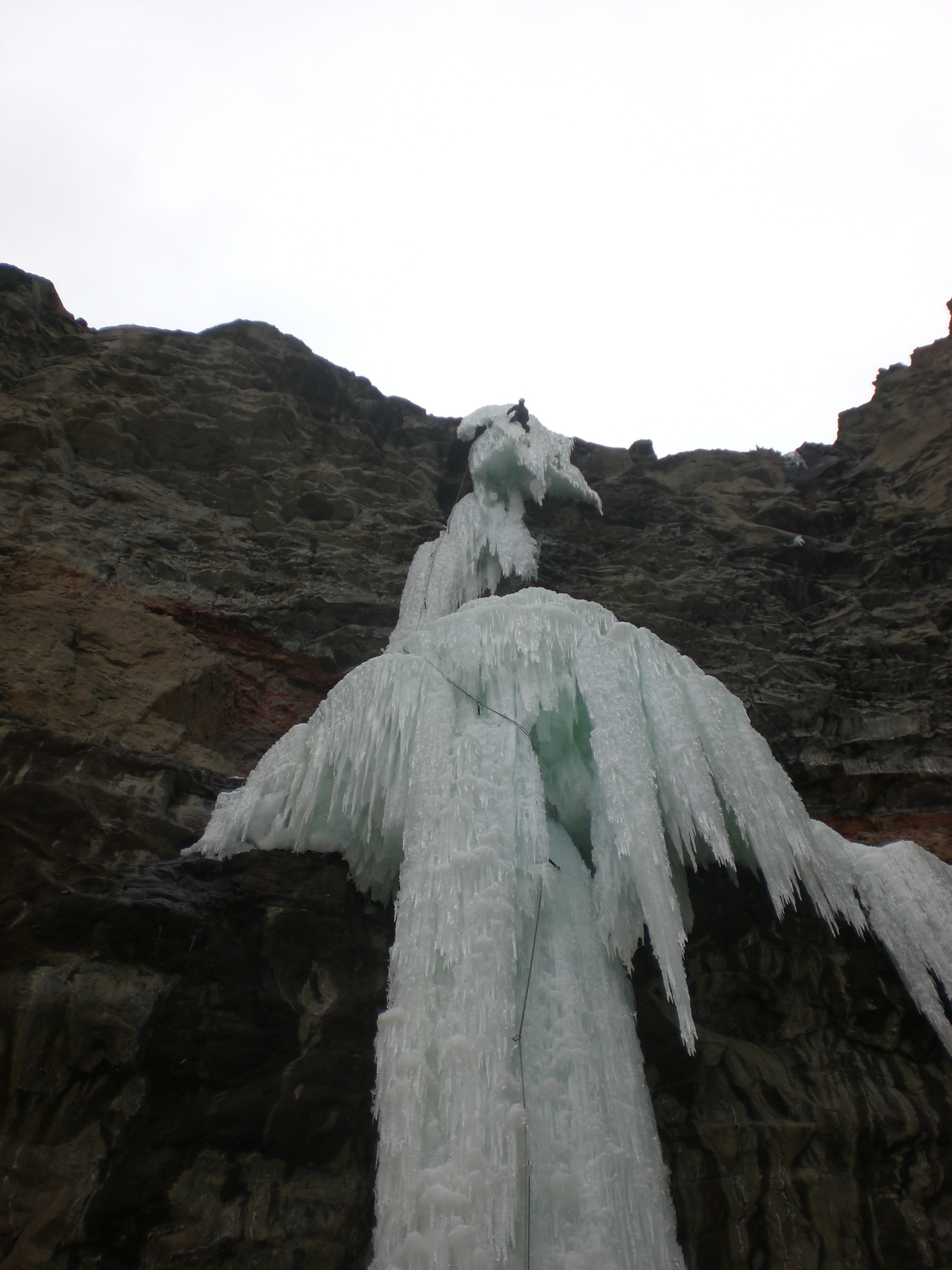
CIMG4015Seven is the number of pitches for Broken Hearts, one of the best climbs in the Southfork valley. The trouble is, those pitches do not often coexist in time. The upper tier of three amphitheaters waits for the Spring to grow its pillars. By then, the sun has eaten away the path up the ice that leads to the show.

Looking back at the road from the half-way point on the walk up.

Looking back at the road from the half-way point on the walk up.

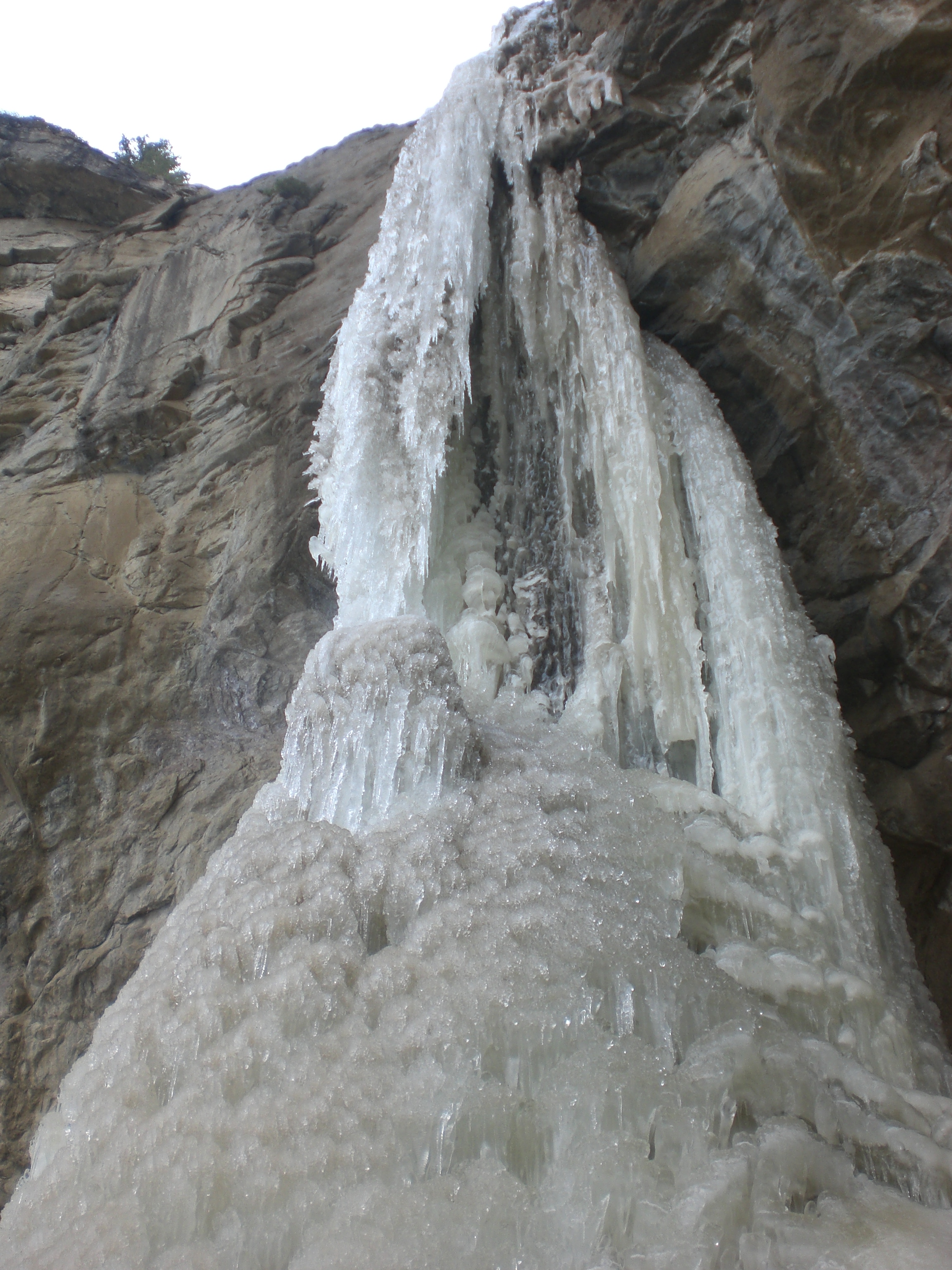
What a show it is, too. The final three pitches, along with Carotid Artery, are a different story from the lark in the lower drainage. But there is a price. To reach this venue in Springtime, when the lower pitches are missing, one has to walk up the walk-off.

Carotid Artery

Carotid Artery

Walking around on the valley walls in Cody is ill-advised in principle. The slopes are steep, loose and rocky, and it is easy to reach  a precipitous dead-end, resulting in grueling detours and back tracking. The course which skirts the lower canyon of Broken Hearts is better than most.As I plodded the solid hour of uphill however, I found myself making notes for the next time: “Remember, it is that bad, it is that bad, …”.

My Only Valentine

My Only Valentine

In the first of the three bowls, Carotid Artery was not formed. Some new fixed gear adorned the crack behind the hanging dagger, but the ice was too far out from the wall to make a mixed version feasible or safe.

Seventh

Seventh

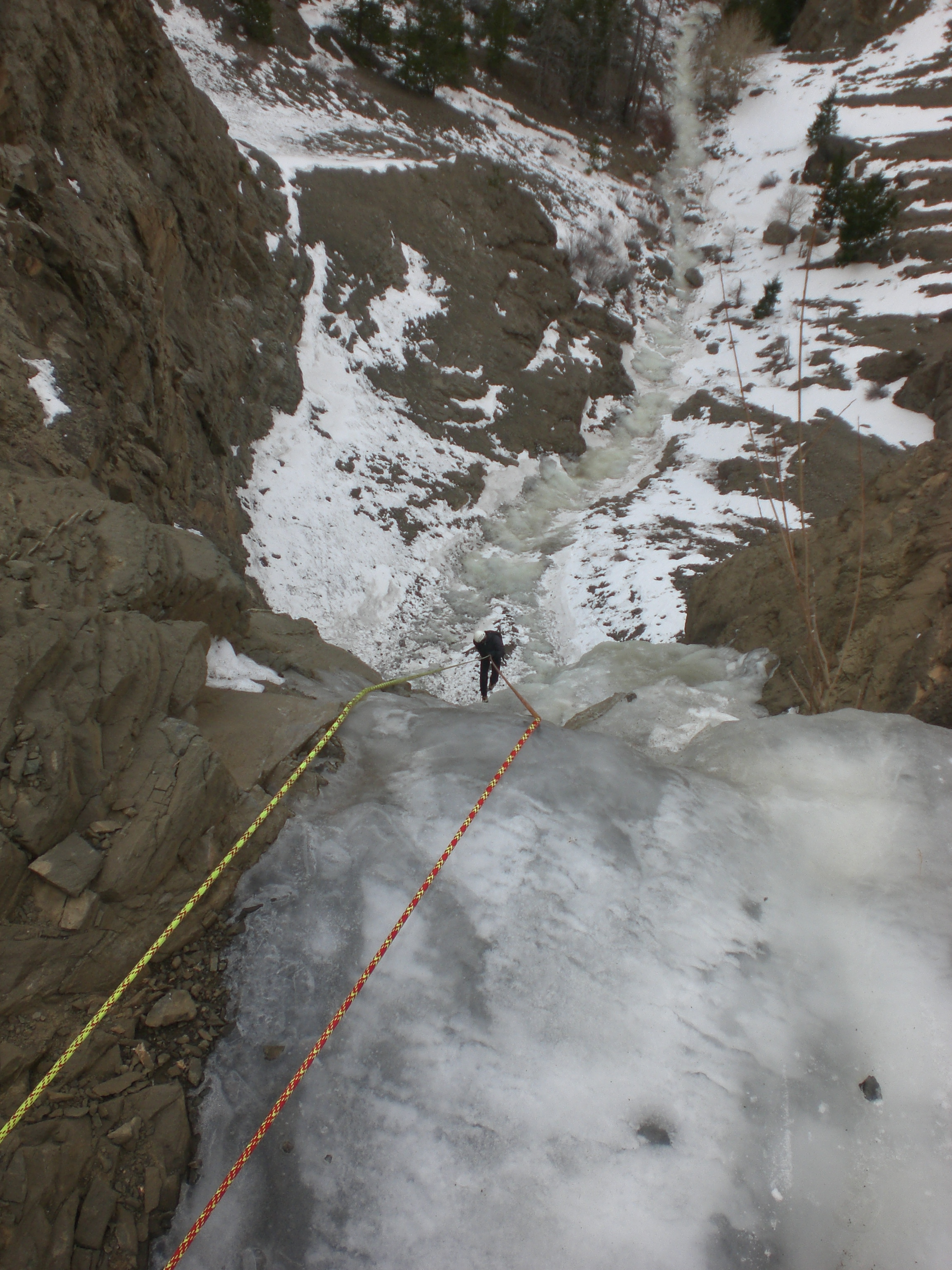
The rest of the pitches were there, though. We knew from the start that the seventh belonged to Rich. We didn’t need to discuss it. He had been thwarted twice before, having to walk away from the climb due to conditions and time. Conditions were not perfect this time. A massive amount of water poured over the roof at the top. We were prepared for it this time, though.

CIMG4021

Like a character moving over landscape out of a Dr. Seuss book, Rich made his way up the twisting series of steps and columns. He was able to skirt the roof, though the climbing to do so was still past vertical.  As I swore away the barfies at the top, water dribbled from the velcro cuffs of my current hand-wear. I found myself making notes again: “Remember, gloves with gauntlets next time.”

Lap 2 on Pillar of Pain the next day

Lap 2 on Pillar of Pain the next day

By the end of it all we were wet, cold, miserable and exhausted. We would be the same way at the end of the day tomorrow. Ice climbing is just freaky like that, and if you aren’t too, you probably won’t keep doing it. I will. I found myself making more notes on the trudge back down: “Remember, it was worth it…”

The upper valley

The upper valley

Tagged , , ,

It’s an Ice Fest Every Time

Sheep on Deer Creek

Sheep on Deer Creek

Rich made that comment while we discussed the merits of driving to downtown Cody to visit the Southfork Ice Fest. It would have been nice to see Aaron’s slide show, but we were kind of tired.

My kingdom for a Bosch! Mixed potential left of Bitch's Brew

My kingdom for a Bosch! Mixed potential left of Bitch’s Brew

Regarding the source of our amotivational state, Rich summarized as only he can, “Someday we’re going to bite off more than we can chew.”

Pitch 2, Bitch's Brew

Pitch 2, Bitch’s Brew

We always seem to end up in Cody on the Ice Fest weekend, but we never make it to the event itself. I think our efforts to dodge the “crowds” (this is the one weekend where you can expect to see other people during your day out on a route) sabotage us. We end up going to things like Illogicicle that are harder to access and farther back.

Steep ice on Who's Your Daddy

Steep ice on Who’s Your Daddy

This time it was Bitch’s Brew and Who’s Your Daddy. Bitch’s Brew is just across from Smooth Emerald Milkshake a couple of miles up, and I do mean up Deer Creek trail. The latter climb is a relatively popular moderate, so we figured some ambitious festivants would be breaking trail for us. We were wrong.

Fortunately, we only had a few pristine drifts to break through. The climb was worth it, as usual: one WI 4 , 65 meter pitch, followed by a pitch of wind-sculpted WI 5+, a short pitch of WI 5, and some grade 3 possibilities above. Did I mention it is in the nice warm sun all day?

CIMG4006

Who’s Your Daddy is the alternative to the first pitch of Ovisight. The approach was mercifully in good shape. The Legg Creek pitch was too. Where the whole drainage pours through a 2 foot wide slot, there was a solid, 6 inch wide strip of through the last 20 feet of climbing (it even allowed a good stubby ice screw). The trip up the last, left side-drainage was a slog.

3rd pitch

3rd pitch

The two, steep steps to solo combined with the thigh-deep snow burned up a good chunk of daylight. The three upper pitches delivered however, especially the third, which had an overhanging section in the middle. Here’s to good dental health.

Tagged , , ,

The Dry Cat Food Paradox

So close, yet so far...the Tetons

So close, yet so far…the Tetons

I’ve recently had the privilege of attending a continuing education conference in Jackson, Wyoming. As a climber who thinks of himself as primarily an alpinist headed to the Tetons, I should have felt like the proverbial cat who ate the canary. Instead, I left my gear in the basement. It wouldn’t have fit in the car with all the ski equipment and clothes anyway (the whole family of four was signed up for the trip). It wouldn’t have done me any good even if it did fit. Four months out of the year, those mountains are shut down due to a horrendous snowpack. When conditions allow, the climbing is still high up and far back.

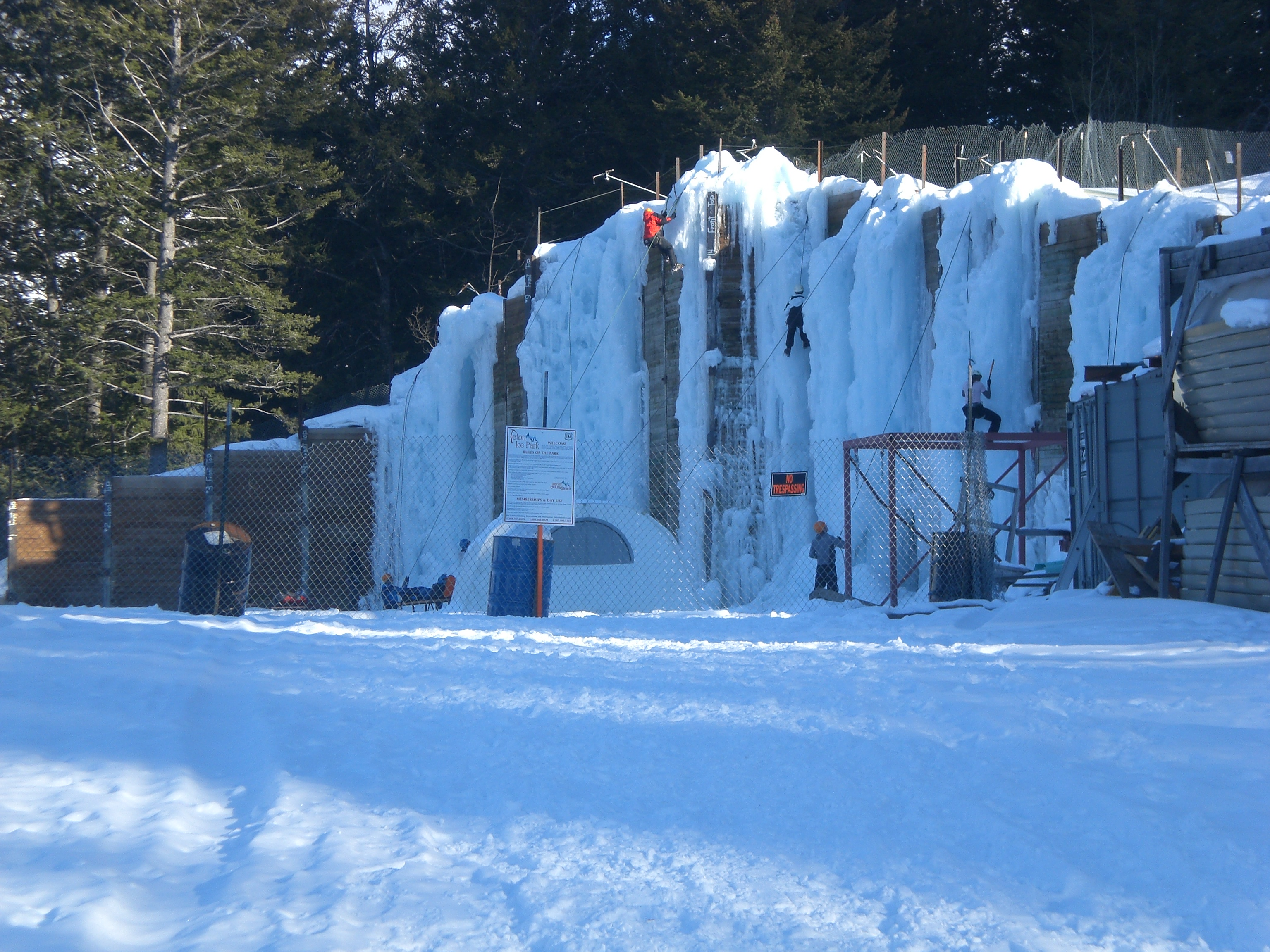
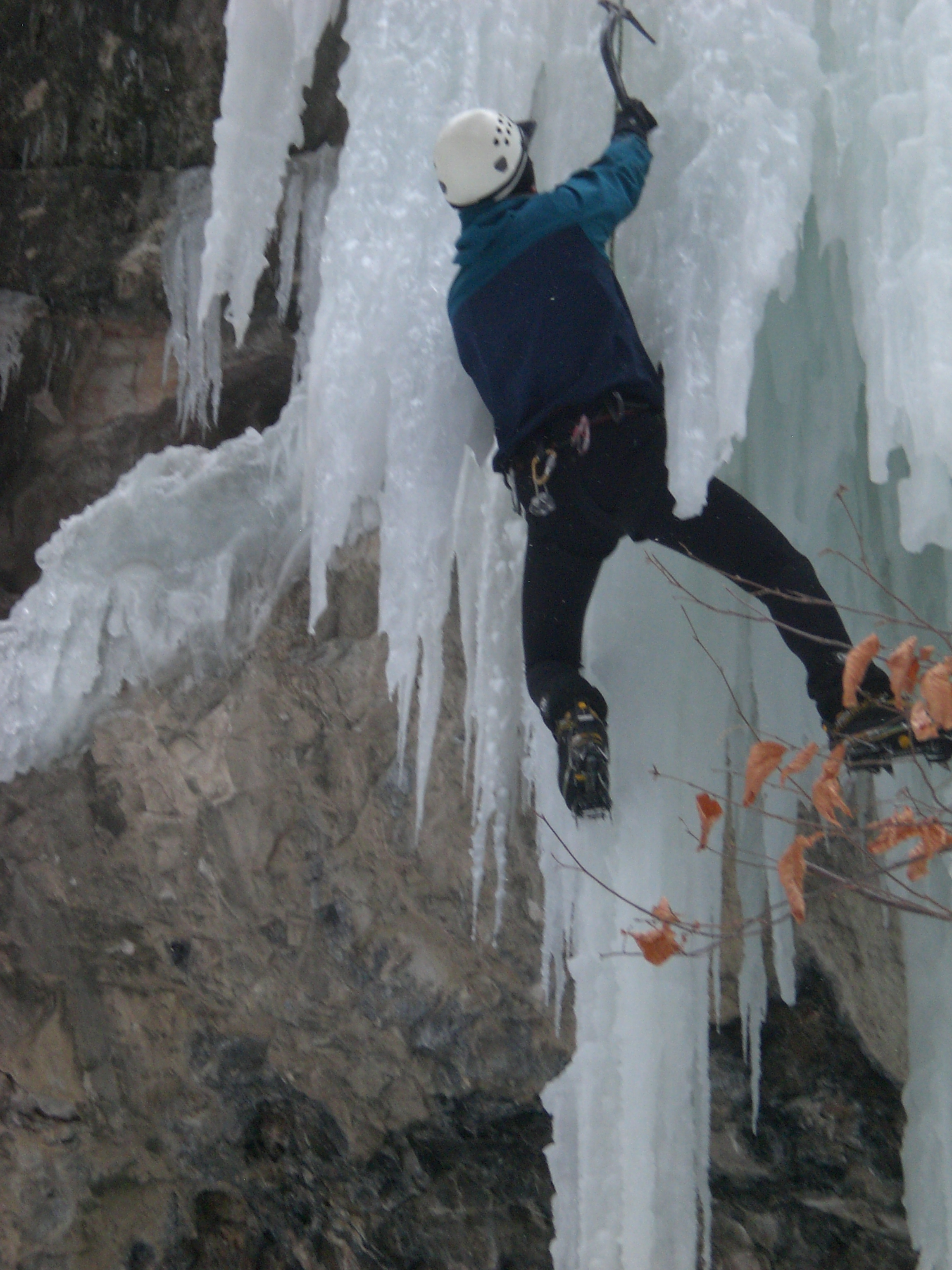
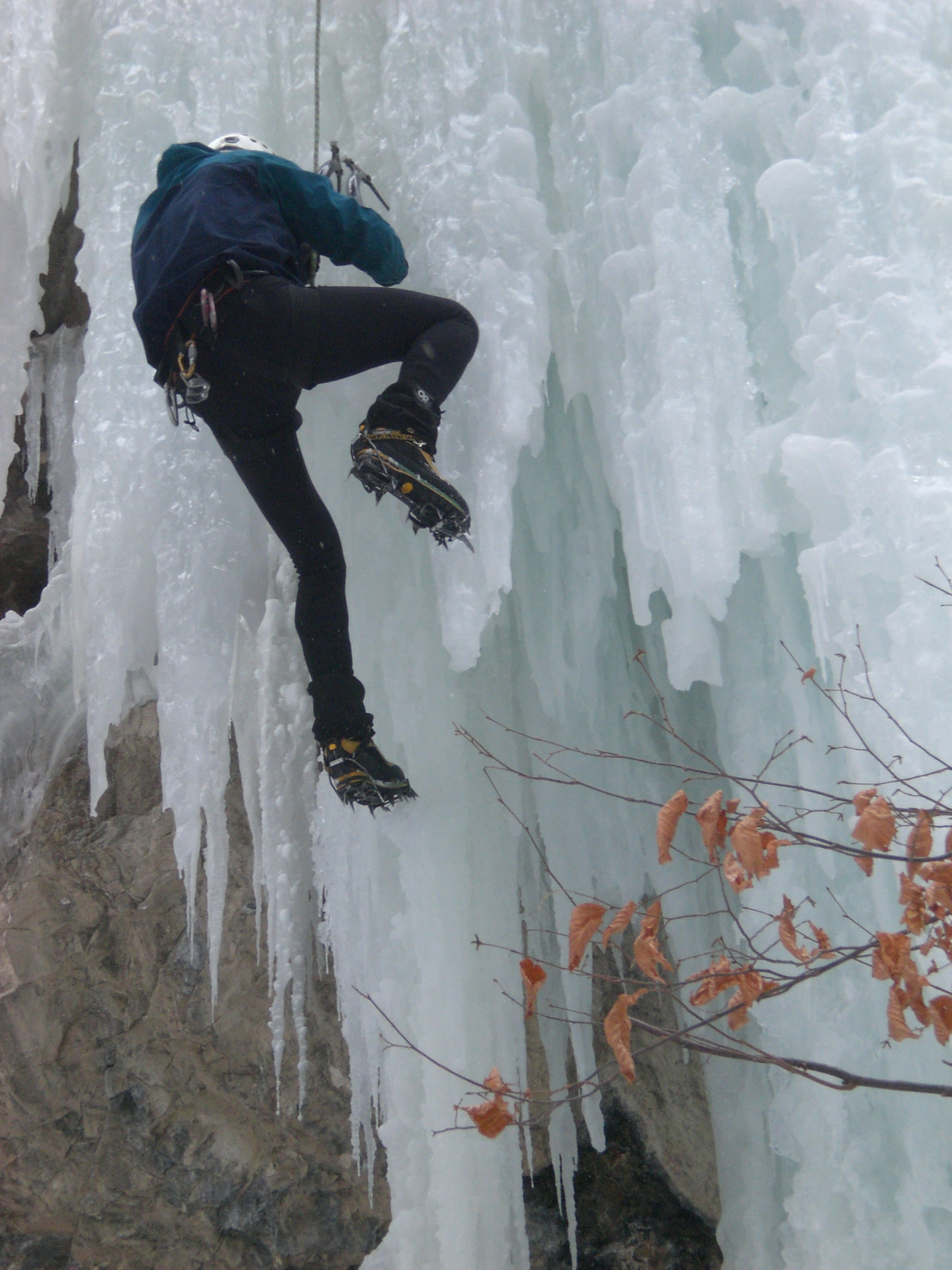
It turns out that it is almost as hard for a climber to subsist on Teton routes as it is for a cat to live on hunted birds. Signs of compensation for these difficulties were everywhere in Jackson. Right around the corner from the conference center, was a sign for the “Teton Ice Park”. When the first morning of lectures ended, I walked up to take a look. What I saw was the result of  a noble effort, but one obviously born of desperation. An enterprising guide service had run a few hoses over a 40 ft. retaining wall to produce about five, moderately-angled chunks of ice. The ice park rented gear, but I decided to utilize a different compensatory facility – the climbing gym just outside of town. It turned out to be quite nice.
CIMG4000

Back in the conference center that evening, I was mulling over the dissonance of indoor climbing in the Tetons when the next set of lectures began. Maybe I should have been paying better attention to the speakers. However, it was a series about nutrition, and though the subject is interesting, the hard science behind it could be covered in about fifteen minutes rather than the three hours allotted  As I considered my Teton climbing experience, I kept coming back to the viewpoint which kept me in the Black Hills for all these years: alpine climbing is more about training than actually climbing. Adaptation to harder routes in the mountains paradoxically required less time climbing mountains. Living in a place like Jackson resulted in strong legs and weak skills. Unless a climber availed himself of  an artificial training facility, the volume of technical climbing needed to improve was just not accessible, at least to anyone with a job. My mind wandered back to the lecturer. He was talking about the Paleo Diet and I found it strangely relevant to the contradictions involved in trying to be a good alpine climber.

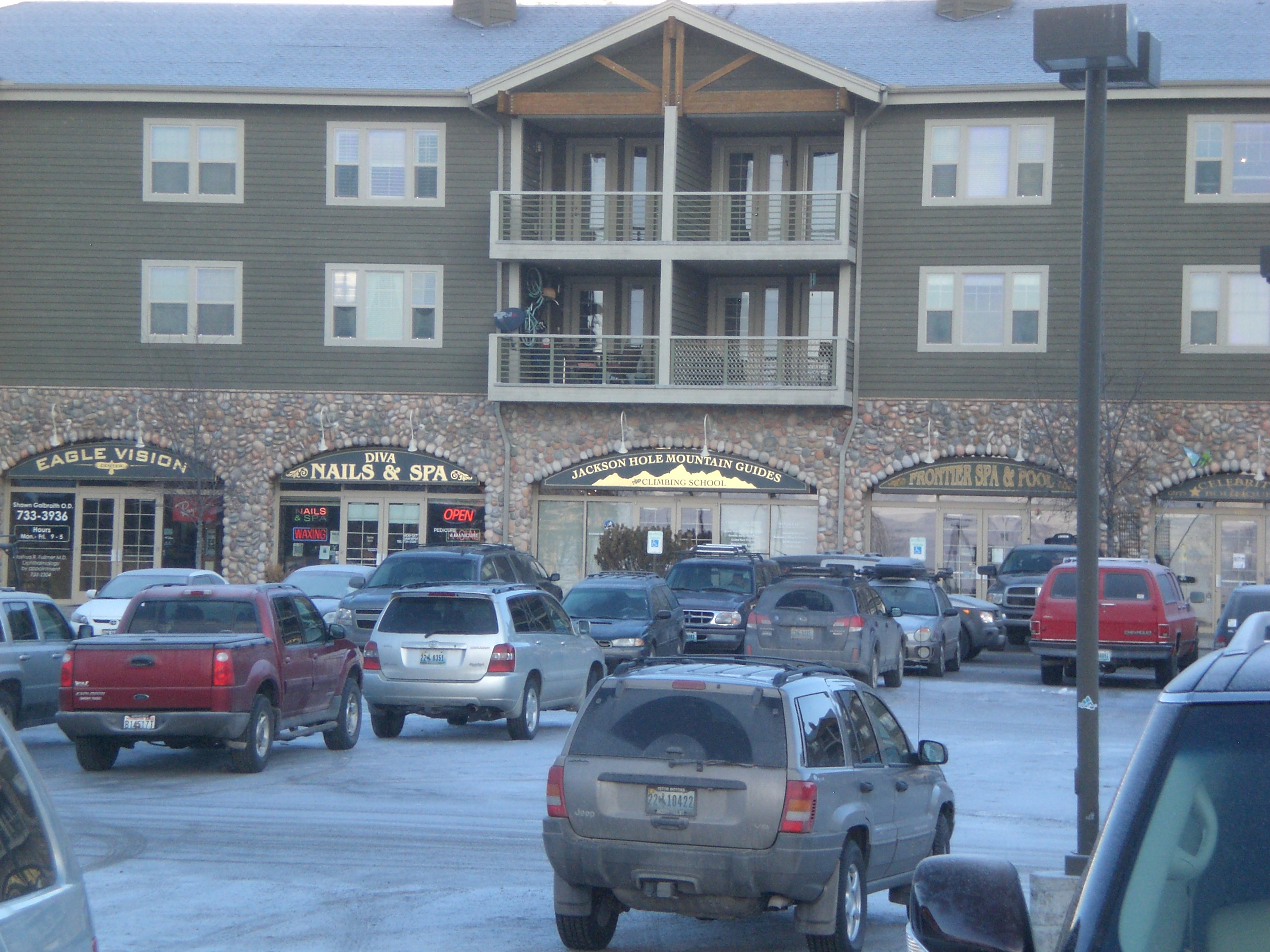
Guide service storefront.
Guide service storefront.
This diet is supposed represent our nutritional heritage. It encompasses the type and mix of foodstuffs our hunter-gatherer ancestors adapted to eat. Therefore, runs the logic of the diet’s proponents, it is the mix of foods that we ought to eat to  maximize our health and longevity. On the menu is lots of meat and a few plants. Grains and legumes are out. We should eat more like cats than cows, the speaker admonished. To back up his assertion, he flashed a slide on the screen with a picture of a cat at the top and a chart favorably comparing the body compositions of hunter-gatherers with those of cats.

The picture looked a little like my cat, but my cat thrives on dry cat food. I say “thrives”, because I have a dietary comparison-state for her. She was a stray who showed up in our garage when the weather got cold. Before coming to live in our house, she had, in fact, been subsisting on the cat version of the Paleo Diet – fresh, free-range mouse and bird meat. She wasn’t doing so well. She was thin and listless. After a few weeks living inside and dining on kibbles, however, she was tearing around the house like a maniac, destroying rolls of toilet paper and climbing the curtains.

Here are the first four ingredients listed on her cat food label: chicken by-product meal, corn grits, chicken fat, tuna, brewer’s rice. One would expect a wild cat to catch birds, but I doubt one ever took down a tuna, much less an ear of corn or rice. Still, a cat’s ability to live a long and active life eating nothing but rock-hard brown morsels shouldn’t surprise us. Evolution makes the most  of things, not necessarily the best of things. Wild cats developed the capacity to survive on mice and birds. Cats are therefore well suited to that diet. That doesn’t mean that there isn’t a diet better suited to cats. Perhaps humans are much the same.
A subsequent  slide showed a Kung! tribesman butchering an antelope with a stone tool, and then a chart with cholesterol levels and heart disease rates demonstrating the sterling health of various modern hunter-gatherers. Unfortunately, the health data for the Tarahumara, a group of indigenous people living in Mexico and renowned for their feats of long-distance running, look just as good. The Tarahumara subsist primarily on corn, beans, chiles, and beer.The answer to this dietary conundrum is not found in the diet, but what comes with the diet. Both the Kung! and the Tarahumara are incredibly active, and they do not suffer from surplus. The Paleo diet is not the answer to our health problems. No such simple answer exists.
Of course, there are limits imposed by natural adaptation and on artificial adaptation. Artificial answers are also incomplete. To be a good alpinist, one must climb a certain number of big routes in the mountains. But plate after plate of summits will limit a climber’s potential in the end. Though it isn’t complete in itself, some artifice is required as well. Likewise, when my cat came to live in the house, she didn’t just get dry food, she got a warm, stress-free place to sleep, immunizations, and anti-parasitic medicine. I’m sure she would not be so healthy if we limited our involvement with her to setting out a plate of kibbles on the driveway.

Of the billions of humans alive now, most are suffering from the short-comings of an agricultural, and subsequently an industrial, society and a few are suffering from its excesses. As the most realize the economic, social and technological benefits which drove the move to agriculture in the first place, they no longer get the grace period which the few enjoyed. The harms of excess come right along with the initial development. We can’t simply go back, though. Solutions will require some artifice, and may have an unsatisfying appearance – less like grass-fed beef  and more like a bowl of dry cat food or an indoor climbing gym in the Tetons.

Tagged , , , , ,

A Moister Brownie…

4th pitch of Mean Green

4th pitch of Mean Green

…is not necessarily a better brownie, especially when it comes to dirty ice.

CIMG3971

The Southfork is not is stellar shape this year. Climbs like Moratorium haven’t seen enough water to form up properly, while South-facing routes like Ovisight haven’t seen enough cold.

CIMG3962

Mr. Mulkey has pulled off ascents of Pillars of the Community and the mixed start to Joy After Pain (the latter with help from a friend, see video and photos at coldfear.com) but even those climbs are beginning to sublimate away.

CIMG3973

We squeaked by the third pitch of Broken Hearts.

CIMG3981

On the return trip, it was gone.

6th pitch of Broken Hearts

6th pitch of Broken Hearts

Carotid Artery wasn’t even close enough for me to agonize over.

CIMG3967

Mean Green looked to be missing the fourth pitch, but it turned out that the ice was just so full of dirt, you could barely distinguish it from the rock.

The Valley from the top of pitch 5, Mean Green

The Valley from the top of pitch 5, Mean Green

It feels like the season has never gotten started this year; thoughts of Canada are already popping into my head unbidden.

Ten Sleep

Ten Sleep

We’ll give it a couple of more weeks.

Tagged , , ,

Ice Climbing is Dangerous

CIMG3954

So we place tubular screws in the ice to secure the rope in case of a fall. But even placing the  protection is difficult enough to be controversial. You find them less and less, but there are some experienced climbers who feel it is safer to go without protection against all but a catastrophic fall. Their rationale is that the screws are too tiring to place and the placements are not predictably reliable.

As if it isn't hard enough - penalty slack

As if it isn’t hard enough – penalty slack

I disagree, of course, but I’m an optimist. I figure, if the screw hit an air pocket,  it may fail if I take a big fall on it, but that means it may not too, and I know that the ground will be even less forgiving. I have some data to back up my optimism. There are the drop tests done by Craig Leubben and Chris Harmston. Then there’s my anecdotal evidence. I know several people who have fallen on ice screws. The majority came away with fractures, true, but the screws held and all the climbers lived to climb again. In addition, I have personally witnessed two falls on ice screws.

CIMG3957

The first was several years ago. A friend and I were watching a couple of guys climb Jaws a waterfall in Rocky Mountain National park. The sun was baking the upper third of the climb and the leader wisely placed a screw just before he climbed out of the shade. About fifteen feet into the tropics, he started having trouble getting his tools to stick. He placed another screw and continued. After ten more feet, it was clear he could not go up any farther; the ice was just too thin and rotten. Things looked better off to his right though, so he struck out in that direction. It proved a false hope. Two moves into the traverse, he slid down several feet. He recovered, made two more tool placements, then popped off. The upper screw blew out of the ice without even stretching the rope. The shadow piece caught him after about fifty feet, just five feet from the ground.

CIMG3959

I witnessed the second fall just five days ago. A younger gentleman was climbing at our training area. I had led a solid line just to his right a few minutes before. He wanted to go a bit steeper. The line he chose had a little overhanging icicle about fifteen feet up and he launched for it. Rich had tapped on that feature on his way past it, and neither of us liked the sound it made. I almost said something, but I didn’t want to intrude. Tony’s a good climber; he would be careful. He drove an ice screw in the pillar below the icicle, hooked a tool on a feature in the middle of the hanging dagger, and took a tentative swing for the top of the icicle. As soon as the pick of the tool made contact, the whole thing cut loose. Fortunately, he had his legs out from under the falling chunk, so he missed having his bottom half skewered. The screw caught him just before his crampon points scraped the ground. The screw did not bend and the ice around the hanger hadn’t a chip in it. The fall factor had to be close to 1.5. I shall persist in my optimism.

CIMG3952

Tagged , ,

Dr. Blue Thumb (with apologies to Cypress Hill)

Right Pillars

Right Pillars

The crop has come in. It may be no taller than G1 in Hyalite, but it is more potent, and much closer to home.

Central pillar

Central pillar

Overhangs, chandelier, steps – it’s all there for the pleasant terror of the community.

All ninja missions require video documentation for payment. Left pillars.

All ninja missions require video documentation for payment. Left pillars.

Maybe the Black Hills will sprout some more ice climbers after all.

Tagged , , ,

Oh Suzanna

Elusive ice in Ten Sleep

Elusive ice in Ten Sleep

The pick made a distinctive ‘plink’ as it bounced off the rock. The sound always sends a shock down my spine, but I can’t tell if it’s the nature of the noise itself or purely the implications. I tapped a little higher and the tool set with a hollow sound no less disappointing than the ‘plink’. The resonance came from a layer of air separating the ice from the cliff face. I spared a glance down.

By the road in the shadow of the canyon floor, I could just make out a tiny brown stain by the car where the dregs of my coffee had flash-frozen when I poured them out an hour ago. The shadow ended in a sharp line half-way up the steep drainage and the upper portion took full morning sun.  Twenty feet below me, my last ice screw basked in the direct radiation. I drove another short screw into the ice. It gnawed through with dismissive ease.

The ice may have been just four to six inches thick, but it was not vertical and was well supported by a thicker lip of ice at the bottom. So, even though it was not continuously attached to the rock, it wasn’t likely to break off in a sheet unless I got very clumsy. The consistency was perfect, too. Though too soft to hold an ice screw well, it allowed the points of the tools and crampons to bite and set. ‘Hero ice’ was the name for it. The whole trip had been black and white like that.

CIMG3941

Every time we drive through Ten Sleep Canyon we look up into the second drainage East of the fish hatchery, hoping to see ice. Usually, we only see a water streak. Sometimes we see a thin smear. Very rarely, we see a fully formed climb. When the ice is formed, we vow to climb it on the way back through, but it always disappears before we return. Nevertheless, when we saw substantial ice in the drainage on our way out this time, we took it as a good omen.

High on Boulder and Moonrise from the river

High on Boulder and Moonrise from the trail.

The sense of good fortune evaporated as we traveled from Cody to the Southfork the following morning. Just as we reached the gravel road, something went wrong in my stomach, and the organ decided to right things by turning itself inside out. We were reduced to a driving tour of the valley between puke stops. The conditions looked dry. Moratorium was thin. Mean Green had a translucent 4th pitch. Ovisight lacked a first pitch. Broken Hearts looked pretty good, though.

High on Boulder and Moonrise (right-hand climb)

High on Boulder and Moonrise (right-hand climb)

Rich had to make a day of downtown Cody once we got back, but my problems subsided over that time and once again we felt fortunate. By the following morning, I was ready to try again. We headed for the lower pitches of High on Boulder, plus Moonrise.

CIMG3929

I hate Moonrise. Rich says I have a psychological problem with the climb. I may, but it often forms up with a series of short roofs, and as everyone knows, roofs are for short people – short roofs the more so.

Another view of Moonrise

Another view of Moonrise

I climbed poorly on Moonrise. After such a depressing reversal, I was sure that the column in Ten Sleep had fallen. Yet as we passed the fish hatchery, there it was intact. We pulled a quick, dangerous U-turn on the shoulderless highway and parked in the last pull-out. The approach was longer and steeper than expected. The climb looked less steep than expected, maybe a WI 4(-) but with the thin ice, imaginary protection and bent pick, it remained interesting. As we rappelled from a bundle of icicles at the top, an old song kept running through my head, “…sun’s so hot I froze to death, oh don’t you cry for me… ‘least I don’t live in Alabama, so don’t you cry for me…” Or something like that.

Tagged , , , ,