Category Archives: climbing

Needles Break

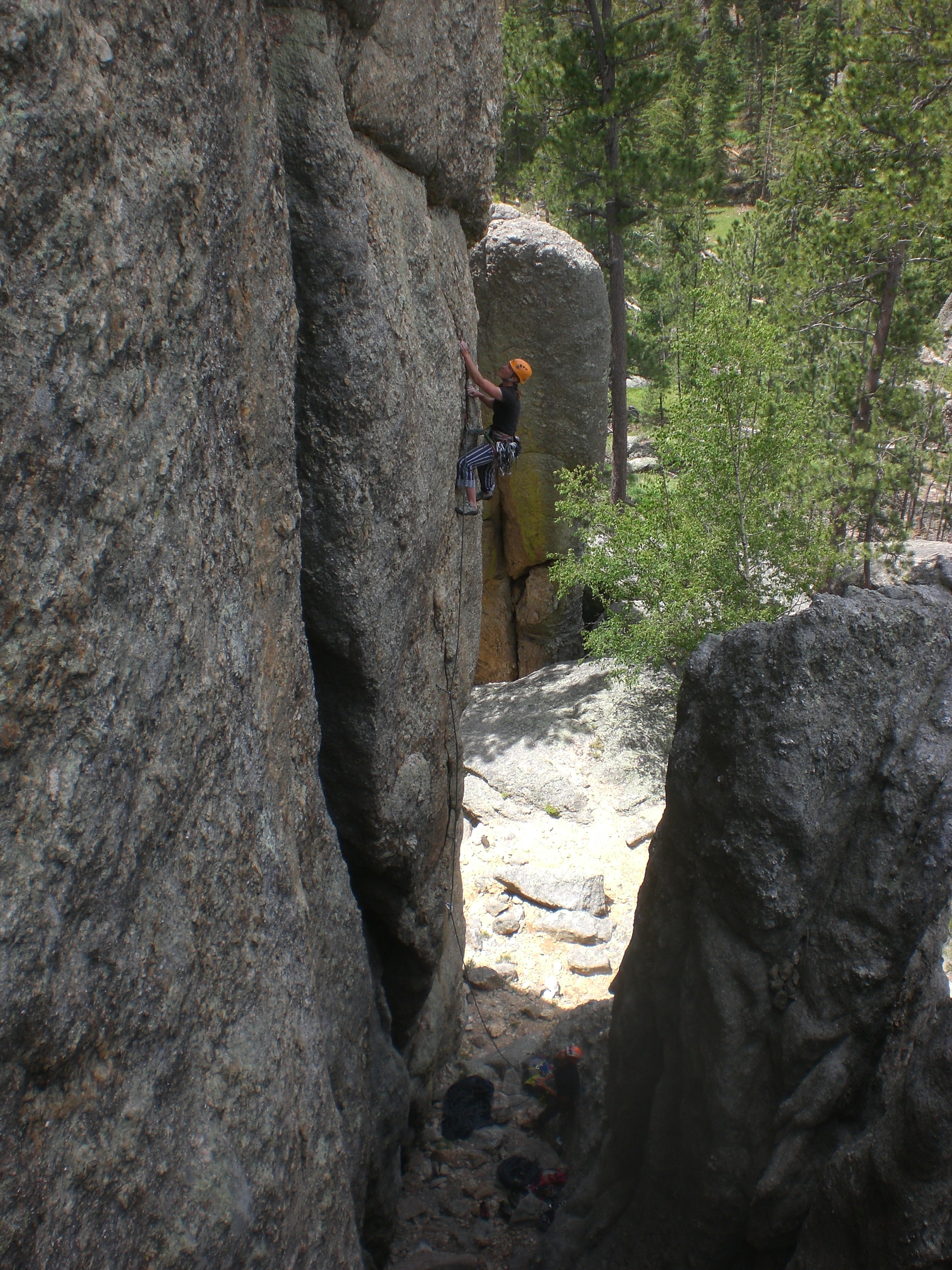
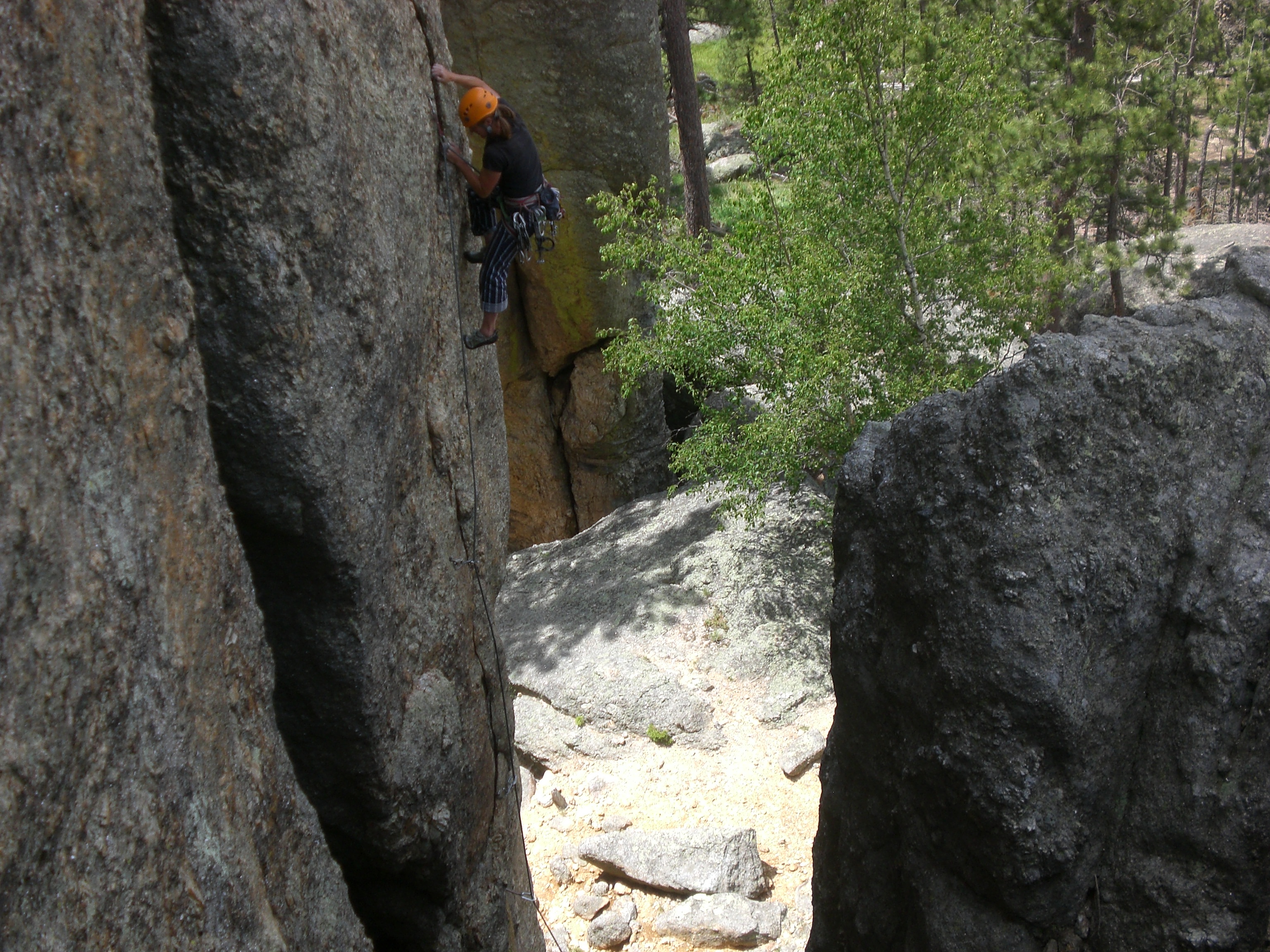
The thunder’s rolling now, but the weather was glorious at the Needle’s Eye this afternoon. It’s been beautiful in the Needles all Spring.

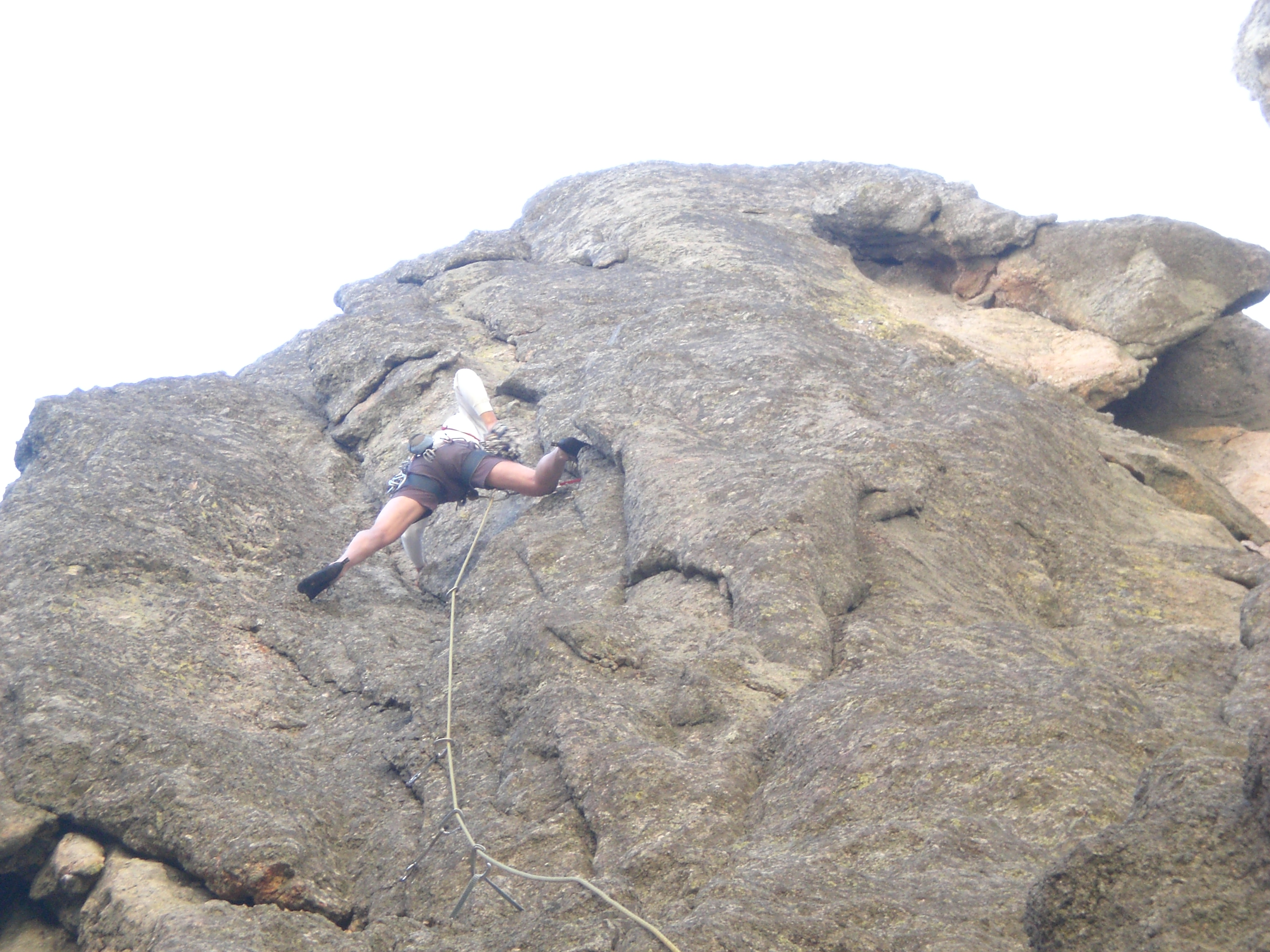
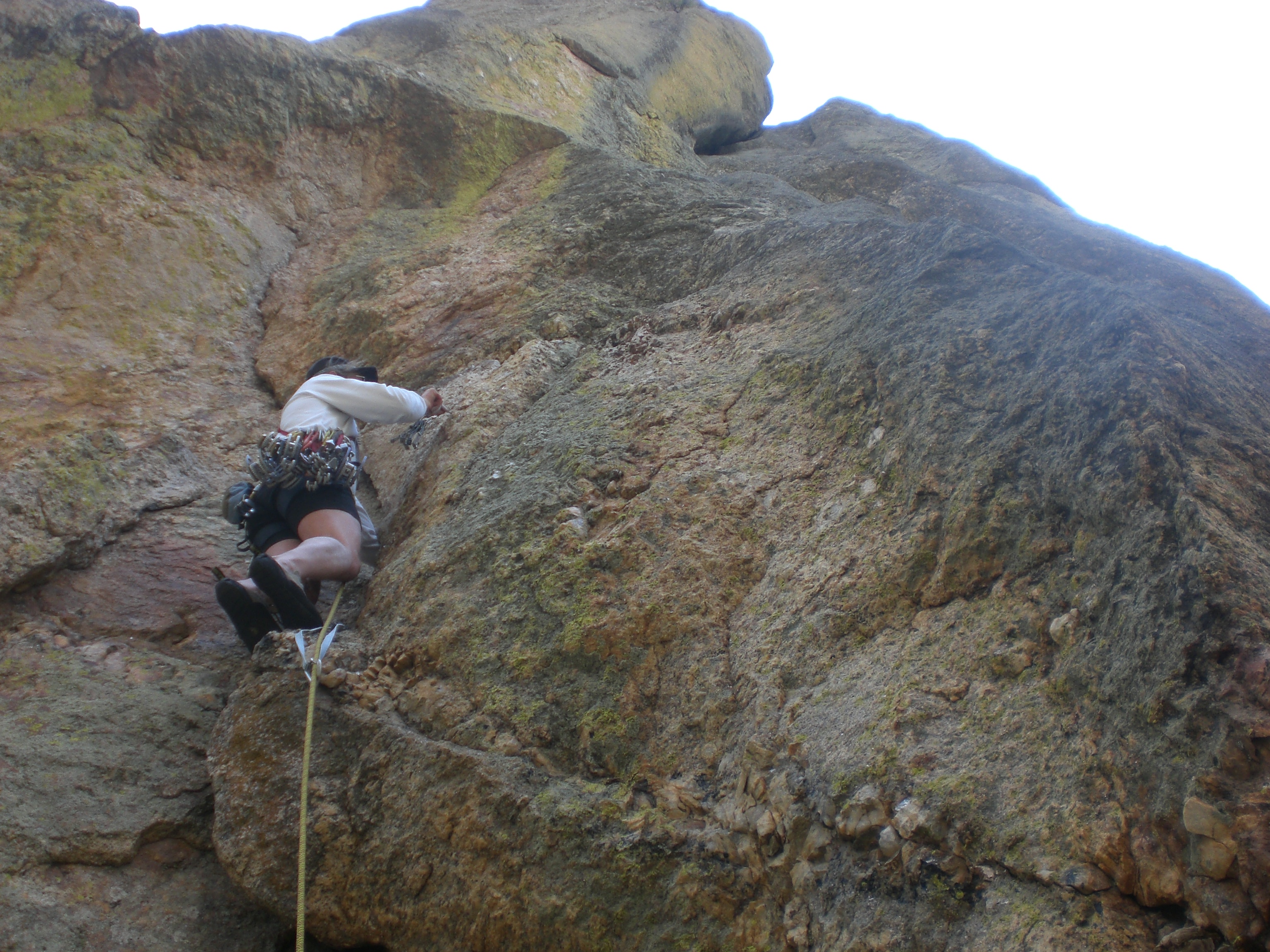
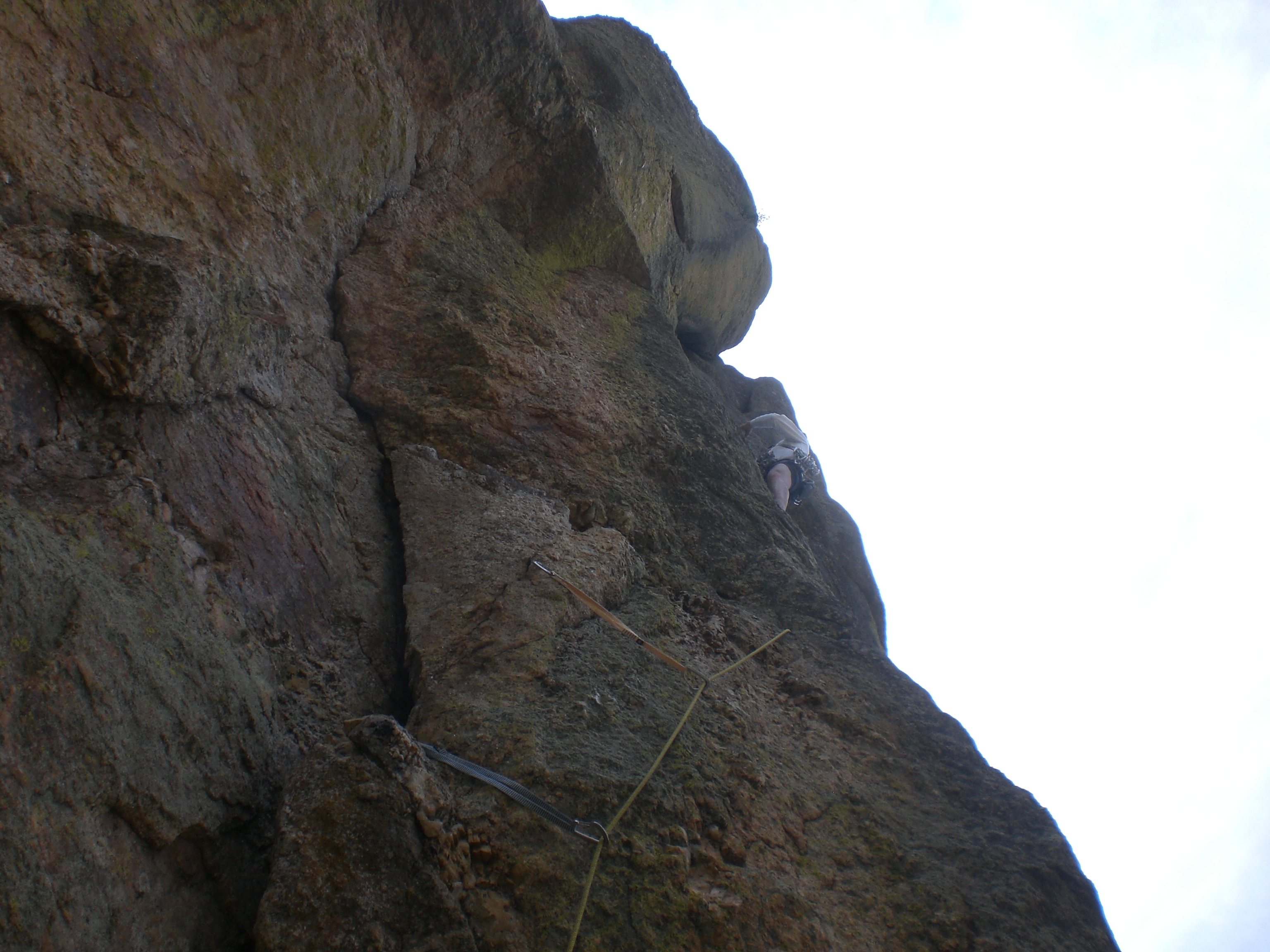
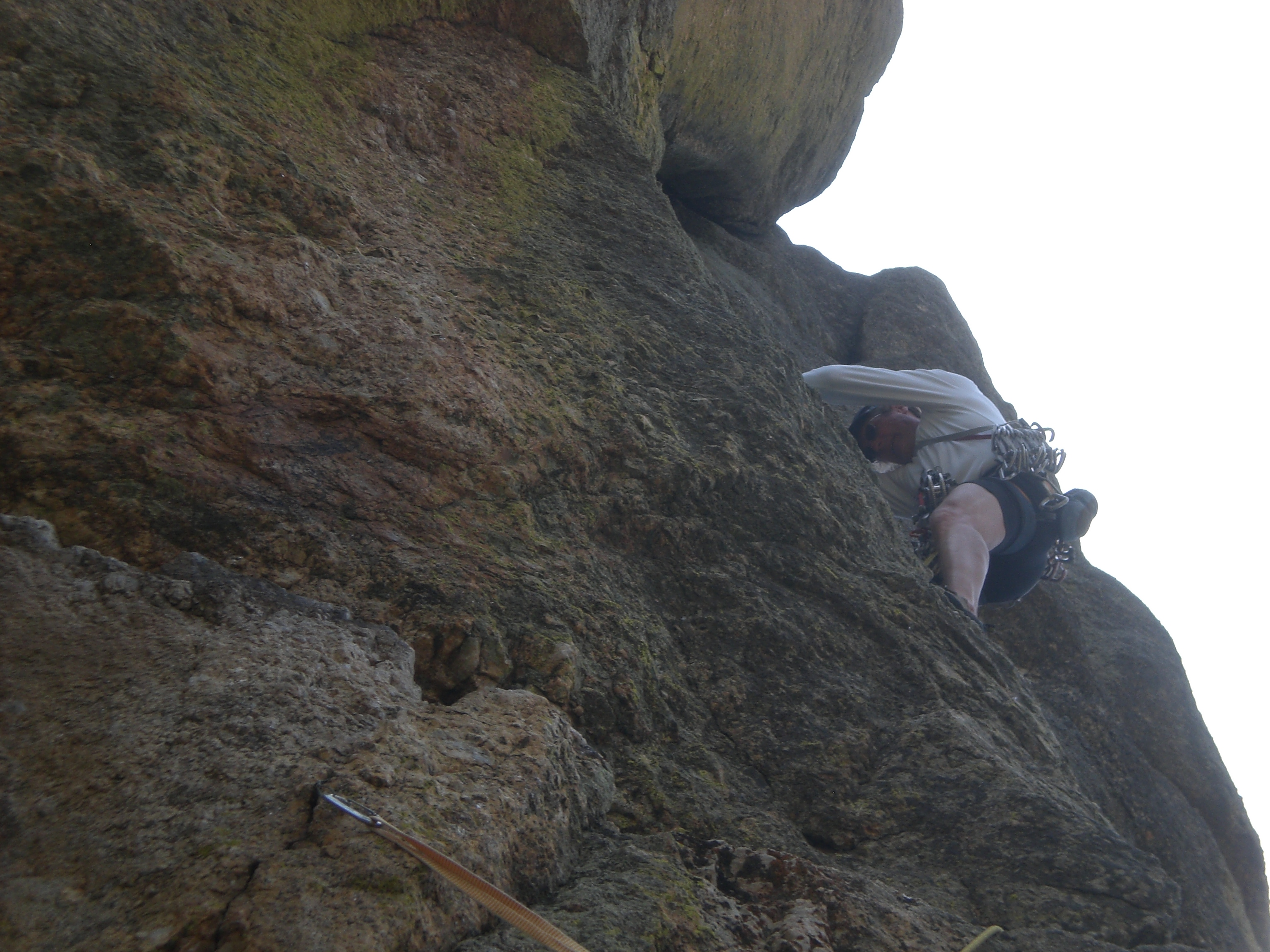
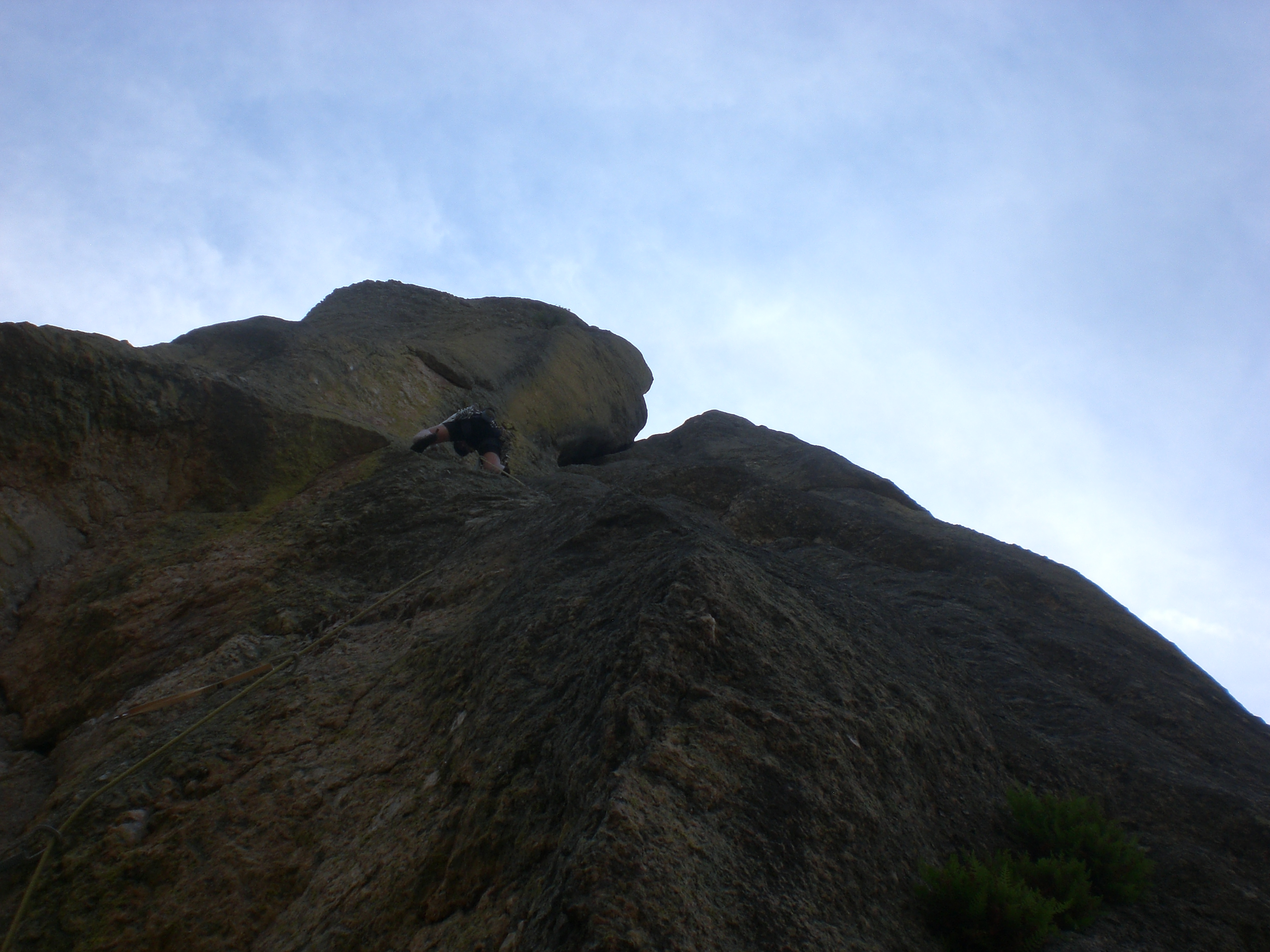
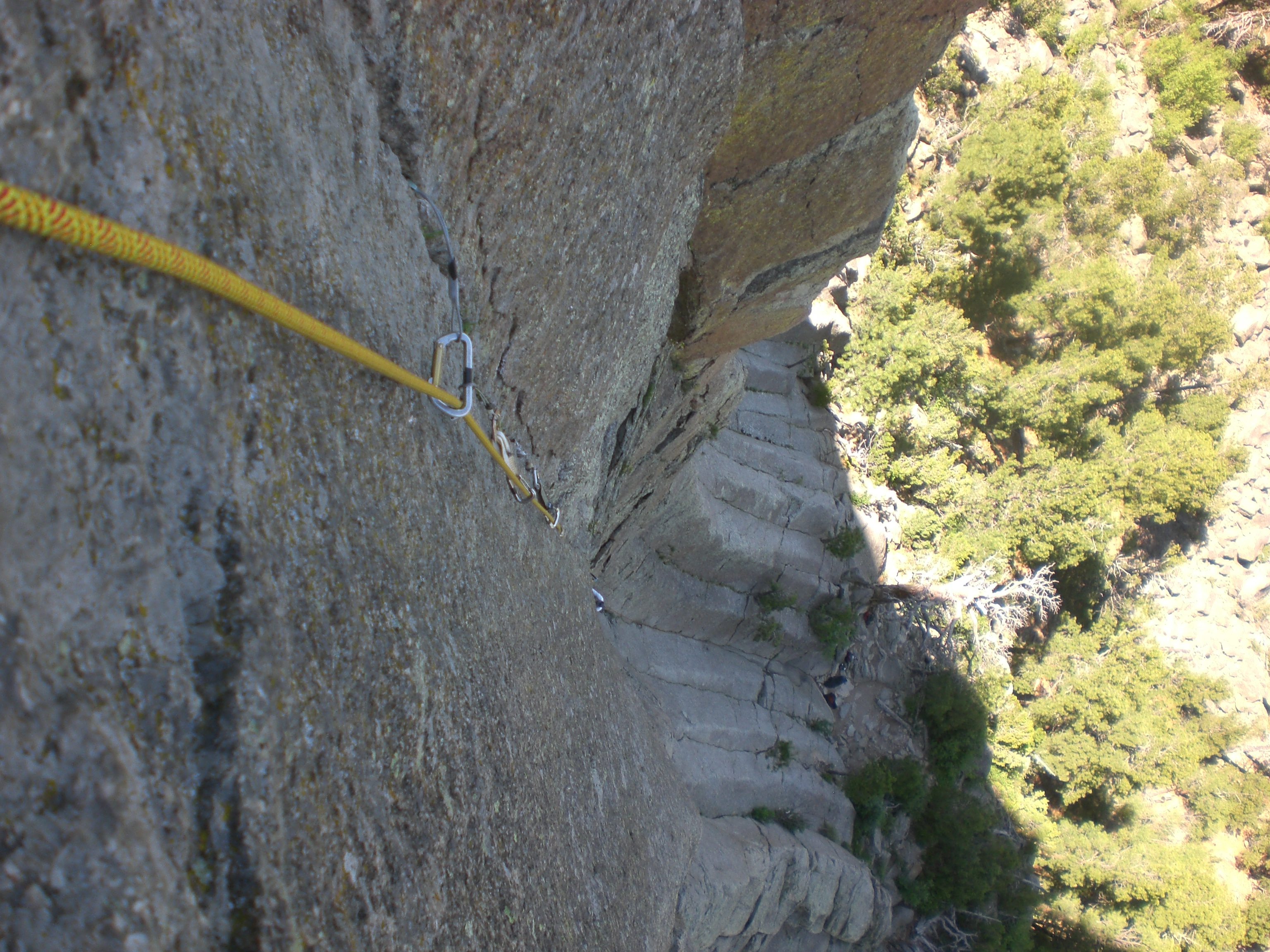
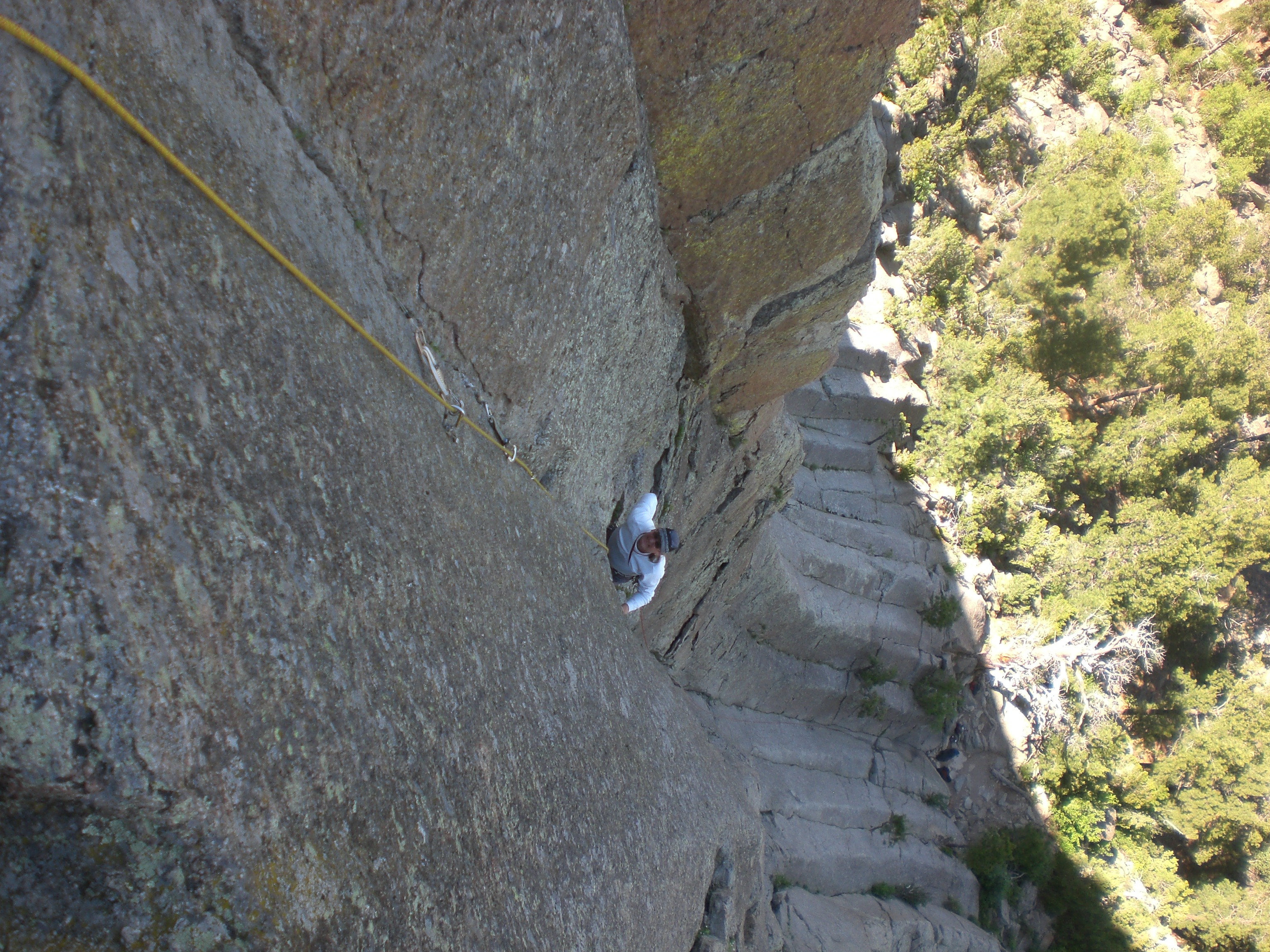
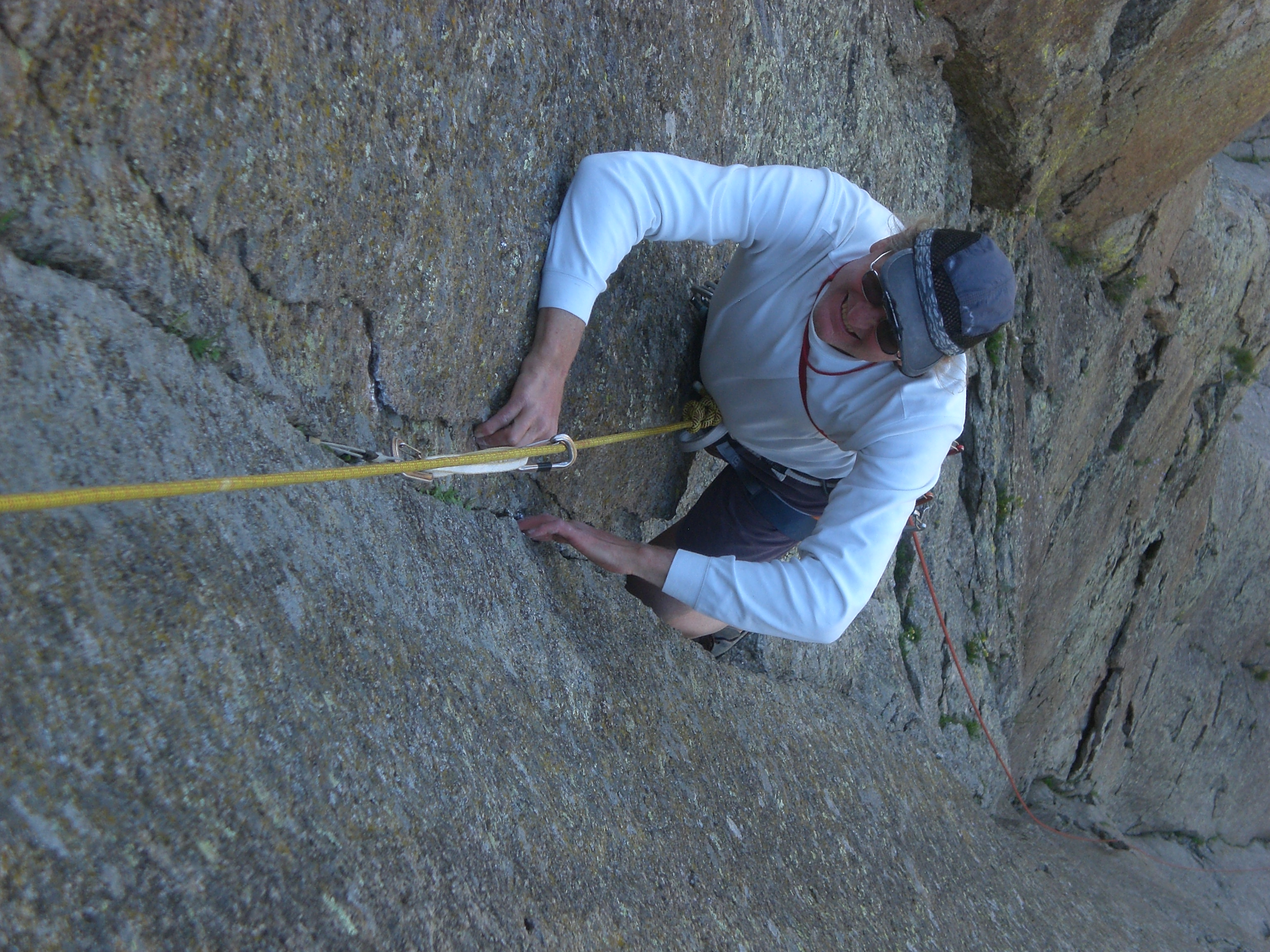
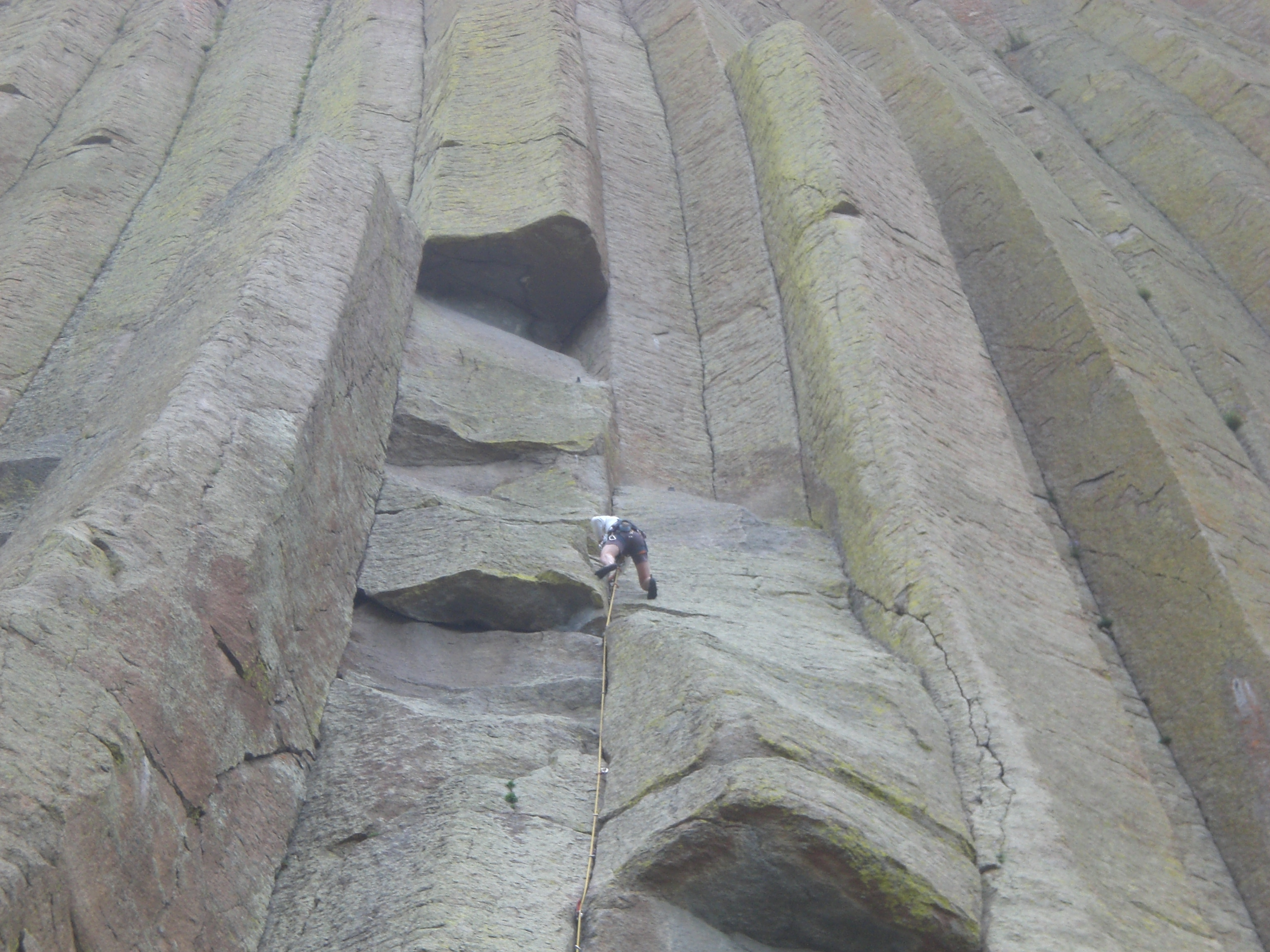
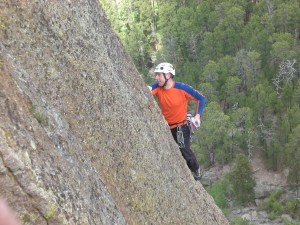
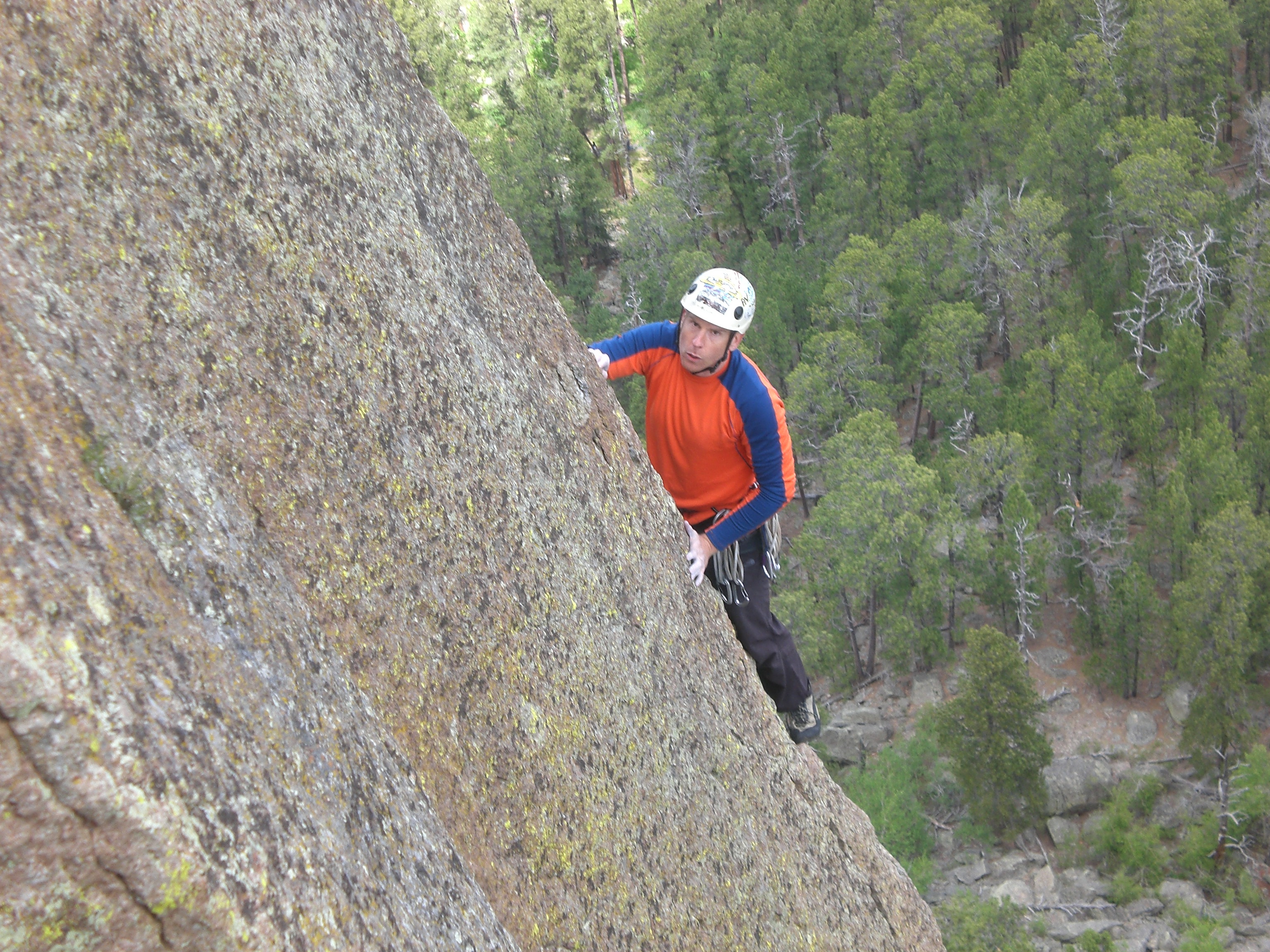
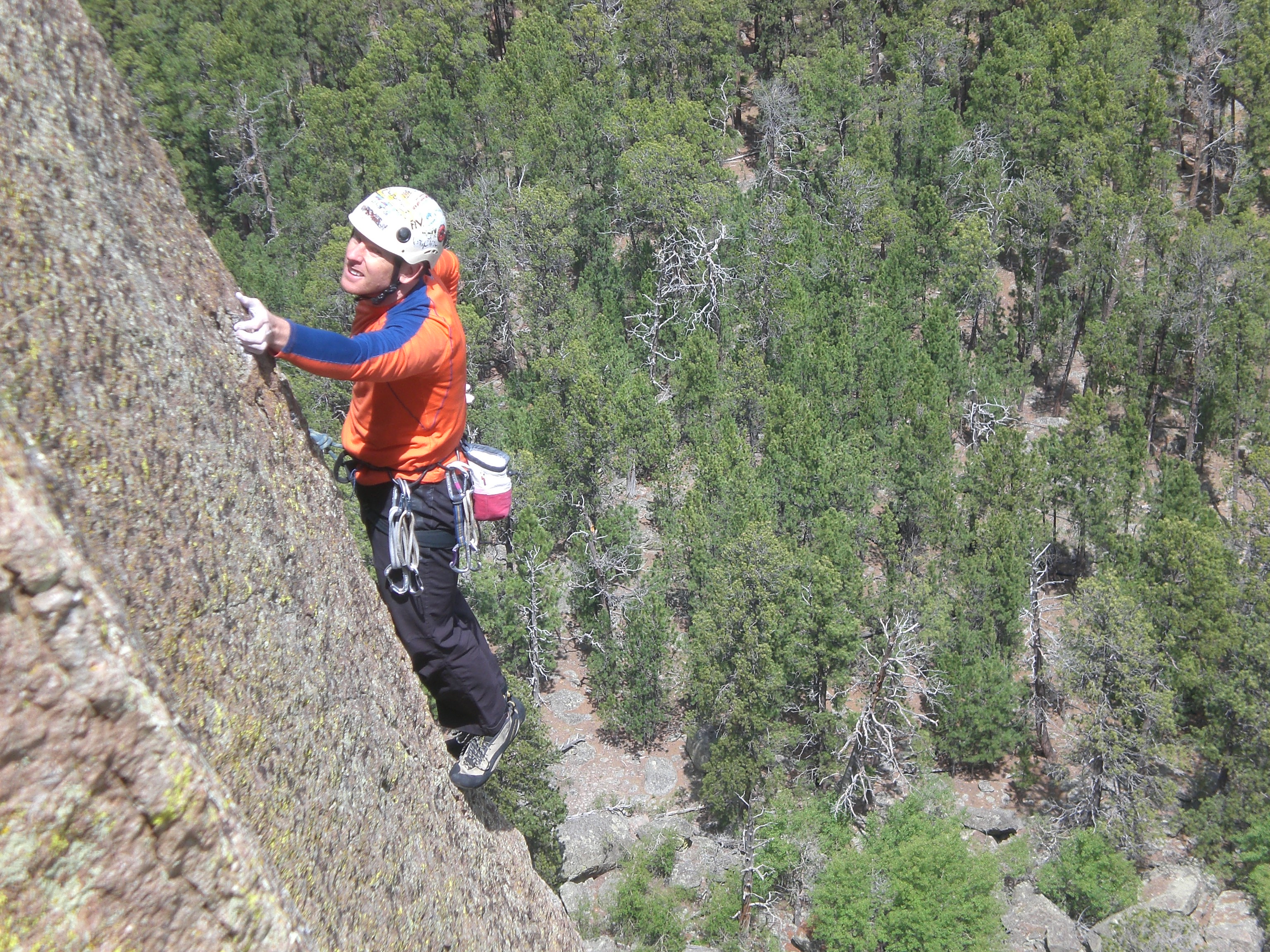
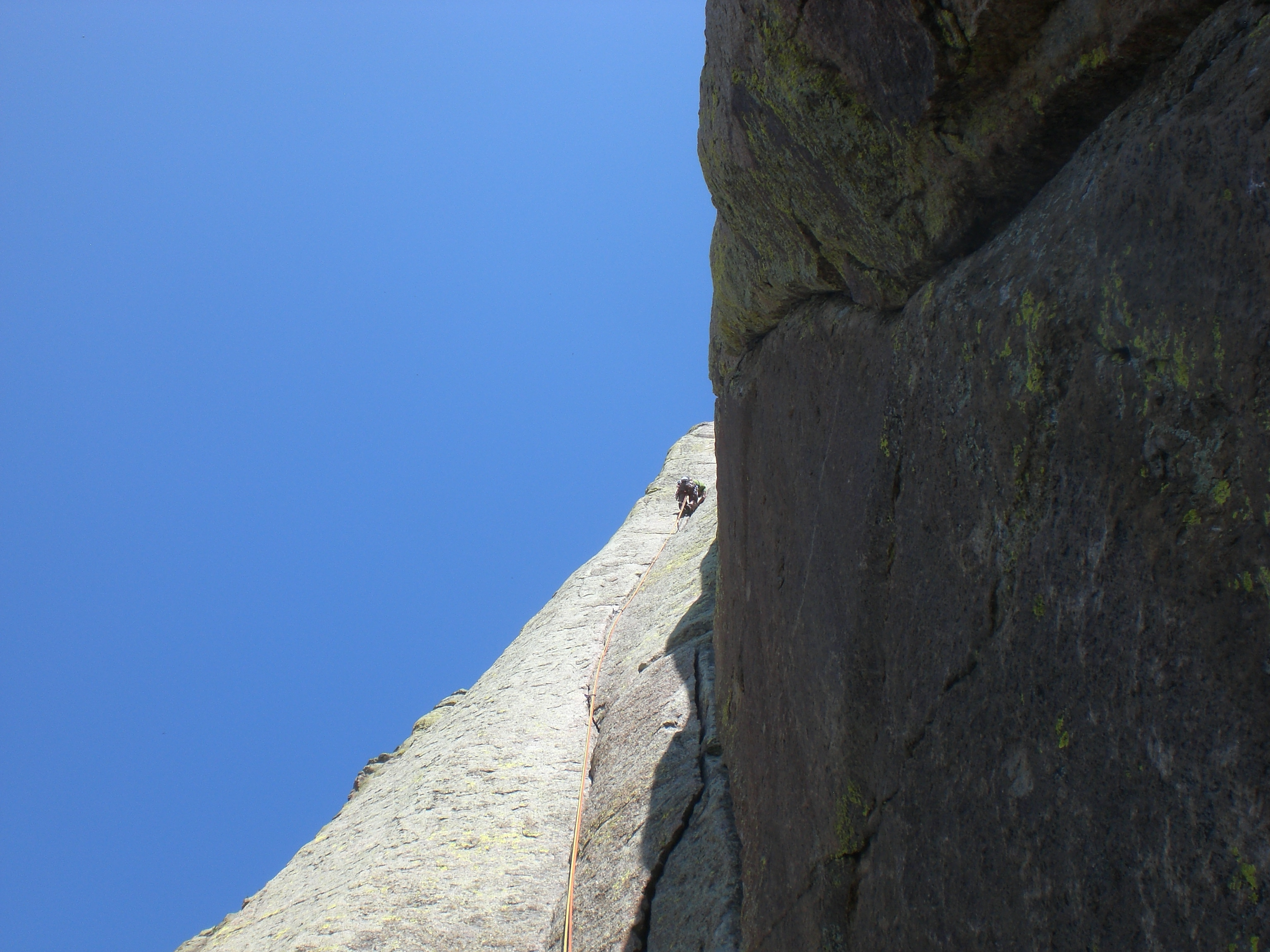
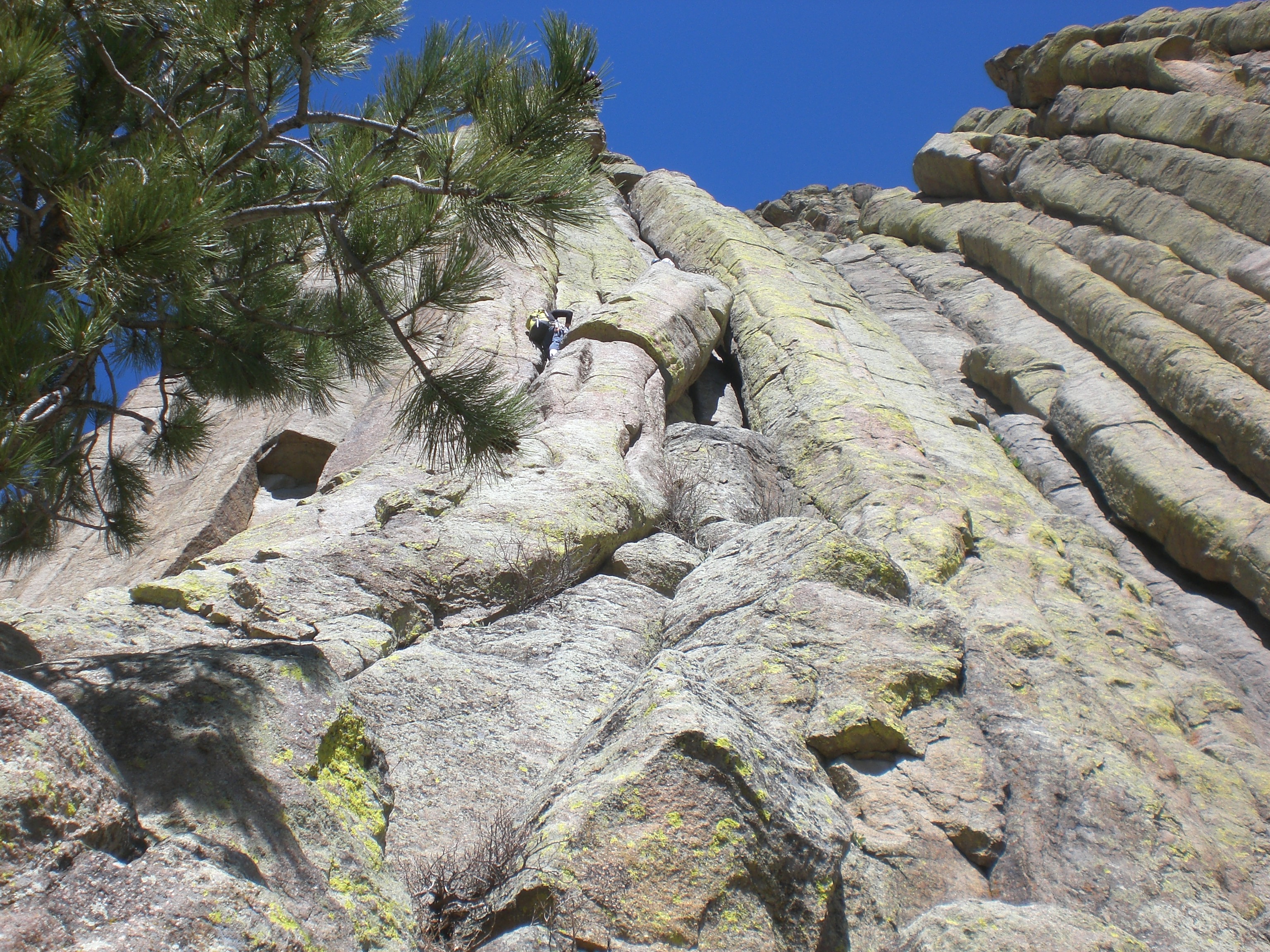
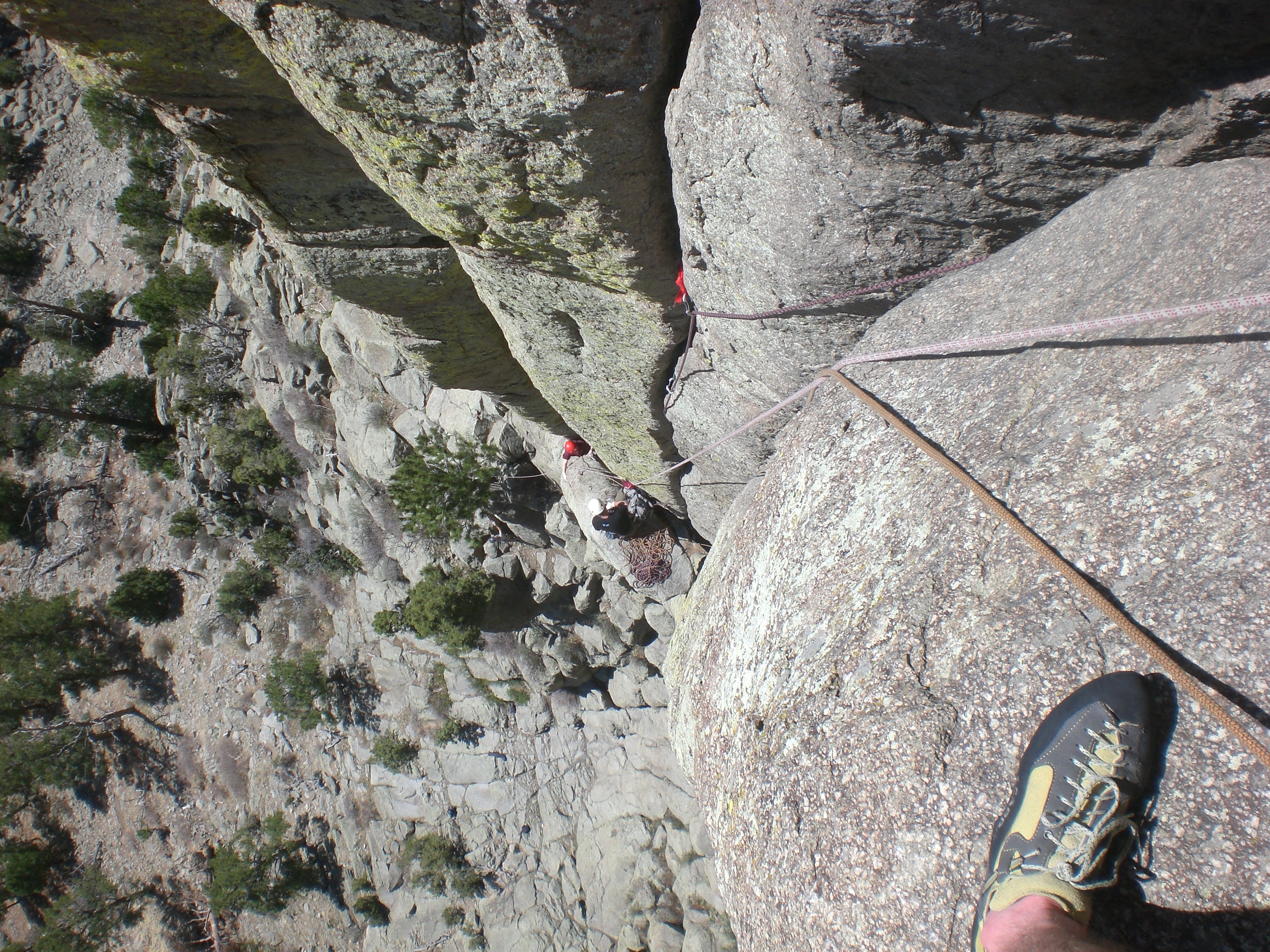
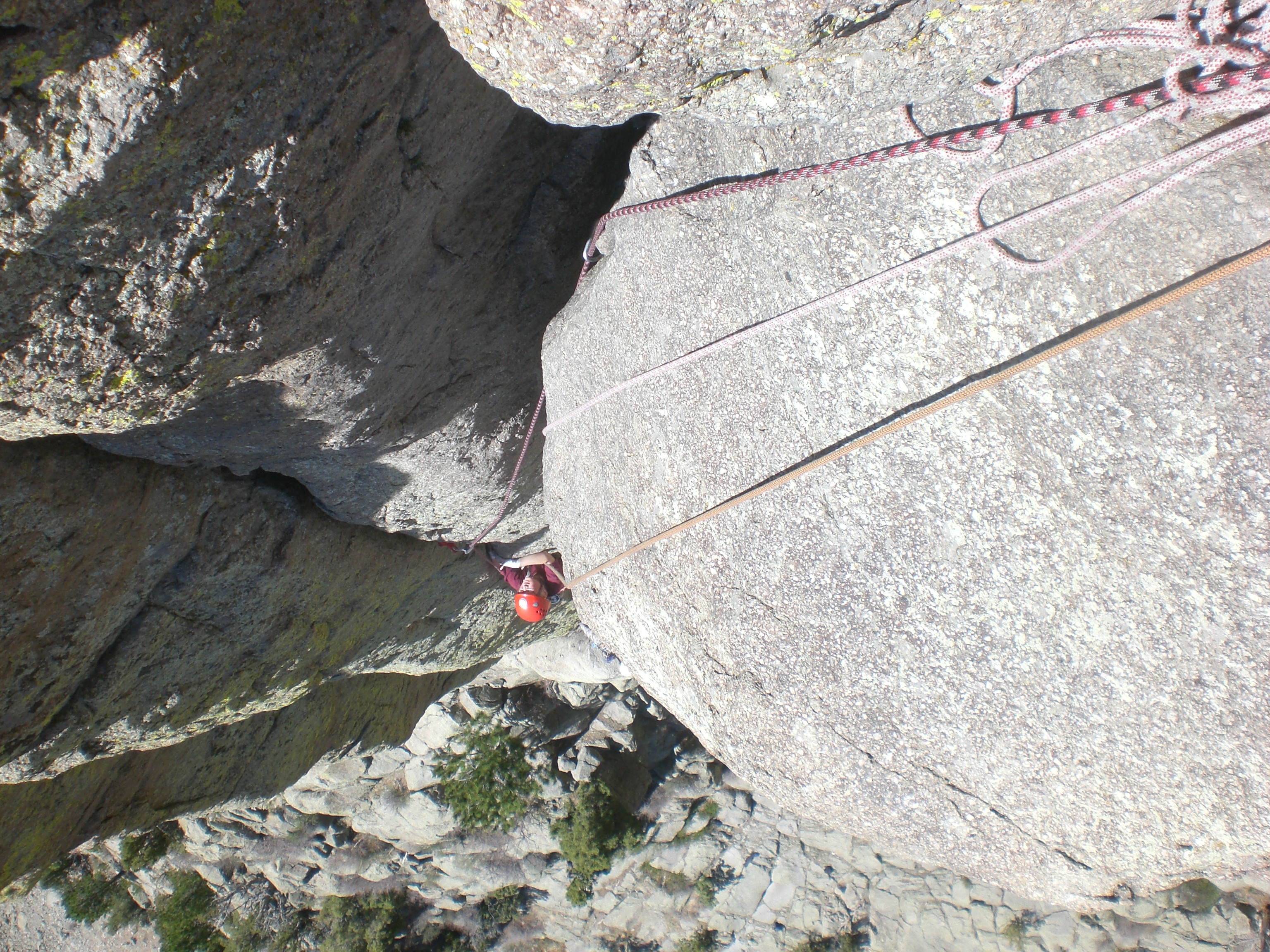
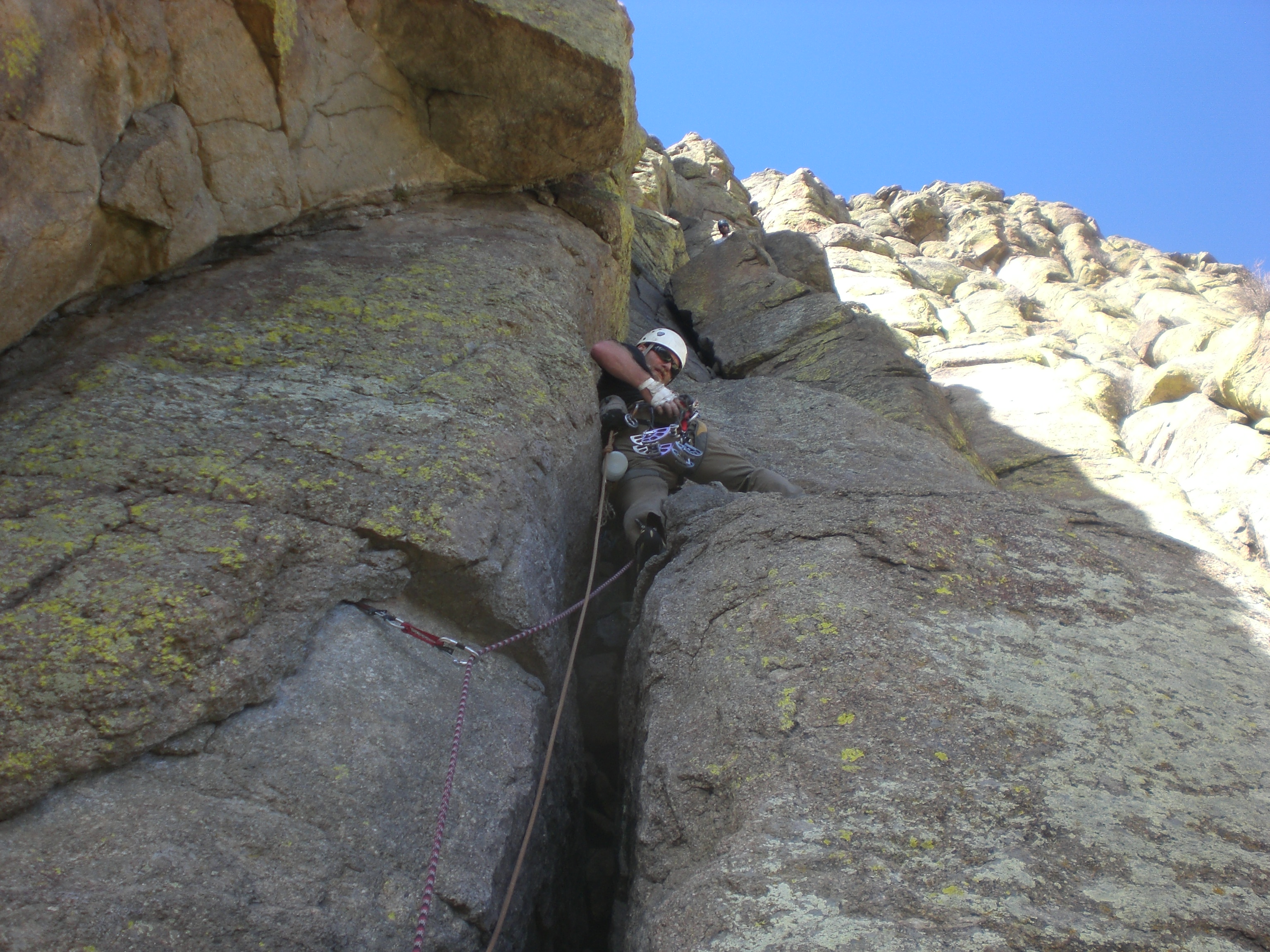
The picture above shows Rich on the first 1/3 of the Larry route on Blockhead. “Five nine” says Larry. I’m not convinced.

It’s hard to switch back and forth between the Tower and the climbs in Custer State Park. The gear at the Tower is generally straightforward and the falls are clean. Needles placements are devious and you really shouldn’t fall. You always feel off-balance.

Climbing doesn’t need Title Nine, it’s got Cheryl.

Rich got to lead Sore Thumb first this year. This spire is the climbable Escher.

Profanity

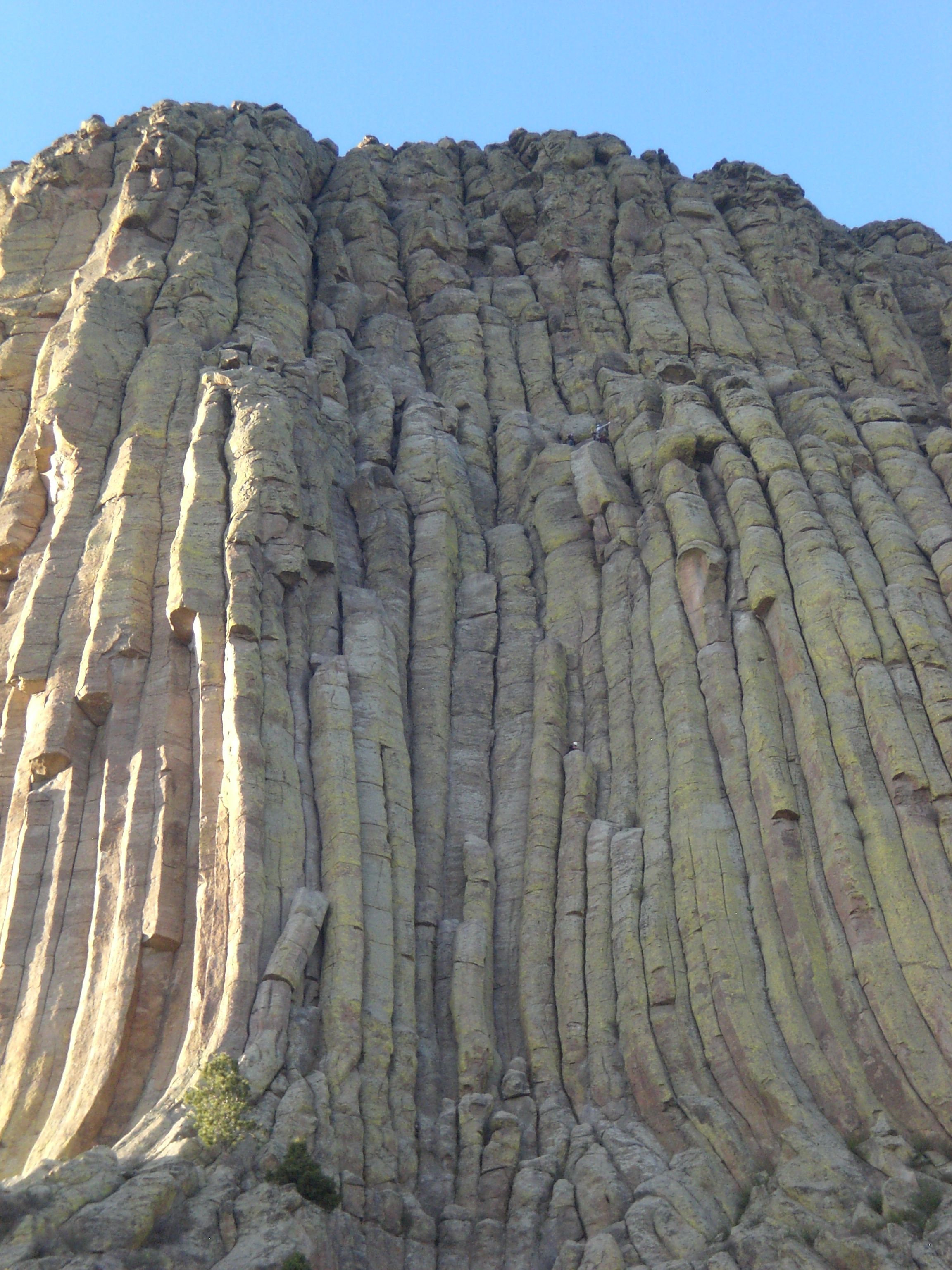
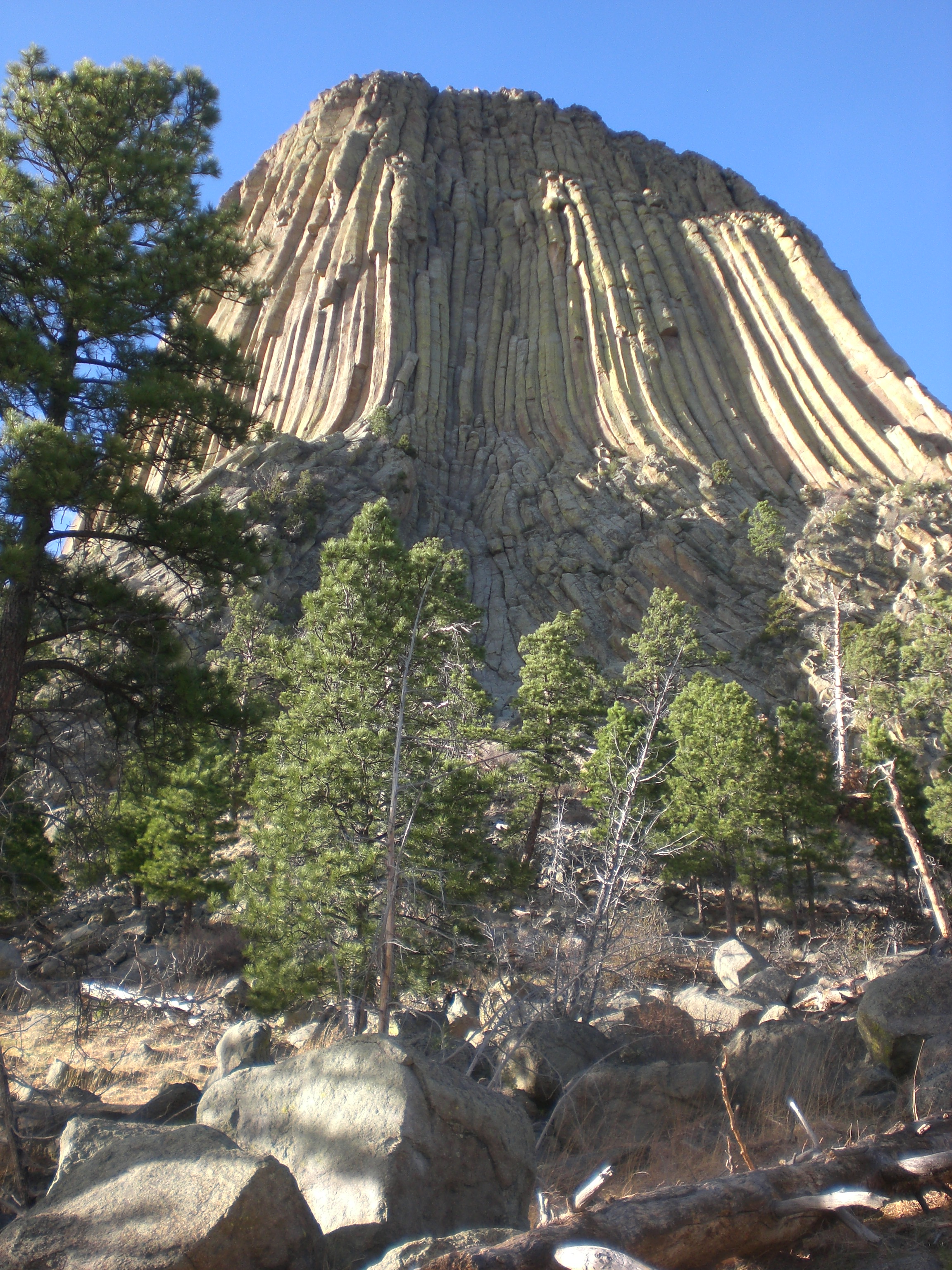
It’s June at the Tower. This month is a designated time for reflection and choice, brought to us by the NPS, the Constitution, and the former exclusive residents of the Black Hills. A decade or so ago, the Park Service did what Solomon could not, it divided the baby. Climbers wanted to climb the Tower without restrictions. Tourists wanted to see the Tower unadorned with climbing anchors. Native people wanted the Tower back, and if they couldn’t have that, they wanted climbers off the Mato Tipila altogether as climbing was felt to profane this sacred place.

In a brilliant compromise – by definition, a deal everybody hated but nobody felt that they could reject – climbing continued with some restrictions. No new bolts were allowed. Anchors were standardized to a low profile set-up. This kept the tourists happy. Signs directed the tourists and climbers to stay on the trails around the base and climbers were asked to stay off the Tower in June, the time of the solstice, when the Sun Dance occurs. This didn’t make the Lakota happy, but it tamped down their indignation enough that they signed on to the agreement.

Some of the climbers sued. This response was predictable and predicted. Political philosophy is circular, with the poles af any creed resembling each other in practice. So it is with anarchism and libertarianism, two vigorous traditions in the climbing community.  Followers of those traditions were obligated to oppose restrictions on principle. Fortunately, traditions based on opposition to law don’t often fare well in court. For one thing, they have a problem with consistency, since that, too is a sort of limitation on personal freedom. In this case, the plaintiffs even made the dangerous assertion that restrictions on climbing violated the constitution’s ban on restriction of religious practice, as climbing was a spiritual pursuit. The assertion was dangerous because the suit was based on the accusation that the June ban on climbing amounted to a government agency promoting a religious practice. The court chose not to engage on that front, and in the end, the voluntary closure and the climbing management plan survived.

The status quo is not entirely healthy though. Native rites get respect thereby, but it’s the kind of respect given a dead relative disliked by the family in life. Despite the sad eyes and solemn words, if the deceased stood up and spoke again, no one would cheer. Native people deserve space, not just allowances.

The voluntary ban confirms climbing as profanity. Nobody can stop you from swearing, it implies, so we ask that you lower your voices and keep it away from the children. Climbing may not be religion, but it isn’t profanity. It is closer to art and I’ll be bold enough to say, art on the Death of a Salesman rather than the musical theatre end of the spectrum. Art deserves space too.

The missing piece is, of course, the Tourons. Climbers calling “On belay,” 200 feet off the deck are intolerably disruptive. Revving Harleys in the visitors center parking lot apparently are not. Of course those RV, motorcycle, and charter bus pilgrims don’t mean to intrude, they just don’t know any better. They constitute the majority of the voting public, and like the song says, this land is their land and the NPS doesn’t dare make any demands of them.

The NPS anticipated all this. It plans to educate its way out of the Yugoslavia it has created. I wish it luck, but a resolution will take more than the passive approach pursued so far. The NPS has focused on the tourists, who aren’t mad at anybody. The indians and the climbers have been left in their respective corners. Maybe Sarajevo felt a bit like this in the Tito era. Maybe it won’t blow up again during my climbing lifetime. I’m not sure whether to hope for that or not.

Tower Blowout

I should have known better. The term “blowout” is never associated with a good aftermath. At best it entails something nasty issuing from an orifice of some sort. I prefer the Tour de Tower, which is a trip around the monolith, hitting as many routes as possible along the way. Some of those routes may be Killer b’s (the 10.b grade at the Tower is a universal sandbag), but not a bunch of 11’s. For me, those are still part of a three route regimen: one warm up, one desperate struggle, and one warm down to wash away the cotton-mouth.

When Mr. Swift suggested the blowout before the voluntary June climbing closure, I figured it would be OK. He’d lead all the hard pitches. Nobody can string together those steep, crimpy slabs and fingertip cracks all the way around the Tower without getting tired. I’d lead the approach pitches and then, when he folded, I’d take over and ease things back into the classic tour.

He didn’t fold, he escalated. Before it was over, I found myself on routes I wasn’t sure I could even follow. I managed, but only just. When it came time for the warm-down, it was I who was forced to quote the great Roberto Duran. No mas.

At least all that time on the dull end allowed me to get some amusing photos.

Anonymous climber on Everlasting, aptly named since you’re sorry you got on it by the second clip and then it just won’t end.

Making his “O-shit” face.

It is important to chalk up here to take your mind off the crappy footholds. 

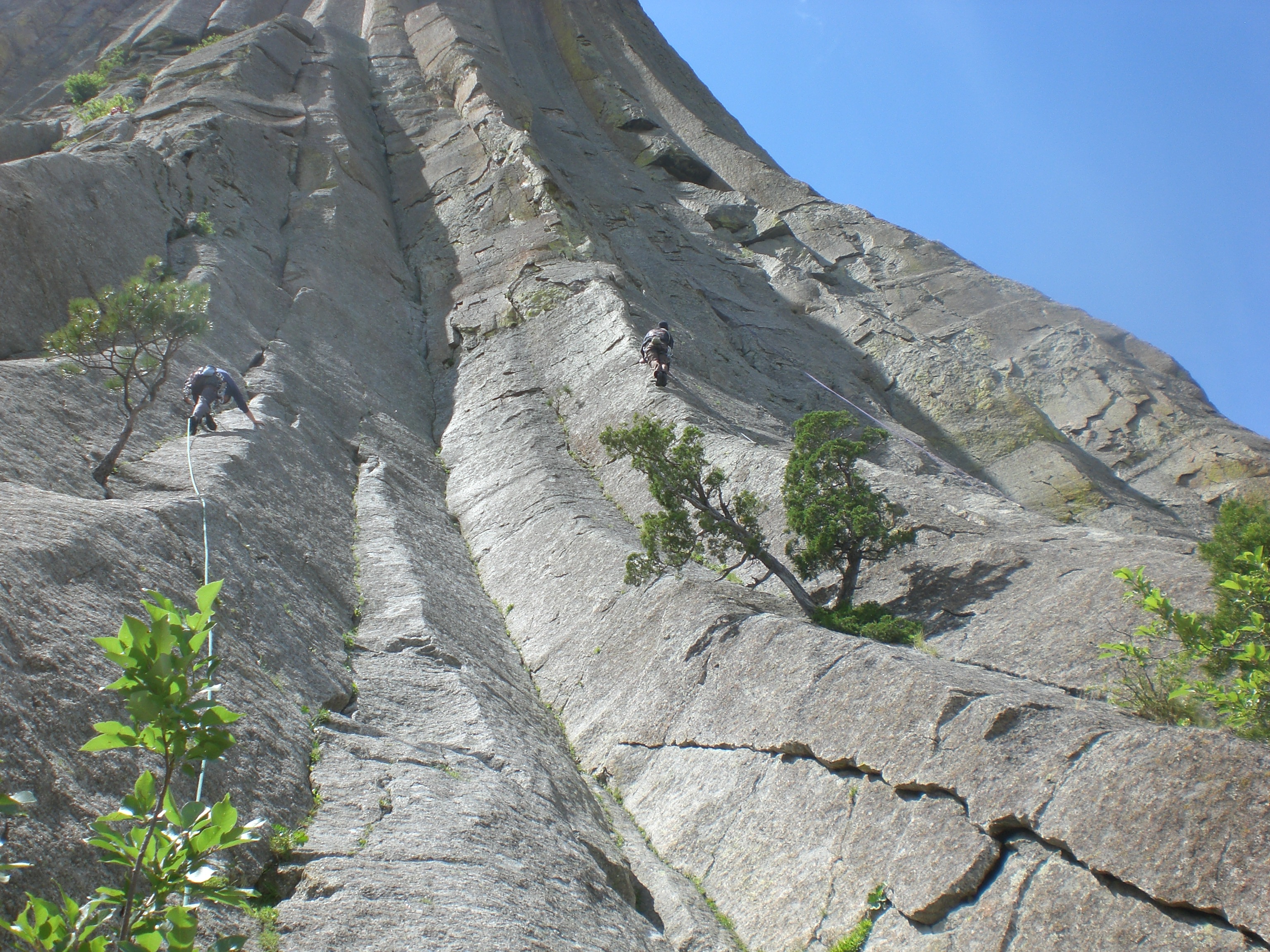
Busy day on the NE shoulder.

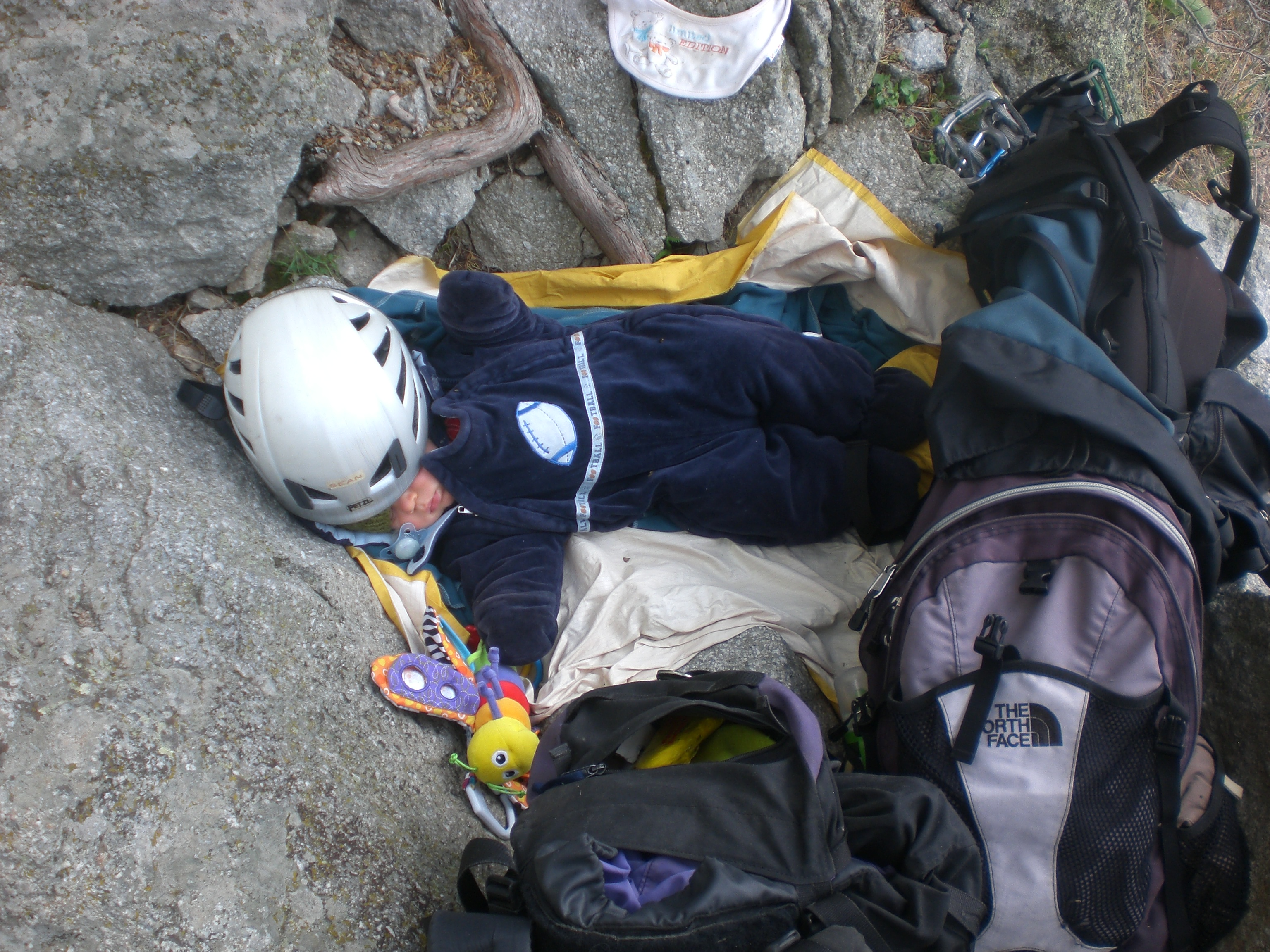
Baby bird doing what good babies do best.


Tagged , ,

Reincarnation

I don’t subscribe to the idea of reincarnation because I don’t like the way it’s said to work. If you are good, you become lighter and float up the preset hierarchy of beings. If you are bad, your evil deeds will burden you and you will sink down the preset hierarchy. This is bogus. It should be more like skeeball. You should get tickets for being good and then get to pick your next incarnation from the highest shelf you can afford. I could go for a scheme like that.

I would choose to come back as a White-Bellied Swift. These birds swarm around Devils Tower in the Spring and Summer. They are specialists in flight with boomerang-shaped wings and sharp, compact tails. They keep the Tower climbing experience real. Finish a hard route feeling all fluffed up and euphoric and one of these little guys will zip past your head, the wind screaming over his feathers, then dive vertically down the wall less than a foot from the rock. No matter how good you feel right then, you will never be as good at what you do as he is at what he does.

This guy is about as close as we humans come to that kind of mastery. He is a rock climbing specialist. As a result, he’s achieved a degree of control and skill that looks a lot like what the Swifts have. Sadly, that’s not for me. I can’t devote myself to rock and since I lack any singular genetic gifts, I’m doomed to mediocrity. I don’t mean to imply that I’m lukewarm on rock climbing. On the contrary, as soon as the snow melts, I’m itching to smell warm granite and feel the crushing embrace of rock shoes on my toes. It’s just that, by the end of summer, I start longing for bleak landscapes, violence and weird new forms of water.

So if I came back as a Swift, I’d probably start watching the vultures soon enough, wishing I could be soaring up high instead of whipping around the Tower like a madman. Maybe I wouldn’t cash in my tickets on swiftdom after all. Perhaps something small and terrestrial, with a bad attitude and a wicked set of teeth…

Tagged , ,

Solo

Climbing is generally misunderstood. The sport’s diversity alone makes it opaque. The motivations of mountaineers, sport climbers, boulderers, alpinists and aid climbers are inherently heterogeneous solely based on the nature of the climbing discipline each group pursues. Add to that inherent diversity the large number of  dilettantes and duffers which climbing attracts; participants who themselves do not appreciate all the possible benefits and dangers the sport offers. Little wonder the public sees climbing as a sort of gray soup with a troubling  aroma, which would be a puzzling thing to sample voluntarily.
Among the various disciplines in climbing, soloing is the hardest to understand. Abandoning all safety equipment save one’s own body and adjunctive tools may appear foolish, bold, transcendent, or egotistical depending on the observer. It is a challenging taste for climbers and non-climbers alike.

To be clear, soloing means intentionally trying something hard without a rope, not accidentally venturing into a climb or die situation. Everyone has one or two of those in their closet. Nor does it mean dispensing with protection on ground one dominates. Purposefully entering a situation in doubt with the understanding that there will be no salvation takes something different and gives something different than those incidental circumstances.  Much, perhaps most, of the climbing community disavows it. But the truth is, most who participate in the sport have pursued it at some point. That’s logical, since soloing is the only reproducible means of achieving one of the unique benefits of climbing: self-destruction.

We all harbor the urge. Who hasn’t felt the fleeting impulse to steer into a bridge abutment or fought the pull of the abyss while looking over the edge of a precipice? This impulse to rebel against the rules of self-control is quite reasonable. After all, our identity is just a convention. It is a yoke imposed by the thin layer of cells covering our brains on all the structures beneath. To have any hope of success, the self must be founded on a tyrannical belief in its own preciousness, only then does it have the strength to make the rest submit to the restrictions inherent in its own preservation.

This product of the cortex is illusory. Ever since we became aware, we have tried to wipe away the limits which the illusion imposes. Our religious history is a chronicle of such efforts and their failures. We have a messiah who cried out for himself from the cross. We have scores of Bodhisattvas, but no more Buddhas. Rather than unshackling us from our identity, religion has settled for turning the self against its own weaknesses, but the project of making us “good” has  always been play-acting. Our consistent hypocrisy shows what a poor compromise it’s been. We were fools to think we could shake our identities in the presence of others. The only place to remove the self is in isolation, where it has no hope of salvation from outside.

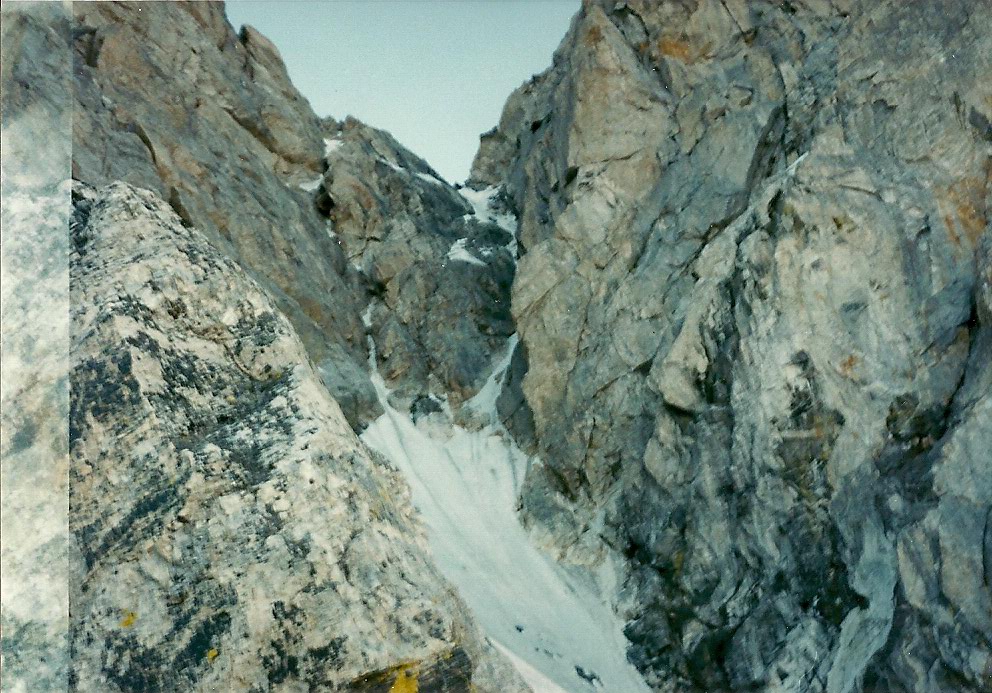
I have done a few solo climbs, but most were on the soft side. They were climbs I had done before with a rope or technically in little doubt. A couple have been for real, though, and the Black Ice Couloir was the realest of those. The route is not particularly hard from a technical standpoint. However, it is an alpine climb with attendant difficulties, including loose rock and variable ice conditions. At the time I climbed it, it was only a couple of grades below what I had ever climbed in the mountains and I was equipped with straight shaft tools, plastic boots and Foot Fang crampons. I wasn’t set to dominate the terrain.

I hiked up Valhalla Canyon the afternoon before the climb and tucked myself under a rock for the night. Several times on the walk up, I changed my mind. Immobility, nightfall and the confines of the bivy sack did nothing to ease the turmoil. Through the night I picked away at my fears with my ambition until both were in tatters. At about 2 AM, there was nothing left but the decision to climb. I sat quiet for two more hours, waiting for the alarm.

I moved up the first icefield by headlamp, and climbed a short, steep chimney on the right side of the headwall. A section of easy climbing passed quickly and I arrived at the second icefield with the light of day. Up to that point, I had felt calm, almost empty, but as I moved onto the ramp above the icefield, an intense focus and motivation took hold. Every move was perfect. A bolt of lightning couldn’t strike me from the rock. The traverse across the third icefield and the climb up the final gully seemed to pass in no time. The short mixed section where the ice ended felt so secure I wished it could go on forever.

Back in the sun, I made my way down to the lower saddle, lay down on the tundra and went to sleep. When I woke, I set off down Garnet Canyon and on to a path of destruction in the world beyond. I tried to bring that sense of perfection and unitary movement with me, to recreate it in the populated world. Of course, it stayed in the mountains, but the expectation was a portable hazard. A hard object, it battered everything softer than itself.

People and their things cannot reproduce the rewards of soloing, despite humans’ capacity to have those experiences for themselves. The preparatory tear-down itself precludes it. Doing that to yourself is illuminating; doing it to somebody else is just plain nasty. Besides, perfect things are transitory by nature. Held closed in memory or kept as principle, they turn rancid, however gently they are tended.

I haven’t done any more solos. Perhaps someday I will again, when I’m no longer wrapped up with other people or when I’ve honed my schizophrenia to an edge sharp enough to cleanly divide climbing from everything else. Until then, I’ll use a rope to protect me from falls and dangerous expectations.

Tagged , , , ,

Uh-Oh

Republican politicians be talkin’ bout risk:

Dependency is death to initiative, to risk-taking and opportunity. It’s time to stop the spread of government dependency and fight it like the poison it is.”                                – Mitt Romney

I’d like to extend an open invitation to Mitt, to go climb the East Ridge of Edith Cavell with me.

Now, I am rich in climbing skills compared to Mitt. Still, I expect him to be true to his convictions and simul-solo it with me. No matter how he begs, I promise not to poison him with dependency on the rope. Naahhh…

I’m not in it to demonstrate my superiority; there’s always somebody better. I’m not in it to tag summits or tick off numbers, those are empty pursuits and they denigrate the game. I’m in it to climb the hell out of everything I possibly can, and sometimes, that takes a rope, especially if you are going to take risks. It also takes a partner that’s got your back, even if you screw up.
So, I’ll throw the rope down when it gets to be too much. I’ll even bail if you can’t take the exposure, Mitt. I won’t sneer or otherwise be nasty about it either. I’ll do all those things because I value the society that the rope entails and because I am not a Republican politician. You don’t have to be either; I believe it’s not too late.

Oh, and if you feel like you aren’t up to it physically, Paul Ryan has made that same sort of statement, why don’t you send him in your stead. That little bitch is supposed to be in shape, isn’t he? I believe it may be too late for him, though – too much Ayn Rand.  That shit is poison.

Tagged , , , ,

Marginal Behavior

Climbing with kids is always iffy. Multi-pitch climbing with kids can be asking for trouble. It isn’t guaranteed trouble, it’s just a set-up that, given the arrangement of the pieces, makes you think twice. It is important to start with low expectations and treat the whole enterprise as a sort of upward rescue.

The great thing about climbing with kids is that they bring kid foolishness, which is plain and transparent,  to the climb rather than adult foolishness, which is deep and opaque. Kids aren’t going to tell you their knot is good when it isn’t. Kids may horse around on the belay ledge, but they aren’t going to unclip from the anchor so they can move around to get a better picture.

By the same  token, if  kids are going to freak out and freeze, it’s probably going to happen in the first twenty feet, when they realize the gravity of their situation, rather than three pitches up when their ego collapses.

When we started up the Tower with our 11 and 12-year-old boys, Mike and I had all these things in mind. Being veterans of soul-searing alpine epics and dicey retreats, we had a reasonable degree of confidence we could pull it off. Experience like ours builds an expertise in Redneck Rescue – an improvisational method of crisis management that is effective, but lacks the smoothness and consistent redundancy of a professional approach. Of course, professionals avoid crisis situations in the first place, so what do they really know.

Rowan, the older kid, had seen the method in action. He had climbed the Tower with me the year before. The way up was tough and he just squeaked by the crux pitch, but the descent was a horror show. A thunder-storm caught us and we had to descend the ropes through hail, wind and lightning. It affected his motivation for the current day, I could tell. Jack, the younger kid, had never climbed the Tower, so he had no reason to fear it.


Rowan folded at the crux pitch; Jack’s curiosity and ambition led him on into the wide crack and stemming problem. I had the opportunity to belay him on the pitch and the experience was the same as every other time I’ve belayed a kid on difficult climbing. It’s a lot like deep-sea fishing would be, if you could hear what the fish was thinking.  You brace yourself, pull, reel in line, all to the sounds of desperate effort interspersed with whimpering.

On the belay ledge, once he stopped shaking, I could see a familiar light in Jack’s eyes. He’d gotten by the hardest thing he’d ever climbed and now his teeth were locked on this project. Jack was going up, but Rowan was going down. He wasn’t upset, he’d just made his decision and would not be continuing.

Splitting up the team is a core skill in Redneck Rescue. After batting the question, “OK, so what is going to happen..?” back and forth for a few rounds we completed the hand off and Mike continued to the top with Jack while I took Rowan down.

It was a long wait at the bottom while Mike and Jack finished the route. An adult would have spent the time moping and feeling impatient. Rowan spent it trying to figure out why rocks bounce. I got to watch the light change over the Belle Fourche River valley without having to think about anybody else’s emotional weirdness. I wouldn’t want to do it every day, but I like climbing with kids.


Tagged , ,

Dutch Whatever

“I’ve noticed that in the alpine, everyone’s hesitant to rate anything harder than M6 – and then everything’s M6. Why do you think that is?” Mike wondered.

M6 is a grade given mixed rock and ice climbing. For most folks, it’s the grade that consistently feels hard, the place where you start to feel like you could fall off. I thought back to the previous day in the Clarks Fork. When you’re trolling for blind pick placements under a sheet of snow, yarding on apparently frozen blocks with the secondary points of your crampon wedged in a crack coated with ice and running with water, it really is all M6 until you’ve climbed it.

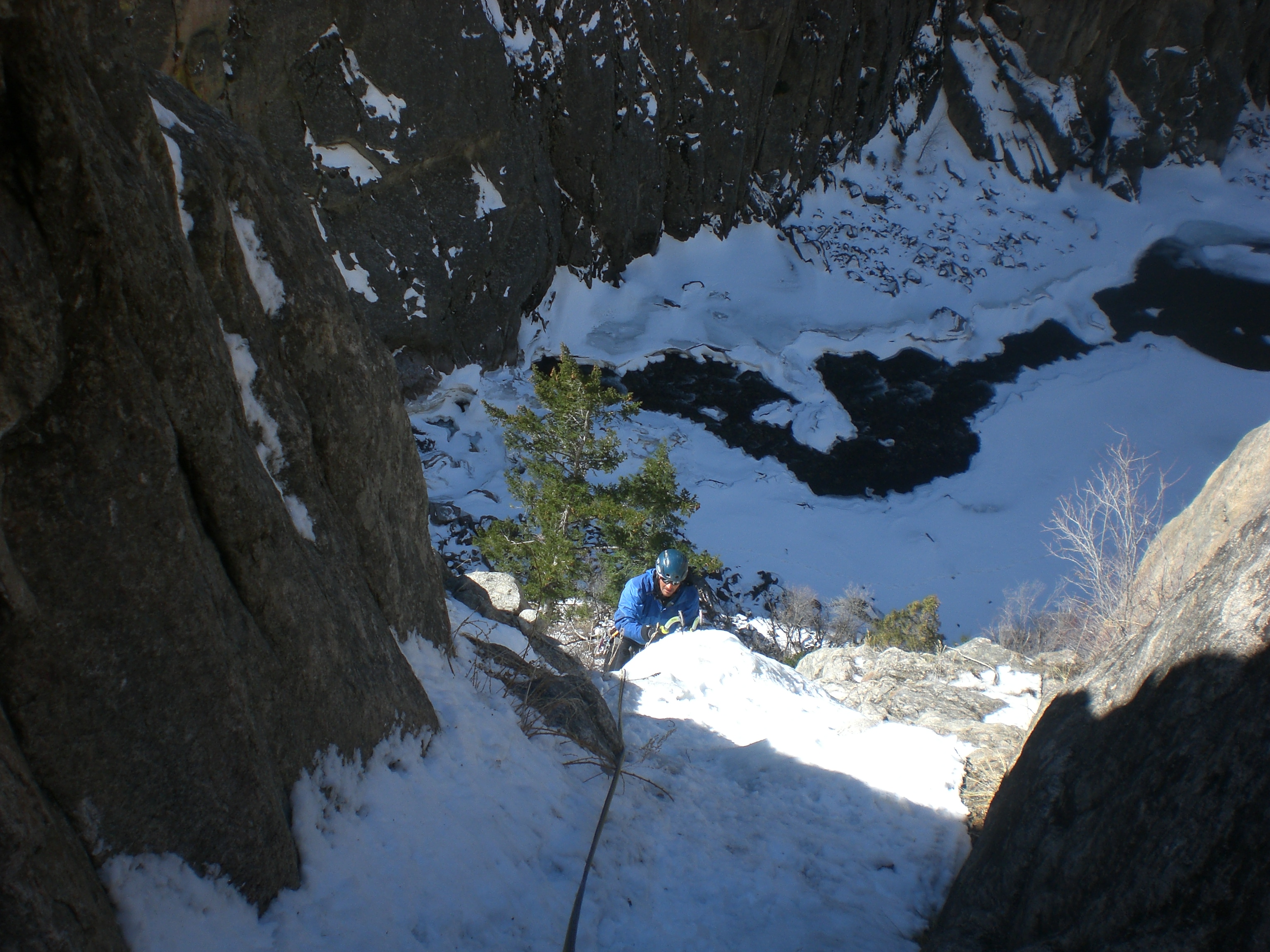
Looking down the 6th pitch of Broken Hearts

It had rolled for us, though. We had felt good after sneaking in six pitches of Broken Hearts as the climb melted around us. It was a good omen, and we had word that the climb in the Clarks Fork had looked feasible as of two weeks ago.

Beta doesn’t obviate omens when it comes to going into the Clarks Fork, though. The climb was probably there. The approach was surely there, and in the usual condition: a brutal wallow through the continental snowpack, followed by a dicey stumble down frozen dirt beside a stream bed.

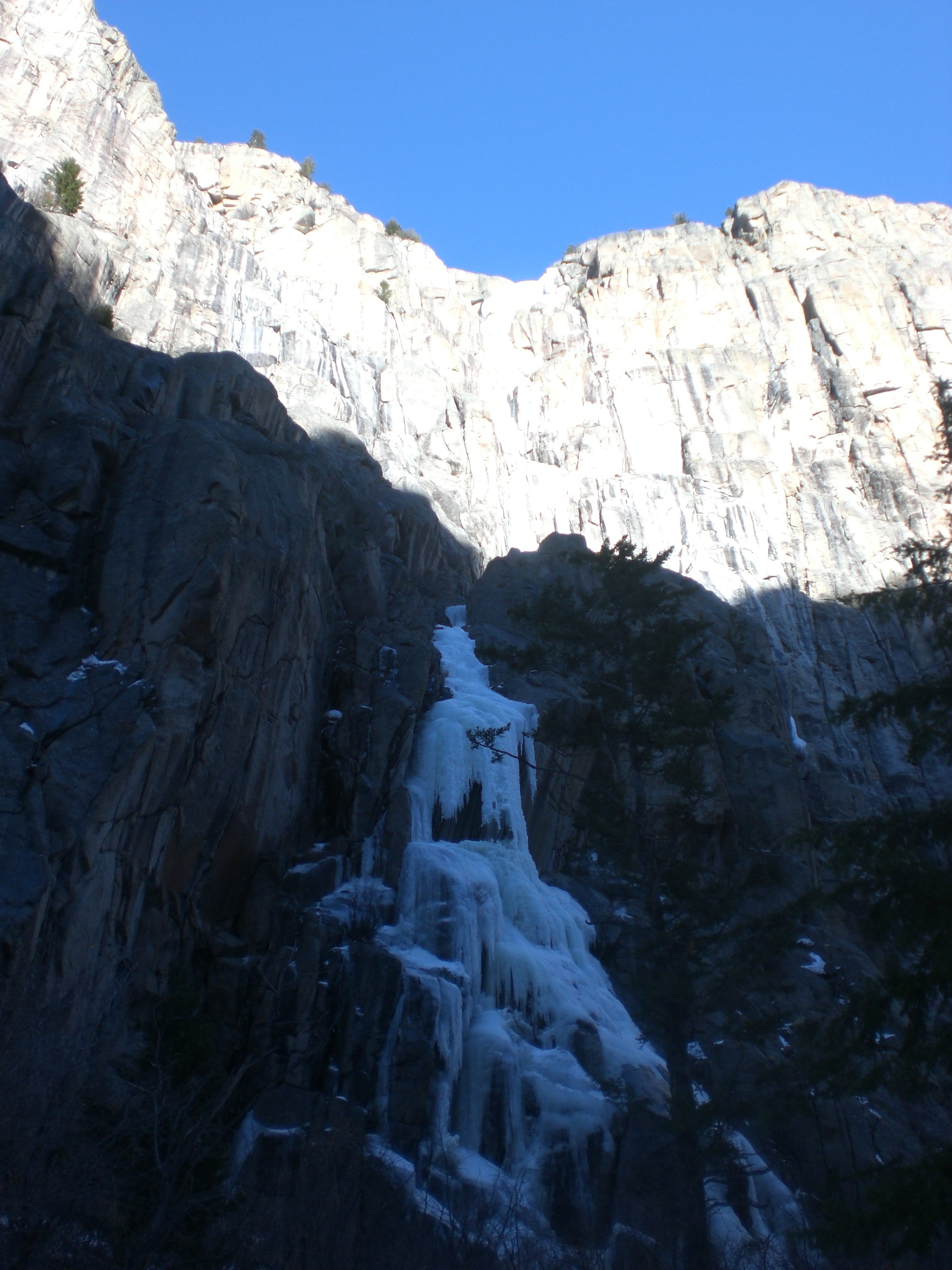
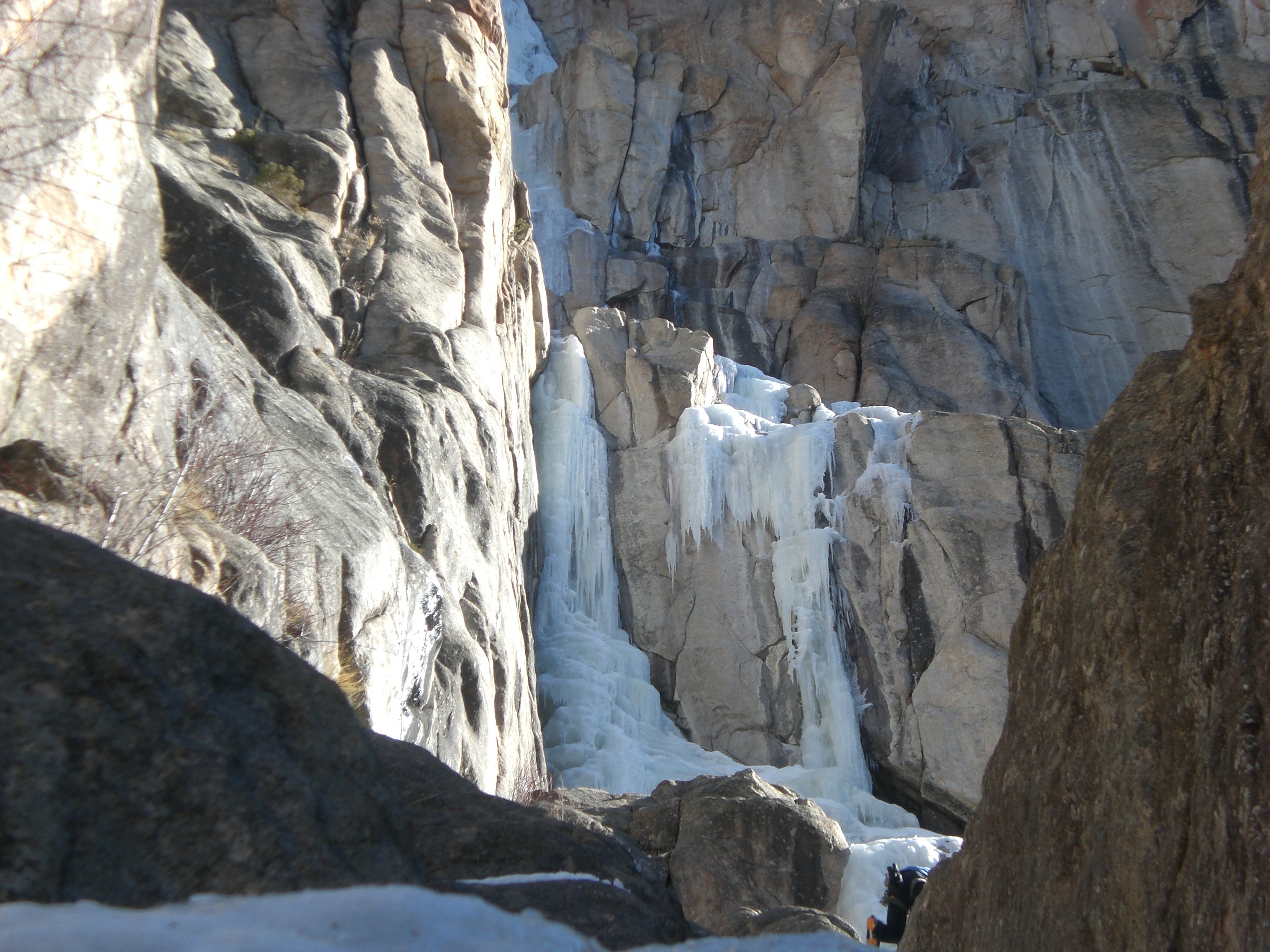
It was quite a reward at the bottom, almost enough to make you forget you had to walk back up what you just came down. The morning sun shone into the gorge, tanning the 800 ft. granite walls, while the river grumbled under ice, welling in pools where the channel widened.

Call of Cthulhu first pitch

And there was the climb I’d fallen off two years ago. The weasel-like part of me that scampers around the base of my skull was disappointed I wouldn’t get a rematch with the mixed version of the first pitch. The more clear-thinking part was glad to see the first pitch touching down.

The climbing wasn’t too hard, it just took a light touch on the sun-baked, arching pillar. Mike accepted the ramble up the second pitch with equanimity.

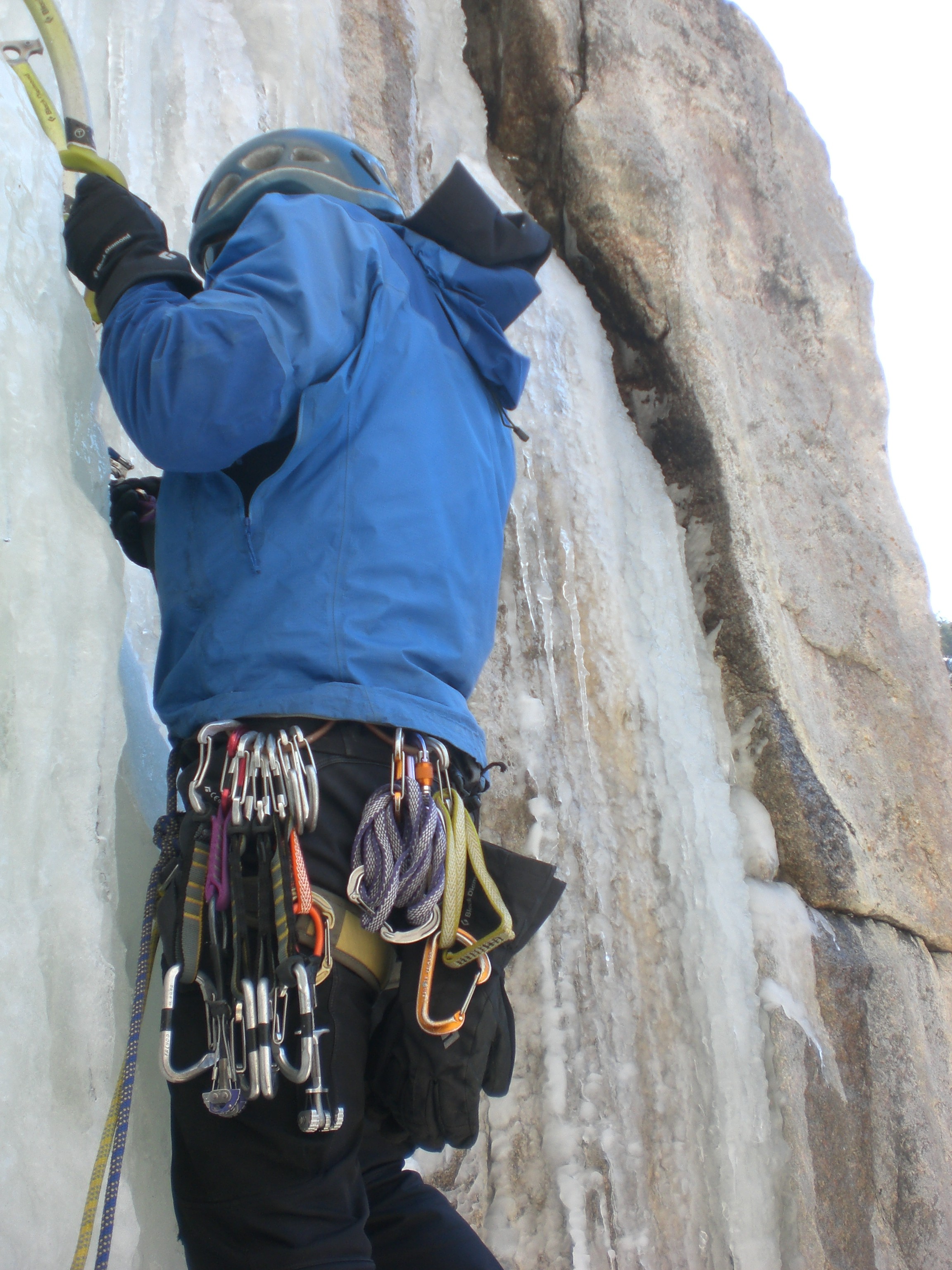
Mike nearing the end of pitch #2

The third pitch was alpine climbing, the beautiful sort of stuff made of rock and ice at once which defies any sort of rating, with a little bit of M4 (after the fact) to finish.

Pitch 3/4 belay

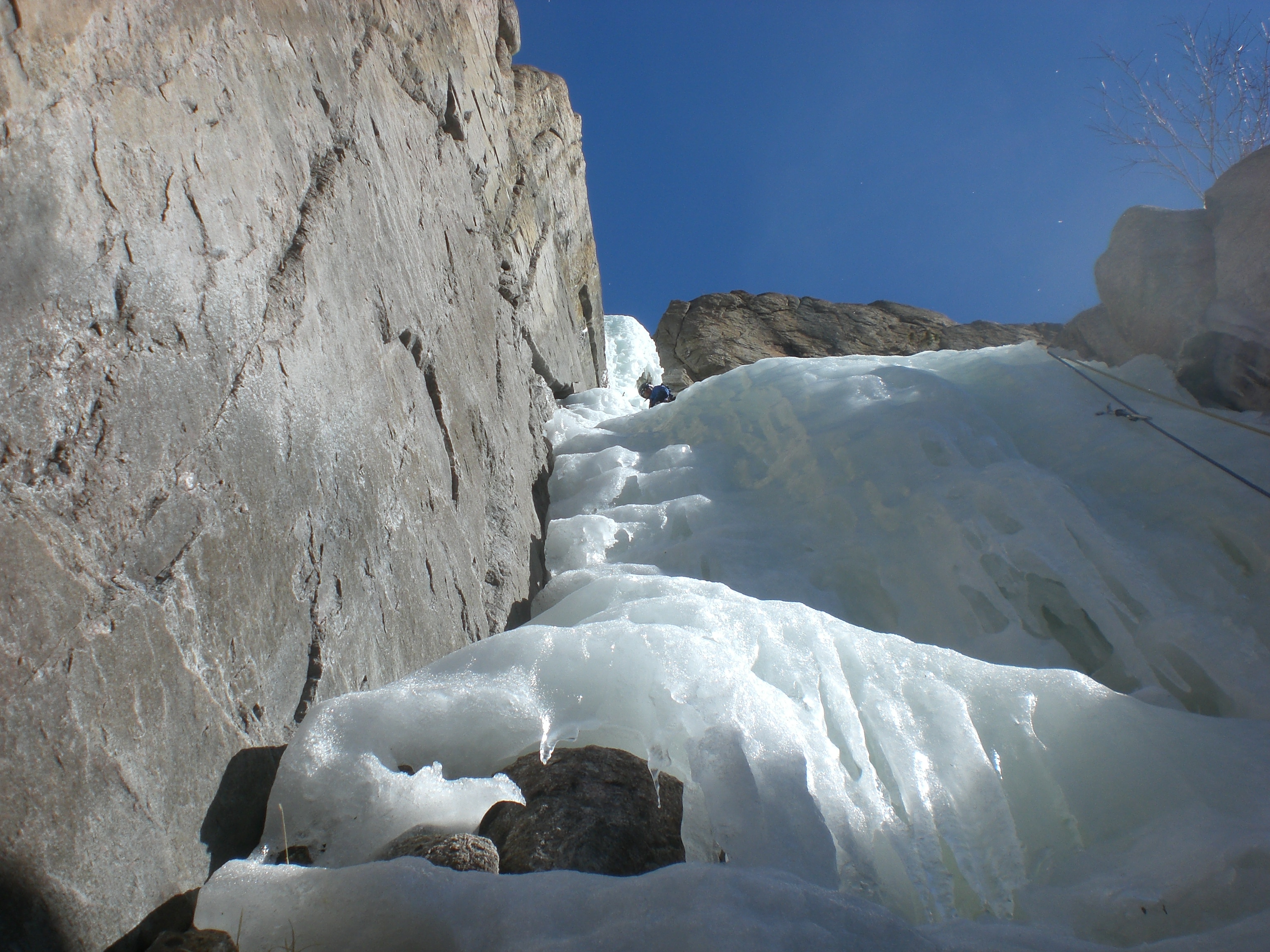
Mike got his karmic justice for enduring the mediocrity of the second pitch. Steep sunny ice on the fourth pitch lead to a spacious belay cave at the end of the route.

Beginning pitch #4

By any name, it was a stellar climb. So good, I barely noticed the quadriceps hematoma from rockfall on the way down. Hell, I’d even forgotten the walk out by the time we left the parking lot. Ok, maybe that’s a lie, but it was pretty damn good.

Pitch #4

Tagged , , , ,

Certainty

I try not to rope up with people who are too certain. They tend to do things like walk under seracs because seracs don’t fall when the weather is cold, forego protection because they can just climb it, and cross loaded slopes because they went this way before and it didn’t slide. Some of them are certain because they are fatalists, some because they are true believers, most because they can’t deal with the fear and uncertainty anymore and have decided to just switch off.

For a couple of centuries it seemed like we were poised to untie from certain people in general. A series of uncertain people came along and showed that their way was better. Their questioning lead to an understanding that the earth was really old, Democritus was right, kind of, and our thought and language were a self-referential tangle. These and other revelations of uncertainty eroded the old institutions whose source of knowledge was authority.

But change lead to anxiety, and the certain people saw an opportunity in that angst and in the methods of the uncertain themselves. To people who lived by a belief in authority, relativism equaled Nihilism and statements like “There is nothing but the text.” represented soft-headed weakness rather than caution and humility. So, the certain rejoined the discussion.

Their bid was an appeal to relativism and uncertainty as they saw it. If the field was level, their ideas should merit equal consideration in principle. And they packed their methods right along with those ideas. Debate to replace discussion. Moral force to replace reason. Because, with authority as their source of knowledge, they didn’t need to refine an incomplete understanding, they needed to win. And they did win. They managed to replace real skepticism, which implies uncertainty, with their version, which is synonymous with mere derision. Worse, they managed to draw uncertain people into debate.

Once the uncertain engaged, it was over. They kept trying to be reasonable and have a discussion. When that didn’t work, they tried to be certain. The certain people didn’t care about a discussion, they knew what they knew and just wanted the popular influence all authority craves. And when the uncertain people  expressed certainty, they became vulnerable to a claim of equivalence. They were revealed as authority-based too, so the claim went, so it was a simple matter of choice among similarly valid systems of belief.

The mistake was to allow the premises of certainty in the beginning. Before the uncertain began a defense of their ideas, they should have demanded that the certain defend and explain their own ideas first, with an eye toward divining the premises. When the certain appealed to assertion of authority, whether in the form of a moral sense, supernatural agency, or incredulity, the talk should have ended. A person may certainly assert whatever, but once they do, there’s no point talking about it unless you begin by agreeing with their assertion. And in that situation, it’s best to just un-tie.

Tagged , , ,

Ovisight


I am getting old. Every year, I recover more slowly from big days out. Injuries have started to accrue rather than heal. My climbing partner has an artificial hip. The day I’ll have to back off is on the horizon. But I can still climb Ovisight, so that day has not arrived yet.

The hills don’t care who you are, what you do, or how you feel. The Ovisight/ Legg creek drainage cares perhaps a bit less than other sections of the world’s terrain. The approach is always just as treacherous and choked with snow, no matter the conditions elsewhere in the valley. This year was no different.

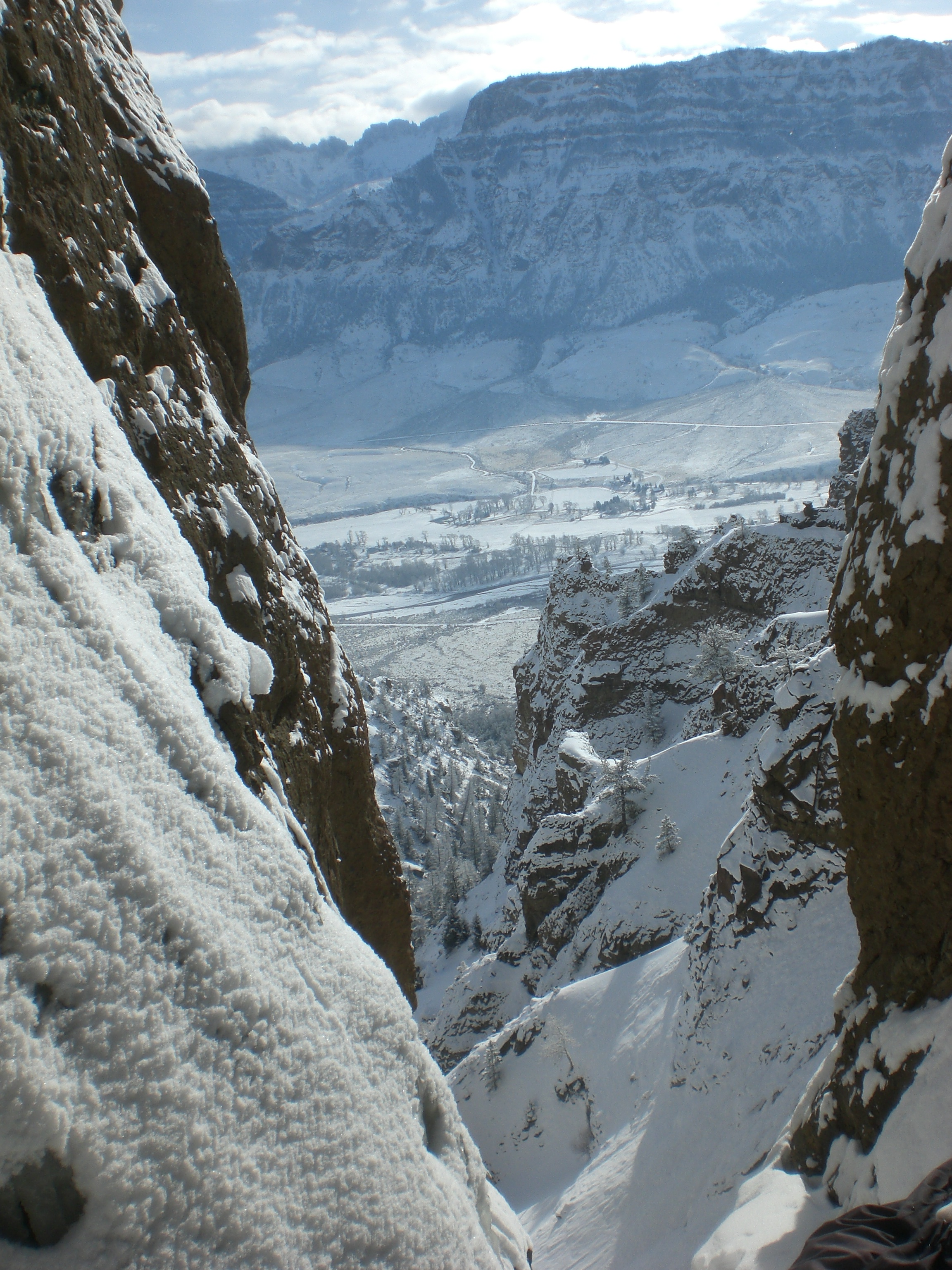
We got a late start, so it was mid-morning before we stood at the top of the approach pitch, where the entire drainage funnels through a gap you can stretch your arms across.

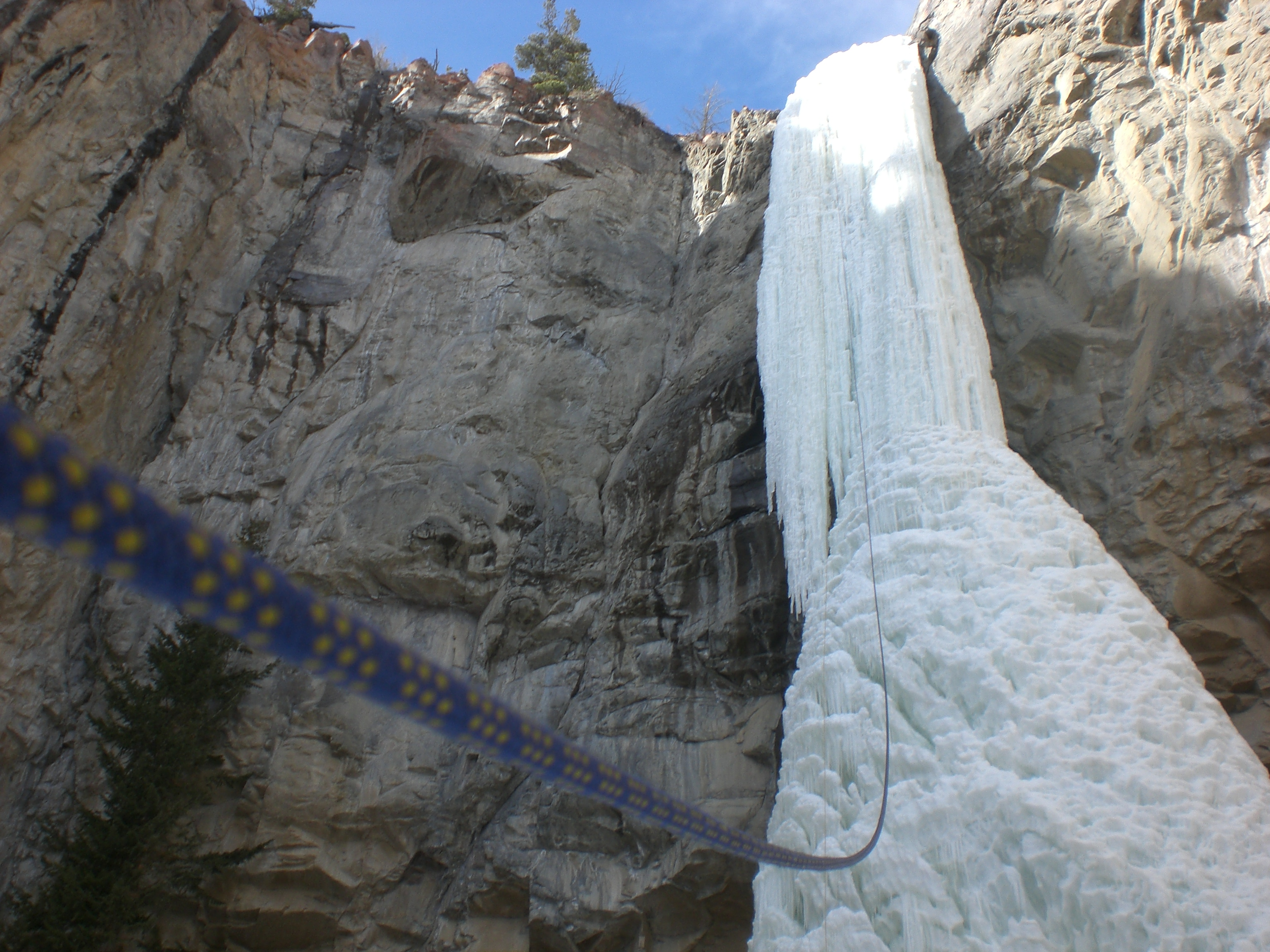
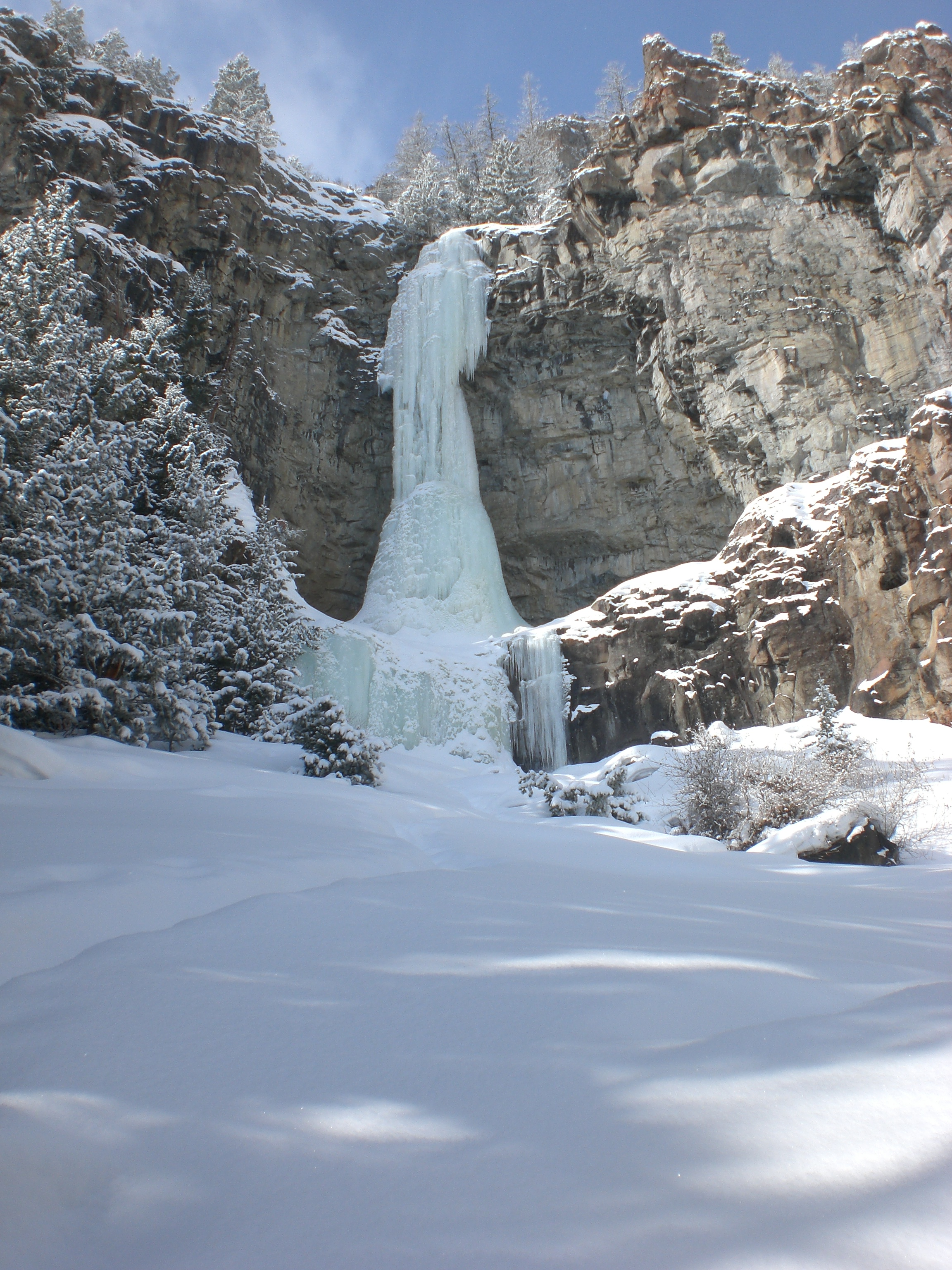
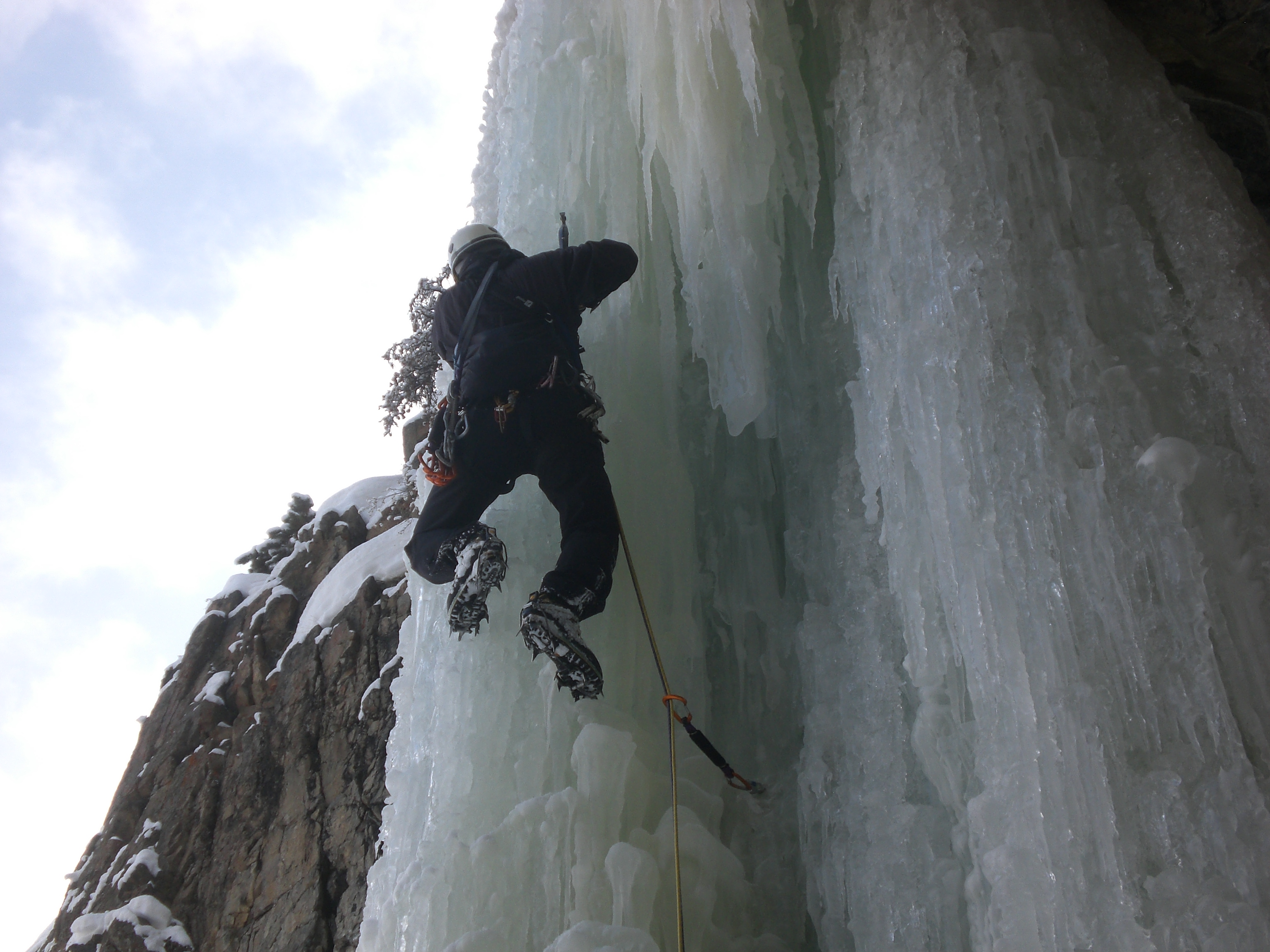
We slid and wallowed our way up to the first pitch. The ice was easier than usual, more five-ish than six-ish.

The second pitch was, as usual, harder than it looks.

At the top of the pillar, the snow was deep and the hour was late, so we went back to climb the first pitch again rather than pushing on to the final column of ice above.

As we were wrapping up, two teams of younger guys arrived at the first pitch. They had started at noon. I was impressed until I checked the clock. They hadn’t moved any faster than us, it was just that late.

We made it back to the car as the sky faded from blue to black and the coyotes began to call to each other. We were whipped and I think if either of us were asked at that moment, we’d have said we wouldn’t go back to climb Ovisight again. But, being old, we would forget that moment and next time the first pitch peeked around the ridge at us, we’d head back up for another Alzheimer’s onsight.

As our little diesel cranked and caught we looked back at the climb one last time and we saw headlamps wink on high, high up the valley wall. I shivered. Age had its advantages after all.

Tagged , , ,