So, the weather crapped out and I’m sick besides. It’s a day indoors reading and training, mostly to avoid housework. This page is usually like a journal and sketch pad for me, and I don’t usually invite comment. But today is one for latent curiosities and nostalgia.
Most of my Sunday school lessons were pretty didactic. Only after I left religion did I realize anything else was possible. Even the world with God was weirder than I had ever been lead to believe. I’d like to ask some of the questions of any believers or non-believers out in the cyberether, the weird questions, that my Sunday school teachers never broached.
I’m interested in hearing what people think about these things, and how much. I don’t really expect to respond, so please just lay it out. That said, I’m not interested in appeals to authority. Not to denigrate those who answer any questions about God with “because scripture says so”, that is just a different issue, and one less interesting to me.
Without further preamble: Is it “like” anything to be God? That is to say, does god have any subjective experience, or any experience at all? If so, how does that work?
Does God have intentionality? Does he think about things and if so, how does that work?
Lastly, does God wish to be worshipped, and if so then how and why? Again, please show your work.
Obviously, the questions are related and may not require separate responses. Thanks in advance for any and all replies.
Dedicated to the Game
Climbing and other disturbing things.

Tag Archives: ideology
Being and Waspishness
In the Fall, our crags are swarming with wasps. Their source is a mystery. It is rare to see wasp nests in the cracks and pockets in the limestone, and when found, the nests are no bigger than a newborn’s clenched fist. The volume of the Fall swarms doesn’t comport with the numbers seen over the Summer. The wasps in Fall also differ in quality from the busy, irritable creatures encountered in Summer. The Autumn wasps are less likely to sting, but they are also harder to shoo away. When threatened, they flare their wings and wave their antennae.
A bunker mentality seems to have taken hold of them, perhaps as a consequence of excessive introspection, depression even. In flight, they behave with no less aimlessness than when clinging to the stone. They waft from perch to perch in short hops, always staying within a few feet of the crag, extending the arc of their flight only if they encounter another intransigent insect where they would land. They are not hunting, and do not appear to engage in courtship or any other purposeful behavior in the course of their days.
To the climbers who persist at the crags through the cooling season, the wasps look a feckless lot. Some observers go so far as to advocate swatting the insects on principle, as the wasps have lost their purpose and are simply waiting to die. Why let them suffer?
The Grand Auger, who sacrificed the swine and read omens in the sacrifice, came dressed in his long dark robes to the pig pen and spoke to the pigs as follows: “Here is my counsel to you. Do not complain about having to die. Set your objections aside, please. Realize that I shall now feed you on choice grain for three months. I myself will have to observe strict discipline for ten days and fast for three. Then I will lay out grass mats and offer your hams and shoulders upon delicately carved platters with great ceremony. What more do you want?”
Then, reflecting, he considered the question from the pigs’ point of view: “Of course, I suppose you would prefer to be fed with ordinary coarse feed and be left alone in your pen.”
But again, seeing it once more from his own viewpoint, he replied: “No, definitely there is a nobler kind of existence! To live in honors, to receive the best treatment, to ride in a carriage with fine clothes, even though at any moment one may be disgraced and executed, that is the noble, though uncertain destiny that I have chosen for myself.”
So he decided against the pigs’ point of view and adopted his own point of view, both for himself and for the pigs also.
How fortunate, those swine, whose existence was thus ennobled by one who was at once an officer of the state and a minister of religion.
– Zhuang Zi as translated by Thomas Merton
The same sentiment applies to the wasps. Trivially, some of the wasps which a climber sees in Fall are foundresses of next Spring’s colonies. No one would question their having a meaningful existence, in wasp terms. They represent the sisters passed, of the colony that bore them and back down the line. When we say ‘meaning’ in regard to a creature’s existence, we imply just such a representation on the creature’s part. After all, meanings don’t have meanings, symbols do. When we speak of purpose in the same context, we refer to the relationship between the representation and the meaning behind it, with the purpose of the representation being to signify the meaning.
Next Spring’s founding females have a purpose: to represent their colonies of origin and so on, in the genes they express, the ova they carry, and the smells they remember. The colony is gone but the intention of the colony remains, represented by the heiress.
People are no different. We represent our backgrounds and their intentions. We try to live up to our potential, what we are born with and what we acquire by learning. For us, as for the wasps, this representation is always in the present, pulling at the intention groping behind it. The colony’s heiress begins her own take on her mother’s colony. Her ownership changes the intention a bit. Her smell is a little bit different. Depending on what confronts her in the Spring, she may recruit the help of her fellow survivors to start her nest or usurp another’s. No matter, the next generation will recall a different ideal in its turn. We too, will try to live up to the tales of the deeds of our ancestors (by blood or tradition), rather than the deeds themselves, and the tales of the tales and so on.
But where does all this leave the true left-overs, the workers who will soon die in the cold? For them, the colony is lost forever. They represent the end. No one could blame the human observer for imagining these insects as little Macbeths, with their petulant defense of limestone cubby-holes and their swarming a soliloquy pleading for release from the futile farce which their lives have become, maybe which their lives have been from the start.
Still, they fly. They utilize the behaviors passed to them as social insects in their new context. They sting if pressed. They taste the air for familiar scents. They seek the light and shade with the progression of heat through the day. For their part, they signify the heritage of social insects as much as the females who will survive the Winter. If they have lost anything by losing the meaning and purpose of their role in the nest, it wasn’t much.
All representations work this way and the losses associated with any loss of significance are no more than the losses a cipher suffers in moving from one equation to another. When we pose the question, “Why should we let them suffer?”, the wasps might answer us like little Mallorys rather than little Macbeths: “Because I’m here.” That is exactly what they are saying when they wave their antennae at an approaching hand.
Looks Like Warhol Was Wrong
So was Nietzsche. We achieved the egalitarian culture envisioned in Warhol’s prediction of 15 minutes of fame for all, but the result was not a new richness of expression or exploration. Nor did we go under, though we have realized the veneration of the Last Man which Zarathustra foretold. Instead, we leapt right over our potential into an unanticipated and more horrible age – the age of the Spectacular Idiot.
The original idiots, to whom the Greek root-word referred, were ordinary rabble, lacking in the judgment which comes with mastering a skill. The English derivation means incapable of rational conduct. Our current iteration has boosted the concept to a new level by replacing the ‘incapable’ with ‘self-consciously dismissive’. Representation is everything. Our idiots are nothing if not democratic, exalted by, of and for the rabble and its discomforts.
The Idiots of this age are driven and sustained by discomfort born of psychic vacuum. Ideas are not ideas for our Idiots; ideas are badges to adorn the clothing which cloaks scarecrow personalities. If one has no sense of efficacy, criticism or modification of one’s adornments is then a disconcerting, existential threat. Alertness, capability in the face of changing circumstance, and the ability to appreciate the immediate cannot be a source of self-worth for stuffed clothing on a stick. None of Warhol’s bubbling, creative ferment for these folks.
When he contemplated the consequences of mass communication and global culture, Warhol missed the possibility of Idiot ascendency because he was an artist. Though not noted for a consistent ability to overcome their own insecurities, artists must at least accept the inevitability of insecurity to do what they do.
Nietzsche recognized the weakness which led to the Age of the Spectacular Idiot, but missed its positive symptoms. He saw the timidity but not the fear.
…Alas, the time of the most despicable man is coming, he who is no longer able to despise himself. Behold, I show you the last man…Becoming sick and harboring suspicion are sinful to them: one proceeds carefully. A fool, whoever still stumbles over stones or human beings! A little poison now and then: that makes for agreeable dreams. And much poison in the end, for an agreeable death.
Little did he know, the last men would not simply sip their poison in silent relief if it were placed at the bedside. They would drain the cup and screech for more, even pushing some of their number forward to fetch it. The last men of the Mediterranean, the Middle East, Eurasia and North America have stood up such cup-bearers for themselves and for everyone.
Sadly, the political right has bred these fellows. It is no accident, for circulating in the conservative vital essence is an element of comforting authoritarianism, the extract of which makes the best soporific toxin. The process is sad because the necessary juices must be boiled off the base solution of sobriety and caution which makes the conservative indispensable, destroying all healthy self-despite in the distillation.
What remains is the Spectacular Idiot, who not only bears the cup, but also supplies the juice for the last men. The words of the bearers do not matter, nor does the content of their ideas. What matters is the rhythm of the sounds, the smell of the thought, the fit of the jacket and the sparkle of its badges. Spectacle, upstanding and forthright, dulls the pangs which come of the last men’s impoverished experiential diet. Idiocy eases the last men’s insecurity, displacing it with denser righteousness. There is only one cure. Somehow, the last men must have their capacity for self-despite restored, so they can clear their stuffing. They need a purgative to make room for some personal integrity. The question is: How to accomplish a rehabilitation at this late hour without being poisoned as well?
Is Intelligent Design Distinguishable from Creation Science?
Yes, as horse shit is distinguishable from bull shit. ID is a deductive argument from analogy and teleology. As such, it is neither valid nor scientific. Both Creation Science and ID are based in the politics of religion, a genre which degrades both politics and religion, but ID is an attempt at subterfuge whereas Creation Science is at least an honest effort to advance an agenda.
Both are like unwanted attention from a belligerent drunk, but where Creation Science is like a shove, ID is like the question, ” What are you looking at?”. As with the shove or the question, one response is in order.
It’s No Good
Zhuang zi is my favorite moral anti-realist. A millennium or so later, and nobody has been able to say it better.
“The invention of weights and measures makes robbery easier. Signing contracts, setting seals, makes robbery more sure. Teaching love and duty provides a fitting language with which to prove that robbery is really for the general good. A poor man must swing for a belt buckle, but if a rich man steals a whole state he is acclaimed as statesman of the year.
Hence if you want to hear the very best speeches on love, duty, justice, etc., listen to statesmen. But when the creek dries up, nothing grows in the valley. When the mound is leveled, the hollow next to it is filled. And when the statesmen and lawyers and preachers of duty disappear, there are no more robberies either and the world is at peace.
Moral: the more you pile up ethical principles and duties and obligations to bring everyone in line, the more you gather loot for a thief…By ethical argument and moral principle the greatest crimes are eventually shown to have been necessary and, in fact, a signal benefit to mankind.”
The translator, Father Merton, does not exaggerate the sarcasm in his interpretation. The use of the word ‘crimes’ , for example, is intentional, not a slip into moral terminology – moral realism leads to the definition of an act as a crime, as it leads to the facile redefinition of the same act as good when situations change.
Good isn’t an intention. It isn’t about any specific thing, at least independent of circumstance or for very long. Good isn’t a quality. To speak of it, we need to make it dependent on a subject. If we reverse that arrangement, we end up with Kantian contradictions – we must tell the axe-murderer where his quarry is hiding because telling the truth is objectively good.
Good is, as any moral notation, a place-holding modifier. These words allow us to avoid the confusion of re-explaining to ourselves what we’re about before we do anything. They are very useful, so we shouldn’t get rid of them, but we must not make the error of treating them as real things. Otherwise, the crimes pile upon crimes, until we smother.
Dirtbag Libertarianism
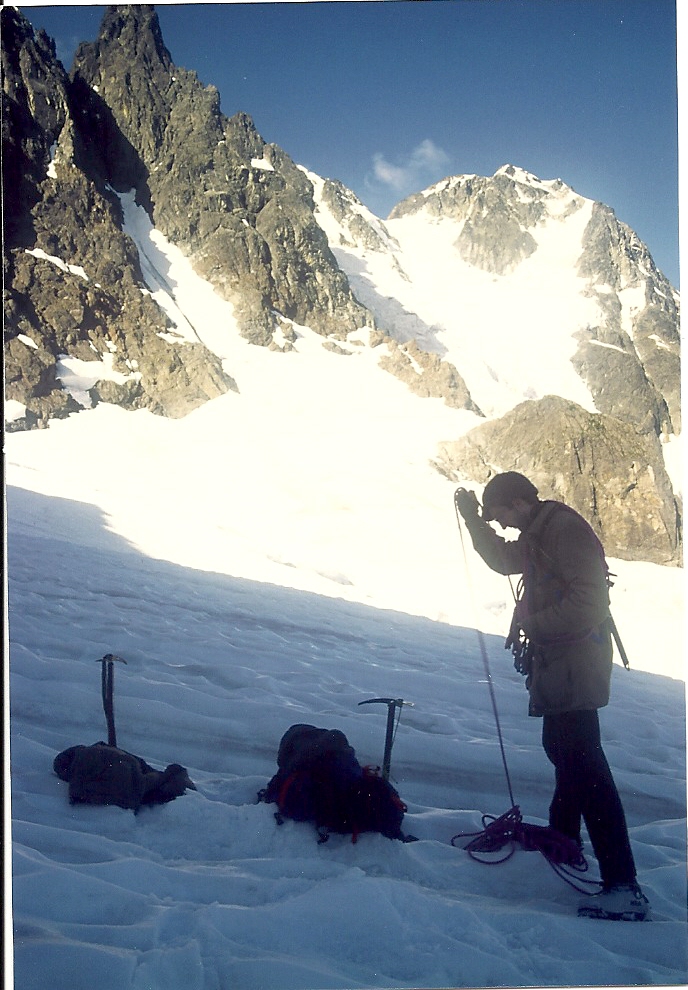
Wool, fiberfill and Scotch-guard – vintage dirtbag
In recent years, there’s been a loud discussion in the black community on the merits of the N-word. Specifically, people have disputed the value of ‘claiming’ the word. Many have offered eloquent arguments on either side of the issue, but few have looked for lessons in history. Those lessons exist; here is a familiar and recent one.
The word ‘dirtbag’ is an honorific in the climbing world. It refers to devotees whose total commitment to the sport has led to a de facto vow of poverty. Nowadays, the word calls to mind the romanticized, early days of climbing in Yosemite, where the pioneering resident climbers, in the course of surviving in the Park, earned the label as an epithet.
The Park Service and the concessionaires saw the climbers as parasites – dirtbags who camped illegally and stole food scraps while contributing nothing to the park or society in general. The authorities were correct, too. Most of the climbers were parasites, due to lack of means and a single-minded desire to climb. They didn’t pursue parasitism, they fell into it by default, abetted by the availability of a corpulent, plethoric, degenerate host. Besides, their parasitism produced results.
Climbing thousands of feet of seemingly impassable rock may not be worth anything to society at large, but it might buy you a word. To the original users, ‘dirtbag’ meant someone who was nothing but a worthless nuisance. A ‘dirtbag’ who could climb El Cap. might still be considered a worthless nuisance, but it was hard to say that was all they were. Plus, not all those who lived to climb were rootless kids looking for an outlet for their dissatisfactions. Always, some dirtbags chose an austere life to pursue their visions.
The latter group planned to work only enough to buy gear, subsist on cat food, and climb as much as possible. Their’s was a long-term plan, and it became a template. Over time, they emerged from the rest of the ‘dirtbags’ but never disavowed the name. Through them, ‘dirtbag’ came to mean ‘the opposite of dilettante’. So much so that modern climbers see ‘dirtbagging’ as a rite of passage and a special opportunity.
By this definition, all sorts of people, from artists to Buddhist monks, are dirtbags, and many of them have taken to using that shorthand description for their lifestyles of devotion. Of course, the original sense of the word will persist. No derogatory term can escape its origins, and the American conservative libertarian will continue to call everybody who chooses to live low and climb high, a dirtbag in the original sense of the word.
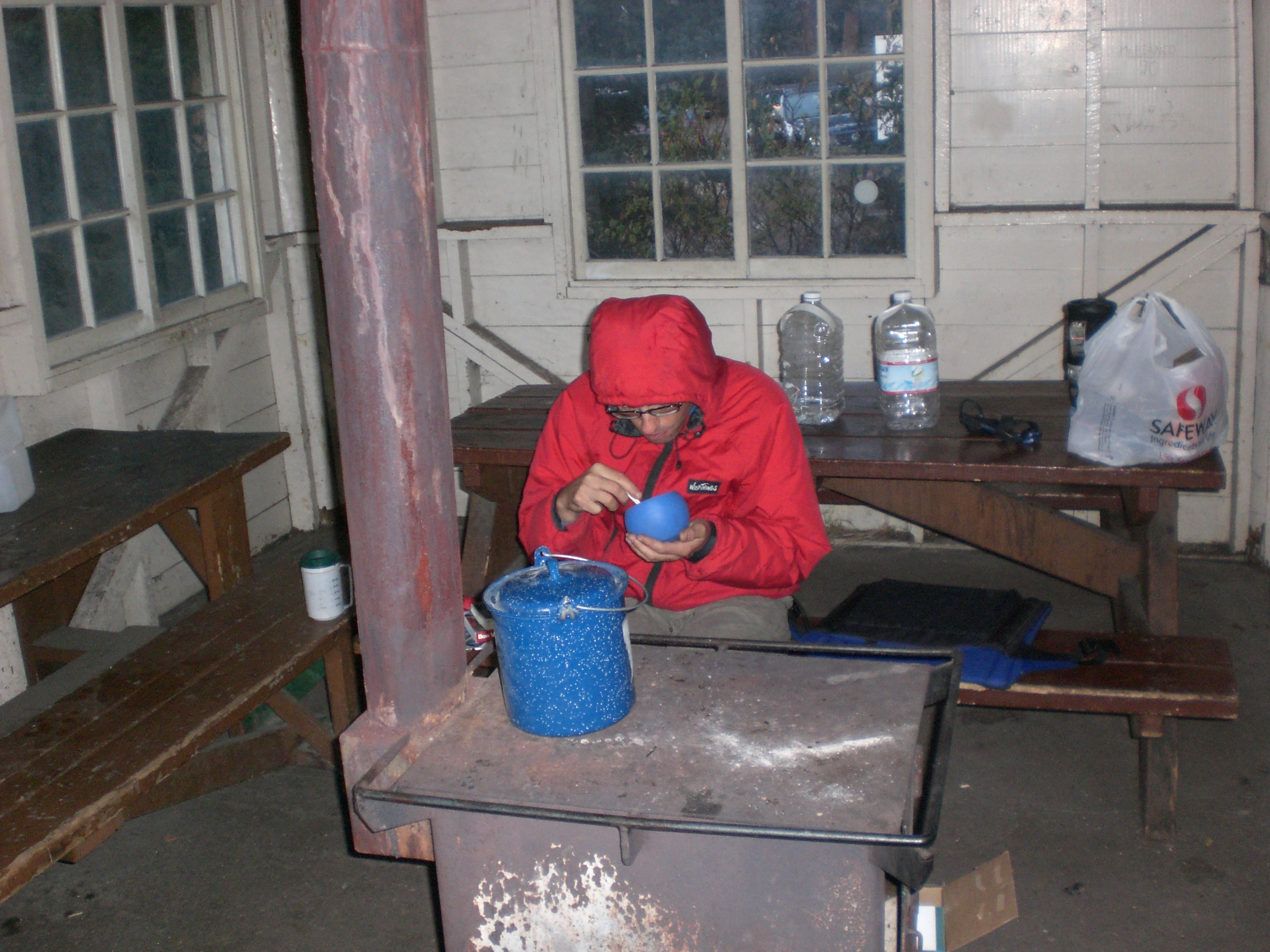
He didn’t build that wood stove, and the Yeoman farmer didn’t mine the iron for his plow. There is no free-range human.
That’s one of the good things about dirtbagging, though. There may be some true libertarian dirtbags – people who believe in the myth of the Yeoman farmer. There are precious few American conservative libertarian dirtbags – people whose credo is: “Everyone must be free; free to be just like me”. Just as being a dirtbag can teach one the difference between voluntary frugality and true poverty, wearing the word can be a reminder of the source of its negative content, and serve as a warning against perpetuating that negativity.
Nevertheless, claiming the word is a perilous trick. The term is a poisonous thing at heart, and it’s hard to play with it without getting any on you. However, some people are going to call climbers camped at a crag with nothing but a rope and a rusty Subaru to their names, ‘dirtbag’ anyway. Tucking tail and slinking away or trying to teach stupid people a lesson don’t seem like better strategies, and overall, owning the dirtbag label has worked out pretty well for the climbing community. For what it’s worth.
Uh-Oh
Republican politicians be talkin’ bout risk:
“Dependency is death to initiative, to risk-taking and opportunity. It’s time to stop the spread of government dependency and fight it like the poison it is.” – Mitt Romney
I’d like to extend an open invitation to Mitt, to go climb the East Ridge of Edith Cavell with me.

Now, I am rich in climbing skills compared to Mitt. Still, I expect him to be true to his convictions and simul-solo it with me. No matter how he begs, I promise not to poison him with dependency on the rope. Naahhh…
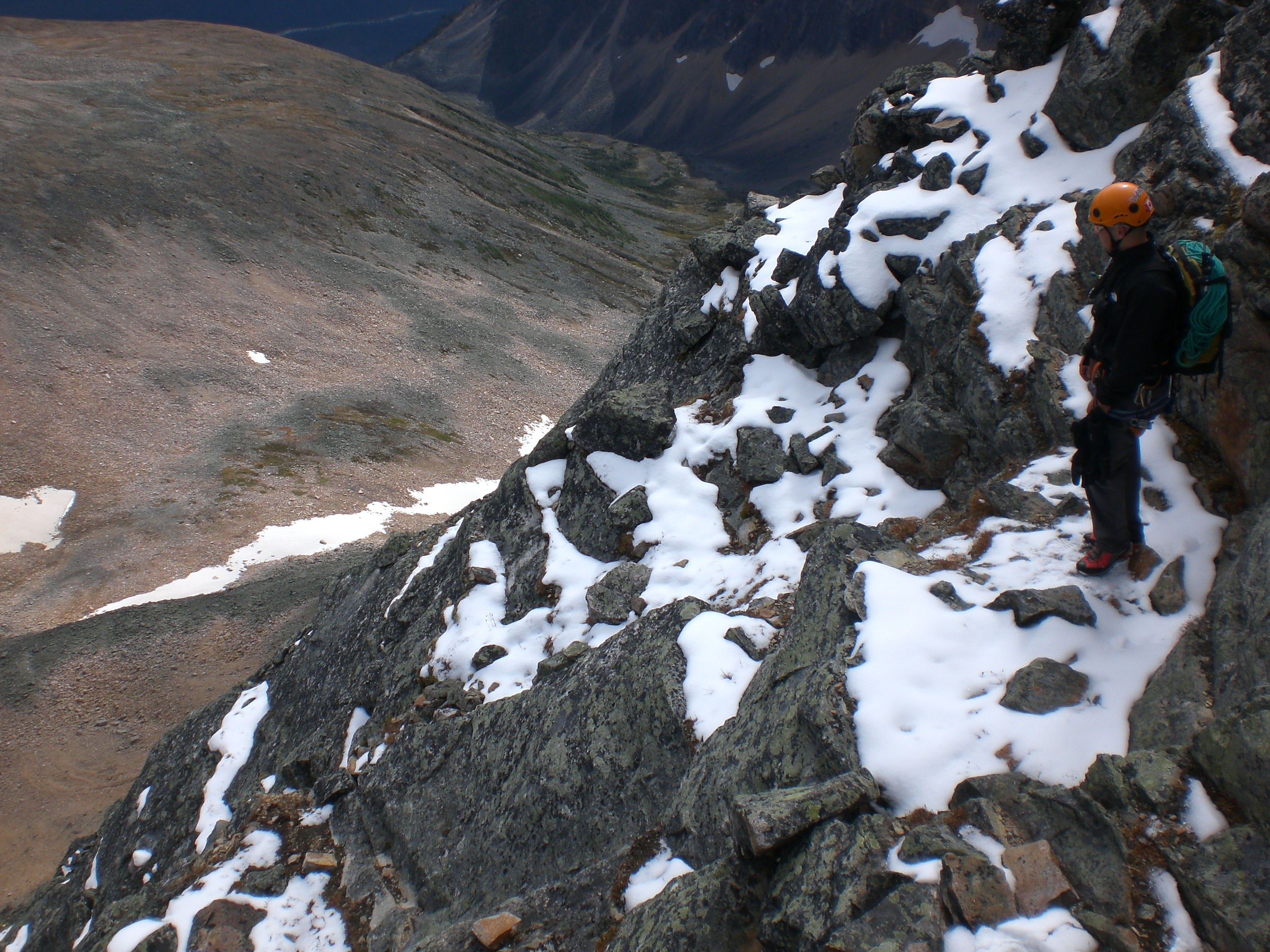
I’m not in it to demonstrate my superiority; there’s always somebody better. I’m not in it to tag summits or tick off numbers, those are empty pursuits and they denigrate the game. I’m in it to climb the hell out of everything I possibly can, and sometimes, that takes a rope, especially if you are going to take risks. It also takes a partner that’s got your back, even if you screw up.
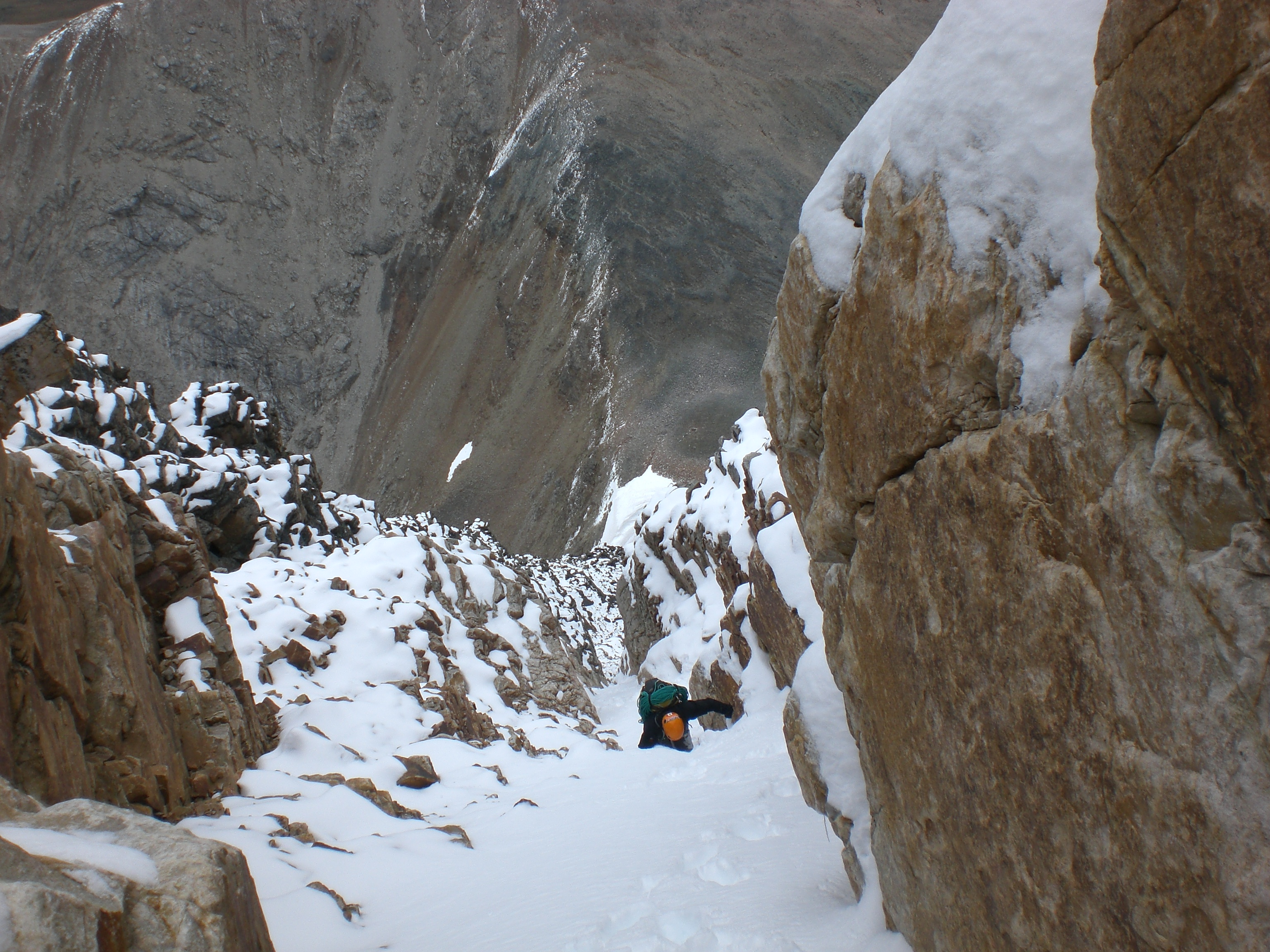
So, I’ll throw the rope down when it gets to be too much. I’ll even bail if you can’t take the exposure, Mitt. I won’t sneer or otherwise be nasty about it either. I’ll do all those things because I value the society that the rope entails and because I am not a Republican politician. You don’t have to be either; I believe it’s not too late.
Oh, and if you feel like you aren’t up to it physically, Paul Ryan has made that same sort of statement, why don’t you send him in your stead. That little bitch is supposed to be in shape, isn’t he? I believe it may be too late for him, though – too much Ayn Rand. That shit is poison.
Certainty
I try not to rope up with people who are too certain. They tend to do things like walk under seracs because seracs don’t fall when the weather is cold, forego protection because they can just climb it, and cross loaded slopes because they went this way before and it didn’t slide. Some of them are certain because they are fatalists, some because they are true believers, most because they can’t deal with the fear and uncertainty anymore and have decided to just switch off.
For a couple of centuries it seemed like we were poised to untie from certain people in general. A series of uncertain people came along and showed that their way was better. Their questioning lead to an understanding that the earth was really old, Democritus was right, kind of, and our thought and language were a self-referential tangle. These and other revelations of uncertainty eroded the old institutions whose source of knowledge was authority.
But change lead to anxiety, and the certain people saw an opportunity in that angst and in the methods of the uncertain themselves. To people who lived by a belief in authority, relativism equaled Nihilism and statements like “There is nothing but the text.” represented soft-headed weakness rather than caution and humility. So, the certain rejoined the discussion.
Their bid was an appeal to relativism and uncertainty as they saw it. If the field was level, their ideas should merit equal consideration in principle. And they packed their methods right along with those ideas. Debate to replace discussion. Moral force to replace reason. Because, with authority as their source of knowledge, they didn’t need to refine an incomplete understanding, they needed to win. And they did win. They managed to replace real skepticism, which implies uncertainty, with their version, which is synonymous with mere derision. Worse, they managed to draw uncertain people into debate.
Once the uncertain engaged, it was over. They kept trying to be reasonable and have a discussion. When that didn’t work, they tried to be certain. The certain people didn’t care about a discussion, they knew what they knew and just wanted the popular influence all authority craves. And when the uncertain people expressed certainty, they became vulnerable to a claim of equivalence. They were revealed as authority-based too, so the claim went, so it was a simple matter of choice among similarly valid systems of belief.
The mistake was to allow the premises of certainty in the beginning. Before the uncertain began a defense of their ideas, they should have demanded that the certain defend and explain their own ideas first, with an eye toward divining the premises. When the certain appealed to assertion of authority, whether in the form of a moral sense, supernatural agency, or incredulity, the talk should have ended. A person may certainly assert whatever, but once they do, there’s no point talking about it unless you begin by agreeing with their assertion. And in that situation, it’s best to just un-tie.
The problem
…with right-wing ideologues is: they always have to be first.
First to tell folks to buck up and face cold, hard reality.
First to whimper about the Threat of the Scary Other.
First to say, “Grab them bootstraps and start yankin’!”
First to say, “Help, somebody’s touching my stuff. My Rights! My Rights!”
Some consistency, please. Bitches.
 Dedicated to the Game