It can’t do anything on its own. But give it just a little bit to go on, and it will make your damn world reliable.
Dedicated to the Game
Climbing and other disturbing things.

Tag Archives: minimalism
“They Are Under My Skin”
I look at the small red spot on his arm and then at his eyes. My heart sinks. The red spot appears to be an irritated hair follicle. His gaze is steady and forthright. I am the 3rd doctor that he has been to for this problem. I recognize the diagnosis. I have seen many people over the years with his same complaints. I have treated many people with those complaints for lice, scabies, and other parasites, with great success. However, I have never successfully treated the condition from which this person suffers. Though they have symptoms which occur with a parasitic infestation the patient is actually afflicted by the belief that they are infested. They harbor a delusion.
A delusion is a fixed, false belief. In many cases this definition is not controversial. For instance, if someone believes that the CIA is controlling their thoughts and actions by means of a radio receiver implanted in their brain, we can quickly conclude that such a thing is demonstrably impossible. It doesn’t fit with what we know about structure of the brain. Such a receiver should be detectable by electronic means or by imaging. It is difficult to imagine how the device might have been surreptitiously inserted into the victim’s head. In other words, none of the stories that we could tell about the mind control device can be squared with any of our well-worn stories about the rest of the world. The glaring falsity makes the fixation easy to expose. When the delusional person suggests that the implantation was accomplished via a trans-sphenoidal incision which would leave no obvious scar, and that the receiver is made of material which nonmagnetic and radiolucent, and that the whole system operates on burst transmissions which are only detectable with cutting edge equipment which is currently only available to the CIA, it is pretty obvious that they are merely doing whatever it takes to preserve their belief rather than proposing a serious explanation.
The trouble is: the method we use to reject the mind control device story is not anything special. We compare experience – our own personal experience as well as our collective experience – with the contents of the mind control device proposition. If things match up, we believe the claim. If the pieces of a mind control device do not fit in to the puzzle of our world, we are prone to say that the claim is not true. The comparison process is not precise though. We often don’t have experience of every aspect of a claim. We also have questionable access to claims, especially when they relate to other people’s experiences.
We may tell people that we feel their pain, but we can never mean it literally. Herein lies a delusion’s opportunity. A dermatologist can tell you that they find no evidence of scabies mites, lice, or plastic filaments erupting from your skin. They cannot tell you that you are not itching in just the way and in just the places that people with scabies report itching. When confronted with such observations, the dermatologist must admit their ignorance., or face the same incredulity with which we greet the story about the mind control device. Furthermore, if the dermatologist is ignorant on that account and yet willing to forge ahead with a diagnosis, what are the limits of the doctor’s hubris? What other evidence has the smug twit disregarded?
The question used to be mostly rhetorical. It was part of that argument from incredulity. Now, the question has a ready answer: all that stuff on the Internet. There is a case report to support almost anything imaginable. Plus, there are instructions on how to investigate your own case. It is quite clear, once a person has it under the oil immersion lens on their home microscope, that the speck they picked off their forearm is not a skin flake, it is a bug. And by the way, patients cannot help but notice the lack of such equipment in the clinics which they visit in pursuit of the truth regarding their signs and symptoms.
Those who imagine that they have parasites, no longer need rely on the necessary limits of our knowledge as they contend with the medical establishment. The volume of unsorted information available to them dilutes any counterclaims. In the process, reams of reference material hide fixation. All the delusional person rejects are the hasty diagnoses of a few arrogant physicians. Those physicians are rejecting a body of literature which exceeds the memory capacity of the patient’s cell phone.
I have never successfully dispelled someone’s delusion of parasitosis, but I have come close, maybe even close enough. The patient had come to me with the usual complaints: rashes and bumps on her skin, itching, crawling sensations. She brought in the usual box of samples and sheets of lab tests. I had failed the 2 previous people who I diagnosed with this delusion. One of them simply never returned after I told him that we had done all the testing that we could and, though I could not tell him why he was having his symptoms, I could at least reassure him that the symptoms were not due to a parasitic infection. The other one walked out in the middle of their last visit after I told them that they ought to consider an antipsychotic for their symptoms.
Previous cases fell apart just about the time of diagnosis. This time, I resolved not to conclude no matter what. We looked at the samples. They were like Rorschach blots. Suggestive shapes faded in and out with focal adjustment if you were prepared to see them. All the labs were normal. There were no significant findings on previous skin biopsies and attempts at sampling from skin lesions were consistently negative. But her labs were consistently normal over time. She was feeling well. Her weight was stable. She did not have any allergy symptoms. Whatever might be crawling on her making her itch did not appear to be doing her any serious harm. Maybe this organism was more like all the mites and microbes peacefully inhabiting the backwaters of our anatomy, than it was like the bloodsucking arthropods that sometimes attack us. It was a successful detente for all of us
All that stood between us and level ground was the truth. It needed to be teased free of all the suppositions woven in with it, almost down to the facts. What remained when the sorting was done was a series of flat statements (I itch, there is a bump on my skin, I feel like something is crawling on me) without distorting references to a justifying theory. She no longer started with bugs under her skin as the primary description of her problem, however compelling the image.. She began with the itching and crawling sensations. The sensations meant what they meant without entailing the massive tangle of hypotheticals and contingencies that accompanied the bugs.
I was also forced to pick apart truth and supposition in my thoughts on her complaints.. Diagnosing her generated a fixation of my own, because it committed me to considering a single aspect of those complaints. To be honest, when I could find no insects, I immediately began to see her as deranged, and so I set about correcting her derangement without a 2nd thought. But my perseveration on the pathological nature of her delusion just fed its gravity.
We all suffer from delusions from time to time. Almost everyone is subject to a “mild positive delusion”. That entity is simply the fixed, false belief that one is more capable than they actually are in any given situation. At first glance, the mild positive delusion appears to be just a fancy name for foolishness. But it is hard to see how anyone would ever get better at anything without it. The delusion pulls a person into situations slightly beyond their control. That zone between comfortable mastery and havoc, is where learning occurs. Of course, not all delusions are so benign. Delusional beliefs may generate heavy, dark hypotheses which draw the deluded to grim actions.
The prime example of such a delusional black hole would be the shooting incident in a small pizza restaurant which occurred a couple years ago. The shooter disliked certain politicians. He took note of some stories on the Internet which tracked well with his estimation of those politicians character. He then began to actively search for such narratives. This drew him in to the point that he became absolutely convinced that the distasteful politicians were a cabal of child sex traffickers operating out of a small pizza restaurant on the East Coast. He subsequently packed his rifle in the car and drove to the pizza joint, where he demanded the release of the imprisoned children and immediate apprehension of the evil politicians. He fired a few shots in the air to emphasize the seriousness of his conviction.
For good or ill, we will never be free of delusions. We cannot do without them. Rather than undertaking the extermination of fixed, false beliefs, we might instead try to limit the pull of their gravity, as my one successful patient demonstrated. That means taking care not to mistake the theoretical structures which delusions generate for the truths undergirding the delusions. That way, when we find ourselves standing in the middle of a pizza restaurant with a rifle, we understand that we are standing in the middle of a pizza restaurant with a rifle. And we itch if and only if we itch. That much would be true.
Revelations
In terms of what we know and how we know it, we are really no better off than scorpions, who are guided by shadows, cthonic vibrations and the fading scents of long gone passersby. For example, if I have a headache, I take some ibuprofen. I believe it will help me because I know how it works. I learned about the mechanism of action in my chemistry classes, and in subsequent review of the medical literature. But I have never seen the chemical do what those sources say it does. Nobody has seen ibuprofen at work, because the molecules are too small, and the reactions are too fast. However, there are ways to magnify the actions of the chemicals in question, so that those actions may be observed indirectly.
I have not even done that. I have read papers and listened to people who explained how they carried out those observations. Having compared their methods to the methods which I learned in chemistry classes and validated in the lab, I believed their report.
Therefore, I take the pills from the bottle labeled ibuprofen when I have a headache, and expect relief. As I choke down the maroon tablets, I act on a belief even more flimsy than the notion that ibuprofen will help my headache in the first place. I have no idea how the pills were made, and no way to know whether they contain ibuprofen at all. Within an hour, my headache is better.
I keep taking ibuprofen from those types of bottles, because it keeps making my headache go away. Maybe someday, I will unknowingly take a cyanide tablet instead. The risk is negligible though. The same biochemists, pharmacists, and physicians who taught my classes, and subsequently formed my beliefs about ibuprofen’s effect on pain, have declared their commitment to assuring the integrity of those maroon tablets in the bottle labeled ibuprofen on the drugstore shelf. The company that makes those pills has also committed to the recommendations of the biochemists, pharmacists, and physicians regarding the purity of the pills, and the company charges a price which reflects its commitment to giving me ibuprofen, the listed dose of ibuprofen, and nothing but ibuprofen in the bottle.
Philosophers have contended that knowledge is justified, true belief. It turns out though, that truth is probably too small for that purpose. Yet even without truth as a necessary condition, we know something. We go to sleep without fear of never waking again. We take one step after the other confidently, apparently certain of the ground’s persistent solidity. We move about justified by an interlocking network of constant correlations. Any single one of those correlations may be dubious, but taken as a consistent whole they support actionable beliefs – knowledge.
Like the scorpions’, our basics seem pretty janky. Nevertheless, though we are occasionally crushed by a boot or have to sting our way out of a situation, we survive for the most part, and even manage to snag an invigorating insect or two along the way.
It is possible to doubt a functional view of knowledge however. Anything less than absolute certainty merits some doubt. I think about that stray cyanide tablet now and again. Yet, I don’t doubt the justifying power of consistency built of constancy. I know that my pills are ibuprofen even though they might, in principle, be cyanide. Doubt in the method of justification itself invites fear, and fear is contagious.
Such doubt in our body of knowledge, driven by attendant fear, has spread in the populace recently. In place of functional knowledge – beliefs justified by their ties to a massive network of constant correlations – the afflicted strive to reclaim truth as their foundation for knowledge. They cast about the culture for a suitable candidate, what they find is revealed truth. Revealed truth has always lurked about in the cultural murk. Religion harbors it, but not the superstitious type of religion which one might reflexively suspect of such activities. The God of the Old Testament felt the need to carve a tablet, burn a bush, and drop some manna now and again. Revealed truth instead finds refuge with the more philosophical types. Think divine command theory or moral intuitionism.
Revealed truth acts something like Platonic form. Taken as a form, a circle is not a good model, it is the underlying reality which the flawed material of our world imperfectly represents. The circle itself is not the stuff of experience. Revealed truths differ from forms on that point, though. Revealed truths can be apprehended, and so blur the line between analytic and synthetic truths. The statement, “all unmarried men are bachelors”, is an analytic truth. The statement, “Bob is a bachelor”, is a synthetic truth. The statement, “Bob is an inherently unlovable person” is a revealed truth. On the same basis, what the Bible says is true because God wrote the Bible, which we know because it says so in the Bible. It is a truth by definition, but only in reference to a given assertion, in this case that an infallible God is the Bible’s author.
With revealed truth in hand, a person can know something with absolute certainty again. The result is appealing. We needn’t waste our time on the uncomfortable task of finding a date for Bob. We know what he is now.The problem with revealed truths should be obvious at this point. Such givens undercut justification. Consistency with the constancies does not matter anymore, only consistency with the given. If Bob actually gets married, we already know that the marriage is a sham. What remains is to discover the structure of the sham.
The justifying structures are easily built, and unassailable, since they have a given between themselves and any assault. The givens themselves are not beliefs, but natural conditions or kinds revealed by an authority, whether it be an intuition or the speech of a erstwhile prophet. Pick your definitive source; there are no limits.
This spoiled conception of knowledge has spread, generating Q anons, Antifas, and vaccine microchips. Similar epidemics have washed over us in the past. They never last, because eventually, the pragmatic view of knowledge outlasts them. Knowing the spells tucked in their jackets will protect them from bullets, a few of the participants in the Boxer Rebellion manage to avoid being shot. Most die. The scorpion who knows that he can wander around in the daytime because he feels the protective hand of God upon him will survive, for a while. The patient on the ventilator may know that Covid is a hoax because evil people lie, and evil people told him about Covid. He will still drown.
Causes, Facts, and Heroin
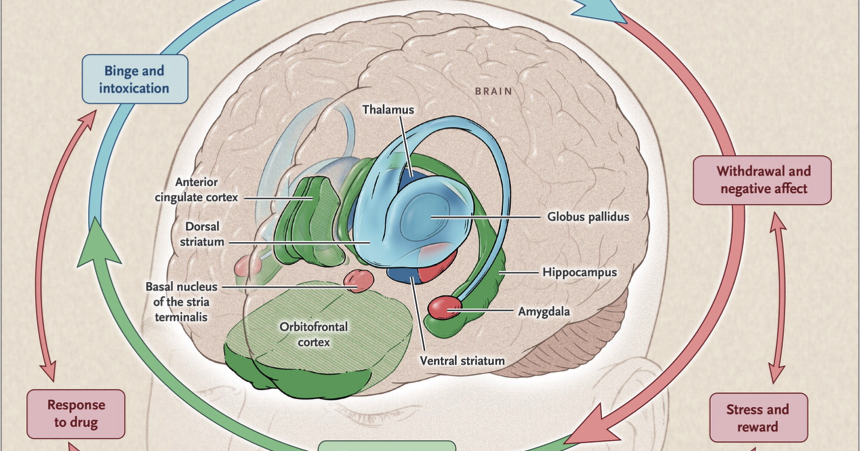
The lecturer moved his laser-pointer quickly over the loop of neural circuitry. He explained the role of Mu receptors in activating the circuit, which sent a signal round and round and came out as the behavior pattern we call addiction. It was all very neat.

It was so neat the he could have simplified his diagram by replacing the pretty brain graphic with a switch. Off would be synonymous with no addictive behavior. On would equal addictive behavior. If you took the theory, “Addiction = Brain Circuitry” at face value, anything that flips the switch would cause addiction. Yet we know that that situation does not obtain. Heroin flips the switch, but not everyone who takes heroin manifests addictive behavior.
For the advocate of “Addiction = Brain Circuitry”, there are two ways out of this dilemma. First, he can posit a multiplicity of switches. In other words, he can claim that there is an intervening network of necessary, but not sufficient, switches on either side of the Big Switch, mediating the input and output of the addiction circuit. But then in principle, all those switches could also be replaced with a single switch, and you are right back where you started. No limited set of if/then statements will be completely determinative.
The second way out of the non-correspondence dilemma is to simply abandon a complete and transparent explanation, in favor of reliable facts. Neurons are necessary to behaviors, and we know that because, if we zap certain neurons, we can reliably alter corresponding behaviors. That doesn’t exactly explain the behavior, but it lets us move on to knowledge of neural circuits and the experiences which correspond with changing the configurations of those circuits.
One might denigrate the second solution as an abandonment of truth-seeking. Perhaps, but that is not so bad, on a proper notion of truth. In solution #2, you get a theory, which is a set of reliable facts. To get to the truth what you need is an explanatory reduction. In other words, all the switches and their positions for a specific moment of behavior, across the cosmic board. Such an array is purely didactic. It refers to no knowledge, for it cannot reliably correspond with anything. You may think you know something about it, but you don’t – not until you begin to formulate a theory regarding it.
Johnnie shoots a dose of heroin because he has inherited a susceptible set of receptors, because he contains the dendritic representations of certain permissive life-lessons, because he lacks certain inhibitory representations, because he lives in a society which has heroin, because he anticipates certain effects from heroin injections. And on, and on, and on…
At the end of such an exposition (if there even is an end) what we have is just a snap-shot which we have pre-labeled, “Johnnie’s Addiction”. To make any sense of it – to know anything at all about it – we must delve in to the insufficient necessities, and be satisfied with their mere reliability. When we give Johnnie a medicine for his Addiction, we should expect that it will, to some extent, extinguish the behavior. We should expect that if we take away his heroin, his behavior will, to some extent, change. And in fact, our theory does correspond with the facts which it predicts, and upon which rests.
Like the addiction lecturer, we all frequently feel dissatisfied with reliability. We would like some non-provisional knowledge. Give us some truth, please. Aspiring to truth gets us nowhere, though. Truth is too hefty. To riff on Gettier’s classic thought experiment, Smith has the truth when he observes that a person with 10 coins in his pocket will get the job, once Smith sees that a person with 10 coins in his pocket gets the job. Yet he has no knowledge thereby. He cannot be (provisionally) right or wrong in such a statement, any more than a snapshot can be right or wrong (though our subsequent interpretations – theories – of the snapshot may be).
If Smith says, at his next interview, that the person with 10 coins in his pocket will get the job, and he takes care to put 10 coins in his own pocket in hopes of getting the job, then he may know something. He is making a knowledge claim regarding his experience with coins and interviews, and his claim may or may not correspond with his theory’s fact-conditions. Reliability is what he will get, and he will be happy with it, or not, as will we all.
Are You Gonna Talk, or Are You Gonna Fish?
Claude Ledbetter and the Game Warden. I don’t think this is where Jerry Clower was headed with the story, but it fits so well:
Claude was the only one in the community catchin’ any fish. Folks was goin’ and they wasn’t catchin’ nothin’. Old Claude Ledbetter, he’d come with a pickup truck loaded down. So the State Game and Fish Commission of Mississippi decided they’d go fishin’ with Claude, just see how he was catchin’em. Claude told ’em – popped off – said, y’all don’t know how to do it. Y’all ought to just go with me and watch me.
Well, the game warden got in the boat with him and they took off out in the middle of the river.
The game warden said, “Alright Claude, I’m gonna see how you catchin’ all these fish when cain’t nobody else catch none.”
Claude raised the lid on the boat seat, got a big, long stick a dynamite. Lit the fuse on it. Let it go down kinda short, then drawed back and chucked it. Boom! Them big catfish come turnin’ they belly up, whoopin’ it outa that water, and Claude was just gettin’em by the tub full.
The game warden said, “Boy, that’s against the law, you cain’t do that. Don’t you know you’re breakin’ the law?”
Well, Claude done lit another big stick a dynamite, handed it to the game warden; it goin’ phsssssh!
The game warden took that stick a dynamite and said, “You idiot! This is against the law! You cain’t do this!”
Claude said, “You gonna set there and argue, or fish!”
The game warden has a coherence theory of truth, and it gets him pretty far. It gets him to Claude, into the boat and out on the river. It even survives one explosion. But it breaks down just about the time Claude hands him the second stick of dynamite, because, like all coherence theories, the game warden’s coherence theory of truth about fishing admits to one bit of correspondence at heart: its own enforceability.
Claude’s correspondence theory doesn’t serve him perfectly either. We all expect it will fail spectacularly once he gets back to shore with the warden. Yet it’s about all that does work for a man with a stick of dynamite in his hand, just as long as he doesn’t take it too far.
 Dedicated to the Game