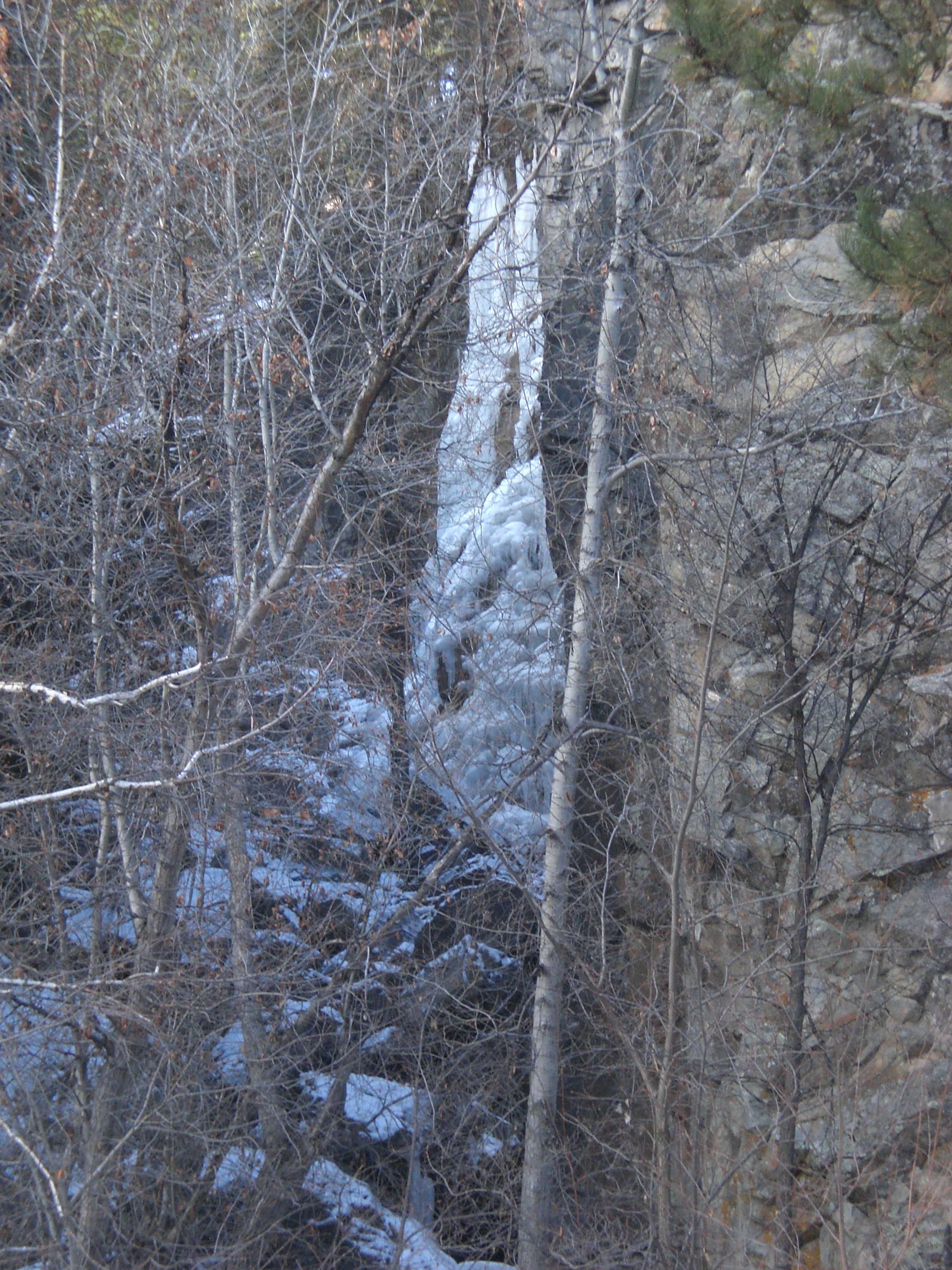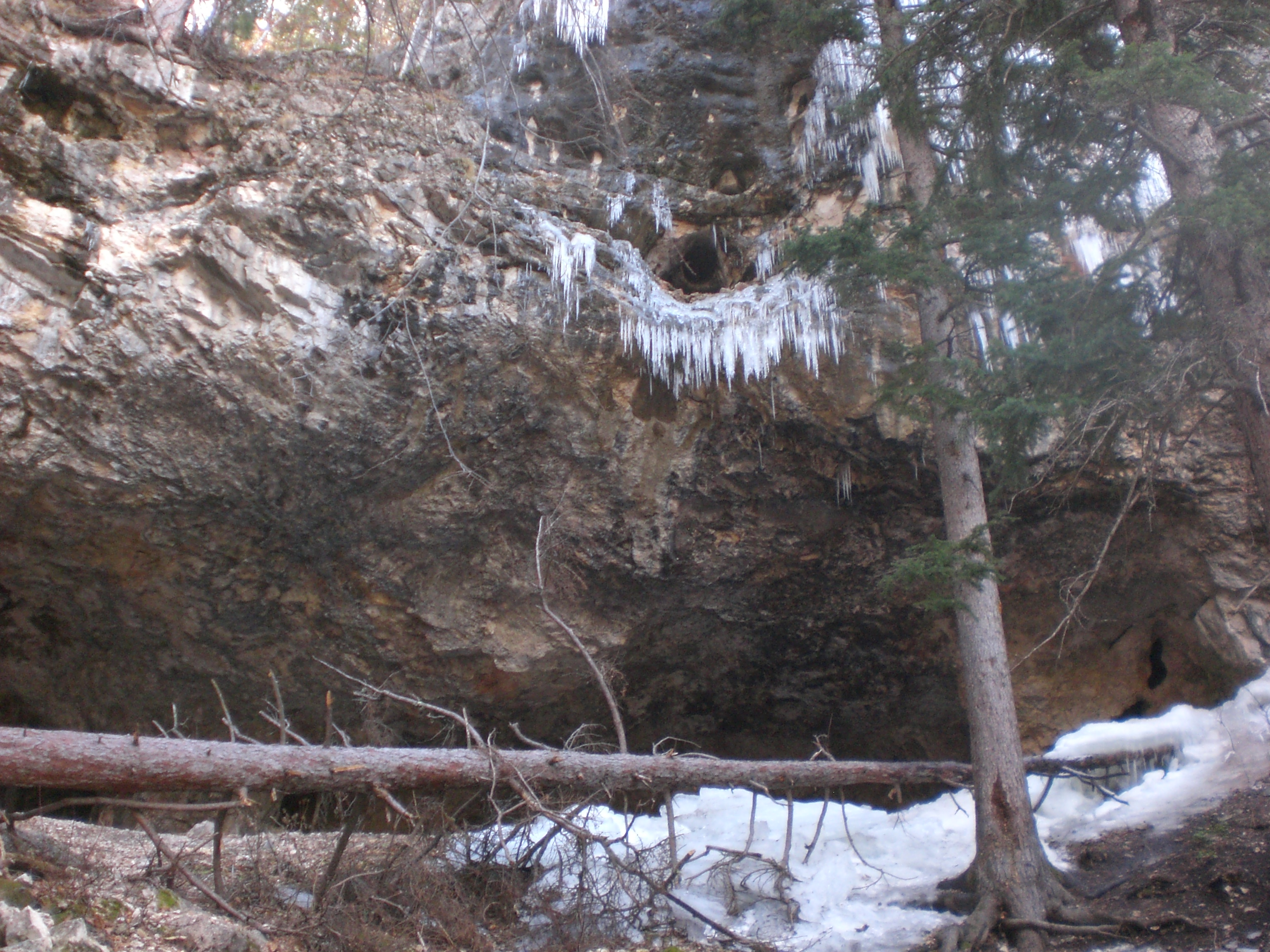
Category Archives: climbing

Spray and Beta : Climbing Social Media

In college freshman English, we had to read Beowulf. The assignment was onerous for most of my classmates, but one woman seemed to suffer above all. She sighed and rolled her eyes through every class discussion; I expected a convulsion at any moment.

And finally, it came. During a passage where the hero holds forth about what he’s going to do to Grendel’s mama, she burst out, “You know, that’s what I hate about Beowulf. He’s constantly bragging and showing off. In fact that’s all this whole story has been about. It is the shallowest thing I’ve ever read!”

I was dumbfounded. “No,” I offered,” it’s not bragging, it’s a kind of oath. He says all those things, in front of those people, there’s no way he can come back empty-handed.”

Beowulf’s soliloquy was Spray. Even back then, when I was a measly scrambler armed with a piolet, the climber inside me recognized it. Since the beginning, when climbers have encountered other climbers, they have sprayed about what they did and what they were going to do. From Cham, to Sheffield, to Camp 4, if you talked smack to those in the know, when you sobered up the next day, you had to fulfill your destiny.

My brother used to yell at the TV. He had all kinds of advice for the Dallas Cowboys’ offensive squad. He really did know something about football and often the coaches would actually do what he yelled at them. Nevermind he had never played football. And, he was 12 years old. But he didn’t seriously think he was advising the team. The tirade was just a means of vicarious participation. In climbing terms, it was Beta.

Spray and Beta are not such bad things in person. You can see the sprayer getting wound up to do something. The Beta, though it can be a little much, has an encouraging tone. However, Spray and Beta shifted to the internet, stripped of tone and context, come across like bragging and showing off, and the result is the shallowest thing you’ve ever read: climbing social media.

Of course, few things are all bad. The four main climbing sites, (Mountain Project, Rockclimbing.com, Summitpost, and Supertopo), have some great photos, gear reviews and  trip reports. In other words, with some editing they’d make decent online magazines. The problem is, they don’t have a good editing process and they don’t want to just be magazines, they want to be guidebooks and chatrooms as well.

The community content guidebook is a guaranteed failure. A good guidebook gives the reader a sense of the area, provides inspiration and gives enough specific information to get a climber up the routes without sucking the adventure out of it. To effectively accomplish those tasks, the guidebook needs the unity of purpose a single author/editor provides. Otherwise, it ends up a pile of puke – you can sort out a few savory bits, but they are partially digested and tainted by the mix.

A chatroom might seem like the ideal internet venue for climber Spray, but think back to Beowulf for a moment. When he stood up to Spray, the audience could see his scars, his sword, and the crazy in his eyes, and he could see that they were not much different. Participants in an online forum are just lines of type with silly pictures next to them. The people behind the words may be anchored to their chairs, a wide load in their khakis, a coke and a sandwich their only comrades. In such circumstances, Spray inevitably devolves to wanking.

So, save yourself the trouble and buy a reputable guidebook if you want to go climb in a new area. And if you want to look online for information or inspiration, stick to regional sites like Gravsports or Montanaice.

 But for those who love bad movies, Twinkies and True Stories of the Highway Patrol and can’t help but lurk – I mean look (and I’ll confess to all of  that), here’s a quick rundown of your climbing social media choices:

Supertopo: Cali-centric with some (intentionally) amusing forum topics and good gear reviews. Typical user may have some difficulty urinating, may also be a member of Mountain Project. Mostly about rock climbing.
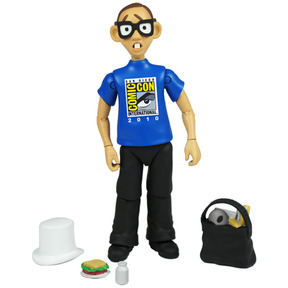


Summitpost: Cosmopolitan, with the best fund of information. Typical user is chronically constipated, may also be a member of  14er’s.com and eHarmony. Mostly about mountaineering.



Rockclimbing.com: Some interesting and (unintentionally) amusing forum topics. Typical user sleeps in a bed that has a canopy or is shaped like a race car, may also be a member of Access Fund and Explorer Scouts. Mostly about what the name says, more sport than trad.



Mountain Project: Colorado-centric with great photos. Typical user owns a letter jacket and loves to give nuggies, may also be a member of Supertopo or Summitpost and a porn site. Mostly about trad climbing.

Tagged , , , , , , , ,

Best of Cody – Mean Green

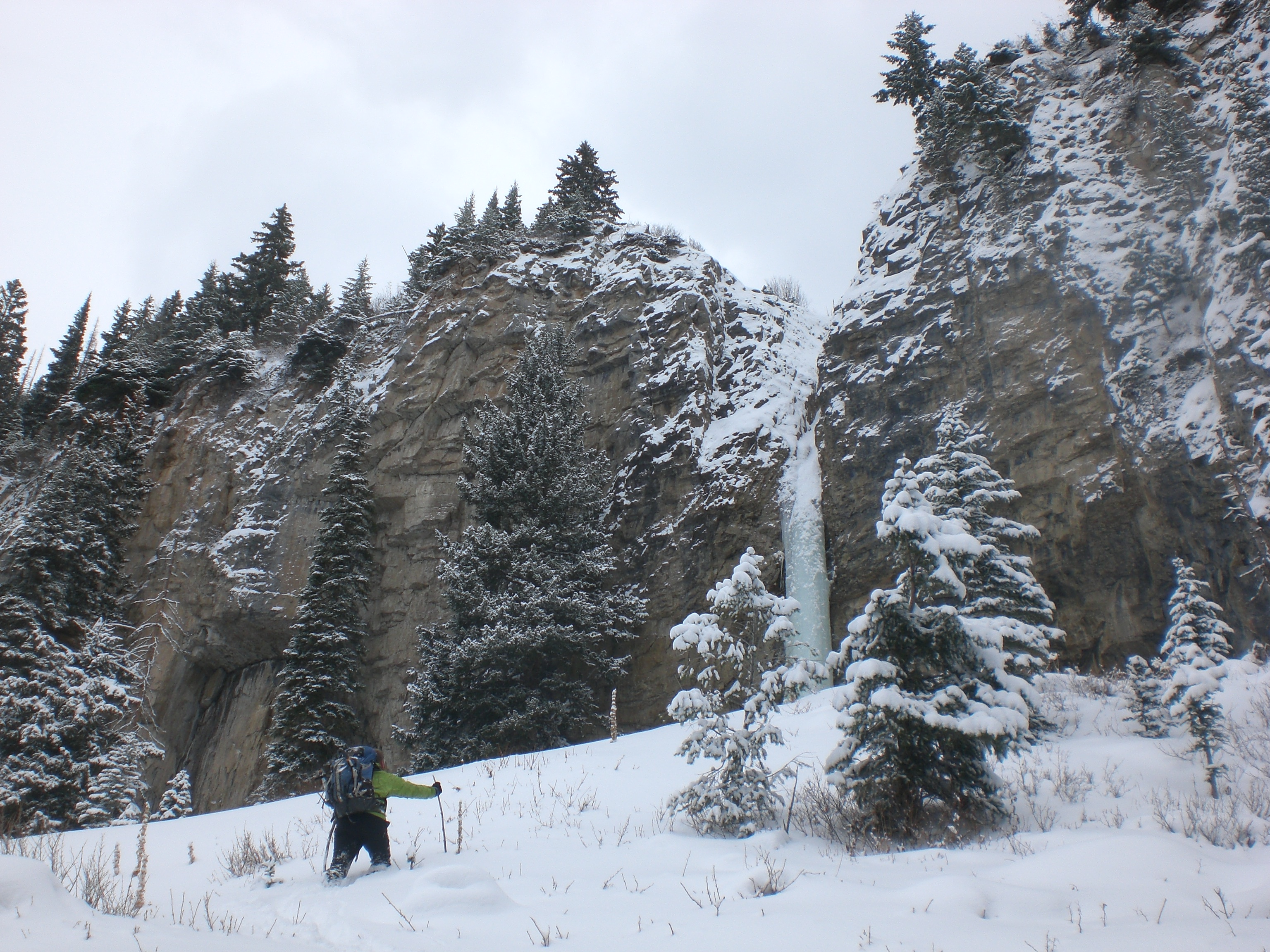
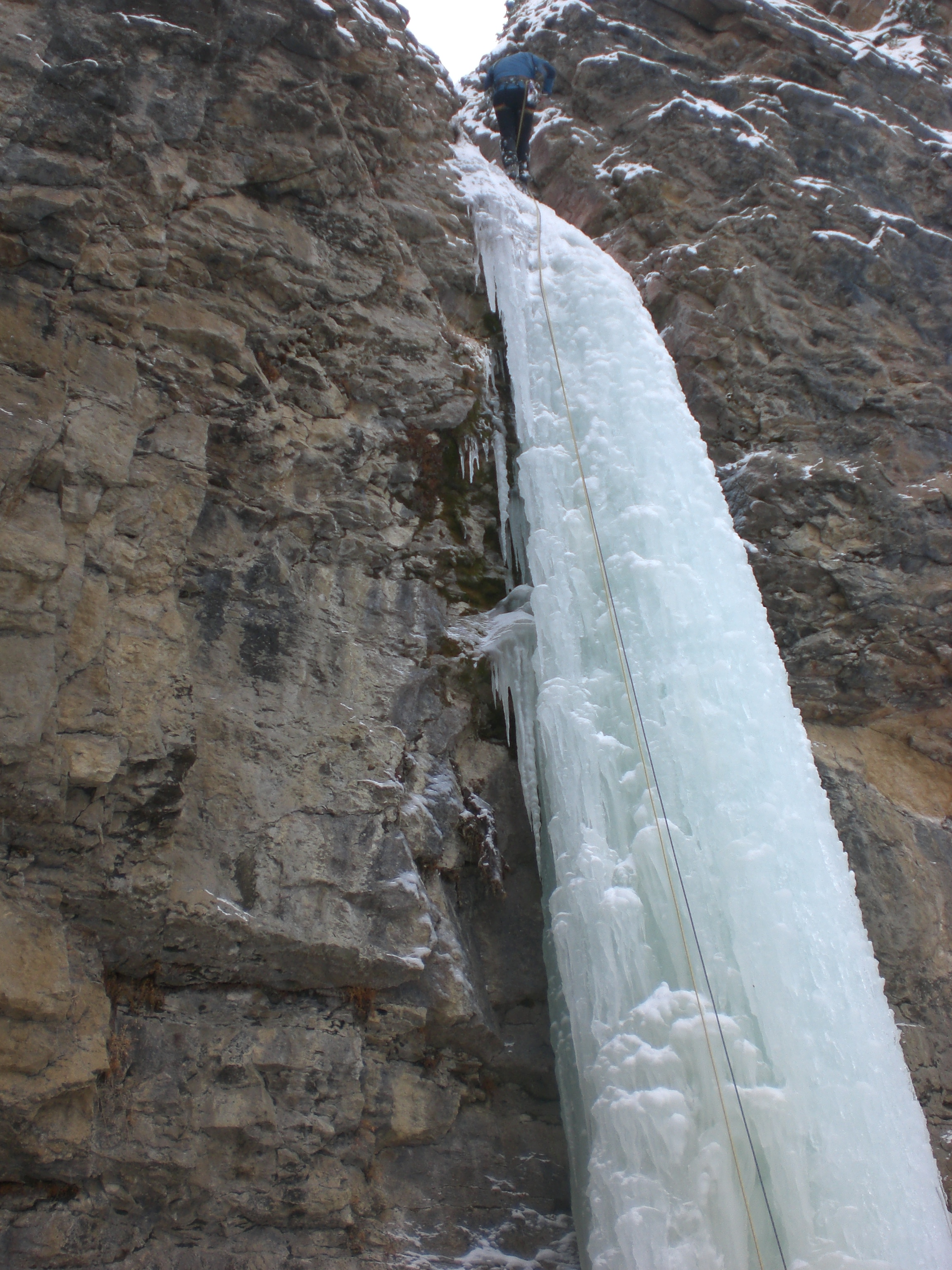
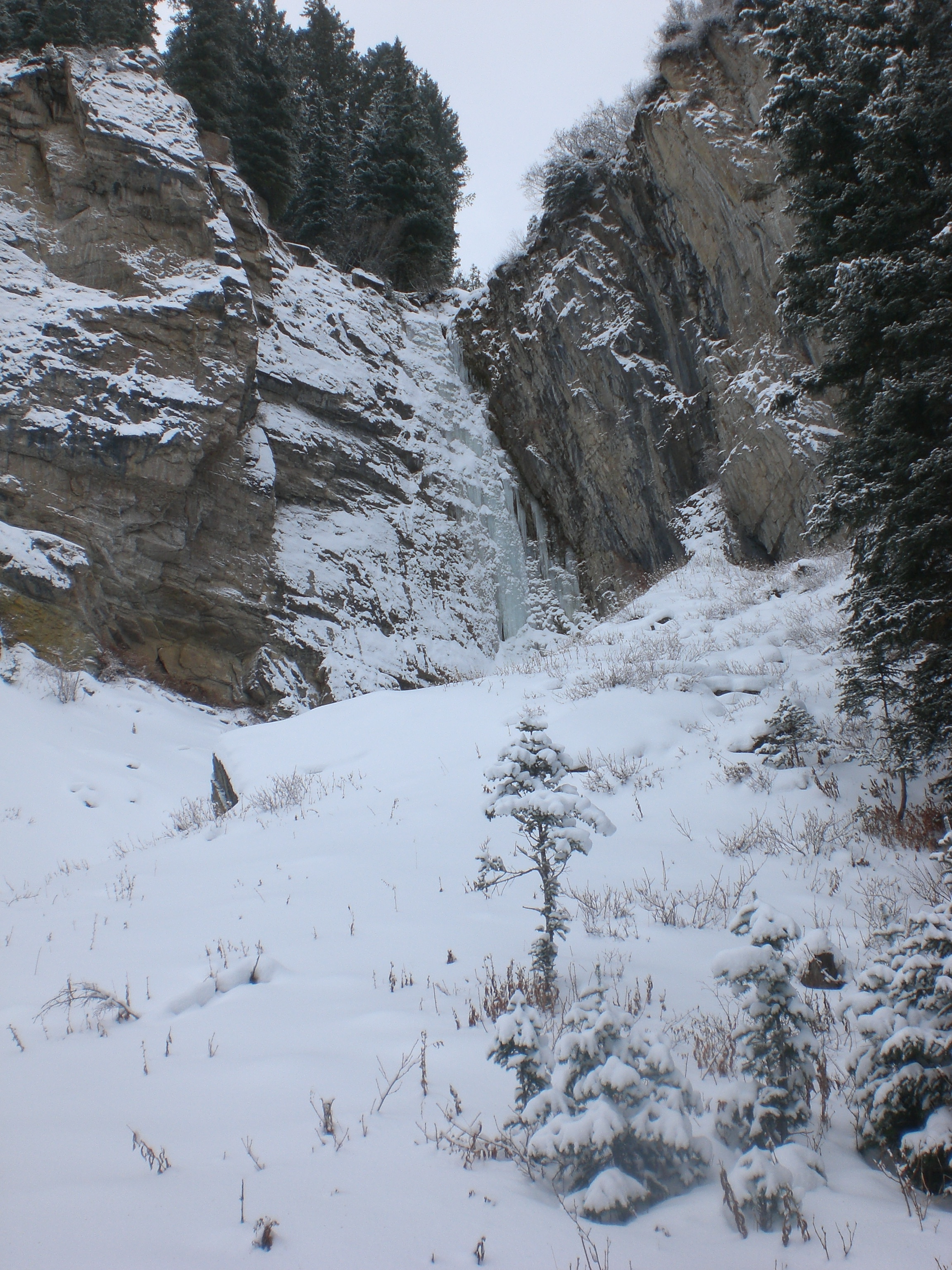
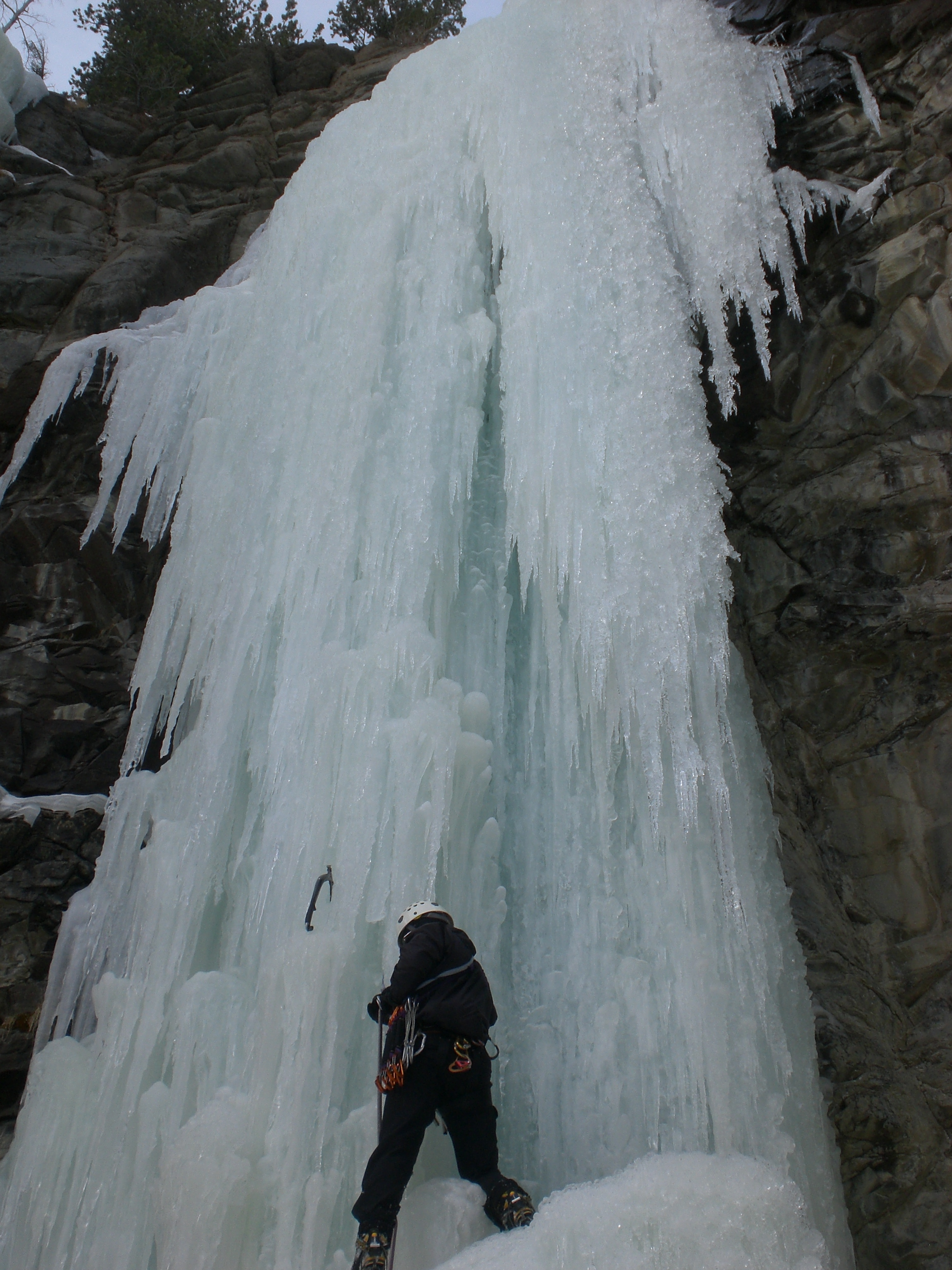
The moose which used to browse along the trail to Mean Green has long since gone, but the climb is still one of the best in the valley. With its neighbor High on Boulder, Mean Green is one of the handful of routes that occasional visitors to the Southfork aspire to climb. It is spectacular, with contiguous pitches at the start and finish, and it is long. You must have your system tuned up to get it done in daylight. So, though the vast majority of the climbing is WI 3, you ought to be solid at WI 4 if you expect to do the whole climb.

Mean Green from the Cabin Creek parking area

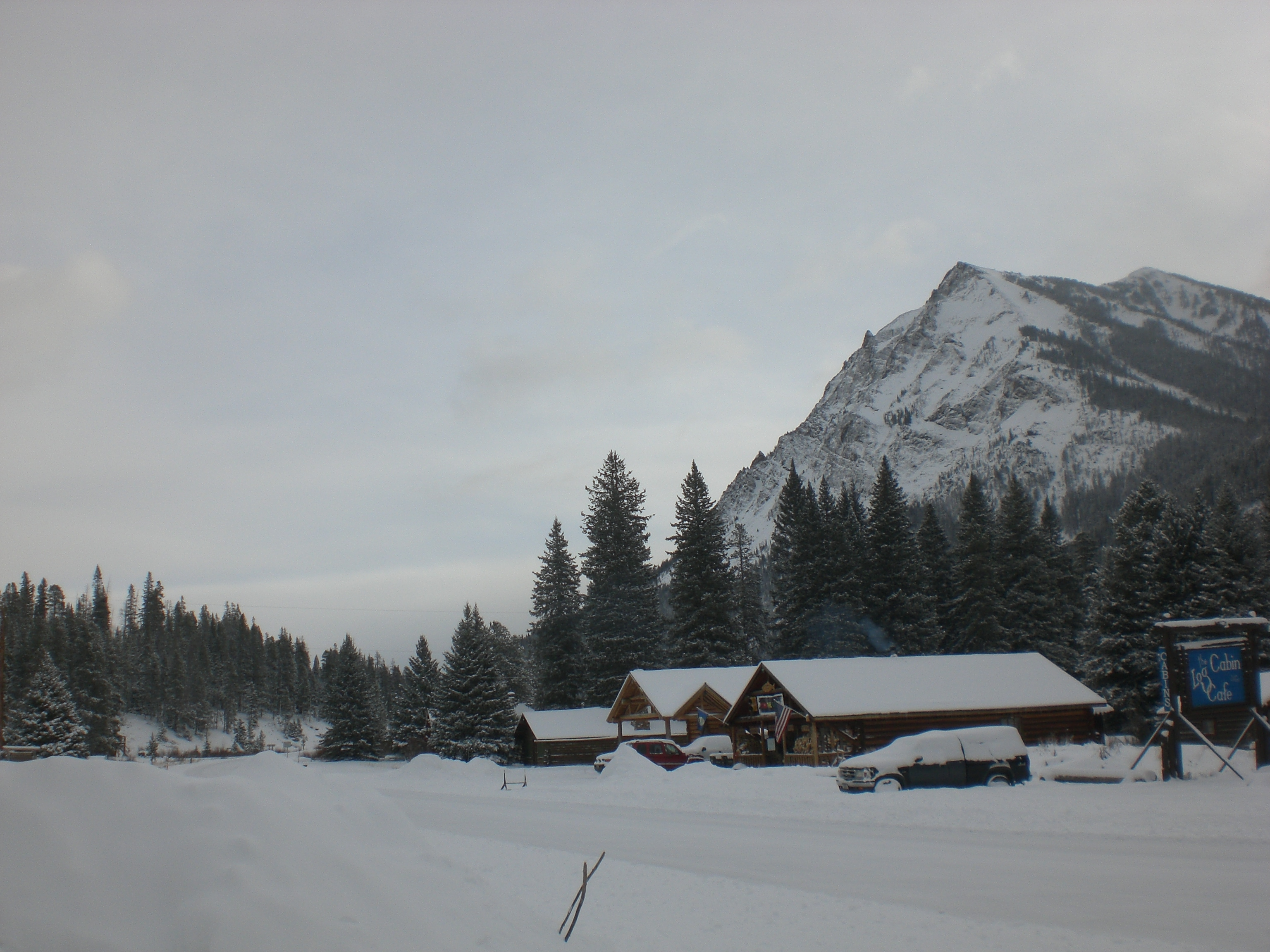
The climb follows the next drainage East (left, down stream) of  High on Boulder. From the end of the Southfork road at the Cabin Creek parking area, cross Cabin Creek and follow the trail left until it brings you to the gravel flats. Cross the river by whatever means necessary and keep walking pretty much straight toward the High on Boulder drainage until you intersect the Southfork trail. Turn left and walk until you see a sign that says “No Trespassing, No Hunting, Stay on Trail”. This is where you want to leave the trail. Don’t worry. The folks who posted are worried about people hunting, camping, cutting wood and generally tearing up the land and disrupting their cattle operation. In winter, if you are just passing through, you’ll be fine. Angle up toward the drainage and cross into the stream bed. Do this just before the drainage narrows, it should take just a single step down from the bank if you’re in the right spot. An easy hike gets you to the bottom of the first pitch.

First two pitches

About 50 meters of nice WI 3 leads to a belay at the base of the short 2nd pitch.

There were bolts and chains at a protected stance on the right, but I haven’t seen them for years. They are either gone or consistently buried now. Belay at ice anchors pretty much right in the line of fire. Send up the partner with the lightest touch to lead pitch# 2.

A short hike gets you to the short third pitch. Belay anchors can be a problem above the pillar.

Pitch #3

Look for ice anchors higher in the gully or use, uh, this…

Alpinism! Two slung chockstones and a 3" diameter pine tree

A bit more walking gets you to pitch 4. This is the kicker. It is much harder than any of the other climbing on the route, WI 4-5 depending on the year and the time of year.

By this time, you will have seen the upper slabs. They look like they’re just about 5 minutes up the way. This is due to something called ‘foreshortening’, a phenomenon where our optimistic little brains, lacking intermediate reference points, tell us that things are closer and steeper than they really are. It’s a solid 30 minute walk with some significant sections of ice bouldering. The slabs themselves are 75-80 meters of easy WI 3. Rappel and downclimb the route, the walk-off is a Bear Grylls sort of thing (gratuitous hardship undertaken due to foolishness or inadequate skill to avoid).
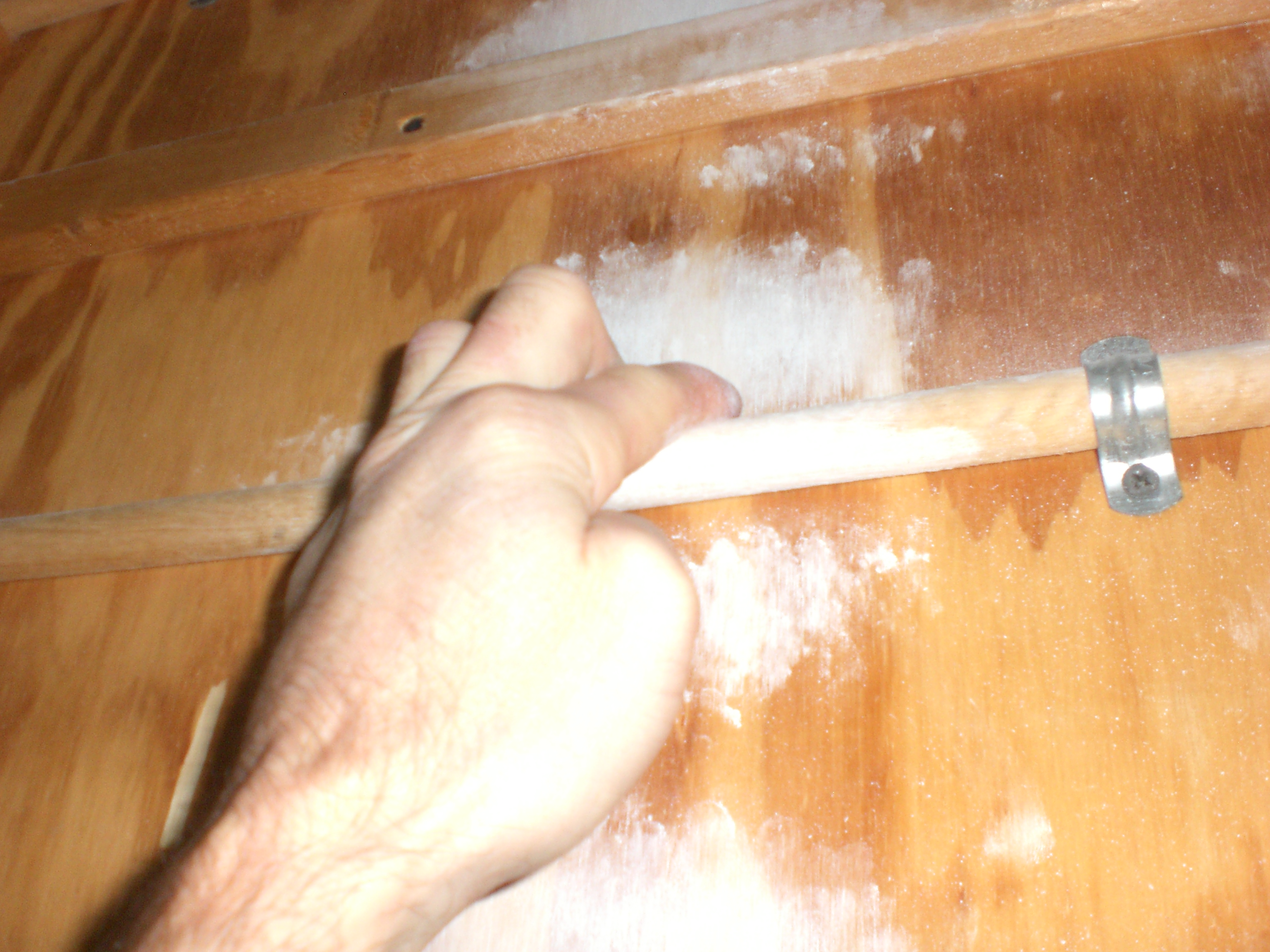
Upper slabs, top right

Tagged , , ,

Just a Taste

A few days of cold make a big difference.

The cave is finally formed up.

Either side is going at ~4+ right now, with indifferent protection.

Maybe it is going to be winter after all. On the other hand, it is 45 degrees and raining right now in Northern Wyoming. Hope this isn’t global warming – my boot is awful heavy, and the crampons are really sharp.
Leo demo's that essential piece of ice gear, the down vest.

Tagged , ,

Making Use of Ice Grades

Well, since there is precious little ice to climb, I’m stuck just thinking about it, and talking about it. Thanks La Nina. Bitch.

Anyhow, the WI grading system has always perplexed me a bit. Other ice climbers seem to feel the same way, since they use it either as a means of keeping score or a general guide to stay within their comfort zone when picking out a climb to do. But I’ve come to see the sense of it over time, and I think it is a valid scale. It does sort out distinct, progressively more difficult types of climbing, each associated with a unique set of hazards and opportunities. Here’s how knowing the grade may actually help you out on the climb.

Disclaimer: The thought of leading WI 6 doesn’t give me instant diarrhea anymore, but I am not an expert. I’ve climbed ice for over twenty years now at levels of activity from weekend warrior to marriage-threatening, though never as my primary occupation. But what I’m going to say isn’t for experts either, it’s for my fellow proletarians. In addition, I am not addressing the Red Bull-swilling, whipper-taking dudes dossing on a floor in Canmore December through February, living for the thrill of the thirty foot run-out. You guys grab your tools and snowboards and get the hell out; you will find this quaint anyway.  This is for those of us who view trying to make it safe as part of the game.

  • WI 1-3 : With a modern set up, the tools are used for balance only. The ice is thick and the only vertical sections are bulges. Good protection is available almost anywhere, so pick a comfortable stance to place it. This allows you to climb from stance to stance, rather than trying to climb to  the most promising screw placement. The commitment level is low, since the option of placing a good piece of gear and hanging on it or lowering is always available. The big dangers are having the ice plate-out, or your calves melt-out, from under you.

3rd pitch of Broken Hearts, WI 4

Wicked Wanda, WI 4

California Ice, WI 4

WI 4 : These climbs are steep enough that you have to pull on the tools to make upward progress, but not so steep that you can’t get your weight entirely back on your feet when you stop. Many of these climbs have multiple “steps” of vertical or near-vertical ice. Running out of gas in the middle of a step can be problematic, so the commitment level is higher. Beware the bulges, where a steep section transitions onto a ledge. The ice there tends to be brittle and may fracture into large plates. However, snow sticks to the ledges too, where it forms a shell of hollow ice above the bulge. These flat spots look like a good location for gear, but often they are not. Pulling over a bulge can be dangerous regardless of the ice quality, as well. Climbers have a tendency to step too high or lean over the ledge too soon, levering the lower crampon out of the ice. With WI 4 like this, the best places to set a screw are standing on top of the bulge or just below the bulge, with at least one tool over the top to take some stress off your arms.

My Only Valentine, WI 5

Community Pillar, WI 5

\

Drumstick, WI 5


  • WI 5: This is the grade where muscle fatigue and fickle gear become big factors. The ice is steep and unrelenting. The bonus is the appearance of mushrooms, blobs, columns, candles – all those irregularities in the ice commonly called ‘feature’.  Making use of the feature is key. Stepping onto a blob of ice instead of kicking the crampon’s frontpoint into a flat section of ice saves energy and may yield a more secure foothold. Hooking over gaps in the ice or swinging the tools at junctions in the features makes for fewer swings to get a solid pick placement.
  • Aside: Before I say anything about protection, I should explain the rationale behind my approach to placing ice screws. First of all, it’s worth it. Gone are the days when climbers could make a cogent argument that screws made things more dangerous because of the effort required to place them or that screws were so unreliable that they amounted to confidence boosters only. Ice screws work. We now know a bit about how they work and what makes a placement better or worse, (see http://www.jjgeng,com/html/body_ice_screw.html for an excellent summary) . Still, field assessment of placement quality is problematic. All you can do is avoid the two situations that make for a sketchy piece of gear: weak, unsupported ice under the hanger and areas where the screw doesn’t ‘bite’ all the way through the placement, indicating an air pocket in the ice.
     
Oh Le Tabernac, WI 5
  • More WI 5: Features can guide your choice of protection points as well. Again, the junctions of columns are places where water has stopped during ice formation, eliminating air pockets. Knocking the lip off these junctions can make for a good placement. Sections where columns protrude from the main body of ice also tend to make for better protection opportunities. At this grade, if there is a good stretch of ice for gear, take it, even if it is not the most comfortable stance. Full on rests are rare and not so restful at this angle if you are trying to drive a screw into the ice. Besides, any ledges are typically located where water has dripped down from just above to form the ledge, leaving aerated ice above the stance. Not always, but often enough that you shouldn’t simply count on running it out to a ledge and getting decent gear there.
First pitch of Ovisight, WI 6

Nemesis, WI 6

Whiteman Falls, WI 6

  • WI 6: Two things, chandelier and overhanging ice, characterize this grade. Sometimes it’s given to climbs where the ice forms up steep and thin or hollow as well, but those are rare. Chandelier, the bundles of small icicles that look like a crystal chandelier, is impossible to protect unless it overlies a more solid column which is accessible with minimal chopping. Stopping to clear bad surface ice and drive a screw on a section of climbing angled at 105 degrees is a non-starter, too. Expect to commit yourself to trust in the sticks. Look for the junction of features and dare to hope you’ll get a screw to bite all the way in there. Fortunately, you’re often climbing toward safety, as the ice usually gets thicker and less fluffy towards the middle and top of these things. The sticks do tend to be good in solid chandelier, too.

So, for WI 3, keep moving from stance to stance and don’t burn your calves out. For WI 4, gun it through the steep sections and learn how to deal with bulges before leading. For WI 5, learn to read and use the features; don’t get suckered into just climbing from stance to stance, the gear may suck when you get to a ‘nice’ place to stand. For WI 6, get your head together, climb to safety, don’t try for gear where there can be none, be sure you trust your sticks, and hope for the best.

  • WI 7  ? I have never knowingly climbed this grade, though I have climbed some WI 6 that felt noticeably different, and harder, than the rest. Is a 10 foot roof still 6? Is an overhanging pile of translucent candles for 25 meters still 6? What about a 3 foot diameter pillar that goes to an 8 foot diameter in 30 meters, is that still 6 (I have kids, so I followed that – and stood well away from the base to belay)? Besides feeling extra hard and scary, the few climbers I’ve spoken with about this grade can’t characterize it further. It sounds like the old 5.9+ rock grade in the Black Hills, devised when the scale ended at 5.9. Besides, hasn’t Will Gadd proposed skipping to WI 10? Splatter climbing, he calls it, doesn’t he? Oh well, I like the sound of that, and I suppose the kids need something to look forward to, especially if it gets them out of their fruit-boots.
Tagged

48 Hours at the Gym

Welcome to our facility at Whitewood

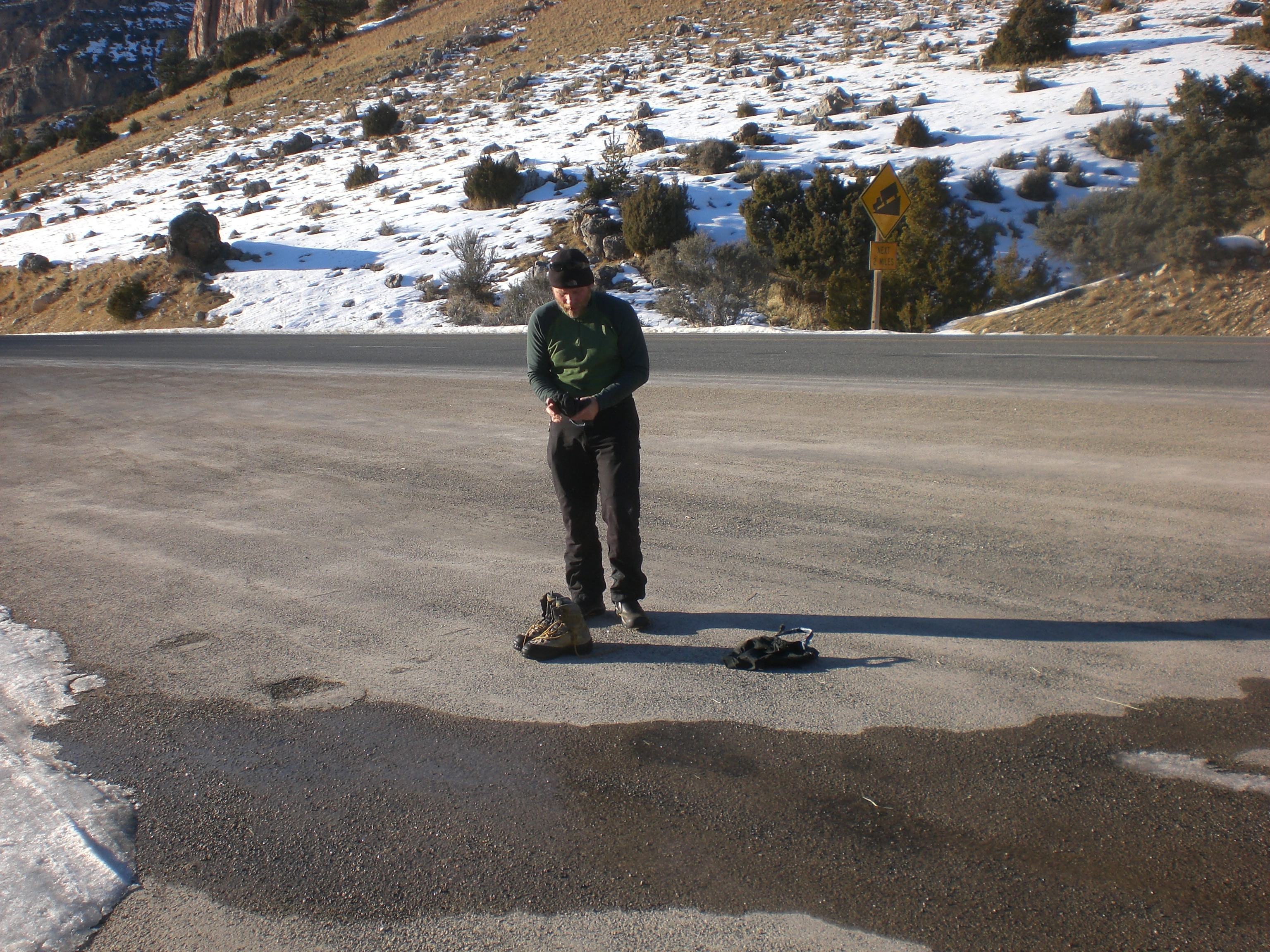
 Going to the gym in Wyoming is a little different. You don’t just pop over for the afternoon, it kind of takes all day. There is generally a commute involved.

 With luck it does not involve a shovel and a come-along. 

There is often a cost of admission, but if you are clever you can bargain it down. 

Every training session involves some cardiovascular work – mandatory cardiovascular work.

Approach to Leigh Creek ice

The machines are limited, too. No circuits, just different versions of the same exercise.

M?


The motivational posters are great, though.

Just a little bit of limestone, Ten Sleep canyon.

And you can’t beat the ambiance of the locker room…

…or the cafe.

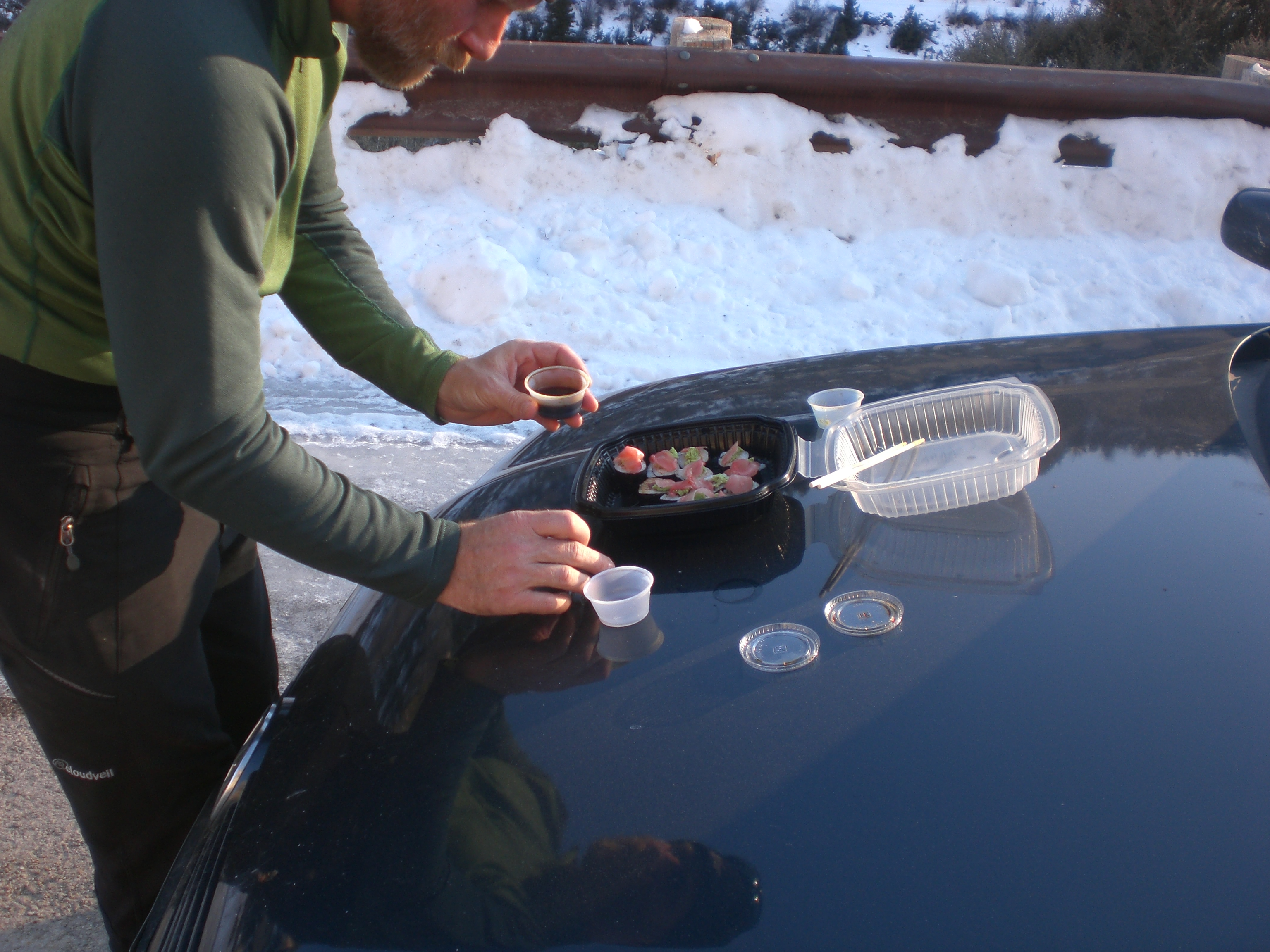
Mid-continental sushi after basking in the sun for 3 hours on the back seat. Thank you Baby Jesus, for giving us Wasabi.

Tagged , , ,

Should You Be Trapped in a Basement

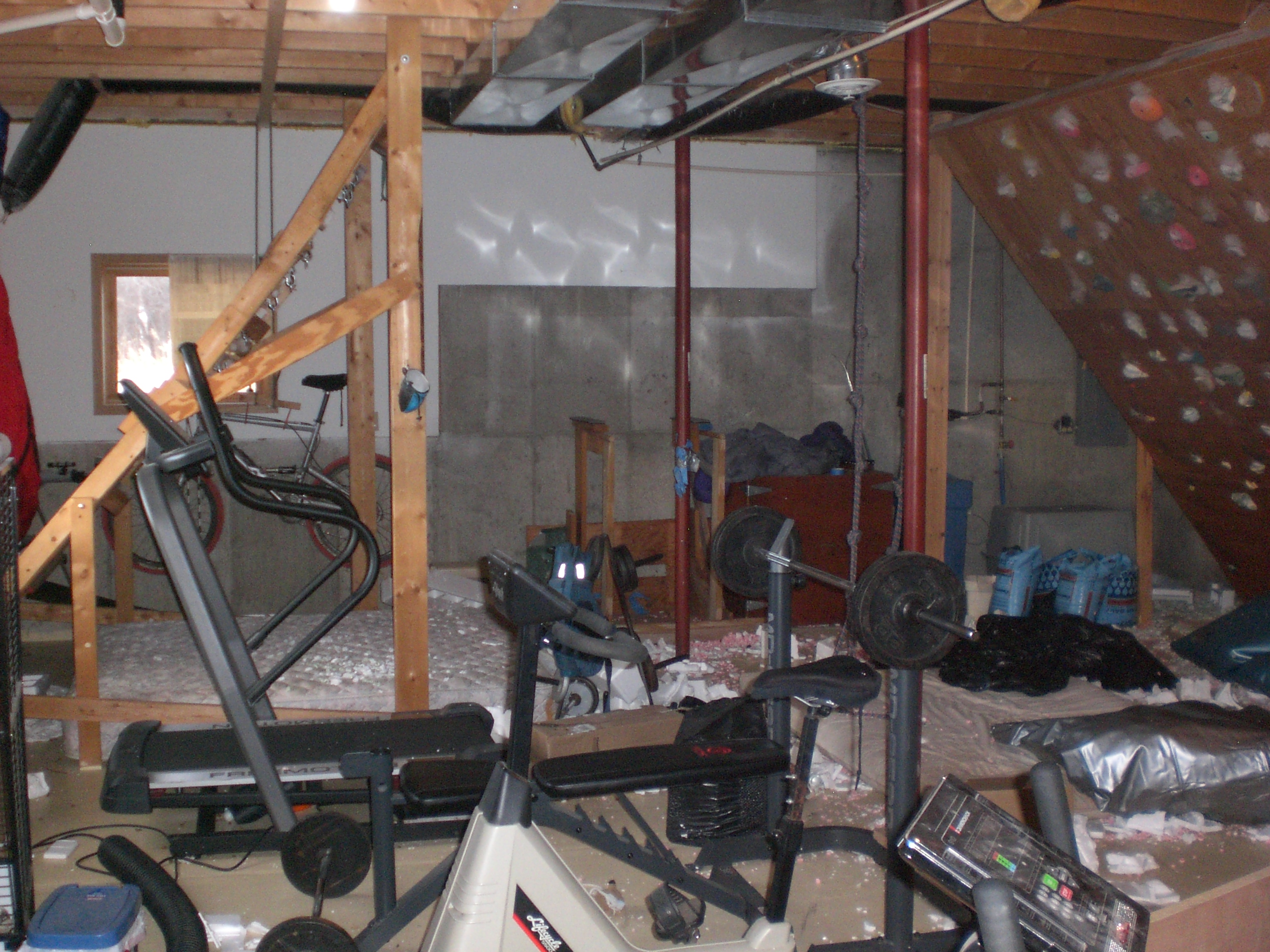
Yes. And if you are already, congratulations, because it means that you are serious about a non-productive activity, and a certain class of non-productve activity – an obsessive devotion. Not a hobby, hobbies can happen in a den and earn their keep. Hobbies are spare time things, to be set aside when they become inconvenient.  I don’t mean hobbies, I mean all those things for which the term ‘amateur’ was devised and were the reason why, in sport,  that term used to define the Olympics. Obsessive devotions will eat you up and must go in the basement, or sometimes a garage.

Anyway, for all those amateur mechanics, body builders, musicians, inventors and artists, I have no advice. For climbers, though, I can say exactly what to do should you be trapped in a basement. 

First, pick the right basement. It should be grim. No windows, no decor, it should be a concrete box if at all possible. Flourescent lighting, at least in the form of fixtures with tubes, is out. A single, bare bulb will do. A single door is best, too. It ought to lock from the inside. People should wonder what is going on down there. Wild fantasies keep people away on the front side, and compare favorably with reality if need be.

Not perfect, but close.

Fill the room only with training devices which pose an eminent risk of harm. Use free weights, no machines. You need at least one campus board. If you have a bouldering wall, pad the L.Z. with the minimum cushioning required to prevent fractures. Any Russian training device you come upon, buy it and put it in the room. They have had the world’s biggest basement for over 100 years, they have what you need. For instance, a bottle of garlic pickled in vodka may help to see you through moments of weakness.

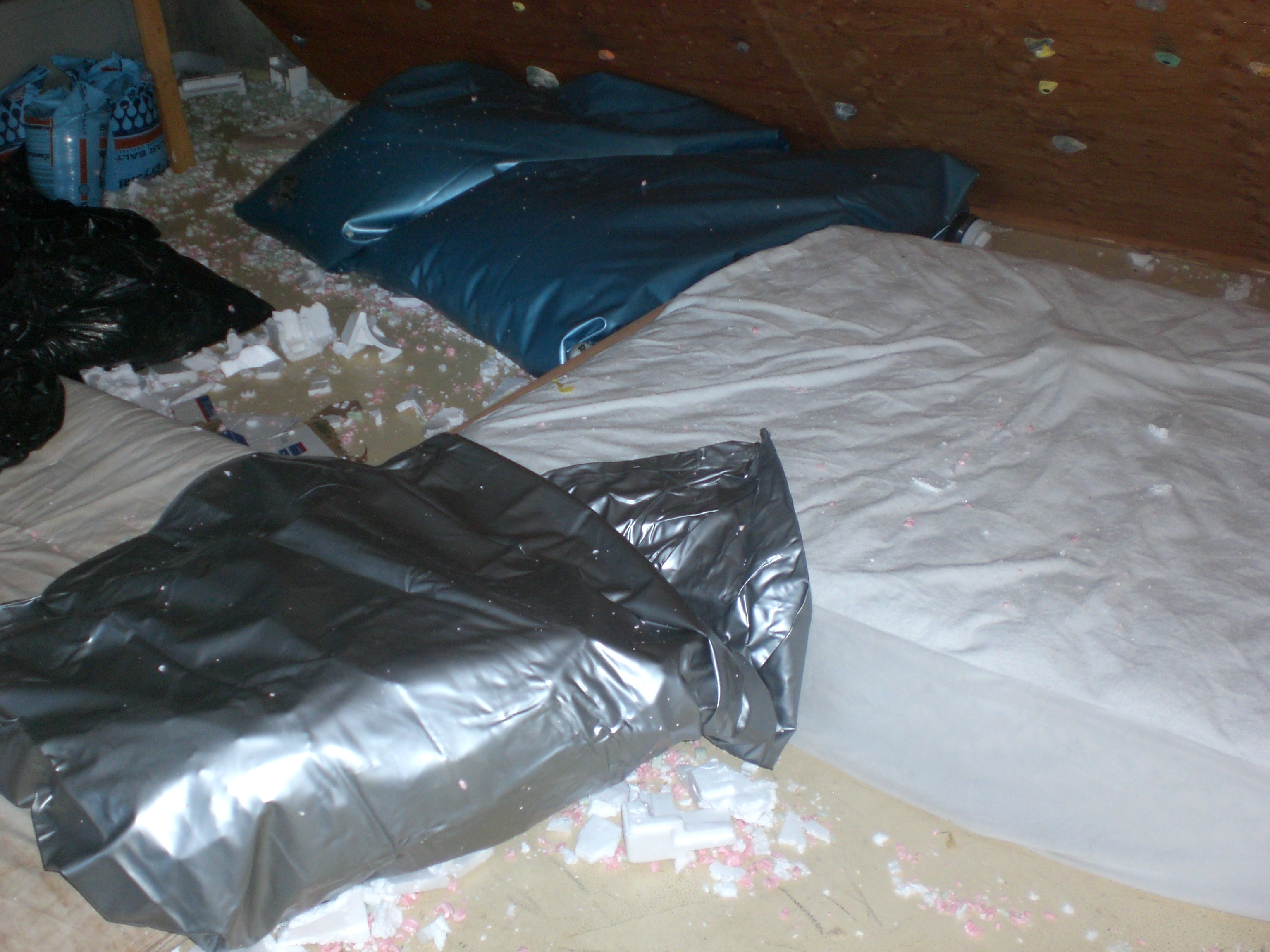
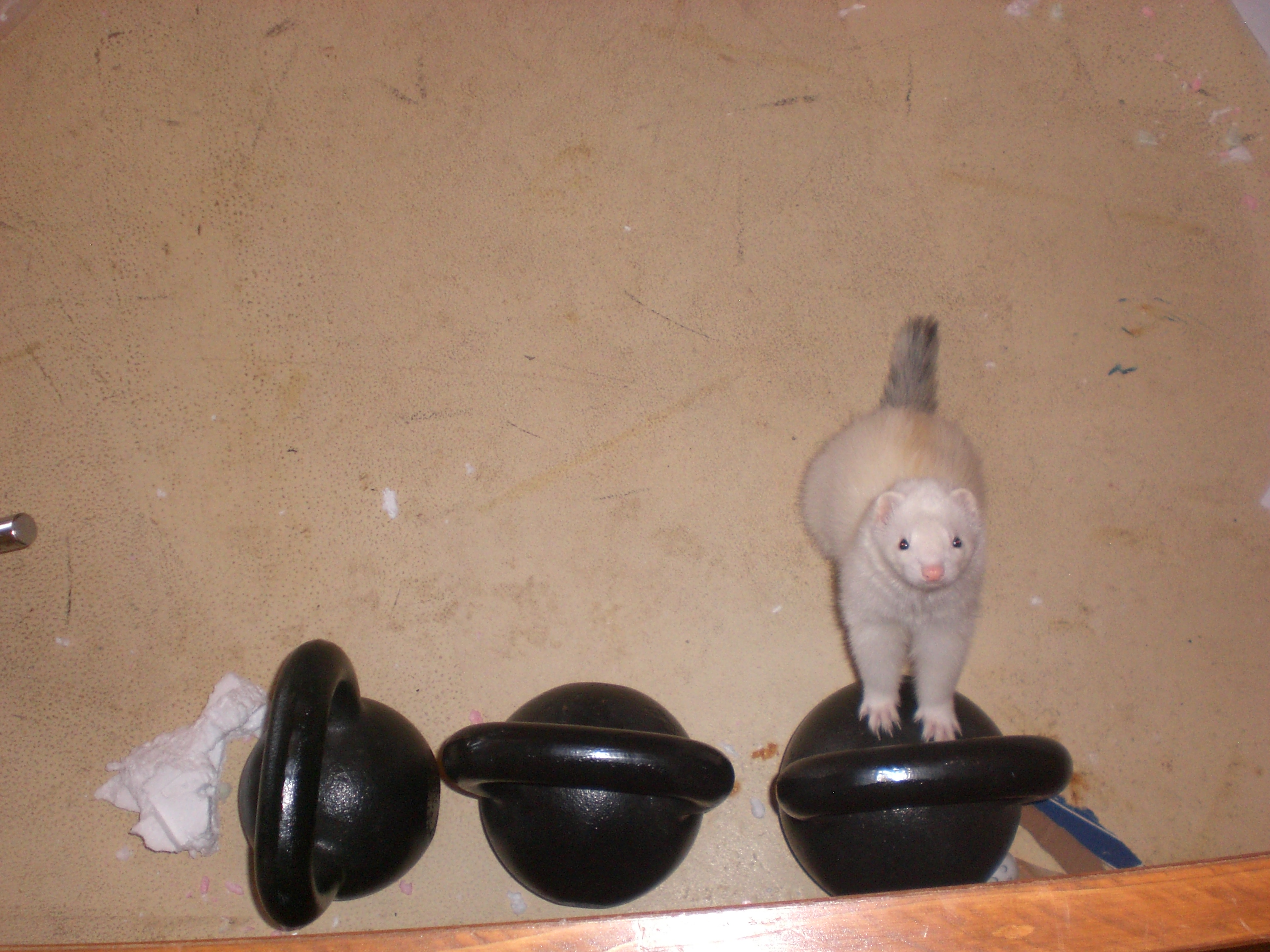
You will need a ferret, or other small, vicious animal. Let it run free to control vermin. It will keep you company without being too chatty. Ferrets are best because they also provide a good moral lesson. Once they struggle to consciousness for their four waking hours per day, they have a pure focus on destruction. Animals ten times their size rightfully fear them.

Training secrets

With this basement, you can train at 4AM or midnight. You won’t want to linger. You won’t need some meathead in a campaign hat, or worse, spandex tights, to keep you moving. Lose focus and you will crush a toe, break an arm or get bitten.  When you can finally bust out to climb outside, you won’t need a warm-up, you will be ready to send.

Tagged , , ,

The New Ice Season

If you go back to climb the same route on rock time after time, you may have a psychiatric problem. You can’t climb the same ice route time after time. The gist will be the same – same basic angle, relative water supply, temperature range, etc. The ice, though, will be brittle, squeaky dry, slushy, plastic, crystal, blue, green, featureless, chandelier, thin, fat, mixed – new every time.

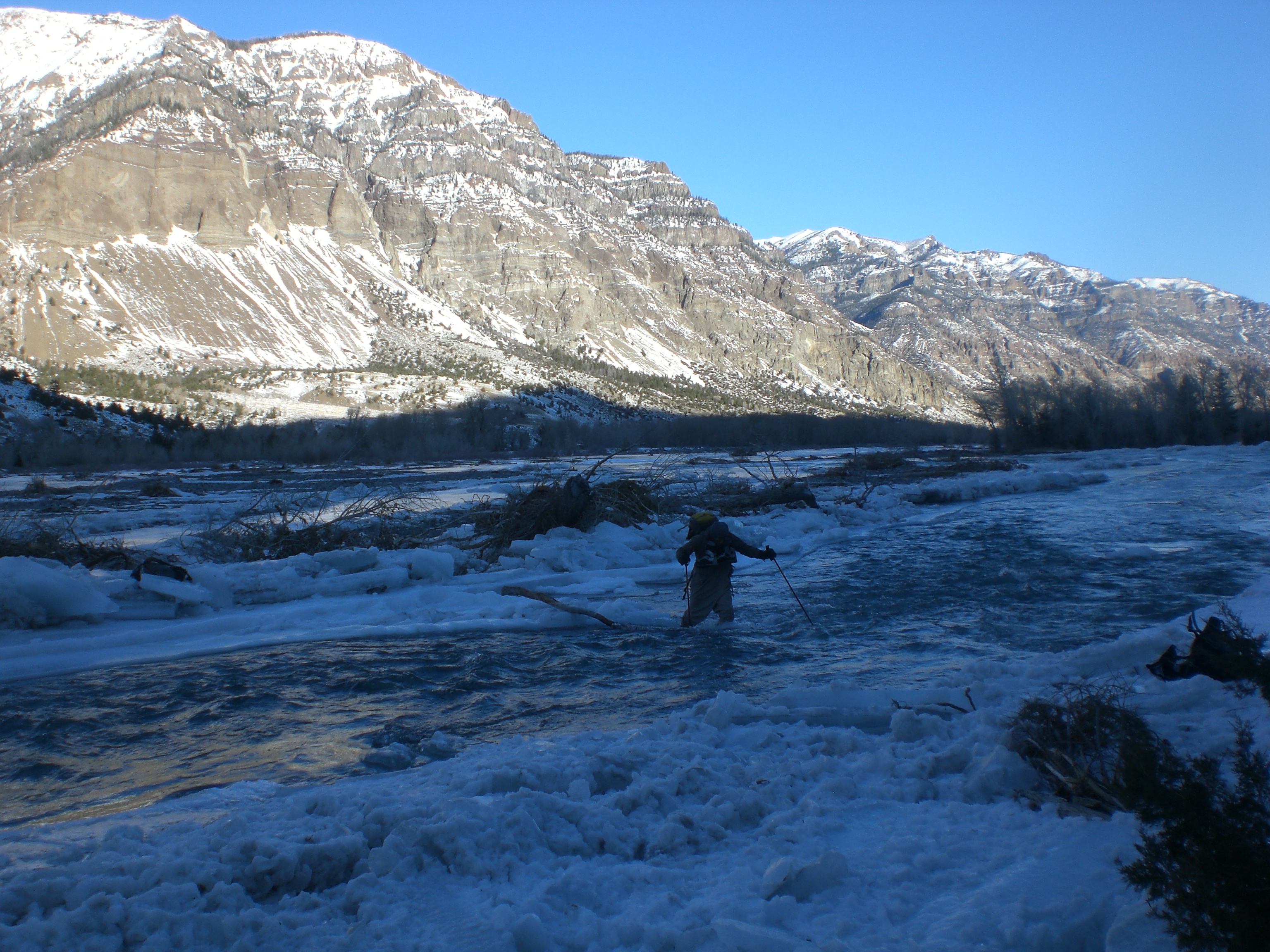
Crossing the South Fork of the Shoshone.

You have to reinvent yourself every season, too. At the beginning, the sticks feel squirrelly and the feet, rickety. An ice screw every 8 feet anchors your psyche.

Pillar of Pain, 12/10/11

 Then the truth starts to come back to you. The last tooth on the pick will hold you. A good stick has a quality you can measure with your hands, eyes and ears. Spread your weight across hips, knees and ankles and the feet can float on the most delicate candles.

Then you can move, making it safe with every swing. The screws will keep you off the deck if the ice betrays you, because that is the only way you’ll fall.

A very wet, Ice Fest

I know, it’s aid, and so it’s easy like aid, the way a hand crack through a roof is easy, the way an offwidth is easy. But it is so cool to travel by real faith like that, not blind belief from a book or other people, but faith from knowledge you can’t get from words. In fact, it’s the coolest thing I’ve ever done, each and every time.

Starting the walk up to Pillar of Pain from the top of High on Boulder

Tagged , , ,

Not lookin’ good

Not much ice in Spearfish canyon. 11th Hour is about the only thing climbable.

The cave was trying earlier last week, but there’s not much left now.

If you’ve got the secret weapons.


You can still make the best of it.

Those global warming skeptics best hope they’re right, though. Because if these temp.s are the new normal, they’re gonna find out what it’s like to get cramponned boot up the ass.

Tagged , , ,

Cooke City

First climb of the season.

As soon as we threw our stuff in the back of the Jetta, we were pretty much doomed. It’s our own fault. We’re just too damned cheap. The thing gets 40 miles to the gallon as opposed to the 4wd Tracker with decent clearance, which gets about 25. But it doesn’t always take high clearance to get into Hyalite, and that plan was looking less likely anyway. Hell, we had just changed our minds about scrapping the whole trip. East Rosebud was as far as we were going to get, and that never took high clearance, just a shovel to get through the drifts.

“Oh shit, we’re getting sucked over!”

 I said that based on feel; the car was plowing up a bit of snow, so I couldn’t really see it happening. By the time I could stop, we were already sideways in the ditch. On the downside, it was the middle of the night about 2 miles out the East Rosebud road. On the upside, it was only 2 miles out the East Rosebud road and we had a come-along and 50 feet of old rope in the back. We’re just cheap, not entirely stupid.

We made it back to the municipal campground in Columbus by 2 AM. There was talk of turning around the next morning, but after some coffee, we headed for Cooke City. It made no sense. Cooke City was the most distant destination South of the Canandian Rockies; literally the town at the end of the road through Yellowstone. But it was a plowed road. Besides, we had nothing to lose.

We got there at noon. Mike had called Jay at the Silvertip Mtn. Center and he’d told us he could see ice from his window. Sure enough, three climbs had formed on the cliff band overlooking the town. We got two in before dark.

Climb #2

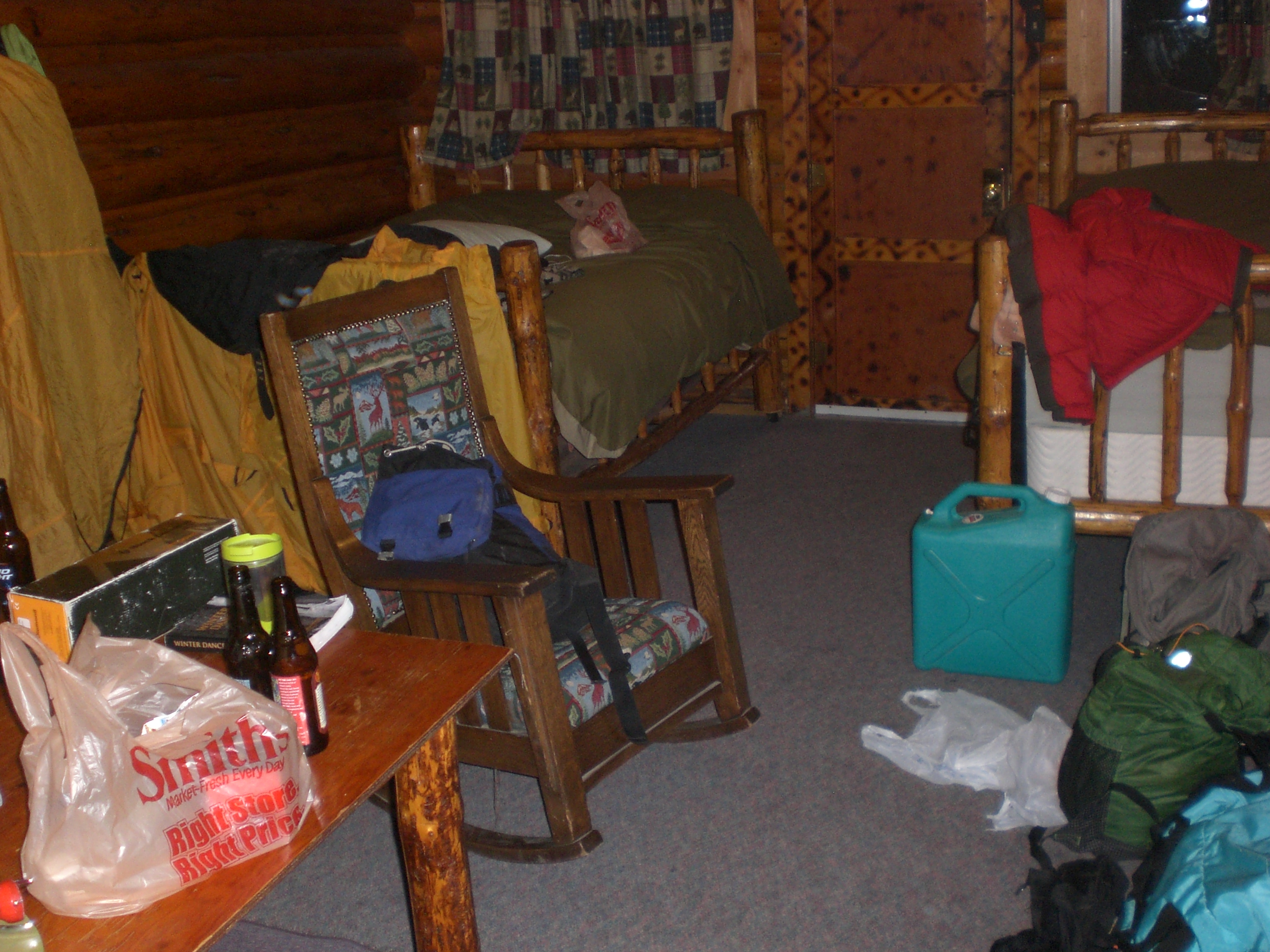
There’d been talk of camping earlier in the day. Jay said we might be able to get to some Forest Service land behind the dump. The visitors’ center lady had looked at us like we were nuts when we’d asked her about somewhere to set up a tent. The dump road was steep and it was snowing heavily when we got back to town. So, we shelled out for a cabin at the Pine Edge. Painful, but probably for the best.

Silver Gate

Drying out at the Pine Edge.

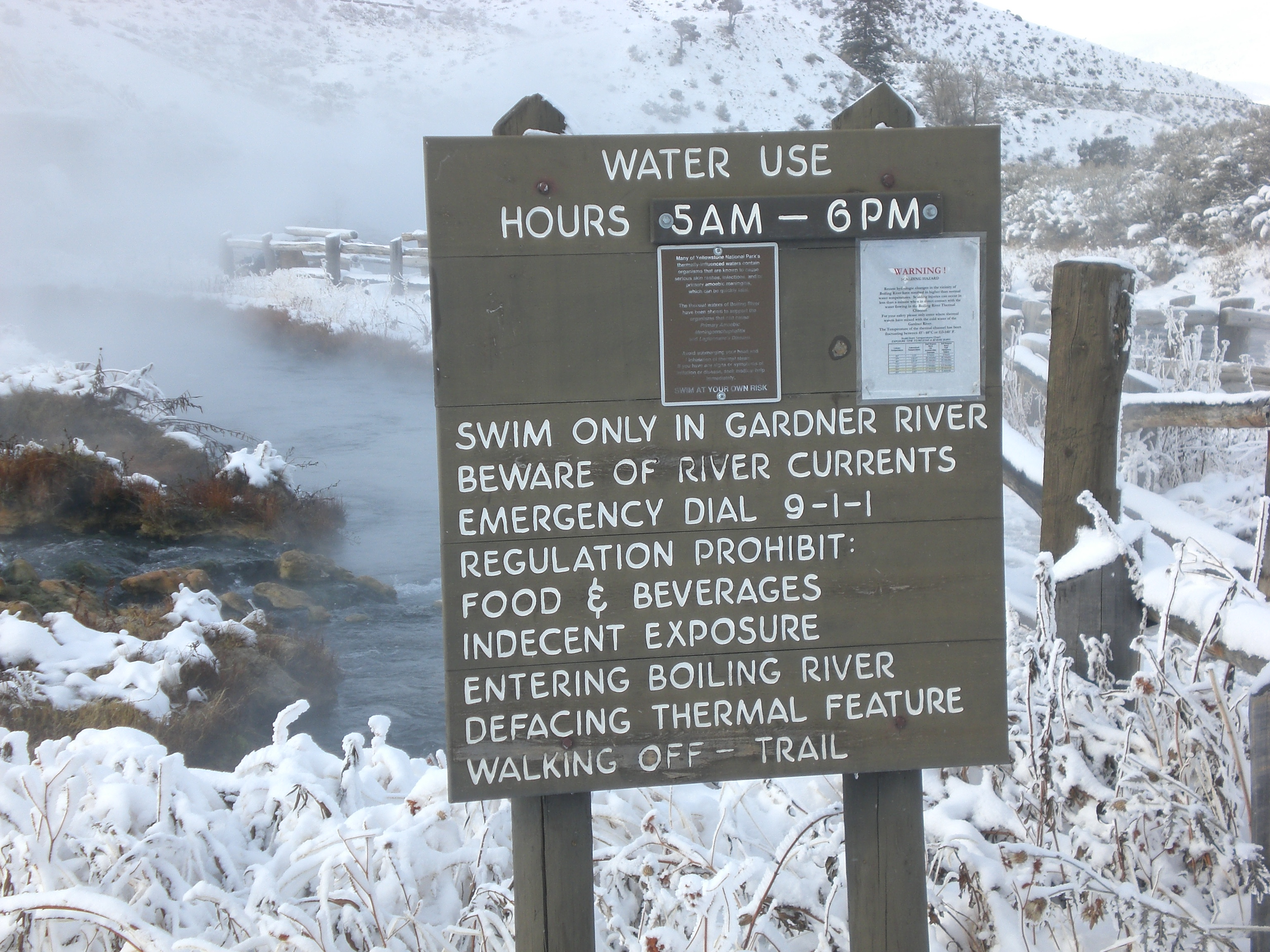
The next morning we set out to climb Hydromonster. Our luck hadn’t taken a complete 180, though. The approach beta is thin and no one had been up to the climb yet this season. We post-holed, side-hilled and flopped over blown down timber for a couple of hours. At a key juncture, we tossed a coin and headed into the wrong drainage. It was late by the time we regrouped on the road, and a dip in the Boiling River was sounding better than another run at the approach by then anyway. It’s not like we wouldn’t be back. 

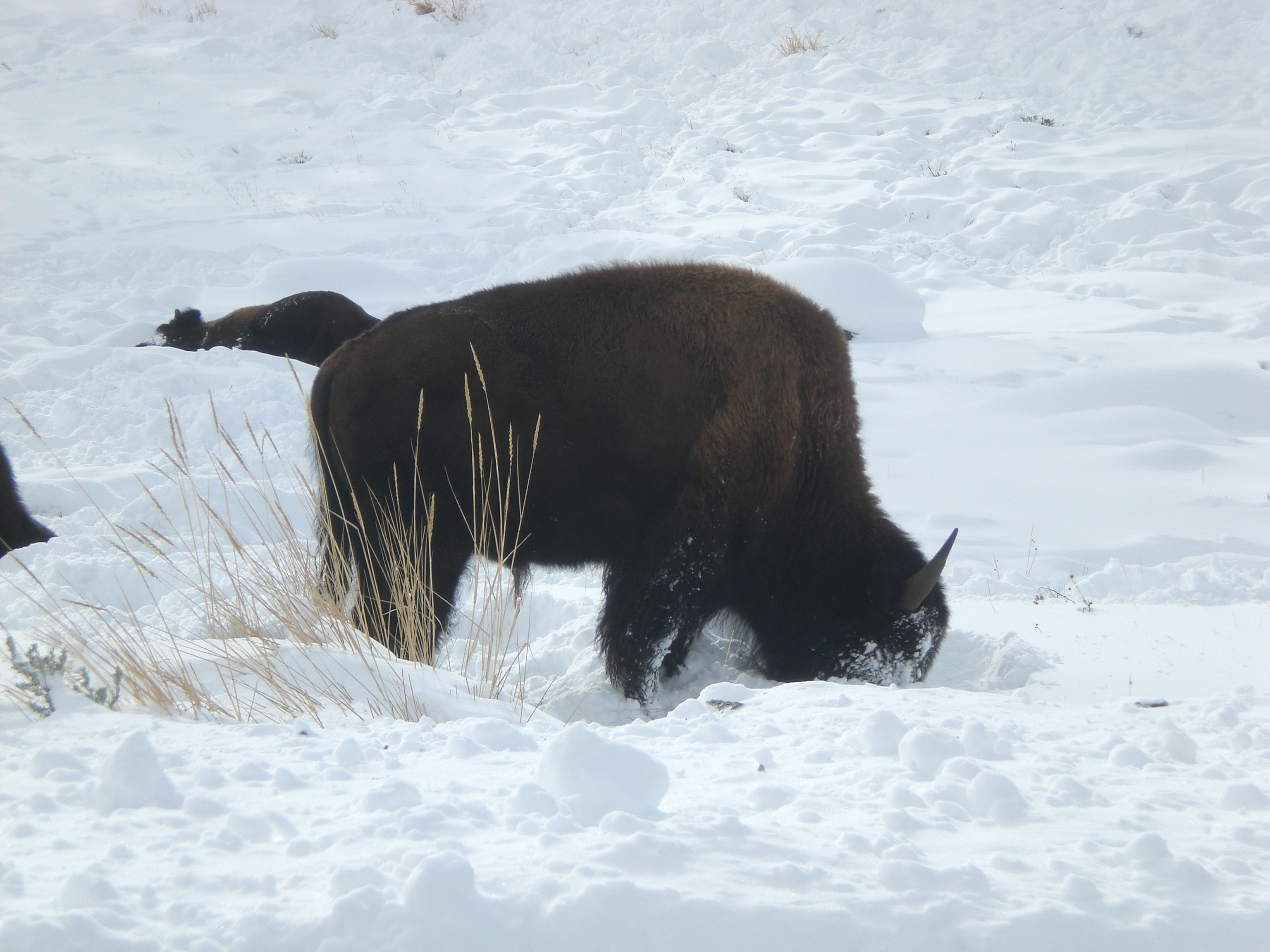
Bison, tail down mode


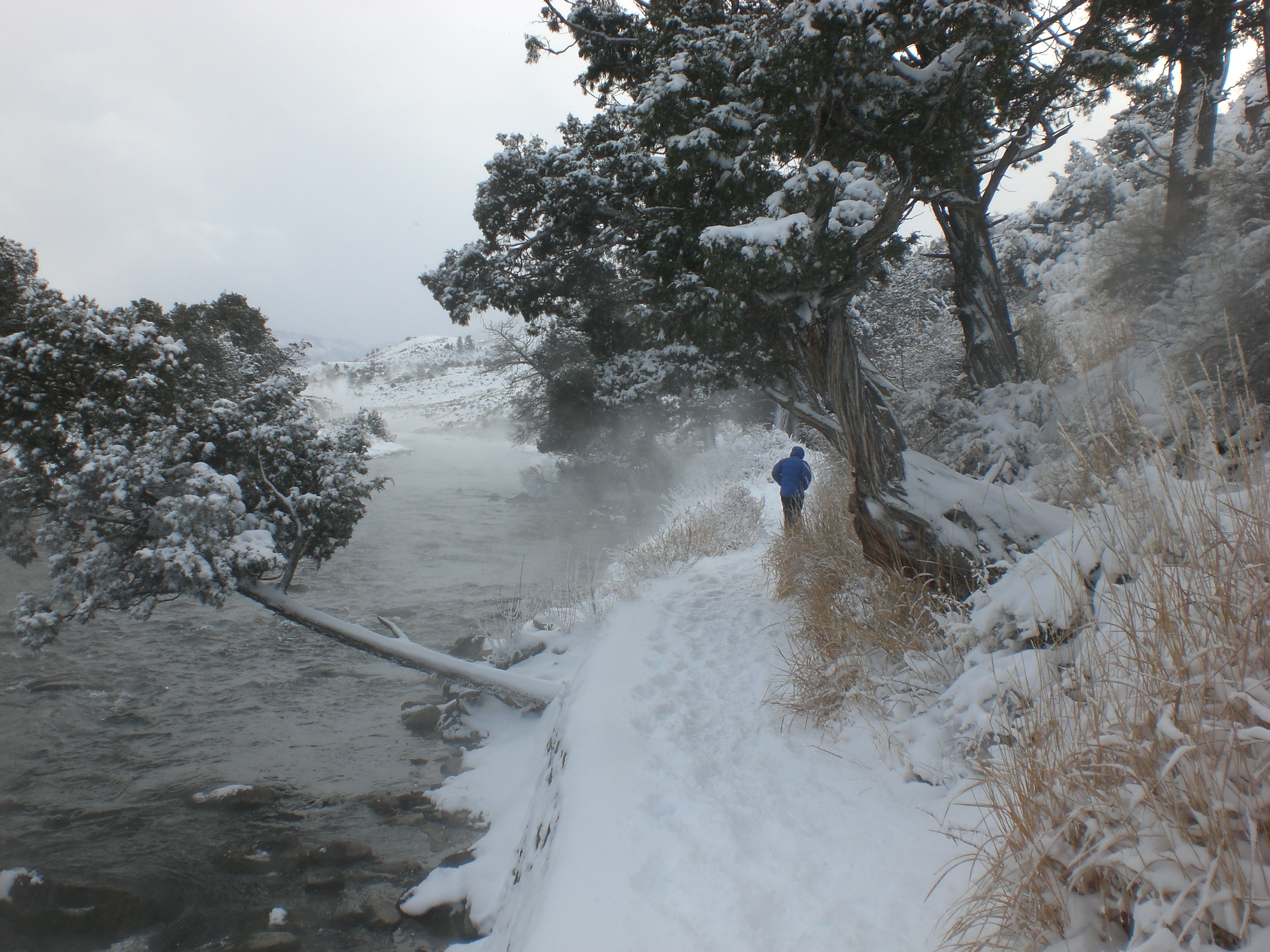
Boiling River


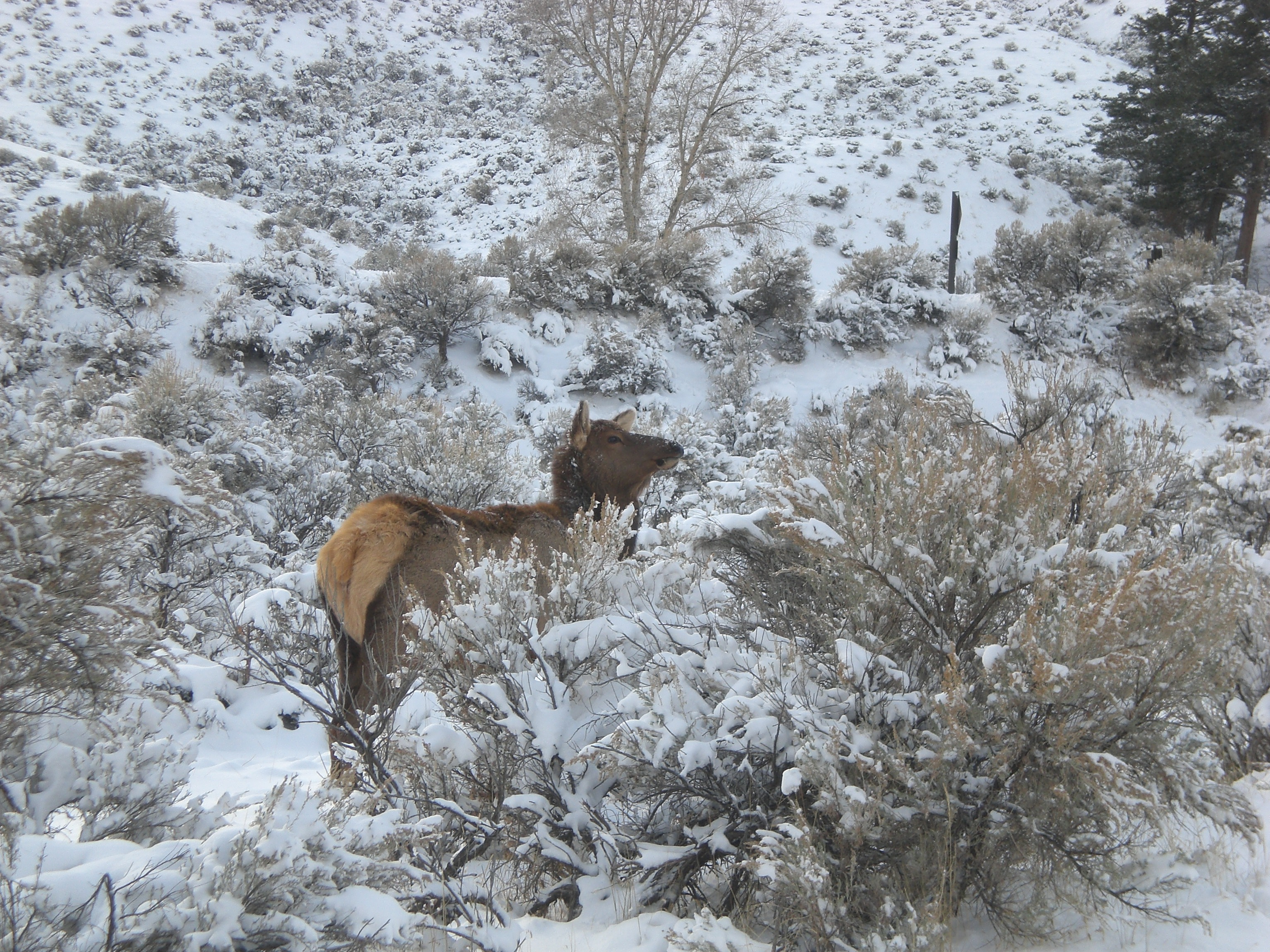
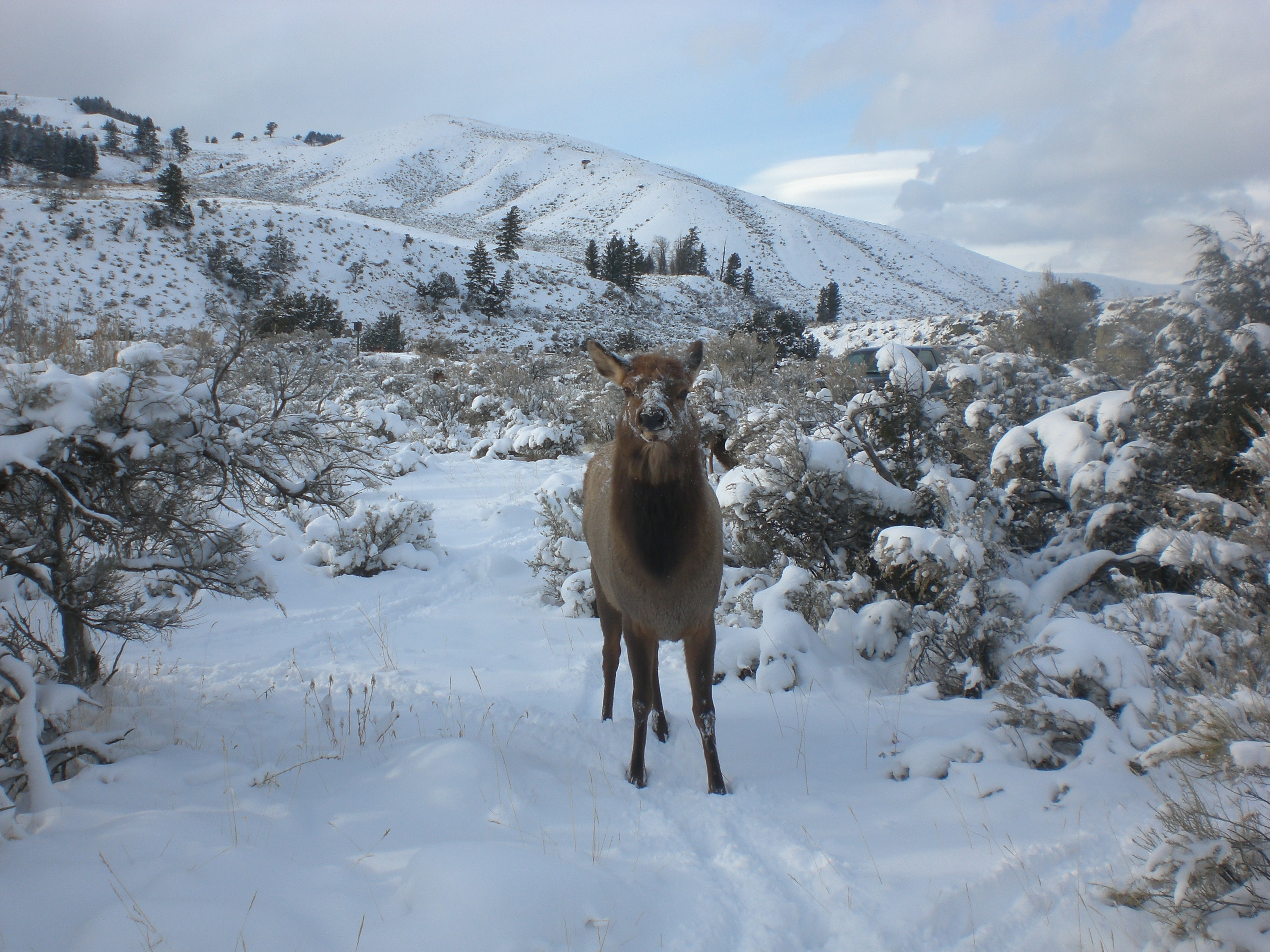
Nervous elk


Angry elk


All that and amebic meningoencephalitis


Tagged

Best of Cody – Triptych

It's what you got, not what they call it. Cody "WI 4".

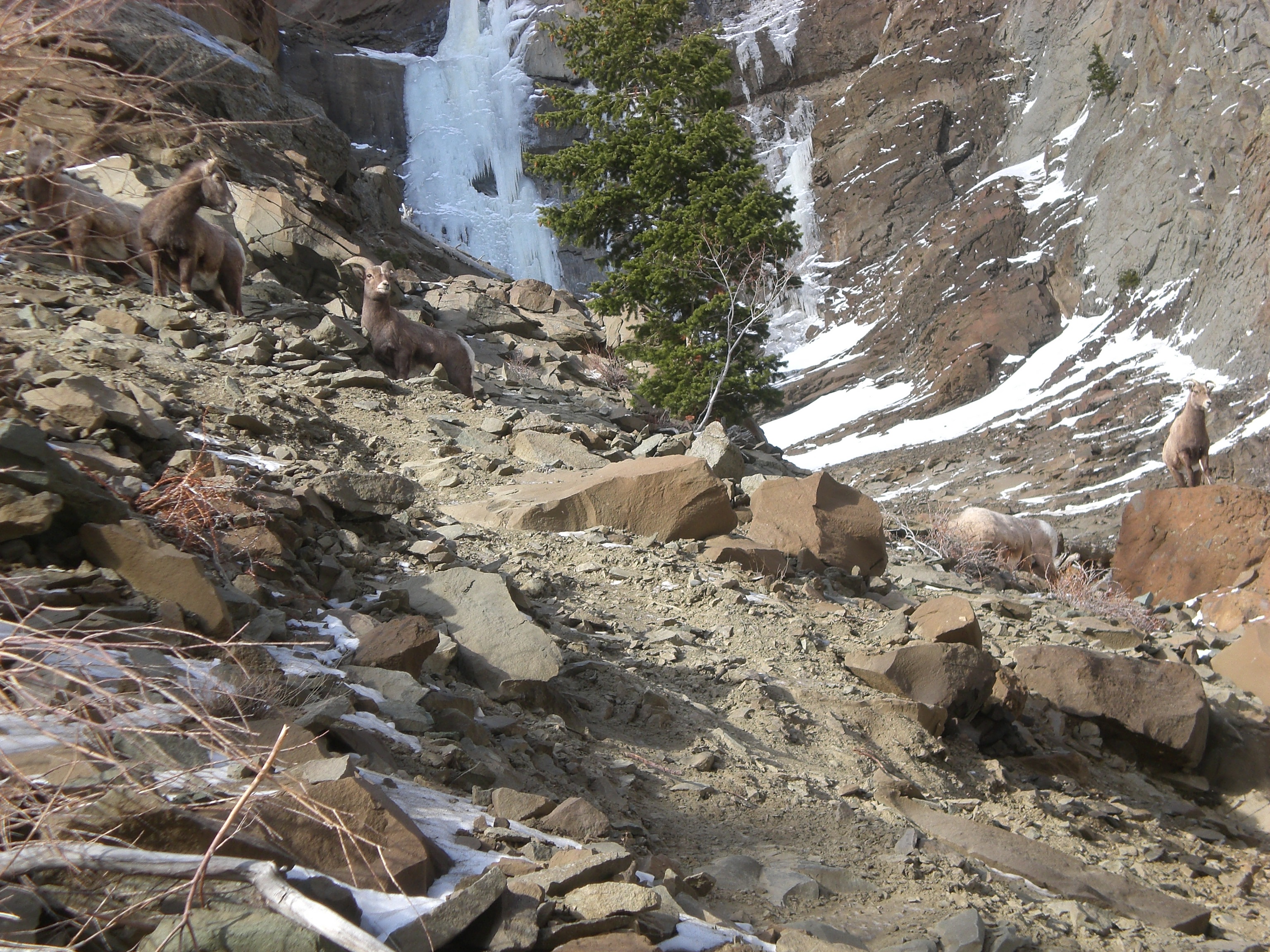
It is hard to get skunked on this one. There is so much ice up this drainage, it would be hard to do all the possible pitches in one day. It is the second drainage past Legg Creek and easily recognizable due to the Triptych – a set of three pillars side by side about half way up the mountainside. Watch out for sheep on the approach. Just as you come around the last bend, there is a mineral lick where the bighorns congregate. Take care not to frighten them or ‘push’ them from the site. You can size up Hostile Takeover while you wait for them to step aside.

The crowd at the mineral lick in the Triptych drainage.

Hostile Takeover


Climb through a narrow gap to the right and into the second tier of climbs, High School Squids on the left and Spittin’ Bullets in a tight chimney on the right.

Spittin' Bullets seen from the narrow gap leading to the second tier.

The next tier up is the Triptych pillars.

The Triptych

 Above that is Nirvana: two easier columns in the shade on the left, (?) Long Neck Bottle and another, regular strength WI 6 in the middle, and possibly two more wet, nasty icicles higher up on the right.

Part of the upper band bonanza, Triptych drainage.

Tagged , , ,