Category Archives: psychology

That’s a Thing? I Thought People Just Did That ‘Cause They’re Nasty.

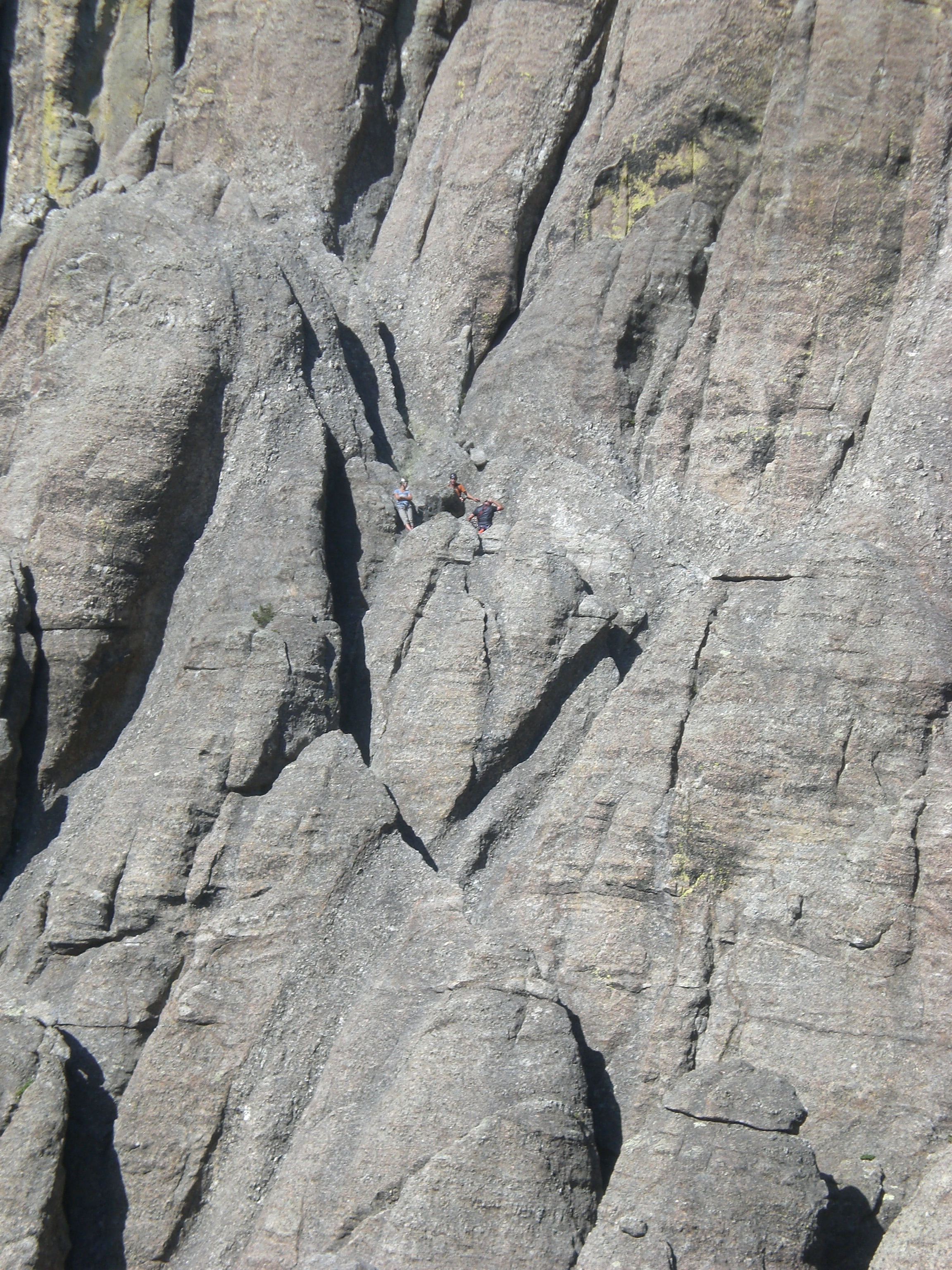
CIMG4127
Like so many other aged and out-of-touch Americans, I learned a new word this Summer. No, I’m not talking about “sequestration”; I’m talking about “twerking”. Thanks Miley.

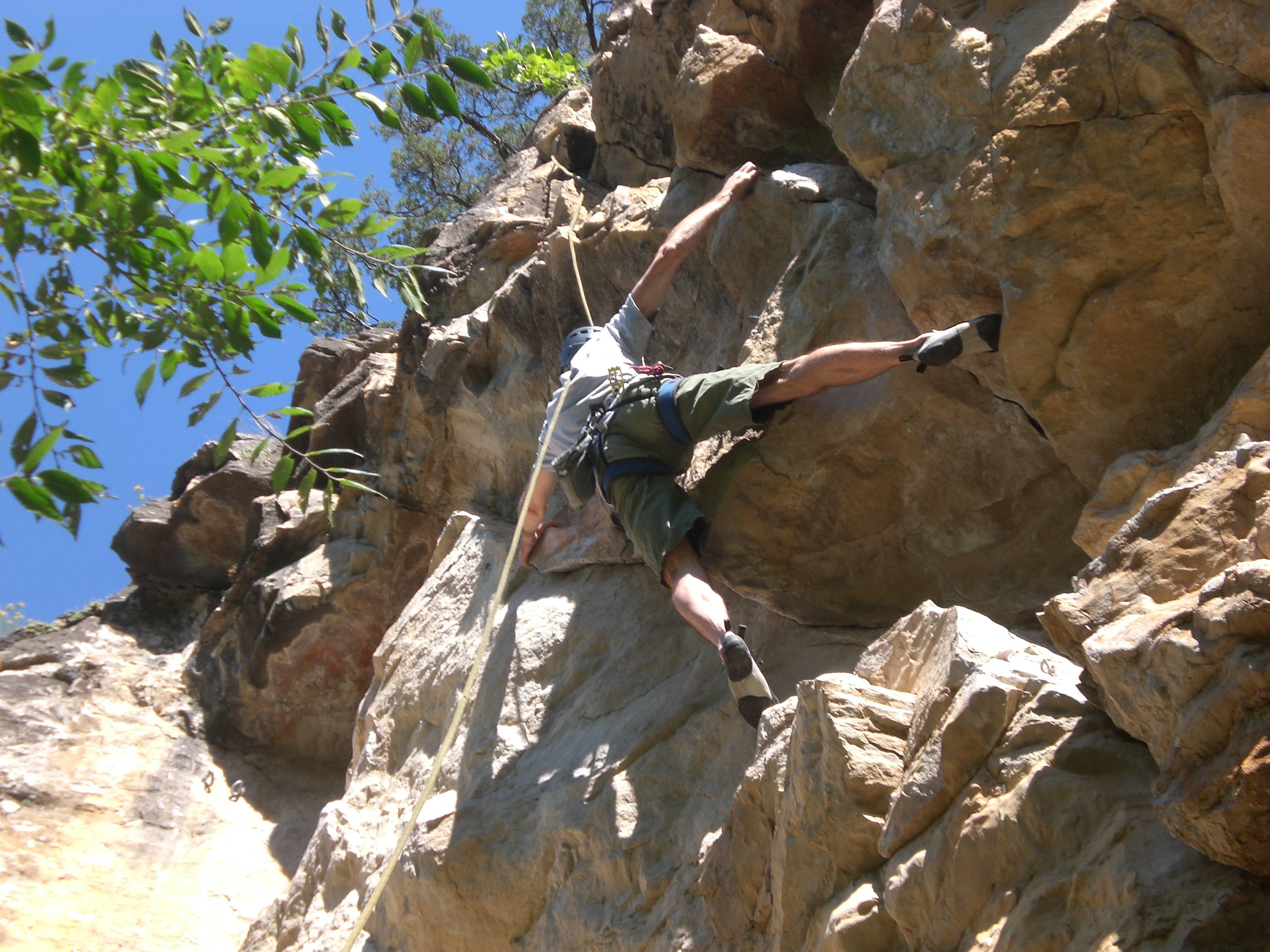
Chris wishing he was off-width climbing - or maybe twerking - instead of guiding,

Chris wishing he was off-width climbing – or maybe twerking – instead of guiding,


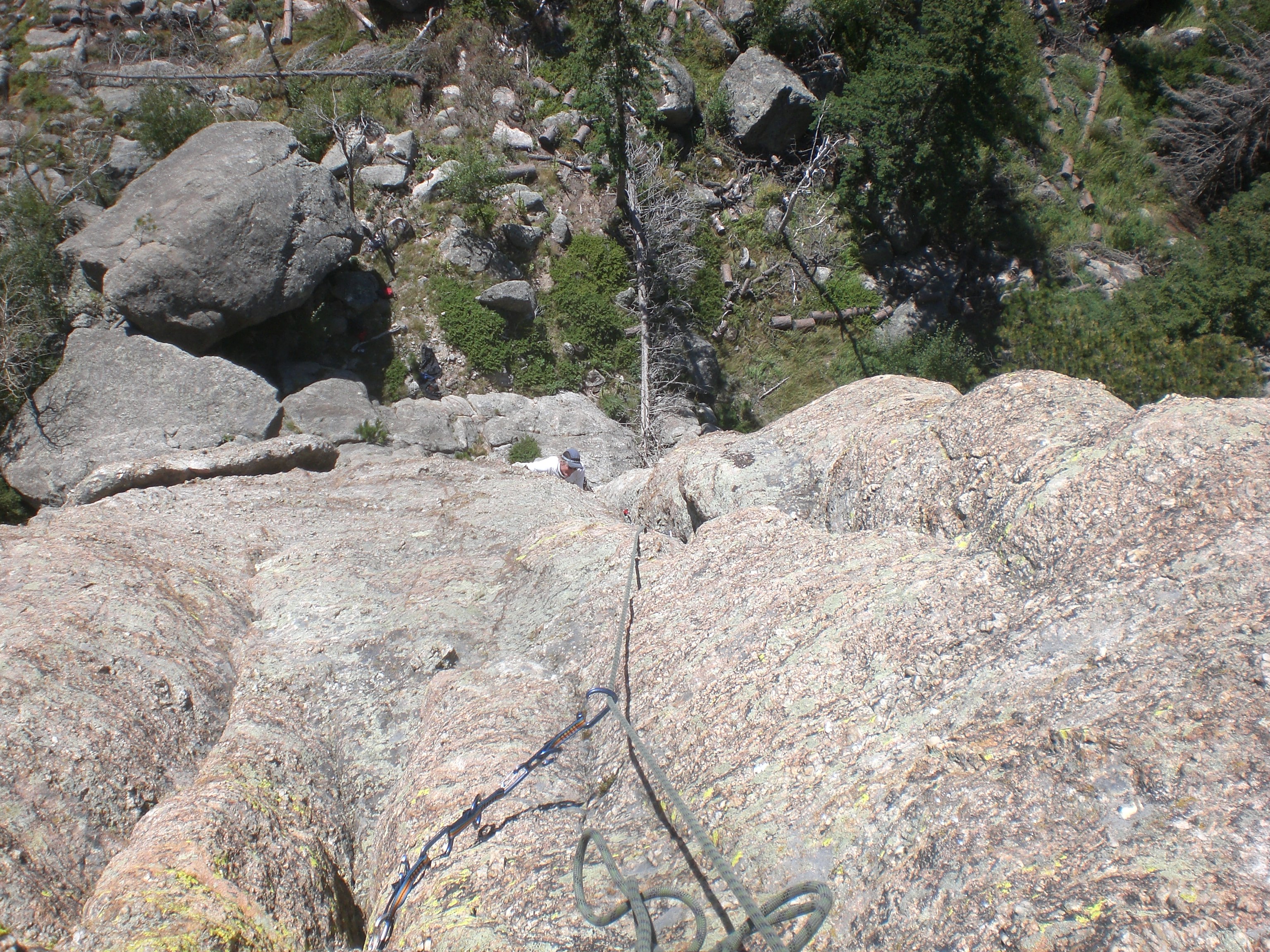
My first take on twerking was the standard one for the aged and out-of-touch regarding any cultural innovation – “That’s ridiculous!”. I’ve no right to heap scorn on the twerkers though, because sometimes, I climb off-widths.
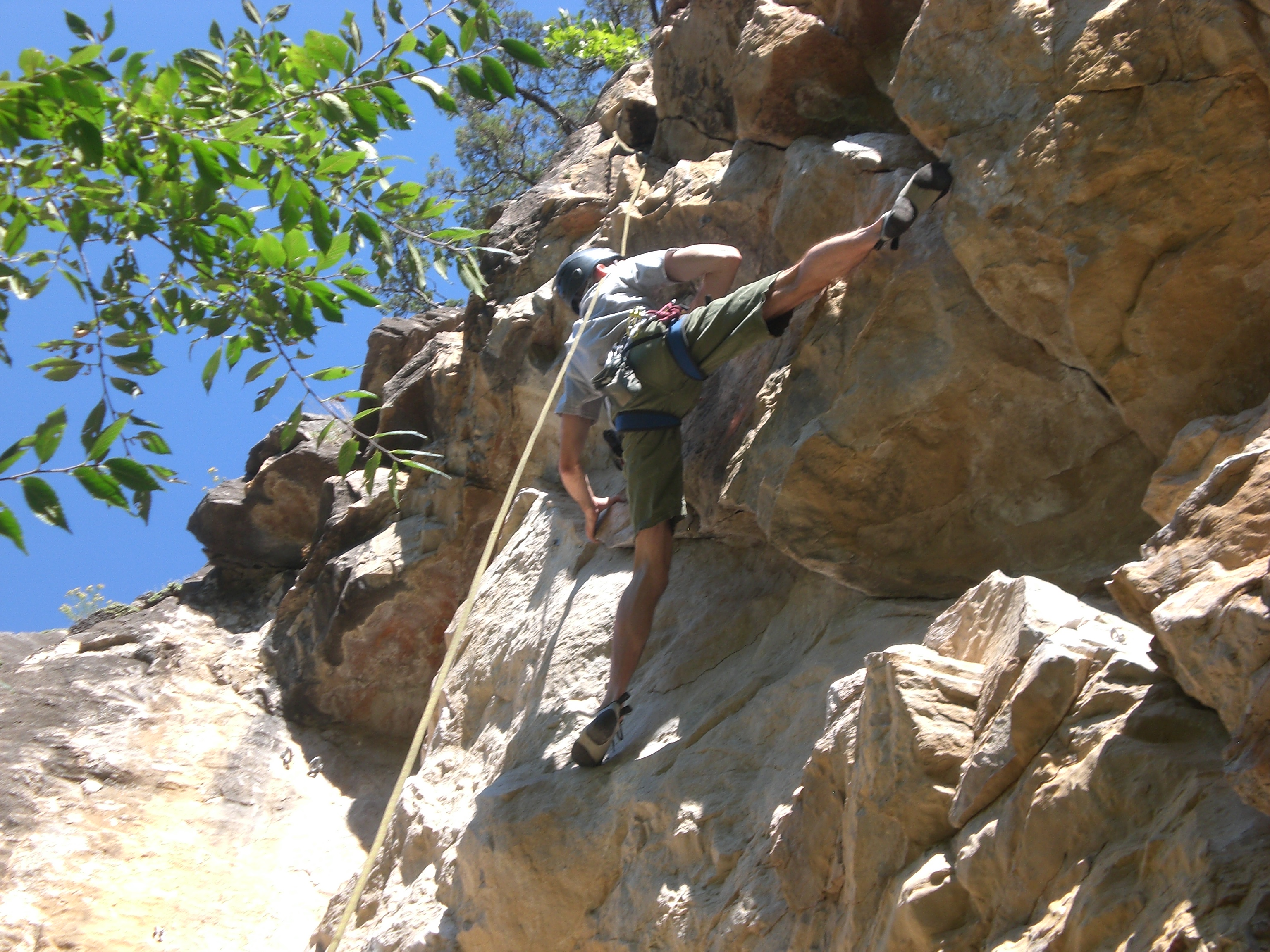
Trying to stay out of the foot-wide crack.

Trying to stay out of the foot-wide crack.


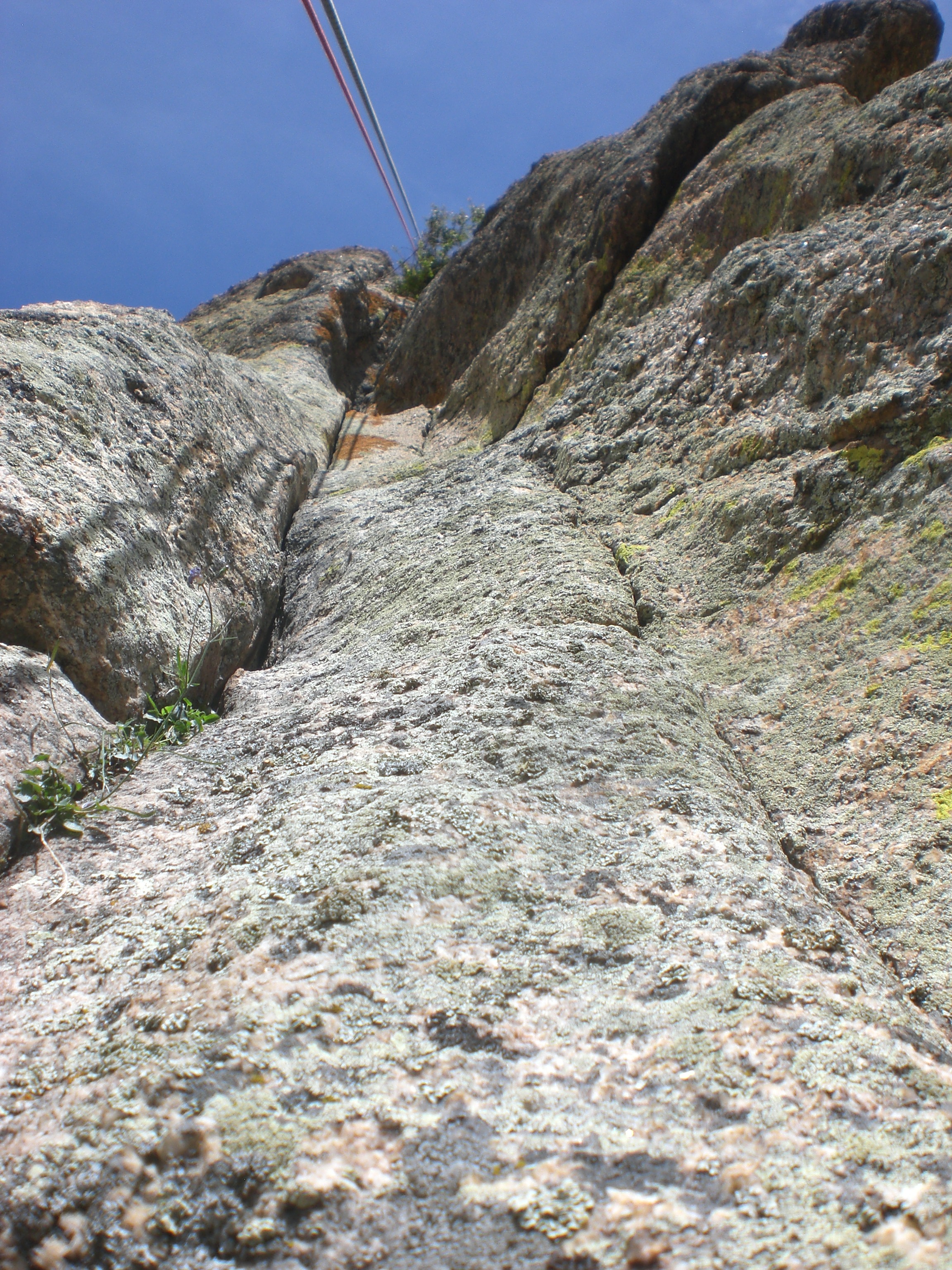
Actually, these are the times that I climb off-widths – when the weather is cool enough to wear clothes with full coverage, but not cool enough to justify breaking out the ice tools. Coverage is a big deal because an off-width is any crack wider than a climber’s clenched fist. In other words, to climb an off-width, the more pampered body parts must get involved.
CIMG4118
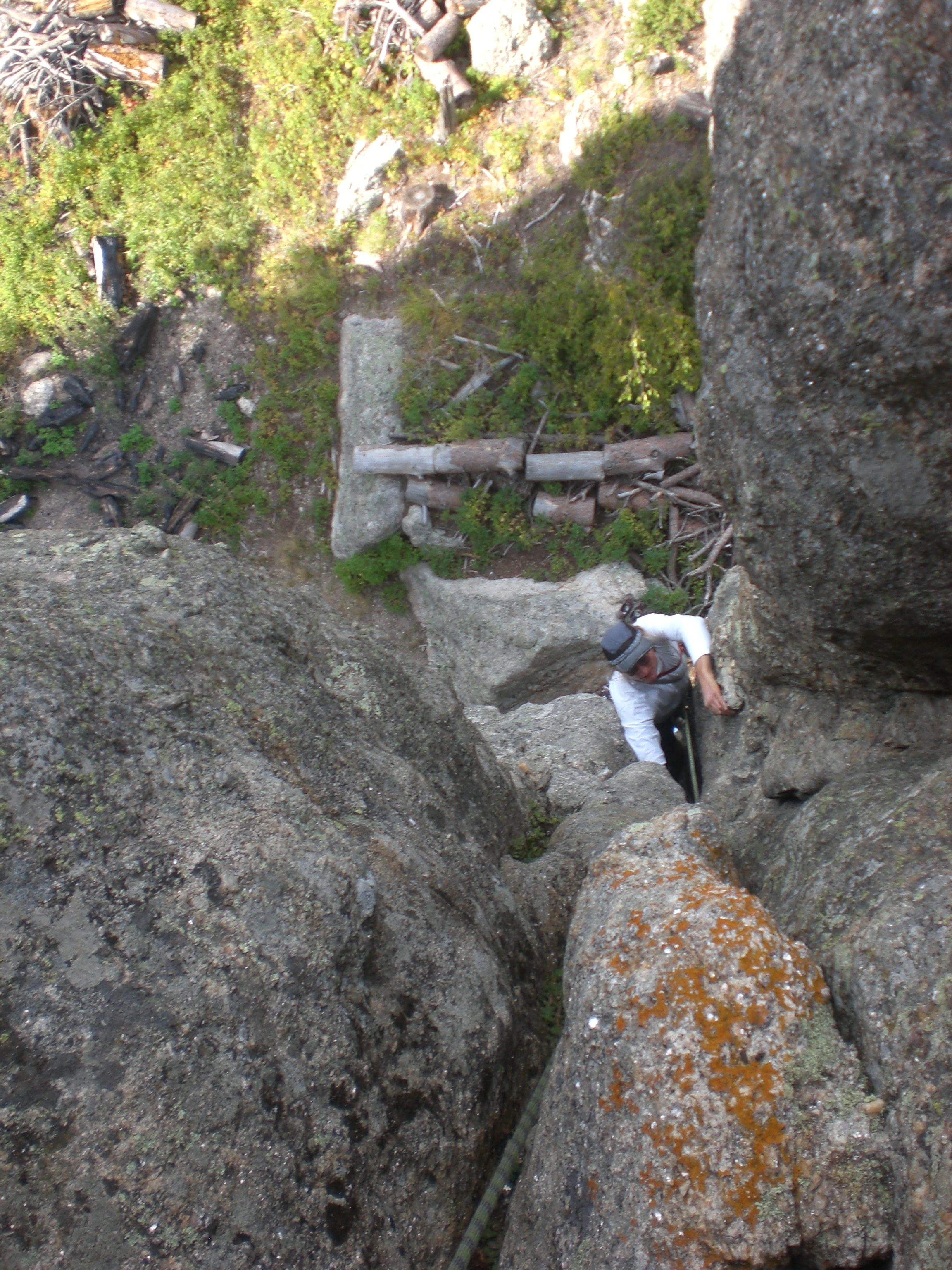
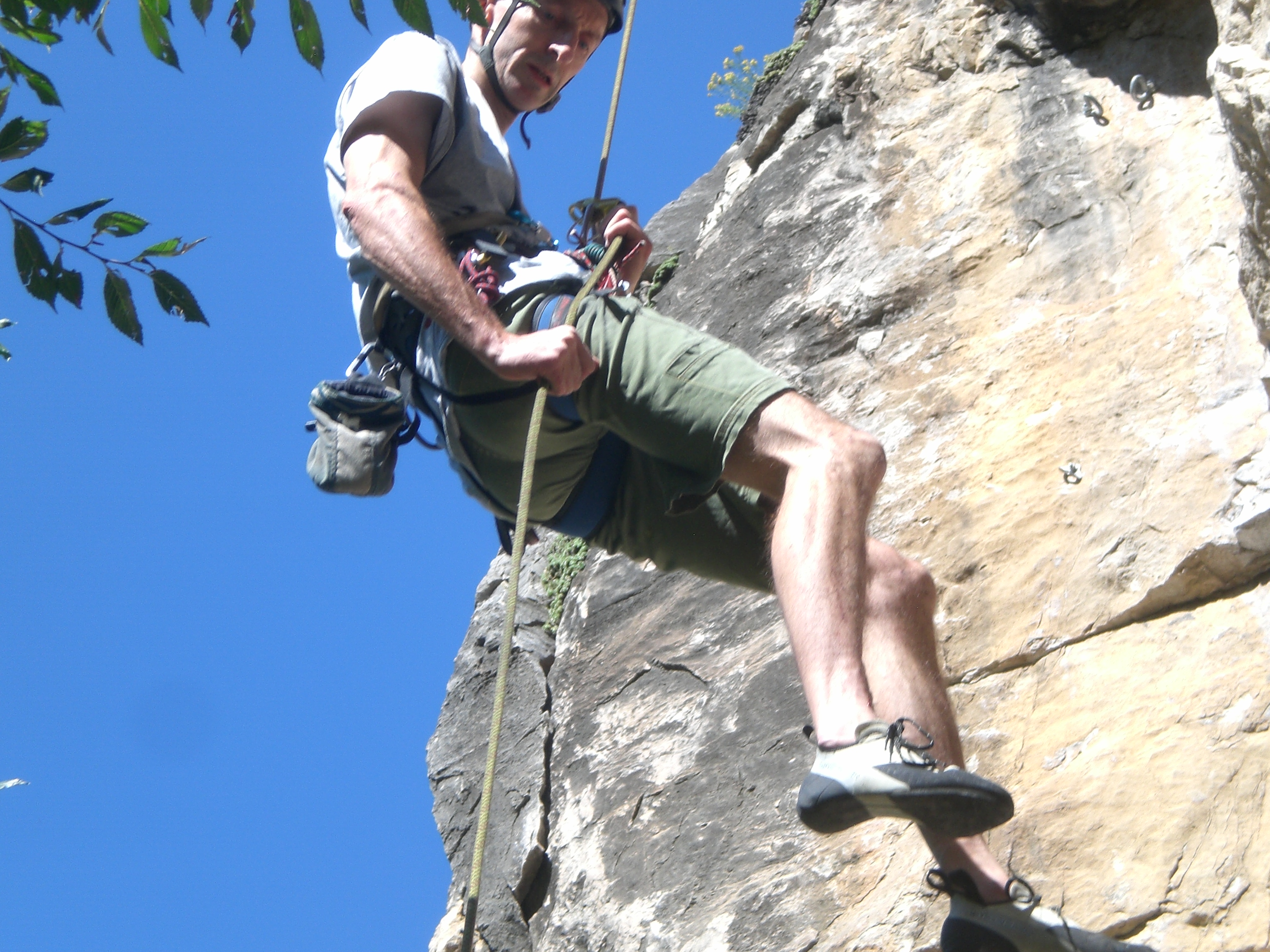
Now, I am the Miley Cyrus of off-width climbing. A brief foray onto YouTube will reveal, by comparison, Miley’s incomplete mastery of the technique which takes the squatting butt-pump beyond its overt nastiness, transforming it to an artistic representation of nastiness. Like Miley, I’m still at the stage where I’m constantly challenged to recall that I just need to relax, that body position is critical, and that proper technique consists of mostly small movements. But at least me and Miley have passed the first barrier. We’ve gotten past the mortification, and whether or not we’re good at it, realized that nastiness can be kind of fun (if you’re doing it on purpose).
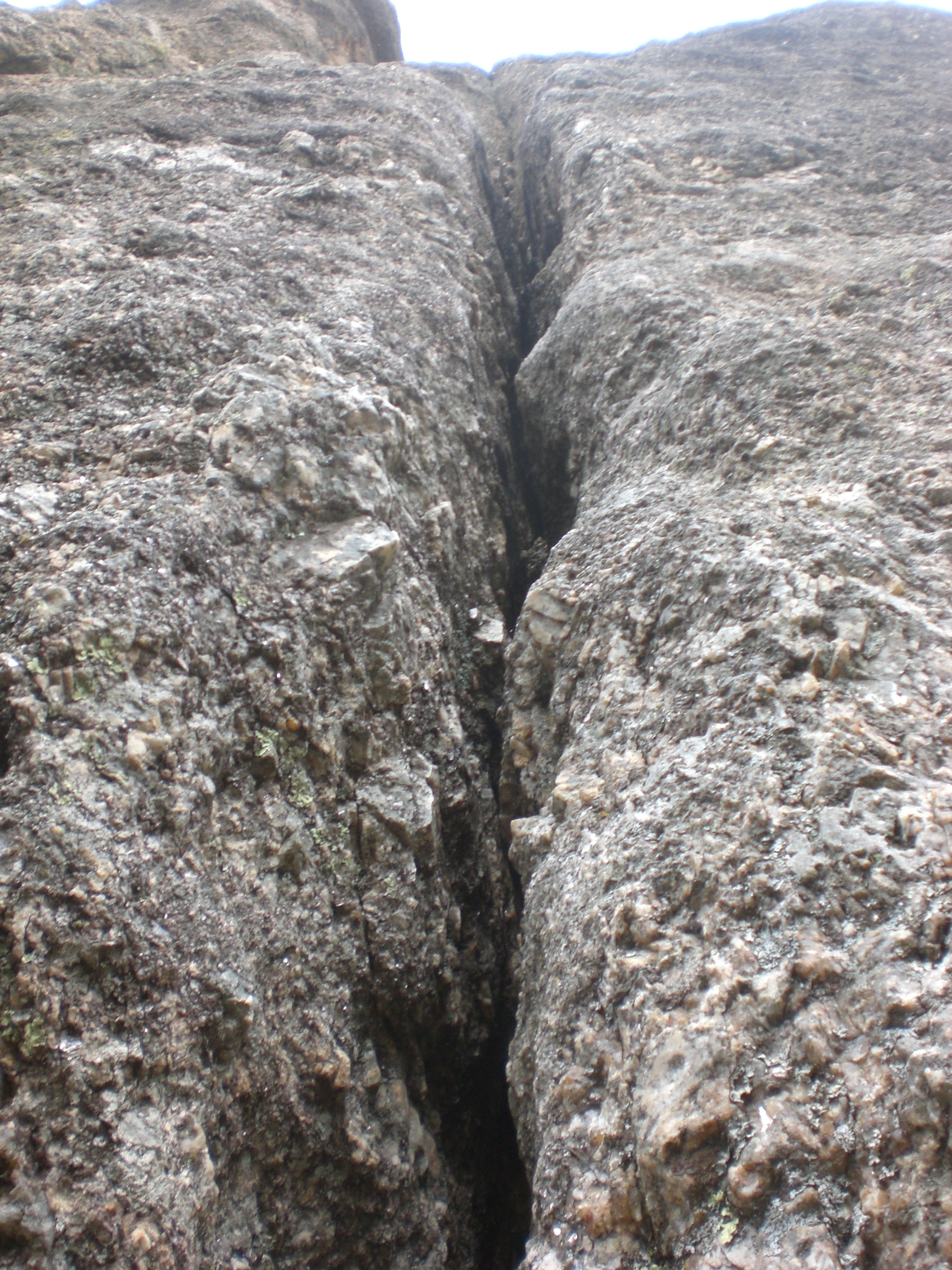
Finally, it becomes a chimney.

Finally, it becomes a chimney.

Tagged , , ,

Samsara

Setting up for the finger lock.

Setting up for the finger lock.

The endless cycle of suffering which is death and rebirth. This has been the Samsara Summer. It is a story familiar to every climber. Just as the season gets rolling, the rain starts, a partner gets hurt, work asserts itself and the momentum dies. You’re left training, but it isn’t really training. Training implies a purpose, and soloing on a top rope and doing pull-ups has no end-point.
For me, what is left when the cycle turns is Tongueless Wonder.
The route is a Pete deLannoy creation at the most unfashionable crag in Spearfish canyon. I don’t know if Pete put this thing up in the absurd, power-drill-on-lead style for which he was famous. I kind of doubt it, though it would be fitting. The whole thing is ridiculous. It is a horrible crack-climb, with as many pockets and pinches as it has hand-jams and finger-locks. It is a horrible sport climb for the same reason. Furthermore, it is an ethical disaster. The bolted crack could be protected with clean gear, but only as a nightmare. The route is only twenty meters; most of the time on route would be spent with only one piece of gear between yourself and the ground. Much of that gear would be placed blindly due to the serpentine nature of limestone cracks.
I’ve lead it on the bolts, so I’ll never have the clean, first lead on gear. What I’ve got left to me is that most absurd of all climbing achievements: the headpoint. Headpointing is the thoroughly rehearsed lead, with the moves and gear placements worked out and practiced in advance on top-rope. In its own peculiar way, a headpoint is quite alarming. During the rehearsal, you fall off. Denial, the onsight climber’s friend, becomes unavailable. One is motivated to get the route wired.
CIMG4106
I’ve been working on this one for, four years, five maybe? I’ve been almost ready several times, but Fall caught me and I had to start over the following year. Perhaps the situation is closer to the Greek version of an endless cycle of suffering – Sisyphus in the underworld. Except, I don’t have Zeus to blame. I’ve chosen to push this, but it is finally an excuse. I like the climb, and that’s the only truth. Climbing it on gear is an arbitrary purpose which keeps me coming back to the route with renewed motivation.
Next lap coming up.

Next lap coming up.


It’s pointless, but so is climbing in all its forms, and work, and every one of our silly struggles – Samsara. We still do it, though. We’re groomed for this game by our heritage. We can’t lose, because points and pointlessness don’t stick to us; the truth is we like the doing and that’s all. Just like Sisyphus, who I believe out-foxed Zeus in the end. Maybe not on the tenth lap, or the fiftieth, but maybe by the thousandth or ten thousandth, old Sisyphus was into it, I’m sure. Then it didn’t matter whether he ever got to the top; he’d beaten Zeus and escaped the cycle of suffering.

Tagged , , ,

Dear Texas A.G.,

I listened to your statement regarding the voter I.D. lawsuit today with a great sense of nostalgia. You see, I grew up in the South. I know the code. I was a soft-spoken, clean-cut kid and so people let me in on it without thinking twice. You might say racists educated me.
I was learning when they said things about what you should reasonably expect of someone, about what was only fair, and how certain people just were.
I was learning when the guy on our work crew vetoed a job applicant because, “I don’t want to ride around in the truck with one of them, the way they smell.”
When our church’s choir director turned to my father and said, “Isn’t that just like a nigger?”, after my friend in the heavyweight division got pinned and lost the tournament: another lesson.
I learned that some people just weren’t like us white folks. Some people didn’t deserve the same consideration. My instructors taught me to look down on people based on affiliations, manners of speech and origins. I got it, but not like they thought I would. You see, my teachers succeeded; I just came to feel that way about them.
The thing is, I wasn’t raised to bite my tongue like the black kids with whom I went to school and worked. By the time I had to do it to get by, the thing had already grown nerves. It galled me, and I guess I took it personally.
So, don’t blame me when I say this, blame my teachers – your ideological predecessors. When I hear some pig-fucking, redneck, piece of shit start talking Reasonable Racism – the code – I just get blind mad. I hate. So piss off. And if you decide not to piss off, as my teachers would say, “Don’t come ’round here, boy.”

Tagged

Determinism and the Demon Experience -or- If You Say Free Will One More Time, I Won’t Be Held Responsible for What Happens Next

Well, after long deliberation, I finally did it. I sold my soul. It turned out to be more difficult than I anticipated, the thing put up – a struggle? I can’t call it a fight; it was more like an argument. It claimed it was a special substance and the only example of that substance which I’d ever hope to possess. When I told it that the fact just strengthened my position with the buyer, it began to claim it was an indispensable consequence of my existence and would carry on representing my self for all eternity if only I didn’t cut it loose. I’m not sure how that was supposed to motivate me in one direction or another, but it reminded me that my soul was putting up an argument because it couldn’t put up a fight. It couldn’t do anything, unless you call standing around acting as a rationalization for teleology doing something. It had me for a while, but it was just stalling. In the end, it needed me much more than I needed it. I could have kept it around for old times’ sake, but I guess I’m not that sentimental. Besides, even though what I could get for my soul couldn’t do anything more than the soul could, it turns out the demon whose consultation I purchased helps me keep me in perspective much better than the soul could. In retrospect, my soul was all about me, a bit of a selfish bastard, and I’m kind of glad to be rid of it, period.
Anyone who knows me, knows the demon to whom I refer: Laplace’s Demon. He is the perfect calculator, brought to life by an Ontological argument just like God:

P1) Numbers necessarily represent identity; the law-based relationships between numbers represent causation.
P2) It is possible for the relationships between numbers to be calculated (causation exists).
1) A complete representation and calculation of all causes over all time is conceivable.
2) There is some possible world in which a complete calculation has occurred.
3) If a complete calculation has occurred in one possible world, it encompassed conditions in all possible worlds.
4) A complete calculation has occurred for this world.
5) A calculation demands a calculator.
6) A universal calculator exists.

Some would say the demon is an aspect of God; it is certainly just as inscrutable. Anyway, the demon itself says there isn’t any difference. Why the demon might trade something for my soul remains a mystery, though I have my pet theory about its motive. I’m not even sure that what it has given me in exchange actually is anything. It can’t cause anything to happen anymore than my soul could.
What I got was a little voice in my head. I’m pretty sure it is different from the other voices which generate my internal dialog. The demon says it is. The demon says a lot of things, but as I’ve noted most of them are of little significance and none are of any consequence.
One of its favorites is, “If you could only look at this from an atemporal viewpoint…”. Whatever follows is moot. A viewpoint removed from time is, of course, its viewpoint. If its calculations occurred in context, it would still be calculating and would have gotten to just exactly this point by now. It could hardly be said to exist as an identifiable thing were that the case, even a proto-consciousness (a proto-proto-consciousness maybe?). No, it doesn’t mind time. That’s the problem, because since it doesn’t mind time it can’t convey any real information.
For example, here’s a conversation we had repeatedly early in our relationship: “What’s going to happen to me tomorrow?” I’d ask.
“It’s complicated,” it would reply.
“How complicated?” I’d persist.
“You don’t have the time.” it would answer.
I’ve found that I cannot ask it any questions about the future; they are just too confusing. If I ask it, for example, “Will I like this carnival ride?” it can give me a theoretical answer, based on the me of the current moment’s appreciation of what it knows will occur on the ride. But it can also give an instantaneous answer, to the me which experiences the ride and at once experiences the resolution of his expectations of the experience. Finally, it can answer the question for the me who will have completed the ride and has integrated the experience into the narrative of all his other experiences. We went round and round about these sorts of questions, but in the end I had to acknowledge that it was right; when I ask it, “Will I..?” it can’t know to whom the hell it should address the answer, and neither can I. Retrospective questions have proven more satisfying.
Questions about what happened didn’t excite me at first. We expect to be able to sort that out ourselves. Asking an all-knowing demon about the past is just indulging one’s own laziness, I thought. I’ve found that it is much more, though, because the demon’s view of history is incredibly complex – much more complex than we could ever hope to know. To a perfect calculator, all the little details matter. For example, when we look at a hydrogen atom, we see something pretty generic. We can’t tell one from another and why should we? To the demon, each one of those hydrogen atoms is there, now in a way that makes it (and its constituents) distinguishable from every other identifiable thing. That’s about as close as anything can get to being a universal truth, and it lends a certain weight to the demon’s pronouncements regarding past events.
Even the answer to the question, “Why did I do that?”, expressed as it is in the stock phrase, “It’s complicated.”, means something more. I always thought I had my reasons for the choices I made. I now have confirmation, not just for the choices which I can readily explain, but for the choices I make just because I feel like it. “Because I feel like it” is as much a gross approximation as the demon’s, “it’s complicated”, but just as true. My whim may not be a reason I pick the dark chocolate rather than milk chocolate in the same way that the dark chocolate’s higher phenol content is a reason for my choice. However, my whim contains such a reason, and in a unique, specific sense. My whim isn’t whimsical as much as it is complicated. My having it as a whim rather than as the demon’s analysis is why I can do something with it while the demon can’t.
I’ve found the demon’s gift of confirmation quite comforting. Everybody has this intuition that something causes decisions, for others as well as for themselves. It is at the core of our Theory of Mind – the notion that other people have their own whims and are not just zombies acting out a complex algorithm.
I’ll admit to having had doubts about my theory of mind. It should have been enough for me, as it is for most people, that I can communicate with others using natural language instead of something like binary code. The implication being that “whim”, for example, has content – all the demon’s complicated stuff – and isn’t just a representation of “emotional impulse”. Despite such logic, I always suspected that I was just projecting my ineffectual feelings onto an algorithm or acting out a psychotic delusion, with my theory of mind serving as a rationalization for discontinuous interactions. Having the demon confirm that the psychotic also had his reasons – that the basics of content remained intact even when the representations were disconnected – was a relief. My theory of mind would not crumble some day to reveal an uglier truth which it had been covering up all along.
The demon’s gift seems relatively cheap, but I don’t want to leave the impression that the gift was without complications of its own. I’ve had to accept some vulnerabilities and abandon some values which I’d prefer to deny and retain respectively. The psychotic does have his reasons, so the demon says. So does the heroin addict. In either case, the demonic complications mean that the person’s reasons may not be accessible or amenable to their consciousness in a way which we would like them to be. Worse, their intransigence may be the only essential difference between those reasons and the reasons which determine our volitions. I’d like to think that Thorazine and Methadone were not necessary. I’d like to think that volition is self-motivated, but the people who really think that are just the people who get the Thorazine prescriptions – in those cases to treat delusions of thought insertion. My motives and their volitions all have a basis, as do everyone’s, and they don’t so much determine my choices as resolve them. Sometimes, the will even requires some tangible adjuncts, like medications, to give it traction in its resolving. There is nothing about me which is truly self-contained and invulnerable.
I can accept being an open system, because I can do things. The demon can have its analysis. It’s frozen out by its status as a universal calculator. It can account for whims and hunger, but it will never have a whim or feel hungry because it cannot ever be there, now. Those identity-resolving phenomena are unnecessary for a thing outside the causal realm and inherently unavailable to it. I initially thought that the demon might have valued my soul because it was jealous of human experience and wished to possess a record of such or at least deprive another of some of that precious history. I no longer think that; the demon couldn’t know the difference. I think it saw the essential identity as a missing piece of its account, though per its method, the account was indeed complete. Judgments like the one I laid on the demon are a human by-product, and they are the last casualties of my association with the demon.
To have a qualitative experience is to be defined by it. Since it contains all the complicated stuff which the demon can’t explain to me (within my constraints), subjectivity is a powerful token in my resolutions. I can tell that my current hunger is like the hunger I have when I’m peckish, rather than the hunger I have when I’m starving. So, as an example of the efficacy of subjective qualities, I won’t try to chase the hyenas away from the food this time. But I can know what it’s like to have my hunger satisfied – to be ‘full’ – as well. That too is a powerful token. I find being full from eating a bowl of donuts to have a quality distinguishable from the quality of being full from eating a bowl of oatmeal. The distinction affects my resolutions as powerfully as the distinction between peckishness and starving hunger. Don’t get me wrong. What I’ve learned from the demon is not that we are automatons moving to the tick of our impressions, just that as creatures occurring in time, we have our limits and live and die by our history – it’s the cost of participation. However, I have therefore had to admit that the romantic and horrific world of tradition is a mistake. We are not heroes or villains, playing out our self-contained natures in some epic, teleological struggle. The demon is not jealous of my soul. Sure, such a model is shiny, well-defined, and action-packed, but it is mistaken. The simplistic evaluations of the traditional model ( the purpose-built, unitary self) don’t represent us well. We are – complicated.
To recap: I needn’t fear zombies or determinism; analysis may be accurate without being completely adequate; qualia have relevant content; identity accrues and so fixed evaluations are invalid. These are the things I have gained and lost by selling my soul to the perfect calculator. I still feel it was a decent bargain.

Tagged , , , , , , ,

Dear Ueli,

You know what this is about. It’s what everything has been about for – how long has it been – ever? I mean the little dust-up on Everest. Let me reassure you, I am writing as a great admirer and friendly correspondent. You are living the dream, and showing all us amateur climbers how to do it. We are all limited by what we think is possible, and you have made a career of crushing the limits. So I am not a critic, but I do have a concern.

I’m not so worried about the actual events on the Lhotse face. I don’t know shit about Sherpas or their culture, but I am a field observer of human psychology, as a hobby and in my job, and here is how it looks. It appears that the Sherpa crew on the face was pissed because you guys passed them and may have knocked a bit of ice down. As climbers, we know how frustrating it can be to have a stronger team pass us. We accept it as part of the game, though. It’s the same with ice fall; even the best climber is going to knock a little ice down, no matter how careful he or she is trying to be. However, the reaction you got didn’t come from climbers, did it? It came from technicians trying to get a job done.

I’ve tasted that flavor of hostile indignation before. The first time was from a Chicago cop. I used to run a route that took me past a housing project. Rain or shine, I did that run for a year and a half, until the cop stopped me. He didn’t yell or throw rocks at me, but he made it clear that I was not to run the route past the project anymore. Unpleasant legal consequences would follow, he implied, if I did not comply. Before my encounter with the cop in Chicago, I had the naïve idea that laws and cops were there to keep the peace and let the citizens get on with their business. Afterwards, I understood that laws and cops were there to prevent trouble for cops and the legal system. Seems like the situation is the same with the fixed lines on Everest and the people associated with them.

These people – the functionaries of the Big Expeditions to the Classic Routes on the Big Mountains – have a different view of risk than climbers. A climber’s view of risk is like a card player’s. He pushes the chips to the middle of the table and then does his best to get them back. These other people do their best not to have to play the game. Who can blame them? They have a job to do.

Which brings me to my concern. What do you want with mountaineering anyway? We all know that mountaineering is for those who can’t do anything else. Hell, in fifteen years or so, I know I’ll be trading in my tools for a piolet and begging my kids to drag me up some god-forsaken volcano (assuming I live that long). Of course, on Everest you were after the West Ridge, which is not a mountaineer’s route. No doubt you were motivated in part by the tale of the route’s first ascent. I have heard Tom Hornbein talk about the original climb. Even back then, he and Willie Unsoeld had to fight the mountaineering expedition mentality to get to their climb. That mentality is institutionalized now in the environs of all the prominent peaks, high and low. Did you hope to escape it in this day and age on the most prominent peak of them all?

I know you have a job to do too, and you are beholden to the weasels in marketing because of it. However, you shouldn’t feel compelled to stoop to mountaineering. You must realize that the weasels in marketing would rather not have you around. They would prefer an endless parade of reality TV celebrities coming off the summit of the world’s highest. Those wankers come much cheaper and are easier to liquidate. The climbing community would recognize the significance of a West Ridge ascent, but the rest of the world would see only the summit of Everest, and they would be glad that you had finally got there, after all your preliminary fiddling in the Alps.

You ratify the popular perception by adding an Everest summit to your resume, and in the process, you increase the value of wanker stock. To us climbers, you represent the consummate talent and discipline required to push the chips to the middle and reliably pull them back. To the summit industry, you represent recklessness bordering on assholery, by playing your game in their workspace. Even worse, when their stock goes up, yours goes down. As the notoriety of the high summit grows, lending credence to the wankers’ claim (explicit or implicit) that the high summit is the Grand Prize of climbing, the significance of soloing the North Face of the Eiger in a few hours, shrinks.

Don’t get me wrong, an artist like you should do what moves him without listening to anybody else, especially a duffer like me, and if you are moved to go back to climb the West Ridge of Everest, you should. Furthermore, you have nothing to be sorry for regarding the fight with the rope-techs on the Lhotse face. I’ve read all the anti-imperialist narrative and social justice analysis regurgitated in response to this incident. Sherpas attacking a bitchy client is a revolution. Sherpas attacking an independent team of climbers is just a good, old-fashioned turf war. So, I think there’s nothing to stop you from going back in principle, but please consider before you do: Is it good for business?

Tagged ,

Just Off Highway 212..

..in Southwest Montana, hard by the Crow agency, stands a  prominent hill with a monument marking a mass grave which holds the remains of members of the 7th Cavalry. On a sunny day in Spring, I stood on that hill and saw what happened to Custer and his command in the Battle of the Little Bighorn.

They lost it. They lost it long before the last of them died on the hill, though. The evidence, especially the fact that the last of the command did die on the hill, is manifest on the surrounding landscape. Markers dot the ridge and valley leading to the site of the ‘last stand’ indicating the spots where men died along the way, died while standing separate from the command, or fell trying to flee the hill. Nobody could really know what transpired that day, but anyone could know, just by standing there, that the hill was a terrible place to be.

The view from the hill was panoramic. All the  features of the terrain, including the perpendicular ridges which form the sides of surrounding gullies, were exposed. The commander of a military unit would naturally seek such a vantage point, due to both his training and a natural instinct to be able to see an oncoming threat. But even at the beginning of his maneuver to the hill, Custer had ceased to be the commander of a military unit trying to win a battle.

As his trained instinct to retreat and regroup was misplaced, so was his natural instinct to keep his enemy in view, for from an opponent’s perspective, anyone standing on the hill became a perfect target outlined against the sky. Any move to escape the hill could not be concealed. From the vantage point of those defending the command, targets seen from the hill had to be picked out from the background of grass and dirt on the slopes, if those targets were not completely hidden behind the perpendicular ridges. Custer’s maneuver to the hill was a mistake, but it was not the first such mistake in human history, nor the last. It was one of a surprisingly broad and common category of mistakes, which afflict the capable as easily as the bumblers among us.

Decades later, the pilots of Air France flight 447 experienced something very similar to Custer’s  retreat up the hill. Just as the pilots were maneuvering through a series of thunderstorms, the airspeed sensors on the outside of the airliner froze over. The plane’s computer then shut off the auto pilot to avoid the automated system’s reacting to invalid data from the malfunctioning sensors. Now in control of the plane and unable to make sense of the numbers anymore than the computer could, the acting pilot reverted to instinct and training. His instinct was to get out of the situation. The first bit of training which came to mind for escaping a bad situation was one which told him to add power and pull the nose of the plane up. He even tried to confirm his instinct with his fellow pilot, at one point saying, “I’m in TOGA, eh?” – an acronym for ‘Take Off, Go Around’, a maneuver used to recover from an aborted landing, for example, by adding power and climbing. All the while, the stall warning was screaming, indicating a problem which demanded everything but elevating the nose of the plane and climbing.

I have great sympathy for the pilot of flight 447, because I have done what he did, but I was luckier. I was on one of my first long rock climbs with an equally inexperienced partner. We set out on a warm, clear day amid the long days of Northwest Summer on a route well within our capabilities. We knew we could climb it easily in a day, so we left without jackets, headlamps and extra food. However, the route was longer and more convoluted than we had anticipated. By the time we peeped over the summit for a view across the range to the sea, we had to shade our eyes from the lowering sun. We knew it was late, but had no idea how late, since we had left our watches with the headlamps. As we descended, which we had planned to do mostly by climbing down, it got dark and we were forced to use the rope more and more often.

For those who are unfamiliar with climbing techniques, descending by use of the rope involves doubling the line through a loop of nylon webbing anchored to the rock, with or without a metal ring to hold the rope off of the nylon, then using a friction device attached to one’s seat-harness to slide down the two sides of the doubled rope at once. Typically, the descending climber holds one hand above the friction device for balance while the other hand is on the rope below the device, controlling the rate descent by increasing or decreasing tension on the free end of the rope. Before coming to the end of the rope, the descending climber must find a new spot to anchor another loop of nylon. The second climber then comes down the rope to the new anchor, the team pulls the rope through the original anchor, doubles the line through the new anchor and repeats the process.

In the growing dark, new anchor opportunities became harder and harder to find. We had to get down, because we planned to get down, because we felt an instinctive aversion to the prospect of being stuck on the face, and because my partner had to be at work the following morning. As I approached a wide ledge, I could not find an anchor. I swung back and forth across the face, letting a little more rope through my friction device on each pass to allow a wider and wider arc. Now past the ledge and increasingly desperate for an anchor point, I pushed back to the left one more time and felt the ends of the rope slip past my lower hand. My upper hand reflexively locked onto the rope above the friction device as the ends pulled free of the device. Luckily, my grip on the rope with the upper hand held and kept me from falling several hundred feet down the face.

Instantly, I forgot about the prospect of not finding an anchor, my partner’s missed work day, and the dreariness of being stuck out for the night. Climbing hand over hand back up the rope to the ledge, I was re-oriented to the situation. We were not racing to finish a successful climb or out of options because I couldn’t find an anchor by starlight. We were trying to descend a complex route in the dark, and had hit an endpoint. We would not die of cold or thirst or starvation that night. My partner joined me on  the ledge. We secured the rope ends to a bush and then curled around the stem of the small plant as if it could provide some warmth and shelter. We shivered the night away and by morning’s light, found a large flake of rock ten feet right of our little bush to tie off as an anchor. My partner lost a vacation day, but kept his job.

As I climbed more, I spent fewer unprepared nights out, partially because I learned the hard way, but partially because I learned the checklists that all climbers employ. There is a packing checklist, a checklist for use prior to climbing onward from an anchor, a checklist for use prior to descending the rope, a checklist to run before pulling the rope through a top anchor, etc. Checklists have saved me on many occaisions.

A checklist almost saved flight 447, though they did not know they were using one. When the senior officer arrived in the cockpit, the pilot and co-pilot were racking their brains trying to sort out what had happened, even as they acted to achieve what they knew that they must achieve – making the plane climb instead of descend. When they asked the senior officer what they should do, he replied, “I don’t know.” In effect, he performed the most vital step in any checklist – he stopped himself and began to pay attention to what was going on right then, in his own head as well as in the airplane. Unfortunately, by the time he’d helped his fellow officers clarify their mental states and reconcile their actions with the events at hand, the airplane was one and a half seconds from the ocean. Even Custer might have been saved if he’d had a checklist, despite the more complicated nature of his situation.Custer faced a special challenge because his opponents had a keen understanding of the psychological elements which make a checklist so useful.

One element in particular is the key benefit of checklists and the one which we are in constant danger of forgetting. Even in the definitive popular treatment of checklists, Atul Gawande’s The Checklist Manifesto, the key element gets only superficial treatment. He touches on it in his description of the engine failure checklist for single engine planes.

It is slimmed down to six key steps not to miss for restarting the engine, steps like making sure the fuel shutoff valve is in the OPEN position and putting the backup feul pump switch ON. But step one on the list is the most fascinating. It is simply: FLY THE AIRPLANE. Because pilots sometimes become so desperate trying to restart their engine, so crushed by the cognitive overload of thinking through what could have gone wrong, they forget this most basic task. FLY THE AIRPLANE.

The admonition in step one of his example could be generalized to the statement: Remain oriented to your situation. Gawande can’t be blamed for focusing on the other utility of checklists – their ability to help us prioritize the necessary steps in a complex task and thus break the task into manageable bites. After all, he is primarily concerned with the application of checklists to prevent errors in the relatively controlled, but complex, environment of the operating room. However, his focus risks neglecting the source of our potential disorientation, a mental flaw which Custer’s antagonists at the Little Bighorn understood as vital, and which the course of the battle illustrated so well.

As opposed to Custer and his command, the warriors camped along the river were not soldiers. They had experience with war, but operated as a group of individuals rather than a formal unit. They had leaders, but no commanders. Their only training in the cooperative use of force came from hunting buffalo. Yet they understood their position. Management of the warriors’ psychological state was the leaders’ primary task. The leaders had to direct their warriors by example and exhortation.  And from the buffalo hunts, they knew that if they could control their targets’ psychological state as well as their own, success was guaranteed. The assembled tribes had a method, but not a plan and part of their method was aimed at breaking all plans set against them.

When Custer moved against the encampment on the Little Bighorn, he had a plan. He planned to trap the band of wayward natives between the two elements of his command, preventing the Indians’ escape or forcing them to surrender and return to the reservation. His plan was one for a pursuing force, an aggressive force. It was a plan for a military unit, utilizing a military unit’s capacity for coordinated attack and maneuver. For a moment, it looked like the plan might work. The Indians were surprised by the force which crossed the river to attack from the South under the command of Reno. But the Indians had a larger contingent of warriors than expected. In the face of determined resistance, the Southern attack failed and the troopers fell back in disarray.

When the initial thrust of Reno’s force stalled, a number of the warriors still mobilizing in the camp stopped to perform ceremonial rites. Crazy Horse in particular took so long in ritual preparations for battle that the younger men following him became impatient. Perhaps the drama was part of his plan too, orchestrated to focus and rouse his entourage. At any rate, Crazy Horse’s rituals were vital for his own role in the fight. The preparations served as Crazy Horse’s checklist, to protect him from the very thing he would soon attempt to do to his enemies – turn them from men into buffalo. When he emerged from his lodge, he was ready to fight his way. During the subsequent action, he would ride back and forth in front of the enemy lines blowing an eagle bone whistle, drawing fire. He would cut through a line of moving soldiers and lead his band of warriors in among the enemy forces. His actions would serve to prevent concerted action by his foes and force them to fall back on the familiar and the comfortable – predictable instinct and the rote lessons of training.

Custer’s attack never really got started. Confronted by a large force rallied to face him, he seems to have had difficulty orienting himself to the new situation. He doesn’t even seem to have had that critical moment which flight 447’s senior officer provided when he said, “I don’t know.” Instead, he retreated toward the hill.  In a subsequent interview, Hollow Horn Bear, a warrior who witnessed the battle gave this description:

Interviewer: After the soldiers got to the ridge, did they keep together in one body, or did some of them make a stand to give the others a chance to select a position?

Hollow Horn Bear: Soldiers kept together all during the fight. The soldiers would shift positions, but no stand was being made to do so.

Another witness, a warrior named Two Moons, gave a more incisive analysis:

…Custer was a brave man. I give him credit for attacking a people that vastly out numbered his – but something was the matter with his men. They did not run nor seek shelter, but stayed right out in the open where it was easy to shoot them down. Any ordinary bunch of men would have dropped into a watercourse, or a draw, where they could have fought for a long time. They acted and shot their guns like something was wrong with them. They surely had too much of that whiskey. That bunch of men should have fought for a long time, but it did not take long to kill them all.

Most telling was the view from the perspective of the encampment, as witnessed by Julia Face:

Interviewer: Did the Indians reach the high ridge ahead of Custer, and did he at any time charge them and drive them off?

Julia Face: None of the warriors reached the high ridge ahead of Custer. The Indians acted just like they were driving buffalo to a good place where they could be easily slaughtered. Custer never charged.

Maybe Custer had no choices that day. But maybe the one critical step in any checklist, the pause to reorient, would have helped his command acquit itself better even if it could not have saved him and his men. Because that one step is the only thing that can save the human part of the mind from itself. Without the jolting stop at the start of a checklist, the part of us that thinks will dwell on its plans and motivations rather than wading into the delays and discomforts immediately before it. A pilot’s mind, focused on the goal of gaining altitude, will tune out the stall warning since it is not helping him achieve his desire. A climber’s mind will forget about the end of the rope since it is not helping him find the next anchor. Then, with the human part of the mind occupied with its own concerns, the buffalo mind is left to act in its place. According to its nature, the buffalo mind just does something. It reacts to the anxiety assailing it from within and the simple cues coming from the outside with a series of programmed behaviors which ignore the future and the immediate past. It functions as a behavioral “Hail Mary” when the thinking part of the mind has checked out. It may freeze in the face of an immanent threat and not fly the plane. It may run over the edge of a cliff to escape.  Even without encouragement, the buffalo mind, with its unselected, rote behaviors, will often lead us to a good place where we can easily be slaughtered.

Notes: Interviews are obtained from the books, Indian Views of the Custer Fight by Richard G. Hardorff, Lakota Noon by Gregory F. Michno, and Lakota Recollections of the Custer Fight by Richard G. Hardorff. Further information is available at the Custer Battlefield in South Central Montana via our wonderful, woefully underfunded National Park Service

Tagged , , , , ,