Tag Archives: identity

Cutting Up an Ox

IMG_1312

Ben Sasse fears for our youth.

He is a U.S. Senator, and therefore he is a very busy man with little time to spare for side projects. Yet, so great is his concern for our kids’ predicament that he has taken the time to write a book about it. It is not a bad book, even if you disagree with what it says. You will have to trust me (or not) on the exact contents, because, “You may not make this e-book public in any way”, is all I will quote directly from it.

His thesis is laid out in the book’s title, The Vanishing American Adult, and he has summarized the gist of his prescription in the subtitle, Our Coming-of-Age Crisis – and How to Rebuild a Culture of Self-Reliance.

In the text, he depicts a generation afflicted by aimlessness. They have been stunted by coming up in the shade of social media and cultural relativism. Deprived of the harsh choices and bright lessons that come with social responsibilities and traditional rites of passage, kids have grown passive. They lack the ‘grit’ to sustain our society.

I won’t quibble with his depiction. Social media is a blight. The current generation operates on the assumption that ‘someone will take care of it’. Giving up is always an option for them.

I do disagree with his diagnosis and prescription, however. He seems to think that helplessness and hollowness result from a deficiency of citizenship. The correction would then involve a big shot of citizenship. He is completely mistaken. In fact, emptiness is the natural outcome of citizenship, and helplessness is just a reactive symptom.

On the most basic level, citizenship is a position in which one gets told that one’s life is fungible. One’s time, attention, motivation, and psyche can be chopped up and traded for goods to satisfy certain needs. Of course, Sasse recognizes this situation. He mentions “development of the individual” on a couple of occasions as a worthy pursuit, but only if it is pursued to certain ends (becoming responsible, self-sacrificing, ‘gritty’ – in other words, all those things that make a solid citizen). As far as I can tell, only the ends distinguish healthy developmental activities from selfishness, in Sasse’s estimation. And in a shocking coincidence, healthy ends are those for which the goods of citizenship come in handy.

“Why won’t my blood sugar go down?”

Maybe my analysis is unfair. Sasse contends that we are all a little defective, and our institutions may be a little defective, too. We should not expect a perfect synergy between man and social machine, even though the basic program is sound and actually the best that we can do.

But I hear differently all the time.

“I’m doing all those things that the diabetic educator told me to. I have changed my diet. I am walking every day. I am taking my medications like clockwork. So why is my blood sugar still high?”

This person is in my office every day, wearing a different, outfit, a different ethnicity, or a different gender. Yet they are the same person. They have a sit-down job, or two, in which they spend 40-60 hours per week dealing with an incestuous dataset – something so about itself, whether it is driving a cab or processing claims, that it demands attention to automatisms rather than any  particular skill. To ensure that their attention does not waver, an overseer tracks their activities and rates their efficiency. Their extraneous physiological and psychological functions are regulated by the employer as distractions.

The citizen in my office sleeps 6 hours per night, or less. They drink energy drinks to keep going, and eat foods which the package or the vendor says are healthy, because they haven’t the time or energy to prepare their own food. They are too exhausted to exercise properly.

As a result, they are obese, diabetic and hypertensive. As a result, they now require one of the goods for which they can sub-divide themselves: medical care.

Which brings us to where the defense of citizenship as a natural-born fertilizer for human development, breaks down. The trouble with the whole thing is not the palate of goods on offer, their costs, or the means of valuation. The trouble is the chopping, because the roots of experience (attention, motivation, responsiveness, etc.) can’t be cut up for a purpose, especially for delayed gratification of a specific need. The very notion mistakes the nature of needs and the relationship between our needs and our activities. Here, Sasse may have been better served by spending a little more time reading Nietzsche, and a little less time reading Rousseau and the Bible.

For an organism’s needs can’t really be parsed. The motivations underlying our activities are merely aspects of a single motive which Nietzsche labeled ‘will to power’. Even when we try to perform an isolated act of attention, we feel something about it, our neuro-hormonal system responds to it, and it tires us globally.

But Sasse seems to think there’s a neat way around the problem of dividing the indivisible.

Life on the Farm or 8 Pitches Up?

In the latter half of the book, Sasse talks about how he sent his daughter to work on a ranch. The idea was to teach her how to enjoy work – not any particular task, but work itself. Basically, he sought to teach her how to thrive as an instrument. It’s pretty clever, really.

He explains the strategy in a vignette:

Martin Luther met a man who had just become a Christian and wanted to know how best to serve the Lord. He asked Luther, “How can I be a good servant? What should I do?” He expected Luther to tell him that he should quit his job and become a minister, monk, or missionary.

Luther replied with a question, “What do you do now?

“I’m  cobbler. I make shoes”, the man answered.

“Then make great shoes”, Luther replied, “and sell them at a fair price – to the glory of God.”

In other words, find integrity in being a good instrument. I think the flaw in this reasoning is obvious: Why not make great shoes to the glory of Satan? It’s the devotion part that really matters, right? This notion of the human lost at heart and essentially in search of a set of rails (any rails) undergirds fascism through the ages, and it works superficially, so long as the social venue is stable.

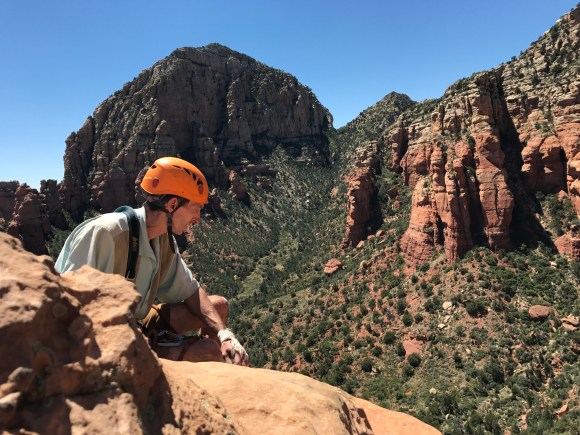
But I took another path with my kids, because I learned more from sitting on a ledge, than I ever did from a job.

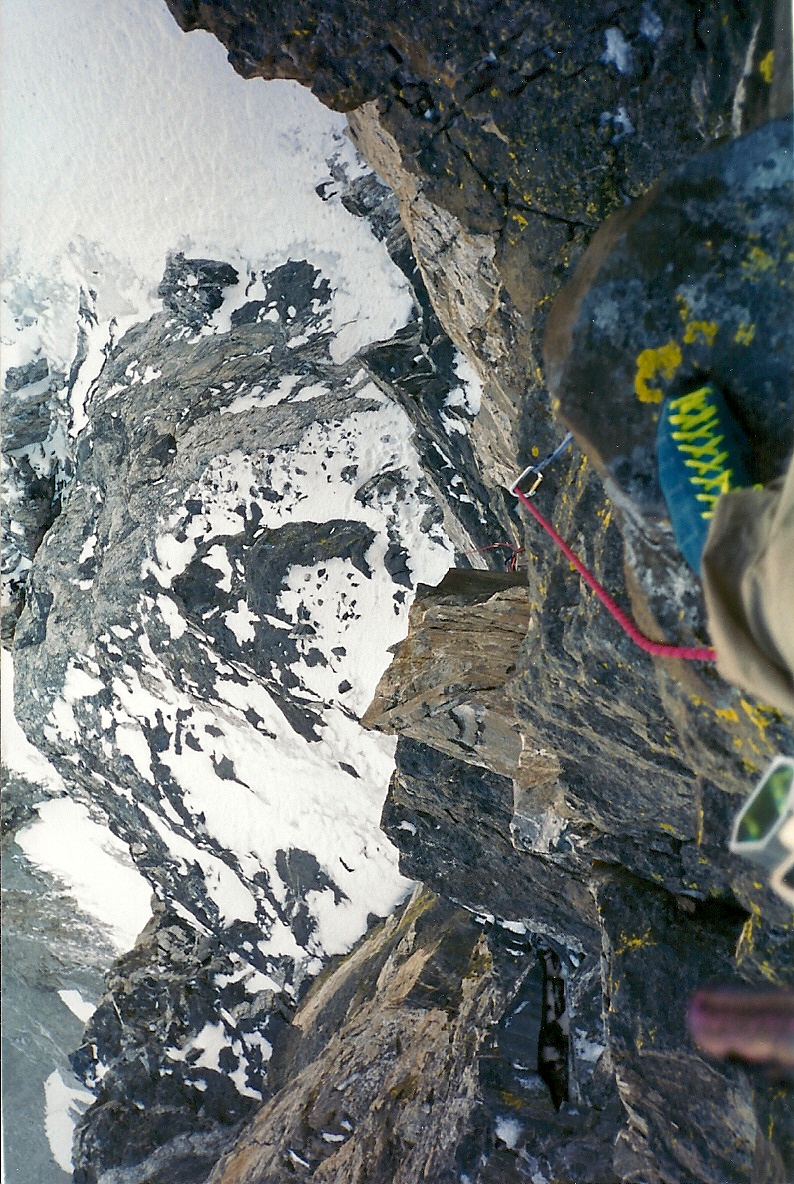
We have climbed several long routes together. We have looked up, down, and out from ledges in the middle of those routes and soaked in the lessons: however precarious the position, what falls to us is to pass the water around, check the system, and find our way through the next rope-length of terrain; trust your partners as you trust yourself; no matter how cold, hot, tired or thirsty you are, the beauty of the sky and landscape remain; achievement, i.e. ‘ticking the route’, doesn’t really matter – it is only a means to get you to the ledge.

In taking them on those climbs, my hope was to offer them a way of life which put making a living in perspective, rather than telling them that making a living would put everything in perspective for them.

A different vignette illustrates my point:

     Cook Ding was cutting up an ox for Lord Wenhui. At every touch of his hand, every heave of his shoulder, every move of his feet, every thrust of his knee — zip, zoop! He slithered the knife along with a zing, and all was in perfect rhythm, as though he were performing the Dance of the Mulberry Grove or keeping time to the Jingshou Music.
“Ah, this is marvelous!” said Lord Wenhui. “Imagine skill reaching such heights!”
Cook Ding laid down his knife and replied, “What I care about is the Way [“Dao”], which goes beyond skill. When I first began cutting up oxen, all I could see was the ox itself. After three years I no longer saw the whole ox. And now, now I go at it by spirit and don’t look with my eyes. Perception and understanding have come to a stop and spirit moves where it wants. I go along with the natural makeup, strike in the big hollows, guide the knife through the big openings, and follow things as they are. So I never touch the smallest ligament or tendon, much less a main joint.”
“A good cook changes his knife once a year — because he cuts. A mediocre cook changes his knife once a month — because he hacks. I’ve had this knife of mine for nineteen years and I’ve cut up thousands of oxen with it, and yet the blade is as good as though it had just come from the grindstone. There are spaces between the joints, and the blade of the knife has really no thickness. If you insert what has no thickness into such spaces, then there’s plenty of room — more than enough for the blade to play about it. That’s why after nineteen years the blade of my knife is still as good as when it first came from the grindstone.”
“However, whenever I come to a complicated place, I size up the difficulties, tell myself to watch out and be careful, keep my eyes on what I’m doing, work very slowly, and move the knife with the greatest subtlety, until — flop! the whole thing comes apart like a clod of earth crumbling to the ground. I stand there holding the knife and look all around me, completely satisfied and reluctant to move on, and then I wipe off the knife and put it away.”
“Excellent!” said Lord Wenhui. “I have heard the words of Cook Ding and learned how to nurture life!”
— Zhuangzi, chapter 3 (Watson translation)

I do not see the current generation as sissified hedonists, any more than previous generations. The hypersensitivity, the passivity, the absorption (self and otherwise) all look like symptoms of a bunker mentality. They see what’s in store for them and they don’t like it, but they don’t seem to know how to resist.

A Sasse-type message has gotten through. The citizenry coming of age does think that it must learn to embrace a social role (little worker, little voter, little contributor) wholeheartedly in order to fully mature, and it just can’t bring itself to do so. The instinct is right. Kids growing up in this era are being asked to pursue a sort of faux-maturity which involves merely “giving up childish things”, and the achievement of that state will leave them empty and utterly dependent on a structure which deals with them on the basis of a flawed methodology.

They need a little less Ben Sasse, and a little more Cook Ding, when it comes to advice about how to grow up. Because maturity means dealing with your situation – not just endorsing it – and dealing with it artfully. It means getting over being The Cobbler, The Christian, The Cobbler-Christian, or even The Cook.

In Sasse’s terms, I have laid out the Romantic counter-argument to his Realist argument regarding the nature of the individual’s relationship to civilization. But I reject that characterization to some extent. There isn’t an inherent conflict between the individual and the civilization. We are stuck with our civilization. It lies before us like the carcass of a great ox, and it is just as indifferent.

We get chopped up in our interaction with it, but our own hand is on the knife. And I agree with Ben Sasse here,  maturity is the solution. Not the faux maturity which the senator espouses, which is just a form of selling out, but actual maturity which sets limits and carves its own way, not towards some magical future, but like the cook’s knife, in the present where we all reside.
IMG_3666

Tagged , , , , , , , , , , , , , , ,

The Door in the Very Back

Freedom’s just another word for nothing left to lose

Janis Joplin

Attachment is the root of suffering

Buddha

We live in Scottsdale, an outpost latched to the Sonoran Desert like a tick on the back of a bony mongrel. It calls itself a city, but it is not. Cities are permanent settlements which arise spontaneously from commercial roots. A city has some external basis for its existence, like a navigable river, a mineral deposit, or rich surrounding farmland. Being based on a natural utility, a city bears the confidence of legitimacy coupled with the discipline of responsibility. Take a port city for example, which grows a superstructure founded upon its waterfront. Though they may grumble about their tax bill, no citizen of the port need wonder why the city government spends money on building docks and dredging the harbor.

Scottsdale has no such foundation. Instead, it is an amenity for its amenities. The city provides an airport so that wealthy snowbirds can migrate to the desert when the first frosts make their hometowns uncomfortable. There are golf courses soaked in stolen water from the Colorado where executives do business in information technology and professional players entertain resident retirees. Many districts are zoned to allow restaurants and shops mixed with apartments and office buildings. The resulting environments have adopted the label “live/work” for themselves. Metaphysically, it is radioactive and I blame exposure to its rays for my wife’s parasomnia.

She does not sleepwalk, nor does she exhibit signs or symptoms of any other ordinary sleep disorder. Her affliction may even be unique, since I have found no record of similar cases in the literature.

This is how it manifests: as I am falling completely asleep, she grabs my shoulder and shakes me.
“How long did you say it would be until humans go extinct?”, she asks.
“About 100,000 years,” I answer.
“Really?” she exclaims” Then what is the point of all this if humans are just over someday and nobody will remember any of us or anything we did?”
“Well,” I say “that question is just bad. Asking an existential what’s-the-point-question is like asking why isn’t round, green. Separate things entirely.”

“Well,” she persists, “I don’t see why we try so hard to accomplish all these things that will be completely forgotten in the end.”
“It is just who we are,” I offer.
“I still don’t see why we try to do anything at all,” she says.
” Try not doing anything at all, and remember, sitting home eating ice cream is doing something,” I say.
There is silence now from her side of the bed.
“Say,” I ask, “do you want to go to Walmart tomorrow?”
“Yeah,” she replies, “that will be fun.”
She settles back and goes to sleep then, but I know she’s unconvinced. We will have this same conversation again, on another night in the near future, in the few minutes before sleep overtakes us.

The trip to Walmart will buy us a couple of peaceful nights. She loves Walmart, like most of us do. The store has a broad-based appeal, as evidenced by its presence in the middle of upscale Scottsdale. Our local Walmart typically has as many BMWs as it has Chevys in the parking lot. It took me a long time to figure out why we find Walmart so attractive. It isn’t the items for sale. Everything in Walmart is available someplace else. Buying the same goods over the Internet is generally more convenient and may be even cheaper than going to the store. The physical environment isn’t the draw either. The aesthetics of Walmart’s interior design leave much to be desired, and practically, it is a maze crammed with items that are sometimes poorly marked.

The ingenious curation of items is the key to Walmart’s appeal. Everything on the shelves serves its purpose up to the highest level manageable by a layman. When a shopper walks through the front door with a certain need, intent on a particular item which they have calculated most likely to fulfill that need, they may or may not find the object of their intent. But, they are almost guaranteed a solution amongst the goods in stock.

Say a shopper comes in looking for a dovetail saw, because they want to cut thin plywood and figure that they need a saw with a straight, self-supported blade. What they find on the shelves at Walmart is a variable speed, electric reciprocating saw. As they consider the electric saw, they realize that they really don’t know anything about the dovetail saw, other than the fact that it has a straight blade which is self-supported. Maybe, they think, they were about to get in over their head by buying a dovetail saw. The electric saw looks like it will do the job, and is guaranteed to be manageable for an amateur like them. All the items in Walmart are instructive in this way.

When I first grasped the secret of Walmart’s draw, it seemed like magic. But it turns out to be something less. In fact, I think the Magi in the back room of corporate headquarters sorted out their strategy by watching beavers. At first glance, beavers seem to be brilliant little creatures. Their dams and dens look like masterful feats of engineering. But in truth, all the beavers do is put sticks where they hear flowing water. The dam is just a manifestation of accrued impulse.

The Magi understand that humans are just the same as the beavers. Everything man-made is a manifestation of accrued impulse. Instead of reacting to the sound of water flowing, we respond to an urge to preserve. Our impulse to save the status is expansive, and pertains not just to personal existence, but to the entire infrastructure of personal identity. Wherever we hear a trickling leak of currency dripping into memory or memory into oblivion, our species hustles over to plug things up again. To get the job done, we will use anything that we can get our hands on: monuments, literature, culture, or personal possessions.

Over the centuries, we have built up dams made of dams to preserve us. In a room in the very back of corporate headquarters at Walmart, the Magi have a model of the whole thing. They can see what sort of patch will fit a particular defect in the barrier. The dam of dams model shows them exactly what kind of jersey to put in the men’s athletic wear section: A tank top which recalls the shirts of famous players long retired, without naming names, yet a garment current enough in its design to acknowledge present stars. This sort of insight is just too perfect to attribute to anything less than informed and premeditated action. It requires a model of the dam.

On occasion, right after I am shaken awake to answer existential questions, I fantasize about taking my wife to corporate headquarters, where we will find the the door in the very back of the complex. I could then show her the full extent of the dam. I wouldn’t say a word. I would let the monstrous complexity of the model speak for itself.

But when I awaken the next morning, I never get up to pack the car for a road trip. Rested and little more sober in the light of day, I suspect that a peek at the whole structure will not cure her sleep disorder, anymore than my reasonable words. I think that she will need to see what the dam contains, and not the dam itself. That stuff is transparent and liquid to the touch, though. It will be dangerously easy for her to dismiss the stuff of identity, even if she were able to dip her toe in it. I doubt that the Magi have gone so far in the name of realism as to fill the reservoir behind their model. They don’t really need that part of the simulation anyway.

It doesn’t really matter. I can survive a little lost sleep. My answers to her questions remain adequate, even if she does not find them conclusive. Besides, in a few decades, the desert will shrivel and the Colorado River will be sucked dry. The city of Scottsdale will flop over with its legs curled in the air. The rest of everything humanity has built will follow shortly, in geologic time. No one will recall her metaphysical sleep disorder. I think I will not keep thinking about a cure. It is a unique experience after all. And there is always the solace of a shopping trip the next day.

Tagged , , , , , , , , ,

AI, Determinism and Supervenience

Recently, NPR interviewed the man who “de-aged” Robert De Niro for the film, “The Irishman”. The conversation drifted into the metaphysics of computer-generated imaging:

GARCIA-NAVARRO: And what you’re describing is a technology that’s only going to get better and better, which I think brings up some ethical issues because as the technology gets more seamless and commonplace and those likenesses that you’ve just described get more subtle, could we end up doing away with the actual actor altogether? I mean, could it come to a point where a studio owns the digital image of an actor and just uses that instead of the real thing?

HELMAN: I don’t think so ’cause the performance has to come from somewhere, and that has to be the actor. And so just think about what it’ll take for a computer to do what Robert De Niro does. You need to train the computer – right? – to do those kinds of things. And basically, if you think about the behavior or likeness of somebody, how do you become yourself? You become yourself by living, you know, by having a bunch of experiences. And then you also have all the connections that are made in your face, the way you smile, all the cultural things that you live.

So if you want a computer to act like Robert De Niro, you need to train the computer like Robert De Niro. And then you spend a lifetime, you know, basically training the computer. And for that, you might as well just use Robert De Niro, you know?

Quite right, and more generally correct than I suspect Mr. Helman intended. Explanations pertain to the past, where things could not have been otherwise. The future will always be the realm of probability, else, to echo Mr. Helman, it will already have been.

The supervenient identity specifies its base. Otherwise, there is no explanation of the identity by the base. The point is: there are no loose ends – no theoretical De Niro’s.

Tagged , , , , , ,

A Bucket of Wings and a Pitcher of PBR with the Baby Jesus

The first time that the Baby Jesus talked to me was at YMCA Summer camp. I heard him on assignment, lying on my bunk in a group cabin while the cicadas droned outside. Us campers had been sent back to our quarters after an evening devotional to listen for a message from God. Around the campfire, our counselors had had admonished us to listen with humility. We had to silence all our selfish desires if we hoped to perceive a divine whisper. We even had to relinquish our hope to hear a whisper from the Lord, if we hoped to hear a whisper from the Lord.

As I lay with my eyes open in the darkness, I was having more trouble tuning out the insects than the cacophony of my selfish desires. The cicadas’ ballad seemed to come from the darkness itself. I had long practice ignoring the undulating buzz, having grown up in the South with no central air and therefore reliant upon open windows for enough cool to allow Summer sleep. With no clamor in my head, the bug song rose from the suppressed depths of my consciousness to make a noise again. I tried to block it out while not trying to block it out, or trying to try to block it out, and so on, until my attention became exhausted and let go of the sound.

Just then, something happened. A voice, or maybe just a feeling, told me not to worry. The speaker was there. Everything was going perfectly according to plan. I felt great. Maybe I even let go a few tears of joy that night. In any case, I soon fell asleep and when I woke the next morning, the world seemed to have a fresh scent, like it had been sprinkled with the lavender water of permeating divinity. The divine freshness lingered for a couple years, but from the moment of spritzing, it was doomed to fade. It could not be reconciled with events on the road to camp.

Our family had set out with a very aggressive vacationing agenda that year. We had left home two weeks prior on a mission to visit my grandmother and Disney World, both a day’s drive away. We would then loop back up to drop me at Summer camp, while my brother would go on to baseball camp, leaving my parents with a week of real vacation for themselves. The schedule was tight, and my father was not pleased when we pulled up behind a row of parked cars on a two lane road in the flatlands of North Florida. When we stepped out of the car, we could see an object blocking both lanes in the distance. Other people were getting out of their cars too, and it was quiet. We walked forward with all the rest.

On the opposite side of the road, about 30 yards up, a distraught elderly couple sat on the ground by their car. The car had a dent in the hood and its windshield was caved in. A few yards beyond lay a mangled bicycle. It was nice, or it had been. I had wanted a BMX bike like that for a couple of years, and I would have done with it what I imagined its rider was doing when the old folks hit him: jumping the banks on either side of the elevated roadway. The boy lay a dozen yards beyond his wrecked bike, diagonally across the lane lines. He was on his side with no apparent injury, from a distance, but with a puddle of blood around his upper body.

Standing over the boy, one could see that the blood was coming from his ears. His gaze fixed on something impossibly distant and his breaths came halting and deep. We circled around him as he died. Someone remarked that an ambulance was on its way, A nurse in the crowd screamed at the rest not to just stand there, but to run and get a blanket. She was upset to a degree beyond what the collective paralysis of the bystanders merited. She may have been wondering how Baby Jesus could allow such a thing. As a child, I knew that adults had their reasons and that those reasons were sometimes unfathomable. I just assumed that the same was true of the Baby Jesus.

I saw no injustice, but I saw his stare. Surely, the distant thing upon which the boy’s gaze fixed was his own death. Yet he would never get to that far place. If he just snuffed out, then he just snuffed out, like when the dentist gave me anesthesia to remove my wisdom teeth and asked me to count to ten as the drug took effect. I didn’t even fail to count to eight. I counted to seven and that was it; there was no experience of looking back on an unsuccessful effort to count to eight, only a memory of seven, then nothing. Likewise, if he saw a light at the end of a tunnel or rose into the ether to look down on his inert body, then he experienced a metamorphosis. He got yanked away from those final moments of physiologic cessation just like the anesthetic yanked me away from counting to eight.

If I had asked any of my fellow onlookers gathered around the body that day, I’m sure they would have spoken of death as a thing which might bear a scythe and a cowl. They would have named it an independent reality. But after that day on the road, I slowly came to see that they were wrong. I fantasized about what would happen if the boy could tell us about leaving his body. Jesus’ disciples were said to have had that very experience, when Jesus returned from the dead to speak to his inner circle. Yet they were only twelve meeting The One. I imagined a world where meetings with the dead were common. I imagined ghosts at first, but engaging in spectrology proved an unnecessary complication. The situation was the same if what happened to Jesus happened to everybody. Your bodily functions stopped. You went up into the clouds. You got a bit of a rebuild. You came back down.

If universal resurrection came to pass, the first generation affected might continue to speak of the Grim Reaper. But as the reportage of the pierced, crushed and disintegrated became commonplace, no one would refer to Death as a thing in itself. There would be misadventures and resurrections, and all would be properly seen as aspects of our total experience. Eventually, no one would even talk about Life anymore.

Though I did not appreciate it at the time, the considerations which began on that roadway in the Southern plains generated a frictional heat, which would finally evaporate the lavender water of permeating divinity. Over years, it dawned on me that Eau Divine had already transcended itself if we could put a name to it, even if we just spoke metaphorically. Like life and death, the scent arose from a great continuity of experience, which we could never look back upon from a discontinuous beyond. It was a slow drying out, and I did not even miss the scent until the next time Jesus spoke to me. That final time, I was sitting in a bar at lunch, far from Christian Summer camp, when the voice of the Lord came to me from a bucket of wings.

I don’t know why I ordered the wings. I was at a crossroads career-wise, so maybe I felt a little unstable and subject to whimsy. As I stared into the jumble of battered and fried appendages however, I recalled why I had become a de facto vegetarian. I felt sick as I imagined all the capabilities which those little wings had possessed in life, reduced to the mess before me on the plastic table cloth. But it was too late by then. I understood my place in the supply chain (having ordered) and besides, I could not leave food uneaten in my financial circumstances. Luckily, there was cheap beer on tap. I asked the bartender to bring me a pitcher.

I took a solid gulp of the rice-brew swill before having a second look at the wings. That’s when the voice, or maybe it was more like a feeling, came to me out of the bucket. It told me not to worry. Life had been given for life. It was all going according to plan. I could eat those chicken wings with a clear conscience, because that’s how it was meant to be. The essence of life got passed on, said the voice, and carried on from the poor little chickens to me. I stared at the crusty wings, and was not reassured. Those bits of bone and muscle that had been, could be taken for almost anything now. But they could not be taken out of circumstance or consequence, anymore than that boy on the road, Life and Death, plans both mortal and divine, or the voice of the Baby Jesus, coming, as it did, from the bucket, or the ether, or any other relatively distinguishable source.

I downed the remainder of the swill and pushed back from the table. Somebody else got the wings, and that was the last I heard from the Baby Jesus.

Tagged , , , , , , , ,

The Dilemma of Divine Purpose

It is often said that God is the source of human (and indeed, animal) purpose, and that without God, there is no purpose.

But what is God’s purpose, and who can say?

Let’s dispense with the common confabulation offered in response: God’s purpose is to do  just what he does and to be just like he is. Of course, this response defines the difference between an explanation and an assertion, and when it is stated as an explanation, it makes a very tight circle.

When God acts, he manifests divine will.

God created the world, so the world is meant to be a manifestation of divine will. In other words, it is meant to be just what it is.

Any questions?

But there is no real answer within the common confabulation. Maybe the question can be reframed to elicit a precise response.

Can God say why he created the world?

This is not to say that he need explain himself to us. Is he able to explain it for himself ?

If creation was instrumental to some purpose for God – perhaps a cure for loneliness – then creation is actually dependent upon some set of determinants of divine will, i.e. circumstances to which the divine will responds.

If so, whence those cicumstances? Even if God can say, we all (us via God) are beholden to those circumstances. For all of us, the circumstances simply exist, and therefore, all of us simply exist.

But what if creation was not instrumental? Let’s say God simply willed it. In that case, there is no divine insight in principle – not even a Muse to blame – and again, all of us simply exist.

So,  we all simply exist, God too.


Tagged , , , , , , , , ,

What Does It Mean to Be a Disembodied Mind?

Really, we should go to the source for a self-report.

We immediately confront a problem, then. Where do we look?

That is to say, if we are to establish communication with the disembodied mind, then we must somehow individuate it. It must be a candidate for intentional inexistence if we even hope to take heed of it.

Yet individuation is precisely the psychological consequence of embodiment.

Look at it from the other side. What if the disembodied mind wants to talk to us poor saps wallowing in bodies?

Mustn’t it make it make the subject-object distinction first? And if it does, hasn’t it wiped out any hope of qualitative distinction from the rest of the body-wallowers?

It is merely a prettier critter, after all.


Tagged , , , , , , , , ,

Balance Impaired


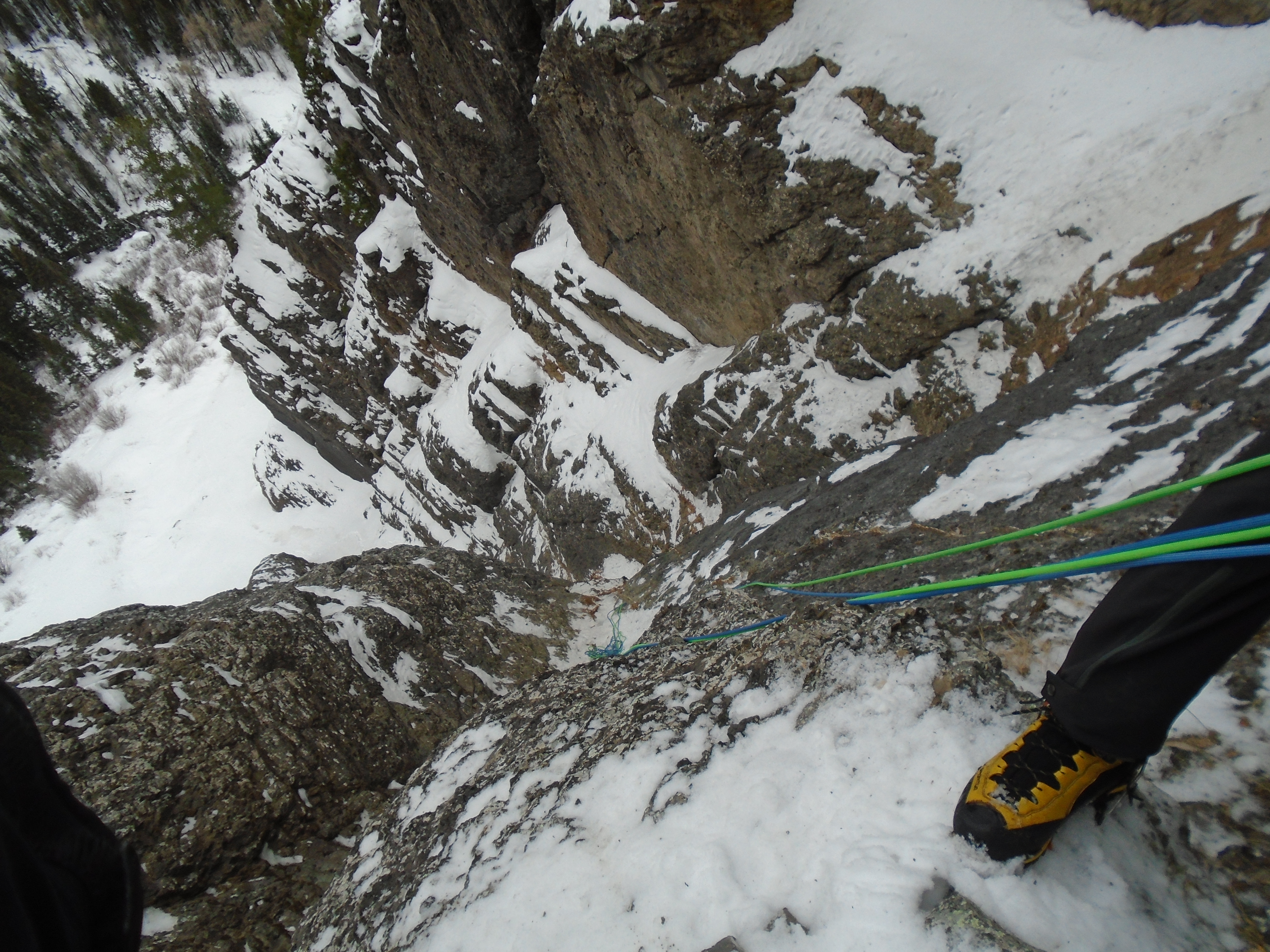
DSC00176Close-up, the little gully evoked a strong sense of deja vu. The angle suggested that one might almost be able to stand up and walk it. The rock looked like a crocodile’s skin – all knobs and chunks with few cracks or pockets – and the few voids in the surface had formed from the erosion of yellow clay inclusions. I had been in this situation before, in the Canadian Rockies, the Tetons, the Cascades. It meant sparse and dubious protection for insecure climbing, with an ugly fall looming throughout.
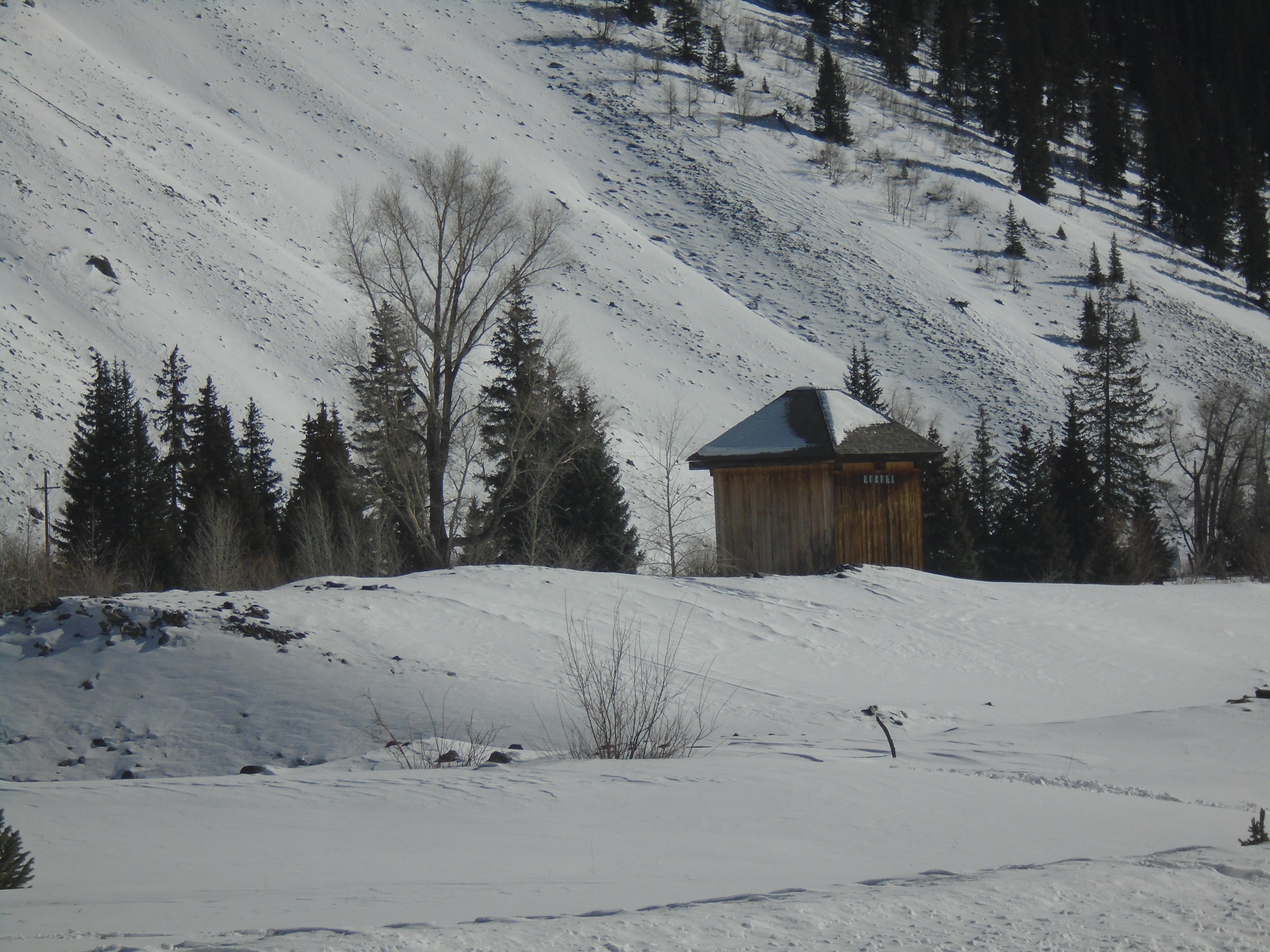
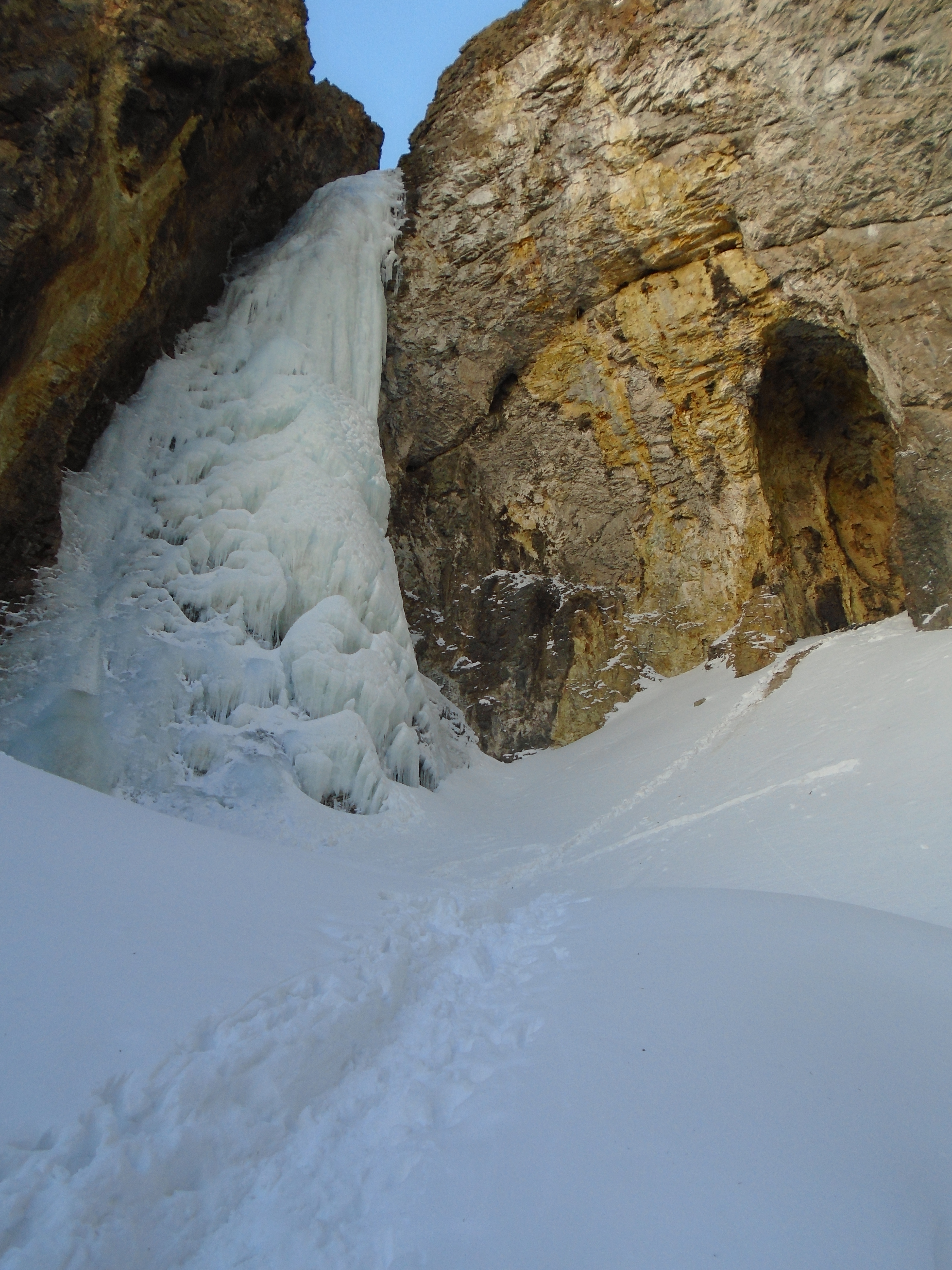
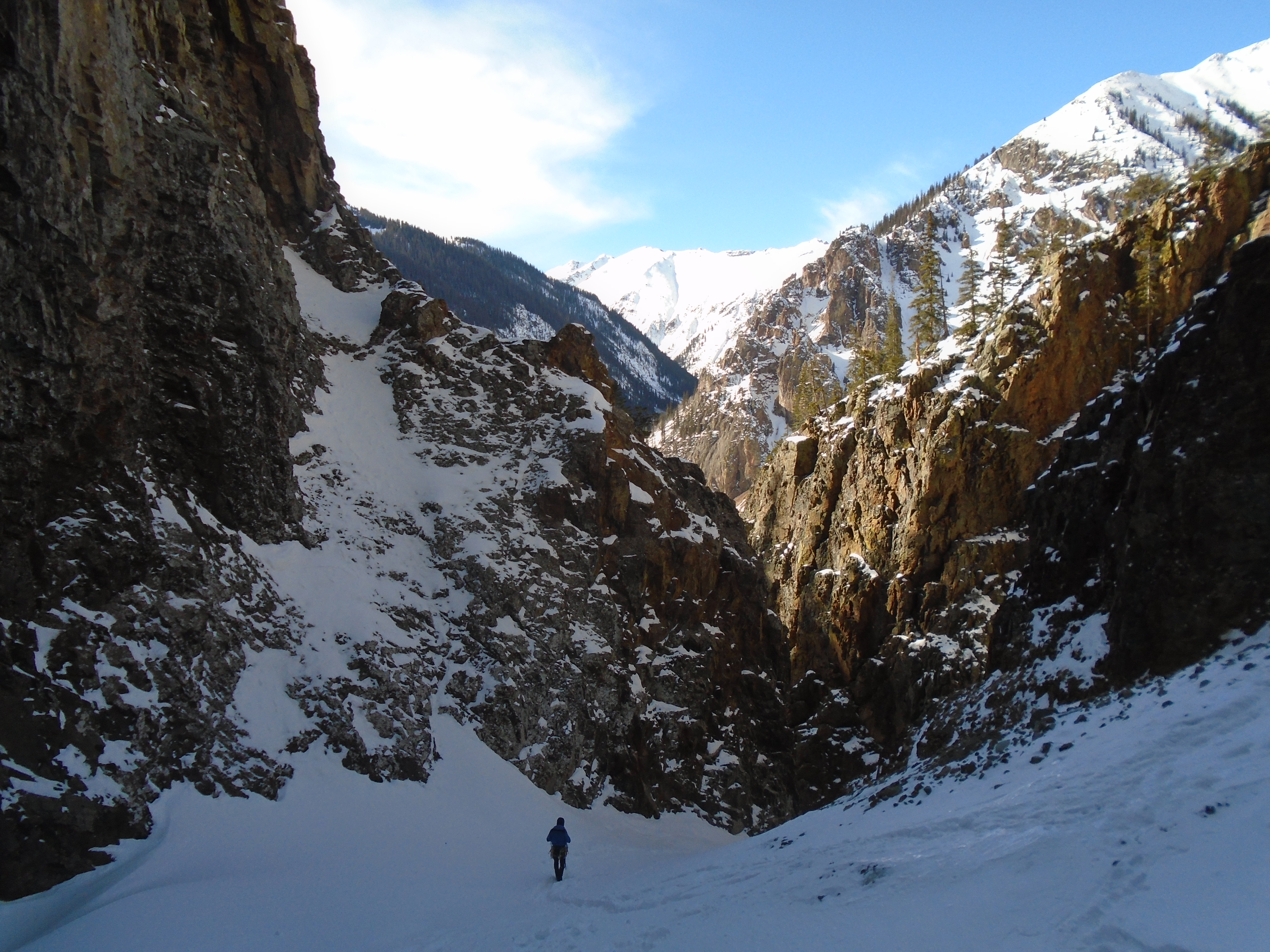
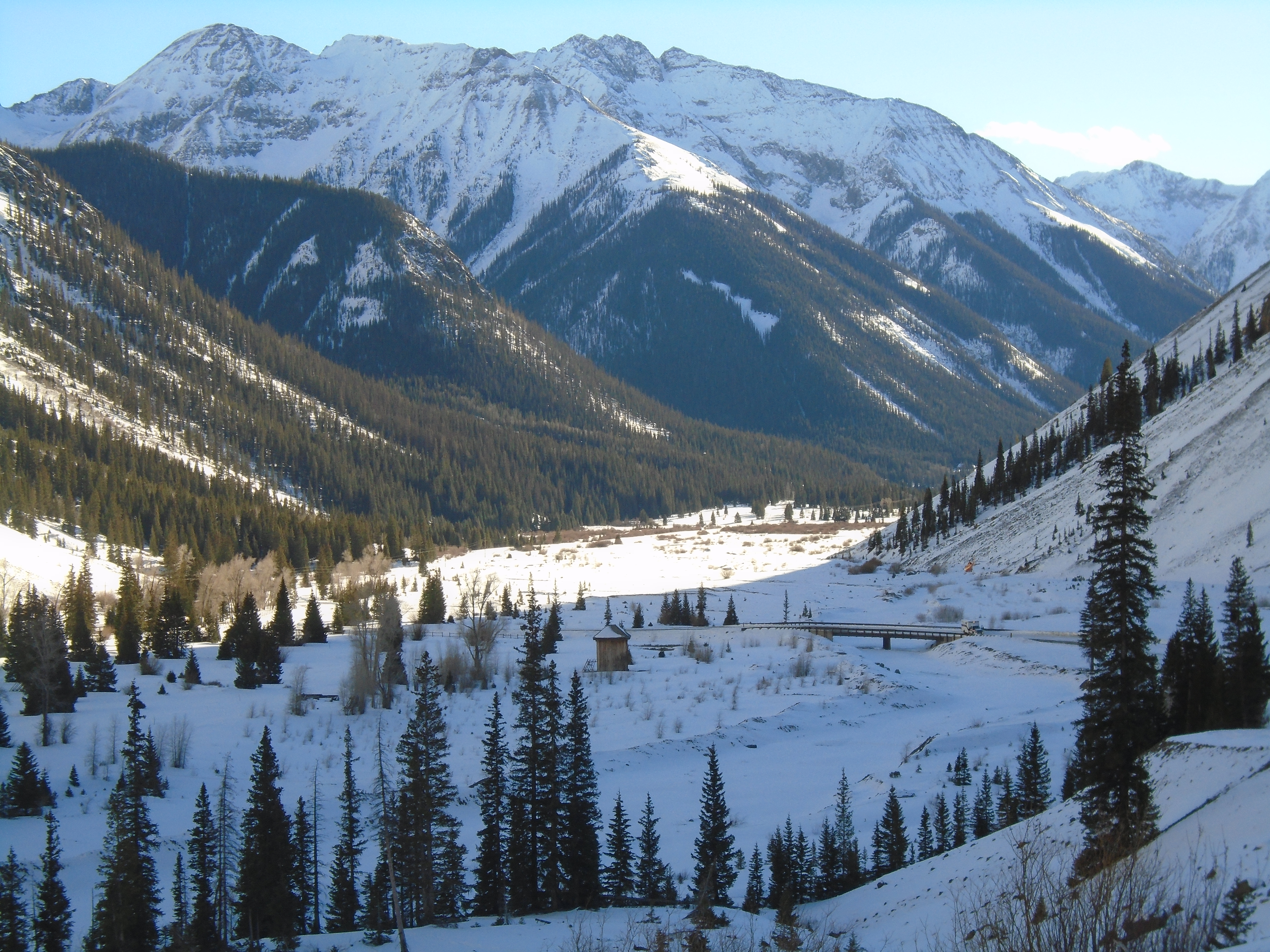
The fresh memory of yesterday’s Eureka foray reinforced my unease. Just going into the mining country in Colorado’s San Juan mountains is sobering.  The road winds through acres of avalanche terrain peppered with jumbles of gray boards and rusty iron marking the eternal resting places of generations of abandoned avarice. Eureka itself stands for self-consciousness of our bitter relationship with the range. Once a small,  hopeful mining community the town is now a single building. The lone, windowless watchtower bears a prominent sign with the name of the town, placed there, no doubt, by the same sort of joker who might strap a party hat on a skeleton.

DSC00173

Yesterday was our second consecutive day at the ice climbs in the valley above the ghost town. The day before, we had been denied access to the longest climb in the area by an SAR exercise. Yesterday, we encountered a line of four parties on the same route, and we decided to trudge a bit further past the routes at the valley’s entrance. Around the bend and not far above, we found a lovely pillar of ice baking in the sun. The air temperature was cold however, and the ice looked to be in good shape from the ground, so we went for it.

My partner took the lead and ran the two pitches together. It went well until the very top. There he found the last few feet melted out and he could not get to the fixed anchor. Worse, in a fit of hubris, neither of us had thought to have him take the kit for building ice anchors. He put in two ice screws at his high point and I lowered him back to an intermediate ledge. He set up a belay and I set off to retrieve the ice screws and build an anchor in the ice to get us back down to the base.

Looking up at the situation, I knew that I should not risk falling. He had placed the two screws at the anchor properly. They had already held his weight on the lower. But the stainless steel tubes were basking. Many times, I had raced the process now at work on the anchor, placing another screw on a sunny climb before the last one heated up enough to melt loose. I arrived at the anchor and placed a back-up screw. Out of curiosity, I jiggled the anchor screws. They rattled in their holes, and by the time finished the rappel anchor, I could lift the screws free with two fingers.

DSC00159

By the time we got back down, the crowds had migrated our way. We had another objective in mind for the afternoon, but our hopes were squashed on the road, for we found a fellow standing at the head of the approach trail just staring across the valley as if he were reconsidering something. He informed us that he had ridden a slab avalanche for a few meters down the slope below our goal.  My partner had his wife and young son waiting back in Ouray anyhow.

DSC00163

There had been angst around bringing the child, who was their first. He was a nidus of concern in some familiar ways. He was 18 months old and did not want to eat or sleep regularly. He clearly understood everything said to him, but his only bit of expressive language was the word “No”. Each morning, he spent a non-stop hour on Rube-Goldberg action. Cups went into other cups, packets of jelly were transferred from person to person and then into the cups, and then back to their original owner. All of this chaos worried his parents. It seemed so overwhelming that one could hardly imagine any organized behavior arising from it.

Unless you had seen it before. I had. I distinctly recalled worrying about how I could possibly teach my first child to speak. I had no training, and no idea where to begin. Nevertheless, the kid started to talk. He had inherited the talent for it. From an adult perspective, it looked like a miracle, because adults liked to think that they had, each and every one, invented the world – or at worst discovered it. That way, the adult felt more competent, and the world seemed more solid.

From the child’s standpoint, he was building a constellation from the inside out. He had his experiences – what he might come to call ‘sense impressions’ should he grow into a particularly deluded adult – and he had the dots and lines to mark and tie together those experiences, inherited in his nucleic acids, language, and culture. The dots and lines were powerful tools. They would allow him to develop at heady pace, mapping out massive territories, like language, on the fly.

His ancestral mechanisms  assembled his star chart in a blur, and if he was at all self-conscious in his adulthood, he would spend a lot of time figuring out how he got there, and what kind of picture he had made with all those dots and lines overlying the bright spots of his experience. It would be daunting and he might be tempted to throw his hands up and just call the dots and lines the truth, to give the mathematical, linguistic and philosophical accretions on experience an undeserved solidity, while relegating the experience itself to a dirtier, incomplete status.

My partner’s son would have an antidote in that case. He would learn to climb, and that would at least open the blinds on the relationship between the picture of the stars and the stars themselves. He would still have to look, but most people didn’t even get that chance.

DSC00170

Perched in the little gully, I saw the true landscape.

I was not motivated. I felt the burden of all those extraneous considerations which populated the slope with angels and demons instead of little edges and blotches of ice. I climbed back down and handed the sharp end over to my partner. He was motivated, and managed to lead the pitch despite some misgivings about the security of the climbing. I followed without slips or fumbles. It was sketchy, no question. We looked at the next pitch, but decided against it. It would be there when the stars aligned favorably, or even better, when no one was thinking about the pattern of stars at their back.

Tagged , , , , , , , , , ,

Curse You Peter Higgs

“Mass was so simple before you. Mass was just a property. Actually it was just a property of having another property: inertia. Inertia was so simple, though. It was just the property of resisting changes in motion.

Of course, we all know what ‘resisting’ means. And, we all know what motion is: d/t. If anyone must ask what distance and time are…well, there is little hope for someone so dim. At least, there is little hope for such a dimwit in physics. Hah! It looks like someone needs a metaphysician!”

The line of thought is a big hit with dualists. Actually, it is the best thing about mind/body dualism, and is why it’s good to have mind/body dualists around. Without them, physicalism grows too complacent.

The physicalist can be forgiven. It seems so obvious what we mean when we say that something is physical. But what does that mean? Is it simply anything that’s the proper business of physics? Is physics itself the proper business of physics?

The question of what makes something physical is actually difficult, even within physics. Take the Higgs field. It is not a ‘thing’; it is not even a ‘property’ of a ‘thing’. It is a property of space. It is a phenomenon which physics considers, but it is really weird, from the perspective of the old extended/unextended divide which Descartes proposed.

Yet we are prepared to accept the Higgs field as something physical, along with apples and atoms. That’s because we have been prepared to accept the physicality of the Higgs field by accepting  the physicality of things like d and t in the Newtonian scheme, as physical. Time and distance are not any less weird – they are strangely malleable, for instance – but they are more easily recognizable as our own phenomena. We experience time and distance, and we are comfortable with the idea that physics is a phenomenology of time and distance.

If we have drilled down to the notion of physics as phenomenology, and understand phenomena as our experience, then the remaining question is: What is our experience? I am not sure there is an all-encompassing answer to that question. Yet I think we can say a few things around the question which are instructive as to the notion of physicality.

At base, our experience is identity, and identity is interdependence. If I am watching an egg roll off the counter and hit the floor, I am the one watching that egg. The rolling egg, among other things, is making me, me. The memories of eggs, dependent upon the shape, color, texture and historical context of my current experience, shape my thoughts and expectations regarding the egg, just as the color, shape and texture of the egg depend upon the impression that the kitchen light delivers to my eyes after it bounces off the rolling egg. That is what the notion of supervenience is getting at: identity is fixed by spatial and temporal history.

And such a thing cannot be ‘transcendent’. It comes with the here and now; (physical) existence has a tense. ‘Tenseless’ existence is a product of reflection and not what we directly experience. Transcendence, in other words, occurs in the storybook, not in the story (else we would never read a story twice).

The trouble with this whole picture is that it looks like a truism. If physicality consists of an interdependent identity which avoids transcendence, then what is left? Ghosts are live possibilities; so are Higgs fields. Of course, that is the point of physicalism. When we look at our experience in total, physicality seems to exhaust all the explanatory possibilities, or at least the ones we could hope to know.


Tagged , , , , , , , , ,

That Moment

scan0012

Every climber starts out believing in their own invulnerability. Death and injury happen to other people, because they are fools, suckers, or just don’t have the luck, like you do. Believing oneself impervious comes in very handy, especially during the formative years. In that era, every risk and critical action is still new.

scan0009

The other ‘O.S’ route, North Ridge of the Grand Teton

You will take big run-outs whether you plan on it or not. You will make potentially fatal mistakes along the way. If you think nothing bad will happen to you, then you will march on past those moments of critical danger and learn the game. Of course, other outcomes are possible. Some people get the chop during the formative era. Some get bored with their apparently inevitable success and abandon the sport.

For everyone who sticks with it, there comes a moment when the belief in one’s invulnerability gets wiped away. For me, it was watching people die, and nearly being killed by the falling bodies. After that, there was no wishing my way back to the last age, where it couldn’t happen to me, no matter how convenient such a wishful belief may have been.

We can’t pick and choose what we believe in the end. No matter what, those moments come to spoil the utility of our delusions. Yet after the disappointment fades, you begin to understand: what you do after those moments is what really matters.

801424


Tagged , , , , , , , , ,

He Baked a Cake with Duty in It

Duties never truly conflict. Unless they are truly categorical. But if they are not categorical, are they truly duties? 

You know what, I gotta take a walk. Forget all that stuff I said before.

– Immanuel Kant (astral form) as related to me, 0300 June 8, 2018


Every act is a political act.

-Cain, to whoever would listen.

A baker in Colorado claims to have managed the feat. He said that the totally gay-free contents of his cake fulfilled his obligation to show love for the Baby Jesus. Because, as everybody knows, the Baby Jesus don’t like the gays. Wait. Strike that. The Baby Jesus loves everybody, so he just don’t like the gayness.

Anyway, this baker loved the Baby Jesus. He refused to bake any cake with any gayness in it, and in doing so, baked into each cake his duty to abide by the wishes of the Baby Jesus.

Some might ask how the baker’s achievement were possible. Cakes are made of flour, sugar, mixing and heat. You will never find respect for the Baby Jesus between the crumbs or under the frosting. But that assessment is not fair.

The folks who ask to see the duty in the cake (God bless their simple hearts) are the same ones who, when told that green experiences reside in the brain, ask to open up a skull to see the green inside. They like to hold the notion of supervenience  upside down, because it seems easier to grasp that way.

But it isn’t so much that neurons and photons and retinal pigments add up to green; the point is that green experiences break down in certain, common ways. Admittedly, the difference is a little tricky to apprehend. It has eluded smarter folks than the poor bastards delving for green things in a pile of brains. Mistakes about the difference have led some very smart people to propose that we can get rid of green, and everything else. Instead of saying “green”, we can just hold up a balance sheet with all the retinal pigments, neurons and photons on it. But then we’ll need a balance sheet for the neurons, photons and retinal pigments, and so on and so on. You can’t get away without primarily localizing things somehow, and you always end up reaching for the balance sheet labeled “green” when you want to indicate “green”, and then you  might as well just say “green” in the first place.

The same mistake about supervenience gives rise to the notion of emergence. Emergence is the balance-sheet scheme for those who just can’t let go of Aristotle (and a very uncharitable reading of Aristotle at that). The only thing on the balance sheet, in the emergent case, is something like a metaphysical time-share: property theoretically without exclusive ownership, but available for occupancy by a variety of occupants in turn. For green, the pigments, neurons and photons tally up to a certain critical point and then begin acting with ‘greenity’, which subsequently begins to explain everything else directly related to green. In the case of the cake, flour, sugar, water, heat, and so on tally up to a certain point and suddenly – cakeity. Ask the obvious question – where does the cakeity or the greenity begin – and the whole thing unravels, just like the more detailed balance-sheet scheme. You circle back to simply saying ‘cake’ and ‘green’, and ‘cake’ and ‘green’ then break down in certain, common ways. Each cake and each green perception has its own, unique identity, without a homogenizing property reaching down to bring it into the categorical fold.

Now we can get around to duty in the cake. Not only will we fail to find specks of duty among the crumbs, but we can’t expect it to pop out of the baking process, or even to be the sum of baking, Bible verses, and love of the Baby Jesus. That’s OK, though. So far, duty fares no worse than green, or cake itself. But it is worse for duty, because duty does not break down in any reliable way. It doesn’t even break down in any definitive way.

The baker baked a cake without any gayness in it, because he loved the Baby Jesus. He told the world, but he would have felt that he was true to the Baby Jesus, even if the baker himself was the only one who knew that there was no gayness in the cake. So then, the duty can’t break down to any relationship between ideas or even attitudes. Maybe it breaks down to just the baker’s attitude toward the Baby Jesus. But then you don’t have an account of the compelling part of the perceived duty, especially regarding gay-free cake.

Loving the Baby Jesus is just loving the Baby Jesus. In itself, the attitude does not contain any obligation. You can’t break down moral obligations (or any other moral “properties”) to a supervenience base. Therefore, we also lack reliable generalizations regarding moral obligations and moral representations.

You can’t even make a cakeity (emergent) case for duties, because duties don’t arguably emerge at some compositionally determined phase. Duties can pop up anywhere along the way, from turning on the lights in the bakery to accepting money for the cake.

The inevitable response to the above observation is an argument from incredulity which refers to the holocaust or infanticide. You can always say that it is morally wrong to throw a baby on the campfire, bake a gay cake, or exterminate a certain group of people, but such statements are always after the fact and are supported by historical fixation of the facts in the acrylic of moral terminology.

After all, moral arguments have been made in favor of all the above activities. And, the moral advocates have not differed with moral opponents of those actions on the factual contents of the actions; they have merely assigned different moral properties to the things and events which can, like a cake or a fire, be said to have a supervenience base, and about which effective theories are possible. In other words, moral ‘properties’ are merely attitudinal ephemera, pinned to the facts of the matter, whatever the matter may be.


Tagged , , , , , , , , , , ,