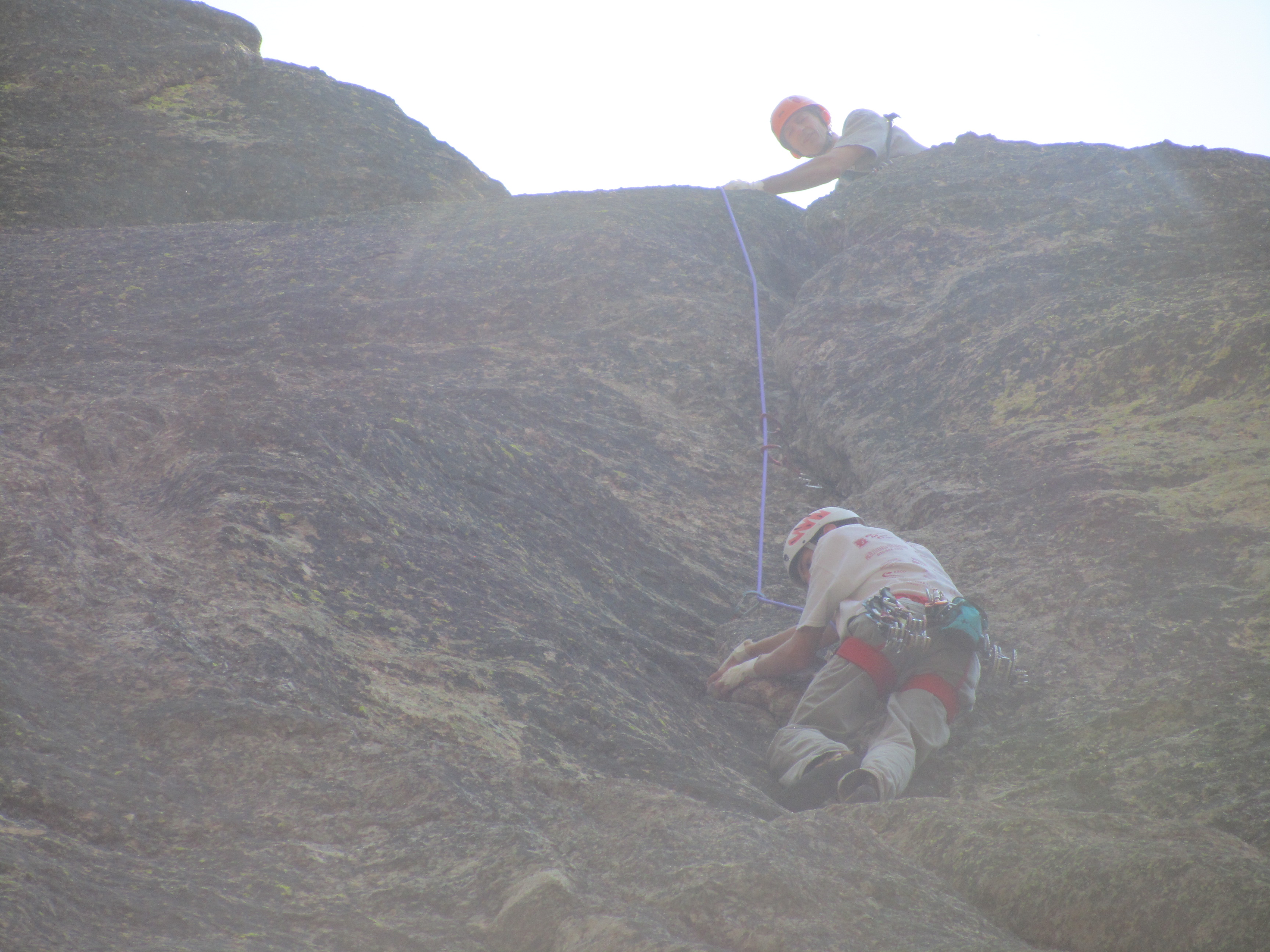
As I prepare to move to the desert, I’m going back to do the climbs that have shaped me.
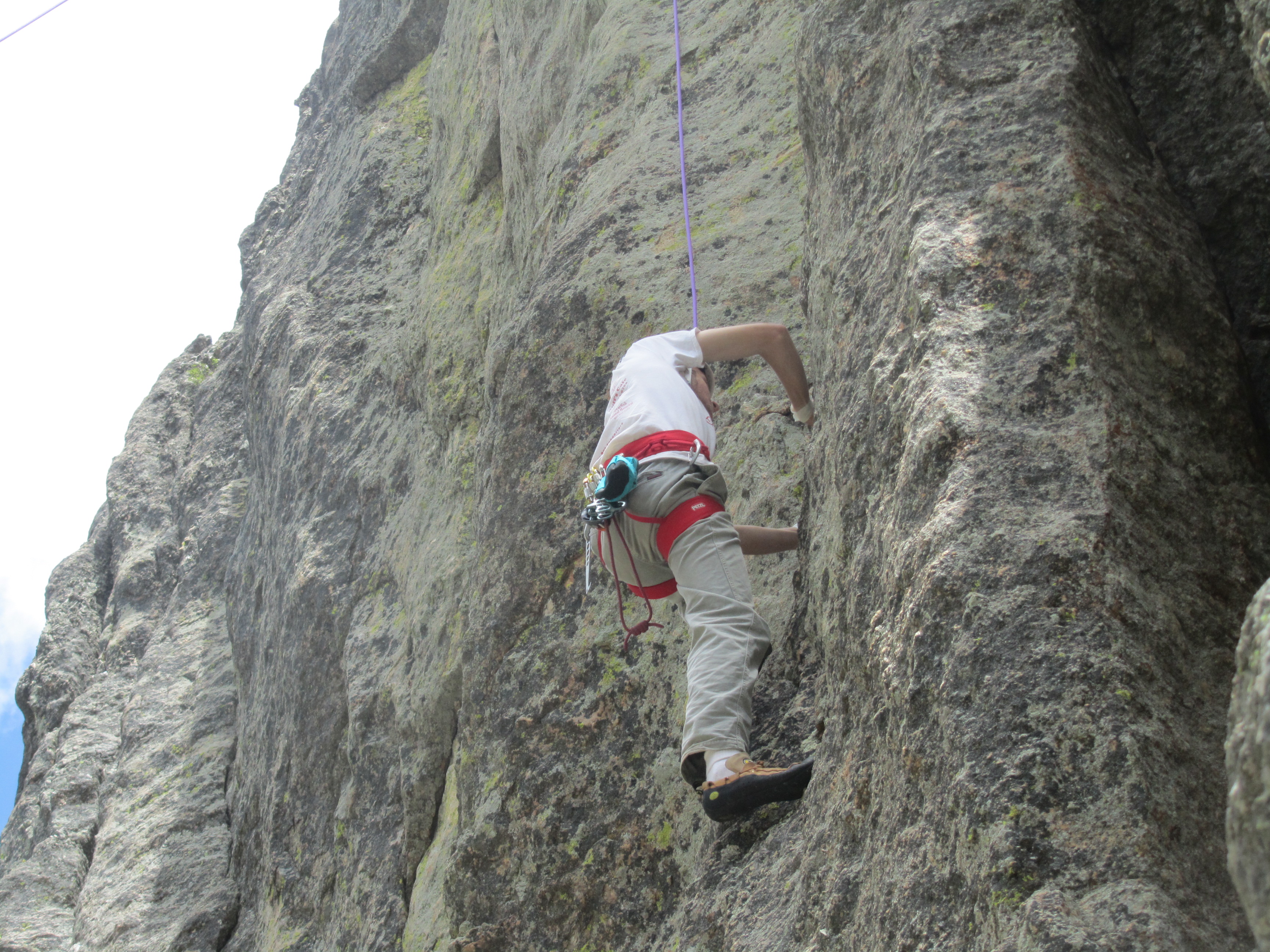
I am climbing them with my sons. I will not imply a goodbye to my friends and partners over the years by involving them in the project. There is no goodbye for them.
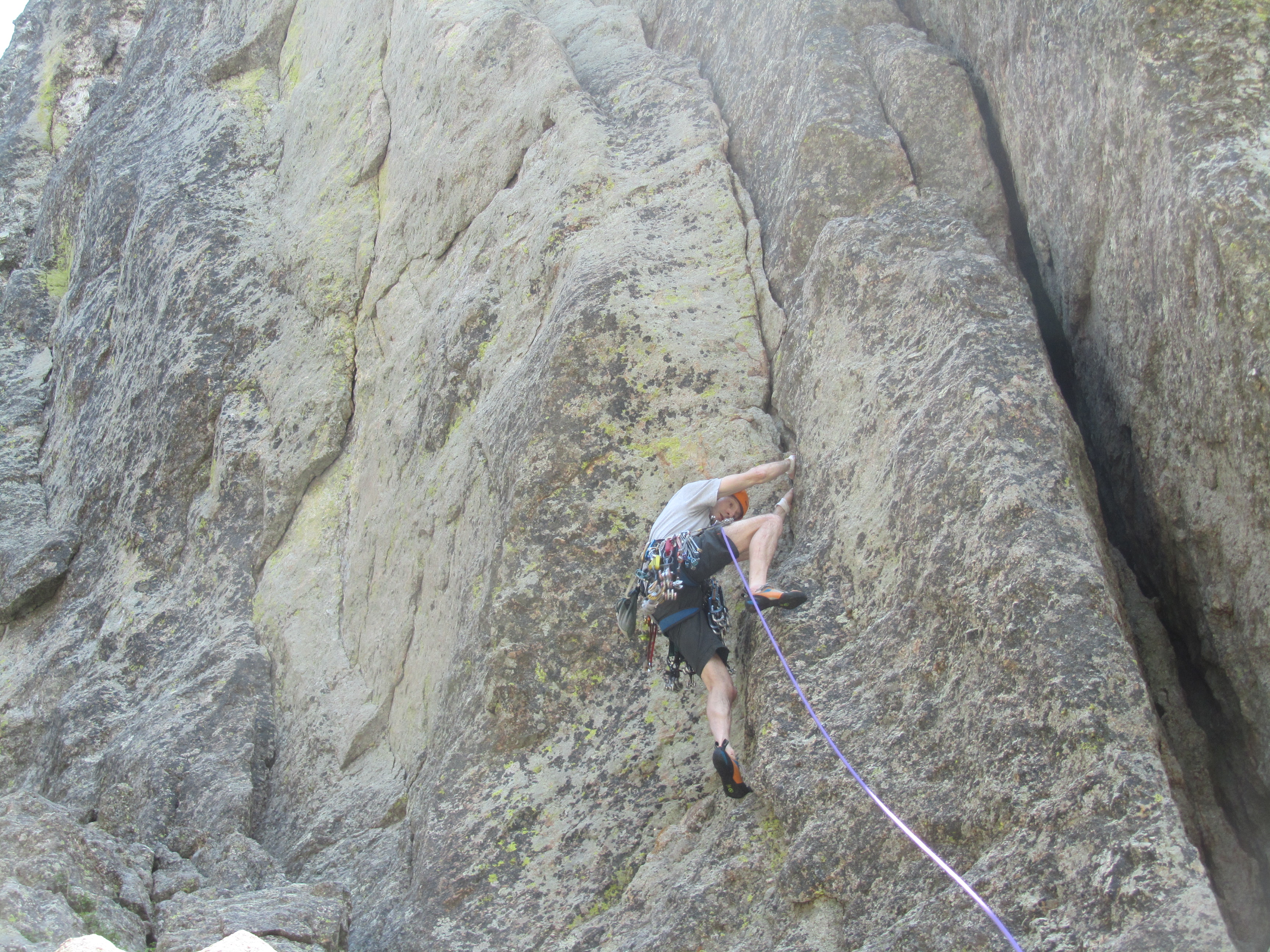
As I return to the old routes, I am finding them suddenly easier. I think it is because I am finally climbing them without any surpassing ambition.
I am not climbing them to become a better climber or to get to the next, harder route. Instead, I’m starting where one always ends: climbing to make the next move.
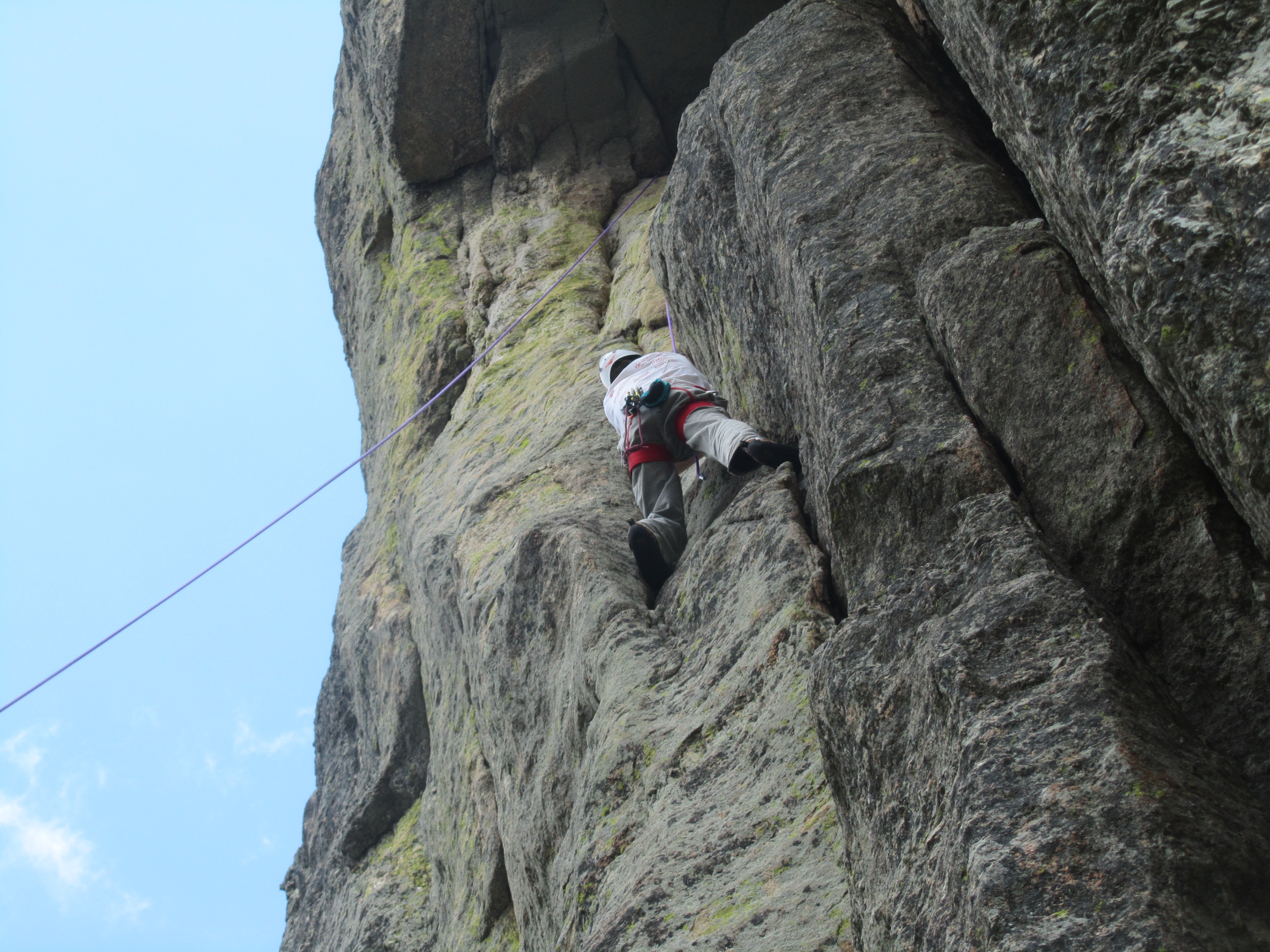
And as I do so, I’m finding just how deeply those routes have etched my nerves, my bones, my ambitions, and my morality.
They’ve given me technique, tough fingers, persistence, acceptance, joy in small victories and peace in grander desires.
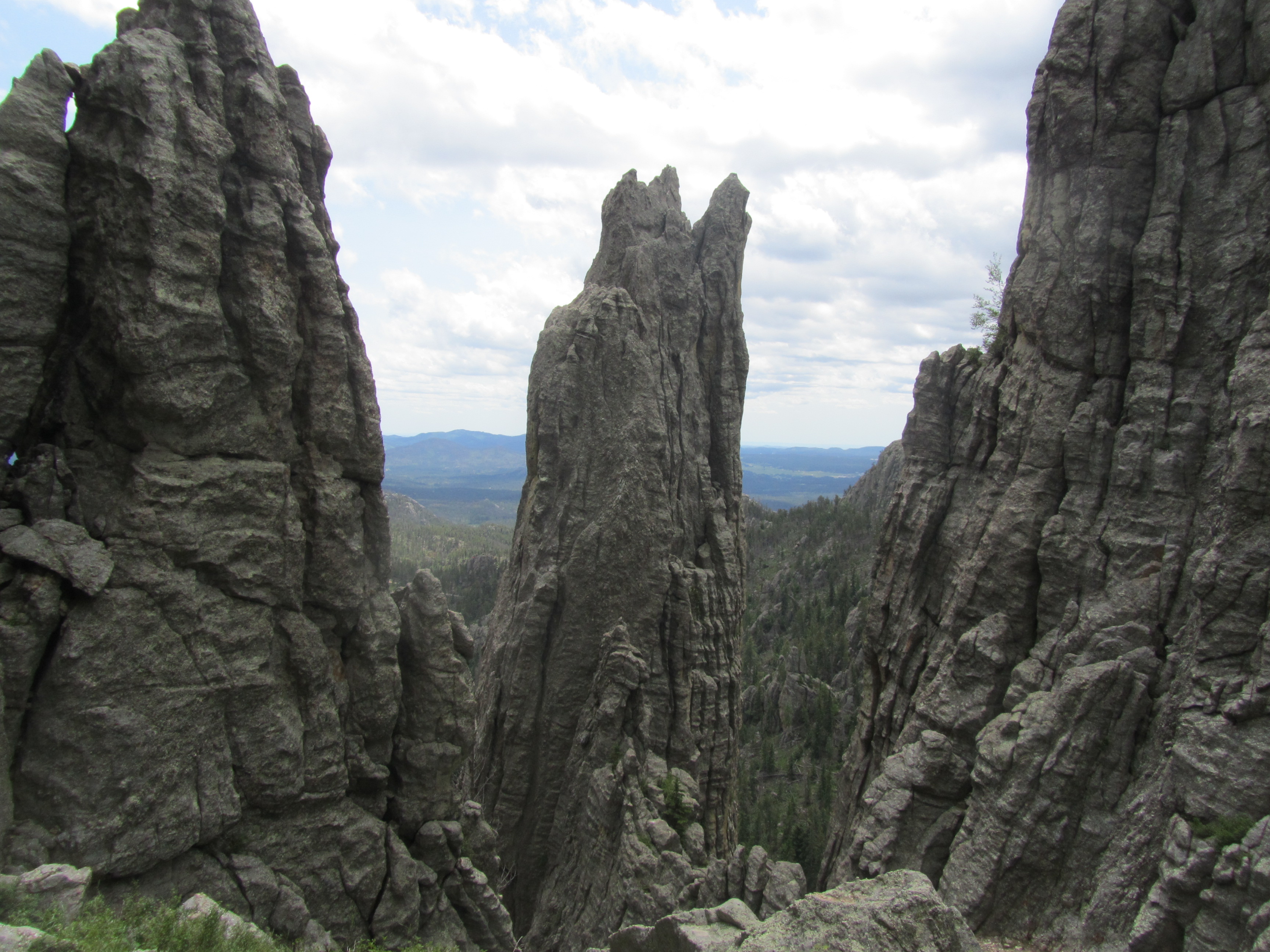
Actually, I’m finding that I can’t say goodbye. I can’t surpass those routes, anymore than I can ever really untie from a partner. They’ve made me, and I will take them along to the desert.
Dedicated to the Game
Climbing and other disturbing things.

Tag Archives: meaning
Mouse-Catching
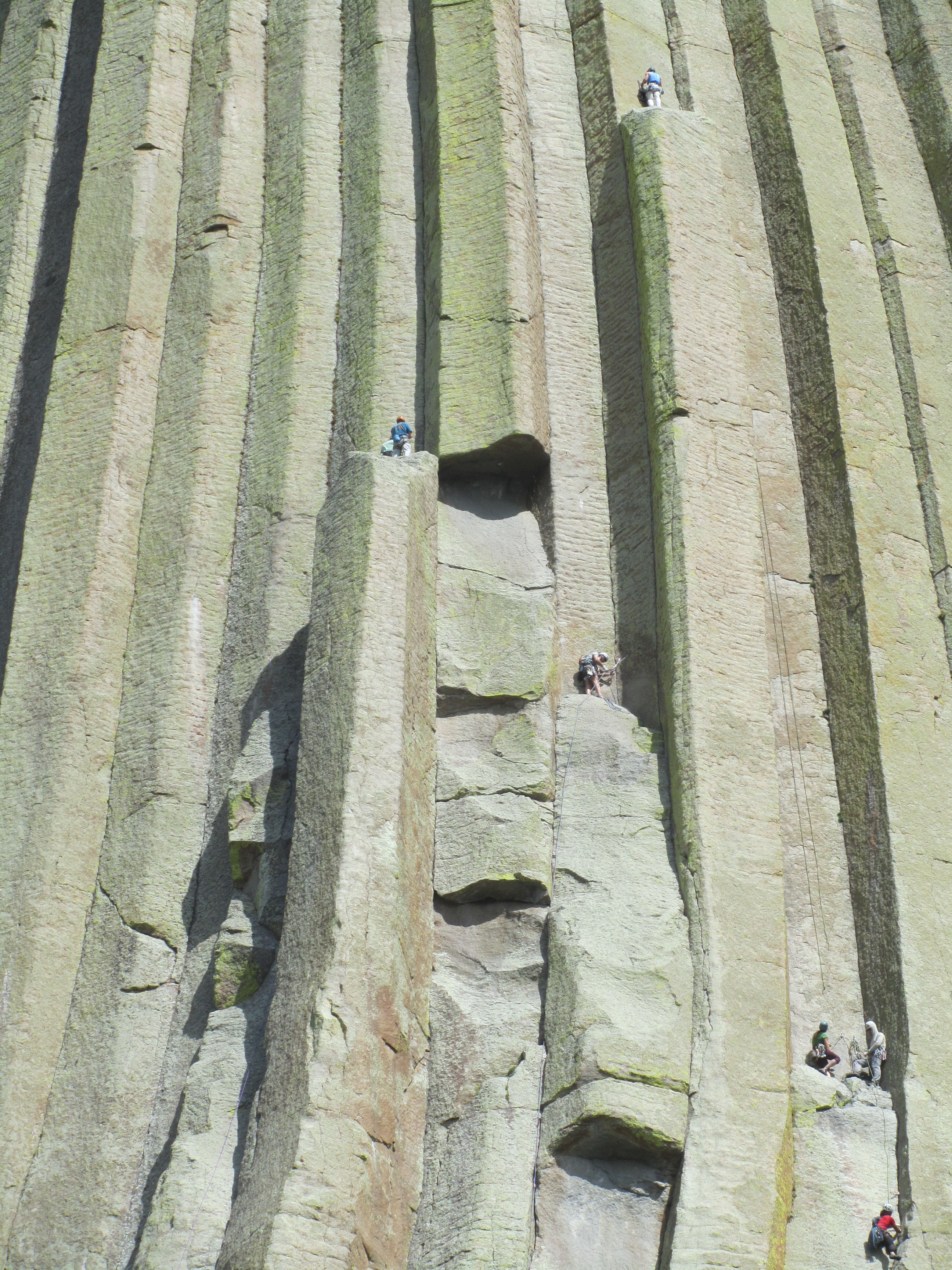
“I was an idiot,” he said.
We looked up the thin crack dividing two, hexagonal pillars. The wind buffeted us, seated as we were on the sheared edge of a broken column-top.
He proceeded to explain that the route which we regarded had been the site of one of his ‘big whippers’. He’d had a proper ‘big whipper’ era when he was climbing hard, during his second decade.
In the case under discussion, he had been leading the route in the heat of the day. As he stepped up to the crux, a strenuous move involving counter-pressure, he passed out.
He looked like a skydiver in the fall, his limbs extended from his torso and flapping slightly against the rising airspeed. At least, that was his belayer’s description. He only remembers lurching back to consciousness as the rope came taut.
Now, the shade of the big whipper haunted the narrow split in the rock above us. I looked at his face. He would hold the rope if I climbed it.
He would do his best to shake his way up when I got to the top and yelled, “On Belay!”
But there were other mice to catch, and I knew where this one lived. It wasn’t like he didn’t want to climb the route. It might be the route he wanted most. It simply needed to ferment a little before he could take it in.
We rappelled back to the cozy ledge on the Southeast shoulder.
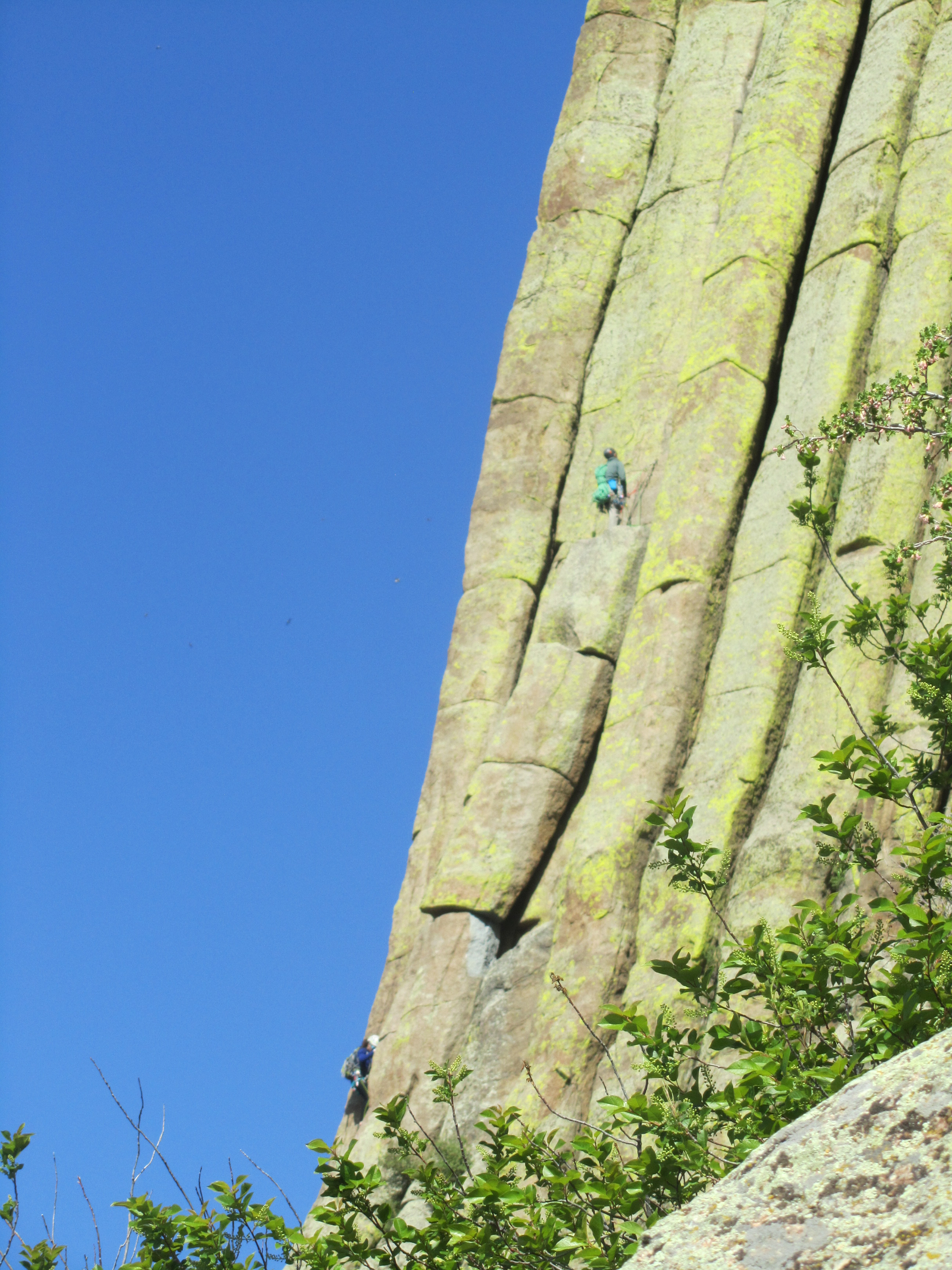
Above the little garden of juniper and gooseberry perched on the sheer side of the Tower, every line was occupied.
A team from Boulder, CO was climbing up to the awful hanging belay on Soler, a climb every bit as good as any at their home crag. A pair from Montana was queued up right behind them. We would watch the two teams try to share the bolts at the unsupported stance as we left. At the other end of the ledge, a guided group of four was climbing the easiest route from the ledge, aiming for the summit.
The trip back to the base of the Tower involved a scrambling traverse. Most of the time, it was done with a single-layer safety system – the finger strength and caution of the climber. But the consequences of a mistake or mishap, like a falling rock, a seizure, cardiac dysrhythmia, etc., would be fatal. Having seen its vulnerability to the shade of the big whipper, such spooks preyed upon my friend’s mind. I paid out rope for him until he was safe, threw my end on the ground and followed.
Back at the base, we packed up and moved around to the West face. On the way, we passed the viewing tubes – sights pointed perpetually at the stake ladder constructed by two local ranchers years ago as a publicity stunt. Nobody was paying attention to the tubes. In fact, we saw few pedestrians until our way departed from the main trail.
There, my friend exchanged a few words with gawkers who shook their heads at what was, to their eyes, the modern equivalent of stake ladder activities. But I was already looking at the West face. We had not escaped the show. All of the prominent routes were occupied, some doubly. Perhaps the gawkers were partially correct; it was absurd.
We started up the boulder field. The day was too nice; we couldn’t turn away.
We found an open line, or at least, a line where we could establish priority.
As we sorted ropes and gear at the base of the thin crack, another team completed a nearby route. After they pulled their ropes, they began discussing further options, a little too loudly. One of their options, as it turned out, was our line. Usually, I would demur to visitors, but not in the midst of the carnival. We exchanged the usual pleasantries which allow etiquette to be enforced. We suggested a nearby route. They had some initial misgivings, but soon quieted down as the climbing began.
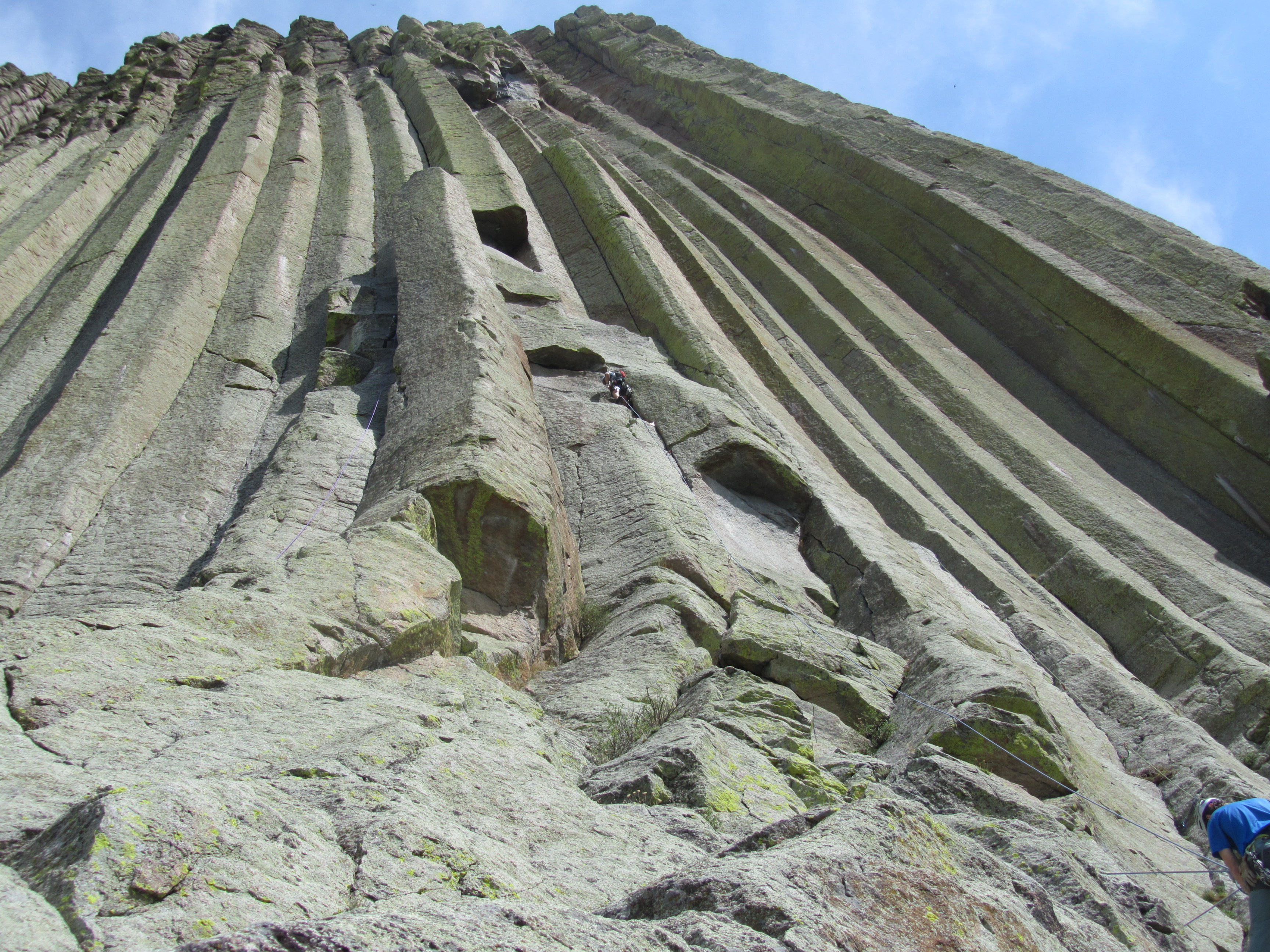
I was already past the wider sections of our line by then. I was confronted by a series of challenges – three or four hard moves, followed by a secure stance, each set harder than the last and ending right before the anchor bolts. I placed a small aluminum wedge or camming device every four feet or so on these sections.
Part of the trick is knowing the difference between placing protection which safeguards life and limb, and placing protection which bolsters the psyche. Part of the trick is learning not to care too much about that difference. I made it. Now it was his turn.
With the rope ahead of him rather than trailing behind, the haunts fled and he moved smoothly. He even took a fall in stride. As I lowered him, he told me how good he felt about the climb. He told me how good he felt about the whipper-era too, in retrospect.
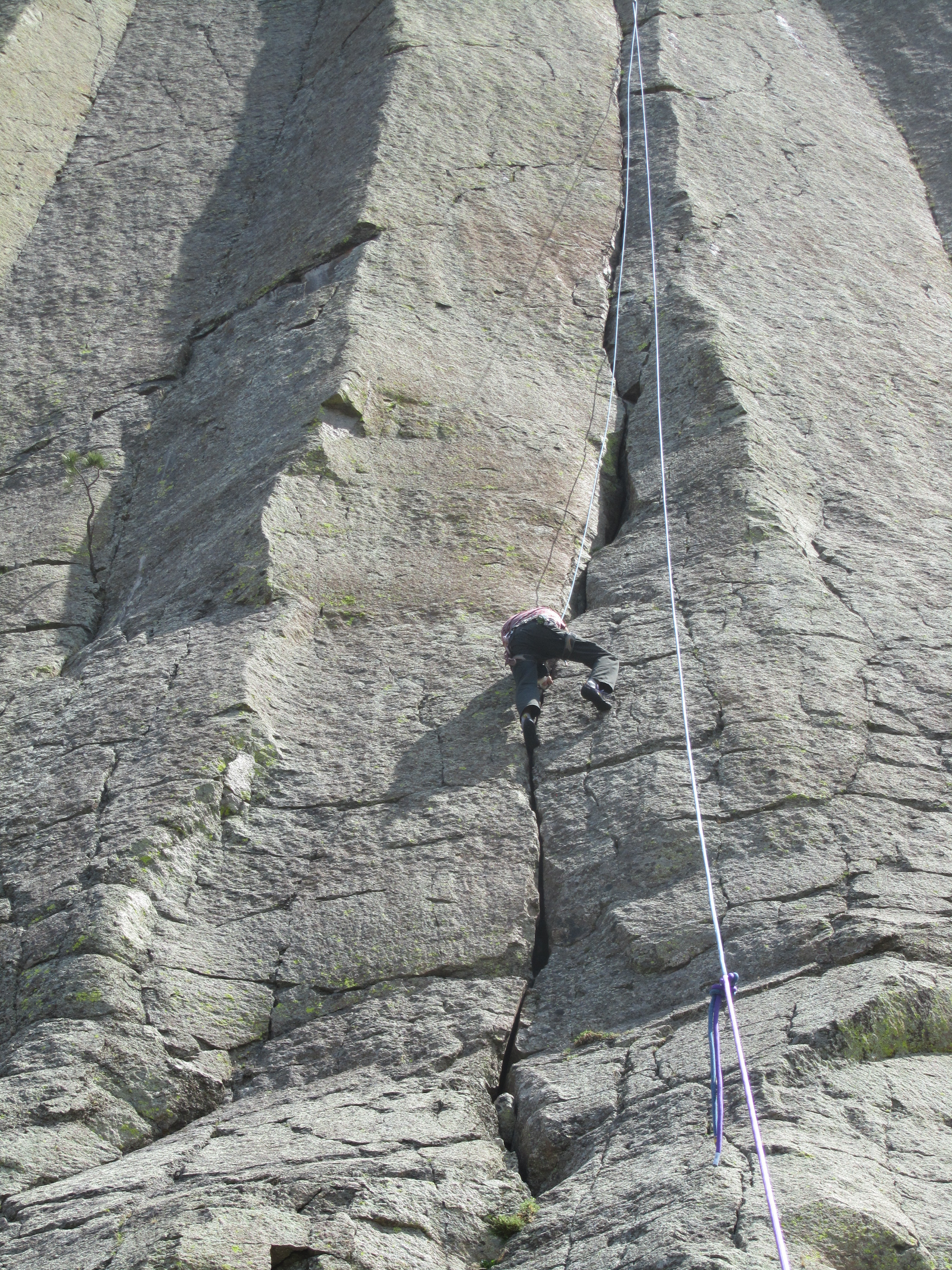
We pulled the rope and left the particular carnival at Devils Tower. I dropped him at his house and returned to my own. I would do a few more days of work in the medical clinic, helping people postpone their fate, before I got to go back to the Tower.
As I pulled into the driveway, my little cat was perched on a rock by the walk, intent on something in the grass. She was well fed. If she caught a mouse presently, she would not eat it. Cat activities were no better than stake ladder activities, or climber activities, or perhaps even tourist activities. I started to shake my head, but she looked up. Her puzzled expression stopped me.
“And?” it said, “There are mice to catch.”
Meta-Ethics is Easy
I’m about to go on about a certain position within moral realism. Like everything that appears in this space, it is mostly rumination. You were warned.
I have my doubts about moral realism generally. I think it turns out not to be the case, at least in any traditional way. But I’m not certain of that judgment in general.
There is a particular brand of moral realism however, which is a dead duck. That variety is the one which claims that moral realism is an analytic truth, a truth like the statement, “all bachelors are unmarried”. I want to be specific about the position in question. It is not simply one which claims that certain values are analytic truths, but one which claims that realism itself is such a truth. It is the position that valuation is impossible without “truths by definition” as the result is otherwise unstable and necessarily without meaning.
The in-principle complaint is easily answered. J.L. Mackie does so in Ethics: “We can then offer a general definition of ‘good’: such as to satisfy requirements (etc.) of the kind in question.” Valuation occurs within the bounds of a subject, however large or small those bounds may be. To borrow further from Mackie, the universe doesn’t demand the existence of a knife, but that doesn’t stop us from distinguishing a good knife from a bad one. The fact that the qualities of a good knife don’t help us pick out a good spoon, doesn’t render our knife-judgments meaningless either.
But what about the pragmatic objection? It is the main argument in favor of the absolutist’s stance. The possibility of a subjective value system notwithstanding, it will fail in its application. Yet monetary systems work by the very means in question, and have proven effective and durable.
Theoretically, money stands in for valuable goods and services – for the variety of labor. But in practice, people value the money itself. They value its utility. The value of money withstands disassociation from an objective standard. The dollar needn’t be redeemable for a certain quantity of rare metal to retain its value. And the value of money can collapse. It isn’t valuable necessarily. Yet even when its value collapses, money doesn’t disappear. People value its utility even when its meaning is shown to be entirely relative.
So it is with meta-ethics. There is no essential supervenience of moral valuation on physical fact. There may be an explanatory supervenience of moral valuation on physical fact, and the necessity of that relationship is a legitimate point of contention. There is no theoretical relationship in the absolutist’s sense.
To illustrate the relationship between value and physical fact, think about murder. The word bears a negative value, but to what does it really refer? Is it a person’s death which necessarily bears the negative evaluation? We certainly evaluate some deaths as neutral or even noble. Is it a violent action of one person on another? Such actions are evaluated as neutral or at least justified in war or self-defense. Is it the pain of the victim or the victim’s loved ones? We sometimes view physical pain as necessary or even good, as it allows us to avoid debilitating injury. The pain of loss comes with love and it can be evaluated as a neutral adjunct of the latter. Is it the killer’s anger? Is it the killer’s functionalization of the victim’s life? Again, that is how people are treated in just wars, and it is the mechanism employed in the soldier’s decision to throw himself on a grenade to save his comrades. ‘Functionalization’ is the actual, ethical problem with what the murderer has done, rather than some meta-ethical fact isolated in principle. Value is not redeemable on any isolated fact. It comes with the whole circumstance, multifariously and specifically.
Again, none of this precludes realism. Maybe we do have an inborn moral sense, and some attendant, necessary evaluation of specific circumstances, just as we have red and green photoreceptors and so see grass like this and blood like that. It only means that realism is not a requirement, any more than red and green photoreceptors are.
The understanding that simplistic realism – where there is a fixed, gold-standard, theoretical, fact/value relationship – is false, has important ethical consequences. Returning to the murderer for a moment, the trouble with his act is an ethical issue, and not a meta-ethical issue. He may value his victim’s life, his own emotional comfort, his victim’s emotional comfort, his own life – and still get it wrong. He does so by functionalizing one value in terms of another.
In that case, the murderer’s ethical error is the same as the one which Solomon exposes when he offers to divide the halves of the baby between the two claimant mothers. The biological mother values the baby on its own terms. Her opponent values equity and is willing to interpret the value of the baby’s life – whose value she recognizes – in terms of equity. As Solomon did, we recognize in her interpretation, a usage error. However one thinks it is assigned, the circumstances upon which the baby’s value supervenes do not encompass social equity between the two women. In the second woman’s treatment of it, the meaning of the baby’s value has been surreptitiously changed.
It is no accident that we have Solomon’s example emphasized in a religious tradition. The stark moral realism associated with most religion offers an easy path to the ethical usage error, as it does to the mistaken notion that moral realism is an absolute necessity. Absolute values feel like they ought to be redeemable across circumstances. Absolute and universal are too easily confused, especially when proper usage is often inconvenient and always a little uncomfortable.
Solomon’s example is cautionary regarding the temptation to ethical short cuts and their usage errors. But, it is cautionary more broadly as well. His good judgment was necessary because meta-ethics is not easy. Whether or not there is finally a moral fact-of-the-matter, our moral valuations are specific and circumstantial, and they do not bear incautious usage. Saying otherwise is simply acquiescence to the lure of temporary emotional comfort, at the price of a flawed ethic. The position of “realism regarding realism” has no other justification.
Simplicity Itself
Arguments about nature, gods, and human beliefs are often convoluted and massive. The central issue can be boiled down to a manageable residue.
The phrases “mental substance” and “independent identity” are incoherent. They are combinations of words which indicate nothing but the byproducts of speech. At best, their proposed subjects are things which we could not claim to know. That is why all arguments in their favor must finally deduce from analogy, if they hope to avoid fideism. All else follows.
Racing the End-Times

I pirouetted around the man in the tiny atrium and past the slowly closing glass door. It was an unusual way to enter McDonald’s, so I thought at first that he gave me an odd glance in return for the odd maneuver. But as I joined the line, just before the end of breakfast service on Saturday morning, he looked at me again in the same way. Then I recognized him, as well.
“Hello,” I said, extending my hand.
“Hey,” he smiled, “here to climb?”
“Yep,” I replied, “Good to see you.”
“Likewise. What are you going to do?”
“Joy After Pain.”
“Oh,” he nodded, “That’s huge this year. Well, have fun. I’m shopping with the kids today, so…”
“I know how that is,” I said, “Good luck.”
He didn’t seem concerned about the time, but neither was I. We were coming home in the dark. We might as well live it up.
We ate our sausage and egg biscuits on the way out to the Valley.

It had been cold in the Valley. Ice had formed back up on the North wall, and it would stay for the day, at least. It was cold, with temperatures in the teens. It even looked like Ovisight was accessible. We looked to the shade though, to the South wall of the Valley, where the ice would be old, cold and brittle. It was formed as well, though the base of our objective tapered ominously. We did not care. We had our decision, and we had the word, and the word was “huge”.
Two other cars sat in the pull-out across from the ranch’s mailbox. One party was visible on Moratorium.
We did not see tracks on the intermittent snowfields on the way to the wooded slopes below our objective, but we met the second party at the tree-line.
“We have guns,” the older fellow joked.
I wasn’t going to race them to the base of the climb. We were coming home in the dark, and there was room at the base to stand and wait if need be.
We walked with them for a ways, up the steep, left side of the drainage. Then, they broke right and fell slightly behind.

I could not see them as we rounded the last, bulging shoulder of the streambed and saw the first pitch fully revealed. Still, I heard them, although I could not make out the words. The tone was plain enough: dismay and disgust. The base of the pitch was a thin, tapering pillar – translucent and gray. I wasn’t deterred. Somehow, “huge” had lodged in my mind, and it made the sight reassuring. The pillar looked well rooted, despite the fact that I could wrap one arm around its connection to the ice sheet below it.
Before I started up, I hit it with the side of my ice tool. It didn’t come crashing down and it produced a deep, resonant note. It would be fine, if I just didn’t hit it too hard, or at all. Fortunately, it had plenty of feature – blobs, divots and candles. I tapped and hooked for thirty feet up to the point where the ice attached to the cliff face and it was safe to place a screw.
The angle eased soon after, and the primary difficulty became the hard and brittle state of the medium.
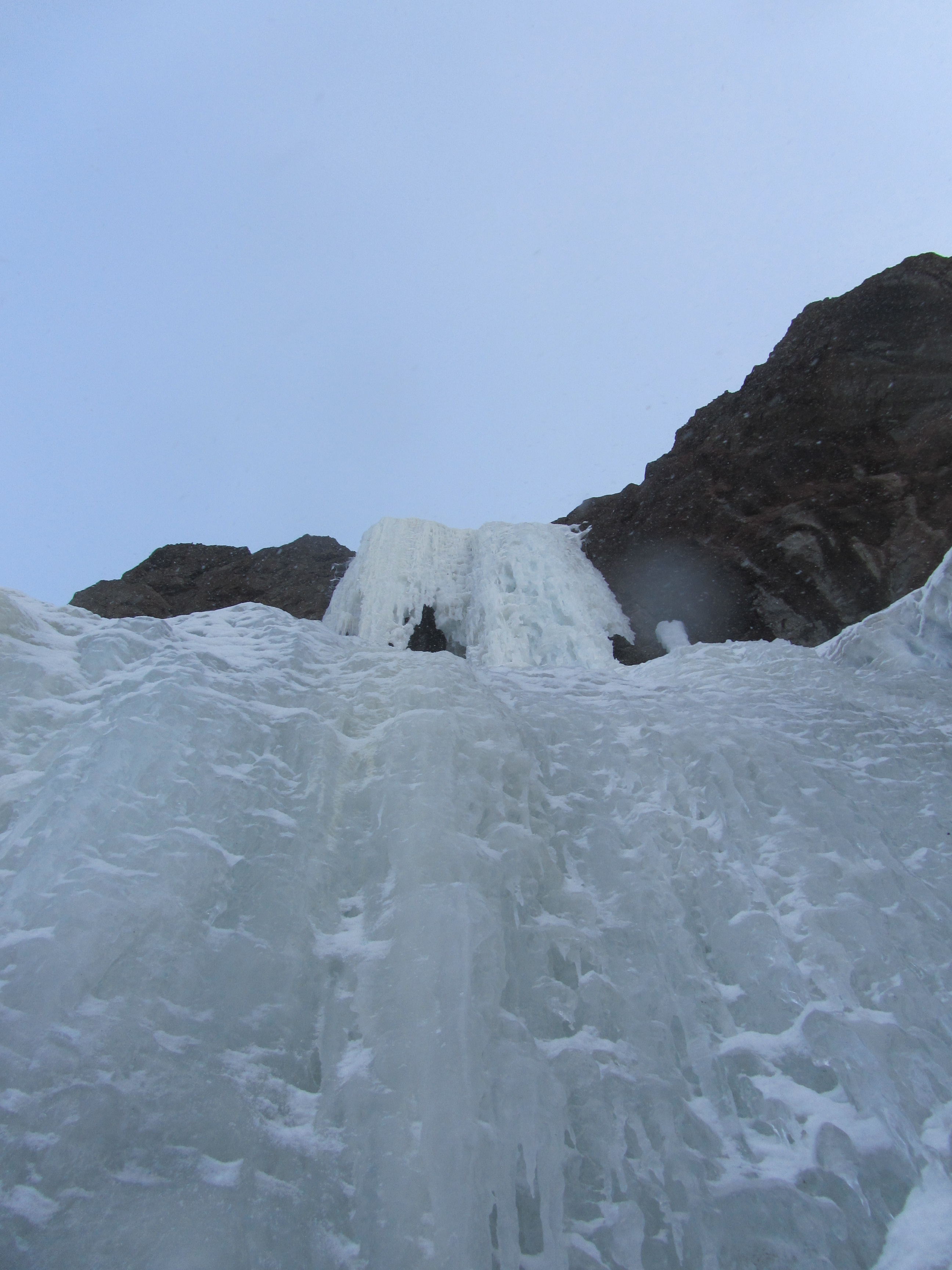
We anchored at the very end of the rope and climbed a deceptively steep and rotted pitch above. There was a short walk with a solo step and then a short, solid roped pitch.
We climbed another ice ramp and finally stood beneath the two-tiered, final pitch. It was four thirty in the evening.

The next day, Mike’s breakfast sandwich would have its revenge, and the fish hatchery climb would melt out before we arrived. The pitch at Leigh Creek would seem too anticlimactic. We should grasp at every last foot of climbing, being practitioners of what is possibly a dying art. But we wouldn’t, because it would be art for us alone, and a ridiculous thing or a cheap thrill for the rest of the world. It must be right for us if it were to make sense at all.
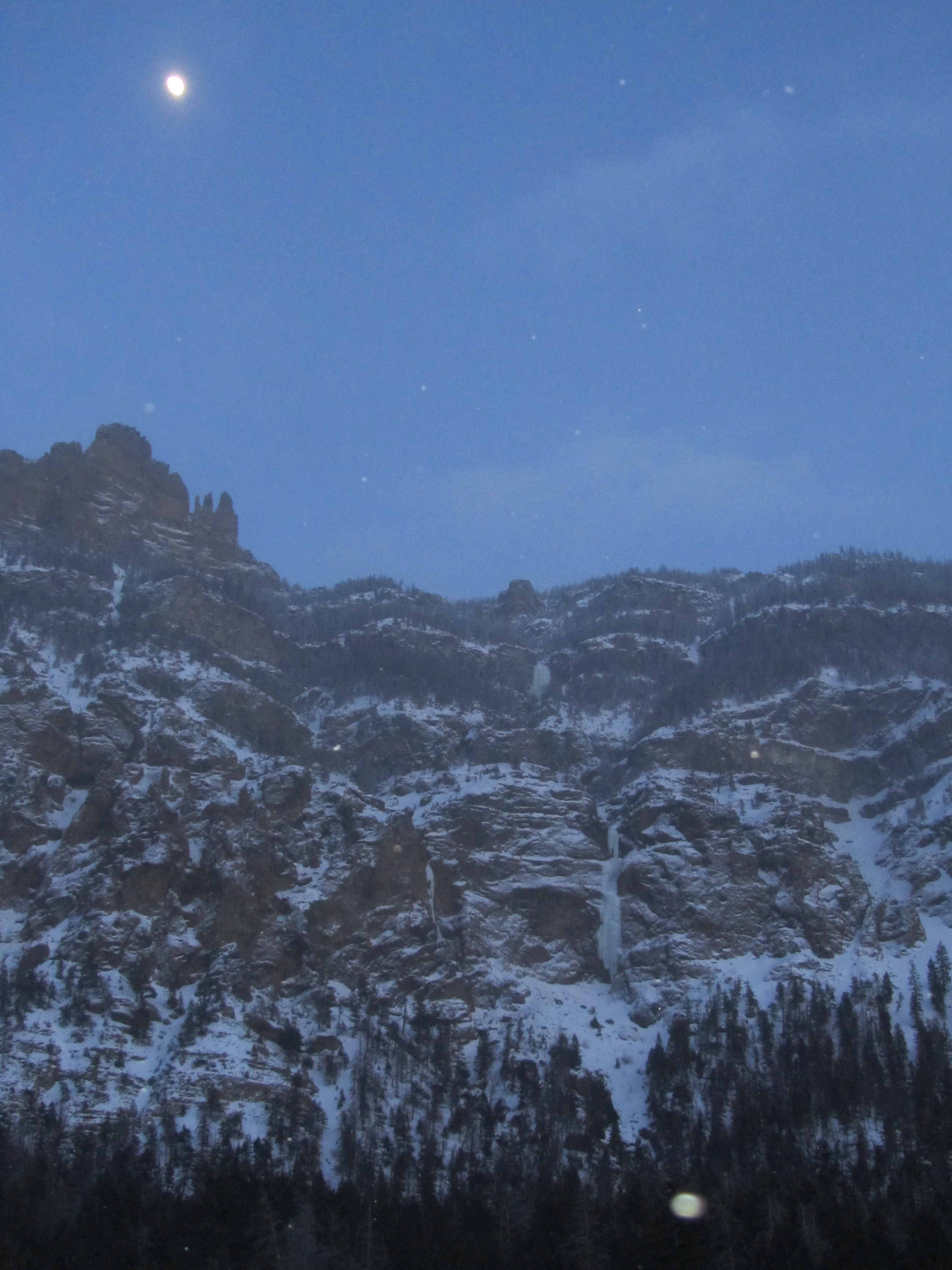
We would save the last pitch of Joy After Pain too. It was blue and intricate, and flowing with water – huge. And it was in the shade, so it would be there when the sun-side languished. We would come back to climb it in the light.
Speaking Essentially and the Root of the Problem
Let me tell you about unicorns. Unicorns are white-coated creatures, with bodies resembling those of horses. The unicorn’s hooves are cloven, and it has a single, spiral horn protruding from its forehead. The horn has a property which allows it to purify water and cure disease on contact. The animal itself has the ability to detect human female virginity and is highly attracted to the same, so much so that it exhibits a stereotypical set of behaviors in the presence of said females.
I can now make some meaningful statements about unicorns. I can say, for instance, “A unicorn is a unicorn if and only if it has one horn.”
I now say, “You should be able to recognize a unicorn if you see one.” Is that true? If it is true, what about it is true? That is to say: Does my statement reference a unicorn, the inherent possibility of a unicorn, or all that stuff I just said about unicorns? If it is the latter, does that necessitate anything beyond a bare, opaque unity?
The Discontented Future
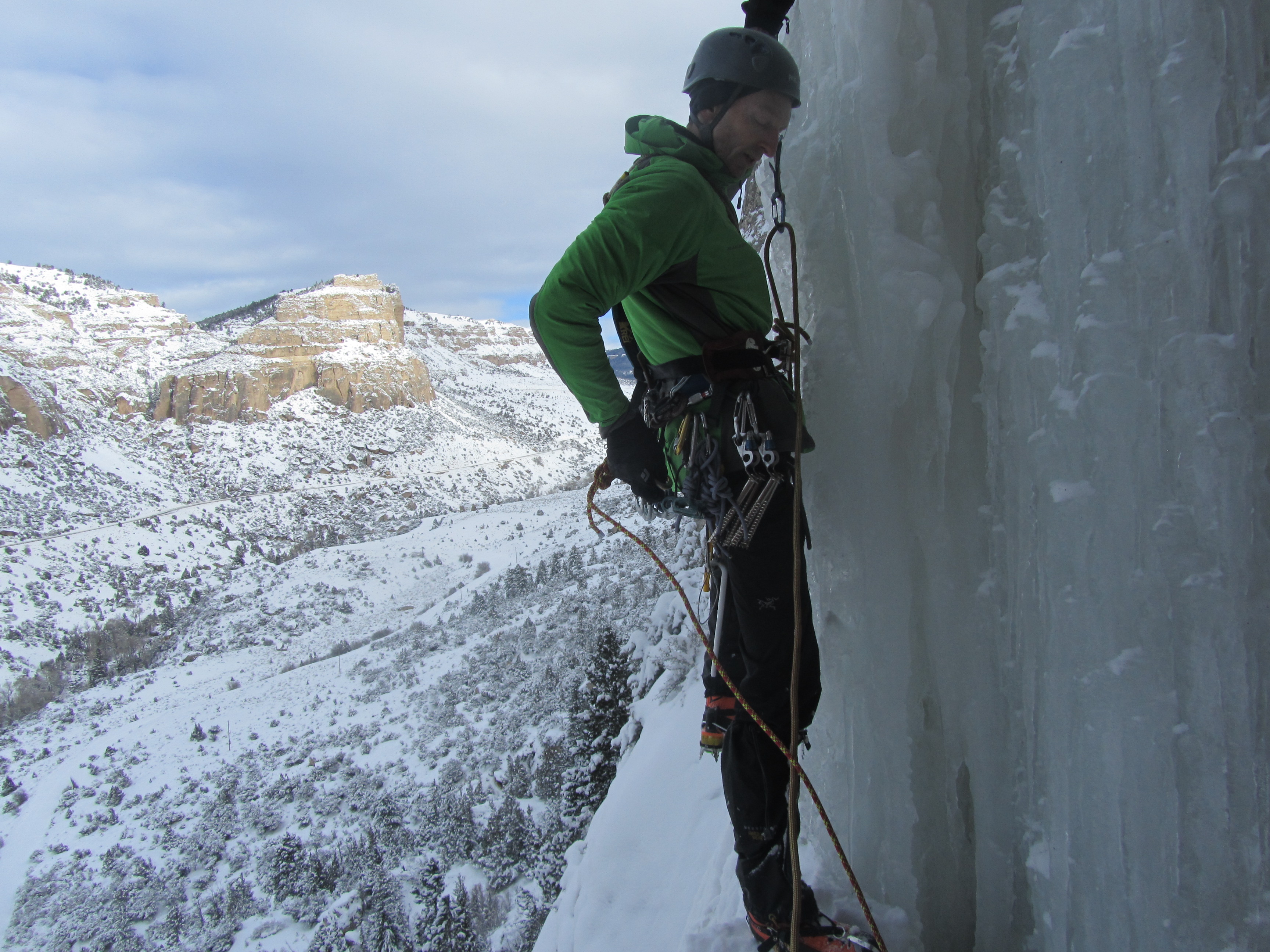
Broken pillars cluttered the slope. Winter had come to this. False starts, collapsing possibilities, and ruined glory lay across the span of weeks between the first snowfall and the now-inevitable warm-up. I loaded the Soloist and began to climb.
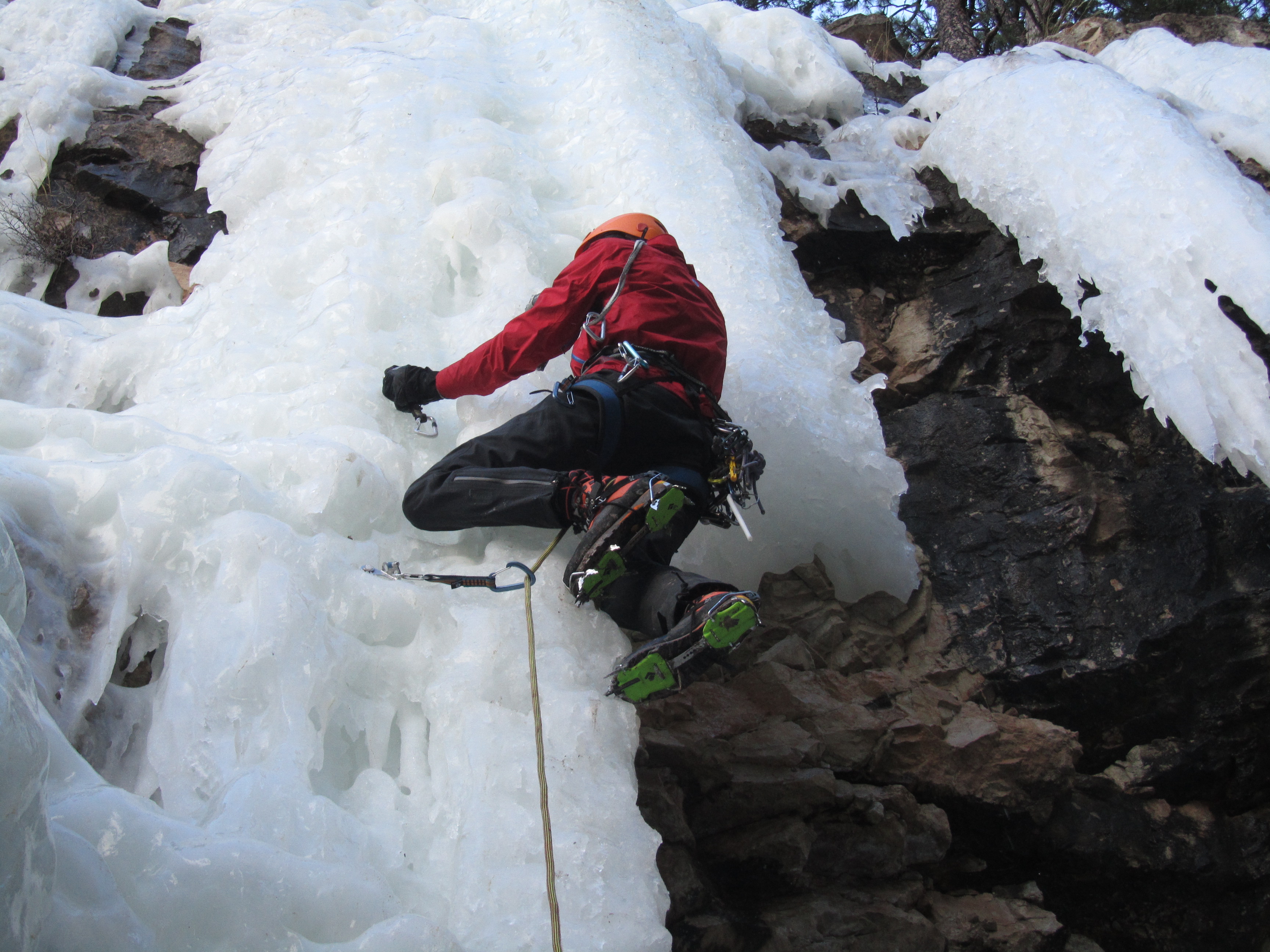
My swing was still good. Over the preceding couple of seasons, I had passed a threshold. My technical skills no longer seemed to deteriorate over the long warm spells. My performance on ice now depended almost exclusively on psychology, and my psychology today was fueled by anger.
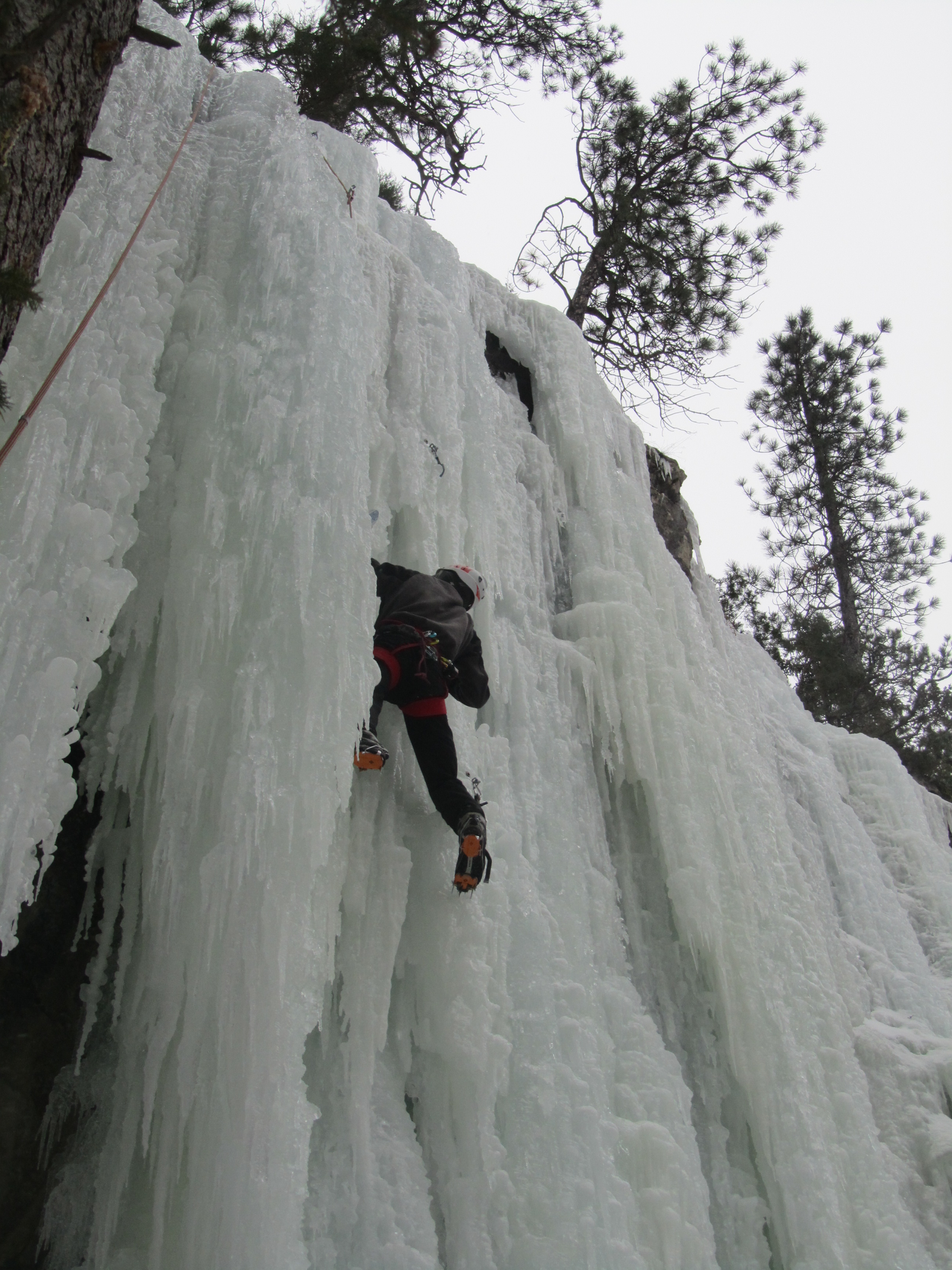
Maybe this Winter was an aberration, but I suspected that it wasn’t. Things were changing; the climate was changing. I’d made a vow, back when rumors of soft and liquid Winters first circulated. When the day came that ice climbing ended, and I had no more use for my crampons, I’d clip them to my boots one more time and kick the nearest climate-change-denying Republican politician in the ass. I felt the time coming.
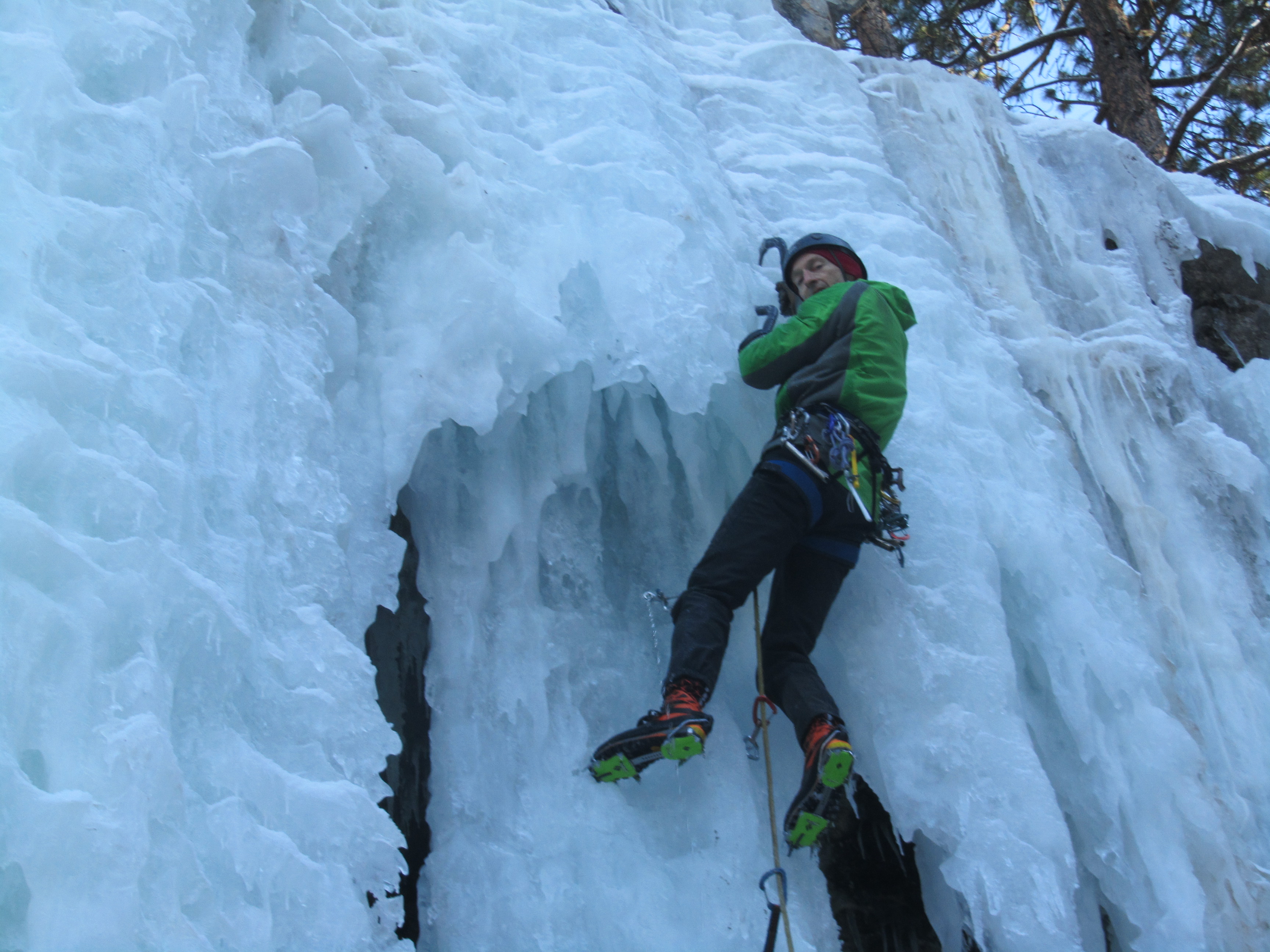
The column of ice I’d chosen was forty five feet tall, and beginning to deteriorate. It was a bit of a risk, and a little silly. It was so short, and it was wet and manufactured. I could hear cars on the road down in the canyon. I had followed a tourist’s Yak-trax prints up the trail to get here. I knew that I would find a PVC pipe leaking water over the cliff band at the top of the ice. There was no wild beauty or uniqueness to be found here. The pillar’s existence was all that recommended it.
The bottom took a light touch. It was wet and brittle ice. It tolerated only one, gentle swing per placement. I weight tested each tool before committing to it. I placed the crampon points in little divots in the ice, rather than kicking the spikes into the column. I waited to place the first ice screw until I was well off the ground. I had picked the spot from below, and it turned out to be as good as I had expected.
The ice improved after the first piece of gear. Above a small roof, it took a full swing. My anger transformed, clarified in the movement. Another ice screw and a few more swings led to a different game on the thin steps of low-angle ice at the top. I grabbed a tree and stepped over the PVC pipe.
I fancied another lap then. I was done being angry. I knew that the anger arose from fear of loss, and a deeper fear of loss than the fear of losing cold seasons. It came from the fear that I might someday no longer be a climber and find myself looking at the world from the same viewpoint as those cramponned-boot-in-the-ass-deserving politicians. It was a fear that I was losing. As more days like today passed, I felt more and more certain that I would not habitually trade an ‘is’ for an ‘ought’. I would not stop paying attention. I would not find myself trading real days for fears of an imagined future and its glories at risk.
As the ice receded, I would move higher. I would take notice of the boulders that had been hidden under permanent snowfields. My tools would scratch more rock. At last, I would walk up glaciers covered with rubble, arthritic knees aching, tottering on my piolet, and feel no different than I did at the top of the little pillar today.
As I set up the rappel, words from a Howlin’ Wolf song began to run through my mind:
I have enjoyed things that kings and queens never have – things that kings and queens can’t never get. And they don’t even know about ’em.
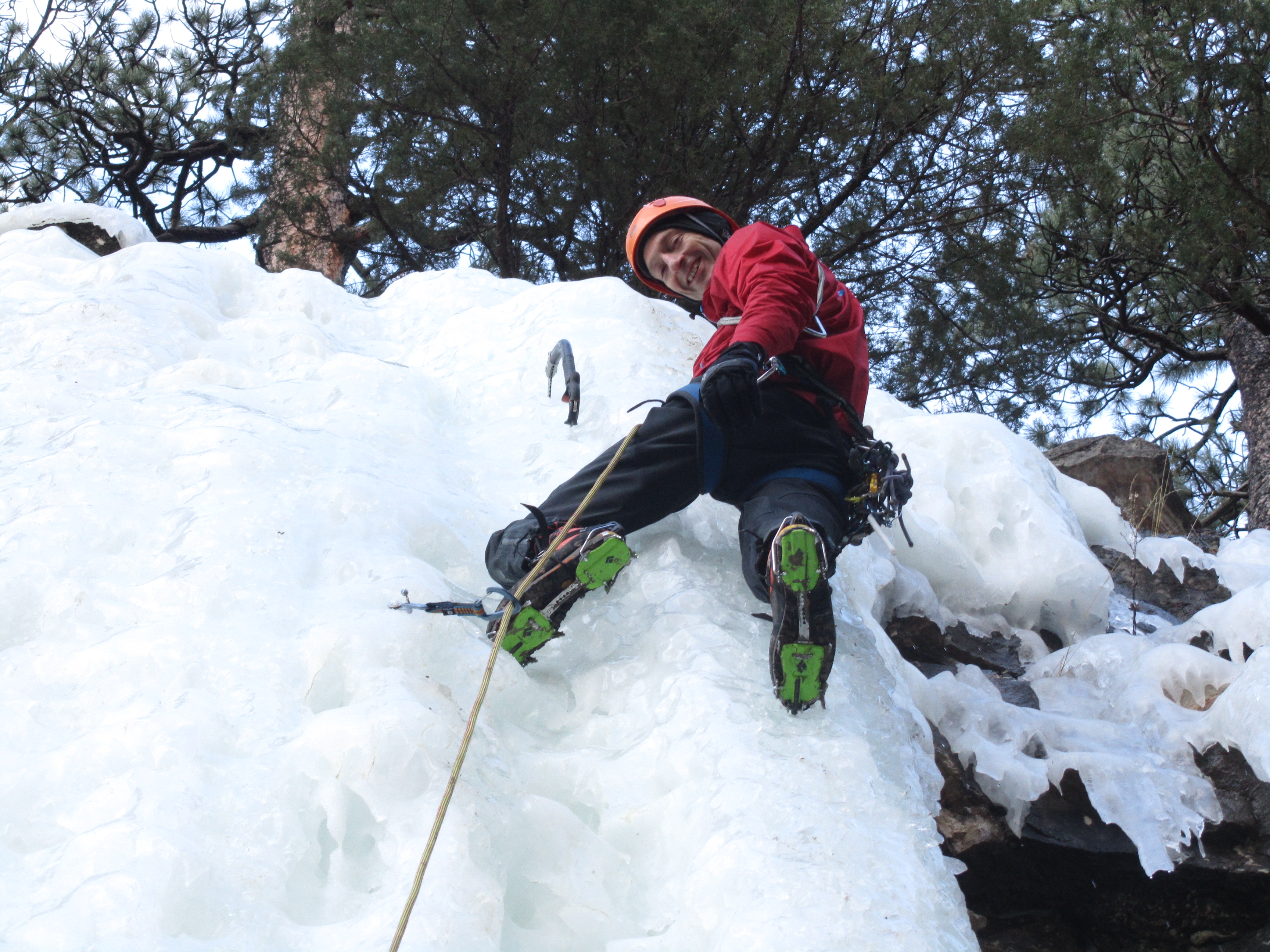
May be I was still a little angry. Yeah, fuck them, another lap.
The Joy of the Circle
I didn’t like to fly. I kept waiting for the bumps to stop. Regardless, the supple machine continued to bob and thrash like a trout in the rapids. A few rows forward, a child began to cry. Between the two of us, adults read their magazines and played video games on their phones. No doubt, they recalled that flying was safe. The statistics were incontrovertible. And in theory, the engineers knew exactly how the air would flow and how the engines would perform. Why should a passenger worry?
Yet no one had predicted the rolls and soft spots in the atmosphere over which we presently skipped. No one really knew what fury of heat and pressure swirled in the engine at that moment. Flying was inherently dangerous. The little boy up front knew it because he didn’t believe in theories yet. He knew what happened when a glass fell off the counter. He knew what happened when a stick, flexing like the wings were, bent too far. I knew it because I habitually did dangerous things and tried to make them safe. I had faith in statistics, but I also knew that sometimes, only one little thing had to go wrong. In the chaos of fluids which sustained our flight, if the one little thing did go wrong, we were all lost without hope of recovery.
The boy’s naiveté could be forgiven, as could the adults’ ignorant confidence, but what about my fatalism? I had better have a reason for getting on this flight, hadn’t I? My children had no one else to care for them. Countless, unimagined opportunities awaited back on the ground at home. What did I have to say for myself and my self-conscious gamble with extinction?
All I could come up with was et tu quoque. I had seen a Wyoming toad once. It was at night, at a rest stop, in the middle of Summer. Its species was endangered, yet this toad made no excuse of the fact. It followed a line of ants down the middle of the sidewalk beneath the streetlights, lapping up the insects one after the next. My six year old son crouched over the little amphibian, delighted. It would never have a better friend and ally, but it couldn’t have known. All it could have known was that the shape looming over it had not struck yet, and that the ants were right there. The toad was gambling with extinction, and a critic might have called it selfish.
But the toad could have responded. If it believed in theories, it could have claimed that it was simply a disciple of Yamamoto Tsunetomo, obeying his dictum:
Even if one’s head were to be suddenly cut off, he should be able to do one more action with certainty.
Or it could have called upon Nietzsche in its defense, claiming that it didn’t pursue ants, but rather:
…a becoming that knows no satiety, no disgust, no weariness: this, my Dionysian world of the eternally self-creating, the eternally self-destroying, this mystery world of the twofold voluptuous delight, my “beyond good and evil”, without goal, unless the joy of the circle is itself a goal…
The toad’s response was better though, because it didn’t believe in theories. Its defense was: a warm night and an Eldorado of ants. Mine would be the same. How else would I defend even my love for my children? No set of laws bound us to each other, only a chance (in theory) arrangement in space and time. Yet it was a chance that went straight to the bone, no question. I had no better answer for the feeling that had gotten me strapped in this chair, bouncing through the sky to an uncertain fate. It was a feeling for a stranger, I’d have to admit if pressed. But it wasn’t composed of what I knew about her, anymore than my love for my children was composed of what I knew about them. It was a chance arrangement in space and time. It was nothing I chose, but it went straight to the bone, no question. Like the toad, I’d risk every calamity with open eyes. I took a breath, shook my head, and stopped waiting for the bumps to stop.
Is a Virus Alive?
life, living matter and, as such, matter that shows certain attributes that include responsiveness, growth, metabolism, energy transformation, and reproduction. – Encyclopedia Brittanica
Close enough, and encompassing the generally accepted criteria: responsiveness, reproduction, metabolism and adaptation. My older son asked the question about viruses the other day. I have been looking forward to this question. It means that he is prepared to understand some things about life which are important. It is a tricky question if considered from the wrong viewpoint. A virus displays some of the characteristics which define a living organism. It can respond to stimuli, attaching to the proper cells and injecting its genetic material through the cell membrane when it makes contact. It can replicate. It can adapt to avoid a host immune response. But it does not have the capacity to metabolize. It cannot, in other words, run its own show. It is entirely dependent on its host organism in that respect. Nor is the virus alone on the gray borders of life. Certain families of bacteria lack some essential metabolic processes which would make them autonomous. They must live inside another cell, and depend on their host’s metabolism to survive. Yet, they too can reproduce, adapt, and respond to stimuli in their environment. Because they have a membrane which is active, biologists are prone to give obligate intracellular bacteria, like mycoplasma and Rickettsia, a break. Most biologists are less charitable when it comes to prions. Prions are mis-folded proteins which replicate by somehow inducing their own conformal change in normally folded proteins with which they come in contact. Prions can reproduce, but they cannot metabolize. They cannot adapt much (although they have managed to pass from cows to humans), but they can respond to their environment, albeit in a very limited way. Still, the difference between the prion and the obligate intracellular bacterium would seem to be one of magnitude rather than quality. Differences in their classification reflect a little bit of membrane chauvinism on the part of biologists. The same prejudice is evident in the gray zone at the other end of the complexity scale. By our criteria for life, is a male angler fish alive? The fish can survive for a short period of time independently, but it cannot carry on its own metabolic processes independently for the long-term. It must rely on a female angler fish. It must quickly sniff out a female and attach itself to her, permanently. The male fish spends most of its existence as a tissue of the female angler fish’s body; its brief, free swimming existence is a transitional aberration. Its ability to adapt is extremely limited. Its existence can be mapped on an algorithm only barely more complex than the one which describes a prion’s lifestyle. So what does differentiate the male angler fish from a mycoplasma bacterium, a virus, or even a prion? A few extra membranes make the only difference. Even our own status as living things is at risk if we apply our criteria strictly. We can certainly reproduce, just like the viruses, obligate intracellular bacteria, prions, and angler fish. But it is questionable whether or not we can independently metabolize. We actually rely on hereditary intracellular symbionts for our primary metabolic process. Without these symbionts, our mitochondria, we could live only minutes on the metabolic processes encoded by our own genetic material. So, we can hardly be blamed for fudging our criteria. We certainly want to call ourselves alive. Since it looks and acts alive, we want to call the male angler fish alive. For practical purposes, we also want to call Rickettsia and mycoplasma alive, as well as viruses from time to time. As for the prions, it is often more convenient to view them as sophisticated toxins rather than living things. And that’s the upshot of my son’s question. The issue of whether or not a virus is alive is only confusing if we consider “life” an actual, efficacious thing. But life is just a category. When we look out across the terrible landscape of things, we see phenomena which cluster about each other by dint of their shared heritage. Our account of our cluster is biology, and our criteria for life provide the outline for our biological stories. This is correct viewpoint on the question of life, and what is alive. But this is not the popular viewpoint. The popular viewpoint attempts to preserve life as a thing, as vital essence or emergent property. Unfortunately, the popular viewpoint is not feasible. It leads inexorably back to the original question rephrased, “where is the life in a thing to be found?” In the end, we find that the essence or the emergent property is explained by the operational mechanisms and properties of the thing in question, but it in turn, explains nothing about the thing; it just notes where that particular thing lies on the vast, terrible landscape of things. Despite its glaring inadequacy, the popular viewpoint remains popular because it seems to save us from losing an idea that we don’t feel comfortable losing. But we don’t need to worry, becoming a category doesn’t vitiate life. We have the things which the category marks clustered around us after all, even if it’s only according to our viewpoint. We can’t escape life anymore than we can climb out of our skins. So, the answer to the question? Sure, a virus is alive – as long as you can explain why.
You Betcha
We’re either all going to Heaven or we ain’t. – Sonny Steele
When the end comes to this old world,
The righteous will cry and the rest will curl up,
And God won’t take the time to sort your ashes from mine,
Because we zig and zag between good and bad,
Stumble and fall on right and wrong,
Because the tumbling dice and the luck of the draw,
Just leads us on. – Dave Lowery
Pascal’ wager is an oft-dismissed argument for belief in God. On the face of it, the wager in question does look pretty silly. It also seems like a real statement on risk assessment, on the face of it. It is neither. Pascal’s wager is an argument about knowledge and its relationship to truth, and by extension, an argument about the potential relevance of belief in God. The bet is this: if we can’t know whether or not God exists, then we might as well believe that it does, because belief in God’s existence is the more consequential option. The wager admits the God-concept only as a possibility. That is, it is something we can construct from our logical conventions in a rudimentary way. Whatever else you may think of God, it is a concept served by conventions like time and location – or at least, their corollaries, and it is a convention itself in cosmology. We experience a world which permits logic and also surprises us. God provides a possible means of describing our experience. The terms of the wager then bypass the question of God’s actual existence, for reasons which will become apparent. The bet turns instead to the question of consequences. What do you stand to gain or lose when you bet on how you talk about what you know? If there is an actual infinite, timelessness or universality, we won’t notice. Nor will we bat an eye over the truth of our more conventional conventions. In physics, we use meters and seconds to tell the story of motion. You may claim that meters are bogus, but I will still see you standing one meter away from me if you stand one meter away from me. You want to say we can’t do without seconds, that they are written into the universe, fine. Time will still seem to pass for us, but not for the tunneling electron. The case remains the same, even when the conventions appear to make the whole story. In painting, brush strokes serve the role of meters and seconds in physics. The Mona Lisa is the Mona Lisa due to the genius of Leonardo’s brush-work. But if you claim that there is no true art without Leonardo’s technique, the fans of pointillism suffer no calamity. All bets on the absolute truth of our conventions are bets with play money. We may feel the effects of the adequacy of our depictions as a whole. An astronaut may be quite concerned that our meters-and-seconds story about motion makes a good prediction. An admirer of the Mona Lisa can make a pretty good case that it is better art than a child’s stick figure. But the meters, seconds and brush strokes themselves, cut from the story and laid on the table? Those are fluff. Go all in with them. Who cares? Those ideas have meaning – are true – locally, in context. We can’t parley them into larger, certain truths.
But the mechanics of the bet are only half the story. Because, Pascal’s Wager can be taken not just as a commentary on our grasp of truth, but as a description of what we actually do. It accuses us of being vulnerable to its appeal. We have the gall to reasonably expect the posited base of all being to consider our existences in a way which is at all comprehensible to us.
If there is a God, he is infinitely incomprehensible, since, having neither parts nor limits, he has no affinity to us. We are incapable of knowing either what he is or if he is…Reason can decide nothing here. – Pascal
Pascal recognized the absurdity of the situation. Yet, with his (very French) apprehension of the absurd, he recognized the license which absurdity grants. Staking a claim on the incomprehensible is just as insane as declaring war upon it. Our hope in God’s grace is absurd, but hope is something to have, as opposed to everything else at issue in his wager. There is something to gain after all. The real problem is: hope is merely a Pollyanna story. It’s the sunny substitute for a more troubling, and more complete, description of a quality which we really need. We can find some clue about the true nature of what hope papers over in hope’s intransigence. We admire the cancer patient’s noble ability to endure horrible treatments in the name of a brighter future which may never come. The same hope has nestled in the hearts of all those who ever proposed a war to end all wars. Somewhere on the edge of a North African desert, a mother loads her infant on her back, takes her small child by the hand, and sets off from her barren village for another country. This person is not motivated by hope. Her situation is too absurd. Her children will die in her hut, or they will die in the desert. What she exhibits is defiance. Her walk is an empty gesture, an expenditure of life with no other reason behind it. The admirers of hope only flirt with the deep truth of human psychology which she has found at the end of all options. Defiance moves us, though we are loathe to acknowledge it. We can’t gussie-up defiance like we can hope. Defiance is not smart, not sublime, and not rational. It is myopic and has teeth. We can’t blame Pascal and his fellow religious adherents for preferring hope when offered it in lieu of the whole truth. But hope is finally an inadequate convention and not something to have. It is arrogant, and brings the errors of arrogance with it. It makes the woman’s walk into the desert quaint. It readies us for the next war to end all wars. So, we must abandon Pascal’s hope. It is not a worthy prize, for it will betray us in the end. In the light of a wider window on ourselves though, there is another bet to make. Either our existence is somehow concordant with some incomprehensible entity or it is not. If it is, then we live in defiance of an eternal other, and incomprehensible, existence which is our final fate. If it is not, then we live in defiance of an incomprehensible judgment. Either way, we carry on as we were, in defiance. Our best bet is that God is irrelevant.
 Dedicated to the Game