Tag Archives: purpose

Cutting Up an Ox

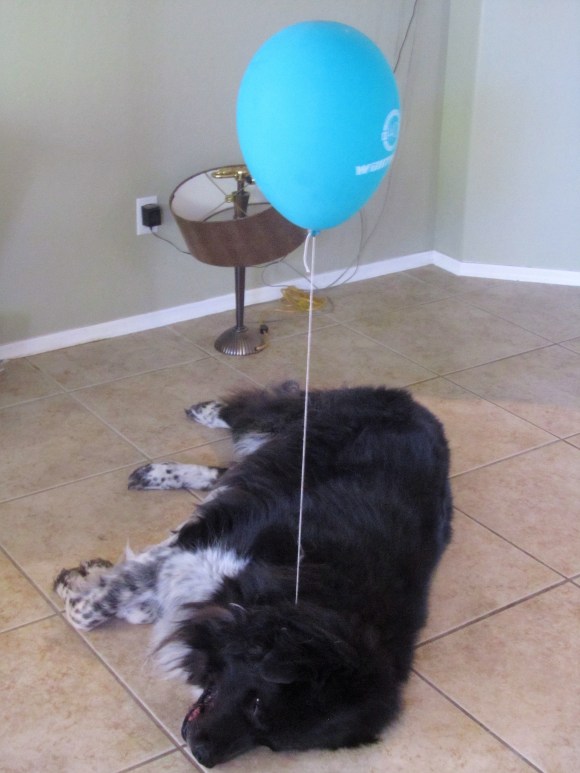
IMG_1312

Ben Sasse fears for our youth.

He is a U.S. Senator, and therefore he is a very busy man with little time to spare for side projects. Yet, so great is his concern for our kids’ predicament that he has taken the time to write a book about it. It is not a bad book, even if you disagree with what it says. You will have to trust me (or not) on the exact contents, because, “You may not make this e-book public in any way”, is all I will quote directly from it.

His thesis is laid out in the book’s title, The Vanishing American Adult, and he has summarized the gist of his prescription in the subtitle, Our Coming-of-Age Crisis – and How to Rebuild a Culture of Self-Reliance.

In the text, he depicts a generation afflicted by aimlessness. They have been stunted by coming up in the shade of social media and cultural relativism. Deprived of the harsh choices and bright lessons that come with social responsibilities and traditional rites of passage, kids have grown passive. They lack the ‘grit’ to sustain our society.

I won’t quibble with his depiction. Social media is a blight. The current generation operates on the assumption that ‘someone will take care of it’. Giving up is always an option for them.

I do disagree with his diagnosis and prescription, however. He seems to think that helplessness and hollowness result from a deficiency of citizenship. The correction would then involve a big shot of citizenship. He is completely mistaken. In fact, emptiness is the natural outcome of citizenship, and helplessness is just a reactive symptom.

On the most basic level, citizenship is a position in which one gets told that one’s life is fungible. One’s time, attention, motivation, and psyche can be chopped up and traded for goods to satisfy certain needs. Of course, Sasse recognizes this situation. He mentions “development of the individual” on a couple of occasions as a worthy pursuit, but only if it is pursued to certain ends (becoming responsible, self-sacrificing, ‘gritty’ – in other words, all those things that make a solid citizen). As far as I can tell, only the ends distinguish healthy developmental activities from selfishness, in Sasse’s estimation. And in a shocking coincidence, healthy ends are those for which the goods of citizenship come in handy.

“Why won’t my blood sugar go down?”

Maybe my analysis is unfair. Sasse contends that we are all a little defective, and our institutions may be a little defective, too. We should not expect a perfect synergy between man and social machine, even though the basic program is sound and actually the best that we can do.

But I hear differently all the time.

“I’m doing all those things that the diabetic educator told me to. I have changed my diet. I am walking every day. I am taking my medications like clockwork. So why is my blood sugar still high?”

This person is in my office every day, wearing a different, outfit, a different ethnicity, or a different gender. Yet they are the same person. They have a sit-down job, or two, in which they spend 40-60 hours per week dealing with an incestuous dataset – something so about itself, whether it is driving a cab or processing claims, that it demands attention to automatisms rather than any  particular skill. To ensure that their attention does not waver, an overseer tracks their activities and rates their efficiency. Their extraneous physiological and psychological functions are regulated by the employer as distractions.

The citizen in my office sleeps 6 hours per night, or less. They drink energy drinks to keep going, and eat foods which the package or the vendor says are healthy, because they haven’t the time or energy to prepare their own food. They are too exhausted to exercise properly.

As a result, they are obese, diabetic and hypertensive. As a result, they now require one of the goods for which they can sub-divide themselves: medical care.

Which brings us to where the defense of citizenship as a natural-born fertilizer for human development, breaks down. The trouble with the whole thing is not the palate of goods on offer, their costs, or the means of valuation. The trouble is the chopping, because the roots of experience (attention, motivation, responsiveness, etc.) can’t be cut up for a purpose, especially for delayed gratification of a specific need. The very notion mistakes the nature of needs and the relationship between our needs and our activities. Here, Sasse may have been better served by spending a little more time reading Nietzsche, and a little less time reading Rousseau and the Bible.

For an organism’s needs can’t really be parsed. The motivations underlying our activities are merely aspects of a single motive which Nietzsche labeled ‘will to power’. Even when we try to perform an isolated act of attention, we feel something about it, our neuro-hormonal system responds to it, and it tires us globally.

But Sasse seems to think there’s a neat way around the problem of dividing the indivisible.

Life on the Farm or 8 Pitches Up?

In the latter half of the book, Sasse talks about how he sent his daughter to work on a ranch. The idea was to teach her how to enjoy work – not any particular task, but work itself. Basically, he sought to teach her how to thrive as an instrument. It’s pretty clever, really.

He explains the strategy in a vignette:

Martin Luther met a man who had just become a Christian and wanted to know how best to serve the Lord. He asked Luther, “How can I be a good servant? What should I do?” He expected Luther to tell him that he should quit his job and become a minister, monk, or missionary.

Luther replied with a question, “What do you do now?

“I’m  cobbler. I make shoes”, the man answered.

“Then make great shoes”, Luther replied, “and sell them at a fair price – to the glory of God.”

In other words, find integrity in being a good instrument. I think the flaw in this reasoning is obvious: Why not make great shoes to the glory of Satan? It’s the devotion part that really matters, right? This notion of the human lost at heart and essentially in search of a set of rails (any rails) undergirds fascism through the ages, and it works superficially, so long as the social venue is stable.

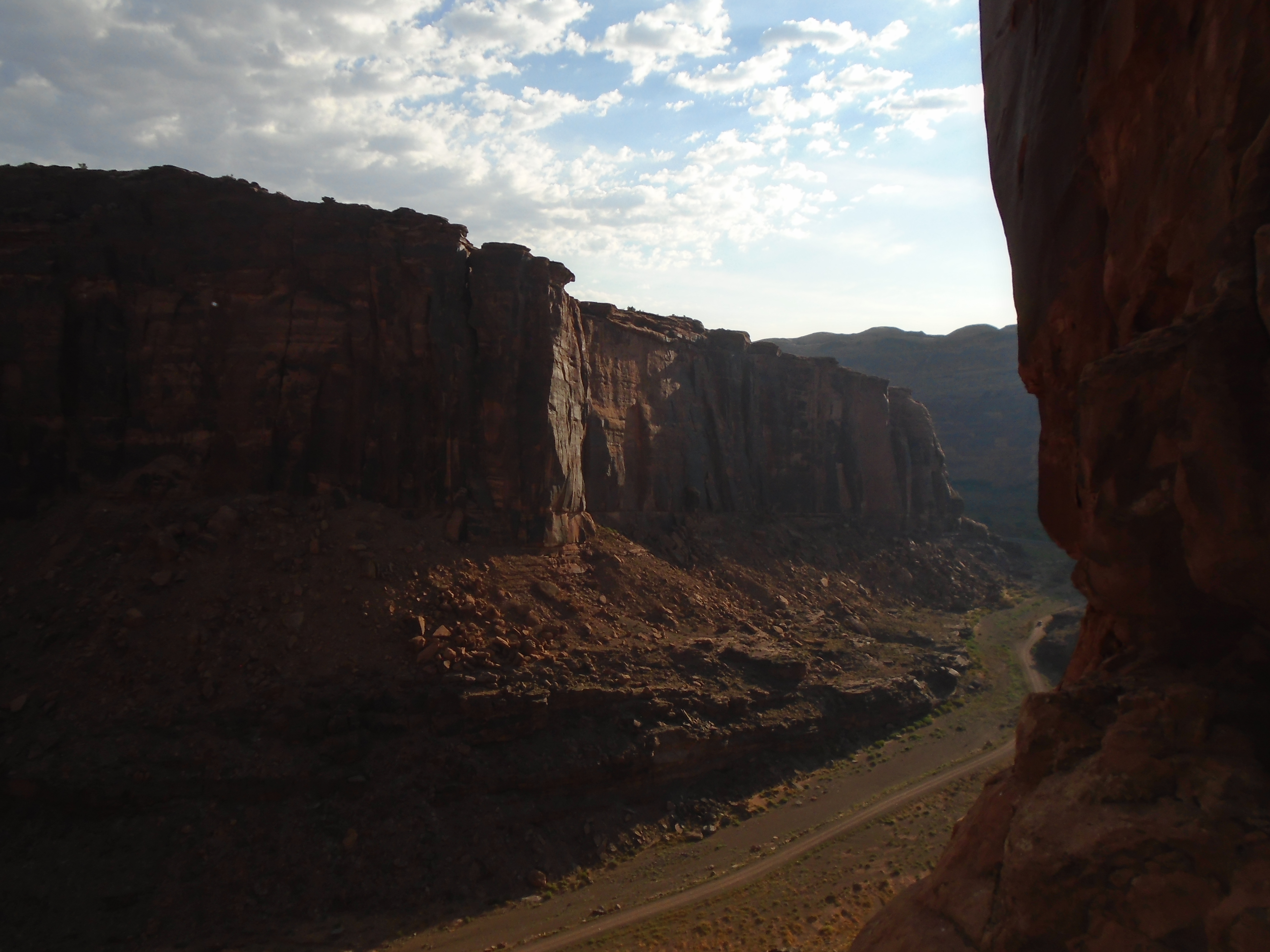
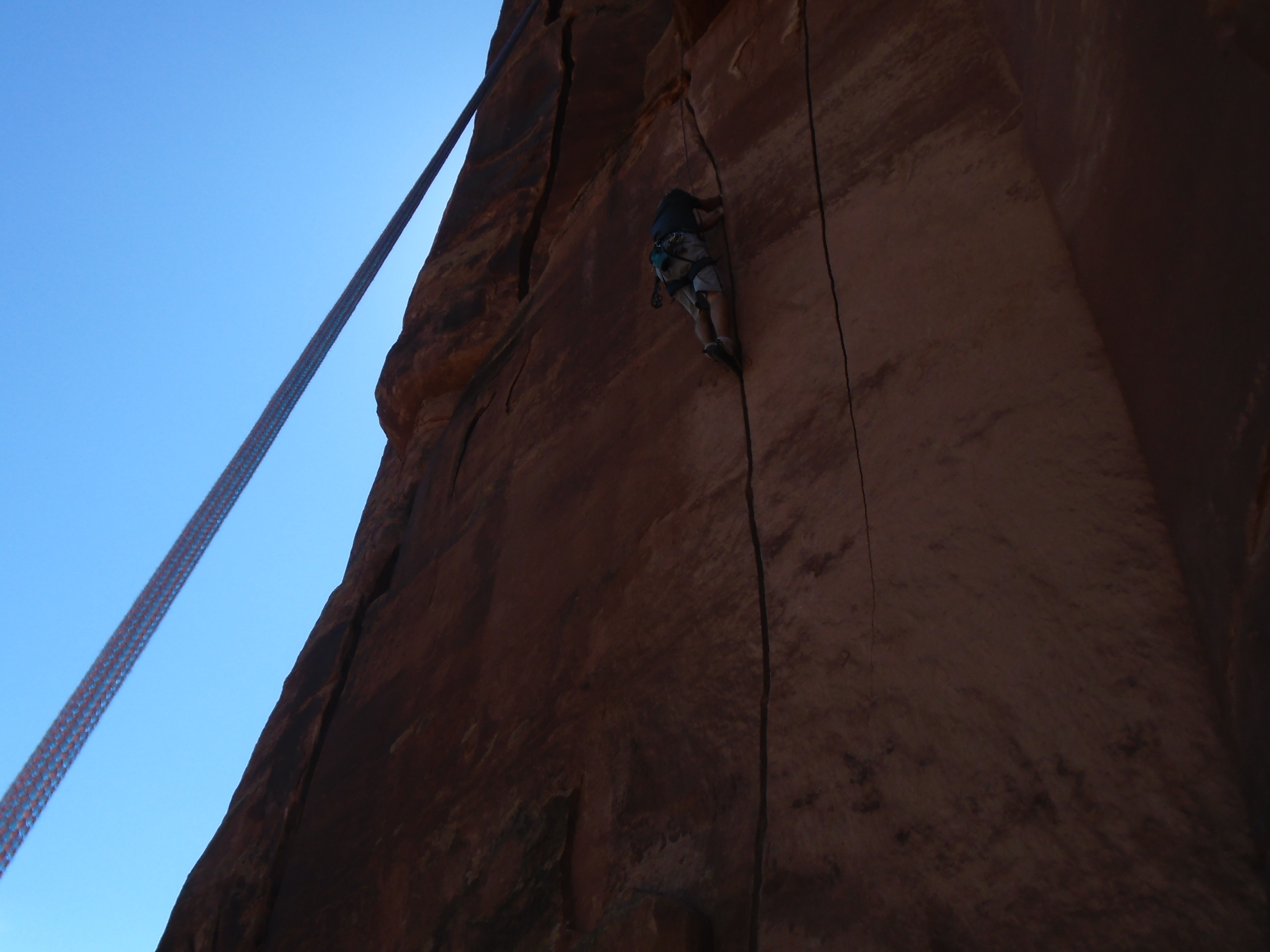
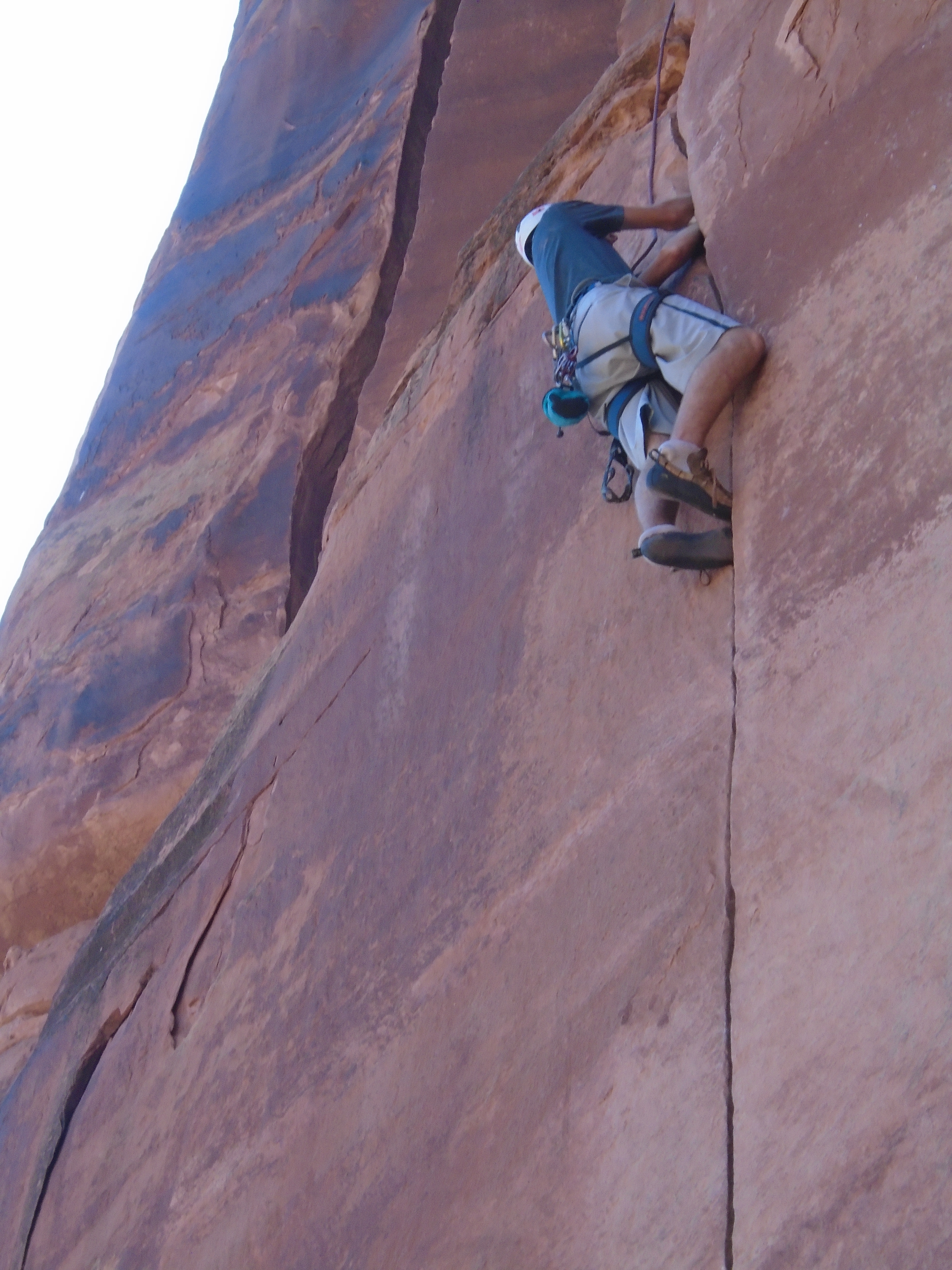
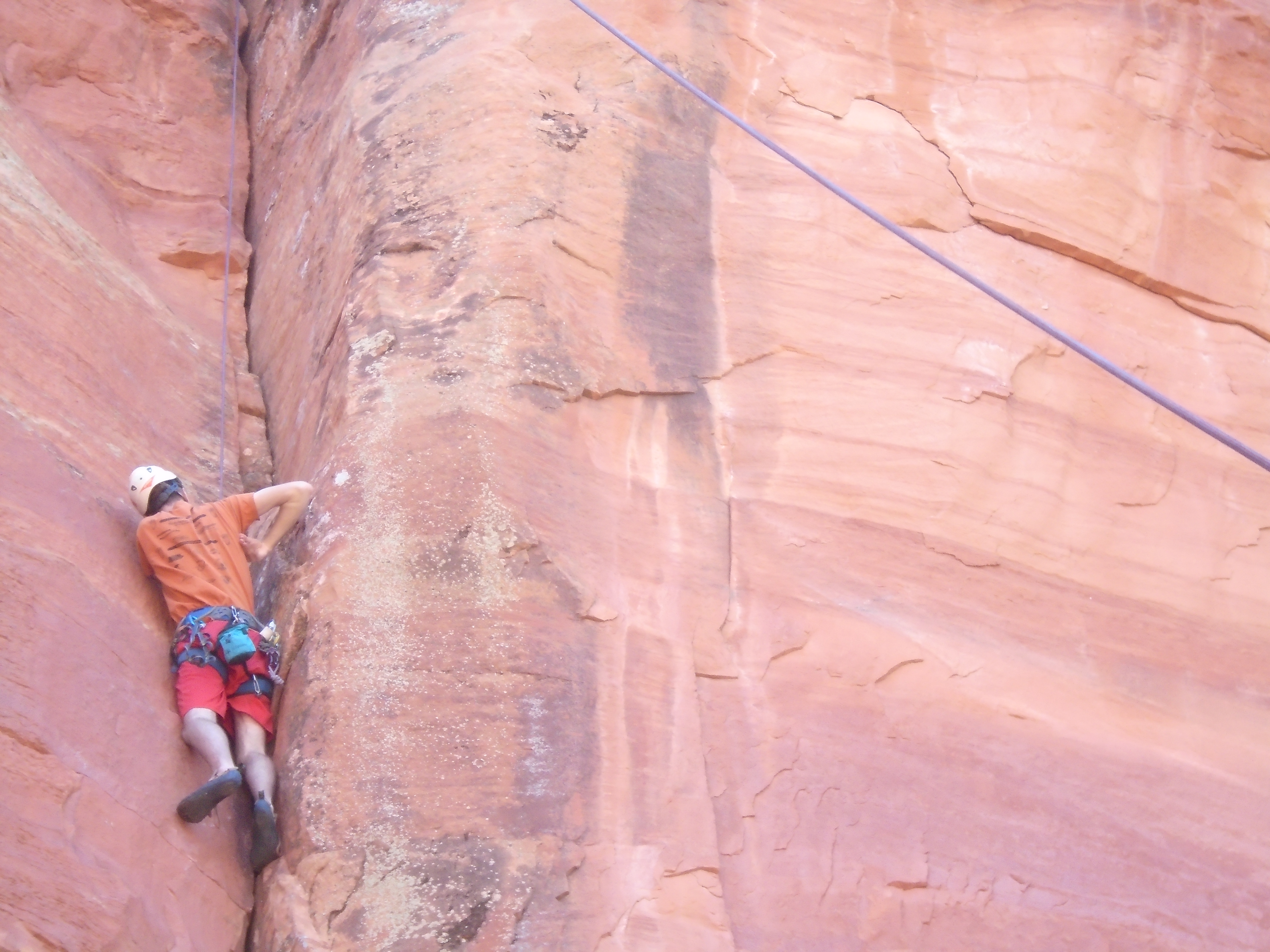
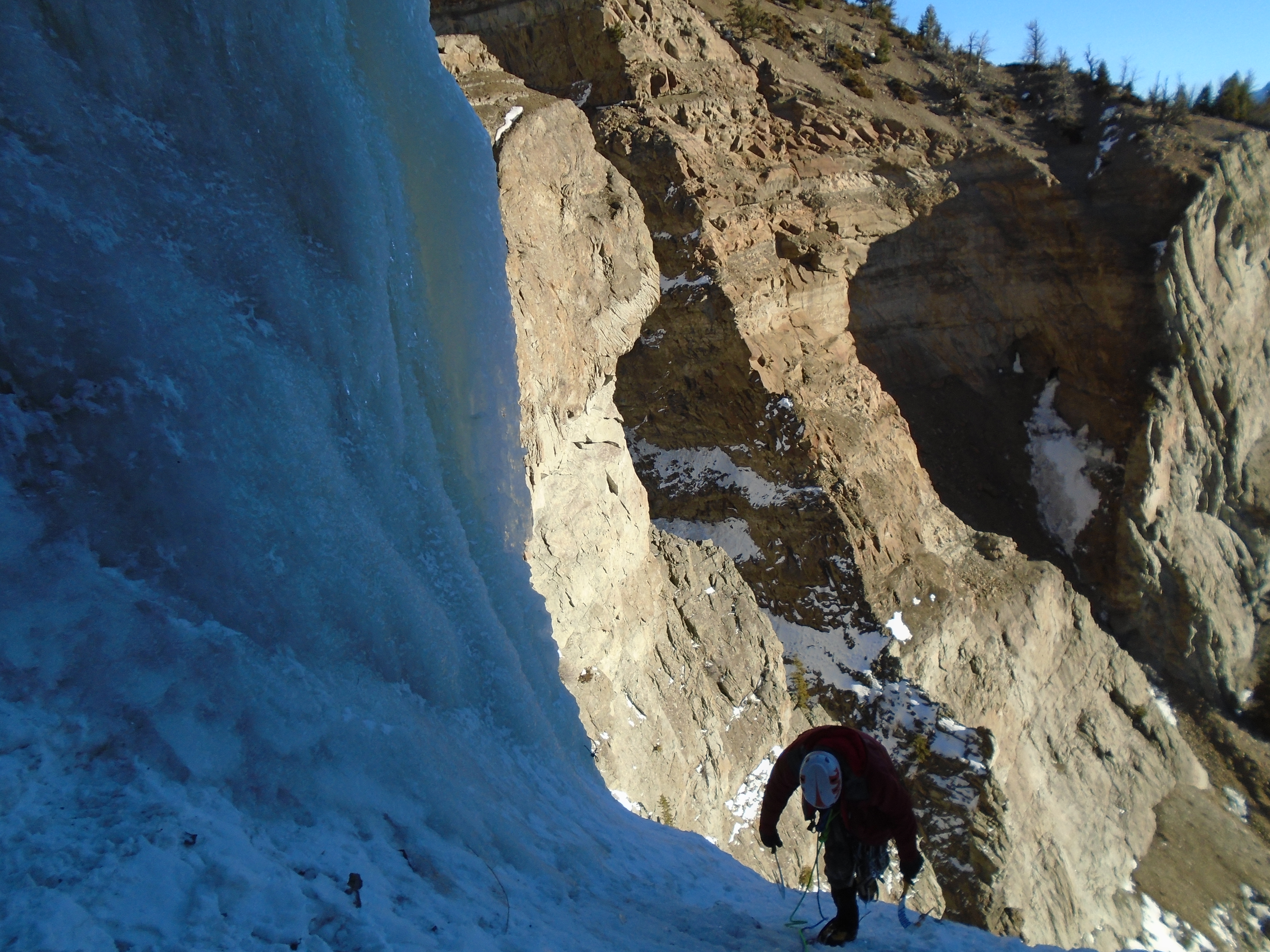
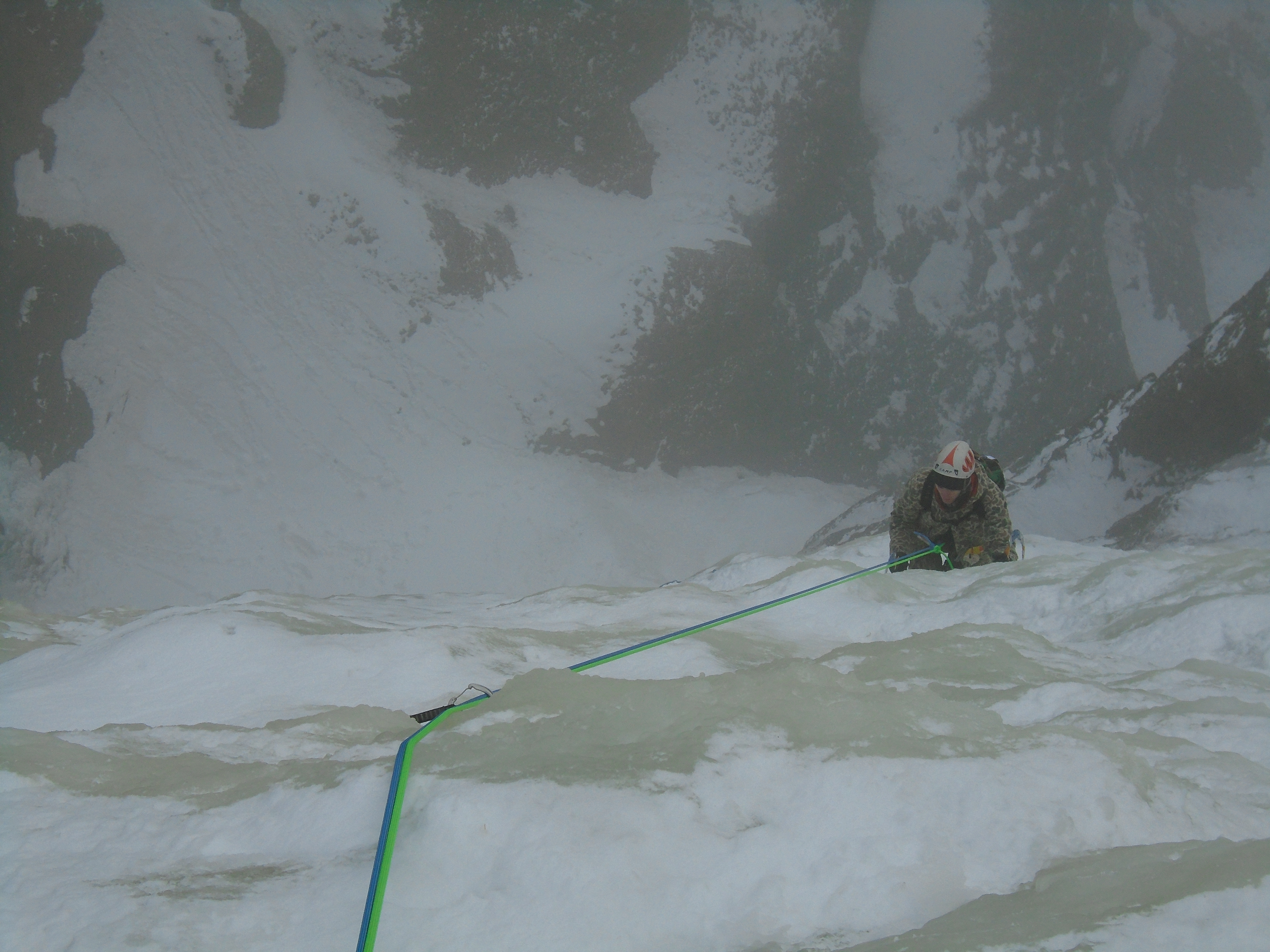
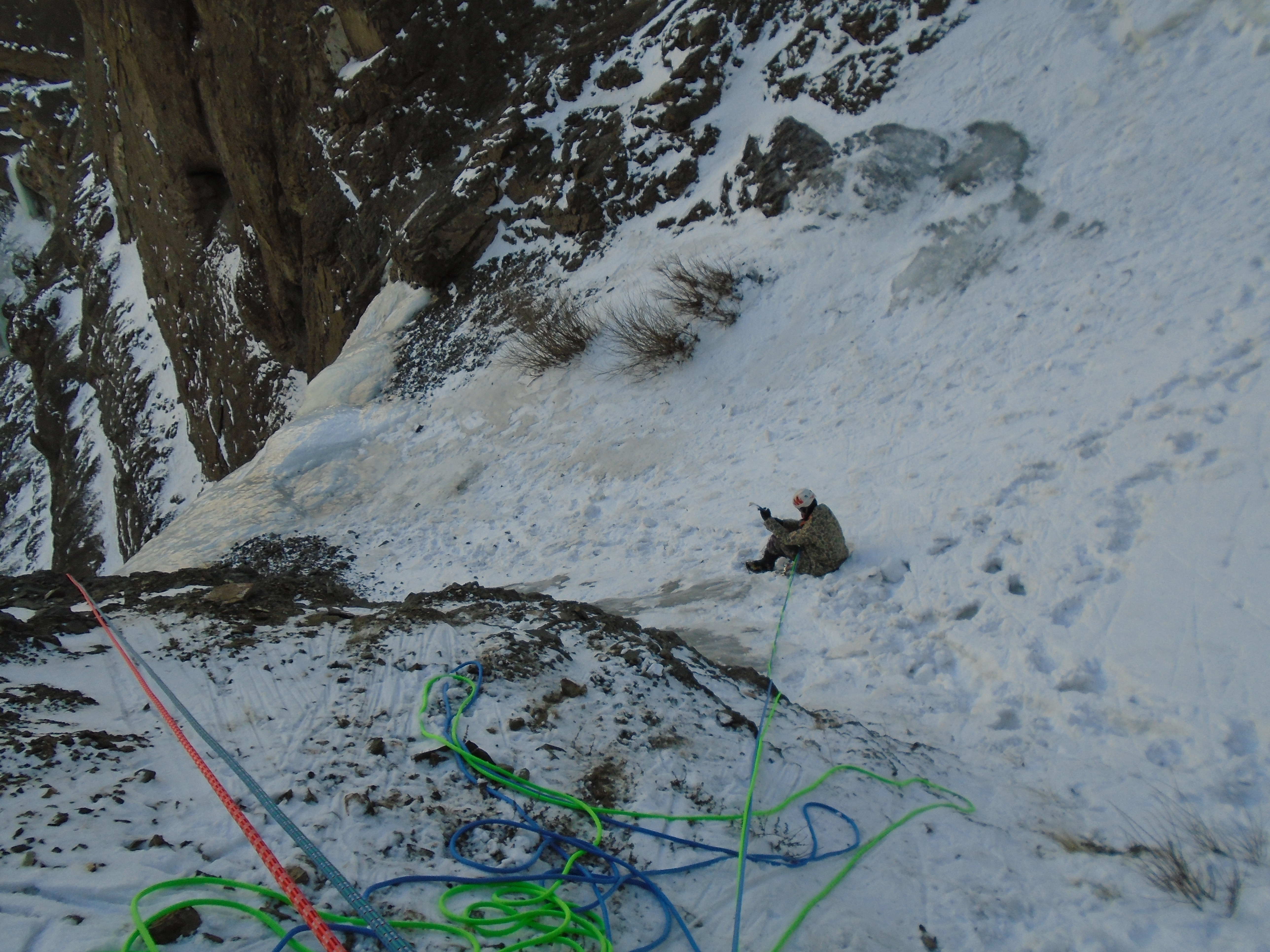
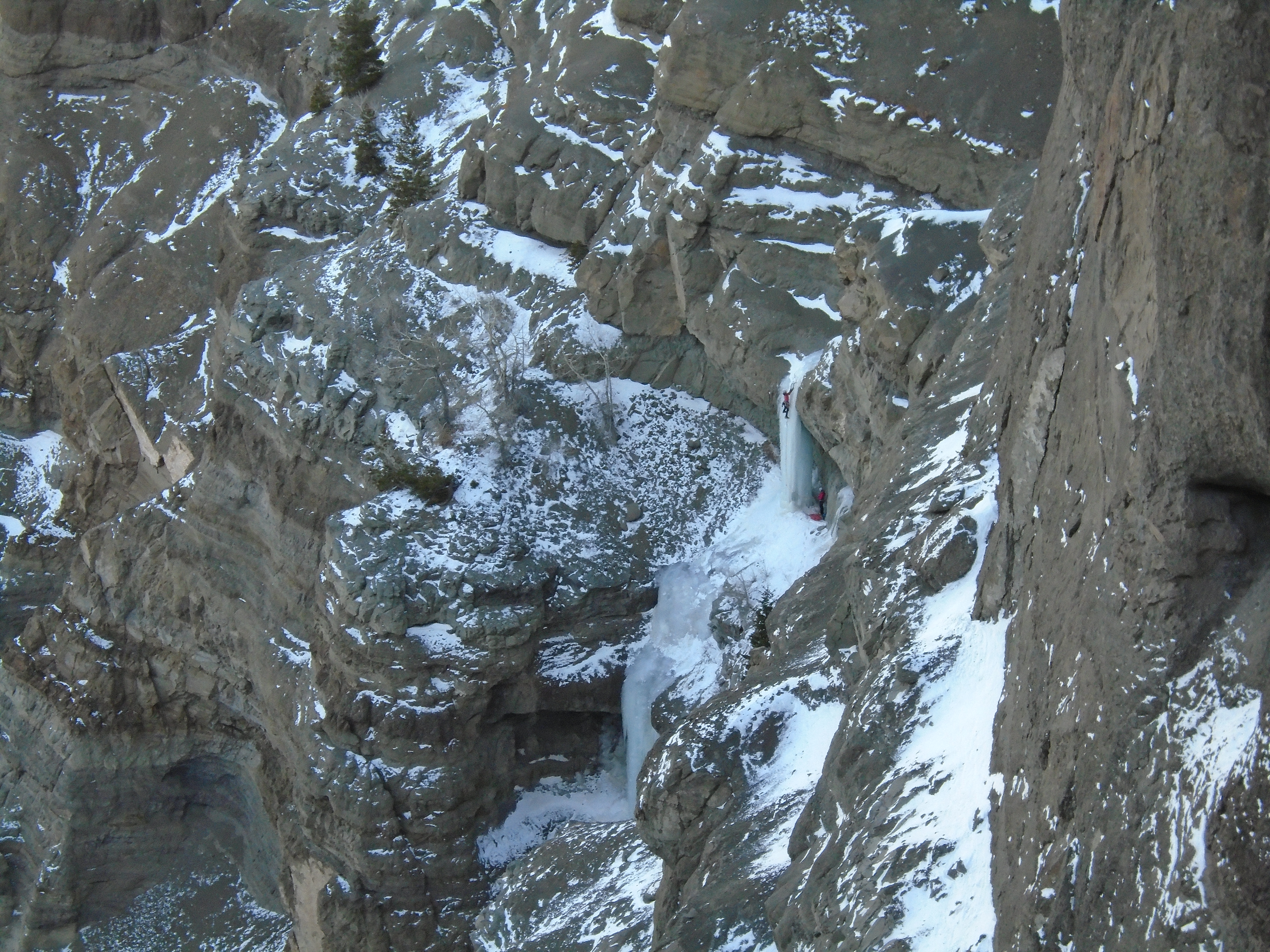
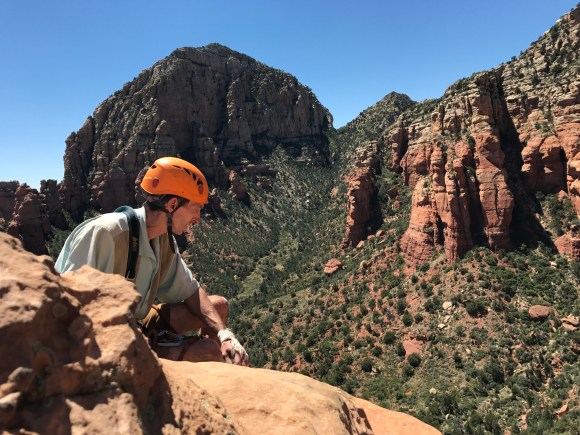
But I took another path with my kids, because I learned more from sitting on a ledge, than I ever did from a job.

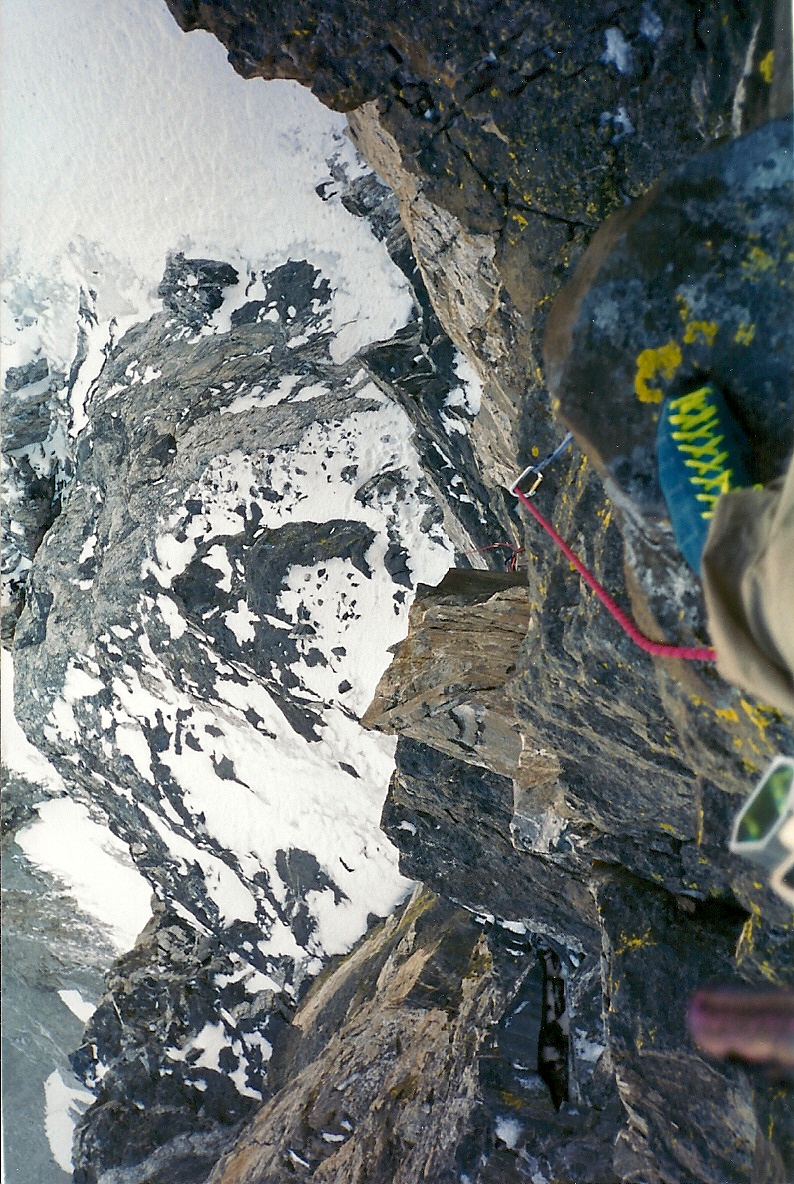
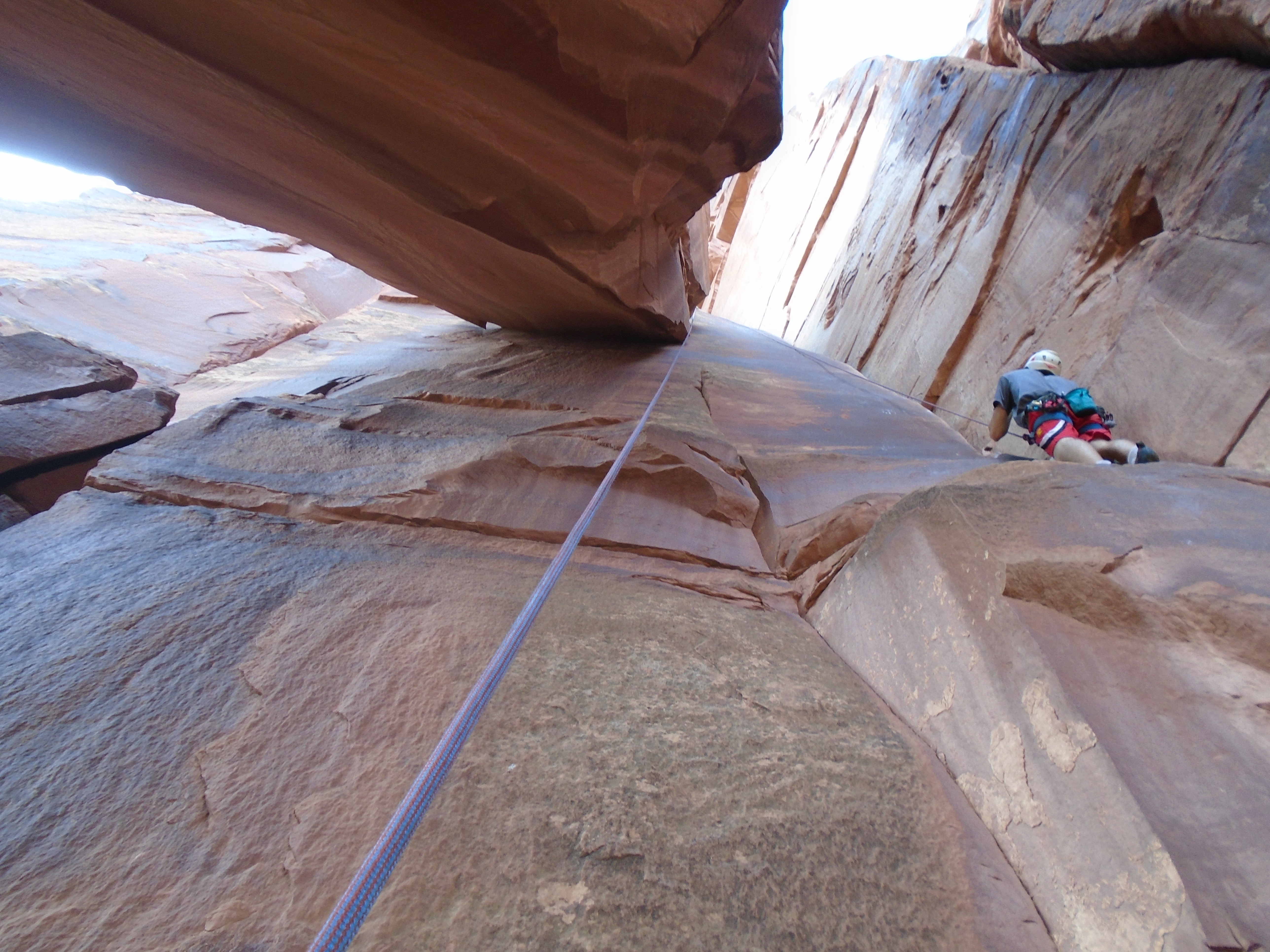
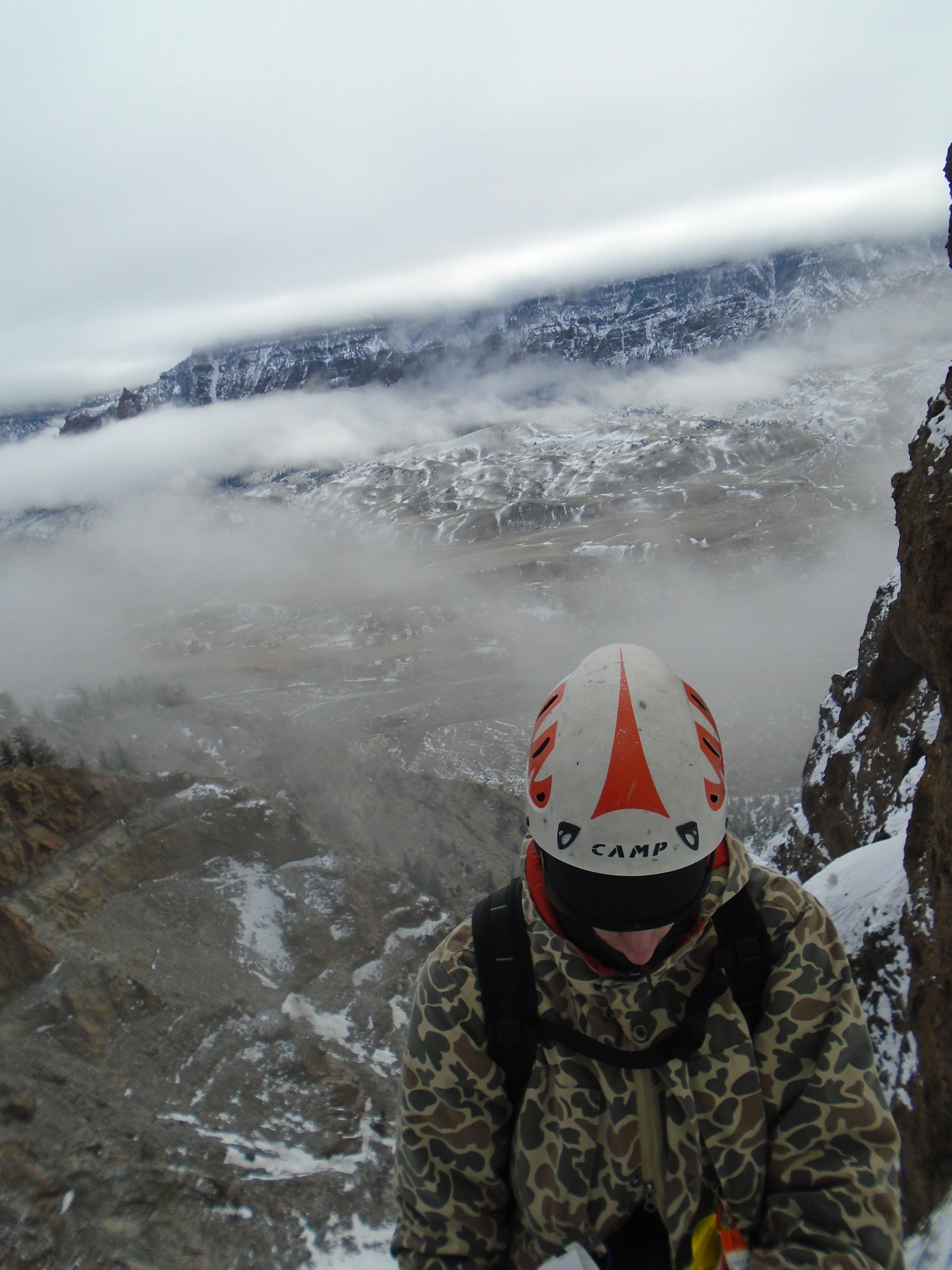
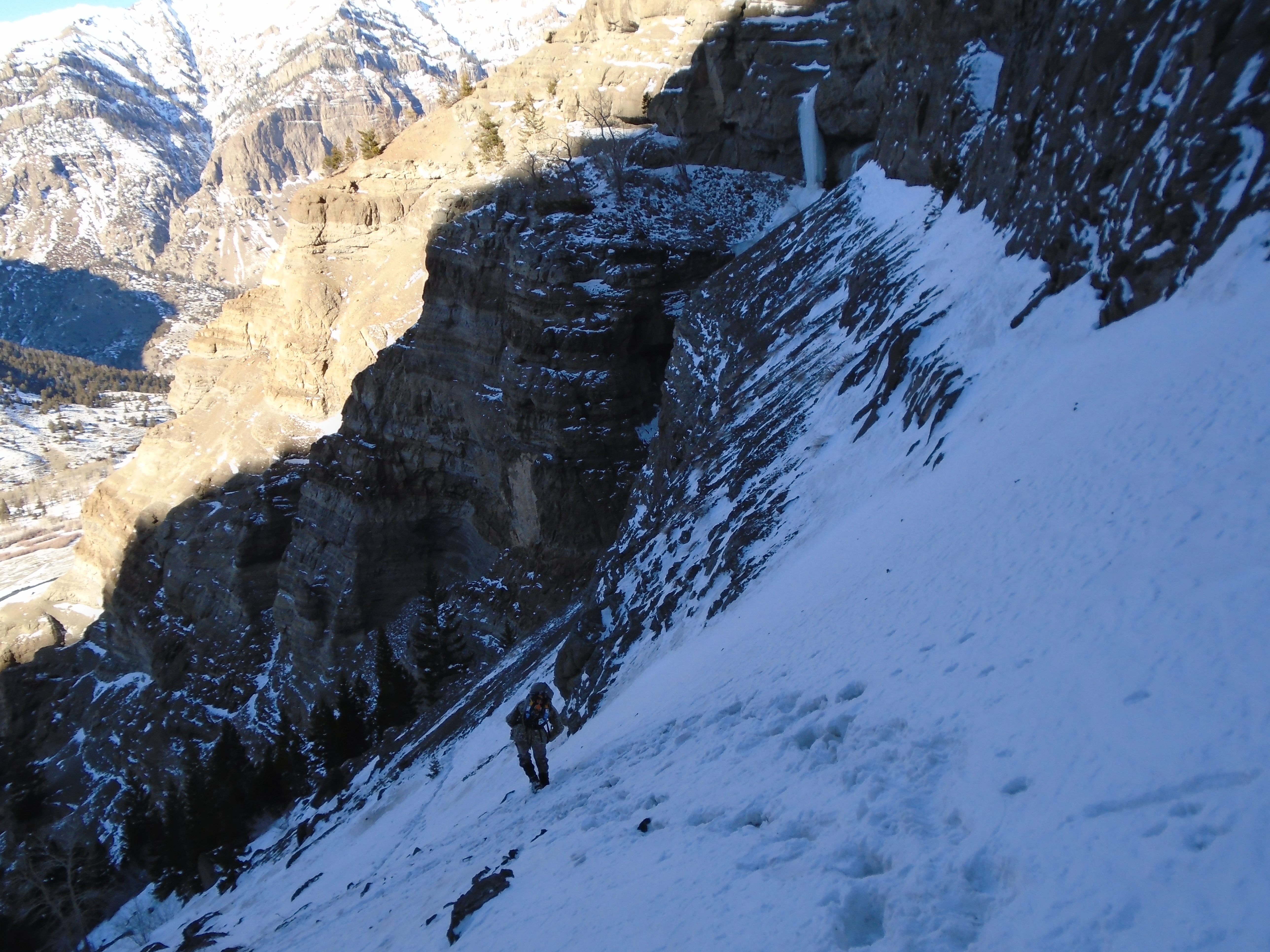
We have climbed several long routes together. We have looked up, down, and out from ledges in the middle of those routes and soaked in the lessons: however precarious the position, what falls to us is to pass the water around, check the system, and find our way through the next rope-length of terrain; trust your partners as you trust yourself; no matter how cold, hot, tired or thirsty you are, the beauty of the sky and landscape remain; achievement, i.e. ‘ticking the route’, doesn’t really matter – it is only a means to get you to the ledge.

In taking them on those climbs, my hope was to offer them a way of life which put making a living in perspective, rather than telling them that making a living would put everything in perspective for them.

A different vignette illustrates my point:

     Cook Ding was cutting up an ox for Lord Wenhui. At every touch of his hand, every heave of his shoulder, every move of his feet, every thrust of his knee — zip, zoop! He slithered the knife along with a zing, and all was in perfect rhythm, as though he were performing the Dance of the Mulberry Grove or keeping time to the Jingshou Music.
“Ah, this is marvelous!” said Lord Wenhui. “Imagine skill reaching such heights!”
Cook Ding laid down his knife and replied, “What I care about is the Way [“Dao”], which goes beyond skill. When I first began cutting up oxen, all I could see was the ox itself. After three years I no longer saw the whole ox. And now, now I go at it by spirit and don’t look with my eyes. Perception and understanding have come to a stop and spirit moves where it wants. I go along with the natural makeup, strike in the big hollows, guide the knife through the big openings, and follow things as they are. So I never touch the smallest ligament or tendon, much less a main joint.”
“A good cook changes his knife once a year — because he cuts. A mediocre cook changes his knife once a month — because he hacks. I’ve had this knife of mine for nineteen years and I’ve cut up thousands of oxen with it, and yet the blade is as good as though it had just come from the grindstone. There are spaces between the joints, and the blade of the knife has really no thickness. If you insert what has no thickness into such spaces, then there’s plenty of room — more than enough for the blade to play about it. That’s why after nineteen years the blade of my knife is still as good as when it first came from the grindstone.”
“However, whenever I come to a complicated place, I size up the difficulties, tell myself to watch out and be careful, keep my eyes on what I’m doing, work very slowly, and move the knife with the greatest subtlety, until — flop! the whole thing comes apart like a clod of earth crumbling to the ground. I stand there holding the knife and look all around me, completely satisfied and reluctant to move on, and then I wipe off the knife and put it away.”
“Excellent!” said Lord Wenhui. “I have heard the words of Cook Ding and learned how to nurture life!”
— Zhuangzi, chapter 3 (Watson translation)

I do not see the current generation as sissified hedonists, any more than previous generations. The hypersensitivity, the passivity, the absorption (self and otherwise) all look like symptoms of a bunker mentality. They see what’s in store for them and they don’t like it, but they don’t seem to know how to resist.

A Sasse-type message has gotten through. The citizenry coming of age does think that it must learn to embrace a social role (little worker, little voter, little contributor) wholeheartedly in order to fully mature, and it just can’t bring itself to do so. The instinct is right. Kids growing up in this era are being asked to pursue a sort of faux-maturity which involves merely “giving up childish things”, and the achievement of that state will leave them empty and utterly dependent on a structure which deals with them on the basis of a flawed methodology.

They need a little less Ben Sasse, and a little more Cook Ding, when it comes to advice about how to grow up. Because maturity means dealing with your situation – not just endorsing it – and dealing with it artfully. It means getting over being The Cobbler, The Christian, The Cobbler-Christian, or even The Cook.

In Sasse’s terms, I have laid out the Romantic counter-argument to his Realist argument regarding the nature of the individual’s relationship to civilization. But I reject that characterization to some extent. There isn’t an inherent conflict between the individual and the civilization. We are stuck with our civilization. It lies before us like the carcass of a great ox, and it is just as indifferent.

We get chopped up in our interaction with it, but our own hand is on the knife. And I agree with Ben Sasse here,  maturity is the solution. Not the faux maturity which the senator espouses, which is just a form of selling out, but actual maturity which sets limits and carves its own way, not towards some magical future, but like the cook’s knife, in the present where we all reside.
IMG_3666

Tagged , , , , , , , , , , , , , , ,

The Door in the Very Back

Freedom’s just another word for nothing left to lose

Janis Joplin

Attachment is the root of suffering

Buddha

We live in Scottsdale, an outpost latched to the Sonoran Desert like a tick on the back of a bony mongrel. It calls itself a city, but it is not. Cities are permanent settlements which arise spontaneously from commercial roots. A city has some external basis for its existence, like a navigable river, a mineral deposit, or rich surrounding farmland. Being based on a natural utility, a city bears the confidence of legitimacy coupled with the discipline of responsibility. Take a port city for example, which grows a superstructure founded upon its waterfront. Though they may grumble about their tax bill, no citizen of the port need wonder why the city government spends money on building docks and dredging the harbor.

Scottsdale has no such foundation. Instead, it is an amenity for its amenities. The city provides an airport so that wealthy snowbirds can migrate to the desert when the first frosts make their hometowns uncomfortable. There are golf courses soaked in stolen water from the Colorado where executives do business in information technology and professional players entertain resident retirees. Many districts are zoned to allow restaurants and shops mixed with apartments and office buildings. The resulting environments have adopted the label “live/work” for themselves. Metaphysically, it is radioactive and I blame exposure to its rays for my wife’s parasomnia.

She does not sleepwalk, nor does she exhibit signs or symptoms of any other ordinary sleep disorder. Her affliction may even be unique, since I have found no record of similar cases in the literature.

This is how it manifests: as I am falling completely asleep, she grabs my shoulder and shakes me.
“How long did you say it would be until humans go extinct?”, she asks.
“About 100,000 years,” I answer.
“Really?” she exclaims” Then what is the point of all this if humans are just over someday and nobody will remember any of us or anything we did?”
“Well,” I say “that question is just bad. Asking an existential what’s-the-point-question is like asking why isn’t round, green. Separate things entirely.”

“Well,” she persists, “I don’t see why we try so hard to accomplish all these things that will be completely forgotten in the end.”
“It is just who we are,” I offer.
“I still don’t see why we try to do anything at all,” she says.
” Try not doing anything at all, and remember, sitting home eating ice cream is doing something,” I say.
There is silence now from her side of the bed.
“Say,” I ask, “do you want to go to Walmart tomorrow?”
“Yeah,” she replies, “that will be fun.”
She settles back and goes to sleep then, but I know she’s unconvinced. We will have this same conversation again, on another night in the near future, in the few minutes before sleep overtakes us.

The trip to Walmart will buy us a couple of peaceful nights. She loves Walmart, like most of us do. The store has a broad-based appeal, as evidenced by its presence in the middle of upscale Scottsdale. Our local Walmart typically has as many BMWs as it has Chevys in the parking lot. It took me a long time to figure out why we find Walmart so attractive. It isn’t the items for sale. Everything in Walmart is available someplace else. Buying the same goods over the Internet is generally more convenient and may be even cheaper than going to the store. The physical environment isn’t the draw either. The aesthetics of Walmart’s interior design leave much to be desired, and practically, it is a maze crammed with items that are sometimes poorly marked.

The ingenious curation of items is the key to Walmart’s appeal. Everything on the shelves serves its purpose up to the highest level manageable by a layman. When a shopper walks through the front door with a certain need, intent on a particular item which they have calculated most likely to fulfill that need, they may or may not find the object of their intent. But, they are almost guaranteed a solution amongst the goods in stock.

Say a shopper comes in looking for a dovetail saw, because they want to cut thin plywood and figure that they need a saw with a straight, self-supported blade. What they find on the shelves at Walmart is a variable speed, electric reciprocating saw. As they consider the electric saw, they realize that they really don’t know anything about the dovetail saw, other than the fact that it has a straight blade which is self-supported. Maybe, they think, they were about to get in over their head by buying a dovetail saw. The electric saw looks like it will do the job, and is guaranteed to be manageable for an amateur like them. All the items in Walmart are instructive in this way.

When I first grasped the secret of Walmart’s draw, it seemed like magic. But it turns out to be something less. In fact, I think the Magi in the back room of corporate headquarters sorted out their strategy by watching beavers. At first glance, beavers seem to be brilliant little creatures. Their dams and dens look like masterful feats of engineering. But in truth, all the beavers do is put sticks where they hear flowing water. The dam is just a manifestation of accrued impulse.

The Magi understand that humans are just the same as the beavers. Everything man-made is a manifestation of accrued impulse. Instead of reacting to the sound of water flowing, we respond to an urge to preserve. Our impulse to save the status is expansive, and pertains not just to personal existence, but to the entire infrastructure of personal identity. Wherever we hear a trickling leak of currency dripping into memory or memory into oblivion, our species hustles over to plug things up again. To get the job done, we will use anything that we can get our hands on: monuments, literature, culture, or personal possessions.

Over the centuries, we have built up dams made of dams to preserve us. In a room in the very back of corporate headquarters at Walmart, the Magi have a model of the whole thing. They can see what sort of patch will fit a particular defect in the barrier. The dam of dams model shows them exactly what kind of jersey to put in the men’s athletic wear section: A tank top which recalls the shirts of famous players long retired, without naming names, yet a garment current enough in its design to acknowledge present stars. This sort of insight is just too perfect to attribute to anything less than informed and premeditated action. It requires a model of the dam.

On occasion, right after I am shaken awake to answer existential questions, I fantasize about taking my wife to corporate headquarters, where we will find the the door in the very back of the complex. I could then show her the full extent of the dam. I wouldn’t say a word. I would let the monstrous complexity of the model speak for itself.

But when I awaken the next morning, I never get up to pack the car for a road trip. Rested and little more sober in the light of day, I suspect that a peek at the whole structure will not cure her sleep disorder, anymore than my reasonable words. I think that she will need to see what the dam contains, and not the dam itself. That stuff is transparent and liquid to the touch, though. It will be dangerously easy for her to dismiss the stuff of identity, even if she were able to dip her toe in it. I doubt that the Magi have gone so far in the name of realism as to fill the reservoir behind their model. They don’t really need that part of the simulation anyway.

It doesn’t really matter. I can survive a little lost sleep. My answers to her questions remain adequate, even if she does not find them conclusive. Besides, in a few decades, the desert will shrivel and the Colorado River will be sucked dry. The city of Scottsdale will flop over with its legs curled in the air. The rest of everything humanity has built will follow shortly, in geologic time. No one will recall her metaphysical sleep disorder. I think I will not keep thinking about a cure. It is a unique experience after all. And there is always the solace of a shopping trip the next day.

Tagged , , , , , , , , ,

The Dilemma of Divine Purpose

It is often said that God is the source of human (and indeed, animal) purpose, and that without God, there is no purpose.

But what is God’s purpose, and who can say?

Let’s dispense with the common confabulation offered in response: God’s purpose is to do  just what he does and to be just like he is. Of course, this response defines the difference between an explanation and an assertion, and when it is stated as an explanation, it makes a very tight circle.

When God acts, he manifests divine will.

God created the world, so the world is meant to be a manifestation of divine will. In other words, it is meant to be just what it is.

Any questions?

But there is no real answer within the common confabulation. Maybe the question can be reframed to elicit a precise response.

Can God say why he created the world?

This is not to say that he need explain himself to us. Is he able to explain it for himself ?

If creation was instrumental to some purpose for God – perhaps a cure for loneliness – then creation is actually dependent upon some set of determinants of divine will, i.e. circumstances to which the divine will responds.

If so, whence those cicumstances? Even if God can say, we all (us via God) are beholden to those circumstances. For all of us, the circumstances simply exist, and therefore, all of us simply exist.

But what if creation was not instrumental? Let’s say God simply willed it. In that case, there is no divine insight in principle – not even a Muse to blame – and again, all of us simply exist.

So,  we all simply exist, God too.


Tagged , , , , , , , , ,

Rabbit Holes

I have looked at the little wall for a couple of years in a slightly creepy way. The pathology  was reflected in the looks on my sons’ faces as they stood with me at the base of the cliff, and in the way that they looked away when I finally broke long, silent stares at the thin crack in the sandstone tower. Their expressions were familiar to me from my rotations on the psychiatric wards. The nurses looked at new admissions with the same expression right before noting in the record, “Patient appears to be responding to internal stimuli”. A person with that phrase recorded in their chart inevitably received an antipsychotic medication.

But, the boundary between dream and delusion is an eggshell composed of success, and I might just be able to climb this, after months of driving back and forth, writing a script composed of all the little holds and moves, dangling on a top-rope cursing, and route-specific training. All of these things are expected. I have done all of them before, with every project that I have done, just as I have sworn off projects after all of my other projects.

I fully expect to swear off projects after this project as well, even though I have been eyeing another route at the other end of the crack-width spectrum for several years, and with the same unhealthy obsession . The rejection of projecting at the end of each project results from an incremental increase in the sanity quotient which comes from terminating the effort. To be clear, I am not saying that anyone who engages in projecting is banking up mental health; quite the opposite.

To start considering a route on the edge of one’s ability, one first must feel a little bored and unmoored. One must ask oneself, “What am I doing with all this? Where am I at? What else is there?” before the darker ambitions can take over. The desire to take on a maximally uncertain climb is a mark of deterioration. The only enduring benefit may be a touch of healthy fatalism. A person taking on a project won’t help himself because he can’t. It is part of the lifecycle, which rolls on with or without our acceptance. Amor fati, or not, the route may go…

Tagged , , , ,

Losers

I have to confess; I climb at a gym. I could dress it up and say that I train at a gym, but that would not quite be true. I climb the routes sometimes.

At my last gym session, I was just about to indulge in that guilty pleasure when I overheard something which totally gasted my flabber. A woman had clipped into the autobelay  on a steep section of wall and struggled up a few feet before auto-trundling*.

As she swung to the padded floor, her husband walked by with their toddler in his arms.

“Did you lose already?”, he asked.

“Lose?”, I thought, “You don’t lose at climbing.”

In the first place, climbing is never over.

In the second place, I can’t see what would constitute losing, short of just not trying at all. Everybody falls. Every steel-tendoned youngster runs up against something they can’t climb. Even the best can die in the mountains, and to think that even such an extreme endpoint defines losing at climbing is a subtle reversal.

Climbing is instrumental, and it is the finest instrument in my book. Think of it like a Stradivarius. A Strad. is worth a lot of money. Investors will bid on a Strad. and brag about owning one. But the violin still gets played, and the day that it gets locked in a vault as a chit is the first day of loss, because the violinist is the one who really possesses the instrument, while the investor is a mere parasite upon it.

There will be a gold medal for climbing soon. There are already prizes, sponsorships, grades and bragging rights for climbing. Some will take all those trappings seriously. However, we should not take those people, or their trappings seriously.

There is no loss in climbing.


  • Auto-trundling – as opposed to cleanly popping off the route and subsequently orienting oneself in mid-air, to auto-trundle is to disengage from the holds in a disjointed fashion, resulting in a tumble which closely resembles a loose rock rolling down a hill.


Tagged , , , , ,

That Moment

scan0012

Every climber starts out believing in their own invulnerability. Death and injury happen to other people, because they are fools, suckers, or just don’t have the luck, like you do. Believing oneself impervious comes in very handy, especially during the formative years. In that era, every risk and critical action is still new.

scan0009

The other ‘O.S’ route, North Ridge of the Grand Teton

You will take big run-outs whether you plan on it or not. You will make potentially fatal mistakes along the way. If you think nothing bad will happen to you, then you will march on past those moments of critical danger and learn the game. Of course, other outcomes are possible. Some people get the chop during the formative era. Some get bored with their apparently inevitable success and abandon the sport.

For everyone who sticks with it, there comes a moment when the belief in one’s invulnerability gets wiped away. For me, it was watching people die, and nearly being killed by the falling bodies. After that, there was no wishing my way back to the last age, where it couldn’t happen to me, no matter how convenient such a wishful belief may have been.

We can’t pick and choose what we believe in the end. No matter what, those moments come to spoil the utility of our delusions. Yet after the disappointment fades, you begin to understand: what you do after those moments is what really matters.

801424


Tagged , , , , , , , , ,

The Age of the Toilet Ant

DSC00123 (1)

I  shifted on the cot, but I could not find a dry spot. It was soaked through with sweat, and the time was only 2 PM. The temperature would remain above 100 degrees F until well after 5 in the evening. Maybe the next time I took a vacation from the desert, I would not just go to another desert.

DSC00112

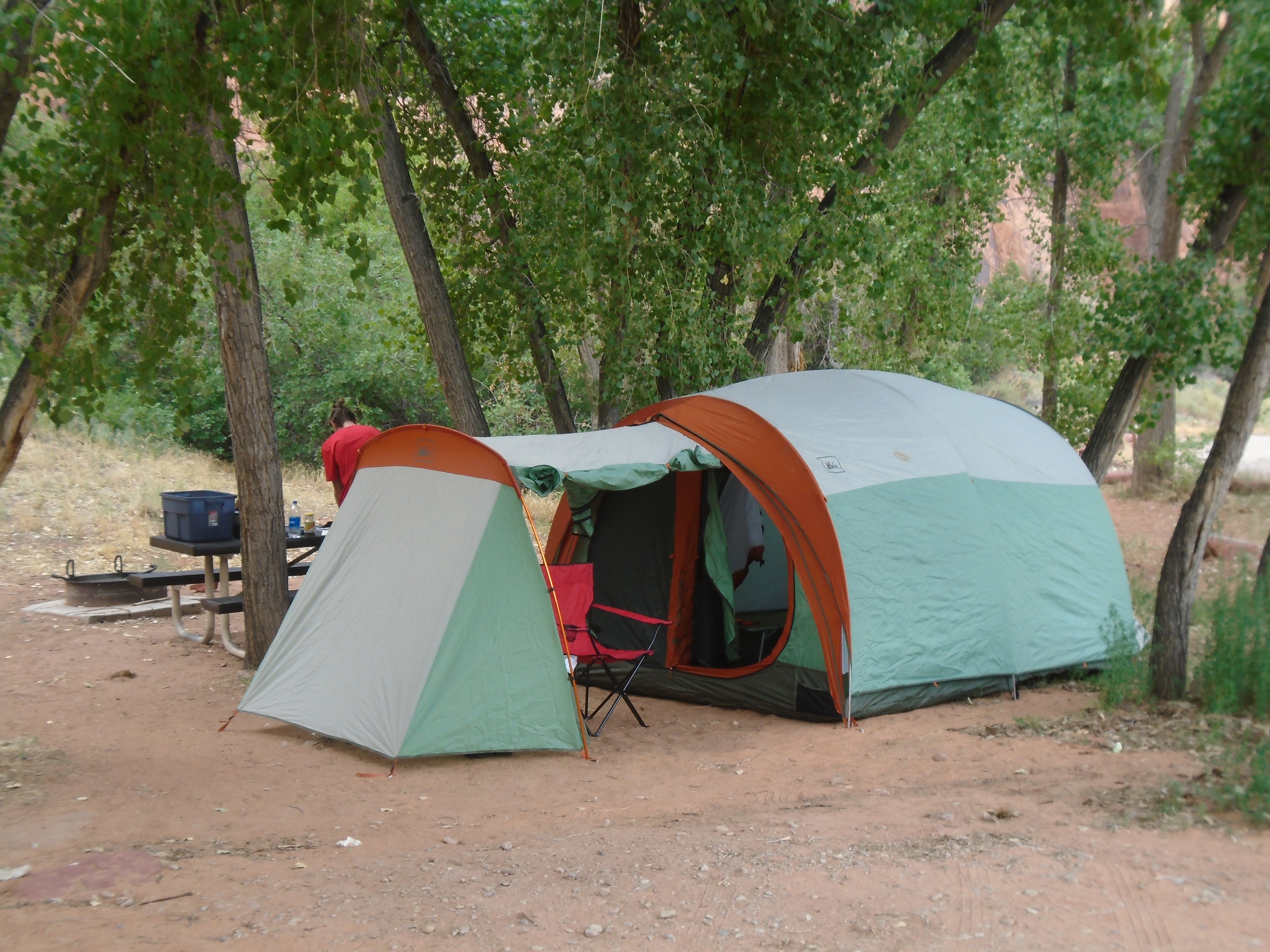
I got up to go to the outhouse. The pit in this campground was exceptional. Surrounded by a wooden screen and open to the sky, it still cloaked itself in an invisible cloud of stench despite maximum ventilation, and it had ants. They swarmed over it, through it and across anyone with a need to approach their shrine.

I’d spent the last few evenings before the trip watching “Dirtbag: The Legend of Fred Beckey”. Ants had crawled over Fred, I’m sure, as he slept in the dirt by his car. The fact provided some sense of justification.

Brushing a few stragglers from my leg, I stumbled back to the tent. Immobilized on my back, I stared at the mosquito mesh overhead and waited for dark. Events of the morning bubbled through the broth of afternoon sensations. There was something about a disappointing performance on a climb below my level (supposedly). An awkward high-step on a fist-jam figured prominently. I recalled the extraordinary feeling that I did not have enough #4 Camalots. My knee and elbow hurt.

DSC00116 (1)

Jeeps trundled through my fever-dream every few minutes, on their daily migration back to Moab. The campground lay very close to the road, and the grinding of their tires and engines echoed off the red sandstone cliff which stood 20 paces behind our tent. An inevitable bump-bump of music accompanied the Jeep sounds, to placate the humans who clung to the great beasts. They passed with a slight weave and steady speed, suggesting instinctive movement.

DSC00124 (1)

The sun finally set, the air cooled, and my brain began to solidify again. Thoughts picked up where they left off: on the subject of “Dirtbag”. Fred did not consider himself a dirtbag, and he offered one piece of evidence for his position: he always had a car.

And why do you worry about clothes? See how the flowers of the field grow. They do not labor or spin. Yet I tell you that not even Solomon in all his splendor was dressed like one of these.

Those verses set Western expectations of the wandering, mendicant seeker. It was a romantic vision, and a wrong one. Beneath every seeker lurks an offering plate, an alms bowl, a trust fund, or a pink Thunderbird. Even the originator of the myth waffled on its purity, since he qualified the key verse with assurances of heavenly treasures and even a Creflo Dollar wink and nod toward earthly rewards.

I got up to walk around the campground. The little brown bats were out flipping and twisting after invisible bugs. All lower mammals hew to a lived aesthetic.

DSC00122

The next morning we chose a shady canyon as our climbing venue. We had done the approach walk the day before, after the hot wind had chased us away from the other crag. It looked good, but I had failed to accurately assess the aspect of the climbs. The sun shone full on our perfect hand crack. After an adequate fit of denial, we turned around and marched back down the lovely canyon to flop on sweaty cots through the heat of the day.

I woke to the sound of a light slap against the tent wall. A quiet curse from my son followed. It was dark , and the propane lantern was burning. He crouched over a large beetle lying on its back by the tent door. Ants swarmed over the bug. They bit its legs, locked their mandibles and then the ants attached to the legs were bitten by other ants in the swarm, forming a rude shackle.

My son flipped the beetle upright and it flew off. But it circled back, then hit the tent, and landed right back where it had been. After a few more rescue attempts to the same end, my son stood up and shook his head in disgust. In the morning, the toilet ants had gone back to their regular haunts and the beetle lay where they had abandoned it. The ants had left the body completely intact.

DSC00125

In “Dirtbag”, someone asks Fred, “Is there one thing that you have come to value above all else?”

Fred answers, “[To] Stay alive.”

Wowbagger The Infinitely Prolonged was – indeed, is- one of the Universe’s very small number of immortal beings.
Most of those who are born immortal instinctively know how to cope with it, but Wowbagger was not one of them. Indeed, he had come to hate them, the load of serene bastards. He had his immortality inadvertantly thrust upon him by an unfortunate accident with an irrational particle accelerator, a liquid lunch, and a pair of rubber bands. The precise details are not important because no one has ever managed to duplicate the exact circumstances under which it happened, and many people have ended up looking very silly, or dead, or both, trying.
To begin with it was fun, he had a ball, living dangerously, taking risks, cleaning up on high-yield long-term investments, and just generally outliving the hell out of everybody.
In the end, it was Sunday afternoons he couldn’t cope with, and that terrible listlessness that starts to set in at about 2:55 when you know you’ve taken all the baths you can usefully take that day, that however hard you stare at any given paragraph in the newspaper you will never actually read it, or use the revolutionary new pruning technique it describes, and that as you stare at the clock the hands will move relentlessly on to four o’clock, and you will enter the Long Dark Teatime of the Soul.

-Douglas Adams

Fred didn’t act like he simply wanted to stay alive. The toilet ants were about staying alive, and its byproducts. His behavior was more like the beetle’s, or even the bats’, though he could never quite achieve the lived aesthetic. But that’s beyond us all.

DSC00126

Leaving the beetle incident behind us, we returned to the shady crag. The early morning was dead quiet, so the clack of falling rock startled us. We paused in the middle of the approach slope to look for the source of the rolling rocks. It seemed like the noise came from across the dirt road on the bottom of the canyon, but the echoes made localization difficult. The clatter came again, accompanied by a flash of movement on the opposite slope. A running herd of desert bighorns popped out of the rocks, then halted and vanished just as suddenly.

We watched them pull that trick a few more times over the course of the morning. A jeep or SUV would pass on the road and the sheep would dash up the slope for a few seconds, then stop and disappear. A few of the SUV drivers hit their brakes and jumped out with binoculars and cameras, only to be disappointed. They scanned for the invisible sheep briefly before grudgingly climbing back into their cars. None of the jeeps stopped.

I don’t think that they could hear the sheep running over their tires and soundtracks. And also, I don’t think they were about sightseeing in the first place. Rental jeeping seemed to be about crushing a strip of already well-crushed earth beneath one’s knobby tires, rather than viewing the natural wonders.

DSC00130

Right on schedule, like we had opened to oven to check on a batch of cookies, the 11 AM breeze hit us. I was vacillating at the base of a nice finger crack at the time, and the puff of heat swept a way my angst. We were done.

DSC00132

Fred Becky was dead. The bats could stay. We had to go back to the tailgating world  where people ate to eat and drove too fast to nowhere. As we packed up, I took one more look at the dead beetle. I though about kicking some dirt over the body, but it didn’t seem right. I left it as it lay, and without an ant in sight.

Tagged , , , , , ,

The Sad Side of the Road

Being awake is swimming around in a lake of the undead.

And the undead are like a bunch of friends who demand constant attention.

Demanding constant attention, will only  lead to attention,

And once they have that attention, they’ll use it to ask for attention…

They Might Be Giants

The white truck was about a foot from our bumper. I looked in the mirror at the pick-up trucker. He wore mirrored aviators and had his head cocked in an expression of bored annoyance which only the rich white folks can pull off. I gave it right back, followed by the finger.

Over in the driver’s seat, my son was oblivious to the exchange. He was too gripped. He was driving the freeway for maybe the third time ever, and had shifted into survival mode on the entrance ramp. The truck pulled out and blew past us. At least he passed on the left. As the truck cleared our flank, I glanced around its tailgate at the Eastbound lanes.

On a Tuesday morning at 0630, the Eastbound side was the sad side of the road. Thousands of people parked in the lanes, distracting themselves with cell phones, the condescending humor and invective of AM radio, or their own expressions of hatred towards the filthy slacker stalling traffic in front of them. I wondered, as I had countless mornings before: Where were they all going?

Most were off to willingly trade their lives for money. Some were probably going to try to game the system, like us. Maybe they played ball in a league, or played a musical instrument, or read books and then thought about what they read. I was pretty sure that the gamers were a tiny minority. If there were lots of those people, then the sad side of the road would not exist in the first place.

I had thought about the sad side of the road on many mornings, as I drove to work. I rarely got to see things from the passenger’s seat though, and that Tuesday morning, from the passenger’s seat, I began to consider my own side of the road, too.  I wondered where the jackass in the truck was going. He was in a hurry, so he was going to cash in somewhere.

Maybe he was going to buy a ride on one of the hot air balloons which hovered above the dirty thermocline in the near Northern suburbs. I could see a couple from the freeway at 0630 on a Tuesday morning. The trucker seemed like the sort who would enjoy a balloon ride. He seemed ambitious, and looking down on the anthill from just above its pollution was good for the ambitious, especially if it was just a peek, and a costly enough peek to exclude the losers.

I knew where we were going. We were headed for Sedona, to climb a sandstone pinnacle. It was a traditional climb, which means I had to carry and place removable anchor pieces on my way up. I preferred traditional climbing to sport climbing, where the routes were protected by in situ anchor bolts.

I preferred traditional climbing because it got right to the point. Helmuth von Moltke the Elder was right: No plan survives contact with the enemy. In climbing, we sought to verify the corollary to that bit of Prussian wisdom: If you wanted to live, you couldn’t defer or hold back. You could not buy your way through. No faking allowed. When you placed your own gear, the corollary was on you right away. If you clipped bolts, it didn’t hit until you maxed out.

When I glanced back over at my son, he looked a little more relaxed. He had picked up driving quickly. I had tried to work on strategy with him. I hoped that he would continue to drive defensively and remain focused once the operational routines of driving became automatic. I hoped that he would not end up like the trucker. Even just being a gamer was better than that.DSC00084

Tagged , , , , , , ,

Aimlessness

Purpose gives life value. Most people would agree with that (false) statement without being able to properly explain what it means.  To be fair, when its morally authoritative proponents speak of purpose in an existential  context, they may mean one of two things. The intertwining intents make for a confusing narrative, so some untangling is in order.

The first, predominant meaning, is the common usage of ‘purpose’: instrumental to an extrinsic end. A good example this sort of purpose is the purpose of a humble noun.

“Cat” has an instrumental purpose. All it does is represent a certain class of lazy, mammalian parasites (who we love anyway). We could name the same category with a different phoneme and nothing would change. The sound and spelling derive their purpose from their use toward an end outside themselves.

The second, less commonly expounded thing to which moral leaders refer when they speak of existential purpose, is something more like ‘content’. The word then gestures at the richness of a personal story. On this account, Immanuel Kant and Idi Amin led purposeful lives.

Of course, lay-speakers often intend both meanings at once and also equivocate freely between the notions ‘instrumental’ and ‘full-of-content’. And lay-speakers cannot be blamed for the muddle. It is intentional.

We are all told, explicitly and implicitly, morning to night, from birth to death, that content comes of instrumental purpose, and one justifies the other. Our religions tell us this. Our politicians tell us this. Our employers and professions tell us this. And they all tell us that this mechanism gives value to existence.

The pervasive message of human civilization is: instrumental  purpose makes purposeful content, makes value. But that is not how we work. Acting as an instrument may serve as a means of expression, but expression of motive (will to power) actually produces the value of our personal stories.

The endpoint itself makes no difference.

Nor does the report of our lives’ content capture their value. A slave may live a wild adventure from crib to deathbed and still, rightfully feel cheated. To think that the endpoint. and content generated in pursuit of that endpoint, themselves yield value, is itself a moral failure

It is all in the doing.


Tagged , , , , ,

One Word

DSC00038 (1)

The pick bounced. I hadn’t dropped my elbow at the end of the swing. If the pitch had been steeper, the little tweak would have been unnecessary, and the stick would have been good. Because of things like the swing tweak, I never liked WI 4 as much as the steeper stuff. Sure, your forearms don’t burn, and all the gear placements are solid, but it somehow felt more insecure.

DSC00030

I looked down at the teenager freezing in the drainage at the base of the climb. He was learning that hours and hours of playing Overwatch were not adequate preparation for climbing in the Valley, among other things.

DSC00015

When he was 5 years old, I carried him up the last 1/3 of the gully to the Abbot Pass hut. That was the last time he had been in the real mountains, before this. He had surely forgotten the feeling of insufficiency in the face of the real mountains’ light and space, because he did not stand unsupported in it for long. A little house, lashed to the saddle between Mt. Victoria and Mt. LeFroy, had rescued him from the exposure.

DSC00016

At the time, he pinged around the hut, euphoric, with tears from the gully climb still drying on his cheeks. From a kindergartener’s perspective, the whole thing was an adventure curated by his parent. His tired legs and cold hands served the story and, given the hut, were not real concerns after all.

DSC00014

Subsequent experience had put mountain fairytales on the shelf. On this trip, he got the larger narrative that the child could not grasp. The cold was not a bit-player. No curator stood between you and the drop. Ambition and inspiration did not necessarily see one through.

DSC00031

I looked up at the rest of the pitch. It was almost done. The angle eased above, and I could see a nice, flat spot for the belay, just below the accumulation zone where old snow undermined the solidity of the ice.

The route then followed a broad ledge rightwards. I could solo up the remaining section of WI3, bring him up, and cross unroped. But when he arrived at the belay, the day was clearly done. He had the look of retreat, so we did.

DSC00018

His confidence flowed back on the rappels. He began to chatter, pinging from topic to topic like the amazed, excited, five-year-old flitting from window, to window, to window in the hut. He  was excited this time though, because he had begun to understand what we were doing, and it wasn’t some fairytale, adrenaline fix or ego trip.

DSC00012

Revelation came in one long word, articulated by picks, boots, simple effort, and the perpetual movement of the Valley’s substance in water, wind and light. Once you heard it, you never completely stopped hearing it, as it went on and on without end. It got louder from time to time too, back in the real world, every time you saw somebody get angry about the contents of their coffee cup or tear up when exposed to a flag and a song.

In those moments, it reminded you that you never completely left the Valley, and it called you back as a whole. We already had our next tickets; only 3 weeks back in the real world to go.


Tagged , , ,