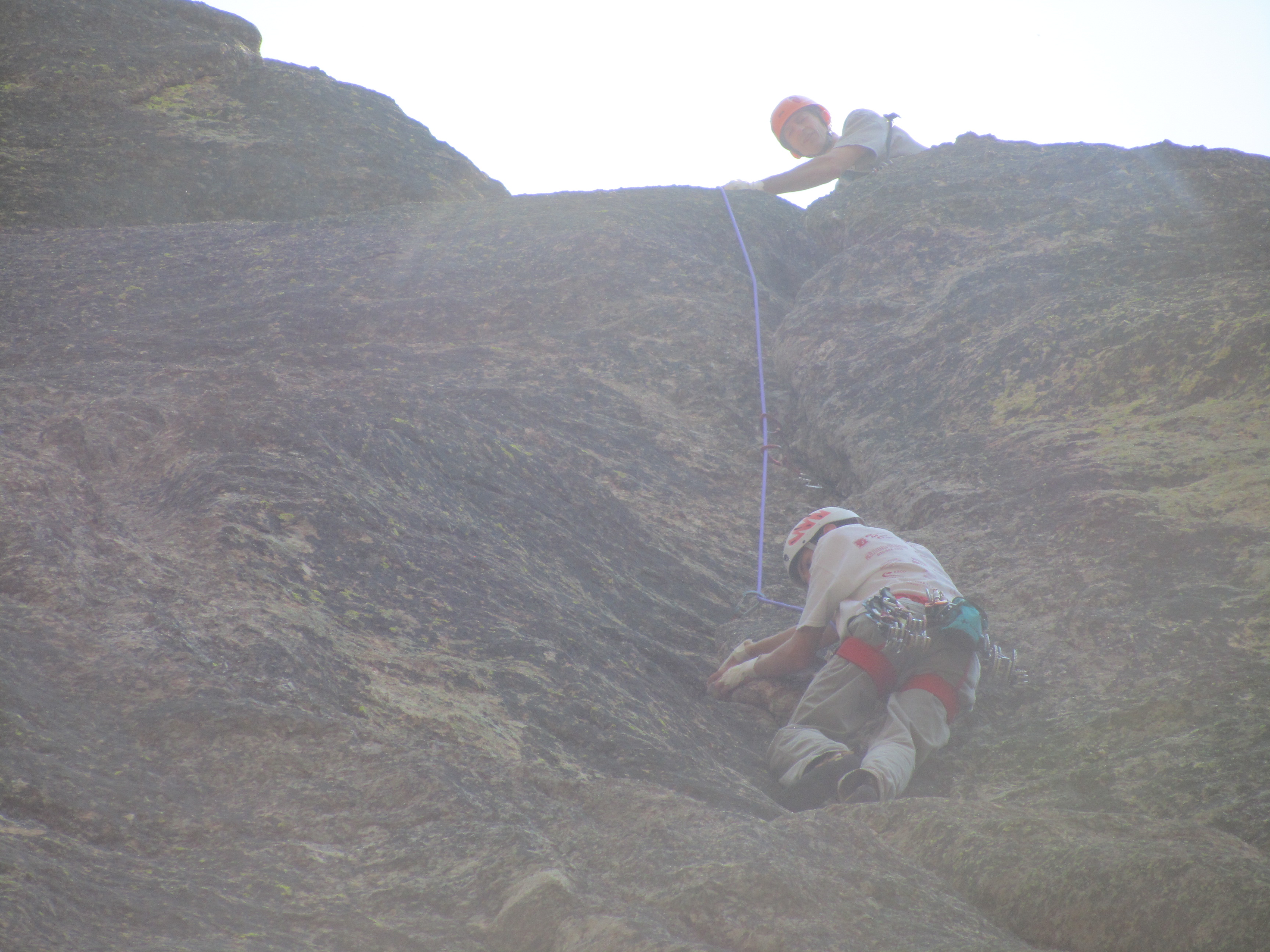
As I prepare to move to the desert, I’m going back to do the climbs that have shaped me.
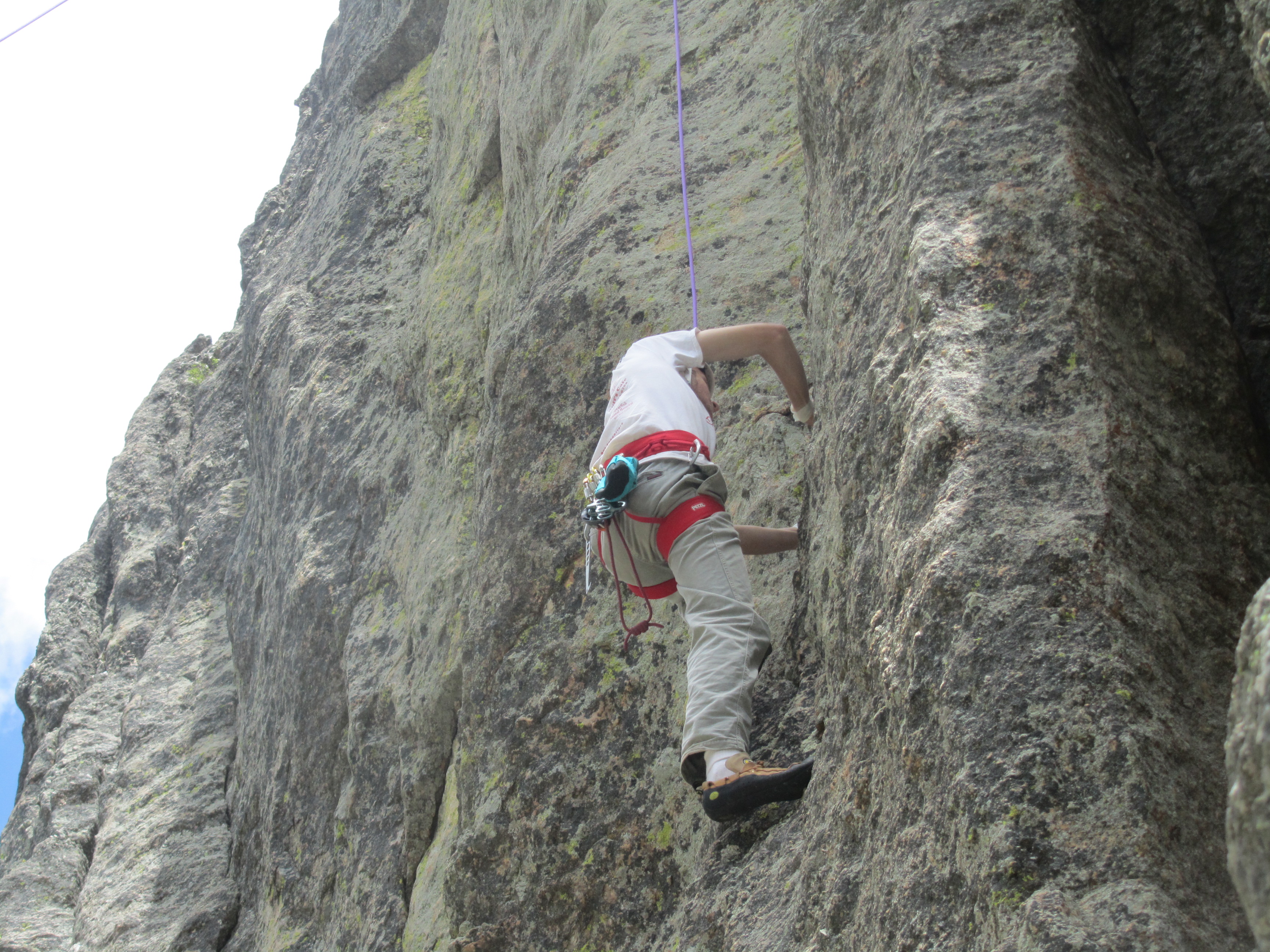
I am climbing them with my sons. I will not imply a goodbye to my friends and partners over the years by involving them in the project. There is no goodbye for them.
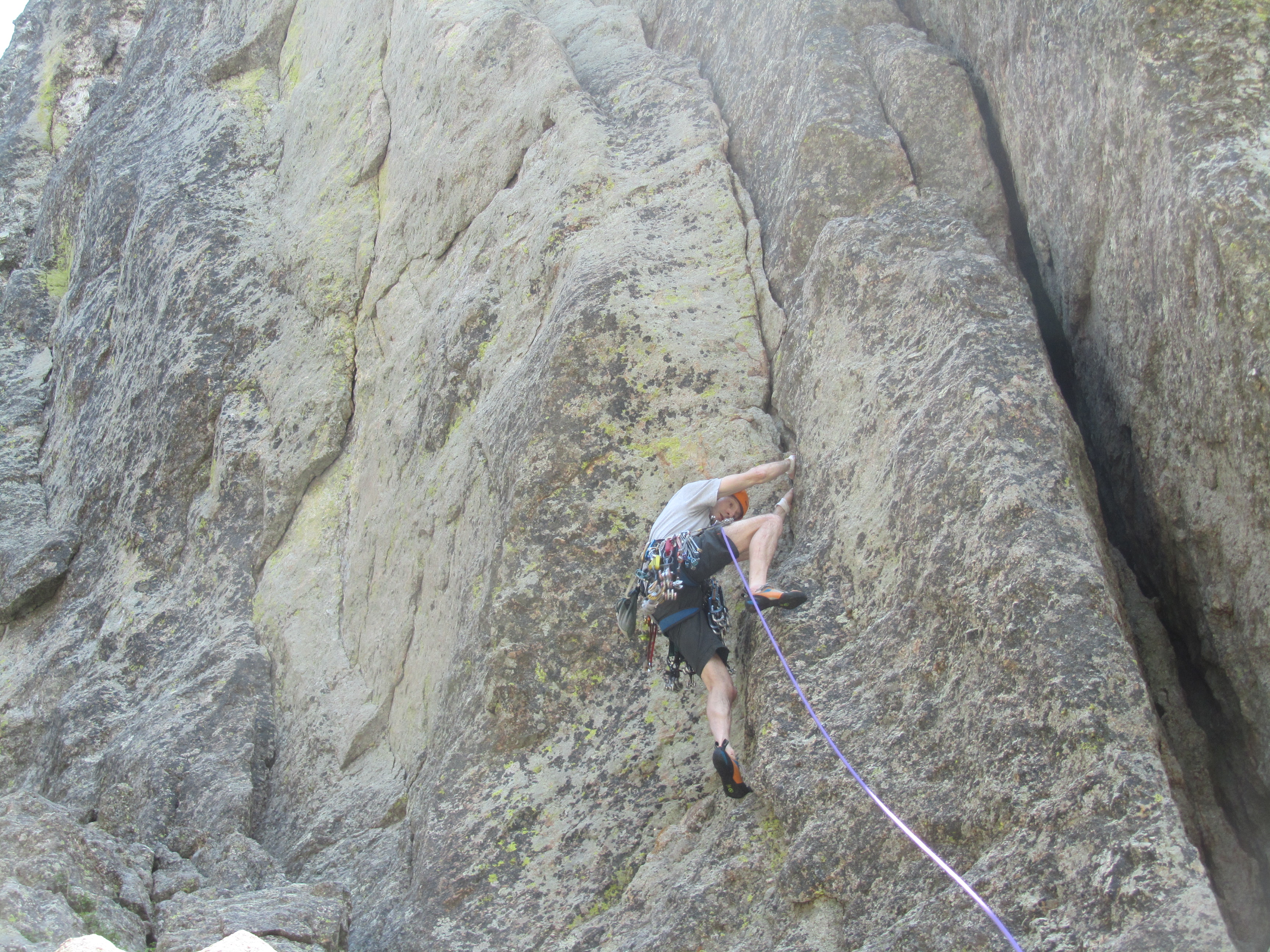
As I return to the old routes, I am finding them suddenly easier. I think it is because I am finally climbing them without any surpassing ambition.
I am not climbing them to become a better climber or to get to the next, harder route. Instead, I’m starting where one always ends: climbing to make the next move.
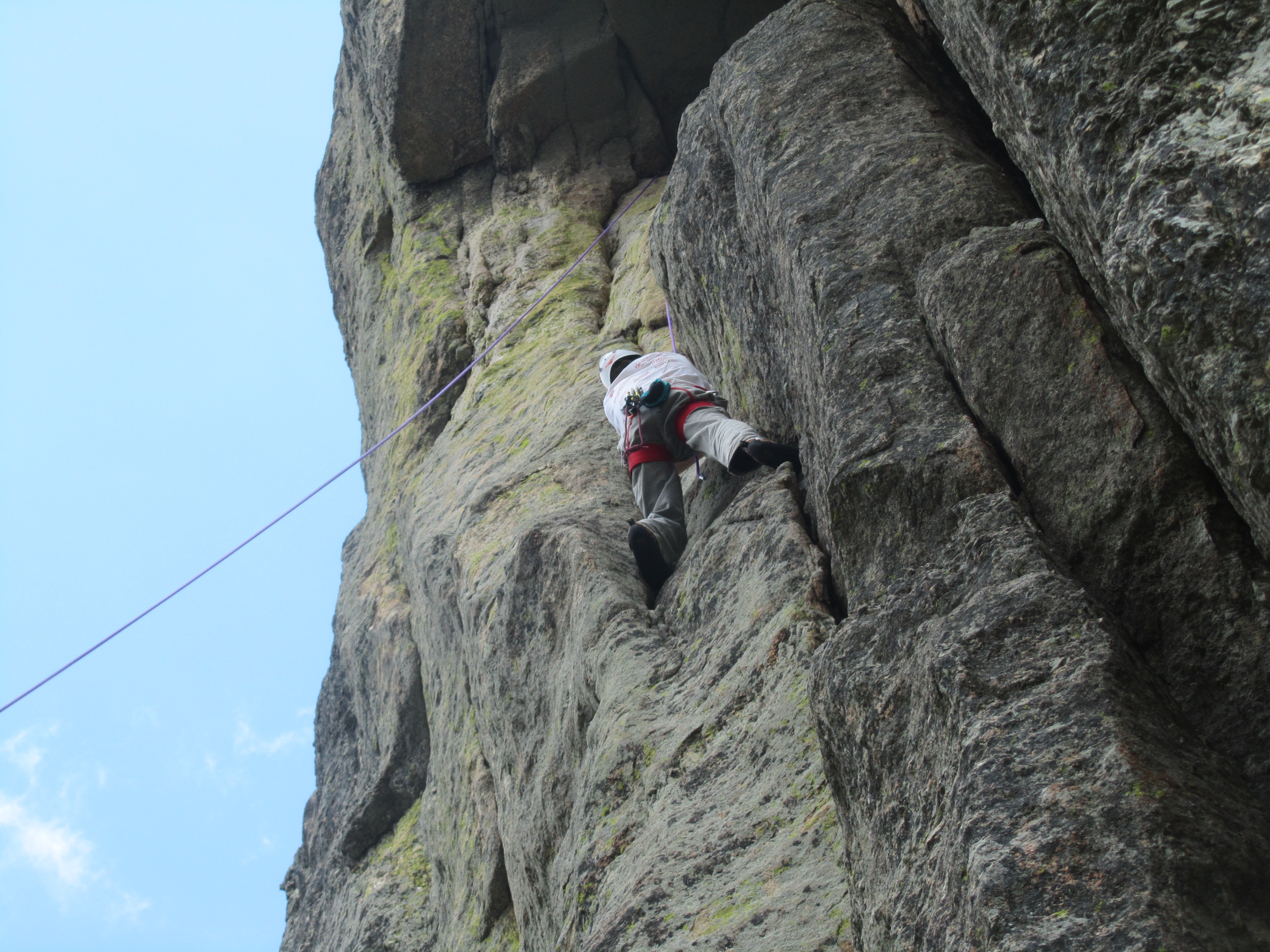
And as I do so, I’m finding just how deeply those routes have etched my nerves, my bones, my ambitions, and my morality.
They’ve given me technique, tough fingers, persistence, acceptance, joy in small victories and peace in grander desires.
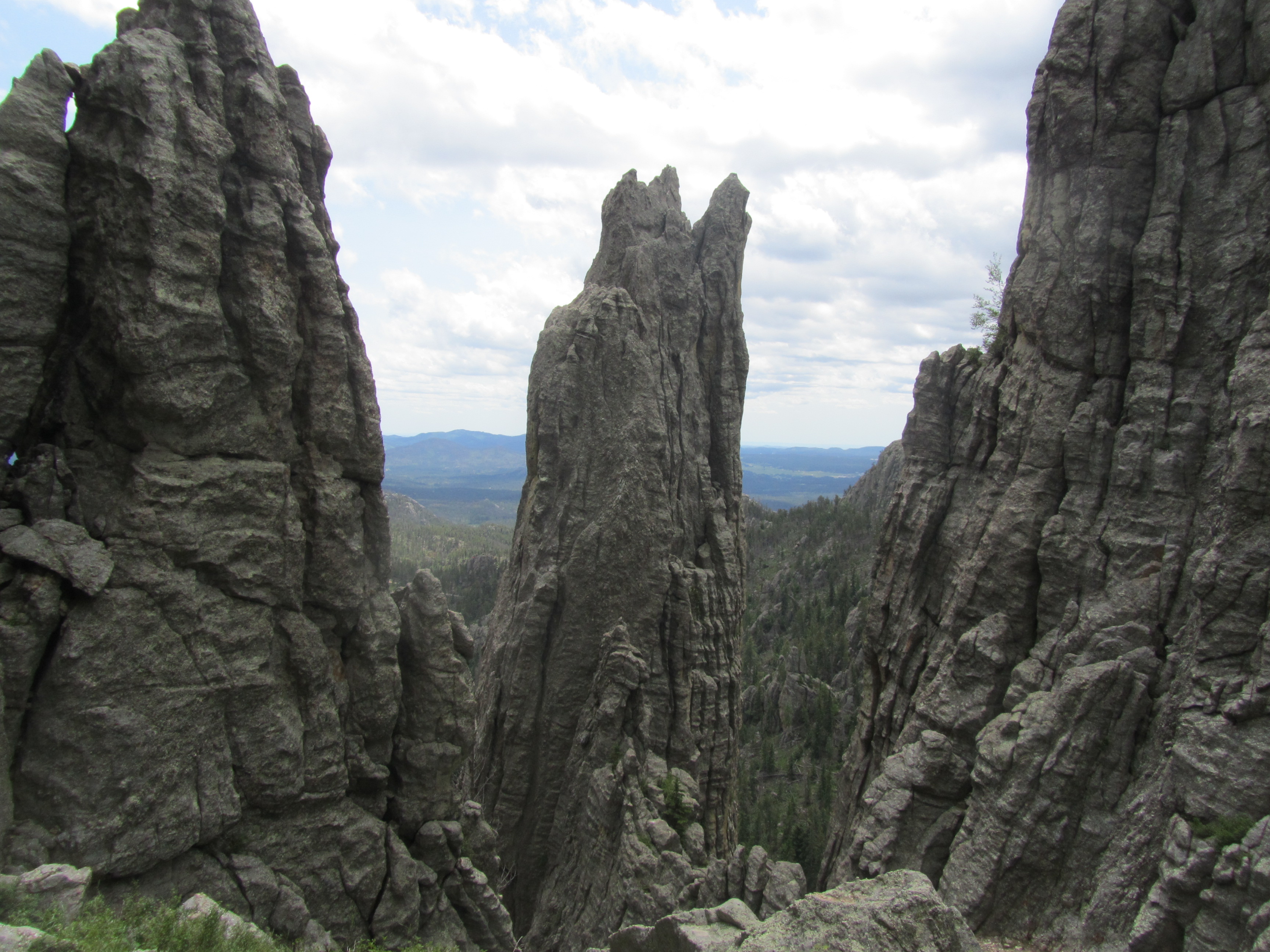
Actually, I’m finding that I can’t say goodbye. I can’t surpass those routes, anymore than I can ever really untie from a partner. They’ve made me, and I will take them along to the desert.
Dedicated to the Game
Climbing and other disturbing things.

Category Archives: climbing
Mouse-Catching
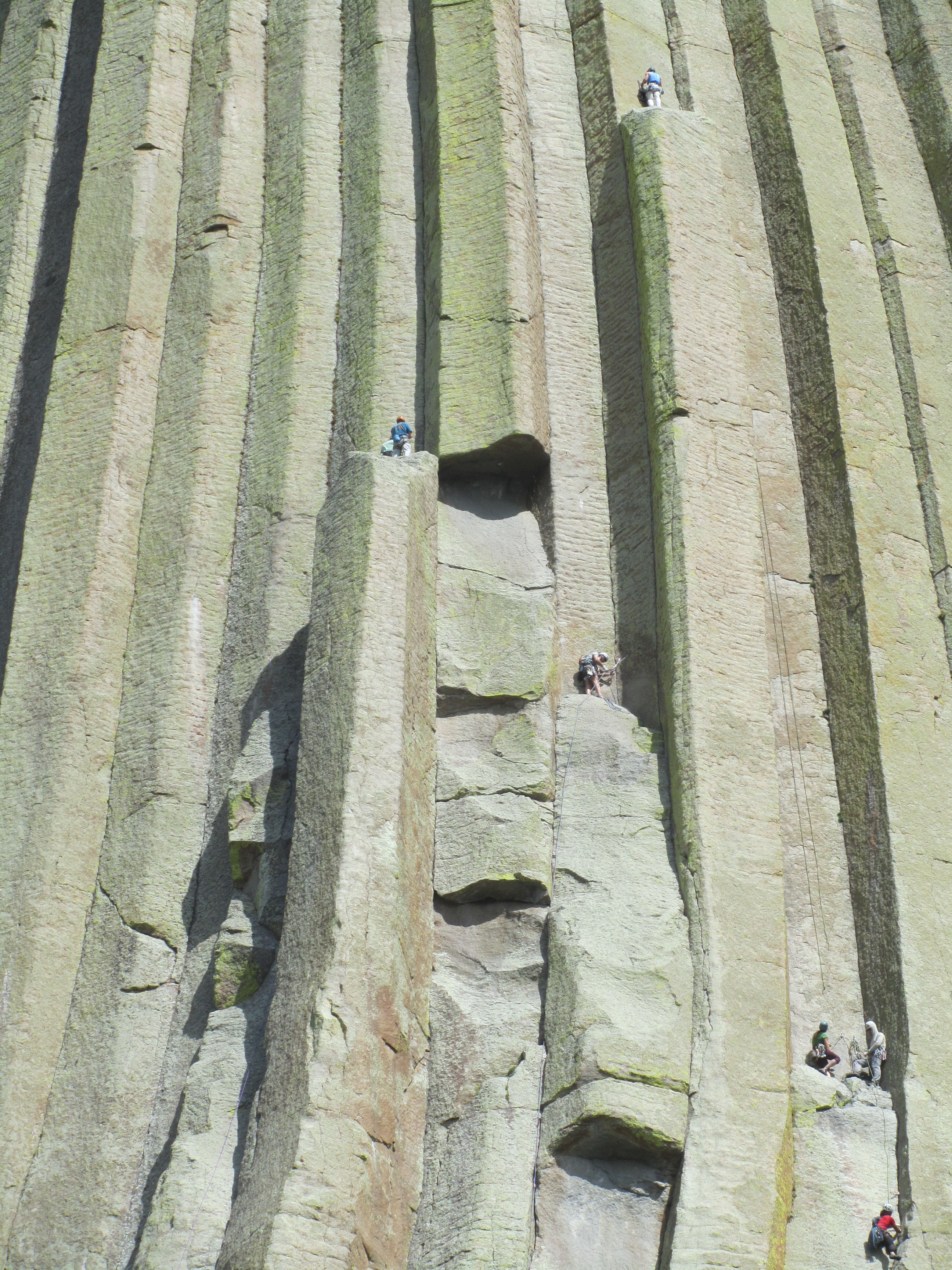
“I was an idiot,” he said.
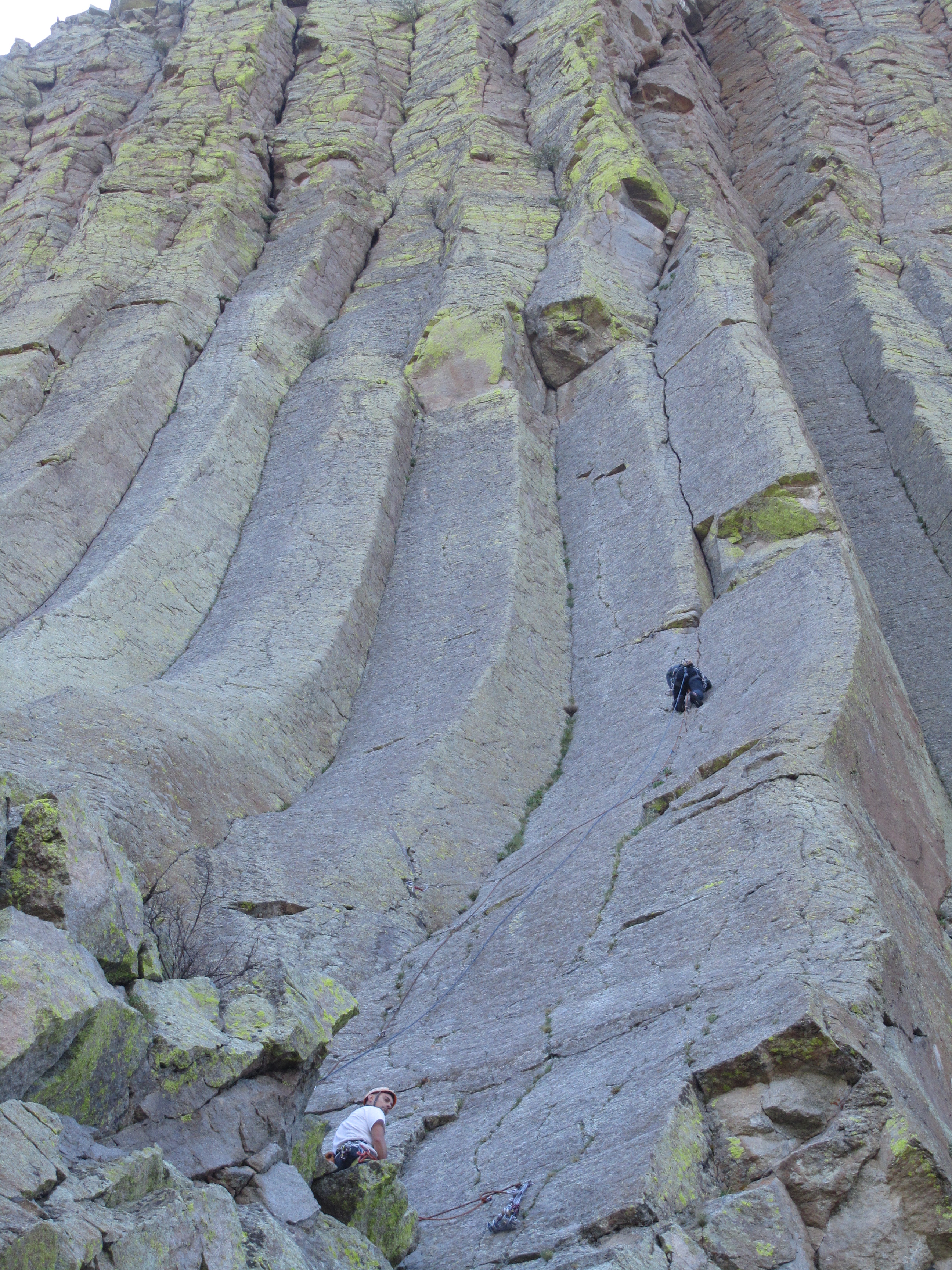
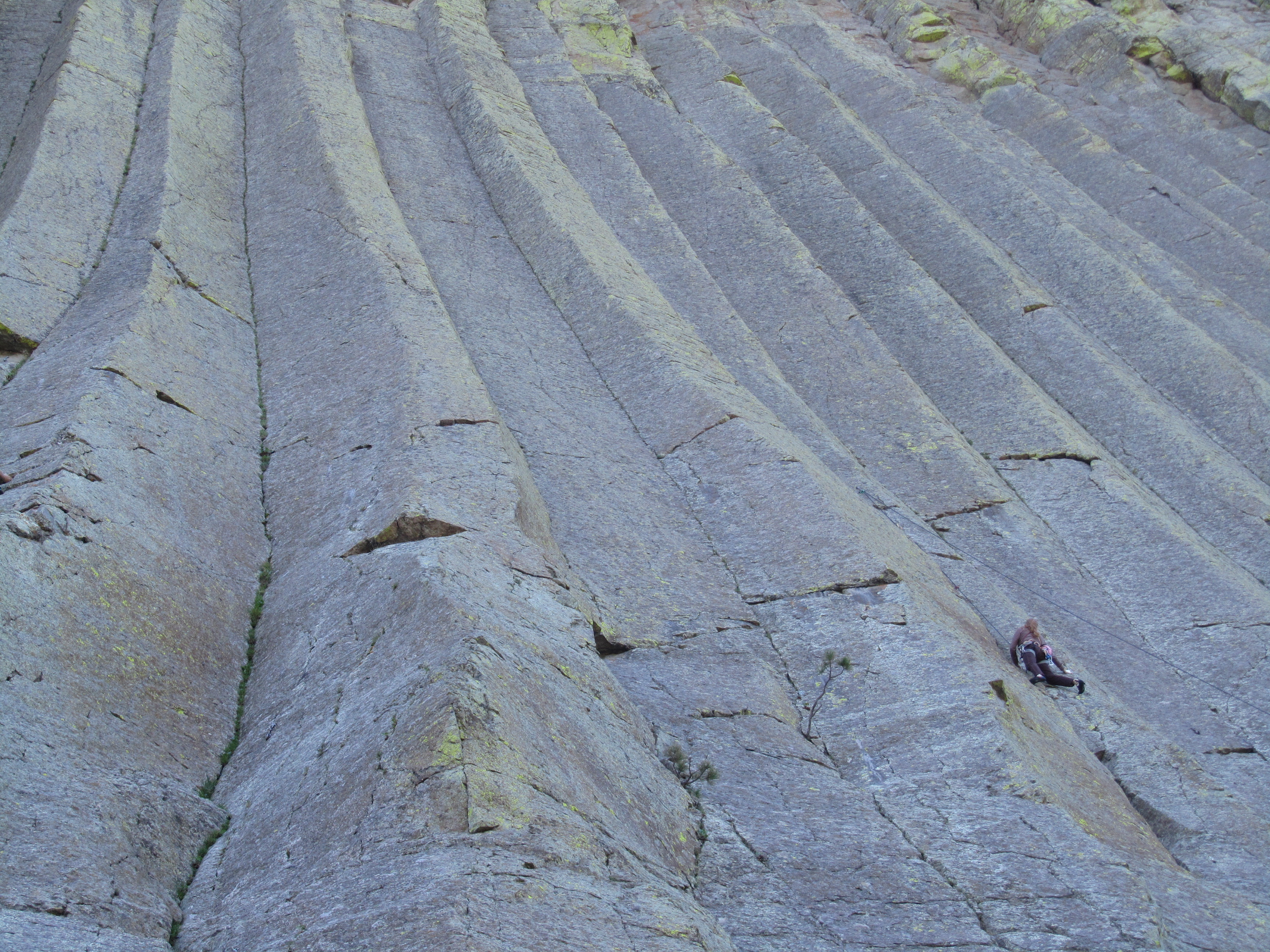
We looked up the thin crack dividing two, hexagonal pillars. The wind buffeted us, seated as we were on the sheared edge of a broken column-top.
He proceeded to explain that the route which we regarded had been the site of one of his ‘big whippers’. He’d had a proper ‘big whipper’ era when he was climbing hard, during his second decade.
In the case under discussion, he had been leading the route in the heat of the day. As he stepped up to the crux, a strenuous move involving counter-pressure, he passed out.
He looked like a skydiver in the fall, his limbs extended from his torso and flapping slightly against the rising airspeed. At least, that was his belayer’s description. He only remembers lurching back to consciousness as the rope came taut.
Now, the shade of the big whipper haunted the narrow split in the rock above us. I looked at his face. He would hold the rope if I climbed it.
He would do his best to shake his way up when I got to the top and yelled, “On Belay!”
But there were other mice to catch, and I knew where this one lived. It wasn’t like he didn’t want to climb the route. It might be the route he wanted most. It simply needed to ferment a little before he could take it in.
We rappelled back to the cozy ledge on the Southeast shoulder.
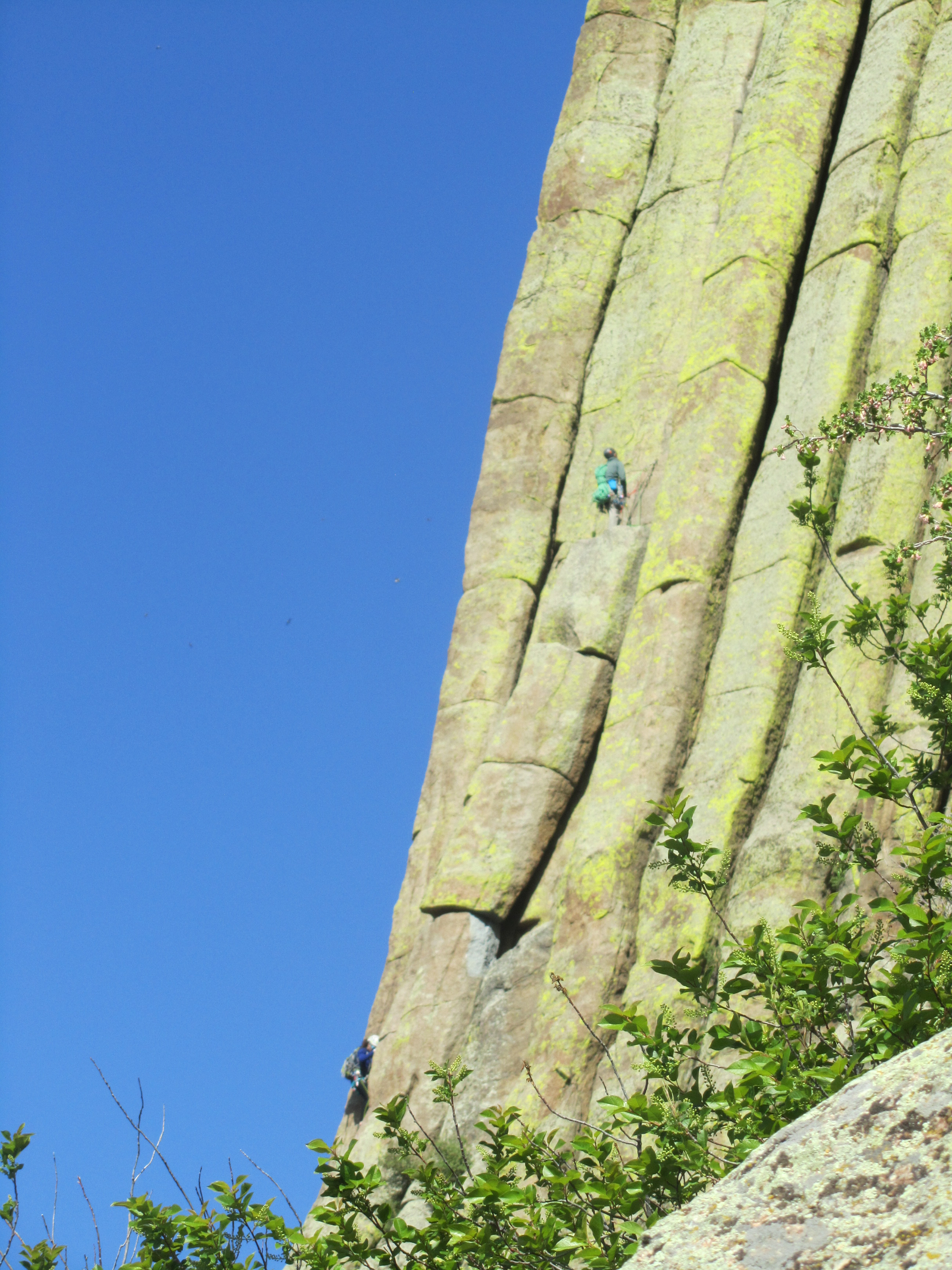
Above the little garden of juniper and gooseberry perched on the sheer side of the Tower, every line was occupied.
A team from Boulder, CO was climbing up to the awful hanging belay on Soler, a climb every bit as good as any at their home crag. A pair from Montana was queued up right behind them. We would watch the two teams try to share the bolts at the unsupported stance as we left. At the other end of the ledge, a guided group of four was climbing the easiest route from the ledge, aiming for the summit.
The trip back to the base of the Tower involved a scrambling traverse. Most of the time, it was done with a single-layer safety system – the finger strength and caution of the climber. But the consequences of a mistake or mishap, like a falling rock, a seizure, cardiac dysrhythmia, etc., would be fatal. Having seen its vulnerability to the shade of the big whipper, such spooks preyed upon my friend’s mind. I paid out rope for him until he was safe, threw my end on the ground and followed.
Back at the base, we packed up and moved around to the West face. On the way, we passed the viewing tubes – sights pointed perpetually at the stake ladder constructed by two local ranchers years ago as a publicity stunt. Nobody was paying attention to the tubes. In fact, we saw few pedestrians until our way departed from the main trail.
There, my friend exchanged a few words with gawkers who shook their heads at what was, to their eyes, the modern equivalent of stake ladder activities. But I was already looking at the West face. We had not escaped the show. All of the prominent routes were occupied, some doubly. Perhaps the gawkers were partially correct; it was absurd.
We started up the boulder field. The day was too nice; we couldn’t turn away.
We found an open line, or at least, a line where we could establish priority.
As we sorted ropes and gear at the base of the thin crack, another team completed a nearby route. After they pulled their ropes, they began discussing further options, a little too loudly. One of their options, as it turned out, was our line. Usually, I would demur to visitors, but not in the midst of the carnival. We exchanged the usual pleasantries which allow etiquette to be enforced. We suggested a nearby route. They had some initial misgivings, but soon quieted down as the climbing began.
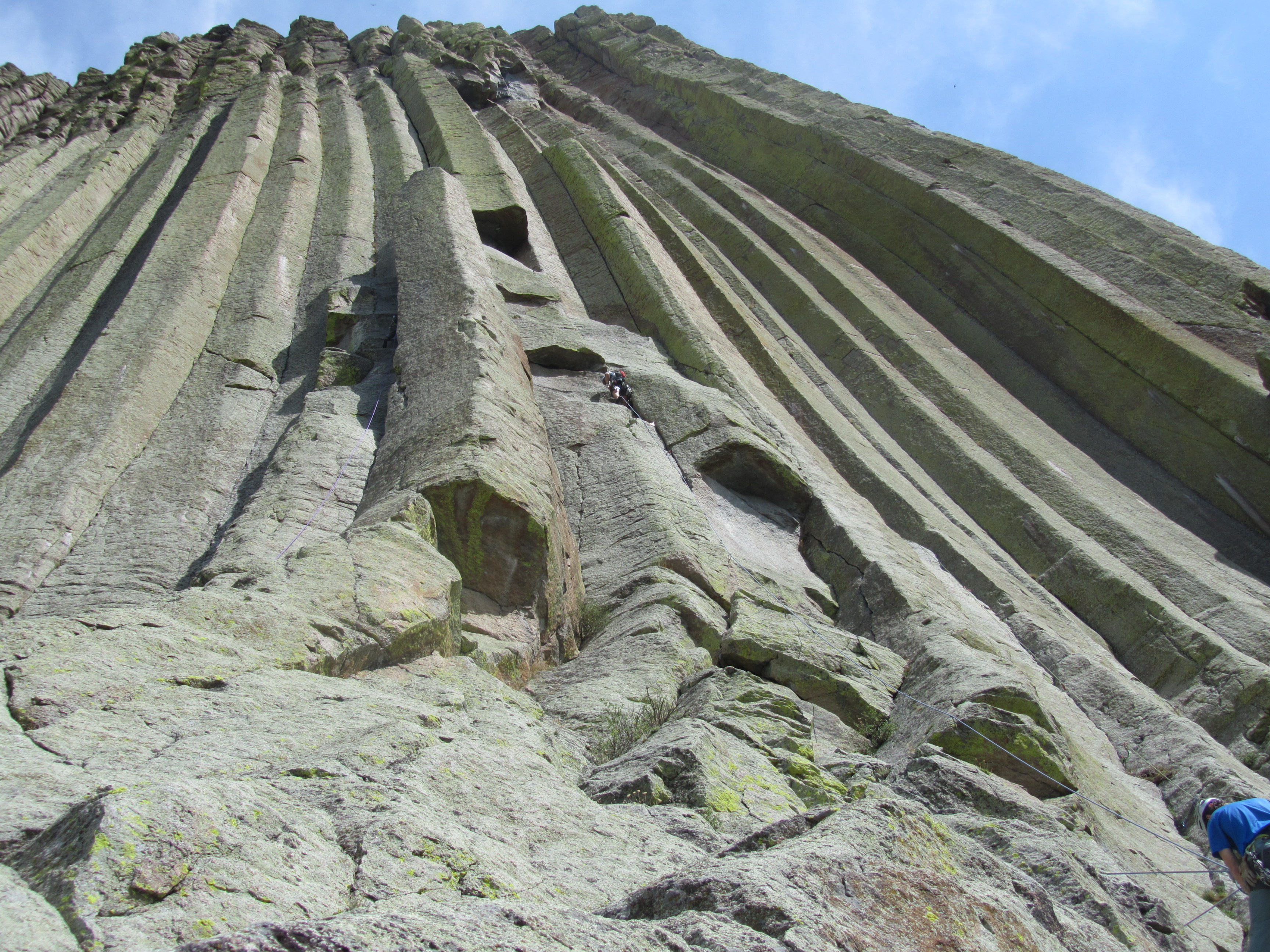
I was already past the wider sections of our line by then. I was confronted by a series of challenges – three or four hard moves, followed by a secure stance, each set harder than the last and ending right before the anchor bolts. I placed a small aluminum wedge or camming device every four feet or so on these sections.
Part of the trick is knowing the difference between placing protection which safeguards life and limb, and placing protection which bolsters the psyche. Part of the trick is learning not to care too much about that difference. I made it. Now it was his turn.
With the rope ahead of him rather than trailing behind, the haunts fled and he moved smoothly. He even took a fall in stride. As I lowered him, he told me how good he felt about the climb. He told me how good he felt about the whipper-era too, in retrospect.
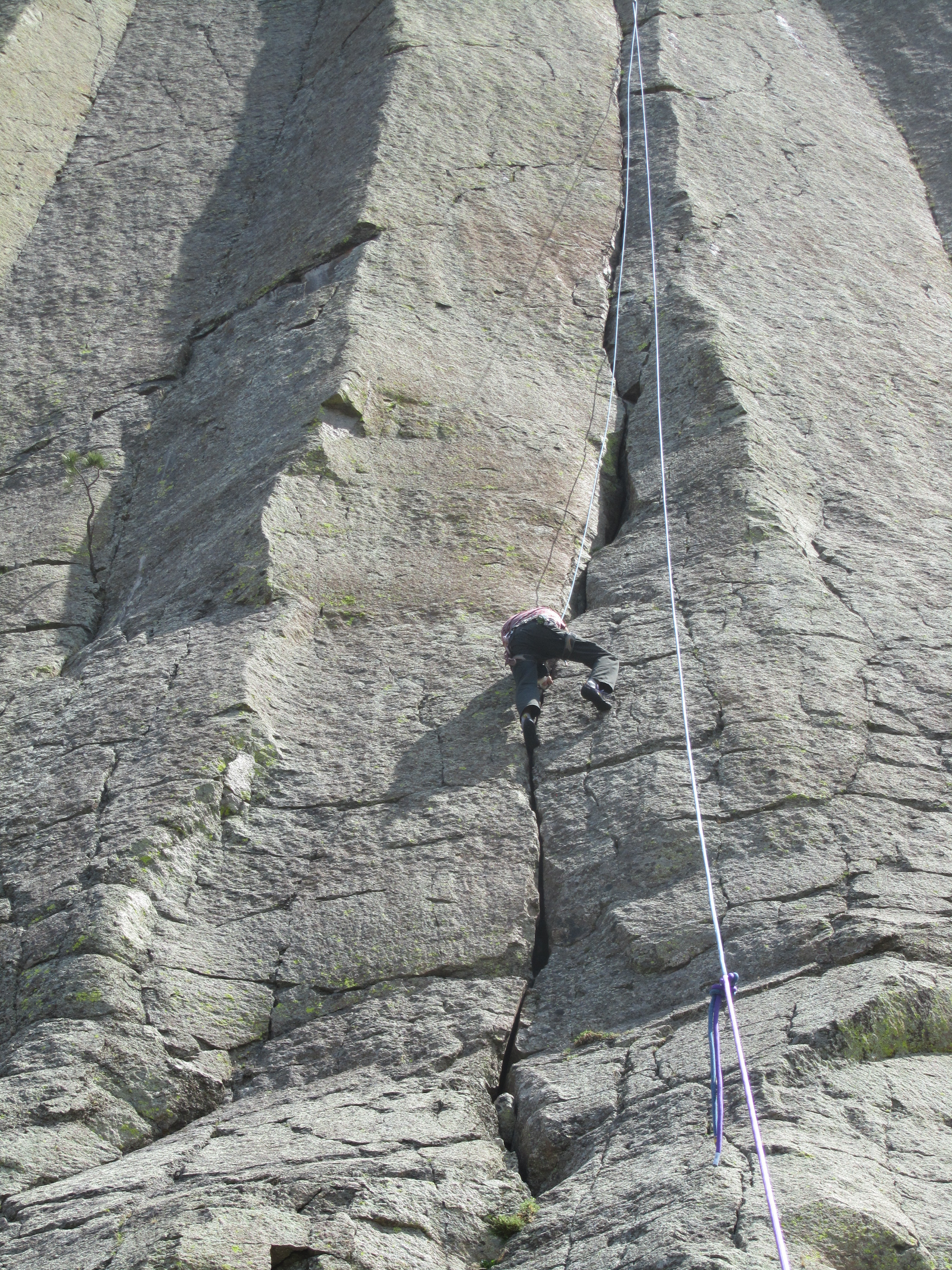
We pulled the rope and left the particular carnival at Devils Tower. I dropped him at his house and returned to my own. I would do a few more days of work in the medical clinic, helping people postpone their fate, before I got to go back to the Tower.
As I pulled into the driveway, my little cat was perched on a rock by the walk, intent on something in the grass. She was well fed. If she caught a mouse presently, she would not eat it. Cat activities were no better than stake ladder activities, or climber activities, or perhaps even tourist activities. I started to shake my head, but she looked up. Her puzzled expression stopped me.
“And?” it said, “There are mice to catch.”
Racing the End-Times

I pirouetted around the man in the tiny atrium and past the slowly closing glass door. It was an unusual way to enter McDonald’s, so I thought at first that he gave me an odd glance in return for the odd maneuver. But as I joined the line, just before the end of breakfast service on Saturday morning, he looked at me again in the same way. Then I recognized him, as well.
“Hello,” I said, extending my hand.
“Hey,” he smiled, “here to climb?”
“Yep,” I replied, “Good to see you.”
“Likewise. What are you going to do?”
“Joy After Pain.”
“Oh,” he nodded, “That’s huge this year. Well, have fun. I’m shopping with the kids today, so…”
“I know how that is,” I said, “Good luck.”
He didn’t seem concerned about the time, but neither was I. We were coming home in the dark. We might as well live it up.
We ate our sausage and egg biscuits on the way out to the Valley.

It had been cold in the Valley. Ice had formed back up on the North wall, and it would stay for the day, at least. It was cold, with temperatures in the teens. It even looked like Ovisight was accessible. We looked to the shade though, to the South wall of the Valley, where the ice would be old, cold and brittle. It was formed as well, though the base of our objective tapered ominously. We did not care. We had our decision, and we had the word, and the word was “huge”.
Two other cars sat in the pull-out across from the ranch’s mailbox. One party was visible on Moratorium.
We did not see tracks on the intermittent snowfields on the way to the wooded slopes below our objective, but we met the second party at the tree-line.
“We have guns,” the older fellow joked.
I wasn’t going to race them to the base of the climb. We were coming home in the dark, and there was room at the base to stand and wait if need be.
We walked with them for a ways, up the steep, left side of the drainage. Then, they broke right and fell slightly behind.

I could not see them as we rounded the last, bulging shoulder of the streambed and saw the first pitch fully revealed. Still, I heard them, although I could not make out the words. The tone was plain enough: dismay and disgust. The base of the pitch was a thin, tapering pillar – translucent and gray. I wasn’t deterred. Somehow, “huge” had lodged in my mind, and it made the sight reassuring. The pillar looked well rooted, despite the fact that I could wrap one arm around its connection to the ice sheet below it.
Before I started up, I hit it with the side of my ice tool. It didn’t come crashing down and it produced a deep, resonant note. It would be fine, if I just didn’t hit it too hard, or at all. Fortunately, it had plenty of feature – blobs, divots and candles. I tapped and hooked for thirty feet up to the point where the ice attached to the cliff face and it was safe to place a screw.
The angle eased soon after, and the primary difficulty became the hard and brittle state of the medium.
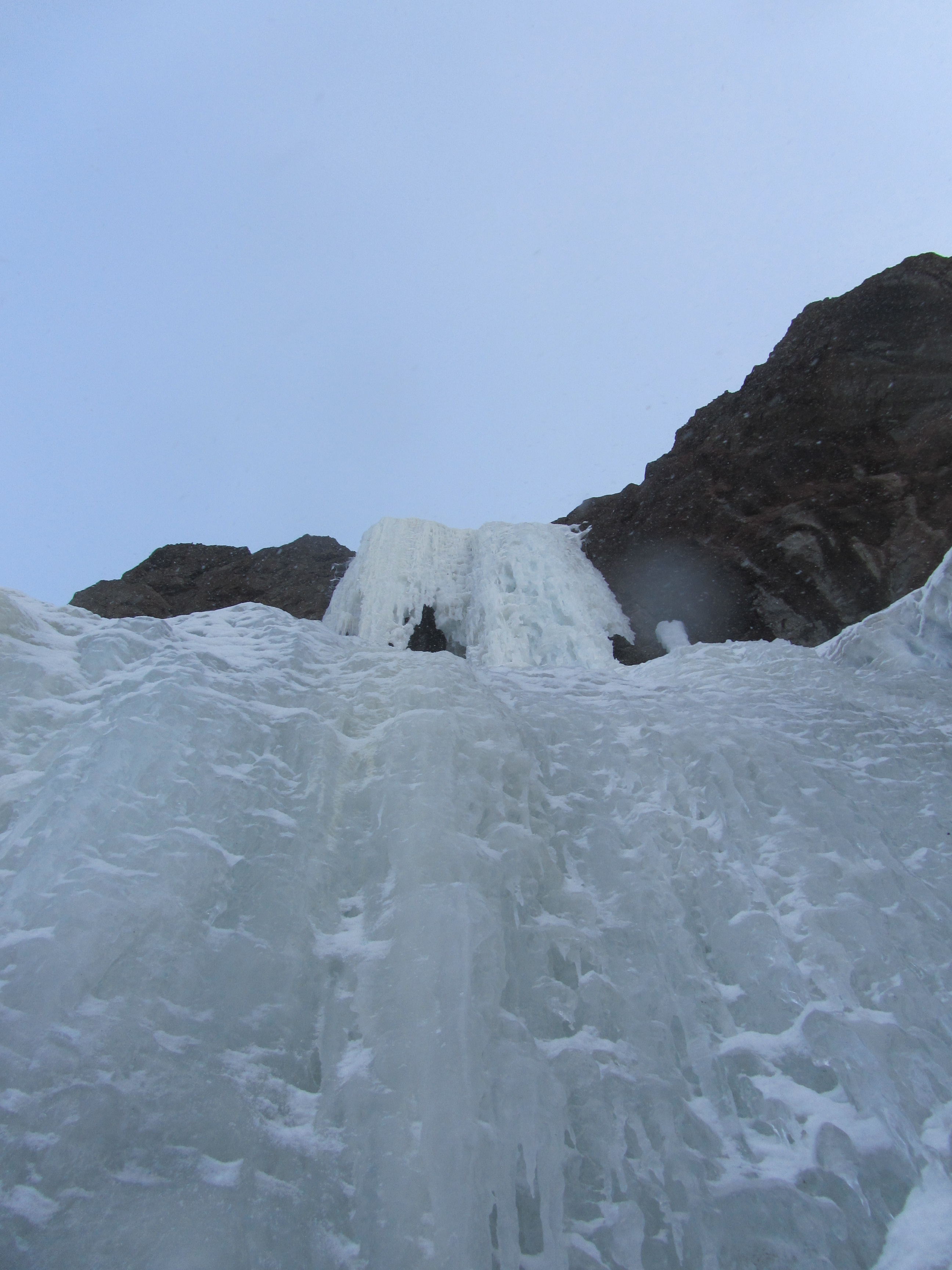
We anchored at the very end of the rope and climbed a deceptively steep and rotted pitch above. There was a short walk with a solo step and then a short, solid roped pitch.
We climbed another ice ramp and finally stood beneath the two-tiered, final pitch. It was four thirty in the evening.

The next day, Mike’s breakfast sandwich would have its revenge, and the fish hatchery climb would melt out before we arrived. The pitch at Leigh Creek would seem too anticlimactic. We should grasp at every last foot of climbing, being practitioners of what is possibly a dying art. But we wouldn’t, because it would be art for us alone, and a ridiculous thing or a cheap thrill for the rest of the world. It must be right for us if it were to make sense at all.
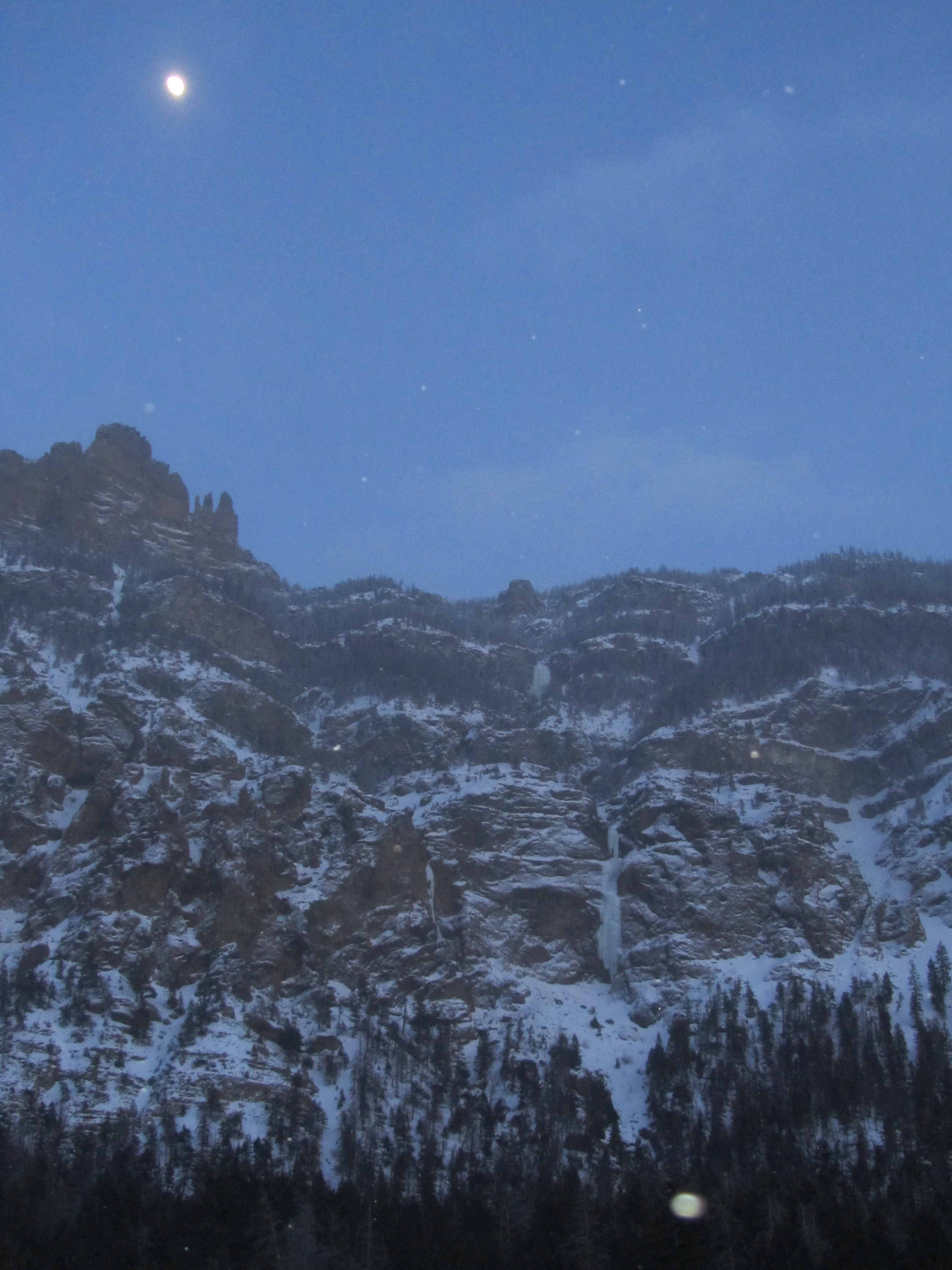
We would save the last pitch of Joy After Pain too. It was blue and intricate, and flowing with water – huge. And it was in the shade, so it would be there when the sun-side languished. We would come back to climb it in the light.
The Discontented Future
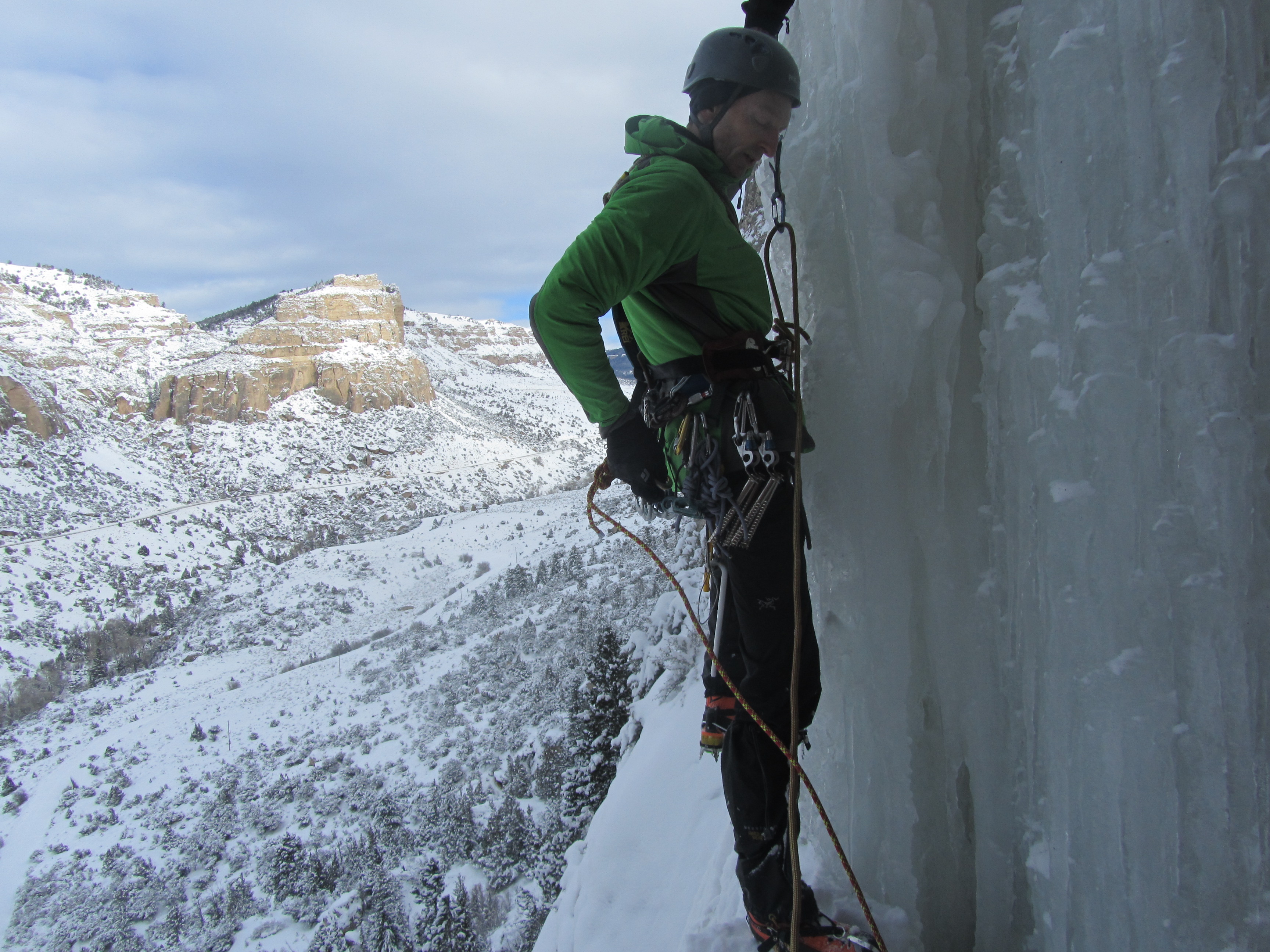
Broken pillars cluttered the slope. Winter had come to this. False starts, collapsing possibilities, and ruined glory lay across the span of weeks between the first snowfall and the now-inevitable warm-up. I loaded the Soloist and began to climb.
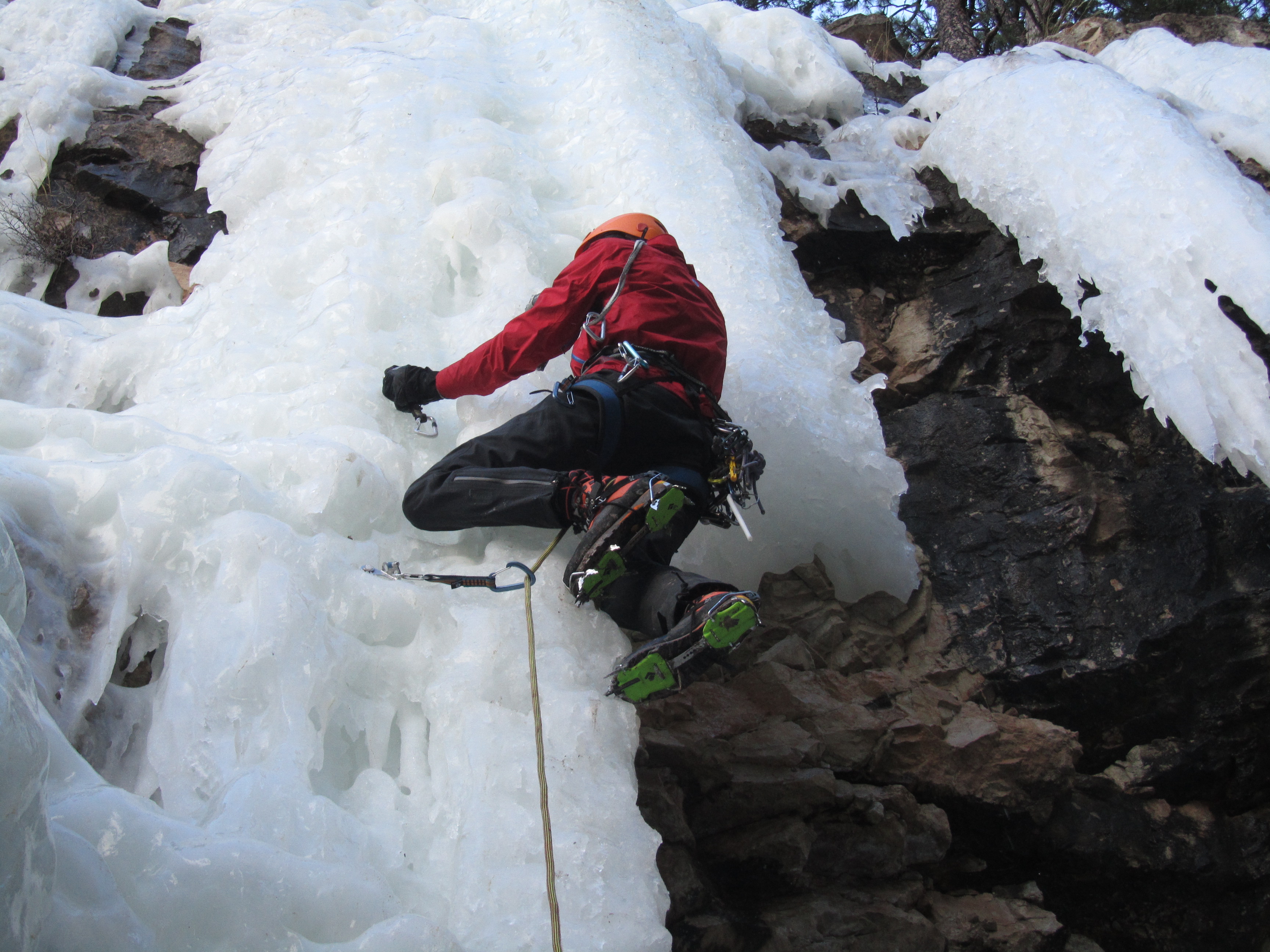
My swing was still good. Over the preceding couple of seasons, I had passed a threshold. My technical skills no longer seemed to deteriorate over the long warm spells. My performance on ice now depended almost exclusively on psychology, and my psychology today was fueled by anger.
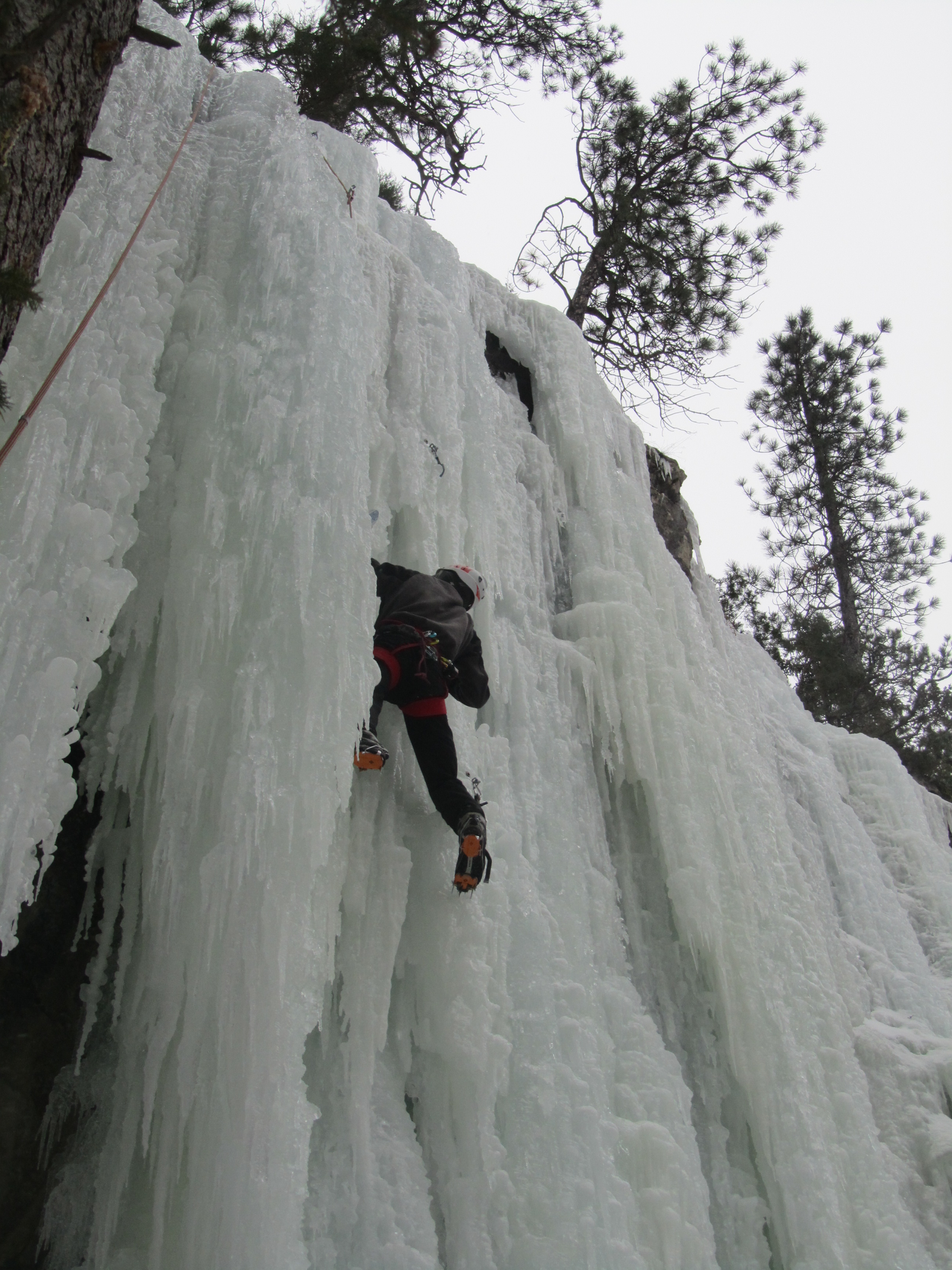
Maybe this Winter was an aberration, but I suspected that it wasn’t. Things were changing; the climate was changing. I’d made a vow, back when rumors of soft and liquid Winters first circulated. When the day came that ice climbing ended, and I had no more use for my crampons, I’d clip them to my boots one more time and kick the nearest climate-change-denying Republican politician in the ass. I felt the time coming.
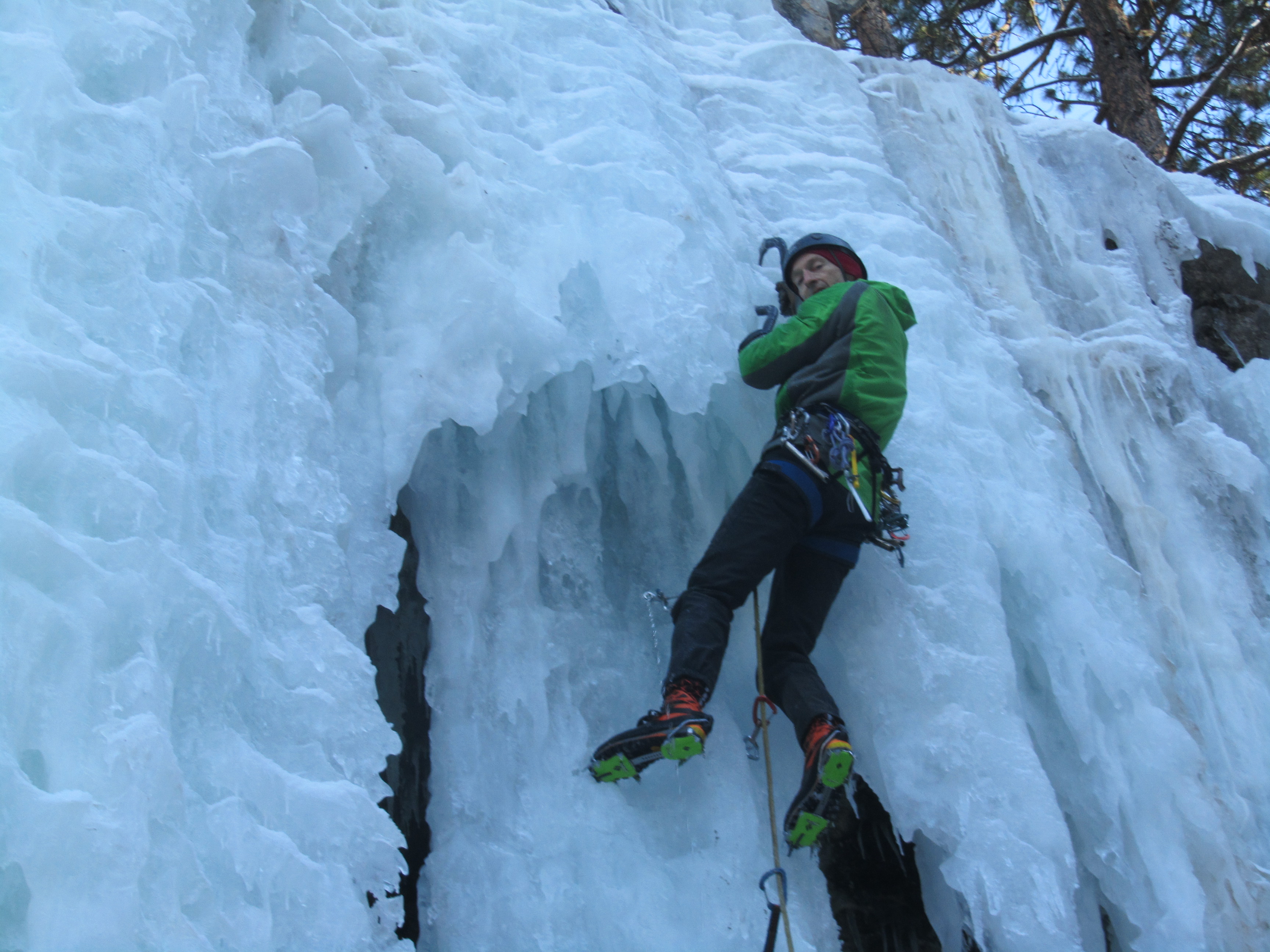
The column of ice I’d chosen was forty five feet tall, and beginning to deteriorate. It was a bit of a risk, and a little silly. It was so short, and it was wet and manufactured. I could hear cars on the road down in the canyon. I had followed a tourist’s Yak-trax prints up the trail to get here. I knew that I would find a PVC pipe leaking water over the cliff band at the top of the ice. There was no wild beauty or uniqueness to be found here. The pillar’s existence was all that recommended it.
The bottom took a light touch. It was wet and brittle ice. It tolerated only one, gentle swing per placement. I weight tested each tool before committing to it. I placed the crampon points in little divots in the ice, rather than kicking the spikes into the column. I waited to place the first ice screw until I was well off the ground. I had picked the spot from below, and it turned out to be as good as I had expected.
The ice improved after the first piece of gear. Above a small roof, it took a full swing. My anger transformed, clarified in the movement. Another ice screw and a few more swings led to a different game on the thin steps of low-angle ice at the top. I grabbed a tree and stepped over the PVC pipe.
I fancied another lap then. I was done being angry. I knew that the anger arose from fear of loss, and a deeper fear of loss than the fear of losing cold seasons. It came from the fear that I might someday no longer be a climber and find myself looking at the world from the same viewpoint as those cramponned-boot-in-the-ass-deserving politicians. It was a fear that I was losing. As more days like today passed, I felt more and more certain that I would not habitually trade an ‘is’ for an ‘ought’. I would not stop paying attention. I would not find myself trading real days for fears of an imagined future and its glories at risk.
As the ice receded, I would move higher. I would take notice of the boulders that had been hidden under permanent snowfields. My tools would scratch more rock. At last, I would walk up glaciers covered with rubble, arthritic knees aching, tottering on my piolet, and feel no different than I did at the top of the little pillar today.
As I set up the rappel, words from a Howlin’ Wolf song began to run through my mind:
I have enjoyed things that kings and queens never have – things that kings and queens can’t never get. And they don’t even know about ’em.
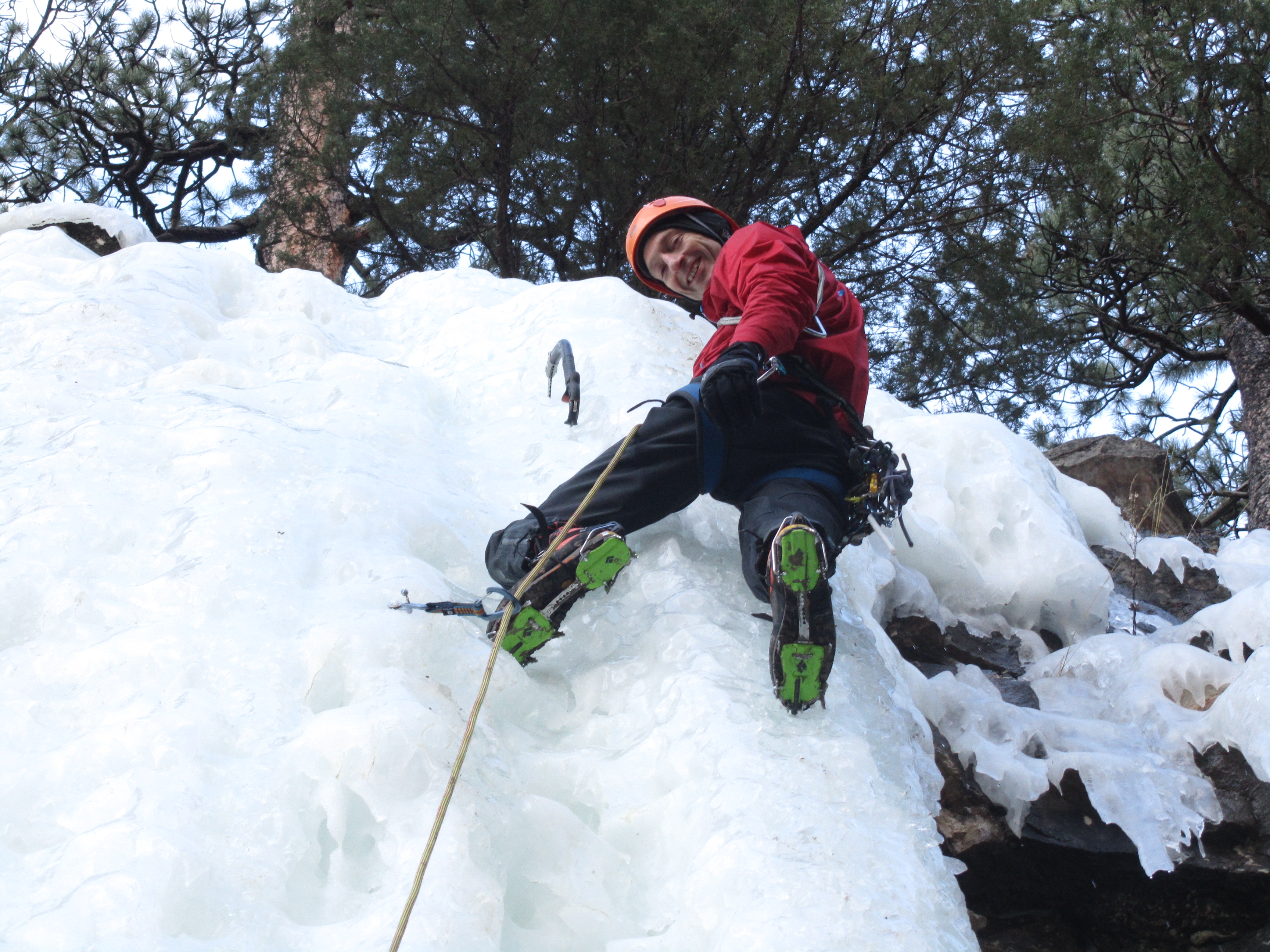
May be I was still a little angry. Yeah, fuck them, another lap.
Here We Go
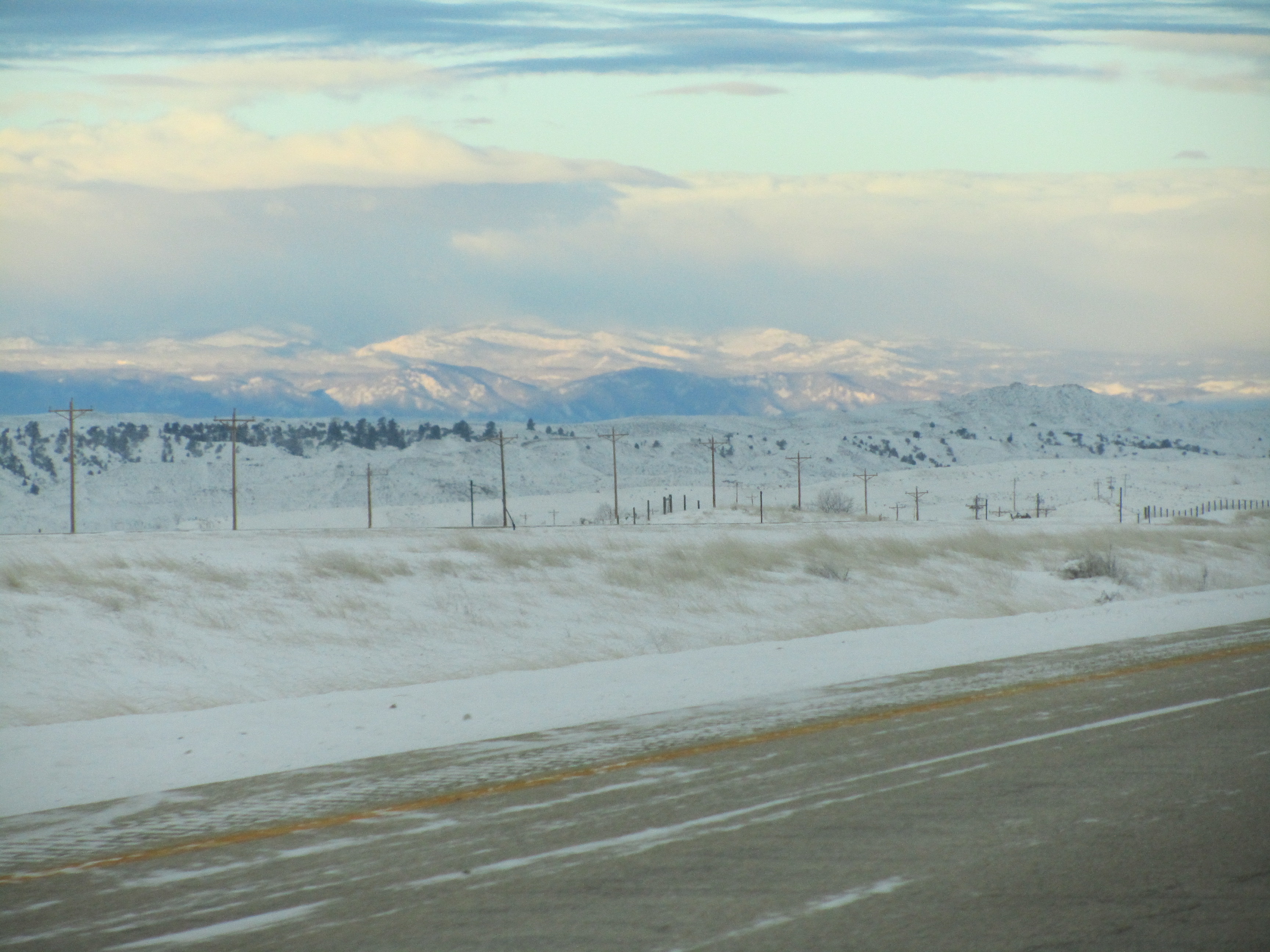
It may not have been a Polar Vortex, but the lack of marketing didn’t make it any warmer. It was perfect. The climb opposite the Ten Sleep fish hatchery formed in such circumstances.
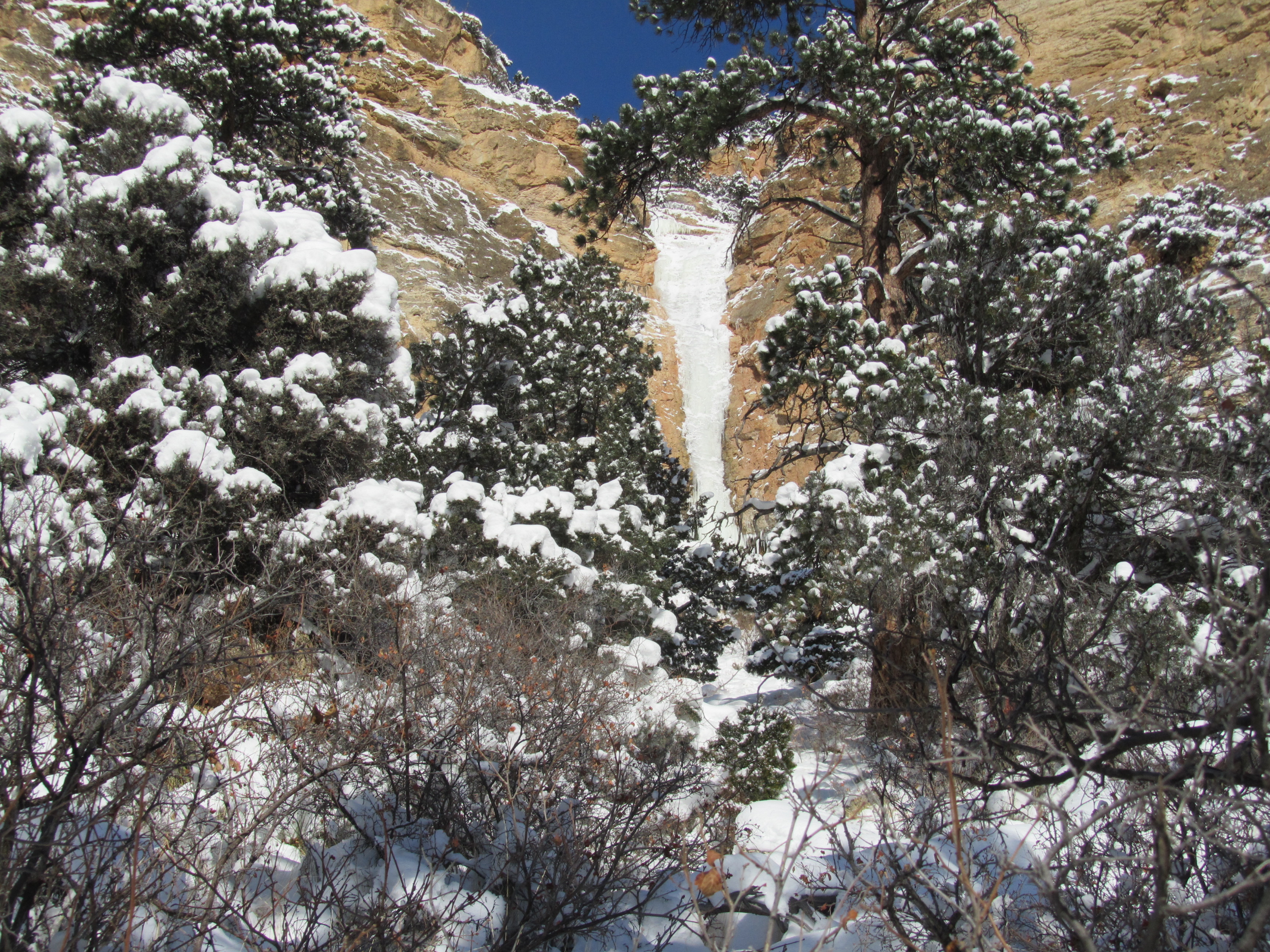
What better way to begin the year than with a test of nerve and commitment rather than strength and skill?
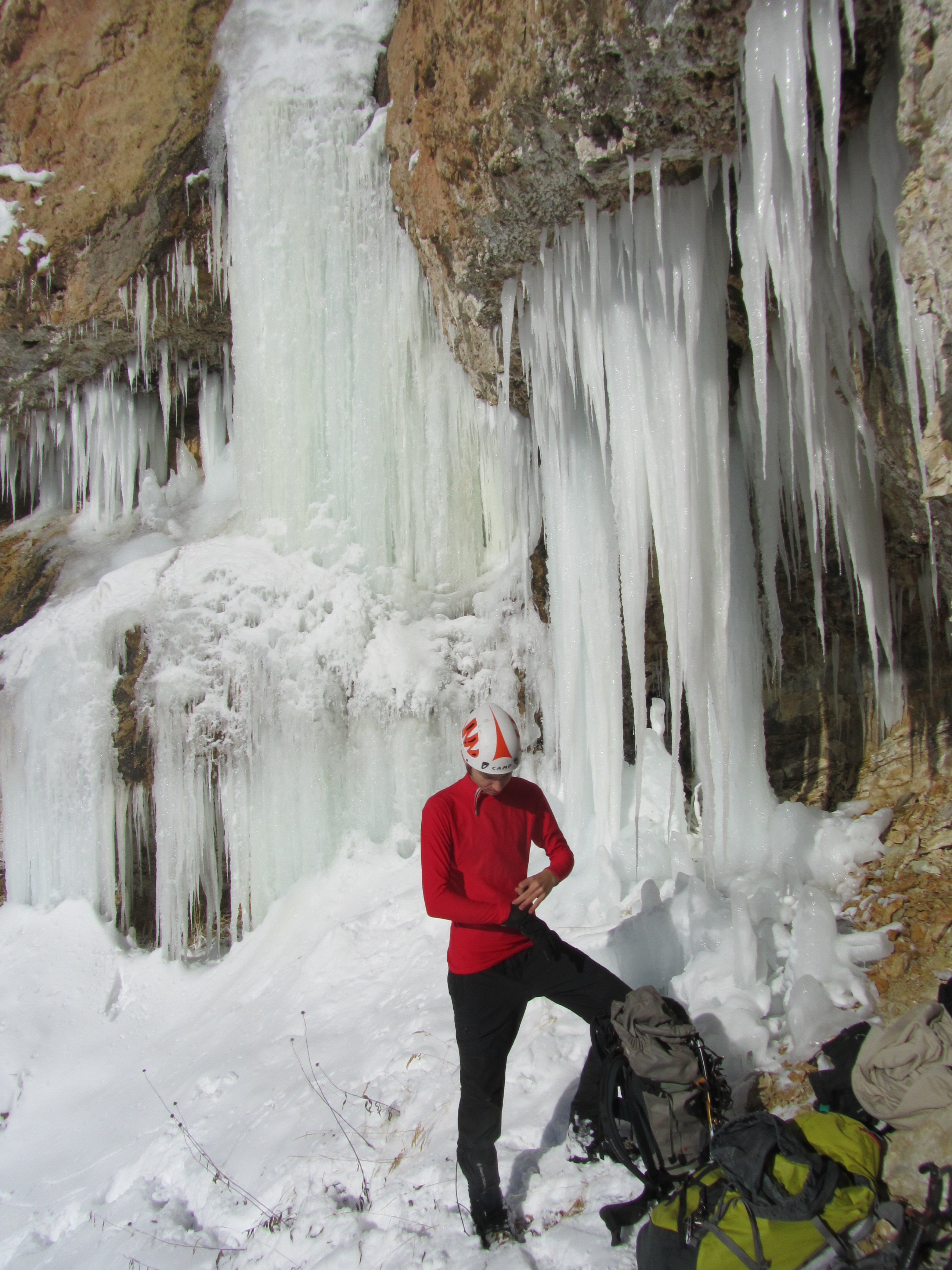
The temperature was in the teens, but in the sun, we could climb in a single layer.
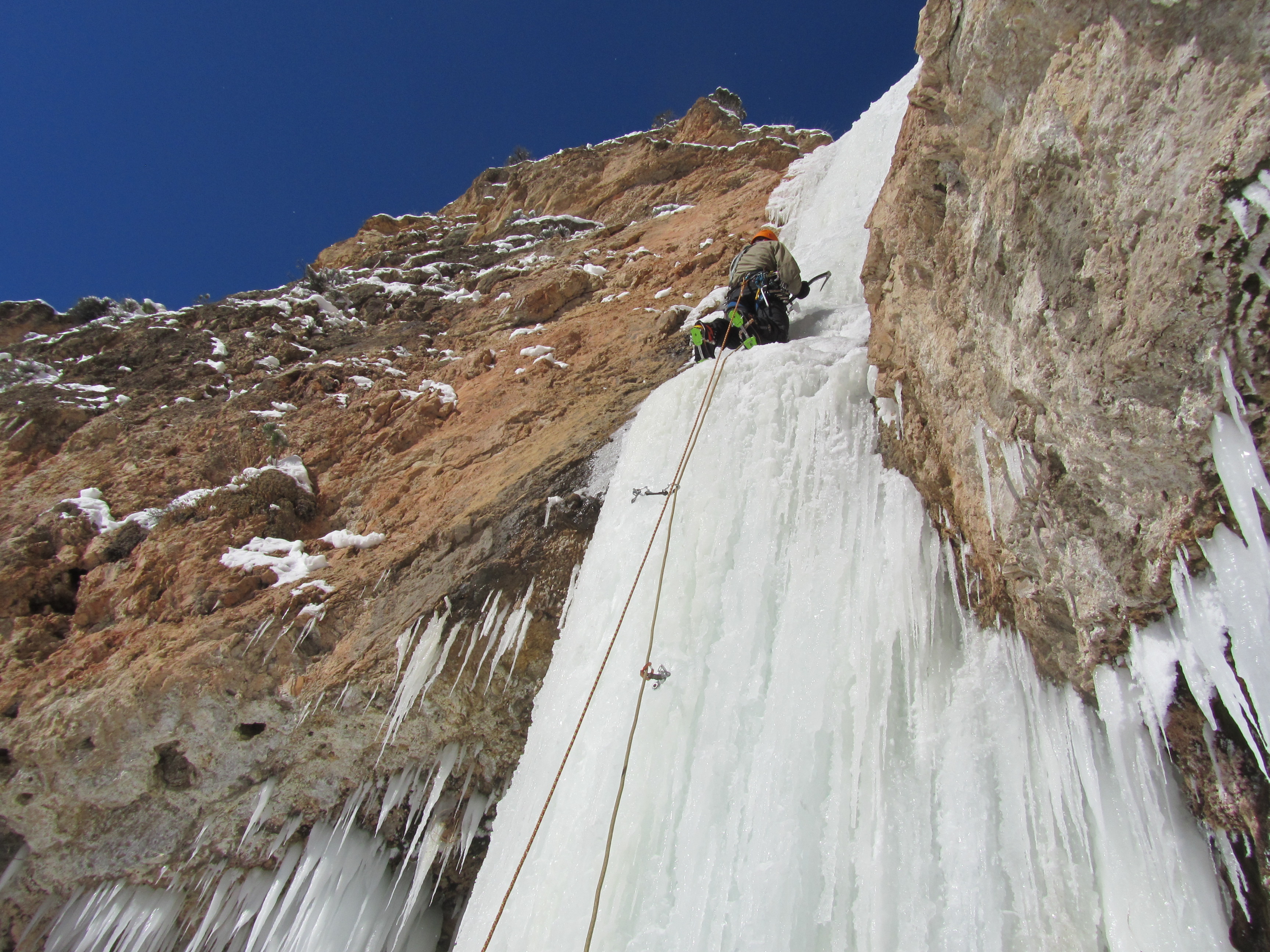
It was a race on tiptoes. The screws were melting out (I cleaned most of them by a simple pull on the way down). The ice was thin and poorly bonded. If I climbed it enough times over the seasons, the day would come when it cracked and slid under my pick.
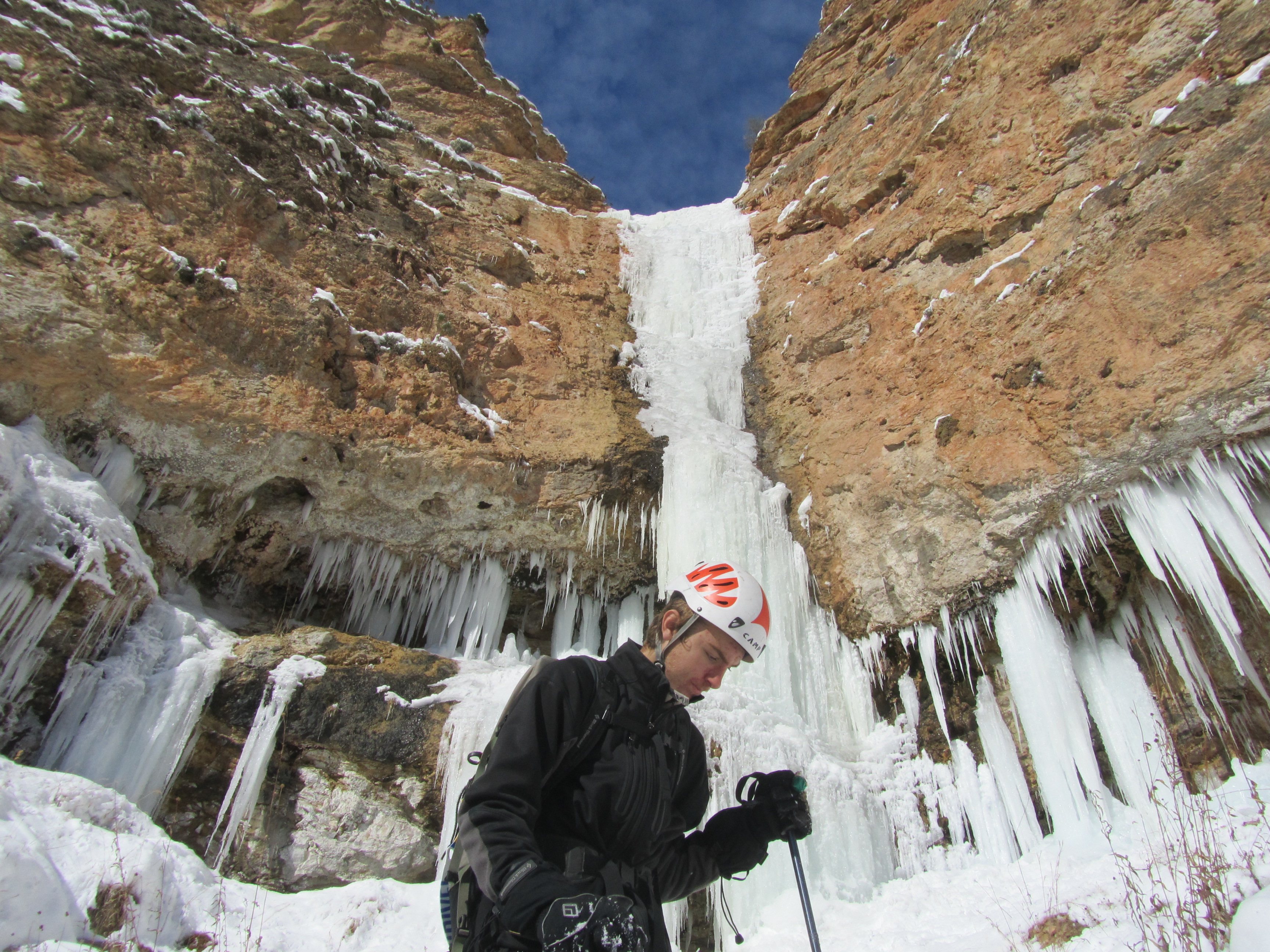
But that day did not come.
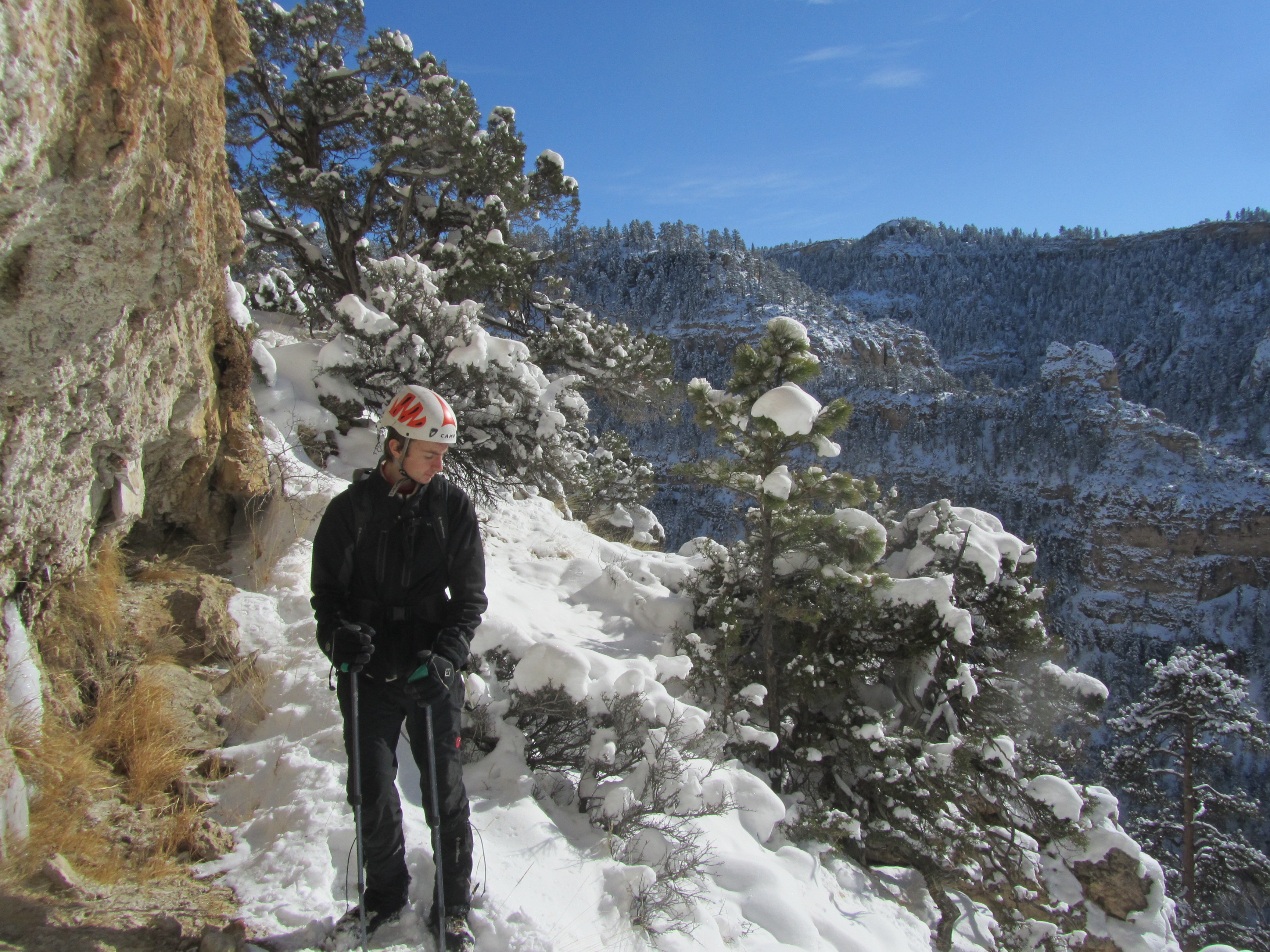
It was a beautiful day.
Burning Daylight
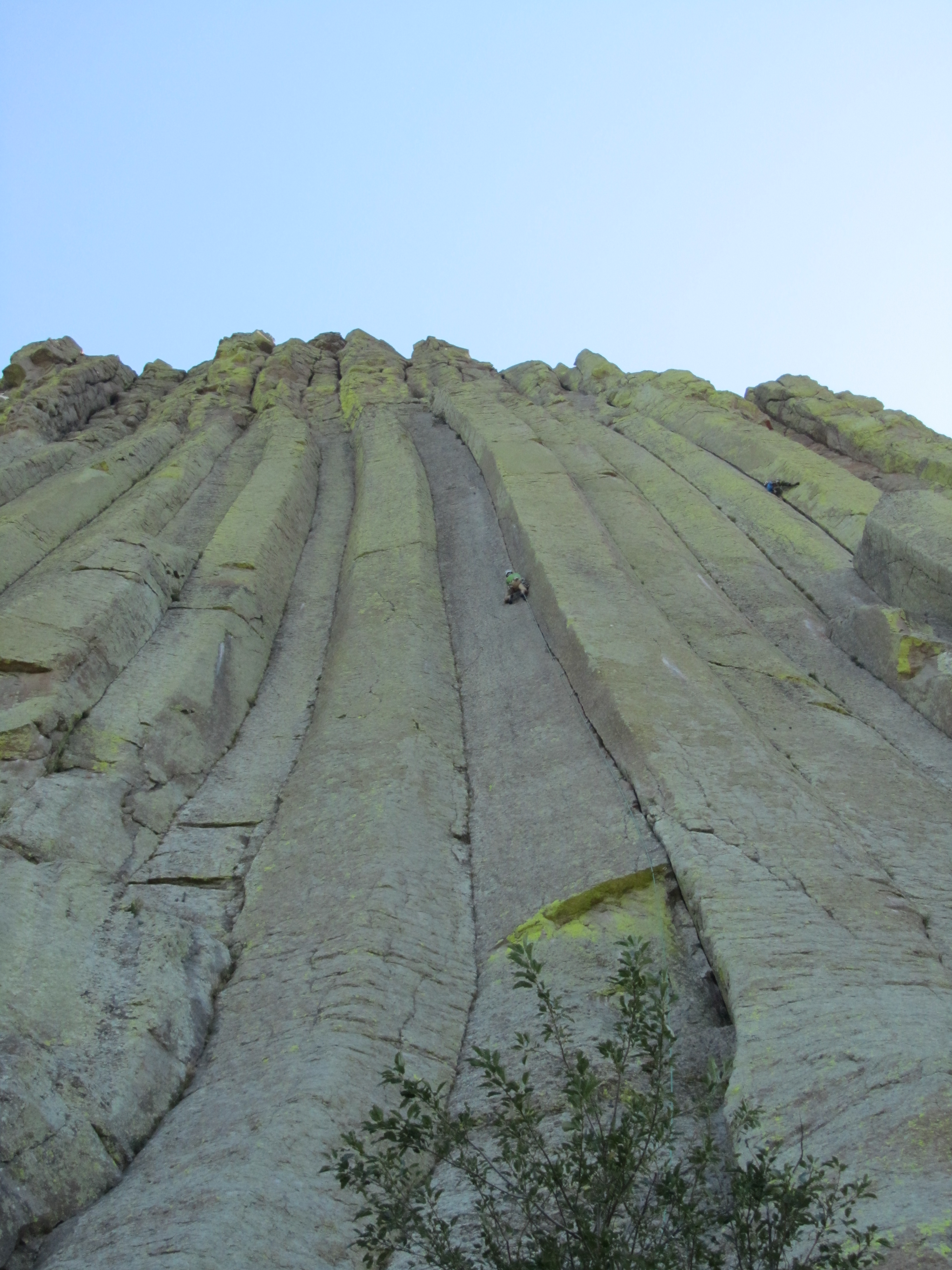
The future, Mr. Clean
The speakers hammered out The Chieftains’ O’Sullivan’s March.
“What the hell is this?” he demanded.
I shrugged. “I can’t help it. If there is reincarnation, then I once wielded a Claymore. But there is no reincarnation, so let’s go.”
I switched off the engine. He didn’t know what I meant by that comment. He thought he did, but not really. He would someday though; I was sure of it. He was a smart lad.
It was already hot. The air smelled of baking pitch. My legs felt rubbery under the sun’s pressure, but the feeling didn’t last. By that time of year, the body had become acclimated. Marching up the paved trail, weaving through the lumbering tourists, my circulation rallied and my stride steadied. I passed pedestrians, some on the trail, some on the rocks beside the trail. It wasn’t that we were short of time; it was just nervous energy that made me walk fast.
I slowed down when we turned off the asphalt and started up the narrow climbers’ trail. When we hit the relative cool of the Tower’s shadow, I began to stroll. Where the trail butted against the rock’s base, I stopped. We dropped our packs and broke out harnesses and helmets while the sweat dried from our necks. He was ready quickly. He stood there looking at me, wearing a well-measured expression of annoyance.
I wouldn’t do this with someone else’s child. We had a bond, from the beginning, that made it alright. When the neonatologist told us that he had been put on a ventilator, his mother started to cry. I held her hand and told her not to worry. She had been part of the pregnancy, and reasonably expected that she had been delivered from its troubles. I had watched it the whole time from the outside, without any expectation of relief. We both knew what could happen. We had seen fetuses get tangled in their development and come out confused. We had seen maternal physiology give up on the process and, against the mother’s wishes, abandon it all in various ways. She knew these things could happen to her. I knew what I would have to watch. It was my proper place. I was a climber and I knew how to be helpless without suffering from helplessness.
That was why I didn’t cry, not when he was intubated, and not when I sat by the plastic crib and watched him lay too still. He wore a blinder for the first few days, to protect his eyes from the ultraviolet lamp which did his liver’s job for him and cleared the toxic pigments from his blood. They took the little mask off the day after the last of his tubes came out. He looked up, then he looked straight at me. He stared for a long time. The nurses made a big fuss about him recognizing his father, but I knew it for what it was. He had a little patch of nerves on the side of his brain which were devoted to facial recognition. Those nerves made a baby stare at faces, and they were working for him.
He stood looking bored and a little impatient as I fiddled with my helmet’s chin strap.
“This is hard, you know. I can fall off of this one,” I warned, “You’re sure you are OK with that? We can always go over to Assembly Line”
“No,” he said flatly, “Burning Daylight”
I was serious about Burning Daylight. It was a place that a friend of mine took those who would lay their hands on Mateo Tipi – the Bears’ Lodge – with impunity.
“I ought to be able to knit a sweater while climbing .10b,” the last one had said to him.
When he demanded his sweater as she scrabbled over the last roof, wild-eyed and bloodied, she didn’t reply.
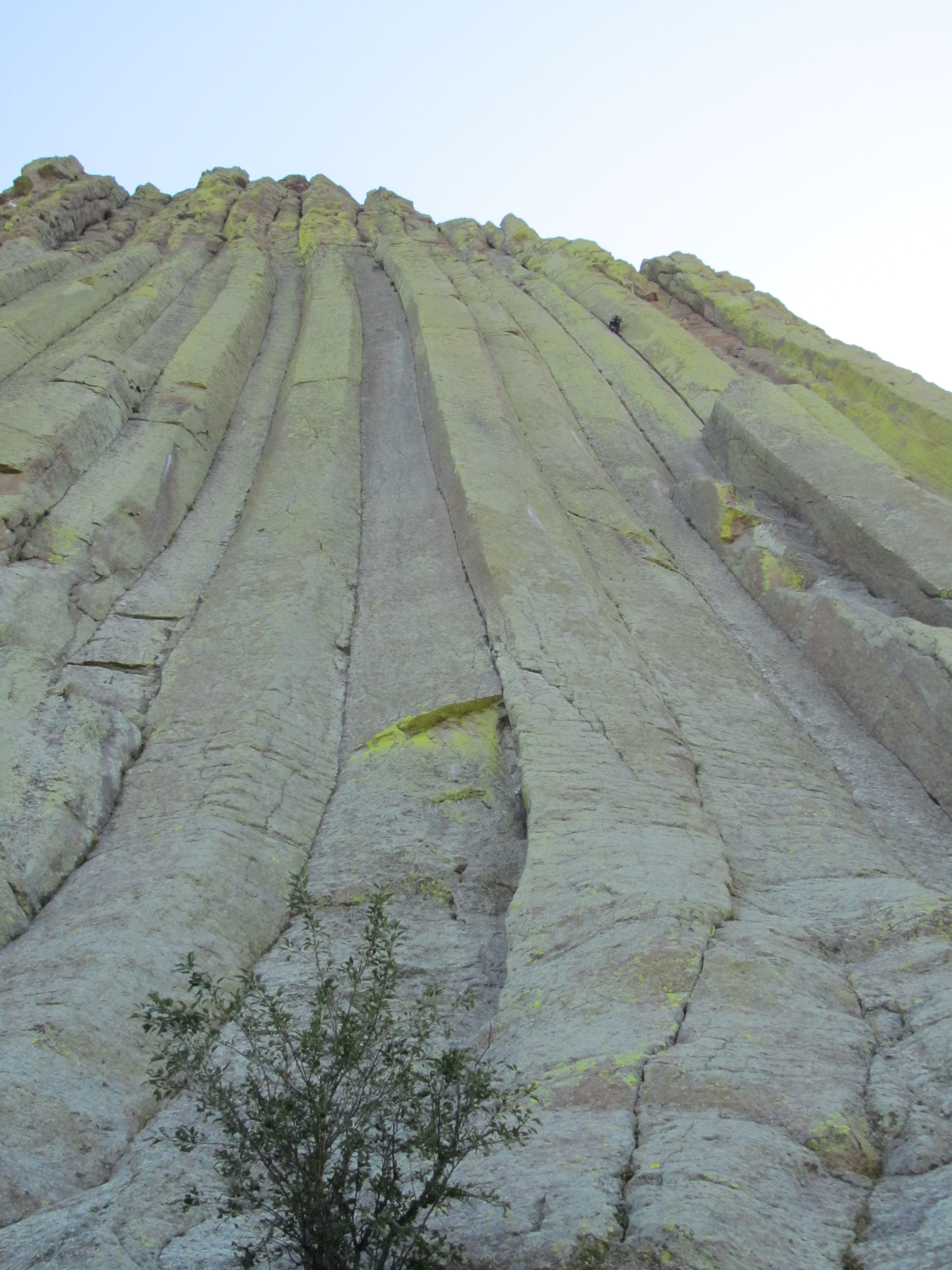
Second pitch of Tulgey Wood
We pushed through the bushes and clambered over a fallen log propped against the foot of the Tower. Where the scramble got steep, we roped up. The rope was mostly for my peace of mind. He could handle this terrain with little risk, even if it made him nervous. I didn’t have him put me on belay. If I fell , I would stop before my weight came onto him. The rope was for his mind more than his body too. It would speed him up and let him build some confidence along the way.I waltzed over the blocks and bushes, past the gnarled juniper tree and the briars to the ledge. This was the most dangerous part of the day; the routine, soft-focus section where a lapse could occur. I anchored into the base of the Burning Daylight crack and reeled in rope.
He followed quickly, buoyed by the nylon cord.
I hitched him into the anchor and began to sort gear. I would need everything, from aluminum wedges smaller than the end of my little finger, to cams as big as my fist. Part of the difficulty of the route was its variety. It never permitted a comfortable rhythm.
I had him put me on belay and we went through our final check. He understood the seriousness of the process. He was a smart lad. But he didn’t understand all the reasons, not really.I started up.
I placed a medium-sized chock in the first 10 feet. This was for him. If I fell, my weight would not come onto him directly. I would still break my leg if I fell, but he would be in good shape to get back down the approach. I moved out slightly onto the face to climb a series of edges, leading up to a stance below a bulging corner. If I fell from there, the gear failed and I hit the belay ledge, I would be killed. He would be on his own to get down, but I had confidence in his ability to do so. He had a natural faculty for seeing the mechanics of a situation clearly. It would work for him in case.
I pulled through the bulge, feeling solid. Now standing under the crux roof, I dawdled with setting up the protection. I tried to remember how I had done it the last time, but I couldn’t. I trusted that the feel of it would come back to me as I began. That was the useful part anyway. Exposition of the moves just soothed the mind.
I reached up and locked my fingers in the crack. My feet set on the last good holds, I stretched high with my other hand and set its digits in the fissure above the roof. They rested loosely. I tensioned my body against the handholds and moved my feet, the left one onto a small irregularity below the roof, the right to a vertical seam on the wall of the corner. My right knee turned in to hold tension, I shuffled my hands higher in the crack above the roof. The forces shifted back across my shoulders as I raised my left foot over the roof and set it on the smooth, sloping ledge. Without pressure on it, the sole slipped slightly. I recovered and reset it. Gently, I transferred weight onto the sticky rubber until it could withstand some force. One more step and I was over the roof.
The next roof was easier, as it led to a hand crack. I wouldn’t fall out of a hand crack, not unless I had a seizure or was struck by lightning. It ended too soon. I placed a couple of cams near the top of the crack and began stemming up the final, overhanging corner. It was technical friction, not too hard, but with tired feet, it always felt desperate.
I clipped the anchor bolts and yelled, “Off belay!”
I took my shoes off and secured the rope for him. He took a long time putting on his shoes. I couldn’t see him easily past the overhangs, but I was suspicious about the delay.
I called down, “Did you clean the anchor?”
“Yes”
“We were going to use that to clip back in to when we rap.”
“I won’t need it,” he assured me.
There was another reason for leaving the bottom anchor: he would need it if he quit and had to be lowered.
“On belay,” I replied.
“Climbing.”
I began to take up rope as he advanced. It accumulated slowly on the ledge beside me. After 15 feet, I could hear him breathing. The respirations were even yet. Then the rope stopped. He must have come to the little bulge. A couple more feet of rope came up, then the line went taut.
“Damn it!” he spat.
I bit down on words of encouragement. I wasn’t going to take this away from him just yet. Once more, the rope went slack, then taut, but there was no more swearing. He hung on the harness for a long time. When he moved again, the rope kept coming.
“Take,” he called.
No swearing at all this time. He stopped for a minute or two to puzzle out the crux.
“OK, climbing.”
I leaned out from the anchors. I could see him now. He had the rattley finger lock over the roof. His right foot slipped, but he didn’t tense up or let go. He put his left knee against the edge of the roof and re-established the right foothold. He shuffled his hands up, and it went.
“Take”
He slouched in his harness and shook blood back into his forearms. Taking a deep breath, he stepped back onto the rock. At the second roof he paused and asked for a tip.
“Feet high on the right wall until you can reach above the overhang,” I suggested, “then palm out left and get your left foot on a big edge over the lip.”
He started the moves and got stymied.
“What the f-. Oh, hand crack,” he declared, finally wriggling high enough to reach over the edge, “Never mind.”
He cruised the rest of the crack to the friction climbing and the exit moves. The corner was steep again, and he was tired. For a minute, he tried to establish a position in the final, little chimney which would allow him to reach the exit holds. Exhausted, he weighted the rope again. At that point, I was close enough to reach down and give him a hand up if I just extended my connection to the anchor a little bit. The thought crossed my mind, but then he looked up at me. His expression reflected his fatigue and some exasperation, but no panic or defeat. He was comfortable on the rope, and he knew he could finish the climb. He wanted to finish. I sat back.
“Take your time,” I told him.
“Yeah. I’m back on,” he replied.
With a little more fumbling and swearing, he managed to drape his hand over the solution-hold below the belay ledge and pull over the top.
“Nice job,” I told him.
“How hard is that compared to the hardest climb at the Tower?” he asked.
I shook my head, “Not that hard.”
“No, I mean how much harder is the hardest one?” he insisted.
“Three number grades.”
He nodded. I began setting up the rappel while he transferred gear to a sling on my shoulder.
“Do you want to go first?” I asked.
“No,” he said, “you go.”
I checked his set-up and descended. At the base, I thought about resetting the anchor, but decided against it. He lingered for quite a while after I called “off rope”. I didn’t worry. I just sat and looked out at the perfect weather and the perfect flood-plain of the Belle Fourche river, not thinking about anything but the passage of time. And that, I told myself, was nothing at all.
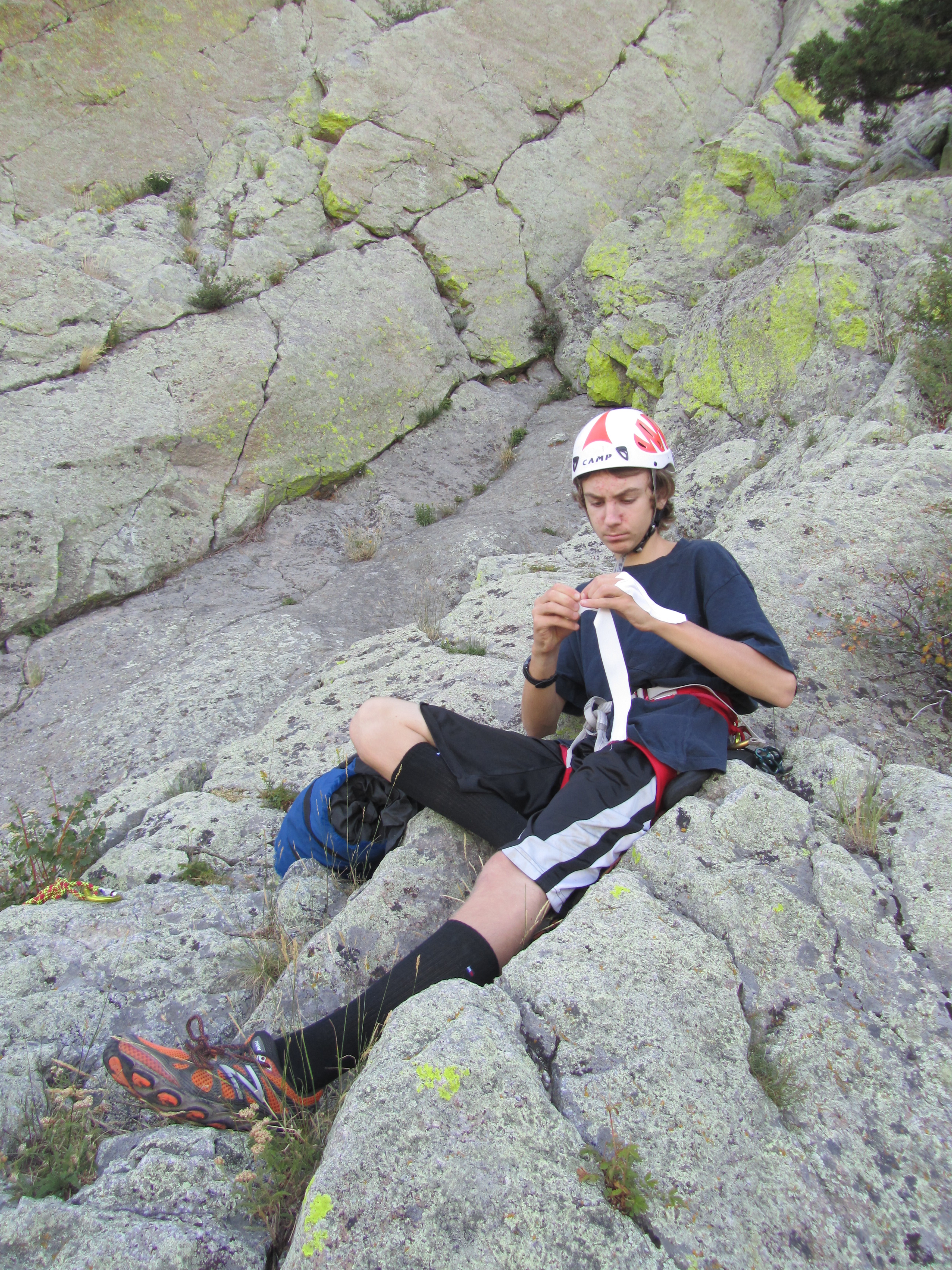
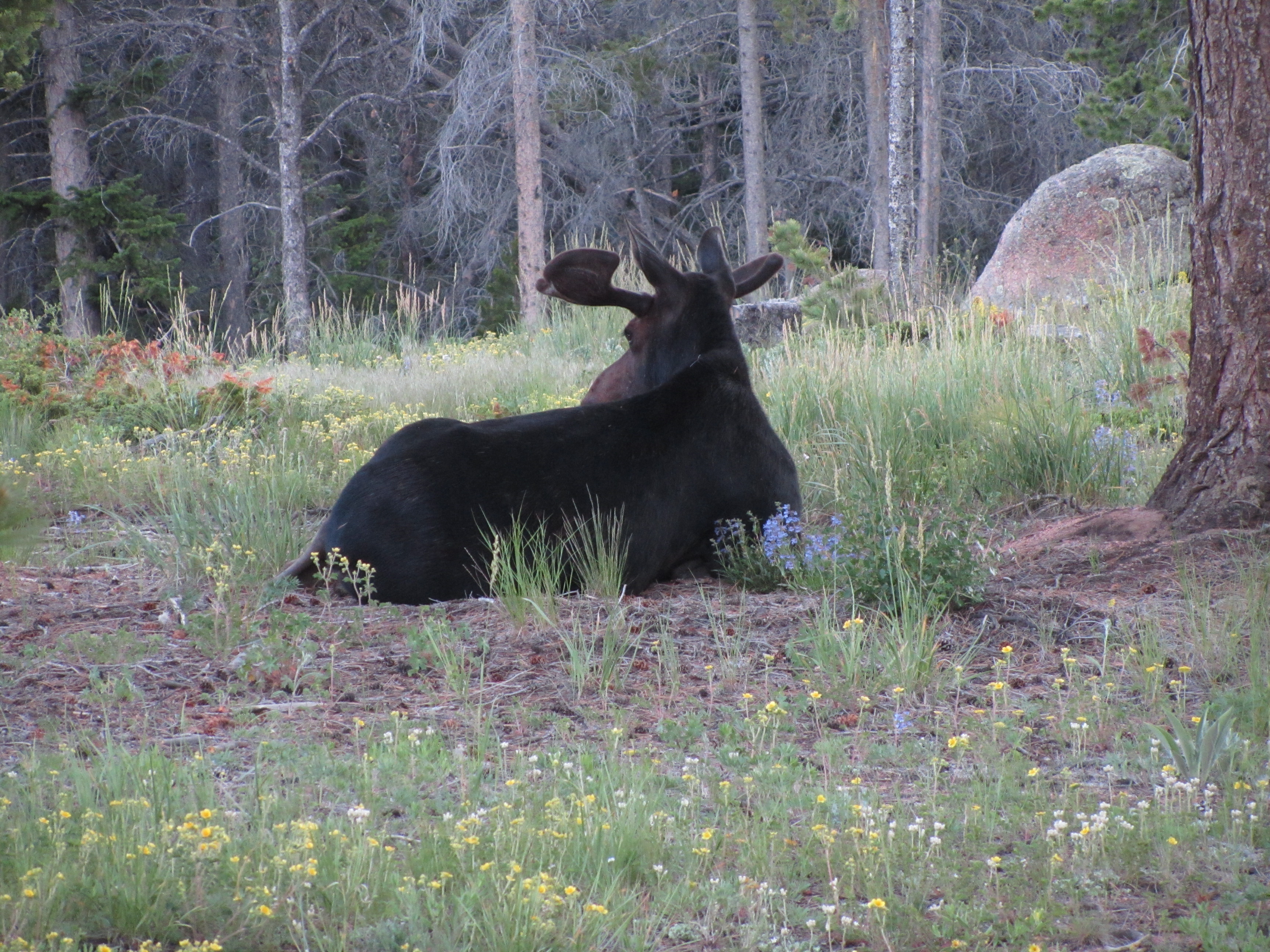
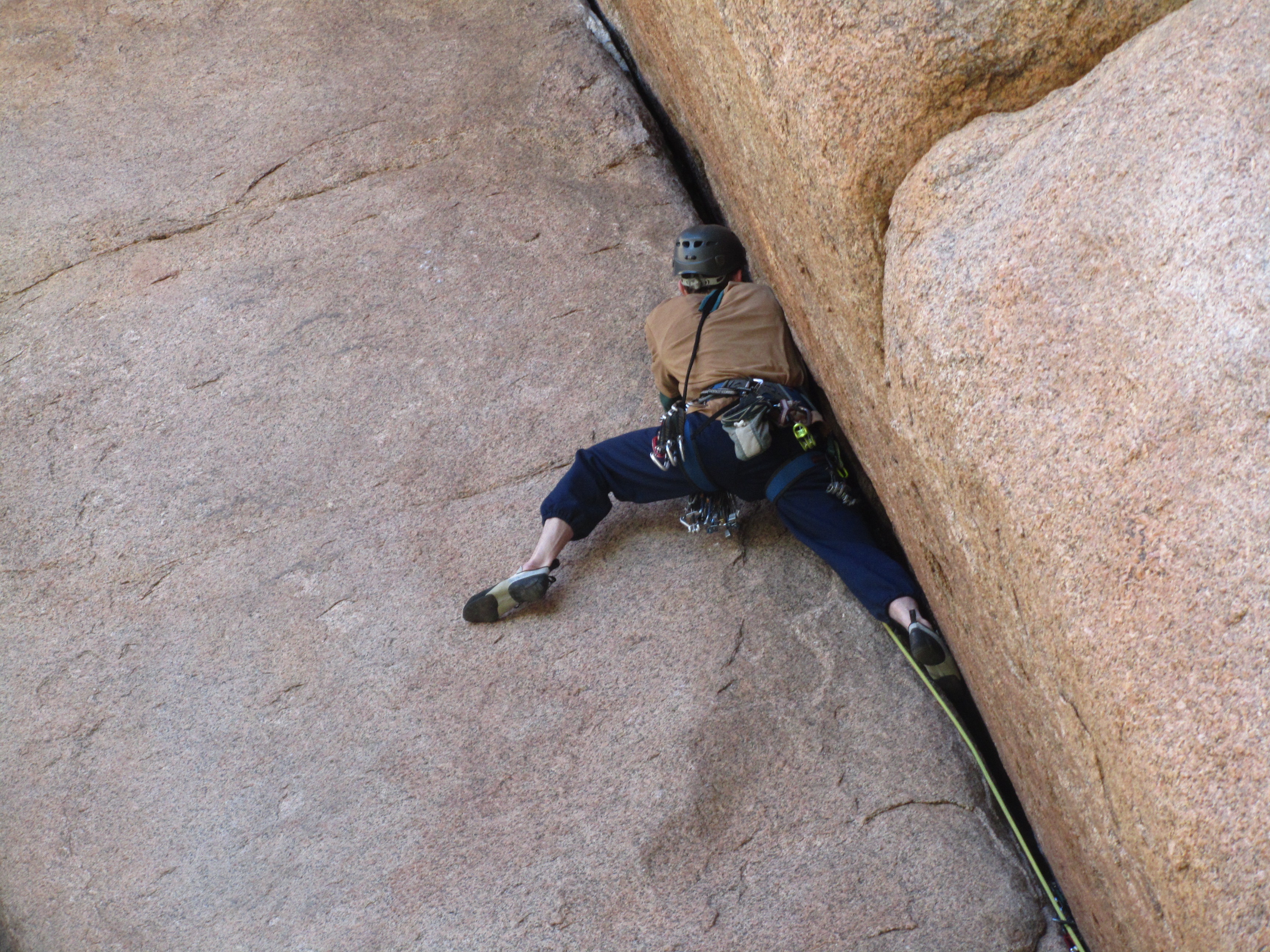
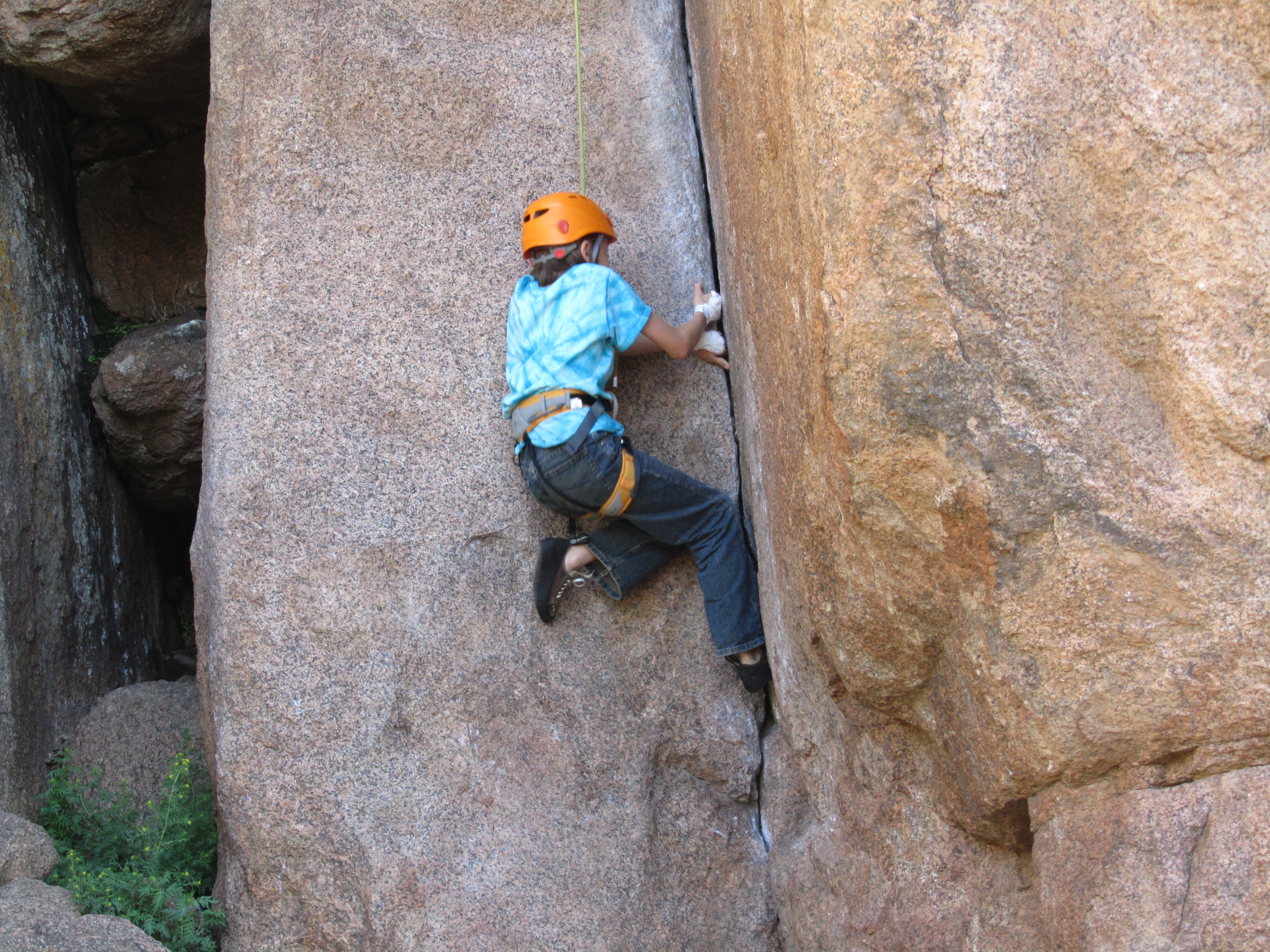
Vedauwoo
“What did you do today?” I asked.
“Got my ass kicked,” he replied with a smile.
I just laughed. Only from climbers do you get such an honest answer to that question, with no attached complaint.
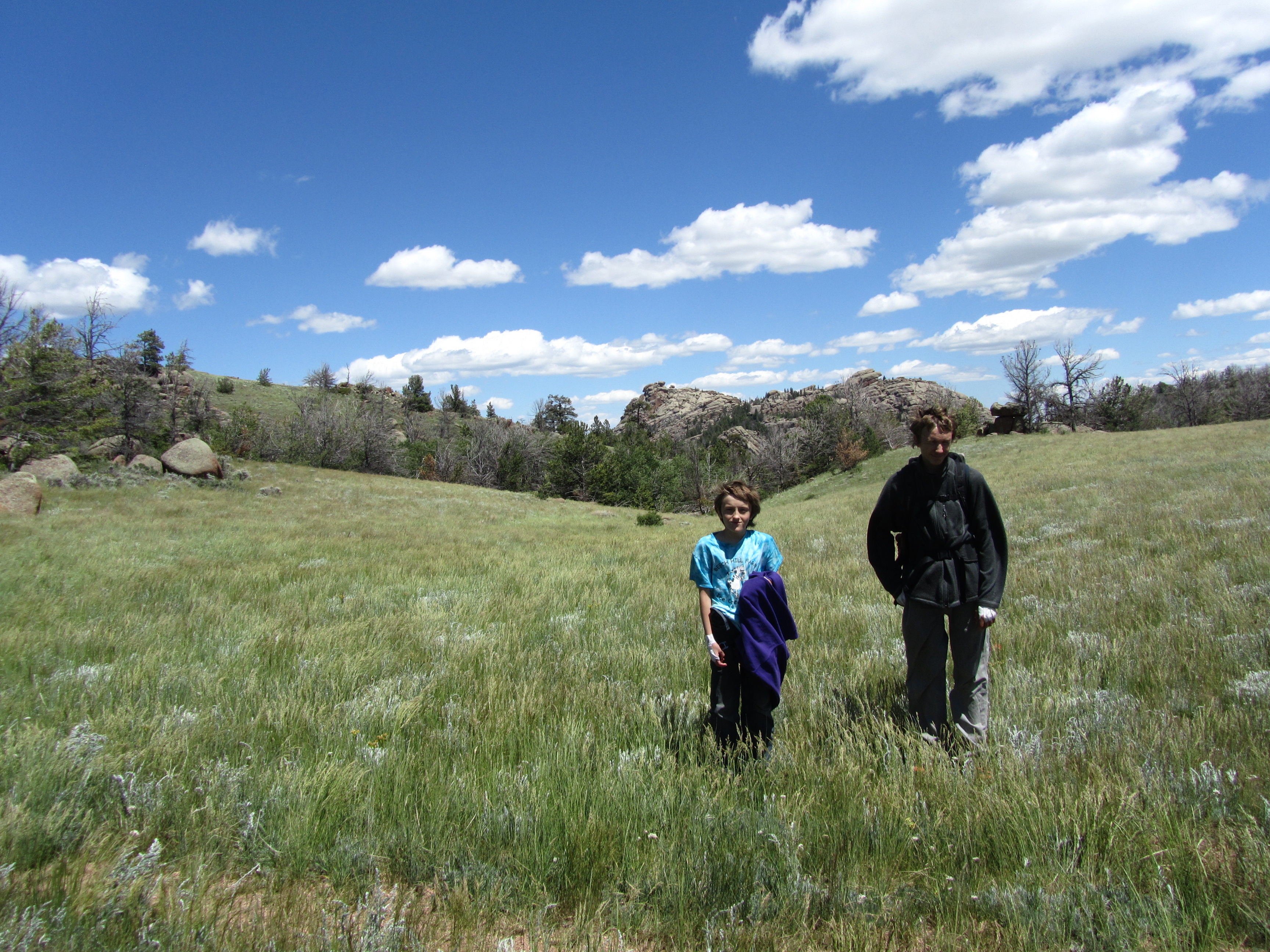
I was glad to get my ass kicked too. We all expect it at Vedauwoo.
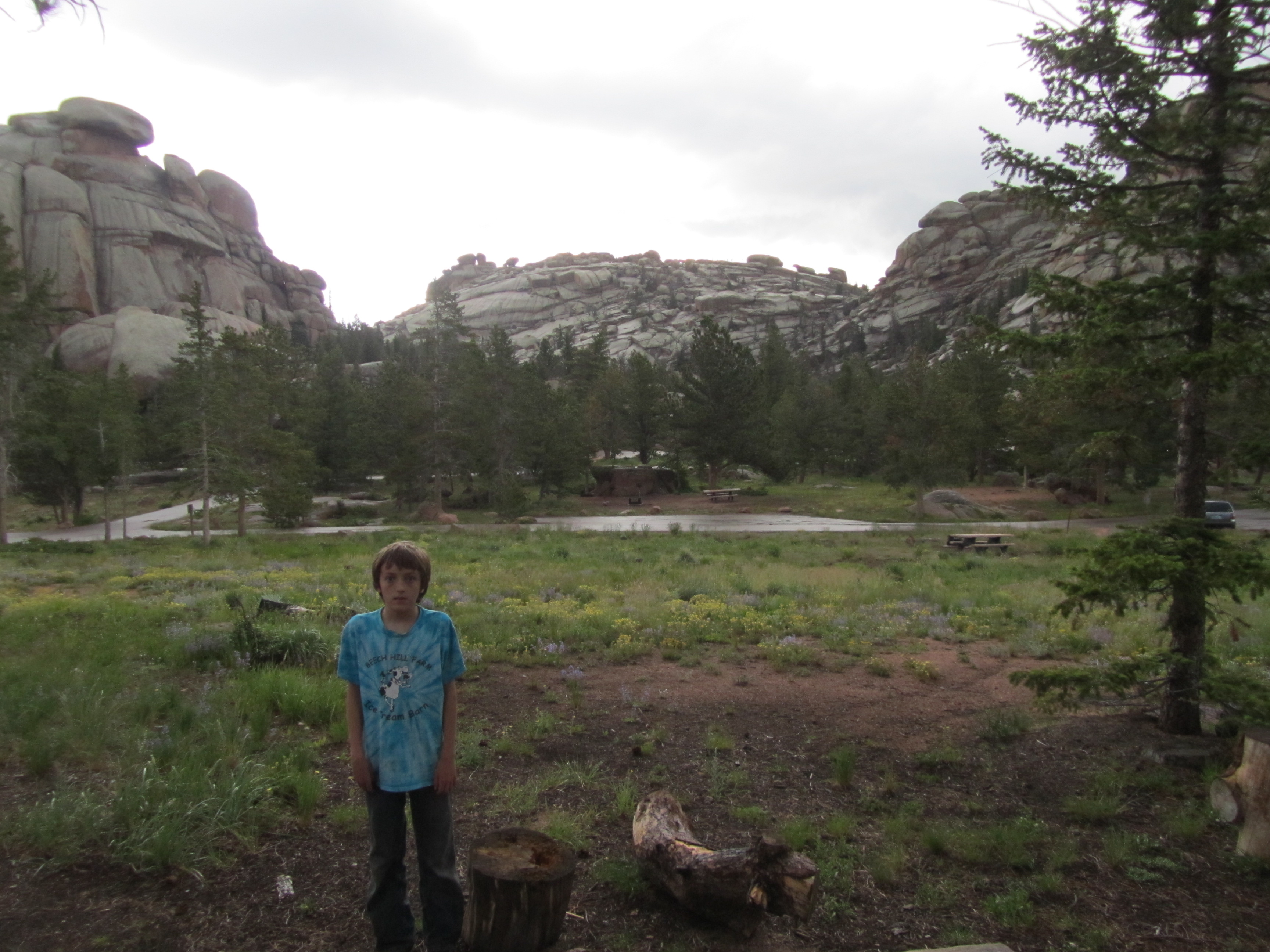
It isn’t the offwidths or even the rough, yet slick rock. It’s the thorough tradiness of the area. It’s a place where anchors have been consolidated and ratings have been downgraded. It’s a place where your two pitches of straight-forward climbing are complicated by thunderstorms and brutal wind.
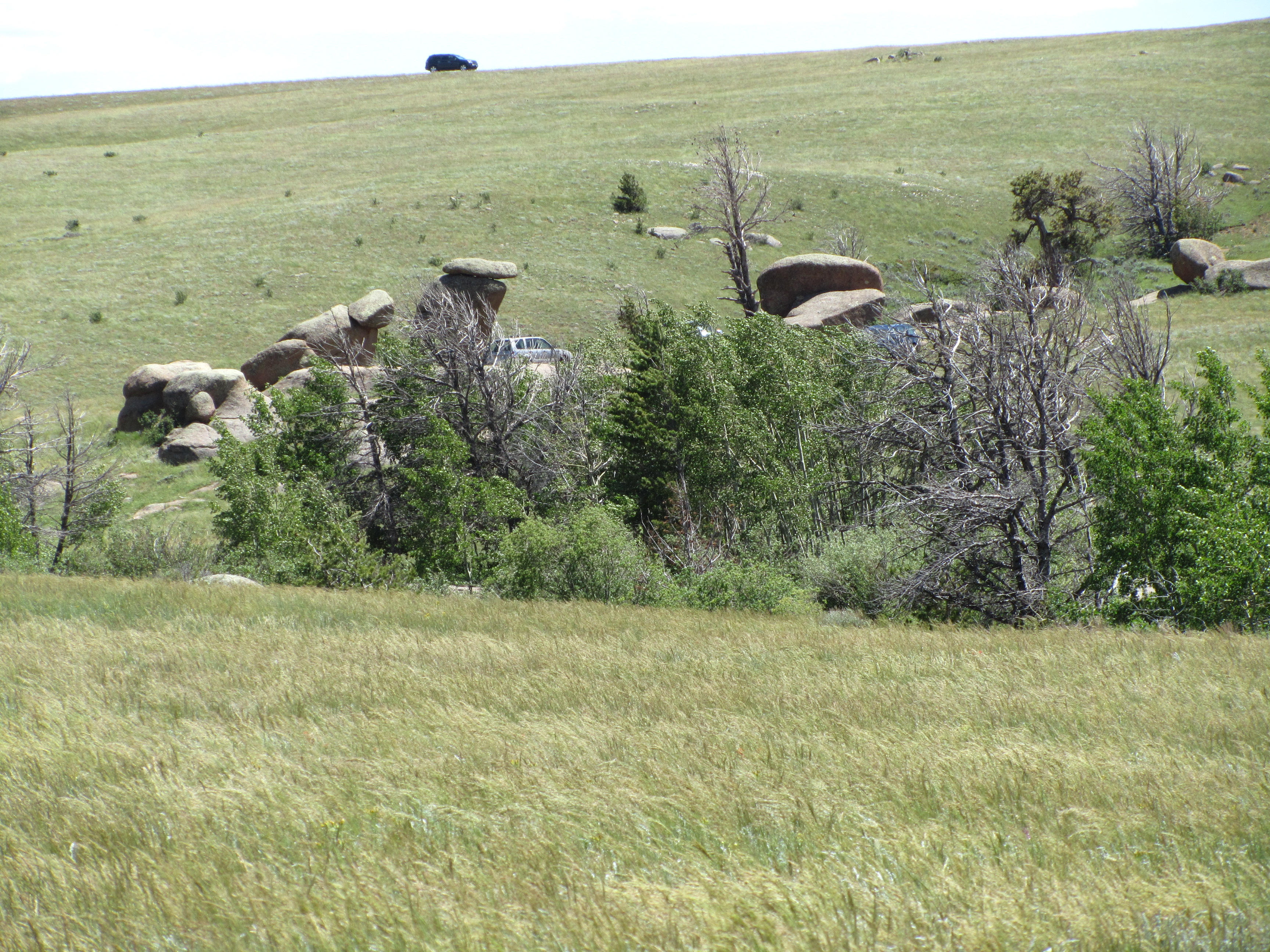
It’s a spectacular place. It kicks your ass like a neat glass of Laphroaig. From the Rat Brain (go see it – pros, mes, and telencephalon made of stone), to the parking lot wildlife, to the battling guitars of the Kolorado Kampground Kids, it’s charm is unique, and it will own you.
The Hammerhead Mentality

Hammerhead (ham-er-hed) n. 1. the part of a carpentry tool used to drive nails 2. any tool’s feature designed to impact an object 3. metaphysically, an implement used to achieve the wielder’s intent through main force 4. (slang, common parlance) any person with a modus operandi analogous to that of the tool, usually expressing the speaker’s contempt 5. (slang, among climbers) any person with a modus operandi analogous to that of the tool, usually expressing the speaker’s admiration and horror.
A hammer has a sort of minimalist beauty. It is clean. It has a singular answer to all challenges. It cannot – it will not – be mistaken for something which it is not. The beauty of the hammerhead mentality is the same. It forges a pure, guileless path in the world. It wakes each morning without ulterior motive; it pounds through each day without ulterior motive.
The psychological dynamic at issue has always been part of the human repertoire. The most famous, historical hammerhead was Alexander the Great. I’ve heard people question why anyone would ever follow such a jackass, as the blustering fool marched his army across Asia Minor to no good end. He wasn’t a blustering fool though, he was a hammerhead and I’m sure his men caught a serious case of Special-Sense-of-Purpose from him. Sure, he didn’t need to conquer India. He was simply out conquering, and India was next. Likewise, cutting the Gordian knot wasn’t a clever, if arrogant, statement or “out of the box” thinking; it was a natural hammerhead move. At the end, nobody was worried about that damned ox-cart anymore, and they could all get on with the conquest.
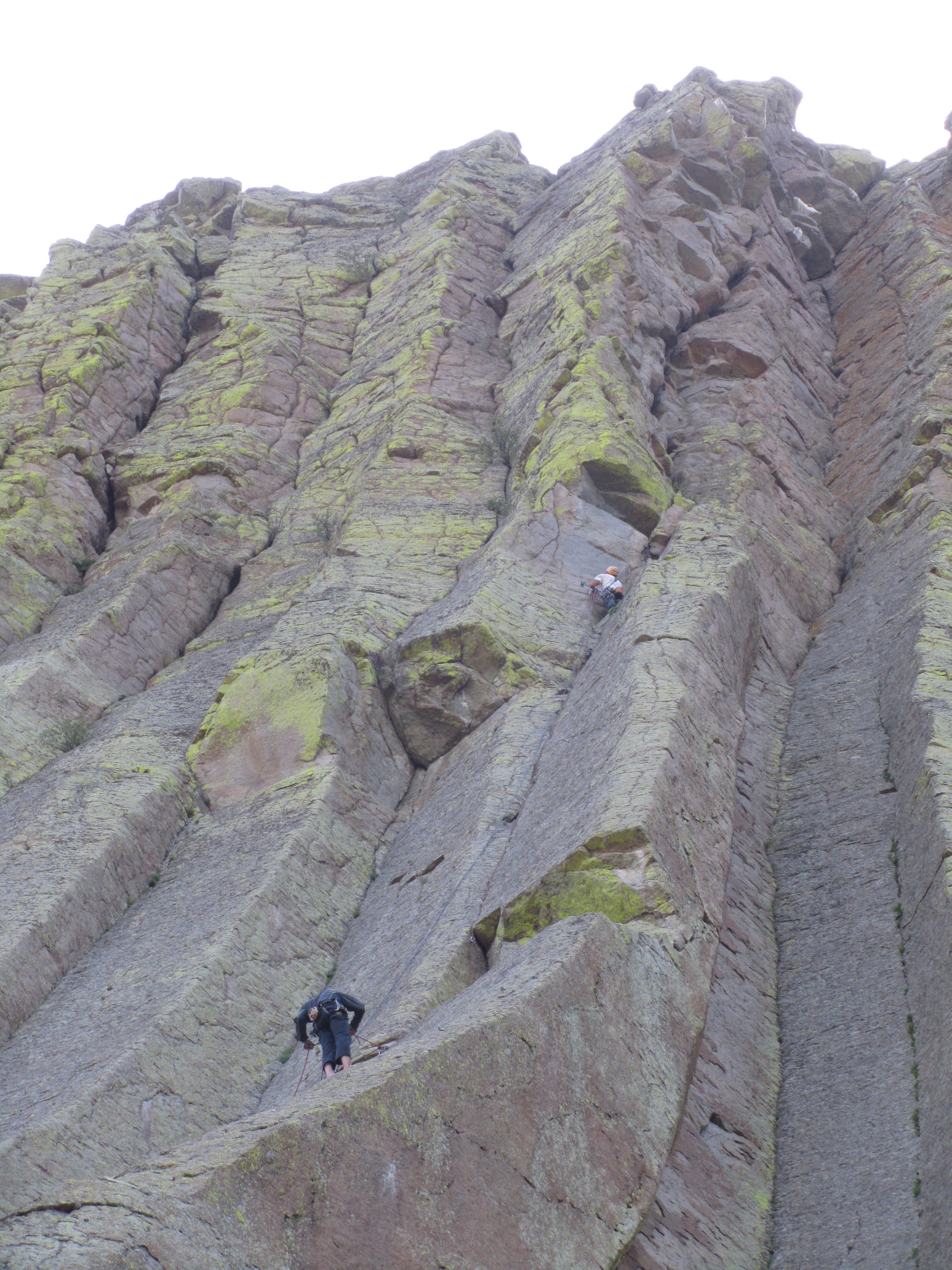
In fable, Aesop’s grasshopper, from The Ant and the Grasshopper, is a hammerhead. But only in a certain version of the fable – the one where the grasshopper is not a dissolute slob, the one where he’s just really, really into dancing and singing. It’s the version of the grasshopper with which we can sympathize. It’s the version which exposes the potential meanness of the ant’s viewpoint.
Their noble clarity is why we climb with hammerheads, why we train with them, and why we stick around to pick up the pieces. Because the unaided exponent of the hammerhead mentality is doomed from the start. Nature is bigger than us, and that’s a fact. Some routes will not go. There is a limit to strength, reach, and flexibility. A person can only go without sleep, food and water for so long. You can’t always just push through.
It’s a flaw as well as a merit of the hammerhead mentality that its hold is unwavering by nature, on the outside and on the inside. Once the hammerhead is engaged, it’s too late. The focus takes over and won’t let go, even in the face of impending doom. Nevertheless, we need the hammerhead mentality. At the very least, we have some unique lessons to learn from observing it in action.
The hammerheads have two things to teach the world. The first thing is: they show us how lucky we all really are. We are much more in command of most situations than we imagine, and we shouldn’t always act so surprised about it. If we just set aside our doubts and fears, we could often do more than we imagine. The odds are naturally in our favor.
As climbers, for instance, our eyes are drawn first to the peaks rather than the smooth rock faces. Our digits are shaped to hook over edges and close around corners. The knobby bits at the bottoms of our brains are really good at keeping us in balance. Our fingertips have little ridges on them. The game is rigged in our favor. We just need to know how far we can push our luck, and of course, that’s the problem for hammerheads.
They need to direct themselves at manageable projects. They can’t be allowed to build up too much momentum. In short, they need help, by means of another behavioral model to back them up and good counsel. They need ants. Not the nasty little ants in the bad version of Aesop’s fable, just waiting to say, “told you so,” and slam the door in the grasshopper’s face. They need the clever ants, the ones with some tricks up their sleeves, who can appreciate the merits of the hammerhead mentality and are prepared to compensate for its flaws. This isn’t pure charity on the ants’ part either.
Focus is a necessary virtue, despite the requisite sacrifices. A person fixated on the summit, the anchor chains or the next hold has abandoned their self-control in order to push through. On occasion though, nothing else suffices. We all can – indeed we must – slip into the hammerhead mentality from time to time for good and ill, even if it’s not our policy. That’s the hammerheads’ second lesson. Even a good ant may need an ant in their own head now and again, if not a doppelganger at the other end of the rope. Being the ant at the other end of the rope is just good practice.
New Moon
“Do you want to do the top half?”, I asked.
“Yes!”, he insisted.
He was offended that I’d doubted his motivation. For him, this was the advantage of climbing with his dad: he needn’t feign disaffection.
“OK,” I replied.
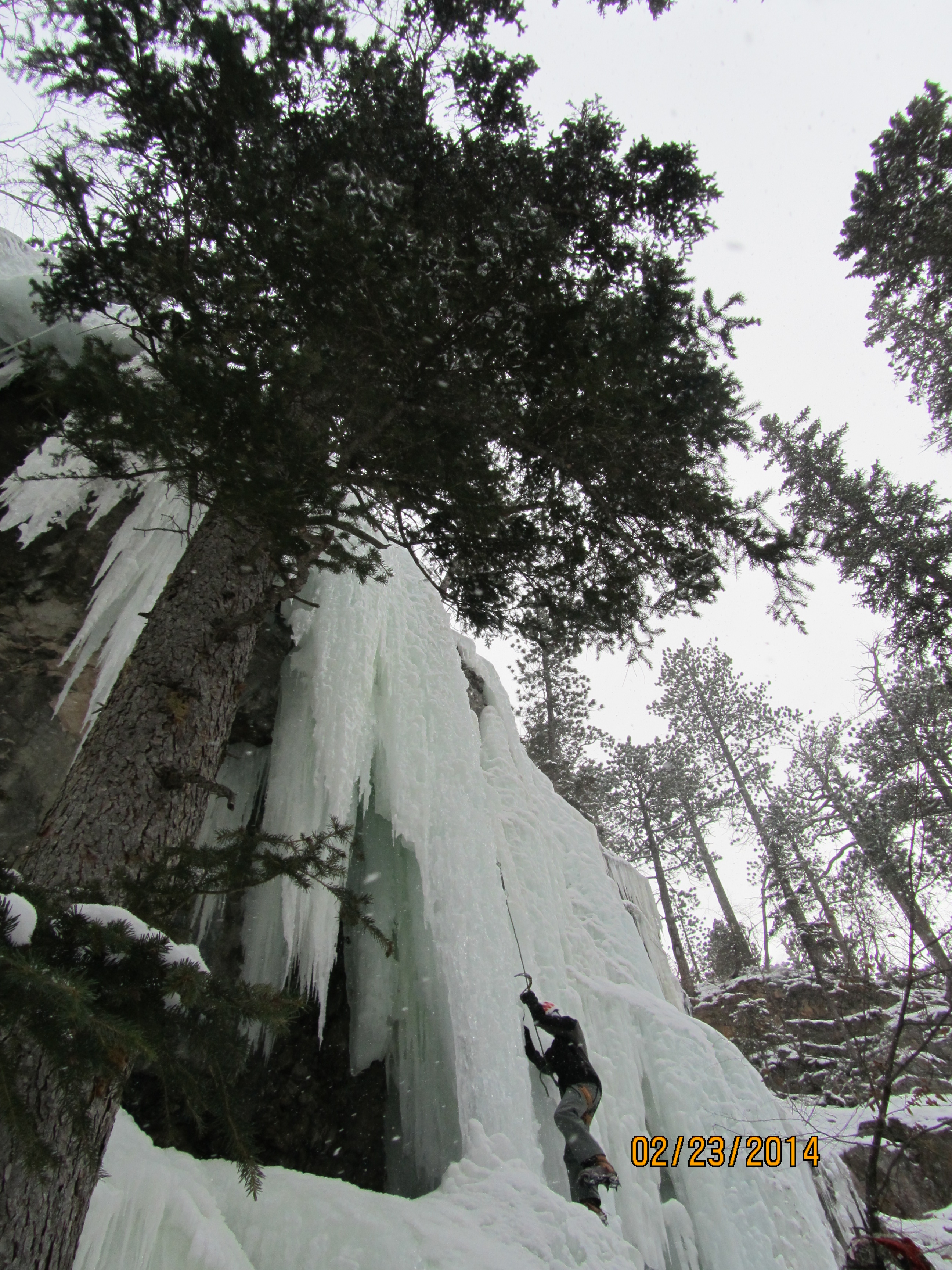
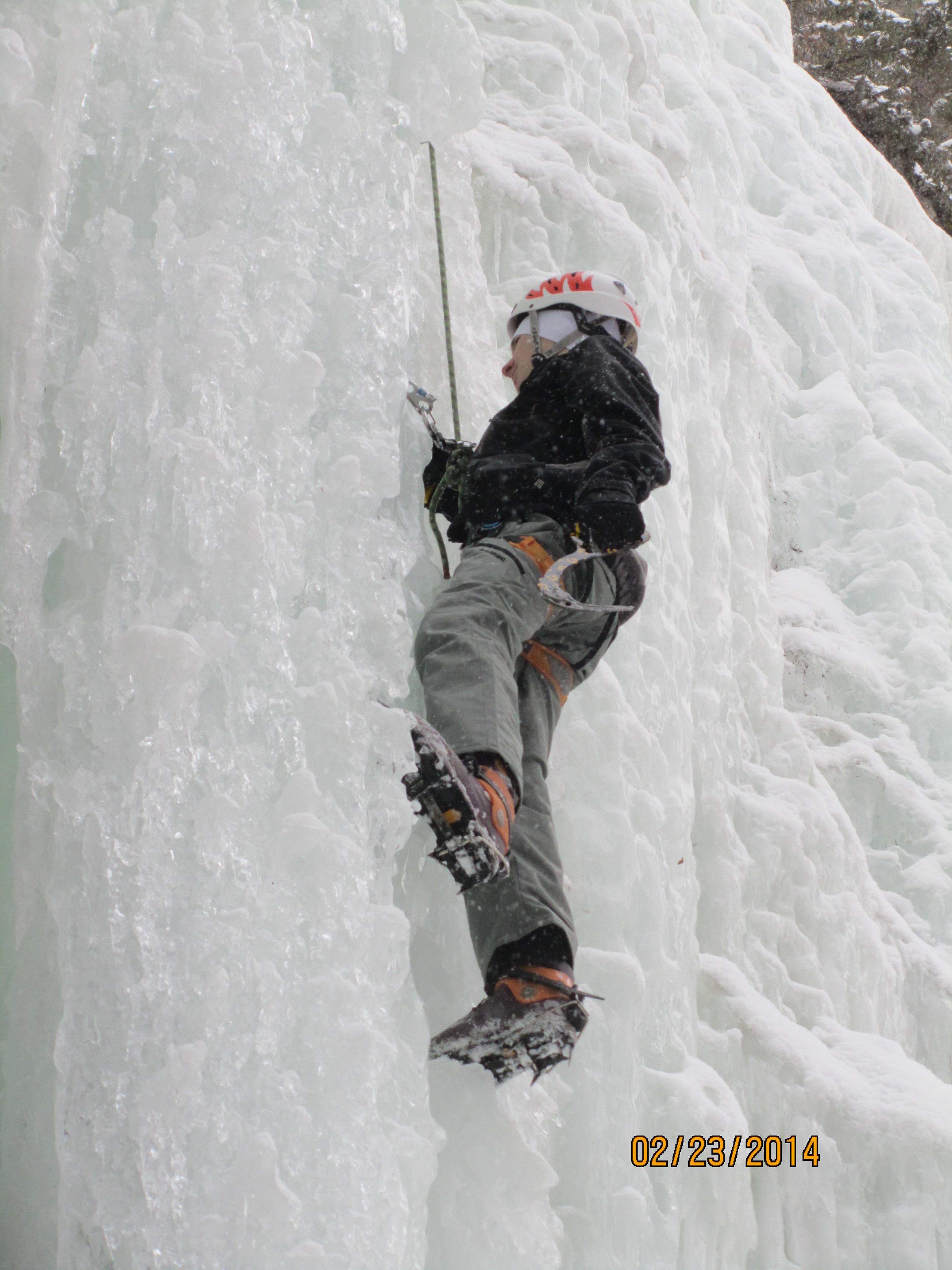
I kept my tone as flat as possible, but I had my doubts. I could dumb down the next 30 meters, but only to a point. The easiest line was still grade 4+ – vertical, more or less. He wasn’t too worried about whether or not he could get up it. He was not a child anymore, but he was not an adult yet, either. He still subscribed to the quaint notion that, whatever happened, dad would sort it out. Actually, he was right in the case at hand. I wouldn’t have suggested that he continue without a back-up plan in mind. I could manage things if he quit in the middle, but it would be a real pain in the ass.

I placed quite a few screws on the way up, in part to keep him on the easiest line, in part to keep him out of the way if I had to come back down and sort it out should he fail. But he didn’t fail. He didn’t even make any whiney noises, only one curse at a slight slip. Besides that curse, the only sound from him was the measured, heavy breathing of the highly determined.
“Kind of overkill on the ice screws, dad,” he remarked at the top, “What is this climb called?”
“Leigh Creek,” I answered.
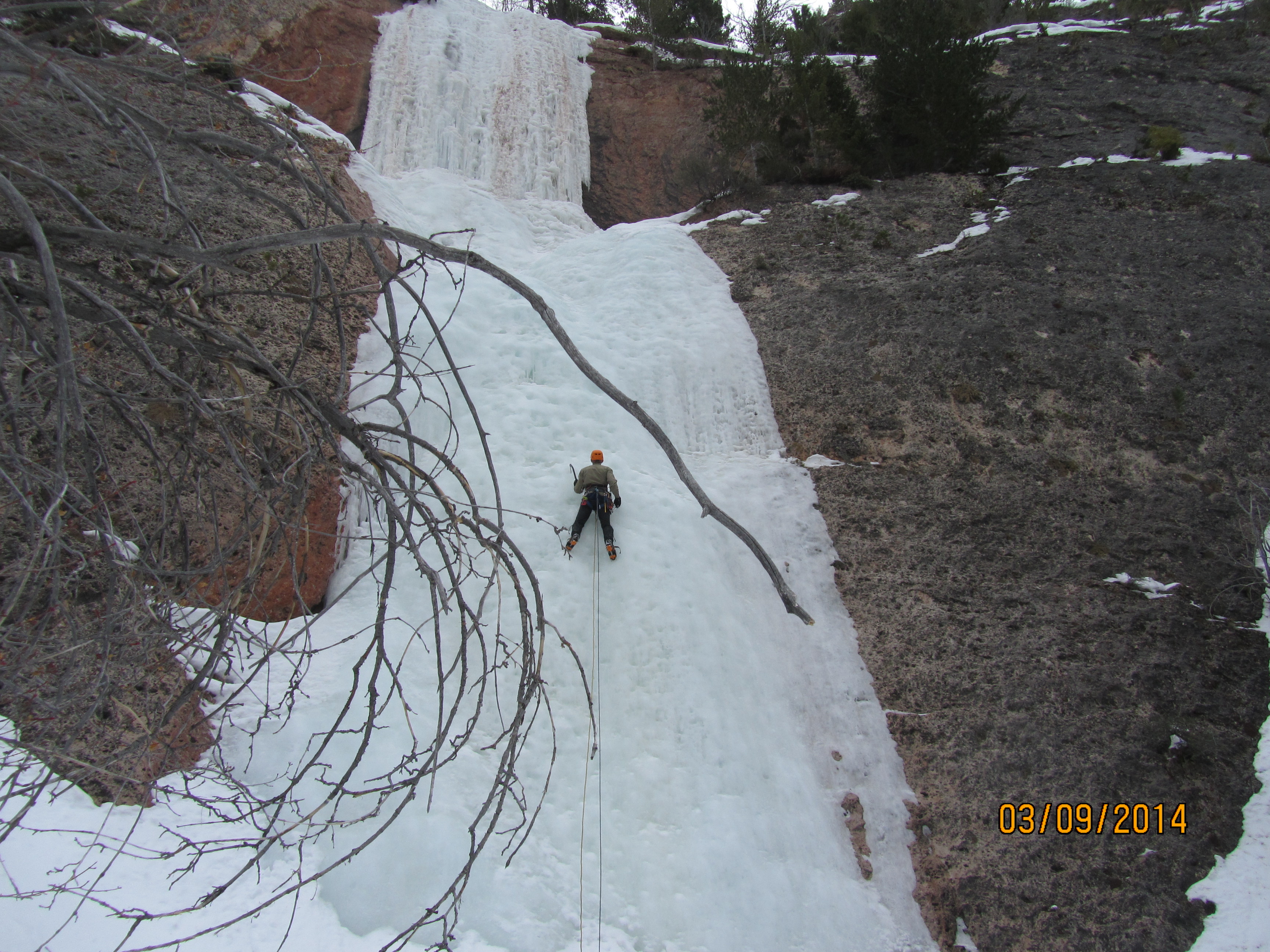
He never asked about names or ratings last year. He’d exhibited some ambition. It was a sure sign of lycanthropy. I envied him in a way. I remembered the transformation well – the ravenous fixation on routes, the immunity to adversity, the anticipation of new phases building to the next big climb and its fearful, all-consuming fury.
I also remembered the frustrations of hiding an identity which others found strange, frightening and repulsive.
“What,” I asked family and friends, “you want to go to the beach in February? Well, that’s a very bad time for me. It’s the busy season at work and I’m likely to be so irritable as to be indisposed.”
“May? I’m scheduled to be in Canada in May,” I’d object, “and you’d hate to see what happens if I don’t make that appointment.”
“The city in August? With all those people?” I’d demur, “Could be a little, ah, dangerous at that time, I think. I tend to be in a bit of a ‘mood’ then. Best not.”
There was a downside, but for the afflicted there was no cure. I set up the ropes to descend. He stood by with a hint of a smile on his face and a hungry look in his eyes.
“Can we go to Cody next year?” he asked.
I looked him up and down. He was getting meaty. Soon he’d be heavy enough to belay me without a bottom anchor. I felt my lips creep back over my teeth.
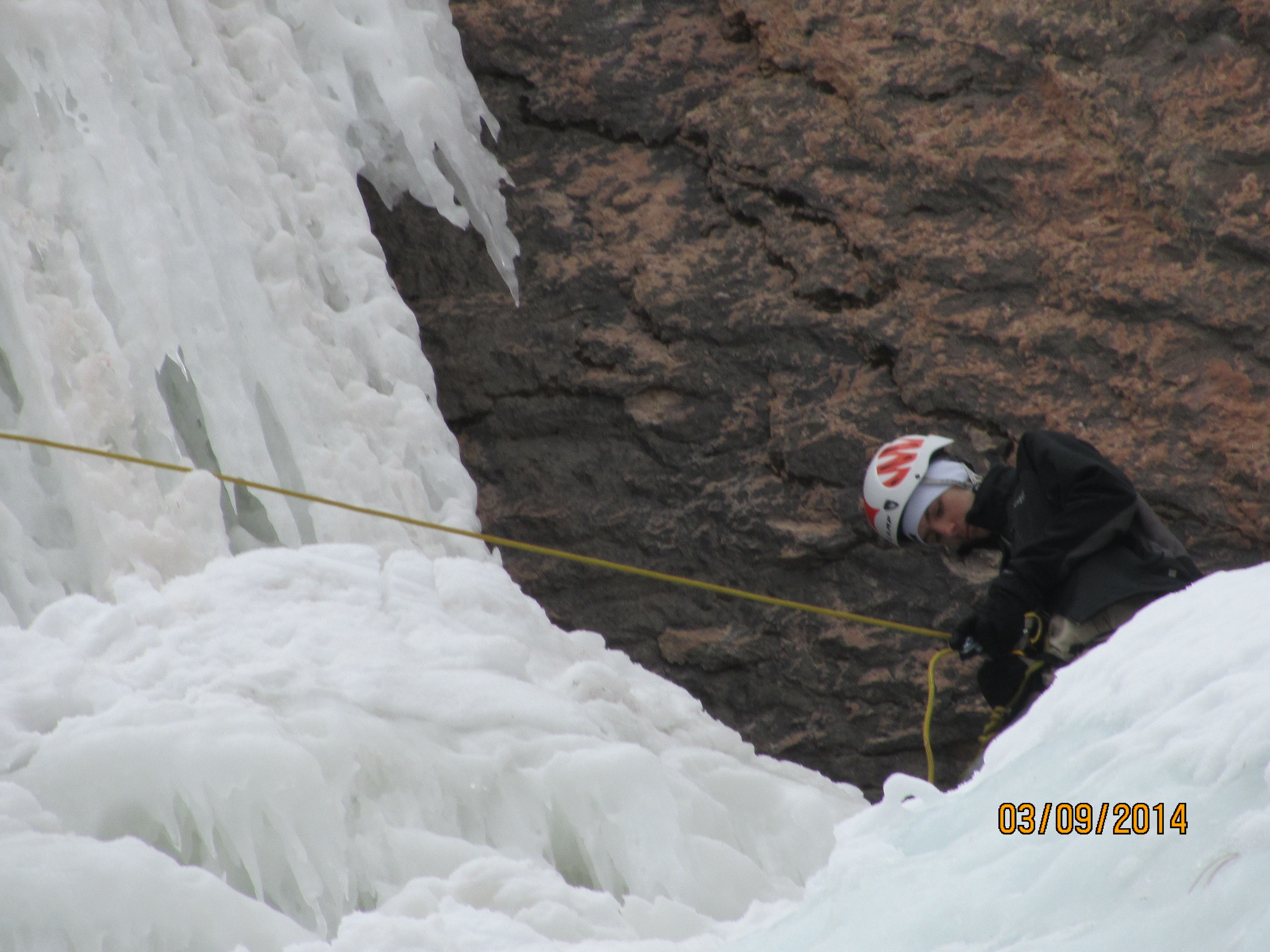
“Sure,” I said, “We’ve got this Summer to get through, but yeah, we’ll go to Cody next season, if you’re still up for it.”
What Dies on the Sharp End
As children, many of us were cautioned not to judge another person until we had walked a mile in their shoes. This simple aphorism is meant, and taken, in two ways. For those with a literal bent, it means that we should withhold judgment until we have the all the relevant information. For those with a more philosophical inclination, it means we should understand that our judgments about others are always bound to be a little off. The latter interpretation is more accurate, because we cannot walk in another’s shoes. Beside them or in their tracks we can experience their walk, but not in their shoes or their skin. To do so would demand abandoning our own identity. In light of the latter interpretation, the implication of Mom’s trite admonition becomes apparent. We aren’t limited by our subjectivity – the statement is nonsense – our subjectivity makes us. Like so many things which children must learn to get straight, it marks a snag in our understanding which trips the most carefully considered philosophies.
Let’s see how philosophical problems regarding mind fare under the heat of our kindergarten lesson. With no subjective experience of subjectivity, philosophical zombies – hypothetical creatures which exhibit behavior without experience – take a shot to the brain, not because we cannot conceive of behavior which does not entail qualitative experience, but because we cannot conceive of qualitative experience divorced from activity (after all shouldn’t something which is a property of experience rather than a product of it show some sign of life for itself?). Rigid designators – necessary identities – hold for representative entities in logic, but not for the objects from which the logical entities derive (would that it were otherwise; think of the savings on auto repairs and trade-ins alone, not to mention the safety benefits of “the red car turning left in front of me” being true in fact as well as in theory). Determinism becomes an analytical curiosity. There is no quantity of happiness, suffering, or human thriving calculable. There is nothing that it’s like to be a bat – or a human.
Philosophies stumble because most of them have not been field-tested. This state of affairs is understandable; field testing is a grim business. The best contrivances fail in unexpected ways, leaving us deflated and puzzled. Trying to break a precious invention in the course of it’s intended use admits to some basic pessimism, but it is vital. Yet how do we test an idea of how the mind works in the world? What we need is something other than the sort of post-game analysis which always concludes that the contest turned out as it did because one team managed to “execute” and one didn’t, that one managed to fit the criteria of our post-hoc definitions and one did not. We need to know what happens, what falls away, what persists and the shape of the relationship between the whole lot.
Fortunately, we don’t have to go to the trouble of designing a test for philosophies of mind. The sort of test in question happens naturally on the sharp end of a rope. Every rope in use has a sharp end, attached to the lead climber, and a loose end, secured by the belayer. As soon as the leader finishes his knot, things begin to fall away. The belayer is a person who pays attention or not, who arrests a fall or not. He may be a Saint, or he may have walked out of prison that morning; it doesn’t matter. Likewise, the leader is a person who falls or not, who puts the belayer at risk or not. The relationship is quite specific and pertains to the subjects and the salient features, the valuable points, of the situation, as do all the relations and values which fall away. But the test extends beyond the mind-to-mind relationship. In the leader’s experience our ideas about the nature of mind itself get tested, because the leader is the one who grasps the holds. Looking at a hold creates a shaped perception of it. The hold has size, conformation, anticipatory feel, relevance to body position, distance and even strategic utility. But that hold is not the hold which the finger touches, and the leader knows the hold in hand by a different means.
Here is where another important set of ideas breaks down. Contact with the hold demolishes the mental theater. The hand and mind know the hold by assimilation. They know the edge as a hold by becoming the hand and mind which grasp it. The meaning of the feature’s heat, slipperiness, sharpness and adequacy are immediately apparent, because all those remake the first person in the moment of contact. The hand and mind know the feature as a hold because that is how they are capable of knowing it and the situation could not be otherwise in the revised individual. The subject doesn’t transcend the moment by discovering some permanent and essential nature realized in the experience, but by diving in, taking in and being taken into the meaning of the hold.
So what dies on the sharp end is transcendence, permanence, and commitment in the abstract. But these are no losses at all, because we can see that, all along, those defunct ideas were merely mistaken shaped perceptions of engagement, persistence, and understanding of change. With the death of its bearers, on more thing must fall and break in our field-test: meaning as a graven image – of God’s will, nature, humanity or whatever other imagined necessity. Meaning is revealed as, like us, the property of the present moment. The edge on the face of the stone is many things, we think, possibly, but with fingers on it, it is a hold – and that fact accounts for all valuation, all confusion over minds and bats, and the limits of footwear exchanges. This is not mysticism; it is much, much smaller. It is just what we know.
 Dedicated to the Game